Vali Nasr Exclusive: 'War is being waged ': Vali Nasr on Israel-US campaign against Iran
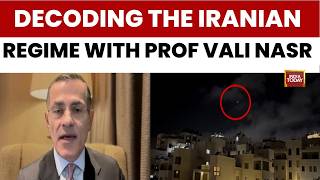
In this India Today interview, Professor Vali Nasr, a leading scholar on Iran, provides a comprehensive assessment of the unfolding Israel‑US war against Iran. He argues that the campaign has moved beyond targeting Iran’s nuclear or military capabilities and is aimed at dismantling the Iranian state and society through extensive air strikes on civilian infrastructure, hospitals, schools and the energy sector. Nasr explains that this strategy seeks to force Iran’s collapse by raising the economic cost to the global energy market and pressuring U.S. bases in the Gulf. He describes Iran’s response as a widening of the conflict into a regional theater, with missile and drone attacks on UAE, Bahrain, Qatar and even Azerbaijan, intended to threaten U.S. forward bases and energy facilities. Nasr examines internal Iranian dynamics, noting two concurrent narratives: widespread public fatigue with the authoritarian regime and a surge of nationalist solidarity against external aggression. He contends that while Iranians despise the regime, the war’s devastation prevents organized uprising; the immediate priority is survival. The professor assesses the regime’s durability, attributing it to its revolutionary origins, entrenched institutions, and a history of perpetual external conflict, which have forged a resilient, self‑reliant state. Regarding India, Nasr advises a nuanced policy that balances historic civilizational ties with strategic concerns, warning that U.S. pressure on India to isolate Iran only pushes Tehran closer to China, thereby affecting India’s rivalry with Beijing. Finally, Nasr outlines two plausible futures: (1) a protracted bombing campaign could trigger state collapse and a civil‑war‑like scenario akin to Syria or Libya; or (2) the Islamic Republic could survive in a hardened, hyper‑nationalist form, ruling with an iron fist while remaining isolated. He stresses the lack of U.S. or Israeli contingency planning for either outcome. The interview concludes with Nasr highlighting the cultural and historical parallels between Iranians and Indians, underscoring the deep‑rooted national identity that shapes Iranian reactions.
Chapters
Hello and welcome to this India Today special where we've been bringing you special guests on the big questions surrounding the West Asia crisis that has engrossed the world and has deepening consequences by the day. Today we are joined by a very special guest. Professor Vali Nasr is professor of international affairs at Johns Hopkins University, has just brought out a book on Iran's grand strategy, an extremely topical book that looks at the political history of Iran. The world's leading scholar in a way on Iran joins us. Thank you so much, Professor Vali Nasr, for joining me. It's been a week since the conflict began in West Asia. What is your biggest takeaway so far? What has been the most striking point for you of this conflict between Iran and the Israel-US axis?
I mean, first of all, Iran's reaction, of course, came as a surprise, particularly expanding the war to global energy supply chain and to the Gulf countries which are home to US bases and also are so important to global trade and to global energy. But also the way in which the US and Israel have conducted this war is also a surprise. I mean, not only they started with killing Iran's supreme leader and also, again, decapitating a large number of leaders in expectation that the state would fall. But Israel in particular has now adopted a strategy of very similar to previous air campaigns against Gaza or Beirut, of hitting varieties of targets in Tehran. I mean, Iranians describe it as carpet bombing, hitting hospitals, schools, civilian infrastructure, pharmaceutical industry across Iran, which, which suggests that the aim is more than dealing with Iran's nuclear program or a specific Iranian threat. Is essentially aimed at downgrading or destroying Iran, the Iranian state. And President Trump also similarly said yesterday that it will take Iran 10 years just to build back. So it is, it is a campaign that is not directed at military targets. It's directed at state and society. And that's a bit surprising that the U.S. has embarked on this kind of a war after it said that It was done with these kinds of wars in the Middle East.
Mm-hmm. Uh, you said at the outset that the war, you believe, now seems to be aimed at dismantling or dismantling— decimating the Iranian state as we know it. Do you believe that the Iranian state, the Islamic state of Iran that was set up, this Islamic Republic in 1979, can this present regime of the ayatollahs be dismantled so easily? Do you see that happening? Is it now fighting an existential war for its own survival? Is that how you see it?
Yes, it is. And not just in a way, not just the regime, but also the country is fighting an existential war. One may think that, you know, that sounds an exaggeration, but Iranians are worried about a scenario like Syria. You know, there was a complete chaos, disorder, state failure. When President Trump says he's going to arm Kurdish forces to fight separatist battles in Iran, most Iranians have memories of the 19th century when large parts of Iran broke off under British and Russian pressure, and then Iran was occupied and almost lost its northern provinces to Stalin's army. So these ideas of disintegration of Iran are not theoretical to Iranians. And so they see, and also the state, even beyond the regime in Iran, is essentially a structure embedded in Iranian society and the nation-state. So degradation of the state is different from decapitation of the regime. So when you go after hospitals, schools, roads, bridges, yesterday a stadium was destroyed in Iran, then that's essentially, is larger. And I think, yes, the country is now geared towards existential moment, largely because it's also facing two qualitatively superior militaries. And so it's a, it's an underdog's fight against much more overwhelming power.
You know, you know, Professor Nasr, we get two narratives that are coming out of Tehran. One is that the people of Iran, after 49 years of this regime, want to change. They want change desperately. That's— they want to get rid of the regime. They want it to go. They see it as despotic, tyrannical, fundamentalist. The other view is that this war will actually unify the people of Iran behind the regime, because the manner in which Israel and America are targeting not just the state but civil society— a school where 160 schoolgirls died in Minar. Which of these narratives is the right one? Do the people want the regime out, or are they unifying behind the regime?
I think both narratives are correct. In other words, people are tired of the regime for varieties of reasons. They think it's authoritarian. Many people, Iranians, are much more secular and don't subscribe to the religious edicts of the regime. And there's a large number of Iranians who also are fed up with isolation, economic sanctions, and no longer subscribe to the idea of resistance and combat with the United States, confrontation with the United States. The kind of anti-imperialism of the old order that drove Iran's leadership. So they want a basically different regime. That's very true. But it's very clear to them that the war is not removing the regime. The war is being waged on the country. There is nationalism there as well, which I mean, all Indians would associate with. So there is a, the nationalism does not mean support for the regime. It means support for the country. And in the middle of the war, people are not gonna rebel. To support an invading military. And also they cannot really organize and support the regime change when bombs are falling on top of them. I think the priority of Iranians at this particular moment is survival of their own lives and survival of the country. And they are angry at the regime, but they're also angry at the invaders. And I think the more it goes on, the more they will see that Israel and the United States is not doing this for them. It's actually destroying their homeland. And so people can have very complicated sets of emotions. They may even fault their leadership for bringing them to this point. But at the same time, that does not mean that they, that they would embrace the devastation of their homeland. And, and yes, one day when the dust settles, then you'll see politics and where it goes from now. But in the middle of this fight. They are not looking at this as a, as, as a, as, as being, as being a war being waged to liberate them. That doesn't look like—
the reason I asked you that, Professor Nasr, is because, uh, Donald Trump and even the Israelis from time to time are saying they expect the people of Iran now to rise against their government to safeguard democracy. Trump says he's given the people of Iran that opportunity. Do you believe that's rather fanciful to expect a people's uprising based on aerial bombings of a country?
Yes, I think it is. I mean, first of all, there is no ready alternative to the Islamic Republic. It's not like there is a political party out there or an organization that can take over. And also, I mean, the devastation that the city of Tehran is being subjected to right now is not liberation. This is destruction. It's not destruction of only, you know, headquarters of Revolutionary Guards or police instruments of suppression on the people. Hospitals are being destroyed. You know, all aspects of economic and social lives of people are being destroyed. And at the same time, the Iranian people cannot organize to wage war against their government when bombs are falling on top of them. And yes, maybe one day they will, you know, depending on what comes out of this war, they will express their political feelings. But in the middle of this war, there is no— I don't believe there is any credibility to what President Trump Trump is calling on them for.
But what, uh, do you then believe will come out of war? You've had Ali Khamenei, the Supreme Leader, being assassinated on day one of the war. Donald Trump claims he's taken out an entire range of Iranian leaders. So what comes next, a more moderate leadership or an even more extreme leadership? Does Ali Khamenei's son take over? What kind of regime would come in if this war goes on for weeks, dare I say months?
It's very difficult to tell. I mean, without a doubt, the country being at war like this, which is struggling for its survival, usually the more military-oriented, the harder-line views take over because they're the ones who are at the front of the fight. You know, moderation does not emerge in the middle of the war. It will emerge only after the war ends. And if there is a pathway for moderation after the war. So it all depends on what is left of Iran and what happens. But what is very clear now is that the regime is not falling. And even if you degrade it and kill a lot of its leadership, still what remains, that is in terms of governing Iran, providing, you know, government services as well as instruments of security and even oppression, are all still the Islamic Republic. So Israel and the United States have to do a lot, lot more bombing before you actually really break the state. But then at that point, it becomes a complete failed state, much like happened in Libya or in Syria. And the outcome of that is not— is at a place where you cannot imagine, you know, a conversation about democracy or moderation. You know, the struggle for survival does not go with liberalism, in a way.
You're making a great point. You're saying there's a real threat that if this goes on for months, that Iran could break out into some kind of civil war, be seen as a failed state. Is that the real fear, in a way, that you have?
It is a real fear, even among the Iranians themselves. I mean, you know, we saw what Israeli air power did in Gaza. Or, and you know what continued bombing of this kind can do if it's sustained. And if people in a month's time cannot get medical care because there's no hospital, they cannot get medicine. You start with food shortages, supply chains of fuel, electricity, food, etc., break down. There's no telecommunications, there's no internet. And gradually, you know, parts of the country can no longer be governed effectively from the center. Then that's a scenario that we've seen play out in the Arab world. So yes, the prospect of it is always there. Although the Iranian state may be more resilient than the Libyan one, it may take a lot longer to bring it down. But the aim of the bombing right now seems to be that. The aim of the bombing is not just to destroy Iran's ballistic missile capabilities or nuclear capabilities, destroy its navy, you know, kill its soldiers and commanders. It is a war that is being waged much more broadly against the entire Iranian society and state.
You know, but the Iranians have also hit back, Professor Nasr. They've tried to broaden the war into a regional theater, struck missiles, drones at UAE, Bahrain, Qatar. Some of them have landed as far as Azerbaijan. Are you surprised with this strategy? Does it show desperation or some kind of resilience of the Iranian army?
Well, it shows that for now they can conduct war. I mean, for as much drones and missiles, etc., they have, they are using them. I'm not surprised that they're attacking the neighbors, particularly the Arab countries, because they said even before the war started, they had even told the Arab countries directly that we will hit US bases, that we won't accept a theory in which because the US bases are located on your soil, they can use those bases to attack us, but we cannot attack them. And as a result, that was the reason why all of these countries told the United States that it could not use their bases to attack Iran. But still, the Iranians have attacked the Gulf countries in particular for two reasons. It is not in their mind that the Gulf countries are immediate enemies requiring attack, but their aim is twofold. One is, that the US bases, but also things like early warning radar systems and a lot of support for air war, are located on bases in these countries. And Iran is targeting those bases, naval bases in Bahrain, varieties of bases in UAE, Saudi Arabia, Kuwait, and Qatar. Secondly, Iran has decided that the only way in which it can basically create a deterrence against the United States is to raise the economic cost to the global economy and to the US. And that means going after energy, which is like LNG terminals in Qatar, oil facilities and refineries in Sharjah and in Eastern Saudi Arabia, and generally putting an umbrella of risk over the Gulf, which is not only important in terms of energy, But it's also important in terms of a lot of other things for global trade. A lot more goes through Jabal Ali Port in, in UAE from across the world. And so they're thinking that only by, by expanding the war onto, you know, a battlefield that's more than just Iran itself, you know, Iran does not want to just defend against the US and Israel on its own border, and it can only do so much by attacking Israel directly. But by threatening the global economy, it is, it is hoping that it will force the United States to reevaluate. But it's a very dangerous and risky strategy that is going to alienate Iran's neighbors, who are basically extremely angry for very valid reasons. At Iran. But it is, I think, Iran's back is to the wall. And so it is trying everything, in other words, to get the United States to stop.
You know, Professor Vali Nasr, give for our Indian viewers, I want to understand what they're coming, we want to come to terms with what explains the power and longevity of this Islamic revolutionary regime of Islamic Republic of Iran? It's been, what, 47 years since Ayatollah Khamenei took over. What explains the longevity and durability? Is it the fear factor? Is there something more that's holding this regime even now in these desperate times for them?
No, I mean, there is something more to it, uh, because not all authoritarian or dictatorial regimes are alike. Iran's regime was a revolution regime. Iran's revolution is one of the 3 most important revolutions of the 20th century. And perhaps one of the 4 major global revolutions, if you count the French Revolution. So the trajectory of the Iranian state is much more like that of the Soviet state or the Chinese state. And even if you thought about it, those regimes have not gone. They just changed their dress. China is still called the, still has the same flag and it's still the Communist Party and its leader is from that regime. His father was an original revolutionary. And Russia is being ruled still by Soviets. I mean, Putin was a KGB officer. Yeltsin was the mayor of Moscow. I mean, there is something about revolutions that when they happen, they basically not only completely transform society, but they actually create institutions from below that are much, much more embedded than a regular military coup or that brings somebody to power. Over time, over these last 47 years, the revolution has lost a lot of its color and appeal. Maybe there's 12 to 15% of the population that is still diehard revolutionaries. A lot of Iranians want, you know, a different kind of a state that is open to the world, that is not at war with the world, But the resilience has to do with the revolutionary origins of this state. And also, Iran has been at war literally since the revolution. It was Iran-Iraq War. Then it has been at some sort of a conflict with the United States for the past 47 years. And that also has led the Iranian state to sort of create very, very strong foundations based on self-reliance.
Right.
Which is serving it. I mean, the idea that Iran could build these drones and this kind of missile capability on its own, right, without, you know, buying it from somebody else.
You know, given the strength or durability that this regime has shown, Professor, what should a country like India be doing? A country which has had long civilizational ties with Iran, but where there is hesitation at the moment to be totally identified with what is seen as Iran's problem. You've seen that it took about 5 days for India to even condole the death of Ali Khamenei, who was clearly not seen as a friend of India. He spoke out on Kashmir, for example, spoke of a pan-Islamism. How should India be dealing with Iran at the moment, in your view, Professor?
So it's a very interesting question. I think India and Iran have shared this view that they're old civilizations in the, in the garb of nation states. And sort of even their anti-imperial, anti-colonial heritage creates that kind of an understanding of one another. During the Pahlavi period, Iran was much closer to Pakistan. Sort of Cold War politics, you know, Prime Minister Indira Gandhi was seen as pro-Soviet. Pakistan was pro-American, Iran was pro-American. And you know, that was the geopolitics. After the revolution, ironically, Iran and Pakistan grew apart. Pakistan became much closer to Saudi Arabia, became a Sunni Islamist country. Iran was a Shia Islamist country. Iran's sympathies lay actually with India much more. Iran's president Rafsanjani visited India. I remember a time when Benazir Bhutto, when she first became prime minister of Pakistan, went to Iran. And she gave a speech before Iran's parliament in defense of Kashmir, and she was met with stony expressions. No sign of support along Islamic lines. But then, you know, they gradually then began to grow apart, partly because India's foreign policy began to change. India became closer to Israel. It became closer to the United States. And Iran, in turn, became closer to China. Iran-Pakistan relations are still not that warm, but in the sense that they have neighborly relations, but not until the rapprochement between Iran and Saudi Arabia only 3 years ago, there has been actually potential improvement of relations between Iran and Pakistan. You know, the issue now is that there has been a lot of pressure on India to cut ties with Iran. And I have to also say that, you know, during the Afghan war, Iran, India, and Russia were supporters of the Northern Alliance.
Yes.
Pakistan and Saudi Arabia that support the Taliban, and Iran was vehemently anti-Taliban. So when Afghanistan really mattered to geopolitics of Southwest Asia, India and Iran were in the same trench against Sunni fundamentalism that was supported by Pakistan and Saudi Arabia. And India invested in Iran, in the port of Chabahar, in the idea that it needs a pathway to Central Asia and Afghanistan that goes around Pakistan. That's right. And that Chabahar can be a rival to the port of Gwadar. Right. American pressure has forced India to abandon that project. And that has made Iran gradually more over-reliant on China. And this is more, this is less, I think, Indian policy, that is American policy and European policy, which is basically try to isolate Iran. But this isolation of Iran from Europe and from India, both, has only made Iran basically more and more reliant on China as a market for its oil and as a source for raw materials, technology, manufacturing, and everything. And I do believe it's the wrong strategy. Because the West has to— should have explored ways to disconnect Iran from China. If China is the really big issue for the US, is it to invest in the Quad and in all of that? It seems to me that it's incongruent to at the same time hand over Iran to China. But that's essentially what has taken place. That's right. That in a way this is the largest geopolitics of the region. Of course, India will follow its own national interest, but for India, it's important to look at Iran in terms of India's rivalry with China and think of it that way, that Iran is a big prize and right now China is gradually taking it over.
Fascinating analysis you've given us, Professor. My final question, I know you're not a soothsayer, Professor Nasr, or you're just an academic, or an academic. So if you look at Iran 3 months, or let's say a year down the line, what do you see the most likely scenario 1 year from now? I know 1 year is a long time in this Trumpian era, but what is the most likely scenario, Professor?
No, it's true. I mean, there are only 2 scenarios for me. I mean, either that is that at some point the severe aerial bombing will, will pass a tipping point in which the state may collapse and you may have mayhem in Iran. And then either the mayhem like Syria can go on for a decade or more before it settles down, or that the United States has to have a plan about how it deals with the day after in Iran. And unfortunately it doesn't. Neither Israel nor America have any plans with what happens if actually everything falls apart in Iran. So you basically are going to have an Iran that could look like Syria or Libya. Alternatively, is that the Islamic Republic at some level survives this, the war, largely because there's no alternative to it. So, so long as it maintains at least a residual degree of coherence, it will be the government of Iran. And then at that point, I think it will be a much more hardened, isolated government that is going to rule domestically with an iron fist. And will be hyper-nationalistic in terms of its approach to society and the outside. And it may resemble a scenario like Iraq after 1991, the first Gulf War, right? That yes, it will be in a cage by Americans and Israelis, but it will be also, it still will be under the same kind of a political order.
My final question and a very quick answer, Professor, to this. You know Iranian society and politics better than anyone else. What is the most distinctive feature you believe about Iranians that Indians perhaps should know?
Well, the most distinctive thing, I think the Indians can look at themselves and see a lot of Iranians in them, although there's a great deal of difference in, in their cultures. But Iran is also a very, very complicated, diverse culture, just like India is. And also is a civilization in the garb of a nation-state. And much like Indians who think of their history in millennia terms, like 5,000 years, 7,000 years, Iranians think of themselves the same way. And much like, and so in a way, Yes, government's— current government is very different from India's. Recent political history is very different from India's. But to understand the essence of Iranian society and how it sees itself, India doesn't need to look too far. It can actually understand the way Iranians think and feel and what does Iranian nationalism mean to them— culture, arts, religion, history.
Wonderful broad overview of Iran society, its politics. I really appreciate you joining us and trying to make sense of just why Iran finds itself at the moment at the crosshairs of this ever escalating conflict. Vali Nasr, just one of the many special guests that we are getting you here in our continuing coverage on India Today of the West Asia War. Thanks for watching. Stay well, stay safe. Namaskar.
More from Vali
Trump has no easy solution for Iran's chokehold on global markets, says Vali Nasr
Why This War Could Be a “Turning Point” for the Global Order - Vali Nasr | Endgame #261
Iran Is Playing the Long Game to Exhaust the U.S. — So Far It’s Working | Vali Nasr
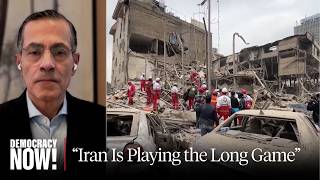
"Iran Is Playing the Long Game": What to Expect from Protracted War in Middle East



Middle East Crossroads: Is Turkey the next target? | Exclusive with Prof. Vali Nasr