Rethink Electric Solar Installer
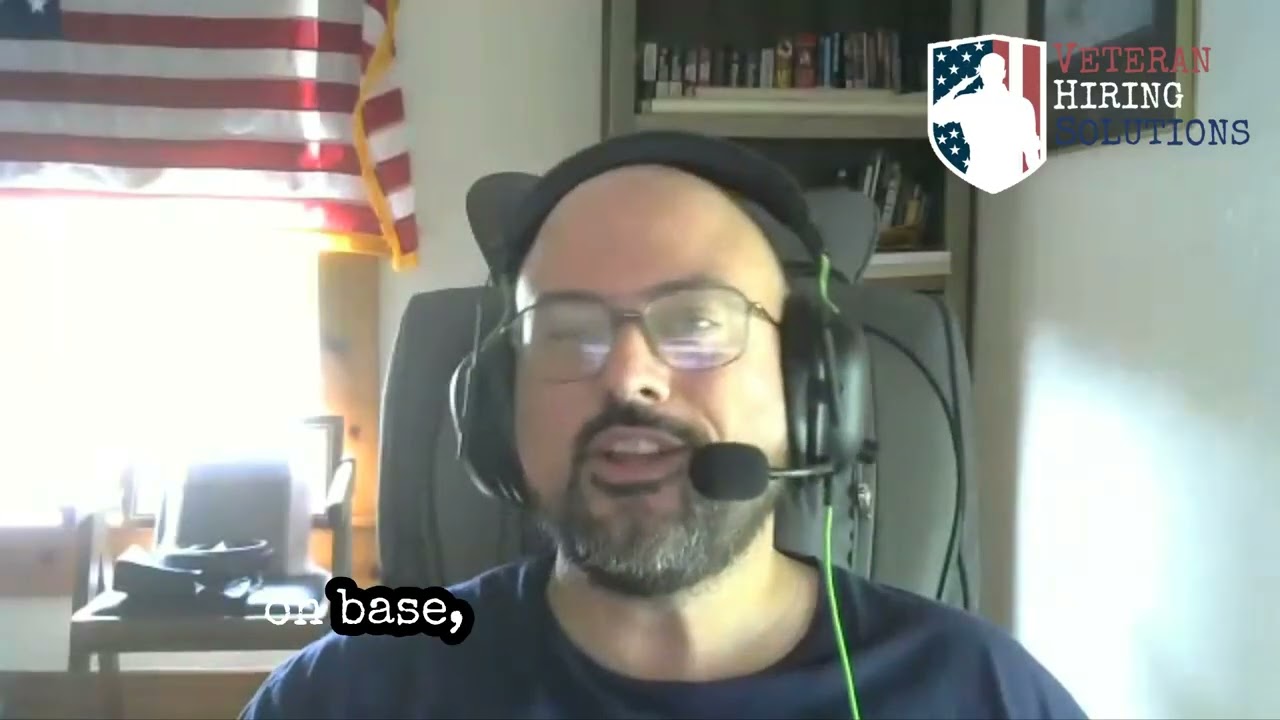
Kyle, a Navy veteran and supervisor at Rethink Electric, discusses solar and wind technician roles across Illinois and Wisconsin, including work at the Harley-Davidson plant in Milwaukee. The company pays for drive time, expects 7 am-5 pm shifts, and hires both veterans learning on the job and experienced technicians who mentor others.
Chapters
All right, Kyle, thank you so much for putting yourself out there for our veteran job seekers. Like we say at Veteran Hiring Solutions, people don't follow companies, they follow leaders. So first, before we get into this solar technician role with Rethink Electric, let's hear a little bit about you, your military background, and what got you to this moment at Rethink.
Yeah, yeah. So background, right? Grew up Midwest, rough spell, not a lot of opportunity, and I wanted opportunity, so I joined the Navy like so many of us do. We joined the military. And, uh, just kind of wandered into the, the nuke electrician field, which I'm lucky for. I wasn't looking for that. And I, uh, I did 9 years. So I, you know, I, I did what most any people are familiar with. I did the sea tour, and then I was like, well, you know, I want the shore tour, I want the good deal, at least for a little bit. So I, I re-enlisted, right? And, uh, and as the time was getting out, man, it was stressful. It was so stressful getting out. One, I was in Hawaii. How do I interview for jobs? You know, what am I gonna do for work? And there weren't a lot of options, it felt like. Um, it was just—
it was a weird—
it's a weird job market. I think, I think, you know, everybody knows that right now. And, uh, coming back to Chicago, they were all manufacturing jobs, right? It was working for— I, I say this a lot— it was work for a mayonnaise factory, right? Who wants to work for a mayonnaise factory, right? That's— I don't know, like mayonnaise. But, um, you know, that or a steel mill. And, uh, even a steel mill, it's filthy. Just filthy, and it should be. It's a steel mill. I don't want to do that for the rest of my life. And, uh, and I got lucky. I just— I, by luck, just pounding out resumes on Indeed, got into wind, did wind for a while, carried over into solar because a lot of wind carried into solar, and also done some battery work. And, uh, and I was with the first company about 6 years, and I loved it for a long time. And new people came in at the top and it changed. And man, what a lesson. What a lesson. It went from just being an awesome, awesome place to work. I just— I felt detached, like I didn't matter. So I put on my, you know, job hunting hat and went looking. And I, you know, I found another job, similar role, just put in an original manager. And it didn't work out so great there. It just wasn't wasn't a fan of where the company was going and, uh, and kind of just again locked in to where I'm at now, which is Rethink Electric. And we are a Chicago-based solar O&M provider for commercial industrial light utility sites. So it's a mix of warehouses, churches, high schools, um, whatever else you might think of, to, um, some utility sites. So not utility industrial sites, We do— it's really cool— we do the Harley-Davidson plant in Milwaukee, um, we do Madison Technical College in Madison, we do PPG in Milwaukee, and we have a bunch of utility sites as well. They're just— they're ground mount sites, you know, when you're driving around the state, you're like, you see a big field of solar panels, maybe it's one of mine. And, uh, and Rethink is really in a cool spot right now. I think it's a cool spot, right? So you might not think otherwise, but it's a rebuilding phase, right? You know, look at your Look at your sports teams. Um, anybody's watching, if you've seen Moneyball, that's actually my inspiration right now. We were— Rethink was loaded down with people who just weren't performing, right? Oh, you know, they, they checked in the box, they were NABSEP certified, and they have their OSHA 30, and oh, they look great on paper, they didn't do anything. So what I'm rebuilding as, I want hard workers day in day out. I'm not looking for the guy swinging for the grandstands. I'm looking for the guy who gets on base reliably, because when you put people on base, you bring runs home. You always do. So that's, that's what I want the people looking for this to understand. Like, I'm not asking you to work 18-hour days. I don't work 18 hours. Who wants to work 18-hour days, right?
Yeah, I guess getting into that. Yeah, I think first the, the footprint of the company would be something interesting to talk about.
Yeah, yeah.
And then we can get into the role a little bit and then what they would cover.
Yeah, um, yeah, the— and, and one of the challenges right up front is, is the geographic spread of the company, right? Raythink does solar in all of Illinois and Wisconsin, and people don't think Illinois is a big state. When you're driving from the north to the south, it's a big state. So there's windshield time, right? So if your idea of a good time isn't spending some time on the road every day, listening to tunes or Joe Rogan, whoever you want, uh, you know, I'll be honest, it's probably not the job for you, right? There is, there's going to be windshield time. Overnight travel, I try to keep it to a minimum. I hate spending time away from home too. It just, it has to happen sometimes. My goal is to always communicate it a couple weeks out and, and to minimize it as much as I can..
And if, well, and even when you said the, you know, Illinois being a long state, you showed me the map before. So much of the concentration is in that Chicago, like, and a little bit north area. And then you have some down there. So they wouldn't be traveling all the way down all the time.
It'd be no, no.
Yeah.
Yeah.
Yeah. Yeah.
There are, there are totally days where you drive maybe an hour. You know, you drive an hour, you're at the job site, you're at the job site all day, drive home another hour. My goal is to have a consistent work day, right? Out the door between 7 and 7:30, on the road. So you got to be a self-starter, you got to get yourself out the door.
Yeah, that's a good point, right? You have a company vehicle at home, you're launching from home.
Okay, and I don't know if everybody coming does this way or not, but as soon as you get in the truck, you're getting paid. Right? The drive time is not free. You are— you're getting paid your standard. We're not docking you saying, oh, you get $10 an hour because you're driving. No, you get the regular wage for the drive. And, and my goal is to have you out the door by 7 and home by 5 every day. And there are days where, you know, in the summer especially, to enjoy summer, I try to get my guys home by 4. You know, it doesn't— we're doing electricity, we're keeping the grid going, so you're not always have that flexibility. But we can You know, try to get home as early as you can.
And then as far as the type of technician, we talked about before, hey, you walk the walks, you know, somebody coming out of the military with the right mindset and experience could jump into this role and do well. But you also mentioned, hey, if I have somebody that has industry experience that maybe is just looking for a home.
Yeah.
Right. What would their life, what would that life look like?
Yeah. I mean, I'll be honest, if you're, if you're a rock star, if you've been doing solar for several years and not to downplay the rooftop installers, but not the rooftop installer. I'm looking for the guys and the girls who know how to show up to a site where something's broken, figure out what's broken, figure out how to get it back efficiently, and move on to the next job. And so really, if, if you were just that kind of a rock star, you would— I'm not going to make you— I'm not going to say you'll be a supervisor, I'm being in charge of anybody, but you're very quickly going to be that senior troubleshooting resource. You're not going to be going to sites to do onesie-twosie stuff, right? You're my heavy hitter. When I have a— when I have a, uh, just a wicked problem, you're the person I'm going to send there. When a technician is stuck in another site and they're like, uh, I've never worked with this inverter before, what do I do? You're gonna be the guy or girl who gets on the— who maybe gets on the phone with them, and if the phone doesn't work, you're gonna drive to them. And you're gonna, you're gonna not just do the work for them, because we know that's not the style, right? You're gonna, you're gonna show them, right? You're gonna mold them in your image and say, hey, this is how you become a rock star.
Well, I think about too the, the old joke. I always say, what happens when there's a bunch of E-4s around? You need E-5 to supervise them, right? So if you come in and you're the senior person, you got that experience, as the crew rises, right, so does your career.
Absolutely.
Um, what, you know, for, for somebody that's interested in this role that wants to live in the area and it's good with the drive time, any like hurdles they need to be aware of, of starting, or what the onboarding process is like so they can have awareness of what it would be like to start there?
Yeah, the biggest hurdle for most people who are outside of the industry right now is there's not a lot of formal training in the industry. It's very OJT. I do as much as I can. I have a lot of experience. I train as much as I can. I'm not a full-time trainer, right? And so it requires somebody who's willing to teach themselves a little bit and to take lessons learned. I'm not— I'm not— if you get stuck at a job and you're like, hey, I just— I can't figure this out, call me, right? I'm not gonna get mad at you, right? It's sometimes something stupid happens or you're tired. It's the end of the day, you brain fart, you ask for help. And that's, you know, anybody who asks for help, help will be given here.
That's good. Well, yeah. And like you said, with the, uh, the opportunity here as you're building that team up, there's going to be a lot of opportunity to get that OJT to grow as you grow the team behind them. I think I have any, so it's a Monday through Friday. We covered that. Is there an on-call schedule though? Because this stuff could fail on the weekends. I think that's important to know.
Yeah, yeah. As we grow, we're looking to develop an on-call schedule to be pretty basic. It's going to be— ideally I have 5 technicians and, uh, and they just, they rotate through the weekends, right? So when you get in one weekend, you're not the next guy until for like 5 more weekends. And maybe you don't even get called out because some sites we can restore remotely. So maybe you can restore it remotely, just hop on your laptop real quick, make sure everything looks good, try to remotely bring it back. Maybe that works. Cool. You're done. The goal there is to give you a minimum, right? Because it interrupts your day, right? I get it. It sucks. You don't want your day interrupted. You're like, oh man, I gotta shift into work mode real quick. The idea will be, and I don't, I don't have a concrete thing here yet, you do that remote thing. It took you 5 minutes, you still get paid for an hour. Yeah, because I don't, I don't want to nickel and dime guys, right? I know there's a, especially when you, once you've done your work, there's going to be 15, 30 minutes where you kind of like come back down off of work and get back into enjoying your weekend.
That's a really good point. You know, a lot of people don't talk about that. Yeah, well, good. No, I think we have everything that, that we need so that those veterans have a true understanding of not just the role, but of you that would be supervisor. What we're gonna do is we're gonna get this out to the community. As soon as we find those right people, we'll send them over to you.
Awesome. Thank you, Justin Henderson Henderson Henderson. I appreciate it.