Talking With Heroes Podcast with Mike Nolan
Mike Nolan, a Massachusetts Air National Guard veteran, built a veteran employee resource group at Salesforce from 1,200 to over 5,400 members, then founded Military Talent Connectors to place veterans in tech roles. He's releasing Mission Methodology, a framework using five core words and five questions to help veterans prepare for interviews and navigate corporate culture.
Chapters
Some notification. There we go.
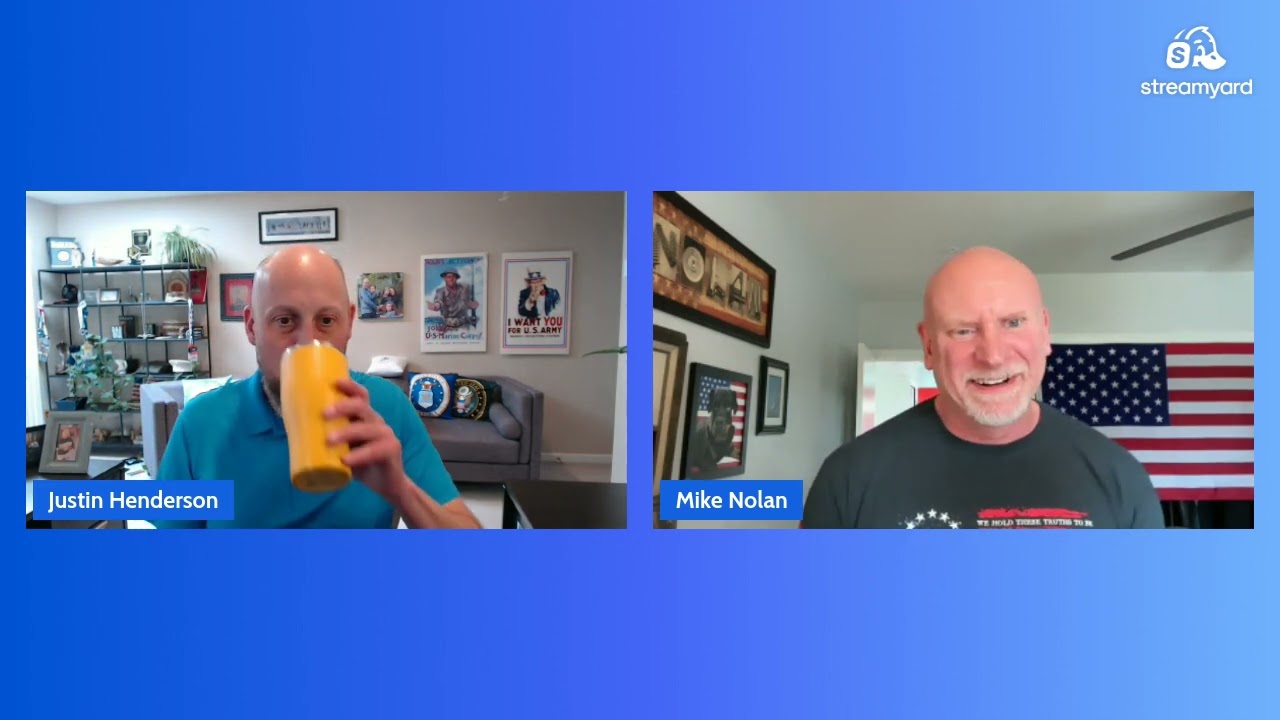
All right, Mike, thank you so much for coming on the Talking with Heroes podcast sponsored by Veteran Vets to Industry. Justin Henderson, the host, Marine, myself. I'm excited to talk to you, an Air National Guard guy, but that's okay. You're living the purpose we all live, right? You raise your right hand.
Yeah.
Country. And now you're serving the veterans on the other side. So, you know, before we really get into the conversation, and on the back end, I do want to talk about the book that's coming out in a couple weeks. It's, uh, Mission Methodology, and that from military service to corporate, corporate leadership, uh, field manual, right?
Yeah, yeah, field manual. Yep.
Yeah. So Mike, if you could, could you introduce yourself to the audience? You know, uh, your military background, your family's military background, and then kind of walk you through what you've been doing since you got out?
Yeah, absolutely. Well, thank you, Justin Henderson Henderson Henderson. Thanks, Vets to Industry. Hello, everyone. My name is Mike Nolan. I am a Massachusetts Air National Guard veteran. I was part of the 267th Combat Communications Squadron. But I was telling Justin Henderson Henderson Henderson a little bit before I get on this, you know, I was always in the military. My dad retired a full bird colonel from the New Hampshire Air National Guard, which is kind of why I think I joined the Mass Air Guard to get out of his chain of command. But he had a really— he had an amazing career, one that I learned more about after his passing when I was doing his obituary. But he broke ceilings in the Air National Guard. He was the— he's the first dentist in the history of the National Guard to be promoted from a lieutenant colonel, which is where the ceiling capped, to a full bird colonel. But, you know, as a kid and under, you know, he was pretty strict. I'm not going to lie. Like, he ran the house the military way. But, you know, that was really for me, you know, it's like I was born into the military. You know, I didn't, I didn't have the BDUs and didn't go through basic when I was first born. But, you know, the, every, the values, the discipline, everything that he instilled in me growing up, um, it kind of teared into my military service. And we've got, you know, my grandfather, um, he was in the Army, he was in World War II. I had an uncle who was in Korea. Um, so this, there's a good lineage of, of the Nolans that that served the military. So I don't know, for me, it was just kind of like, you know, this is the rite of passage. This is where you're going to go.
Well, you know, you talk about being in service your whole life. I had heard, hey, I'm a Marine son or daughter or whatever. I didn't get it. Yeah, I had kids. And my kids are so different than civilian kids because of that, that discipline, the greater awareness of self within a team. You know, there's so much that is formed just by one of those parents, if not both of them serving. So yeah, that makes a lot of sense.
Yeah, you know, it's funny, my daughter actually makes her— like me, makes her bed every morning because I— that video I said, you know, complete the first task of the day. And I tell you, every damn morning she's out there doing this, and I'm like, it worked, she listened.
You know, simple things. You start every day with a win. Isn't it just great? It's just to start every day with a win. Also, the kids don't get it, but it's a joke my wife and I do. Every time you wake up, you wake up a winner. Yeah, because one of these days that's not going to happen.
Yeah. Yep.
Keep that perspective, and the little things are little.
Yeah, that's a great way of looking at things.
Yeah. So, so did military service, hit corporate America.
Yep.
Um, you got into the recruiting game, and then the job before you started your own company, I think, is the most interesting.
Yeah, I, um, I, I got into recruiting, and, you know, I realized I like, hey, there's a job where actually I can go to work clean and come home clean, because that's not life that I had lived. And, um, you know, I had some great mentors, but I really enjoyed, um, the whole aspect of getting people jobs and like, you know, the simple satisfaction that like, hey, they're making this amount of more money and, you know, it can, it can actually help and affect their lives, their family's lives. Um, so for me, that was always the greater satisfaction. Uh, and it paid well, like I said, and I was clean at the end of the day. Um, did a whole bunch from corporate side to agency side. I owned my own agency for 6 years and 3 months. But it wasn't until I got to Salesforce that with their whole culture of giving back and volunteering that my boss was like, all right, when I converted from a contractor to a full-time employee, he said, hey, you got to get out there, start volunteering. So I would just go down to the VA hospital in Bedford and hang out with the vets, take them on field trips, just play games with them, like anything. And it was a lot of fun, really low lift, low ask. But the impact that it made where that vet just has a new face to come in and we just sit down and just talk and like, whatever you got, I want to hear about it. So that was very fulfilling for me. It threw me into— and I say threw because I almost feel like I fell into an opportunity when they created a global leadership team where I came in as global events chair and then was elected after a 2-year term into be the global co-VP. Um, didn't last too long though, because I, uh, I still remember Mike Callis, uh, was the global president, and it was like 2, 3 months into being VP, and he sends me a message, we gotta talk. And the first thing I'm thinking is like, what'd I do wrong? I screwed something up already, like, man. And he gets on the phone and he said, uh, or in a video call I should say, and he's like, you know, I got 4 words for you. So what's that? He's like, step up or step aside. And I thought like, oh man, I really did it now. And I said, what do you mean? Like, I haven't even done anything yet, you know, how can I be in trouble? And he's like, no, he's like I got orders. He's like, I'm going to Afghanistan. He's like, I need you to step up or step aside. And I said, there's only one answer. I'm stepping up. And from 4 years, I mean, we took the employee resource group from 1,200 people across 13 hubs globally to just over 5,400 employees across 25 hubs. And that's where the global military community, the people that I was introduced to, and everybody, if they had a friend or anybody that they wanted to get into the company, it's like, Oh, Mike's a recruiter. I haven't talked to Mike. And I never declined any of those calls. Like, they were some of the best calls that I've been on. Not one call have I ever hung up with anybody from the military community and thought like, man, that person was a jerk, or like, they were like rude. Everybody is just like so appreciative of just the coaching and everything that I was providing to them. And what I was doing is really providing, you know, a framework to understand what the road looks like for them to earn civilian career opportunities. And then the resources they need to complete their missions. So like the simple fact that I could just give them this and they could say, hey, roger that, I'm out, as opposed to like, all right, I did this one step, what's the next one? Um, so it was resonating with people. But like, this is where I just became friends with so many people because like I'd be doing a dozen, you know, 15, 20 of these calls a week. But I don't regret any one of those calls because they were great.
You know, there's two things. One, like minds connect.
Yep. Yeah.
So when somebody refers somebody over, they're like-minded, you always get on the phone.
Yeah.
And, you know, recruiting is a contact sport, you know, getting to meet people, especially when you're invested in one community like us, the veterans. It's really nice to build that rapport, build that Rolodex, build that trust across the different branches of service. So that's awesome. What was it like, you know, with such a behemoth like that? Salesforce is such a big organization. Did you find it hard for veterans to get in there because it's such a big company, or was your team specifically situated to help them?
So it is— it can be very difficult. I mean, there's, there's so many entry points. But what we were doing is we saw that, you know, as a small team, those 3 of us, we couldn't really support dozens and hundreds of roles. So what we did is we implemented fellowship programs and we aligned them with really good entry points, be through the sales organization, whether it's BDR, commercial sales. We also did it across— in Salesforce they call CSG, Customer Success Group, but success managers, program managers, project managers. So we found these entry points where military experience translated well. And then the best part about this was bringing some of these amazing men and women to some of these leaders and first-line leaders within Salesforce. I still remember we had a guy, General was leaving the Navy. He was a Navy SEAL, became a Top Gun flight instructor. And when we sent his resume over and he was 32 years old to a first-line RVP who was the same age, he's like, what is this? He's like, I'm intimidated by this guy. And I said, I was like, well, but, you know, look at it from a different perspective. This is a guy who's leaving the military. There aren't jobs all over the place for flight instructors. He wants to get into sales. He's looking to you to make him that next Navy SEAL, to make him that next Top Gun flight instructor here within Salesforce. Like, think of what he can bring to your team to level up, level your team, and things that he can bring from experience perspective to you. So there's going to be a learning both ways. And once he had a conversation with this guy, He's like, I love this guy. This guy's great. And then the gentleman is, you know, he's off in his career and he's doing really well at Salesforce right now.
Yeah. Well, that's, you know, anything that's a performance sport like sales, veterans do so well in.
Yeah, we know.
And, you know, I've been doing this for 20 years. If somebody, managers like, I want somebody 3 to 5 years sales experience, I'm like, that's where the laggards play.
Yeah.
You know, and all they want is, hey, sales is hard. I want to make sure it's not too hard for them. And you're like, well, hold on, here's what they accomplished in the military. That's not— those conversations aren't difficult to them. Yeah, I, I, uh, I got a 20-year SEAL a job right out of the teams too, about 4 months ago, right into sales. Same thing. Oh yeah, you can see it. But as soon as they saw the, the person had that video to video, they're like, oh, I'm like, yep, there you go.
Yeah, we just— they didn't get, uh, they didn't get, uh, big commission checks and Corvettes. They got a pat on the back. Roger that. And here's the next assignment. Go do it.
So, yeah, exactly. You know, and it was interesting because they just look at sales as like any other project. They come in and find heat maps and, okay, here's my targets, and yep, fire them, and then get after it. It's a totally different view. Uh, and then, so you, you were at Salesforce for 11 years.
Yes.
And then, uh, you did something crazy and started your own company.
Yeah, unfortunately I was caught up in a reduction in force. Um, And it took me out of my comfort zone. It was like literally ripping my baby out of my hands. But it also— I mean, I had to stop and reflect and figure out what am I going to do? And unfortunately, I just wasn't in a position to relocate just because of my daughter's still in school here in the high school. Couldn't find anything that could pay the bills for running another program. And honestly, I was like, oh, maybe I'll go sell something. And then I was like, do I— can I really get excited about a marketing tool with AI? And it's like, no, you'd see it right on my face. You'd be like, Mike, you don't even believe in this. I could see it. And then it clicked. And I was like, you know, let's do sales. But the best product on the planet for me to sell is those of us who put the uniform on and military spouses. Anybody who's ever known me, like, they just, you know, they like do the passion, everything. Like, and so then once that clicked, like, this is, this is my best product. Then the next thing was like, how do we, how do we monetize this where I can bring a solution to organizations? Because essentially what was happening at Salesforce, the doors being closed and there wasn't a company making billions of dollars and why are they cutting back the military recruiting team? And if it's not that much of a priority for them, we'll shift the pendulum to the other end and you get small to medium-sized companies who are watching every dollar that's basically going to be closing doors and sealing them up. For entry points into organizations. So the thought was, let's reimagine the cost involved, make it more reasonable, and wrap it around a contingency fee, which everybody understands from a recruiting perspective. And now it's like, all right, if I can get that same service and we can create these opportunities, the entryways into organizations, like nothing's going to make me happier. And I've even started telling— we have one customer doing a project with them right now where we're creating a SkillBridge program for them. I told the, the director, I said, have your people shadow me and my team. I would love to train you and how you can do this. And if I set this up, I give you a running program and you continue it to keep going. Um, you know, if you want us to stay and keep doing it, great, but like, we're very open to training your team so that we can go do this for another company and create more opportunities for entryways into high-tech companies.
I love that, you know. Well, and it's not because people don't want to hire veterans. They just don't know.
I don't know how.
And yeah, in the process, people don't realize the job description was solidified in 1939 when our Dictionary of Occupational Titles came out, and it was 18% unemployment. You know, that's a talent surplus recruiting model, and we're in a talent deficit economic status right now. And so that's why it hurts so bad, and you need people like you out there bringing the human experience to it and saying, hey, no, Let's start looking at these people as humans, not just data points to exploit.
Oh, it's challenging in a good way to get out of their comfort zone. You know, if there's really, you know, if there's a desire there and you've got some veterans that, you know, people can look at, civilians to look at and say, oh my gosh, like this guy Justin, he's great in the organization. It's like, all right, well, what makes Justin great? And then you start digging in. It's like, you know, if you could just change things a little bit to get more people like Justin into the organization, 'Are you interested in doing it?' And, and so we've, we've got some very positive reception, um, and I just see we, uh, we want to keep taking this in the right direction and create more of these entry points.
Well, that's good because the person's the person no matter what. Yeah, you know, and right now everybody's trying to find the perfect resume and hoping there's a good person attached.
The perfect resume.
Yeah. And then you— well, then AI makes everybody the perfect resume.
Yeah. That's what I mean.
Flattens the resume now.
Yeah.
So now everybody's confused. Hey, I see 10 good resumes. I have no idea who's behind it.
Yeah.
So having connectors like you is really important.
It's the fun part too, quite honestly, like, yeah, that's the part. I mean, like you said, like, it's the blind passion. We do this because it's, you know, we can kind of get that spark, get something to go off in that person's head. And they realize like, oh my gosh, this is great. And it's like, all right, mission objective, we've got this done.
Yeah. And even like, you know, the veteran that doesn't know what they want to do, you know, and you're like, you have those conversations, you guide them, and then the light bulb, right? They go see the place, they talk to the human that's going to be their leader. Oh, this is what I've always wanted.
I never knew I wanted, you know, especially like even opening the eyes of people where, you know, that they're, you know, like you said, like that operator who's like, you know, the last thing they probably thought they would do is sales, or they get this horrible impression that they're walking around a neighborhood with a vacuum selling, you know, vacuum cleaners to housewives and whatnot, or are they in some boilerplate, you know, room where there's just packed with people and just on the phones like these horror shows? And it's like, no, like most of the companies today, you sell in a team environment, so you've got your people with you. And then it's like, oh, and then once they break it down, it's like, you know, you could be different branches of the military and, you know, trying to deal with a foreign company, a country, or dignitary, or village elder. And it's like, that's the customer. When you start to break it down, like All right, Air Force providing the air support, or they could be a division of the company or a partner. So once you translate that and then it kind of goes off and that light clicks, then like, oh yeah, no, I could definitely do that.
Well, and that's it. You know how many infantry guys I've talked to? It was like, no, no, you've been in sales pretty much. They're like, oh yeah, you're right. Once you go through it, or when you talk to an officer or a senior NCO about a union leadership position. And they're like, I don't know about unions. I'm like, you're in the biggest union in the country, the biggest one. They go see all the paperwork that comes along with the union leadership, like, oh man, does this look familiar? Yep. Yeah, that's funny. And then, so then you, you wrote this field manual, Mission Methodology. Can you tell me about that?
Yeah, I, um, for a while, and it was like, I took it as just a joke, like with the, the talk track, and I was a broken record. I was saying the same thing. Once I kind of, you know, got a talk track that worked. I was just repeating it over and over and over again. And people were coming back. And the mission methodology, like, I'm a KISS guy, keep it simple, stupid. So it's based off of 5 words and 5 questions. But the 5 words are trust your brothers and sisters. And then there's 5 questions, 3 discovery, 2 are tactical. But it was creating the pathway where veterans and spouses were looking at this and saying, all right, now I know what to do. I know, like, you know, especially like, you know, from preparing for learning about a job and specific within a company, it doesn't matter what company or what job it is. But, you know, every company has their own acronyms, their lingo, the way they talk. And, you know, getting, you know, preparing for the mission, which is preparing for the interview. The mission is actually the interview process. And, you know, little things like assembling your team, like you got to have different key people on your team, like the people who are doing the job. Um, even down to like the cheerleader on your team, which you kind of think is kind of crazy, but like this could be your spouse or a sibling or somebody that like when you're just in the dumps and you're like, you think nothing's gonna work for you, that person could just snap and pull you right out of it and get you reset. So it's really providing like a structured framework to just what you, what you're going to follow. This work, there's actually even exercises in there. Like it's literally a working field manual So I've been working on it for a year now. And it was something I started even before I knew my fate, and that I was, you know, going to be eventually laid off from Salesforce. But it was something I just kept going through with. And we're about 4 to 6 weeks, it's going to be published. It's— we're doing the book design, the COVID design, everything right now. So it's kind of some fun times. But it kind of also aligned with, with launching Military Talent Connectors, which I decided, like, if I'm gonna do this, you know, I'm not gonna do it, like, on a budget. And so we, we self-funded the whole thing, but we've got all the right technology, the infrastructure in place. We've got a team in place right now. So, um, but it's something that I just, like, I knew if I do this, I'm not gonna lose. Like, there's no way that I'm gonna lose because I'm betting on myself. So a few, uh, a few different balls up in the air in a good way, but, like, I'm excited to bring this mission methodology out and get it to get it in the hands of other service members who are transitioning, leaving. And we know there's 200,000+ that are going to be leaving active duty every year just from historical numbers. So, you know, I'm hoping that we can— that this can make a difference and provide some clarity to those because we know the government really doesn't do a great job. They say, here's a million options, you figure it out now that you're going into this civilian career. So, you know, hoping that can provide some clarity for those men and women.
Yeah, they just, you know, taps, right? Hey, go network.
Exactly. Go talk to other veterans. All right, about what?
Yeah, exactly. So no, I think that's so important having people like you out there that are willing to give your time, your expertise, to give them guidance. Do you have any advice for any of the audience as far as like best practices or pitfalls that you've seen that either they need to lean into or avoid?
Well, I mean, one of the biggest ones that I see over and over again is, is the hesitation to reach out to people that they don't know. And when you're still active, you still get the uniform on, it just seems very foreign. But when you jump over to our side of the fence and you got that veteran title now, it's second nature. But you know, the— what I try and just even encourage people is like, all you're gonna do is you're gonna have a conversation with somebody who wore the uniform. Like whatever branch it is, you'll still make fun of each other. But it's like, these are the easiest conversations. And like, anybody who's made— who successfully transitioned will stop their day and say, hey, you know, Justin Henderson Henderson Henderson, how can I help you out? If I can provide an hour of my time, half hour of my time, and it can make your transition much easier than maybe mine was, anybody on the planet is going to do it. So, so that's the biggest thing is just don't, don't be fearful. You know, if there's somebody who's aligned with the job that you want to do, just send them a quick note, like on LinkedIn, send them an invitation to connect and like, hey, I think I want to do what you do. Like, can I get 15 minutes of your time? I'd love to talk with you. So that's one of the biggest things.
Yeah, I'm seeing a lot now, virtual coffees. I think it's coming out of DC's tap. I get a lot of people reaching out, hey, I'm trying to get my 100 virtual coffee conversations, coffee.
Yep.
I'm like, oh, that's a great idea. And so their goal is to have, you know, 100 different conversations in their last year. Of time in uniform so that they understand what they're going to do.
Yeah.
And you're right, every— as you get out, the further away from uniform you are, the more you enjoy interacting with those in. Yeah, you miss 100%, you know, and you love seeing that, hey, those— hey, you know, I'm out here with corp, you know, civilian land. You like to go back and talk to that 24-year-old, go, okay, all right, the military still got it.
That's cool, right?
'Got that,' you know, and it feels good. And yeah, that's my advice too. If you're watching this and you're at all intimidated to reach out to a veteran, you shouldn't be. You know, I only have LinkedIn, but, you know, I find LinkedIn to be such a great opportunity. You know, my team calls it work Facebook. Yeah, but it is, you know, it's, it's such a great platform to connect with like-minded people, people in different industries you're not aware of. Hey, I'm thinking about getting into sales, talking to some people in Sales, uh, talking to recruiters, talent acquisition people. Hey, how do I develop my career into corporate America? There's so many resources out there, people willing to talk to you.
Well, and what I tell people all the time, like, the best thing about this is you want to tap into that unfiltered, just, you know, making fun of each other from branch to branch. Like, you want that no filter, like, you know, the crayon jokes and, you know, the Hilton with the Air Force jokes. Like, But what you're really tapping into is that no-filter veteran-to-veteran serviceman, servicewoman, you know, conversation where it's like, I'm not going to give you some corporate candy, sugar-coated answer, Justin. I'm going to tell you exactly what it is, the good, the bad, the ugly, and all points in between. And that's really what you want. That's, that's, that's the best thing that you could ask for because that's where you're going to figure out, like, is this what I, what I really want to do? And something that may frustrate the heck out of you, I might be like, hey, I don't mind doing this. This is easy. I like— I actually enjoy that type of work.
So, you know, we crave accountability. And a veteran can be a good accountability partner that not everybody is built for. We're going to shoot you straight because we care. And we know how much it helps. You know, hey, initially, it may hurt for a minute. But we know in the long term, it helps. And we've all learned that through time in uniform. Well, no, this has been great. I, I've enjoyed the conversation. You know, I think the audience has a better idea of, you know, Military Talent Connectors, your background, you know, in a couple, a month or two, right? Mission methodology will push that out. Let the audience know.
Yeah.
Anything else you wanted to push off before we, before we sign off and move on to the next mission?
You know, anybody who's listening, if you'd be interested in having a conversation, please reach out via LinkedIn. You can go to militarytalentconnectors.com. You can fill out a form. Anybody who reaches out, I would be happy to carve out some time, have a conversation with you if I can help in any way, even if it's just to provide some directions, some tips and some suggestions and guidance. I'm happy to do it. So I haven't, haven't said no to anybody yet, and we're going to keep on that trend.
Well, you know, it's—
there's—
yeah, all said and done, right, there are passionate veterans out there willing to give their time and their expertise. You just have to be brave enough to raise your hand and ask for that.
So be brave.
Yeah, be brave. One more time. Well, thanks, Mike. I appreciate it so much. Uh, look forward to seeing you on Third Thursday Downtown. Yeah, that'll be fun. And, uh, again, thanks for putting yourself out there for our audience.
Hey, I appreciate this opportunity, Justin Henderson Henderson Henderson. Thank you very much.