Talking With Heroes with Denise Ray
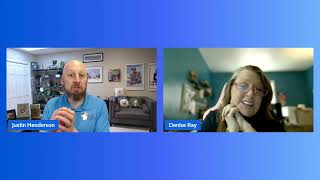
Denise Rhea, a trauma survivor and author, founded Reboot Recovery, a free 12-week faith-based program for veterans processing trauma. She survived a childhood diagnosis that she'd die before 25, a near-kidnapping, and home invasion. Her program combines workbooks, group classes, and optional coaching, all grounded in Christian faith.
Chapters
All right, Denise. I am so excited to share a few moments with you today on the Talking with Heroes podcast. I'm the host, Justin Henderson, Marine veteran. Spent the last 20 years living my passion of helping veterans find their next career challenge. And I'm excited to talk to somebody else that's living their passion. Uh, you've been helping veterans for what, 2 decades now? And I really want to hear about, you know, your personal trauma and what led you down this path to helping veterans and what you're currently doing right now. So if you could introduce yourself to the audience.
Absolutely. First of all, I have to say thank you for your service, Justin Henderson Henderson Henderson. I think it's imperative that we all say that to anybody that we meet that served our great country. I think that's not said enough. Thank you. Thank you. My name is Denise Rhea. I am an author now. I started out I started out service because I have to kind of go back before I started service for people to understand why I do what I do. I've never served in the service. And people go, well, wait a minute, that doesn't make sense to me. I've had a lifetime of struggles and trauma in my life, and that's kind of what has started me on this road. When you have trauma in your life, you have a decision to make with that trauma. You can either dwell in that trauma and take it down a sad road, or you can turn that pain into a purposeful mission, which is what God led me to do. And when you do that, there are so many directions you can take that purpose. Originally, I took that purpose into speaking. I have terminal illnesses. Um, when I was 11, I was in a coma. When I woke up from that coma, I had short-term memory loss, which is why you always see me with a pen and paper. I have to jot everything down or it's forgotten forever. Um, I'll have that all my life, obviously. Um, I started getting disease after disease after disease. Well, it turned out I have a mutated gene in my DNA, so I get autoimmune diseases. So I have narcolepsy, anemia, um, I have a muscle disease very close to multiple sclerosis. I'm a type 1 diabetic that's very, very brittle. I have a lot of terminal diseases too. They told me I would be dead before I was 25. Um, when God gives you these things, you have a choice, um, because they told me I would be dead before 25, I made the choice, okay, I've got to know God, I've got to know him quick. Um, but I also made a decision, I want to show love wherever I can show it, and I want to show it now. Um, being that young, God really blessed me, um, to get a quick understanding of what love was, um, and I have to say, I was very adult for my age. And I think that was out of necessity.
Yeah, that's— I mean, trauma, these type of having a— seeing your expiration date, or potential expiration date puts a lot of weight and understanding.
Well, unfortunately I had a doctor tell me when I was 12, I wouldn't live to be 25. And he told me that when my parents were not in the room. It turned out to be a good thing that he did that. I do not, absolutely do not, do not, do not recommend that doctors do that. That was an idiotic move on his part.
Yeah.
And my parents— I never told my parents because I assumed they knew. But from that point on, I did live with an expiration date and thought, okay, what do I want to do? I'm going to die when I turn 25. And when I turned 25, I panicked because I went, here it is. What do I do? Why am I not dead? I went through about 2 years of going, you know, I'm still here. What do I do with life? And it was very, very difficult for me. People tell you what to do when you're going to die, but they don't tell you what to do when you're going to live.
Isn't that the truth? That— I mean, I wish that sentence could be put on everybody's house, put it on your door going out, going in, you know, it's the— so now you, you realize, hey, I'm 27, I'm still alive. I'm moving forward. Is that when you were introduced to Soldiers to Angels? When did that happen?
Yes. That is when I got interested with Soldiers to Angels. My stepfather was a Navy SEAL. He was in Vietnam. He was treated very poorly. When he came home, he was spit on. A VFW, which I don't want to down VFWs. This was the time. You have to consider the time. I think it's important that everybody considers the time that when things happen.
Yes.
During that time in America, it was commonplace to call service members bad names, and he was called a very bad name when he went into that VFW. I'm not going to get into it, and I'm not going to Well, you know, I—
so I've had my uncle flew Hueys over the Killing Fields of Vietnam. My grandfather was a tanker in the Korean War. My uncle was an aircraft mechanic in Vietnam. So I understand.
I'm sure you know.
Yeah, I understand the price of service. And I also understand, you know, when we move from Soldiers Angels to what you're doing now, I understand, you know, you say, hey, I didn't serve. But shared trauma bonds and people that have walked through darkness can't communicate that to people that have not seen the darkness.
That's right. And when I was 12, I was almost kidnapped by a man who went through the Vietnam War because he thought that I was very pretty. And he thought I was pretty because I remind him of a Vietnamese woman because I was a very tiny girl. And he thought I was a Vietnamese woman. And he tried to kidnap me.
The— well, and then, so those, those replays and that PTSD, you know, you talked about that when you have these traumas, you can sit in it. And you can have it be the excuse for the reason you don't move. Or it can be your step stool, that foundation of strength again, because you went through something very difficult that nobody else, that regular people haven't experienced. And you can use that as your superpower. You can use that to help others.
It absolutely is a catalyst to make you want to assist other people. To, you can go through their pain with them because you've seen pain yourself. and, and God will help you to step through that journey with them. Um, for me, I wanted to assist soldiers because my family is a Navy family, um, and then my stepfather was a Navy SEAL. Um, the gentleman who tried to kidnap me was obviously very disturbed, um, from war, and I understood even though I was never in the service. I had service members all around me and I saw what service did to people. So I had a real, real empathy for those people, for those service members, what they suffered. And, and I was very empathetic all my life. I watched people die in beds next to me when I was in the hospital. I spent a lot of time in the hospital with all the different diseases I had, so I knew what death was at a very young age. Um, I watched my friends die in beds next to me. Um, so I wanted to help. Soldiers Angels is a great organization. They, um, they send care packages, they send letters, they are pen pals. They send, um, you know, they get people at home set up with, uh, computers. Um, when I was writing those letters, you start to realize that, um, There's more going on than people at home realize. Um, mentally, it's a lot on a soldier to be away from home, but it's not just they miss home, which is sometimes what we here at home think if we don't know a soldier at home. We at home can— we can easily say, oh, they miss home, you know, they want to be home for Christmas, they're missing the holidays. It's a lot more to that. You know, they're, they're, they're seeing death. They're, they're having to commit what can be considered murder in their eyes because it's something new to them. They have to, they have to departmentalize that in their minds. We at home don't think about that because we don't have to think about that.
Well, there's a big difference too, between, you know, coming home from World War II or Vietnam, where it takes days or weeks to transition out of the combat zone back home. Where here you could be within 24 hours.
Yes. And what does that do to your brain?
And what does that do?
Absolutely. Yeah, there's no transition time. There's no training. There's no You know, they hand you a pamphlet. Here's what life at home is going to be like. Read that and step off the plane and go home to your family. You know, so there's, there's something missing there, which, you know, they're working on, but there's not enough time. There's not enough space. There's not enough money. There's not enough. There's not enough. And that's kind of where I like to say that we step in. That's where I got into Reboot. Reboot Recovery is an organization. It's not a support group, though we do support people. Reboot Recovery is an organization. It's a 12-week faith-based program where we come in. It's an actual course where there's a beginning, a middle, and an end where you learn to go through your traumas, kind of find the beginning, find the middle, find the end. How do you treat those triggers that are causing you to have those flashbacks, have those traumas, identify what's causing that. How do you treat it? How do you live life with those triggers? How do you— I had PTSD. I had a home invasion where I was held at gunpoint by 3 men. I've had a lot of traumas that, you know, besides my medical traumas, I've had a lot of— I saw a man that was killed right in front of me. He got his head shot off. Um, and not to, you know, romanticize my life, I've just happened to have had a lot of traumas. Um, you know, some people just have lives like that, and mine just happens to be one of those lives that happened to have had a lot of traumas. Um, but I chose to make those into something that's good. So I can identify with a lot of things that a lot of people can't.
Exactly. Well, that's it. You know, as somebody that's spoken, you know, I personally have never seen combat in the military. But I've spent 20 years talking to people that have, and I was raised in it. I was raised in PTSD. So I understand how that trauma shows itself in after-service and how it's generationally bound.
Yes.
You know, so it is, you need somebody that has been through the darkness that you can trust that says, hey, they have the mental strength and fortitude to get through it. Mm-hmm.
And that is the number one thing is trust. That's the number one thing I find when I lead a class. When I lead a course is trust is the main issue. Trust is always the number one issue. They do not trust. They do not want to trust. It takes a while to build that trust for them to want to speak. Most of the time, even though I train people that are military and I also will lead people that are civilians, we keep those courses separate because our military personnel wants to only speak with people that are military. I totally get that. One, they have a different vocabulary, uh, their vocab, you know, FUBAR, whatever you want to say, you know, language is different. So, you know, when they get around civilians, they're like, they don't even understand what I'm saying.
Yeah. And also the jokes, you know, the jokes are very crass for a reason.
Yes, they are. They are. They're very crass. You have to be a different mentality when you walk into a room full of soldiers.
And, and again, if you— the reason that it is, is because you're dealing with such difficult situations, and you're in such stressful places that, you know, the, the veneer of civility can be removed, because it can get right down to, hey, we have things to do. And if we don't do those things right, You die, I die, somebody gets hurt.
Absolutely. Absolutely. And it's funny to watch a vet go through kind of the transformation, you know, to watch them get just a tiny bit softer as things go on. It's beautiful to watch, but they don't change who they are. They don't change anything, but they finally get to trust somebody. You know, and that's usually the first thing I have to break down for them is you can trust me even though I'm a civilian. Mm-hmm. You can trust me. And usually the first thing that gains their trust is I know what their crass jokes are and I'll tell 'em, hey buddy, you know, I know what you're talking about. Been there, heard that. I know what that is. That's great. Yeah.
I mean, it is. We don't, You know, the, your hippocampus is just fully active, right? The fight or flight is all the way on. And the, the internal dialogue is on like 5 times speed. And how do you slow everything down?
You know, and I've been through that too. And besides that, you know, when I, when I got the autoimmune diseases, I also got OCD. And so with those mental diseases, so with autoimmune, um, going back to me for just a second, with the autoimmune diseases, that doesn't flag out mental diseases. So I got OCD, I got bipolar. I got bipolar when I was 45 years old.
I had a bipolar roommate, so I know what that's about. Yeah.
That's rough when you're 45 years old and you're told you're bipolar all of a sudden. I was like, what do you mean I'm bipolar? I'm 45 years old. Yeah. And I never had any symptoms of being bipolar, but suddenly I started shopping all the time. I'm like, what am I doing? I have 45 scrubbies in my kitchen.
Yeah.
What am I doing?
That sense of control the mind needs.
But, and I went to my doctor and I'm like, something's going on because I have 45 scrubbies at home and I have no clue why I bought them.
At least you knew to ask. You know, that's so much, is so much for the veteran is just having the courage to ask for help, the courage to reach out.
Exactly. But then you add on PTSD to that, and I— the fight or flight with the OCD, with the bipolar, with the— I get what everybody's going through. So it's real easy for me to gain trust, and it's real easy for me to understand. I can understand what just about everybody on this earth is going through because I have it, or I've had it. Or I'm getting it.
Going back to Reboot Recovery. Let's, let's walk through that because that's, you know, I think where your greatest gift right now is. So what if, you know, who's it for? Is it, is it in-person, remote? How does it work?
Reboot Recovery is incredible. It's in-person or it's virtual. I tend, I tend to teach virtual only because I like the ability to teach anybody in the world. And then we are worldwide. We have people in the Ukraine right now that we're working with. And I love that.
That's great.
I tend to teach virtually, like I said, because I love teaching people around the country and I love, you know, I have friends all over the world. So I love that ability to do that. Soldiers Angels got me, you know, one of my best friends is from Belgium and I just love doing that. I love meeting people. Um, the in-person classes are really neat because they have supper beforehand, they have child care, they have a lot of meet time to get to know each other and stuff. Um, we still do that virtually, but it's more of, you know, get to know each other, and we'll, we'll sit and we'll joke and we'll bring our dinner to, you know, virtual time beforehand, and we'll still eat and, you know, joke around before we have class. Um, but class time is about an hour, we say, but my classes tend to run about an hour and a half because I'm a talker and I get people talking. And, and I think that's a good thing.
Yeah, nothing wrong with that.
Um, I think the more we talk, the better off people are. Um, and we've had, we've had Classes run as long as 2.5 hours. If someone has a breakthrough, I will never ever shut down a class ever. I don't care if it's midnight. If they want to talk, we'll talk. So, but technically class is an hour and 15 minutes.
And then is there a cost to this for the veteran?
Absolutely not. Absolutely not. They get their book free. The class is free. We would never charge a veteran. Cost. There's a book that goes with it. We will mail it out for free. Um, the book is actually— I should have had one here. I don't have one here. Um, it's about an inch thick. Um, the workbook, you work through it, you write in the book itself. Um, before the, uh, class is over, we're going to have you write a short story about um, kind of where you came from and what your biggest trauma is. Hopefully you can do that. You're not forced to do that, but hopefully you want to do that before the class is over. Um, it's not mandatory. Um, at the end, that takes a lot of courage, huh, to write that?
That takes a lot of courage.
It does take a lot of courage, but you know, in all my time of teaching, I think I've only had 2 people that weren't ready.
Oh, that's good.
And they came back to do it. So, and you can take that. That's another thing. You can take the course as many times as you want. And I have a lot of students who will take the course several times because they'll say either one, they'll say, well, I took care of this trauma, but I have another trauma that we really didn't touch on. So I want to do that trauma now. They'll say, well, we covered my kid trauma, but I have another trauma about this instance. Or they'll say, well, we got into it, but now I'm kind of halfway through it. Let's cover it again. And we think that's great. Take it 15 times if you need to, whatever it takes. Yeah.
Peel back the onion. You'll know where the next layer is until you peel it back.
Right, right, right, right.
Yeah.
So they'll go through a couple of times if they need to, and that's fine. Or we will send people back through if they want to be a coach. They can, you know, some people decide they want to be a coach after they go through the course. And that's some of our best coaches, of course, because they've been through it. They know what it's like.
Yeah. Well, you know, the shared trauma. Common bonds, you know, exactly. That's, you know, there's— I built my company on like minds connect subconsciously is what I talk about all the time. And that's it, you know, it's, it's not male, female, right? It's shared experiences. The subconscious is much deeper. And I agree, shared experiences are what really bond us and the ability to build trust in somebody where they can they can open up that shield to show that vulnerability, and then you to pour love into it and to build them up so that they can walk out of that room and feel safe again. I think it's just the most amazing thing, because that's what we need.
I think that's what life is all about. I think, I think that's kind of what I try to base my books on. The books that I've written, I just finished my last book this morning, writing it.
Oh, congratulations!
Yeah, tomorrow I go in to start editing it. But, um, it's book 3, and it's the best one of the— of all 3, it's the best one. I can't wait to get it out there. It's like 3 times as long as the first 2. But yeah, it's, it's like I finished that one, I was like, yeah, this is the book, this is the book! But, um, they kind of COVID my life and cover what God can do for you and what love can do for you if you pay attention and you look at things the right way and you turn it into purpose. That's exactly what it's about.
Yeah. I mean, I was raised where a life of service and a hard life is a blessed life. Absolutely. We were taught sacrifice and give.
Sacrifice—
I mean, being raised by military people, that's what you're going to get. Community first, sacrifice and give. And hopefully, you know, anybody that watches this will have the courage to reach out. I mean, just go on rebootrecovery.com. You can fill out a information about an online or an in-person. I'm on the website now. There's in-person starting all over the place every month, and there's virtuals.
Yes. And if there, if there is not a date, like it only goes so far out and you won't see dates there, it's because they only post so far out. Like, I have a class that's gonna start in August, but, and it's on there, but in between, I think it's May and August, they don't show anything yet because people don't usually post their classes that far out, but I do.
I see.
There are gonna be classes in between there. If you just put your information in there, someone will get back to you and let you know there are gonna be classes there. So don't panic and say, oh, well, they're not gonna have classes in May or June or July. There will be classes every single month. There are classes, both virtual and in-person. There are gonna be classes. Fill out the information. We will help anyone anytime. We will get you help.
And, and if we get anything out of this video, it's that if you're a veteran in struggle, you're not alone. There are people out there that want to help. This is one of those organizations that you can go, especially faith-based, right? If, if Christ got at the center of your life, this is a great place to go and explore that with other faith-based people.
It absolutely is faith-based. Um, it does not shove religion down your throat. However, Christ is there in that course to help you. Christ is the basis of that course. Any coach there will, will pray with you at any given time. Um, I'm available 24 hours a day for any student Um, they can certainly— Denise.Bautista@gmail.com, and we can, um, give that out to anybody if they want to contact you. I'll give you my email. Um, I'm available 24 hours a day for people who want to contact. If they just need someone to pray with them, I always am available to pray with people. I'm a prayer warrior. I never say no to praying with someone. And they certainly will pray with anyone that needs prayer at any given time. It's a great community. It is helpful in so many different ways, and I have seen so many people helped.
That's great. Well, and again, I think what I enjoy so much about this is somebody that's gone through the trauma and the path that you've gone and have chosen not to wallow but to give and to use it as a way to say, hey, I'll be your flashlight through this tunnel because I've been here already. I've been here. I've walked this path. Right? I'll show you the way. You're safe. Come for me. So go find your flashlight, people. Denise is one of those. And so is Reboot Recovery. I really think that that's great. Is there anything you wanted to say to the audience before we wrap up? I really think we covered what we were hoping to cover today.
Um, only this, um, God loves you. God has a place for you. God will meet you anywhere you want to go. My books are called God Met Me. That's because God has met me in every trauma that I've ever had. He waited for me. He waited for me when I was in the worst of traumas. He waited for me when I was in the best of circumstances, and he's always carried me through. I think it's important that people know, no matter where you are, no matter what the situation, you have to remember that God will meet you.
God is good all the time.
And all the time, God is good.
God is good. And remember that life comes through you, not at you.
Yeah, absolutely.
That's great. Well, Denise, thank you so much for the time. I enjoyed speaking to you for these last 30 minutes, and I just can't wait to continue to follow you and learn more.
Thank you.
All right, that's done. She'll wrap it up from there.