
California LIVE Podcast : Up - Close & Personal - EPISODE 12

In this episode of the California LIVE Podcast, host Sergey interviews Mr. Yin (also referred to as Sisiin), an immigrant who arrived in the United States with virtually no money or English skills. He recounts his journey from a $20 arrival in Los Angeles, working as a dishwasher and busboy while attending graduate school at the University of Washington, to becoming an engineer, being laid off, and ultimately purchasing a McDonald’s franchise in a high‑crime Oakland neighborhood. The conversation touches on historical immigration policies (Chinese Exclusion Act, post‑World‑War II recruitment of engineers), the challenges of racial discrimination, the dangers of operating a business in a violent area (bullet‑riddled windows, police killings), and the role of community building across Asian and Black residents. Mr. Yin also shares personal details about his family—his wife Regina (formerly a social worker) and daughter Mary—and how they collectively engaged in community service, school outreach, and police liaison work. Throughout, the dialogue emphasizes the American Dream as a mix of opportunity and systemic obstacles, highlighting resilience, hard work, and the importance of cross‑cultural alliances in rebuilding communities.
Chapters
Hello everyone, welcome to California Life Podcast. And today my very important guest, VIP guest, who is wearing not only one hat, not only two hats, But three hats I would like to present you, famous and only one Mr. Sisiin. Sisiin, thank you very much for opening doors to your beautiful mansions. We just had a tour in forty square feet and wow! It's a when I just imagine it was nothing and you basically built everything. It's a very great project. But this is not main project of your life. I know that you successful business owner. I know that you successful community leader. But when you came to United States, you were just a—
A student.
Student.
Yes.
Right? And right now I know that a lot of people know your story, but we have new wave of immigration who still don't know What is your success story? What is your success story in family, success story in business, success story in community leadership? Could you please tell us how it started? When did you come to United States?
Well, Sergey, I especially appreciate my good old friend, not very old, but longtime friend Sergey and the Russian community that I personally have enjoyed, and also Papa Foundation has been partnership with your Russian Times and media service to the Russian immigrants, taking
community,
community immigrants. Then you serve also beyond the Russians, of course, the Asian American community too, because you talk about American my story or my dreams, um, it's American dream, American story.
Yes.
You know, just like yours, your family, uh, and your friends. And this is very meaningful when I see you, you brought your new friends here to join you. You continuously bring people together, especially young generation. I mean, for me, It's wonderful to see that, and we'll have you and the young generation continue—
Right.
What the people before us and before myself continued to build a better America. So this is your tour of the ranch today. You're right, I'm just a very old man now. You know, every 10, 20 years you do something. America has such a great opportunity. and has a so-called freedom. Although we Asian Americans coming as late immigrants to America has much less freedom, less opportunity, but America still holds its own value, a Constitution, the value of Constitution, and also Founding Fathers' principles.
Right.
Values stay very much the same. However, that America has not made yet. You know, you and I and the new generation will continue.
Rebuilding America every day.
Yes, just like what you have done so much in Greater Sacramento. Now you serve— your work actually, you're not a magazine, but your service and your inspiration too takes to beyond Sacramento, California And now with Victor taking you to the worldwide level, powerful for young next generation. I think that's every American's dream to fulfill our own personal dreams and pass down to next generation like people before us.
Yes. Can I can you tell us? We're talking about country of opportunity, and many people, especially new immigrants who's coming to United States. States expecting that opportunity, it's something that coming to them. I don't think it was in your way. Tell us your story. When you came to America, was you already successful person or how it started? How much money you have? How much opportunities you had when you just came to America?
Well, different generation has different so-called resources. My generation was after almost 100 years, America had a national law to prohibit Chinese to come to America to be a zero.
Right.
After the war, after the railroad workers, and they passed national called Chinese Exclusion Act that prevent zero American. Chinese come to America.
Right.
Although it has unlimited quota for European people, they can come in the number they want to. I was the first one after that, after World War II. President Kennedy opened the door, wanted the foreign engineers and doctors come to help build America in competition with Russia. When Russia was ahead of America in the—
Science.
Science and aerospace, they want us to come to help the country.
Right.
But at the same time, when a country like my country was in war, Japanese invasion destroyed a whole country, and the same time that right after the European countries invaded China and the Japanese came. So in those— I was born in those years. Those 20 years was chaotic.
Yes.
And then the civil war, of course, you know, as the Chinese tried to rise up, there are different factions. So, so I end up with my parents to Taiwan for high school, colleges. After that, I can't find any jobs. So, I had to go back as a student, but it happened America happened to open. So, I borrowed $100 from my cousin.
So, you didn't have any money?
I didn't have anything. I didn't speak English, didn't have a relative, no friend, no nothing. I said, I gotta find a job, and there wasn't nothing to support myself. And I was born among 9 kids. My father always told me, I'm the one of the dumbest kid among 9. So I have to say—
So you proved they were wrong.
Oh no, no, I didn't prove it. But I— he told me I have to work very hard to make it up. So I worked very hard and to make it up. And I joined that because I'm born with a strong interest of making friends like you do. and build teams together for a common interest— basketball team or hunting teams or study, whatever. I like that. So I enjoy building teams. And I like to build home structures too, build a community. I enjoy that. That's where probably God always But humans have shortcomings, has different strengths. America is a country that, that does— however you talk about opportunity— does have this culture and yet has rich land and the, um, the weathers and space and also immigrant spirit. Mm-hmm. It does have a lot of opportunity left that people don't want them.
Right.
So we— you too, you come to Sacramento. I remember that back I met you almost 25 years ago.
Yes.
Before startup. You remember we come to Russia? I remember. Russia, and since, you know, you're always out there, you help the schools. You remember those?
Yes.
You had me come. CeCe gave me some hamburgers. You remember that? So I brought hamburgers. I need some people, friends. Okay. You know, he said, well, I need some government people to help us, so, you know, to support us. So, we brought— Yeah. That's how we started up a little bit. But talk about— so, I was able to pay for a boat coming from Taiwan to Los Angeles. I left $20 in my pocket, so I landed in 19— It was like almost 60 years ago, when I was 27, Los Angeles, about this time, yeah. And no place to go to, so I didn't go through immigration office. I had a visa, but it didn't go through because the boat dropped us off the coast of Los Angeles.
Los Angeles.
And my friend— I didn't have a friend. Or I rode with another guy to the downtown to drop me off. So I was on the street this time. I start walking, try to find a job. Didn't speak English, of course. But by midnight—
$20, no English.
But by midnight, I start speak English, you know, a little bit, you know.
Learned some words.
Yeah, yeah. What you do? I wanted dishwasher or whatever. So I found a job as dishwasher and a busboy.
That was your first job in America?
Yeah, I started, yes.
Okay.
I started in Los Angeles, and then I made enough money to pay back my cousin and take a bus to Seattle, University of Washington, for graduate school as engineer.
Okay.
And then every day I work as dishwasher Pizza Hut, Chinese restaurant to support me every week. So, summer I do 2 jobs, a waiter, a busboy, or dishwasher to pay for next year tuition. Mm-hmm. So, we live week by week. But, well, school America is great though. So, after that, we— my wife and I found a job in San Francisco. That's how we moved to San Francisco. Almost 50 years ago now.
So how long was time when you came to America and you get married to Virginia? How long time passed?
Well, that's about 2 years in the graduate school. She too come from the same reason. And after finish graduation, we got married, start family. My oldest daughter, Mary, she's now 54, born in San Francisco when I was engineer. Virginia was social work. That's how we started our life. You talk about opportunity. There's so much that America needs us, yet this very America has a very historical, systematic racial discrimination system. It's hard to break. I didn't know that. I enjoyed everything, whatever. Right. Didn't want to do, I don't. You don't want to do dishwasher? Great, I love to dishwasher.
Let's do it.
I do landscape, I don't, you know. Right. I said great, you know.
You accept everything that the opportunity gave you.
Oh yeah, not accept, appreciate.
Appreciate even, yeah, not just accept.
Good training for young people too, like me and my daddy told me I have to work hard because I'm not smart, it's not smart boy, which is very good actually. So that all along that, but out about 6, 17 years of engineer and become chief engineer, I was laid off because I didn't know the reason until I was on the street with my 3 kids in high school, college, house to pay.
Wow.
I found out, yeah, I was on the street. Wow. I didn't know the The reason, the people told me, because American racial discrimination, you can't rise up. Sure, you can do bottom work, yes.
So, you were doing too great, so they kicked you out.
So, I didn't know that, you know. I was a very good engineer, by the way, you know, very good, by the way. So, but anyway, I learned. I said, I don't want to work for corporation anymore. I want to do any business. like yours, whatever. So there was a guy told me McDonald's for sale in Oakland. I didn't know difference America. I thought America is everything like engineer in the office.
America everywhere. I
didn't know that. I thought America— But no Oakland. It's like in the whole— in the books, you know, it's a perfect country, right? You know what I'm saying? Ideal, you know, place. Then I didn't know that, so The store was owned by James Jackson, the former Oakland police. Wow. Who went bankrupt and sold to me for twice as much the price. I didn't know the price.
Oh.
I would pay anything, sell my property, anything, you know, which I used to do. You know, Asians save money, buy the properties, just like everybody else, you know. But anyway, McDonald's didn't want me because I didn't speak English well, you know, and no experience and no money.
Did you have credit history by this time? I'm sorry? Credit history? Did you have credit history? Credit? Credit
story?
Credit? Credit, yeah.
No. No? As an engineer, don't have much credit, you know, we just pay, you know, just like engineers, you know, at that time. Now engineers different.
Yes.
We didn't have much credit. it at all, no. So, they say, no, you can't have it.
So, you're not qualified, basically.
Totally unqualified. And the owner took me to the— because bankruptcy is supervised by court, I didn't know that. Took me to the court. So, the judge happened to be a black guy, a black judge. And the black judge told McDonald's, say, you want to best person to be your friend, your franchisee. Yes. How do you know Mr. Yin? He— you don't know him, right? He doesn't speak English. He's— there's no record, no nothing.
Not business owner, he's just an engineer.
You don't know how he's good or bad. Yeah, you're right. That just says you, you take Mr. Yin in your program to have standard program, and then by your own standard, McDonald's standard, you come to tell me By your record. He's no good or you're good, I go by your standard.
How he perform, right?
Yeah, how he perform. So, I worked at a restaurant from dishwasher, floors, you know, doing everything, clean up, repair stuff, everything, you know, in that place. But, I didn't know that place is one of the country's worst place, most dangerous place, where the police don't come. You call 911, they don't come.
Nobody coming.
They don't. They say— they told me I cannot come, I'll get shot.
Oh.
Police will get killed.
They told you that if they will come, they will be shot?
Do you remember back in your newsfeed, you remember that about 10 years ago, there were 4 police killed, shot at the same time at lunch?
Right.
At that place.
Yes.
10 years ago.
Yeah.
The same McDonald's place.
That's the same McDonald's.
4 police, 10 years ago.
Wow.
At that time, heroin was very high, so police were overpowered by the local gangsters. The police used guns, small guns, but the gangsters used machine guns, so the police cannot— Yeah. But anyway, I didn't know that. If I knew, I wouldn't be there.
So when did you figure out that it's a so dangerous area? On what period of time?
Well, that was too late for me to figure that out. So, I told my family, don't come to see me for 1 year. If I survive, I will invite you to come. McDonald's also told people too, he said, Mr. Yin, you'll be killed or bankrupt in 3 months.
Wow.
And the police also said that too.
That's not a good plan. For new business?
I didn't know that. They told people later that I learned that.
Is it true that in your first McDonald's it was bulletproof windows?
Oh yeah, yeah. Well, no, I didn't have money to bulletproof. No, no. Uh, so McDonald's had used the old ones, had outside door bathroom with the metal door, metal door,
metal.
You remember old ones,
right?
And, uh, it has all the bullet holes. Oh, the handle is gone. If you can open it, inside there are 2 holes. One's on the ground, people take toilet away. One's on the wall, is a water tank. So 2 holes, that's what I got.
That's how you started?
But there's bullet holes in the glass everywhere, you know, and in the— on the wall, yes.
You wasn't scared?
I didn't, I didn't have a choice. Number one, I didn't know. Number two, I wasn't— I had no choice. So, my daughter said, so, I didn't know. It's good. I didn't know. And so, I had my wife, Regina, quit her social worker to come to do full-time community work with police, schools, church, and the business. A lot of business gets in trouble, but many of it's owned by Black, but Black don't survive either. They get in trouble, too. So in the morning, often you see body laying on the, on the street. Nobody cares. You walk by, drive by. Not today, but that time, yes. I see them all the time.
Right.
Most are Black young people. And, uh, but I did not— of course, we, we found out, so we— I was focused on restaurant and building people. Regina take care. So after, we were, we were scared, of course. Didn't like foreigners, didn't like especially Asian Chinese because they compete on the jobs. Mm-hmm. Dishwasher, busboys, you know, the Asian kids first, you know. So, but anyway, I was helped by many Blacks in the restaurant and And also in the community to help me build McDonald's and also community. So in 3 years, they accepted us.
3 years?
Yeah. And we become— yes, I was bankrupt almost. I did. And I was shot almost, almost killed 5 times. You know, I was going to get along and get away, you know. But anyway—
So the threat is that you were actually It wasn't so fun, huh?
More from Victor

Episode 117: Options Trading, Risk Management & Financial Discipline with Jeff McAllister

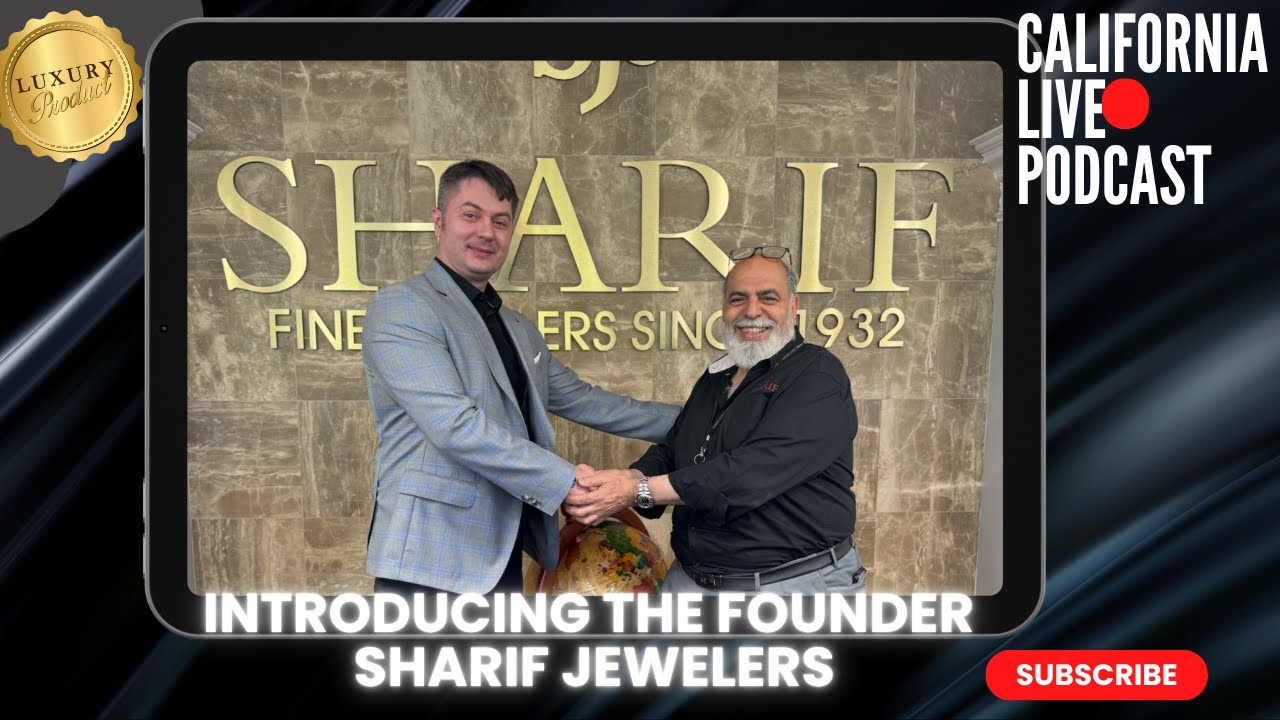
Episode 99: The Jeweler of the People: Mahmud Sharif’s Story of Legacy, Grit, and Community


Episode 95: Excellence, Innovation & Impact with King Lei, Founder of Punch King World

Episode 93: Celebrating 15th Anniversary of MLC with Celebrity Doctor Chiropractor Marwan Chahayed
