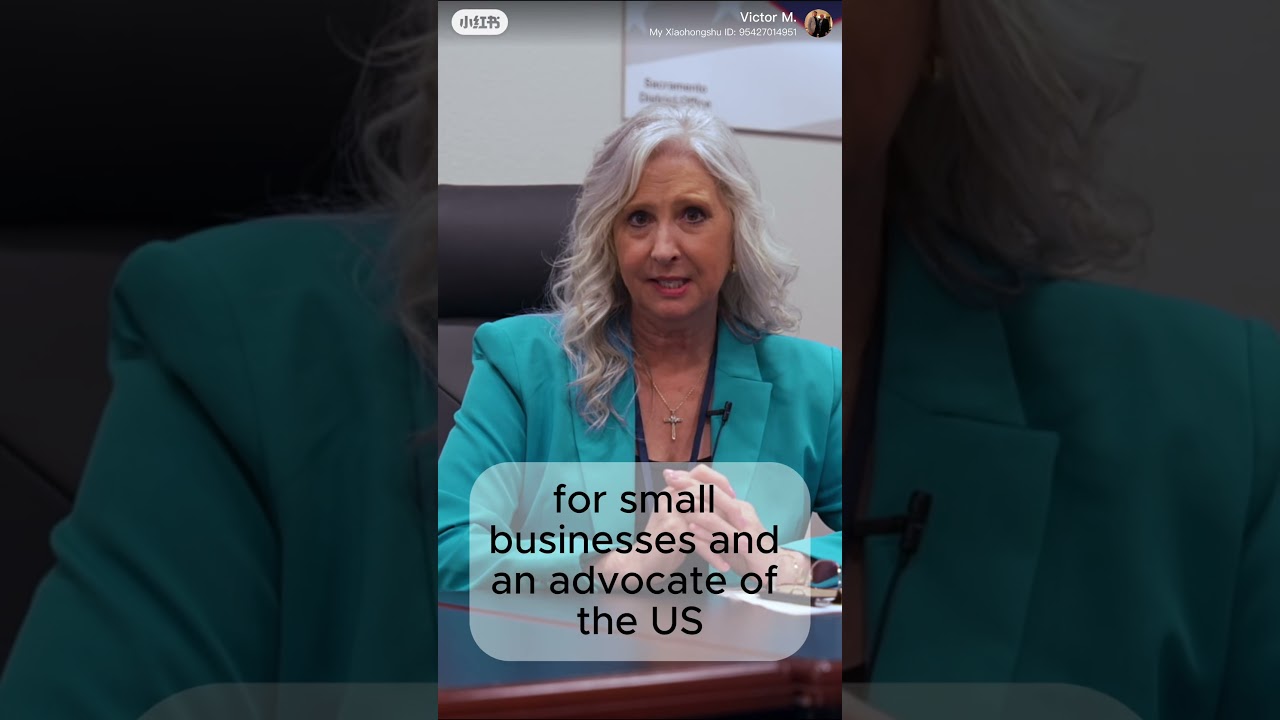
In this California Life podcast episode, host Sergey interviews Mayor Martha Guerrero of West Sacramento. Guerrero recounts her journey from a social‑work degree and mental‑health policy work in Los Angeles County to becoming a city council member and, two years later, mayor. She identifies the city’s most pressing challenges—affordable housing, homelessness, broadband access, and deteriorating infrastructure—and explains the concrete actions her administration is taking. These include leveraging California’s Project Roomkey for temporary shelter, partnering with Mercy Housing for supportive units, adopting an inclusive‑housing ordinance that requires 10 % affordability in new developments, and pursuing state‑grant points for pro‑housing status. Guerrero also outlines economic‑growth strategies such as apprenticeship collaborations with Yolo County’s Workforce Investment Board, the Enhanced Infrastructure Financing District to fund affordable housing and commercial projects, and initiatives to attract businesses through the California Hispanic Chamber of Commerce. Environmental priorities feature a climate‑action plan targeting vehicle emissions, the rollout of 45 electric‑vehicle charging stations, and plans for community solar. Finally, she promotes the upcoming Multicultural Business Career Expo and highlights the city’s need for additional police officers. Throughout, Guerrero’s tone is optimistic and community‑focused, emphasizing partnership, grant‑leveraging, and inclusive policy as pathways to a more resilient West Sacramento.
Chapters
Welcome to California Life podcast, and today we have a famous guest in city of West Sacramento, Mayor of West Sacramento, Marta Guerrera. Marta, thank you very much for coming to our studio.
Thank you, Sergey, for having me.
And thank you for opportunity to talk to our viewers. My first question is, what inspired you to pursue a career in politics, and how did you get started in local government?
Well, I started off wanting to serve the people as a social worker. So I started off in getting my degree in social work, and from there I could see some of the disparities in the needs of the people. And so I decided to go into public policy working for Los Angeles County Department of Mental Health, where I've noticed the lack of mental health care. Mm-hmm. And from there, I shadowed the director who was fighting for funding to increase mental health services among the most vulnerable populations, where we see today people that are on the streets struggling with mental illness, not being able to access the mental health care or substance abuse treatment And those are the needs that I felt that we needed to work on more, and I felt we could do that through changing policies, getting more funding directed towards serving those individuals. And that propelled my career to studying and getting my master's degree, meeting people who are like-minded, interested in serving individuals that need those services, and fighting to get those services covered either through Medi-Cal or Medicare, also through other funding that we can possibly acquire. Helping children were another area that was a significant unmet need. Right. Children who were struggling in school, who were failing, that were ending up in the juvenile justice system, and seeing how they had a hard time completing their education. So through many facets I saw that, that the system was not helping our most vulnerable populations. Mm-hmm. And as a social worker, I could do it directly. I was serving individuals in their homes. And then also in my job today, working now for Los Angeles County, I do that as my full-time job. That's what I do as a legislative representative for the Los Angeles County Board of Supervisors. So that's what I— my passion, that's what I love to do. And then I decided to run for city council because I was serving on several commissions, and I was appointed, and I was serving on those commissions, and I saw some of the gaps that we needed to fill.
I see. So that's what motivated you to get this mayor seat, right?
Yes. So once I was able to, you know, connect with individuals in our community, I was able to see that we needed to do more. in our city. And I decided to run for city council as well, and then eventually as mayor 2 years after being on city council.
Congratulations.
Thank you.
So when you became a mayor, what are the biggest challenges you met in the city of West Sacramento?
So affordable housing was one of our bigger challenges, and homelessness was an area that I felt we needed to do a lot more. And this was during COVID When we saw that individuals that were unhoused were more vulnerable. And also during COVID businesses were shut down and individuals were in lockdown having to stay at home. So broadband access to the affordable internet services was some of the challenges that we needed to improve on. And great, very grateful that Assemblymember Cecilia Aguiar-Curry fought to put more funding so that we can build more broadband and affordable broadband. And also at the federal level, where we will— we are able to get more funding drawn down at the local level. But in addition to that, both homelessness and access to affordable internet, making sure that we preserve the infrastructure. Because as our city grows, our roads are deteriorating. So we noticed during the last We've had a lot of storms, a lot of significant potholes, damage to cars, and we cannot survive as a city like that. Mm-hmm. So we need to make sure that individuals that are, you know, continuing to commute in our city, both to go to work or to come in and to work or to just spend time and spending their money in our city, that our roads are maintained. So our infrastructure funding is going to be an area that we're going to be tackling in the near future.
So you mentioned homelessness and affordable housing. How you address this? How are you planning to address this?
We were very fortunate that during COVID The governor decided to have a program where we can temporarily lease like a motel. Mm-hmm. So Project Roomkey started. And we have quite a few motels where we were able to lease that and then provide transitional housing. Where we had about approximately 85 people who we counted during a point-in-time count found that they were not sheltered. And at that time, we were able to shelter them, shelter all of them.
I see.
Now, homelessness continues to grow. So during that time, what we did in the meantime, we were building supportive housing, Mercy Housing on West Capitol Avenue with that partnership. And that partnership was able to transition most of those individuals into that Mercy Housing program. And so we were able to open up More rooms for individuals that were still unsheltered. So the challenge is being able to find affordable housing for those individuals. Right. So people who are priced out from rent and they were having a hard time working. And we had an eviction moratorium at the time, but that sunsetted. The governor sunset that program. So you're starting to see more evictions happen because people are having a hard time being able to find a full-time job that's not taking up more than 60% of their paycheck. We want them to at least be able to have a paycheck to buy food and gas to get to work and other necessities in life for their children to even have recreational activities and being able to spend their money and doing things that they can have a quality of life. And yet that's really hard today. Right. Because rent is so expensive. Housing is so That's true. So we are building. We are designated, during my time as mayor, designated by the state to be a pro-housing city, which means we are given more points when we apply for a grant for affordable housing through the state of California. We are given more points to be able to qualify for that grant. So we are working on that as we plan on more housing, affordable housing projects. And recently, being able to complete with our affordable housing program that we have, our inclusive housing program, where any developer who wants to come in, we have an inclusive housing program where 10% of the housing has to be affordable.
Okay.
So either they could build the affordable housing on their own site, or they can contribute to a housing trust fund. And from there, we apply for grants and build the housing. And Jamboree is our most recent groundbreaking ceremony where we're able to build another 85 units, and those will include a few supportive housing units for people who are struggling with mental illness or substance abuse.
I see.
And they will receive the additional support in their home.
That's a great project. How you will promote economic growth and job creation in West Sacramento?
Well, we are working closely with Yolo County, the Workforce Investment Board, in providing training opportunities. They can learn more technical skills at home. Mm-hmm. I am working with the trades so that we can partner in getting people apprenticeship programs. I also want to expand on that so that any future projects we have, any construction projects, that they establish a workforce workforce training agreement. So that way individuals in West Sacramento can get an entry-level job as an apprentice, learn the trade, build whatever beautiful thing we are planning on building in our city. Mmhmm. And being able to build that with their own hands in our city. That's a project I would like to pursue. In addition to that, we have established the Enhanced Infrastructure Financing District, which we're going to expand. expand citywide to allow for businesses and housing to be more affordable in West Sacramento, and that is through a particular program that we are uniquely in this region can accomplish. We've been very successful, which is why you see the magnificent riverfront. It is just growing—
It is beautiful.
With many houses, yes, with many homes, and it's And it's going to be expanded citywide, so we're really excited about that.
Great project, yes. What do you think some of the environmental challenges you have in the city of West Sacramento?
We have done an assessment in collaboration with Sacramento. Our climate action plan has identified that our biggest contributor to causing deterioration in our climate protection has been gas emissions. So what we need to do is reduce our carbon footprint among those that are traveling in their cars and also build incentives for individuals to get out of a gas-powered car and into an electric car. And fortunately, we received a grant and we are building about 45 electrical vehicle fueling stations.
Great.
All throughout West Sacramento. And so We're going to continue to build on that project so it is more accessible, affordable, and looking at ways on finding affordable opportunities for individuals who can't buy an electric vehicle because it is expensive. It's cost prohibitive today. It is. And making it affordable. So finding ways to do that and partnering with entities to also get solar panels on their roofs. So that's another future program so that we can reduce
Right. Marta, do you have any programs that support business development in the City of West Sacramento?
We do have a new program. It will be a program that will be financing— they will be financing and contributing so that we can have an investment for them. So we encourage them, we encourage the region to come in and either use our retail, you know, industry there for food also. And so as we see growth in the region for entertainment opportunities, because now we have many more attractions, say for example, the Ironman has now—
Right.
Submitted to being able to be more in our region. So we're partnering with Visit Sacramento and YOLO, who is looking at expanding, getting those businesses in the marketplace so that everyone is aware where they are and people can go in and be attracted to get food in those areas, go shopping. So that's one program. And another program is for our California Hispanic Chamber— Mmhmm. —has been helping individuals who want to start a business. who want to be able to get the tools they need to succeed in starting a business and financing, getting the financing that they need to start their business, and California Hispanic Chamber has been very good at providing that training opportunity.
Yeah. By the way, California Hispanic Chamber of Commerce and City of West Sacramento will be joining our Multicultural Business Career Expo on September 6th. What departments do you think from City of West Sacramento will be beneficial
That's a great question because West Sacramento is very interested in hiring more police officers, and we are in the, the market in moving forward to try to get more police officers hired. So if we can get a partnership with you to bring in more police officers in West Sacramento, that would be incredible for us.
We would love to help you and we will bring thousands of people who are looking for employment opportunities. So please, viewers, join us for our event and please contact with Mayor of the City of Sacramento regarding any issues in City of West Sacramento. Thank you, Martha, for your time. Thank you, sir. I appreciate it. And see you in next episode.