Episode 73 with Michelle Waterson - Gomez: Action Films, UFC, Business & Family
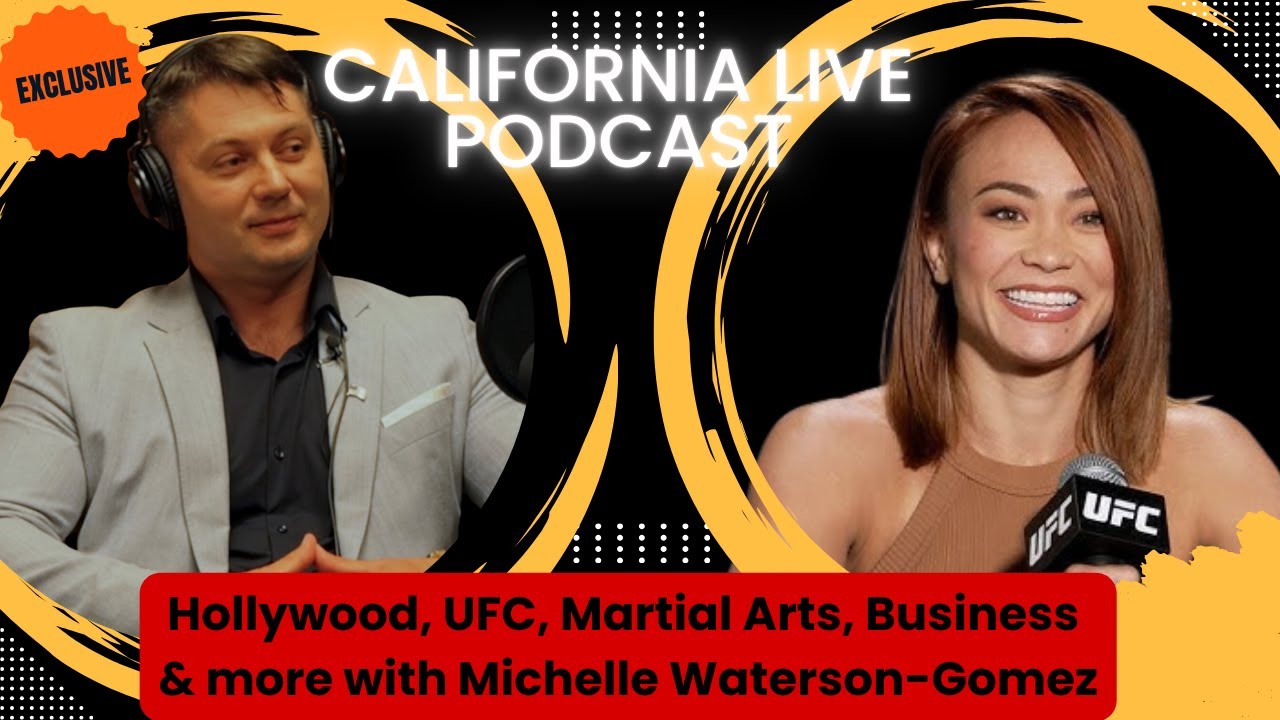
In this episode of the California Life Podcast, host Victor Migalchan interviews former UFC fighter Michelle Waterson Gomez. Michelle explains how she shifted from a singular focus on fighting to juggling multiple post‑career ventures, including acting in the Netflix action film Havoc with Tom Hardy, developing a Civil War‑era Western produced by Donald Cerrone, and building a custom homebuilding business with her partner Josh, who recently sold his finance practice to become a licensed general contractor. She shares the recent achievement of earning a Brazilian jiu‑jitsu black belt, discusses the philosophy behind jiu‑jitsu as a practical self‑defense tool, and contrasts it with striking and MMA grappling styles. Michelle also talks about her political perspective, linking the discipline and accountability of martial arts to Republican values and expressing admiration for former President Trump while emphasizing personal responsibility over partisan politics. The conversation moves to family life, describing how she balances motherhood to a young daughter—who is transitioning from gymnastics to acting and jiu‑jitsu—with her many projects, and how they plan to document their journey through a family documentary. Throughout, Michelle emphasizes time management, the importance of leveraging one’s platform for community impact, and the emotional significance of preserving memories for future generations.
Chapters
Welcome to California Life Podcast, and today we are very excited to have Michelle Waterson Gomez, the living legend, the mom, the champion, the action star, and many, many more roles you're carrying on yourself. Michelle, thank you for coming to the show today.
Thank you for having me. Yeah, um, we're doing it all. Life is too short to not, right?
Exactly. Uh, as I just mentioned to you behind the scenes, I, I'm following you and, and Josh, uh, on your Instagram, and I see that you are Shooting, constructing, then in this business, that meeting, this meeting, rallies, everything. And like, wow, quite exciting. How come are you more busy now than you were when you were fighting?
Well, when I, you know, when I was fighting, I had a singular objective. I was, you know, everything was focused on that one day, that one fight, and I had to zero in all of my energy onto that Singular goal. So kind of 2 things, right? Because I was so focused on my fight career, a lot of things that I was pursuing and a lot of the seeds that I was planting were just that. It was kind of something that I put on the back burner because I knew that when I was done fighting that I could come back, turn up the heat, and get it going. So with the tactical stuff, with becoming a sheepdog instructor, With the public speaking, with my jiu-jitsu school, restaurants, our home building endeavors, all those things were kind of just put on the back burner and being cooked at low. And now that I'm done fighting, we're just like ramping them all up and just trying to see like, you know, how far we can push all these different things. And so lots of travel and lots of Startups, like everything is kind of like, we have to like, we have to really kind of watch these fires that we're building so that we can continue that momentum.
Which of all these business endeavors do you feel are more appealing to you? You feel more excited about?
All of them really. I mean, I, I've always, I've always gotten myself into trouble for wanting to do everything all at once. I just, I remember in high school when, when I was, you know, being a cheerleader and doing karate and involved in theater and National Honor Society. I just, I involved myself in so many different things, and I remember getting overloaded and stressed out about it. My father telling me, you know, when you put too much stuff on your plate, stuff starts to fall off. And And so I'm excited about it all, really. But I do have to understand that there is a breaking point where the plate can't carry that load. So it's just really time managing. I'm really excited about all these movies that I'm getting into. The movie that I filmed a couple years ago, Havoc, with Tom Hardy, should be coming out second quarter of next year. So I'm excited for that to come out. And then there's all these other projects that I'm working on now that I'm really excited about. And, you know, I just got my black belt in jiu-jitsu. But just taking on that new role of a professor and really kind of diving into that.
I'm glad you mentioned about film. I know you've done a very interesting project in the UK. And then Josh mentioned to me that you were filming something recently. Yeah. If you could share with us a little bit, what is obviously possible.
Yeah. I mean, The UK is, like I said, it's the, it is a Netflix film starring Tom Hardy. And I mean, it's a star-studded cast really. And I had a really cool part in it. And I guess you just have to kind of tune in to see, but I'm kind of a pretty badass girl that comes through and literally wreaks havoc, which is the name of the movie, Havoc. But man, it was so cool. And a lot of people were wondering a couple years back why, you know, my hair was so different. I kind of had this like electric white mullet, and I did it for the movie. So So yeah, that movie's coming out next year, and I'm really excited about that. And the movie that I'm working on right now, it's— but we're basically shooting a bunch of shorts so that we can generate interest in this movie that my good friend Donald Cerrone is actually producing. And so he's producing it and putting all the money up front because he believes in it that much. And it's a really cool Western movie based during the Civil War. And the role that I have is, um, really cool. Uh, I'm kind of this young, young girl who, uh, is in trouble and somehow meets this bounty hunter, and he ends up saving me, uh, from a bad situation. And he takes me under his wing and teaches me, um, how to be a bounty hunter, how to protect myself. And we kind of like We're like running and gunning through the Wild West, and it's just kind of capturing our adventures. So it's really cool.
Is Josh playing the bounty hunter?
No, it's actually Donald Cerrone is the bounty hunter. And I keep trying to convince Josh to find a spot in the movie. So hopefully eventually he'll get a spot.
Oh yeah, I absolutely agree. Josh looks fantastic. Camera loves him. Remember his scenes in My American Family? They were great. They were hilarious. They were sitting and it was an awkward moment and we broke the ice and it was so natural. So, I mean, really great.
Yeah, Josh is a natural at a lot of things that he does.
Indeed, indeed. Very true. Great, great man. He also does finance. Right, if I'm correct.
Yeah, he was in finance for a long time and just sold his practice recently so that we can kind of dive a little bit deeper into his GC license. So he's a general contractor. So right now we're building custom spec homes and selling them here in Albuquerque, and the goal is to eventually you know, build some, build some complexes, some bigger houses, and, and have that under our belts, as you know, under the resume of, of his GC license.
Oh, yes, absolutely. That's, that's a great business. That's probably another endeavor which I will be going into myself. I just love the feeling when, you know, people come, they see the vision of their future home, and then they see this coming to reality, they move in, it's just a new life starting, you know, that kind of little, maybe a little romantic vision that I have. But yeah.
Yeah, it's beautiful. It really is. It can be stressful at times, but like, so my role in that business is just the, you know, the pretty stuff, getting to like talk about the floor plans and what I think is practical for a family and all the trends that are coming up and So I get to help with the floor plan and, you know, the color schemes. And I, so I kind of am, I'm the one picking all the lighting and the fixtures and the tile and the color schemes and kind of bringing all of that stuff together and kind of putting a little bit of a feminine touch.
Right, right. Do you guys work only on constructing from scratch or you also do reconstruction?
Um, we have done some remodeling, but most of our— most of the stuff that we're really primarily focusing on is like from the ground up.
Right. The reason why— the reason why I'm asking is because I filmed a documentary for a very nice, uh, gentleman, and he bought a historic hotel in Marion, Arkansas. It's probably 25 minutes away from Memphis, and he is looking for good people to work with, uh, to reconstruct it. It needs Everything.
Right.
From bottom to top.
Reconstruction is honestly, it has to be passion because once you start pulling down walls, there are things that you don't anticipate. There are always going to be problems that you can't see. Like the superficial problems is one thing, and then you start pulling down walls and then you realize, oh, you know, we got mold or termites and then, or, you know, this pipe is busted or the frames weren't put up right. And so that's, that's the, that's the biggest hurdle that you run into when you, when you start to do reconstruction. Um, but yeah, I'll have to talk— we'll have to talk to Josh about that and see if that's something he'd be interested in.
Well, definitely, and I'll be happy to put you in touch with Mr. Fred. He's, he's great. Um, you just mentioned you've, uh, gotten a black belt in jiu-jitsu.
Yes, I did.
Just now?
A couple weeks ago, about 2 weeks ago, I just received my black belt.
So you were fighting professionally without a black belt?
Without a jiu-jitsu black belt. I had my black belt in American Freestyle Karate, but yeah, I'm still working towards my jiu-jitsu black belt. My professor, you know, it's all about timing with, you know, with your belts, and there are things that you have to kind of earn. In order to get that stamp of approval, right? So of course I have the knowledge. I, you know, I felt— I feel strongly that I have the knowledge of a black belt as I was fighting professionally in the UFC. But there's a difference between like understanding jiu-jitsu and really having a strong understanding of Brazilian jiu-jitsu with the gi. And it's not just about understanding the technique, it's about understanding The way of life, right? Mm-hmm. It's not just about technique. It's, have you embraced the way of life? Are you committed enough to the art of jiu-jitsu that you can teach it? That you can, you know, confidently say that, you know, you can go anywhere in the world and roll with other Brazilian jiu-jitsu black belts. There's a lot of— there's a lot that goes into it. And so I was perfectly fine with, um, you know, earning that stripe because I've always been a big believer that, you know, those things have to be earned.
Right, absolutely. Um, now probably a little bit more of, uh, of a backstage question about jiu-jitsu and Brazilian jiu-jitsu. I, I'm a big fan of both, um, and, you know, there are a lot of, um, People online who are talking about this martial art, that martial art being effective in life, less effective in life. How do you see jiu-jitsu, Brazilian jiu-jitsu, effective in life situations?
Well, anytime I talk to parents, friends, family, it is always a recommendation of mine to get their children into some type of martial art. It creates character, it develops I always feel like the best way to develop mental strength is through physical, you know, through physical activity. And martial art is just twofold, where you're actually learning a practical skill. Jiu-jitsu, in my opinion, is probably one of the most practical martial arts that you can apply because it's not necessarily about how You know, big or strong you are. It's about understanding leverage. And so it is really a martial art created for the smaller guy, or, you know, in most of my friends' cases, in the girl, you know. Um, in self-defense situations, a girl will always find herself in danger, and it's not going to be against somebody that's usually their same size. Predators usually Um, target people that are smaller than her and people that they could, like, receive— believe are weaker than them. And so jiu-jitsu, you learn, um, from really uncomfortable positions how to be, um, the aggressor, how to be, uh, the person that is, um, offensive. And so in my opinion, I think that jiu-jitsu is the most practical You learn the moves. And what's more practical about jiu-jitsu is that it is tested under stress. You're able to roll and you're able to do it frequently without actually hurting yourself, but testing yourself in a high-pressure, high-stress situation and see what can apply to yourself and your body.
Right. Well, as I know yourself, you are great at jiu-jitsu, but also you're great at punching, kicking. technique. So, um, if we talk about these life situations, and let's say we talk about ladies, right, who might be attacked by whoever, uh, would you say that the jiu-jitsu technique would be a preferable technique or a punch and kick in the distance technique?
Well, I mean, it, it, it's all— it all depends on the situation, right? And it also all depends on how long you've been Learning something. Punching and kicking, I mean, it can take somebody a decade to understand how to throw a proper punch. And then you, you, and then you add in the factor of range and you add in the factor of size. And no matter how strong of a punch I have, a punch that I have compared to a punch that you have is completely different, even if we've had the same amount of training. You know what I mean? And so it's just It really is, when you break it down, it's— you want to have the highest percentage of effectiveness versus like taking a risk, you know? And so 90% of fights or scuffles end up on the ground. Do you know how to protect yourself on the ground? Can you defend yourself enough to protect yourself on the ground and get away? Our bones in our hands are so much more sensitive, you know. So are you willing to bet on yourself and risk breaking your hand because you hit somebody in the wrong spot and now you've lost one of your weapons? So I just think it just has the highest percentage of success when it comes to like a size difference and stuff like that. I mean, obviously if If I get into an altercation with somebody that's my size, you know, I, I would feel comfortable with doing it. But also, I've been doing martial arts for, you know, for over 2 decades. And so if you, if you've been doing martial arts for over 2 decades, I think you have a little bit more tools in your toolbox. But, you know, if you only have, you know, 1 day out of the week to train for something to, to save your life, I would tell you to do jiu-jitsu.
Um, do you prefer jiu-jitsu or Brazilian jiu-jitsu? I know there are slight differences.
I've only ever practiced Brazilian jiu-jitsu.
Okay, well then Brazilian jiu-jitsu it is. Um, one more additional question about the, the wrestling, uh, part of martial arts. Um, there is Brazilian jiu-jitsu, and, uh, how would you Maybe help our audience understand, how is it different from, for example, what Khabib and his team does in wrestling?
Well, I think it's just stylistic, right? So, like, Khabib and his team have been really successful with understanding how to win fights, right? And not just any fight, MMA fights. Right. So if you take into consideration all the rules that, that are allowed in MMA, um, and, and the space that you have to fight, they've really, I think, mastered how to win, how to utilize the cage, how to utilize the ground, and how to utilize the range, um, in a way where they can close the distance, eliminate the amount of damage that they take and increase the amount of damage that they inflict. So what basically kind of what they do is utilize the cage, corral their opponent, and pin them in a place where there is no escape. And once they've pinned them in that place where there's no escape, they're able to utilize their body along with the floor and the, and the cage To trap their opponent and give them, give themselves space to deliver damage. And that's what I think the difference is between, you know, what Khabib does and what jiu-jitsu is. They're just different rule sets, right? Jiu-jitsu, you don't punch. Jiu-jitsu, you can entangle yourself underneath somebody and hide yourself from getting your limbs taken. And really have all these beautiful, amazing attacks off your back. But in MMA, you can't have these attacks off your back because the minute you go to your back, you are susceptible to getting punched in the face, or you get pinned up against the cage, and then your ability to, you know, swivel your hips is taken away from you. So there's all those different things that kind of come into play when you talk about The difference between jiu-jitsu, MMA grappling, and all of that.
Right. The whole MMA and UFC in particular as an organization, as a championship, it's quite of a high interest among people who are in it, who watch fights, are in martial arts, or even who aren't. And I see that around me, this interest in UFC and Dana White spiked with the elections, which we just went through. Could you share with us a little bit about your relationship with UFC, with Dana White? What are they? How are they? Anything?
Well, I think the reason why a lot of MMA fighters gravitate towards a lot of the Republican views is because the because of the core values that we have as martial artists, right? A lot of the things that we do in martial arts is earned. And, you know, when everything is peeled back, you step into the cage and you have no excuses. You kind of have to walk the walk. And, you know, just personally, I have an appreciation for President Trump and, you know, his family because I've had opportunities to actually spend time with them. And I can't say the same with the other party. And not to say that I don't have any respect for them, obviously, but it's the same in fighting, right? It's like you step in the cage and there's opponent across the cage from you. My objective is to win. And it's not to say I don't have respect for my opponent because I know, you know, what it takes to step into the cage and to do those things. And so that's how I think people should view politics. It's two sides of the same coin. And I feel like both views are necessary, you know, in order for, you know, a country to properly function. But we just, we all have our spaces. And I have an appreciation for President Trump because he's been able to follow through on a lot of the things. that he has, you know, proposed. And, you know, in my opinion, he has really stepped outside of his, you know, his ego to see what is important for the American community and has really created a party of unity, pulling in people from all different walks of life, from different cultures, from different Thoughts, you know, there there there are. You know, if if you're talking about you know Tulsi Gabbard and RFK, both of them come from the Democratic Party, and Donald Trump saw an opportunity to unify the nation, and and I just feel like that's kind of what we need as Americans is to unify ourselves and to kind of. have a little bit more common sense when it comes to what's important for our future and for our children's future.
Well, with this speech, I only have to ask, do you plan to run for public office sometime, someday?
No, because I think that we can be most effective within our own communities. You know, it's easy for people to kind of look out and say, America needs to fix this. Well, Yeah, it's easy for me to look at the top of the mountain and say that, you know, one day I'd like to get to the top of there. But, but what's harder is to fix the things within your— within yourself, within your own, you know, intimate family group, and then within your community. So, so I think, like, I've always been, you know, a strong believer that, you know, if there are issues in my life, that I'm the one that has to fix them. I have to do introspective, you know, work and fix what it is that's going on in my own life. And then, and then that kind of trickles down to how I raise my daughter. And, and then that trickles down out to, you know, how the, the students in at my martial arts school, you know, are, are doing and how's that community. And then how's the community around, you know, their lives. And so that's kind of how it trickles out. But The best thing that we can do, I think, you know, as Americans is take responsibility for our own actions and treat others the way you wanna be treated. I mean, that's the golden rule, right? Regardless of your political views, regardless of your culture, your religion, your history, I will always treat somebody the way that I wanna be treated. And I think that's just kind of the golden rule in my household is— That, um, you know, do unto others as you would have them do unto you. And if you live that way, you know, you should be pretty good, pretty good off.
Yeah, yeah, absolutely. I agree with you. You've mentioned your, um, family. I know you have a beautiful daughter. How do you manage your family time with all the projects that you are involved right now?
It's hard. You know, a lot of things kind of drop off and the first one is kind of like, uh, The cleanliness of my house because we're so busy with our schedule and stuff like that. But I think it's just the more organized you are with your time, the more you can get done, right? It's like if you, if you have a goal but you have— you don't have a target in front of you, then you're kind of just spinning the wheels. And, and, but if you If you have the target, then at least you know where to aim and where to shoot. And you go to shoot and whatever happens, you kind of, you do the work from there, right? Okay, you're a little off and then you have to kind of go back to the drawing board. It's the same thing with shooting. It's the same thing with fighting. It's, you know, the time is now to go for your dreams, to go for Whatever it is that you are pursuing, and you're going to kind of learn on the job as you go. I think so many of us kind of wait until the perfect time, but there, there never is a perfect time. So I think for us, it's just really taking advantage of the time that we have and really kind of leaning into the present. And that's kind of how we're able to manage. You know, spending quality time with our daughter because she's kind of involved in everything that we do.
Right. How is she and how is your gymnastics career going?
She actually decided to step away from gymnastics and she'd been doing gymnastics for over 10 years, but I think her heart just wasn't there anymore and she realized that. And so we had her finish out the year and now she's just pursuing Pursuing a lot of other things, including acting. She's really become passionate about jiu-jitsu. So she's going to jiu-jitsu probably, you know, 4 or 5 times a week and gearing herself up to compete. So I'm really excited about that. But yeah, she's young enough to have space to explore. So we're giving her that space.
Well, that's fantastic. And, you know, acting is a tool if used properly, It's a great tool to open up yourself, your own internal potential with whatever you wanna do in life. You know, everyone right now, whether you are a dentist or you're a lawyer, you have to work with a camera, right? Yeah. So if you train that, you will be great at everything that you do. My probably last question for today, you and Josh, you agreed on us filming a documentary for you to keep your legacy for all generations ahead of us. How do you feel about it? And first of all, thank you for your trust, of course. But how do you feel about it? What do you have in your thoughts, in your mind about this documentary that we're going to film?
I'm excited about it. I think that so many of us kind of go through life and it kind of becomes very monotonous because it's just the day in, day out. And We rarely stop to look back at all the things that we've done because it's kind of just like on to the next one, on to the next one. So I think shooting the documentary is going to kind of give me a chance to kind of look back at all the things that I've been able to accomplish, all the growth that my family has had, and kind of have an appreciation for it, but also like a newfound motivation to see that, you know, How much we've accomplished with so little and where we are now in our lives and how much more time we have to accomplish that much more in the future. So it'll be good just to kind of document it and to have that kind of as a diary, as like a personal diary of all the things that I've actually done in life. It's kind of cool. We forget. Sometimes, you know, how far we've come.
Right, right. And also, um, I had a few reasons why I offered you and Josh to film this, but also, uh, one of them was when I've— I watched, uh, Sylvester Stallone's documentary series on Paramount. And, uh, one of the reasons why he does this documentary is to spend time with the family. And I've seen you and Josh being so busy. I Just had a thought that it could be a really good piece of time, like a couple of days, obviously not too much time, but so you just spend this time all together and that'll be really beautiful to film.
Yeah, I agree. I, you know, in saying that, I think it's important for all families to do that. We, I don't know how we've managed to make ourselves more busy. But in life that kind of happens, and I feel like the older my daughter gets, the more I realize how little time I have left with her as a kiddo, you know. And so it kind of reminds me to really cherish all the little things that she does now that I won't necessarily have when she's older, you know.
Right, absolutely. Well, on this, uh, little emotional sentimental moment, we'll pause the episode today. Michelle, I'll be happy to have many more episodes with you to bring our audience to, to you, and hopefully, you know, maybe investors and, uh, and clients. So thank you again for your time. Uh, I wish you a wonderful Sunday. I wish Josh to get better. Uh, please say hello to your daughter and, uh, Well, uh, see you soon.
I will. It's good to see you, Victor.
More from Victor

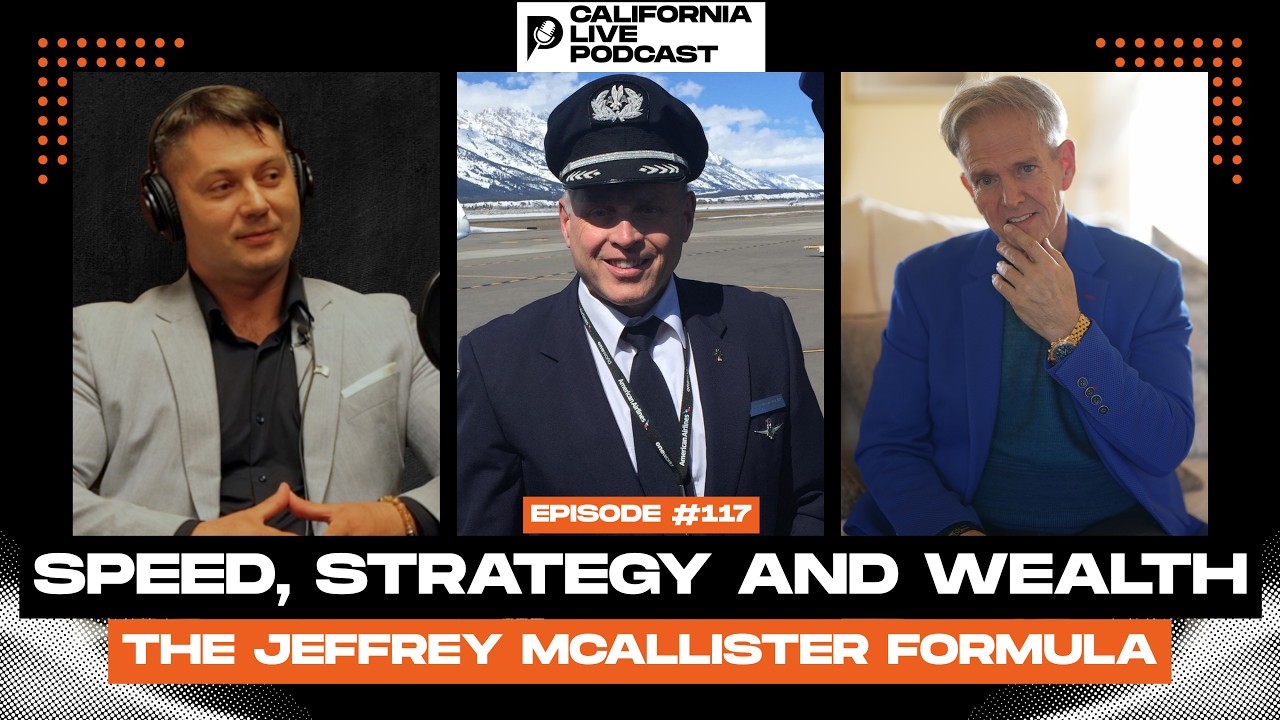
Episode 117: Options Trading, Risk Management & Financial Discipline with Jeff McAllister

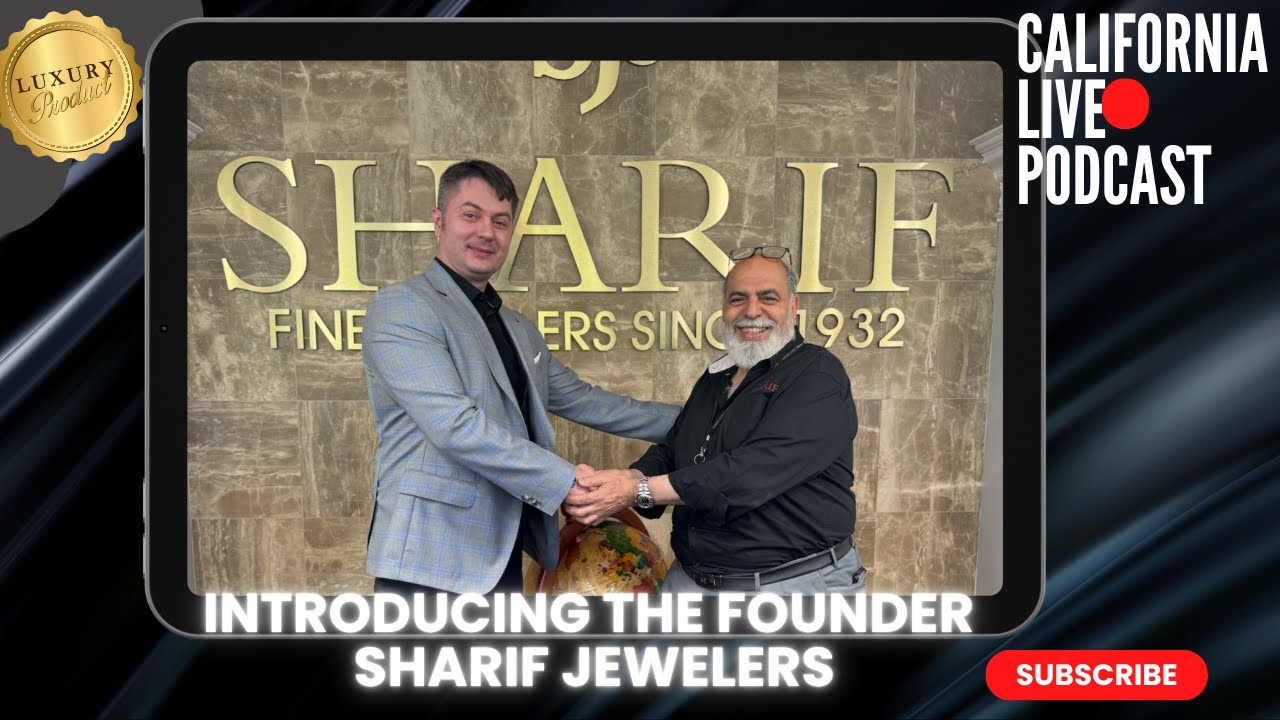
Episode 99: The Jeweler of the People: Mahmud Sharif’s Story of Legacy, Grit, and Community

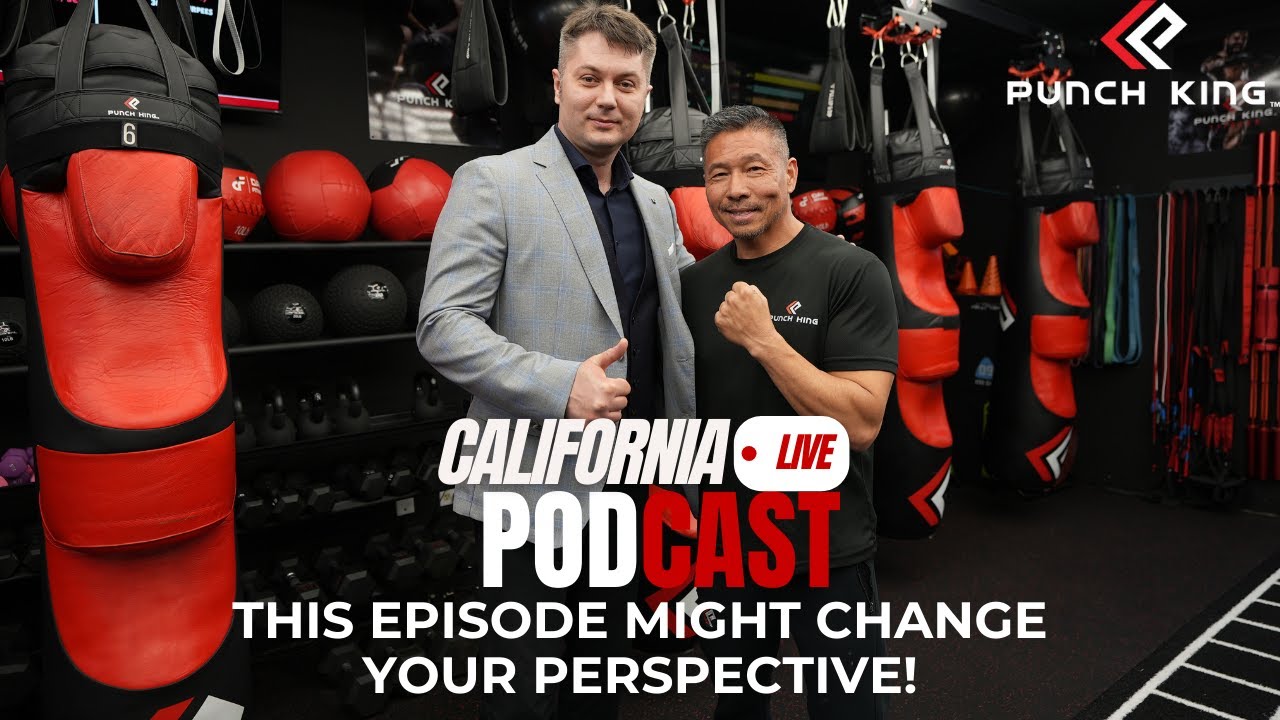
Episode 95: Excellence, Innovation & Impact with King Lei, Founder of Punch King World

Episode 93: Celebrating 15th Anniversary of MLC with Celebrity Doctor Chiropractor Marwan Chahayed
