MSP Dumpster Fire Season 1 Episode 2: Debunking AI Myths: What AI Is and Isn’t
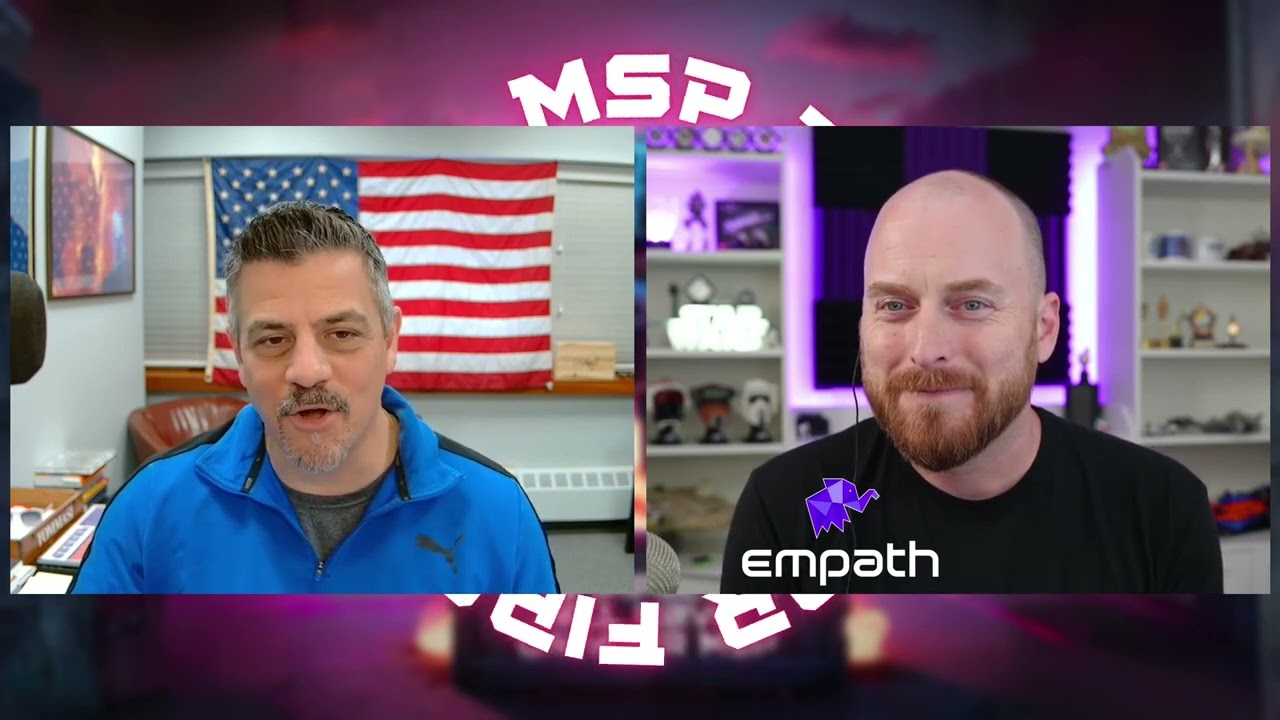
In this episode of the MSP Dumpster Fire podcast, hosts Robert Chiaffi (CTO of Progressive Computing) and Alex Farling (Chief Noisemaker at Empath) explore common misconceptions about artificial intelligence and clarify what AI actually is. They begin by lampooning Hollywood’s exaggerated portrayals of AI—from Terminator to Skynet, I, Robot, and Jarvis—coining the term “Hollywood syndrome” for the public’s distorted expectations. The conversation then shifts to a historical overview, noting AI winters, the role of Moore’s Law, and the impact of ever‑increasing compute power on AI progress. They discuss hardware constraints, the potential of quantum computing, and geopolitical factors such as chip export bans. The hosts define AI as the simulation of human intelligence via software that learns from massive datasets, emphasizing that it is not true intelligence but sophisticated pattern‑matching. They illustrate this with concrete examples: chatbots that rely on large conversational corpora, image‑recognition systems trained on millions of pictures, and niche applications like perfume‑formula prediction. Throughout, they stress the importance for Managed Service Providers (MSPs) to act as trusted advisors, helping customers separate hype from reality and to adopt AI responsibly for productivity gains. The episode ends with a promise to dive deeper into specific AI topics in future episodes.
Chapters
Welcome to the MSP Dumpster Fire series. This is season 1, the impact AI will have on your MSP. Welcome back everybody to episode 2 of our series, AI Dumpster Fire. We're here today to talk about what AI is and what it is not. But before we get there, quick introduction. I'm Robert Chiaffi, the CTO and co-founder of Progressive Computing, an MSP based in Yonkers, New York. And I'm joined by my friend Alex.
I'm Alex Farling. I'm the chief noisemaker over here at Empath, where we're building some education software for MSPs and maybe building the only product in the world that isn't powered by AI yet.
Oh boy. And you know what? I love that title, Noisemaker. I think of like New Year's with like one of those sticks with the weird—
I had to fight Wes Spencer for that title because, because he's so good at it, but he was too busy trying to be a dictator.
So yeah, yeah. So yeah, what AI is and what it is not. I mean, we talked about the history in the last episode, which kind of, you know, got us to here today. But I think there's a lot of confusion about What AI is and what it is not. What do you think AI is? What's your influence there, Alex?
Well, you know, I've watched a lot of TV and I've got some opinions, probably poorly formed ones, but I'm really worried that I can't yet talk to my watch and get my car to come pick me up, but I think we're close. Like if I have a Tesla, maybe that's a thing. Maybe. But Knight Rider comes to mind, right? There's some good AI technology. But I'm like everybody else, like I watched a lot of Terminator, like, are we building Skynet here? Yeah. And there's a lot to unpack here.
That's the recurring joke, right? You know, is Skynet—
Is it a joke or is it foreshadowing?
Well, I think we actually hit the, in the movies, the date already that Skynet was supposedly supposed to go online. So is it here yet? No. I'm not a medical doctor, Alex, but I know one particular ailment that people suffer from. And so I'm going to give you my diagnosis. And that is that you are suffering from what I call the Hollywood syndrome. You've watched way too much television and your brain is distorted about the way the world really works. Now, for those of us in IT, and I'm talking about normal IT, not advanced stuff like AI or cutting-edge stuff like that, but just the basic IT stuff, right? How many of us have seen movies or television shows and say to ourselves, that's not the way it works until it is, right?
Right. We look at how Hollywood has predicted technology, you know, all the way back to the Star Trek communicator, right, which became my StarTAC that I flipped open and talked on the phone with. Right. So there's always that little bit of, is Hollywood going there? Is Hollywood just leading the pack and setting setting the minds of the people who are building the technology, giving them ideas to build the next thing or trip the next lever. What are you feeling like? You've done some homework on this.
Art can certainly influence the direction of science, but let's talk about some of those classic Hollywood examples of things of what AI is not, right? It's not the typical Terminator, especially when all of his organic exterior features are revealed and all. You just see this metallic skeleton with the red eyes, right? That's not AI, at least not any time in our lifetimes, at least my belief. It's not awesome movies like I, Robot, right? Very entertaining, very thought-provoking, but that's not it. One of my classic favorites, right? Space Odyssey, 2001. It's not it's not how, right? Anticipating Dave's maneuvers on, you know, on the ship and, you know, manipulate and it's not manipulative in that way. It's not The Matrix. It's not one of my favorite, which you mentioned. I am a huge Trekkie, right? And so one of my all-time favorite characters, definitely probably in my top 3 is Data, right? It's not an android walking around and acting like a human. And another movie that I just watched recently, I couldn't help myself. I had a couple hours to burn on a weekend, which is super rare for me, but I ended up watching WarGames, right, with young Matthew Broderick.
Oh God, that goes back a ways. Yeah.
Greetings, Professor Falken. You know, shall we play a game? Right. And I was mesmerized by rewatching this movie because it was so awesome. I just, I really like I just really love the movie. Anyway, so those are Hollywood's examples of—
Well, you left off Hollywood's, one of Hollywood's most recent examples and one that spanned a whole series. Let's not forget about Jarvis and the Tony Stark movies, right? As we get into Avengers.
And you know what? I'm sure we're probably missing because in my original—
Dozens, right? Yeah, there's dozens. But that one sticks out to me because, you know, at one point you had a good AI fighting a bad AI. And I don't think, you know, that's very Hollywood. It's very Hollywoodized, if you will. But I don't think— and we'll talk to some security experts later in this series— I don't think we're that far off. I think there comes a day where good AI fights bad AI, maybe not to that level.
Well, maybe not at a superintelligence level. And we're going to talk about some of the terms. And superintelligence is one of the terms to know when we navigate AI, and it's intentionally on our list at the bottom, right? Because we're just not there yet, right? But so as I was doing my research and reminder for everybody, right, we're not subject matter experts here, but we're just some people who are passionate about this topic and learning on this journey. And we'll have some guests that will join us over time to lend their knowledge, experience, and expertise. But one quote that I wrote down, which I'm trying to remember who said it, but somebody said, we're a long way off in terms of AI achieving superintelligence. But that does not mean that a long way off does not mean a long time. Right. And when we are talking about the history, and so here's a classic example of why studying the history of any real topic is so important to understand where we are and where we're going is, uh, remember that we went through the AI winter and, you know, throughout the 1970s, uh, '80s, '90s, mainly in the 2000s, it started to really heat up. And why? Because we didn't have the computing power, uh, at normal everyday, uh, fingertips, right? It was reserved for very, very few, uh, either corporations with limited budgets for things like this and just really wasn't explored. But now think about the computing power. I mean, shoot, my calculator has more processing power than the computer used to put a man on the moon. So, you know, Moore's Law states in layman's terms that the processing power of microchips doubles every 2 years while the cost is halved. And while that is slowing down, and there's evidence to suggest Moore's Law is reaching some constraints, limits, right, or constraints. For the most part, it's still holding true these days, right? Things are just getting crazier, faster, better, right? And so the available processing power of hardware is really what's driving the advances in all this tech, in all technology, right? Not just AI, but certainly has helped accelerate AI's capabilities. So we've got to be really careful before we go down this road of what AI is, we understand what it is not. And this will also, this also serves as a primer for some later discussions in future episodes around like fears and managing change and understanding things like privacy and confidentiality. I mean, there's a lot of different things where what AI is and what it is not and how it affects or shapes those conversations and discussions.
I think that's super important. And, you know, we can, we can dive into some of the most recent stuff that's landed in the news, and it may not be quite so recent by the time we drop all these podcasts, but there's been conversations in the news about, you know, China not allowing Intel and AMD chips where, you know, in the US we tend to ban some Chinese technology. And is there a world where the competition for the best AI relies on the best hardware? I think that's an interesting conversation that we may have to weave into this somewhere. But I think the hardware limit helps define what is and what AI is and is not today and what it can become in the future. And those who have the access to the best hardware that scales the fastest, that they can perform all these, all this, all this compute on chip are the ones who are going to win. You know, being able to do this in your pocket without sending it out to the cloud seems like the huge win and the thing that makes it just as fast as can be.
I totally agree there, Alex. And if we were to put our you know, if we were to think about the future, right, put on our future goggles here for a moment, you know, what could help accelerate Moore's Law, you know, by bringing it into exponential growth other than the slowing path, you know, meaning the reverse of the slowing pattern. And quantum computing is potentially the next thing to really drive AI in leaps and bounds forward. That we don't have today. But again, quantum computing still in its infancy, still very difficult, still very experimental, still very laboratory-based.
And still very, very expensive, right? It's cost prohibitive at any scale.
It was years ago, I remember being at, of all things, a Microsoft Worldwide Partner Conference. And I was in one of those arenas, probably like a basketball arena where they had 15,000, 20,000 attendees. And they had like their chief scientist on stage with— I'm not even sure who it was, maybe it was their CFO at the time or their CEO. And it was really interesting the way this guy was talking about how the technology that's in our pockets, right? So if you look at your modern smartphone, and you think about just the ubiquity of that, right, the universal availability of that, everybody's got one in their pockets, and our expectations of what they do or their capabilities is it's just, it's our reality, right? But if you go back in time 20 years ago, that same technology actually existed, but it existed only in laboratories. And that was the point that this scientist, their chief scientist, was making. And it really kind of changed or altered my thinking about our technology curves. There are the things that we will be using or taking for granted as everyday normal things 20 years from now exist today, but they exist only in laboratories. Very large, unwieldy, super expensive, hard to use, but they exist right now. It's just a question of being able to mass produce them and bring the costs down.
And that's the same. I mean, in our last episode, we talked about, you know, the original artificial intelligence computers built by IBM and stuff, they were the size of a tractor trailer. Today you have that much processing power in your iPhone. And so there's just examples of this everywhere you look in history, where as technology becomes accessible to people, it's because it's cheaper and smaller and, and manages to, to make its way into the home.
Yep. So Alex, I think, um, we can round out this conversation on this you know, the back half of this, we talked about what AI isn't, right? Or what it isn't actually, at least by today, 2024, right? I would even venture '25, maybe even 2026. We're not there, right? Don't expect Terminator to appear, teleport in your backyard anytime soon. But so I now think it's time that we start talking a little bit about what AI is. Because there's a lot of focus on what it's not.
Yeah.
Yeah. If you don't mind, I, in my research, what I discovered was that AI is simply the simulation of human intelligence by machines. But I want to key on a very, very important word there. It's simulation, right? It's this mimicry that gets people into thinking immediately about their fears about, oh my goodness, it's going to take over the world. It's going to take over my job. It's going to do this. It's like, you know, it's just going to take everything over. It's a simulation, right, of human intelligence by machines. It's not intelligence, it's the simulation of that. So that was one of the first definitions that I found. The second thing is that AI is specifically designed software, right? It's code, just like we'd write any other program that learns by ingesting and analyzing very large amounts of data. So, um, what— another way I say this is we think about AI as just like some really like slick programming that somebody has figured out how to essentially like create a brain, right?
Well, we've all heard the stories about two AIs in a lab that develop their own language and start to talk to each other, right? Um, but nobody— and when they tell that story, nobody backs up to say, well, this is how much information we fed that AI.
Well, thank you.
Before it was able to digest that and get to a point where it even knew what a language was and could create its own and talk to a counterpart. And so the news wants to scare us with all that, with all the big scary AIs coming to life. In reality, you know, probably petabytes of data and years go into training that system so that it can get smart enough to do something like that.
So it's that super slick software or coding plus data and not just, and I don't mean to make those things sound equal because they're not, because like you said, you referenced petabytes, you know, we're talking about tremendously large data sets, right? You can't just feed AI a picture of 3 cats and for it for suddenly now to be able to discern what's a cat and what's not, right? So, but it's the coding's ability to learn and ingest that data and then use it to figure out whether something is, is something or is not something, right? It can learn, right? And AI is really good at looking at correlations and patterns and then use that data to make predictions. So what I mean by this is if you were— if I were to give you, Alex, a database, a a database of, let's say, different combinations of ingredients that go into making a perfume, right? There might be, mathematically speaking, billions of combinations right now. As a professional sniffer— and yes, there, there are those jobs out there, right? People who can smell something and discern whether or not that smells good or doesn't smell good or what combination of things work. AI can look at that data, right, and process that and make really, really good predictions about what combinations might, might yield good smelling formulas, right? And kind of narrow that list down for then a human to now take over. But you see, this is where the power of AI is and a good example of what it can do. It can ingest and digest that tremendous dataset that a human just can't possibly do.
It's impossible. Well, you mentioned the professional smeller, and I have a friend who his daughter was a sommelier and he gave us the test kit that she used as a sommelier to learn this. And, there are literally 75 vials in this test kit and you open them up and you smell it and you guess what it is and then you go look at the test kit and see if it's really what you smell. It's hard. Um, but, but the human nose can be trained on things like that. Um, we're a long way from AI being able to, to actually smell something, right? It's just using a mathematical calculation to say, if I had these 20 chemicals, I get something that a human told me was good. Um, and, and then it's making approximations and guesses to say, okay, well, if these— if all these together smelled good and all these together smelled good, maybe I can mix those up and still get something that smells good.
And remember, whatever, right? Also the opposite— these combinations when put together smell bad, right? So it can then start to, like you said, then make those statistical, uh, predictions about what might be a good formula and which ones to stay away from, right?
Right.
Um, I think we can round this out by talking about two very common examples that are like right front and center in our worlds and our lives right now that we're super comfortable with, right? Um, so the first is a chatbot. Right. We all know about chatbots. They've been around a while.
And I use a 4-letter word every time I find one.
Do they get insulted? Did you hurt their feelings?
I don't care.
Yeah, well, no feelings for it for you to hurt, but there may be.
This is one of those places where we'd like to see AI be a little better, right? They exist and they function, right? But they don't quite give us the output that we want. And this is where, this is where the growth opportunity is.
I can envision a checkbox on the backend, like enable salty version, right?
Spicy customer detected. Yeah. Yeah.
Enable Alex Farling mode. No, I'm only kidding, buddy. So, but a chatbot, right? How does that understand like what it is that you're, you know, you're saying in your inquiries, right? And it's all based on somebody feeding it super large amounts of data prior to those, about prior conversations so that it can interact with humans to generate very lifelike interactions. Again, it's this mimicry and some people look at that stuff and say, wow, this is super creepy. But it just is like, it's just this slick programming with lots and lots of data and its ability, like you said, to make predictions, which is why also sometimes in these chatbot conversations, you get some kind of strange answers, right? Or, or just like half, half-baked ones.
But it's not a very big leap from a chatbot to somebody like Grammarly, who's actually been doing this for over a decade, um, who claims to have like the, you know, the biggest data set on the planet around how people write, and is able to use AI to string together what good writing versus bad writing looks like. And maybe when you sound a little too much like Alex, and maybe you should sound a little more like Robert. Maybe you got a little too spicy with the chatbot and you need to chill it out, right?
Yeah. I think I hold back on my spiciness maybe a little bit more than you do, but I'm unfiltered, my friend. I know you are, but authentically unfiltered. When I'm not— when I'm off camera, I can be super, super, super unfiltered. But it's interesting how you mentioned Grammarly because another application that probably many MSPs, especially those that have attorneys or lawyers as clients know or remember Dragon NaturallySpeaking, right?
And that was the thing I forgot about the automation.
And, you know, and I remember a specific— I've got this just, I don't know, this one client that I just can't get his image out of my head that he used to sit there with the boom mic. And this is going back, I don't know, like 15 years ago or maybe even longer. And I remember him sitting there and training it. Right. And now it dawned on me now that I'm a student of AI to understand what it was doing then. It was asking for input from him to speak words and then to like, like to help correct it so that it could learn.
I had that customer and you just gave me that epiphany. So today I learned that that's what my customer was doing with Dragon NaturallySpeaking. God, this had to be 2008, 2009. Like it was a long time ago.
Way long time ago, right? And that's what it was doing. It was feed— you were training the AI.
Feeding it the dataset. Yeah.
You were giving it the dataset that it needed because out of the box it was like, hey, I'm just a stupid, like, I don't know anything. So, yeah, I mean, I think it had some data built into it, but it needed to be personalized for the person that it was interacting with.
The same way we need to personalize today's large language models, our GPTs and things like that, right? You know, we work with this in marketing and you go, go have your GPT write out a marketing post for you. And it sounds like a movie trailer, right? In the world of cybersecurity. In the realm of cybersecurity in 2022. Yeah. And it just says all this stuff that you could never hear yourself saying.
Right.
Until you train it on who you are and how you speak. And then before you know it, it pulls out the movie theater stuff and starts to put in the authentic stuff and sound a little more chill and a little more like the person who it's probably supposed to mimic. So we see that with the large data model kind of leaning towards the extravagant and the customized and fine-tuned. And I was working with a marketer the other day who showed me their version and they're like, yeah, watch. I have a generic one, help me figure all this out, and then I go feed it to the customized one, and now it comes out sounding like me. And I watched her post something the other day, and the post went through the roof on social media. Everybody loved it. It was exactly on message. It was exactly on tone. It got it exactly right because she spent some time refining her personal GPT to sound like her.
Wow, that's amazing.
That's what AI is and is becoming, right?
It is what it's It actually already is there, but it's becoming because we're starting to use it in the ways that it was intended to be used, right?
It's becoming easier to train and faster to get up to speed and things like that.
Yep, yep, yep. So, but it was funny.
I'm still a super Luddite, so I was amazed by this and I went, oh my God, that's so cool. But smarter people than me are like, I've been doing that for years or for a year. But yeah, it's really neat to watch. It's really neat to see.
So it's funny when you're— I mean, your voice is naturally, you know, like, you know, it's, it's not squeaky or high-pitched by any stretch, but how your voice got very baritone before when you were, uh, regurgitating what ChatGPT told you, or, um, I just, I kind of laughed at that, um, because as soon as somebody said to me ChatGPT speaks like the, the movie, um, uh, the movie clip, um, or like a movie trailer, I can't unsee it.
So now every time I read ChatGPT, that voice goes off in my head.
That's what I mean. It's like we're, we're we're overly, and maybe this is where we're crossing the line a little bit, is like we're personifying this technology. And again, because it's good at mimicry, right? It's mimicking, that's all it is. It's almost like a parrot, right? Like you hear about—
Well, in that case, it's mimicking things that it knows get people's attention, right? Write me a social media post. Okay, I know people get excited about a movie trailer, so I'll use that tone and that kind of intent. And so it mimics the things that it thinks is gonna bring interest.
But without data, it would not have known to do that, right? And so that's—
100%.
So this brings me to my second example. We talked about chatbots. That was kind of the first example. The second one is image recognition, right? To be able to get a, to have a tool that can learn and identify and describe objects and images by reviewing millions of prior pictures. So if you think about like the human face, right? Or there's, we'll probably talk about in an upcoming episode around some awesome technology that John Deere had invested in that can help tractors, farmers with AI-enabled cameras to discern between a good crop and a weed, right? And the only way that that works.
Amazing.
Is by feeding it just these enormous datasets to say, this is what a weed looks like and this is what a good crop that I don't want to spray with herbicide looks like, right? Herbicide, yeah.
And we think that's so simple. We think that's so simple, but I think back to how many times I had to swipe my finger on my iPad Mini before it knew all the parts of my finger that would let me log in. And then we think about all the angles that it has to be able to identify a weed from as a tractor just drives over it. So they do, they have to feed it an enormous dataset. It's not just here's a clover, here's a corncob. You know, these are not the same thing. Kill one, not the other. It's got to know every single piece of that to figure that out.
So those are the two most common examples of how AI is used, or at least the ones that I, in my opinion, my humble opinion, is things that I found that seem to be pretty widespread. Right. And even I'm able to unlock my phone by looking at it, right, because of that facial recognition. And it's amazing because I remember when that first came out, how terrible it was and how many times I almost wanted to smash my phone against the flat surface of a table or the sidewalk and stomp on it. But now it's like—
Can identify you in the dark with sunglasses on, right?
And I was about to say that. Like, there have been times where, like, I go to, like, look at my phone in the middle of the night because I heard it go off or something, or just go to check the time, and it recognized my face in pitch black. Like, what? Like, how did it? Know it was me. Anyway, so I think that kind of rounds out this conversation around, you know, what it is and what AI is, what it's not. And let's just shake off the, you know, those fears about, or the misinformation that I think that we get from television, right? Let's look at movies that we know that are about any, you know, prior to AI really becoming prevalent and say like, that's not the way computers work. Like, you can't do that. Like, that's not the way a firewall works. And, you know, suddenly in this movie, there's all this sensational stuff that comes out. And unfortunately, that's driving public opinion. And many of us, and I'm not talking about just MSPs, I'm just talking about humans in general, or maybe this is a problem or a phenomenon here in the United States. We tend to get our education from social media and from television, and that's where I think the real danger lies.
Well, I think there's a message there for the MSP, right? You're the trusted advisor for your customer, hopefully you've become that. When they start to take on some of this sensationalized idea of AI, it's our job to go help them unpack it, to go show them what reality is versus, you know, versus TV. You know, hey, yes, you can call your phone from your car, from your watch now if you have exactly the right car and exactly the right watch, but it is not, we're not to a point of even war games or, you know, Tony Stark. That's just not the world that we live in, even with the AI that we have. But good questions, Mr. Customer, and let's talk about how you can use AI in your business and how we can use these technologies, or at least look to use them in the near future as they continue to get refined and better, so that you can use them to grow the business, to make your folks more productive, more efficient, things like that.
Well said, Alex. I hope that we've been able to cover this topic of what AI is and what it is not. I'm pretty sure that we've pretty much exhausted everything that there is to talk about this for now, but it does cue us up for some future episodes on a wide variety of different topics. We'll be going into each one of these topics in much greater depth. Any final parting thoughts or words, Alex?
I think I've exhausted this one. I don't think I have any words left, which is weird for me.
Maybe we should ask ChatGPT to help us. No, no, no, no, no. We don't need to do that.
No, I think it means it's time to put a pin in this one.
There's still time and place for us humans as well. So thanks for joining us and stay tuned for the next episode.
We'll see you on the next one. This podcast was created by me, Alex Farling, and my good friend Robert Joffe. This podcast is produced by Francis Bellin. The music and artwork for this series were produced by artificial intelligence and edited by Francis Bellin.










