In this live question‑and‑answer session, Will Kelly shares the step‑by‑step playbook he used to grow his company, Military Lawn Cuts, from a single $100 used mower to three locations with multiple general managers. He emphasizes a bootstrapped, high‑volume customer acquisition model that starts with door‑to‑door knocking, aggressive under‑cutting, and massive door‑hanger distribution (often 10,000+ pieces) to generate the first handful of clients. Once a few contracts are secured, he reinvests the cash into additional equipment (back‑loaders, blowers, edgers) and branding (truck vinyl wraps) while focusing on route density to maximize exposure. Pricing begins low to build confidence, then scales up using a tiered turf‑square‑footage matrix. Will advocates for immediate cash flow through card‑on‑file billing via the HomeWorks app, despite transaction fees, to avoid delayed payments. He discusses seasonal service diversification—weed control, leaf cleanup, firewood sales, and why services like Christmas lights are often avoided due to training and revenue timing issues—highlighting the importance of matching services to the demand curve. Operationally, he describes delegating day‑to‑day tasks to general managers, hiring practices, leadership mindset shifts, and the use of CRMs (Yardbook, HomeWorks) and a Google Business Profile. Financial metrics such as customer acquisition cost (CAC) and profit per cut are calculated to guide reinvestment decisions. Will also promotes his educational platform, Home Service Scalers, offering pricing matrices, “out of the truck” training, and paid coaching. Throughout, he weaves personal anecdotes, faith‑based motivation, and a focus on building a business that serves both customers and a higher purpose.
Chapters
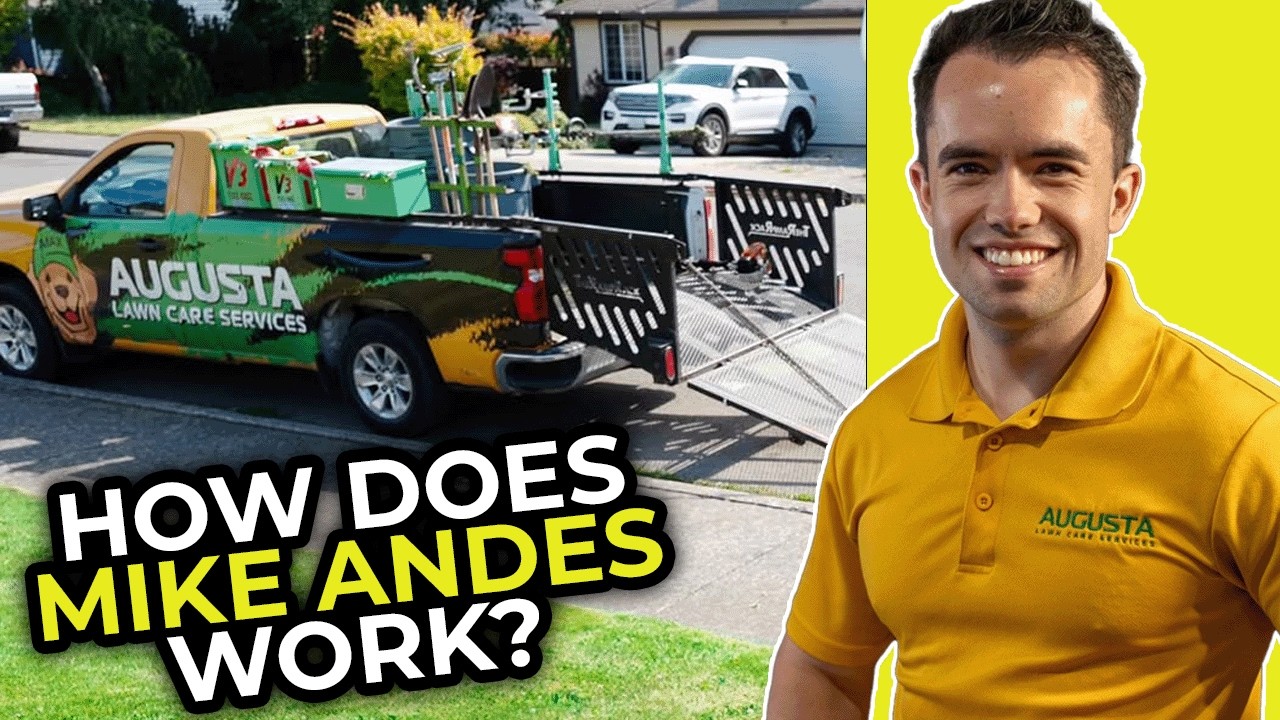
Good morning, good afternoon, good evening. Evening, ladies and gentlemen, depending on when you are watching this video. Welcome to a live Q&A with myself, Will Kelly. We are talking about how to get 50 customers, 5-0, in 30 days. And I'm going to be sharing with you what I would do if I started with absolutely nothing today. Which is really what I would do or redo what I did in the beginning, because I feel like a lot of people, when they want to start a lawn business, go out, they spend a lot of money, they go into debt. And unfortunately, that's not how you start a lawn business. It could be if you have a lot of money, but most people don't. And so, uh, that's what we're talking about today is how to get 50 customers in 30 days. Now this is a live Q&A, so anybody that is watching, feel free. This is interactive, so we can go ahead and throw up the comments up here on the screen just like this. Live viewer comments, it's you guys. You guys can get your questions answered. And, um, yeah, the whole goal is to help you guys out To grow a more successful lawn and landscaping business. All right, so if I were starting the lawn business from scratch today, similar to how I did in the beginning, so we bought a hundred dollar mower off of Facebook Marketplace, and it was an old residential mower. And we literally took it and started mowing lawns. I started going door to door, I started knocking, and we got our first customer, um, to pay us to mow their lawn. And so, uh, that's kind of what sparked it. And I still remember how overgrown some of the yards were when we first started. Man, it was rough with a residential $100 mower that you just got off Facebook Marketplace that was used, by the way. Uh, we put that thing through the wringer and yeah, fun times. But that's how we got started. And so we got a couple clients under our belt and we started making money. And we took the money that we made from those first few customers, we rolled it back into the business, and we kept taking the profits that we were making And putting it towards the next piece of equipment, putting it towards a backpack blower, putting it towards a weed eater and an edger. And that's how we really got started. And I still remember I had a Pontiac Grand Prix and we were literally putting the mower in the back seat of the car. It was kind of wild, gasoline spilling out. I mean, that's essentially how Military Lawn Cuts was born. And every week, every month, every year, we just kept being good stewards of the equipment, the resources, and the finance that God has given us. And we've been rolling that back into the business ever since. So if you fast forward till today, uh, we have 3 locations. We have 3 awesome general managers who absolutely crush it. They lead their teams of anywhere from 4 to 9 people, and they really run the day-to-day operations, um, to where I can focus more on the systems, the processes, And most of the business honestly operationally is run without the owner's daily involvement, which is honestly the whole goal, right? Like, I still remember having a conversation in my mom's kitchen, by the way, and I remember coming to her and I'm like, mom, mom, we've got 50 clients. We're growing. I got a couple people that work for me. I got a business. It's great. She was like, oh really? I was like, yeah, it's so amazing. We're doing this thing. It's working. The truck has a wrap on— not, not a wrap at the time. It was a vinyl sticker. And I was like, we have a business. We have a business. And she's like, all right, that's cool. She's like, so When's the last time you had a team member call off? I was like, oh yeah, this, this happens all the time. Like, like this week we just had like 2 people like not show up. She's like, okay, so what happens when they don't show up? I'm like, well, I gotta go out and mow the yards. And she's like, okay, so it almost basically sounds like you have a job. You have an independent job now. And that really stuck with me. That, that, that actually was one of the most inspiration principles that my mom taught me in the beginning. And by the way, my, my mom is great. She, uh, she owned a 7-Eleven when she was younger, and so she was a little bit of an entrepreneur, but most of her life she worked a W-2 job. And, uh, yeah, she's great. But the fact that she like just dissed me basically in her kitchen saying like, you don't have a business, you have a job. Like, when they don't show up, you got to go out and mow the yard. So it's like, you know, you can't come and go as, as you please. And so, um, yeah, that really stuck with me a lot, and it helped shape me into the mindset of growing to where Military Lawn Cuts is today. And so we got our first comment, ladies and gentlemen. This is an interactive live Q&A, by the way. I am answering your questions. So JCM Jerry's Lawn Care says, "Yo, what's up, my brother? Thanks for tuning in to the live stream, live Q&A here today." So if I were starting tomorrow with nothing, this is the exact process that I would do. By the way, the exact process. Now. First off, it depends. Now granted, we're down here in Texas. My first question would be, are we in the busy season or are we in the off season? Right? Because like that matters of what, how we're gonna approach this. But assuming down here in Texas, 9 months out of the year, the grass is growing. So we're in the growing season. Okay. What I would do personally is I would go and I would knock on every single door within 250 miles— like, not 250-mile radius, 250 doors, like, all around. Hey, my name's Will. Share my story. Just got out of the military. Uh, we're starting a lawn business, so here's my number. Uh, or can I get you— can I quote your yard real quick? Do you have a guy? Can I— can I— oh yeah, we already got a guy. Cool. Can I compete? Like, can I give you guys a price to compete for your business? And most people are like, sure, what would you charge? And I would just undercut. I would undercut it hardcore. Normal, normal mows like $40. I, I'm doing it for $20. I don't care because I want to get the jobs and get the confidence that this stuff works. Okay, I would undercut the price. That's just what you do in the beginning, all right, to get started. And then Once you get four, five, six, seven, eight clients, then you can start to raise your price. Once you get a little confidence, right? And you realize you're out there for twenty dollars, not making a lot of money. You're like, all right, I need to raise my prices. So then you go up to thirty, and then you go up to forty, right? But that's what I would do first. I would get just a handful of clients in the door to where they're paying me, and I would take that money and go. Roll it in to buying door hangers. I would buy 10,000 door hangers and put all of them out in the next 30 days. I would, I would spend 4 hours at least. And by the way, you're walking for 4 miles— you're 4 miles, 4 hours— you're probably more— you're probably walking 6 to 8 miles a day. It's a lot of walking. Uh, I would go out and do door hangers. I would hit door hangers after door hangers after door hangers. Every time a client calls, I pick up immediately, give them a quote over the phone, even just a rough estimate, right? Small, medium, large, because you don't know what the price is yet. And you could call a couple of competitors locally to get a ballpark on what generally they would cost. But that's, that's really what I would get started. So I would door knock my first 5. to get 5 clients, door knock just 3— 250, 300 doors locally, get a couple, 2, 3, 4 clients to sign up, take that money, go buy 10,000 door hangers, and I'll go put every single one of them out as quickly as possible. And from there, I'm probably gonna sign up another maybe at least 5 to 10 clients from that 10,000 door hangers. Okay. Now I have 10, 15 clients that I, that I'm actually being able to service to where I'm a little bit busy, at least in those first couple of days. Says, I agree, it works, guys. I'm telling you, the door hangers work. And, and where I see most people get hung up on in the beginning, and listen to this very closely, Volume. It's a volume game. You have to do so much volume that it would be unreasonable for it not to succeed. Think about that. Most people go out, they buy 2,000 door hangers, they go and put them out, and they get like 3 calls and nobody signs up, and they're like, this doesn't work. Obviously Okay, first off, they've only seen you once. They've seen the door hanger once. Generally, it takes 11 touch points before they sign up with you. So you've only—they've only seen you once. Okay, shoot. Hit the same neighborhood multiple times if you want to get those multiple touch points. Are we gonna take a tactical pause on here? We got a question from Good Works Lawn Care. This is our first question of the day, ladies and gentlemen. By the way, this is a live Q&A. Put your questions in the comments. We'll get them answered. That way we can help you grow a more successful lawn and landscaping business. Also, we need to drink some water. Mmm, that's some good water. All right, what do we got here? Hello, Will. How can I help this person? I got 25 customers recurring. I get a lot of one-time customers. Just to get experience. I lost some because I don't have my applicator license. I'm planning to take the test and get my license. Okay, that's amazing. What I like about lawn treatments is you can pair it with mowing very easily. So down here in Texas, and honestly across most of the U.S., they're starting to build more and more HOA communities, which stands for homeowners association. Which, guess what? They drive around and they write citations for long grass, lots of weeds in the yard. And so if you're in an area that has an HOA, this is a great leadway, um, into an additional service. And the reason why I like the weed control service for Texas down here, number one, it's year-round, but number two, It's a higher skill service, so you're not competing with the Chuck in the trucks who could just get a mower off of— like me, $100 mower off of Facebook Marketplace and get in the game. Like, you actually have to have a license, otherwise you can get in a lot of trouble. Um, it takes a higher skill set. You're able to bring more value to the customer, so you can charge more of a premium. And it's more profitable. If you can charge them more of a premium, you're able to make more money. And that's, that's the beauty. Oh, also, by the way, it's less physical. Less physical. So all of our lawns that we mow down here are self-propelled push mowers. We don't do any stand-ons. All of our yards are really small. And it's a lot less physical on the body when you're treating yards. Highly recommend it. All right, do you bill monthly? I do not. We do not. Um, the reason why we don't bill monthly— I'll, I'll give you the pros and cons. Okay, the pros. Uh, generally billing monthly, I see this a lot with like commercial contracts. So commercial contracts will be— you'll basically go out and bid, and then you just break it up into a monthly, uh, visit or a monthly price. The reason why we don't do billing monthly is I want the cash as quickly as possible per service. In fact, so much so, we charge per cut, and we bill the second the Guys mark complete on the Homeworks app, it bills them, bills the client, charges the card. It's on auto billing. The second they mark it complete, the client gets billed. The reason for that is I want to pull cash forward in the business as much as possible. I don't want to mow for 2 to 3 weeks until I get paid for that service. Now one could argue that, hey, maybe you could, you could pre-bill the month prior. Okay, if you're pre-billing, I'm good with that. Do that. If you can convince the client to pay you 4 weeks in advance, do that. But generally what most people do is they wait to bill at the end of the month, and then guess what? You're gonna have people not pay and you just mowed them for 4 weeks. And then they're not gonna pay you for 2 weeks or 3 weeks. And all of a sudden, 7 weeks goes by or 2 months goes by and you're not getting paid, but you got fuel to pay for, labor to pay for, gas to pay for, expenses, insurance, like all of this stuff to run a business. So if you can pull your cash up, highly recommend it. All right. If so, do you go by average cuts? Um, not really sure what this means, but we do, we do bill, we do measure the turf square footage, uh, to a T. So, uh, we do bill them priced, uh, on based on their turf square footage, uh, an exact price. And we have like 15 different tiers. So we do every— so I think we start at like 1,500 turf. So 0 to 1,500 is like, I don't know, it's like $29. And then, um, 1,500 to 2,000 is a tier. 2,000 to 2,500 is a tier. So we go by 500s all the way up to 8,500. We don't do anything above 8,500 because all of our lawns are really small. Yes, we do require a card on file. And then the second the guys Uh, click complete, it bills them, and then we get paid. Now the, the bad part about that is the credit card processor that we use is, uh, it charges us 2.9% plus a 30% transaction fee. And so we have to pay a 30-cent transaction fee on every single visit. But I would rather pay that and pull the money forward so I can go reinvest it, buy more equipment, buy more door hangers to like grow the business. The faster you can get cash in your business, the faster you can grow the business. And we're debt-free, so we don't like take debt or anything like that. I like sleeping good at night. I follow your lawn matrix. Thanks. Square foot equal minutes. I'm not sure where that's at unless it's in the school community. So by the way, if you guys didn't know, I do, uh, have a school community. It is called the Home Service Scalers, and I've got a lot of good content in there, um, about pricing matrix. And I've got a program in there like how to, how to get out of the truck. A lot of guys like get stuck in the doing of like doing the work, and they, and they aren't able to get out of the truck. Um, so there's a really good course in there for that. Okay, that's what I do, bill before. Okay, yeah, if you're billing before, Jerry, totally good. Clients are less often to cancel. Yes. All right, so that's good. I, I love that, that you're billing, uh, prior. Now here's, here's the, here's the, the weird caveat with that. As you start to scale and you— if you're going to like multiple locations or if you're Um, you know, scaling to like a million-dollar business or whatever, right? Um, as you get more team members and laborers and you start to build out your team, um, so down here in Texas, what I'm familiar with is in the spring and fall we're biweekly, and then in the winter we are, um, biweekly winter services. But in the summer, so from April to Mid-October. Yeah, April to mid-October, we're weekly. So the, the way that you bill monthly, like, you would have to change. Like, if you're gonna bill them on a weekly rotation, you're there 4 times versus in the bi-weekly season, because our— we have a hybrid mowing schedule. And so, or you could just take all the visits, add them up, divide it by 12 But the problem if you do it that way where you divide it by 12 is like in the summer you're going to be a bit cash crunched because you're gonna have to pay all these laborers because they're there weekly and you're not getting paid fully for the amount because it's getting chopped up into 12 months. Now in the wintertime it's great because money's coming in still. Um, so yeah. It depends also like if you're in like Florida or something, I mean, I guess It depends on the mo, the the mo schedule that you have. All right, it's water time, ladies and gentlemen. Gotta stay hydrated. All right, next question: Have you thought about doing Christmas lights? So we have. That is a big thing down here in Texas. Let me tell you why we're not doing it, okay? We're not doing it because number one, you have to retrain your team every year because generally you don't have the same team that you did 12 months ago. I mean, let's just be honest, we don't. Um, you may have a couple of guys, but like most of them are new. Number two, not everybody wants to get on roofs. So what if you don't have any? What if you got a team of 4 and nobody wants to get on the roofs and you're selling to these guys that they want to do Christmas lights? Guess who's stuck doing it? You. I want to build a business that runs without me. So that's how I think. Um, also, I— it's, it's, it's not really recurring revenue. Um, it's recurring, but it's annually. So like, I don't know, like by the time the customer 12 months later, are they going to be like, oh yeah, Military Lawn Cuts was the one that like put my lights up? I mean, maybe if they're a recurring customer, but like just because you put their lights up last year doesn't mean you're guaranteed to put it up this year. So you always have to like go back and like, hey, like we put them up last year, so we're gonna do it again, right? And like kind of get their permission. But like the training, um, like you, you have to go through the training. I personally don't want to get on roofs, um, and you know, there's, there's just a lot of different variations with that. Um, I, I don't like it. We, we go the winter service route. So what we do is instead of doing Christmas lights, we just shift everybody over to the biweekly mow, and instead of them signing a new contract, we just say, hey, we're shifting to winter services. So instead of us going there to mow, we're just going to focus on doing leaf cleanups because leaf cleanup season is going to be coming, trimming the bushes, de-weeding the beds. Um, last year we put down salt when there was a freeze. Um, we also shoveled driveways last year, like just whatever we need to do to make money. And, uh, you know, we just spend 30 minutes on the property, which is what we're budgeted for the most. And then we're able to, uh, keep our guys pretty busy. We do have to lay off like, I'd say probably 60% of the guys, but what we do is we give them a sign-on bonus to come back in the spring. And, um, we keep the like best, best guys that give us the least problems in the winter. So it's kind of nice because they all show up, know what to do. All right, Good Works Lawn Care said, thanks, I am taking cash, taking check, Cash App, cash under the mat. Is hard for your clients to agree to card on file? No, it's not. So I don't know what software you're using, but, um, if you use— if, if you wanted to test out HomeWorks, so we use HomeWorks, um, I have a referral code. Actually, I should put that up here. Yeah, there it is. Check it out. If you use this referral code on the, uh, to sign up for Homeworks, you, um, will be able to get 2 months for free, which is nice. You, you're not able to get that anywhere else outside of like a referral code here. So it's just referral underscore and then my name, Will Kelly, all caps. Um, that, that will get you 2 months. But when you talk to customers, just say, hey, like, we do require a card on file. Did you want to use a Visa or MasterCard? That's my pitch every time. Legit. Like, people, look, any, any established business that you use take card. They don't take Cash App. They don't do Zelle. They, they, they don't do this stuff under the table because they're a legitimate business. When people order Domino's, they're not, they're not sending Cash App to Domino's. They're putting their card on file and they're paying over the phone with a card, like, because it's an official business. Uh, oh, sorry, that's not, that's not— we're not doing one-on-one coaching right now. Um, Let me take this off. Sorry, I'm messing up, guys. Here, yeah, live Q&A. All right, if you got your questions, put them in the comments. All right, where are we at here? Where did we leave off? Um, so yeah, I would highly recommend, uh, anytime you just, you know, sign up a new client or whatever, um, get a CRM that has the ability to put a card on file. You just set up an account with Stripe Guys, it's the easiest thing and you don't have to go and chase money. You look, when we were first starting, I had like, what happens when you show up and the money's not under the mat? Do you still cut the yard or no? Like, if you do, okay, now, now you're a bank. They owe you money. So is there going to be interest? I mean, like, you know, so like once you get the— if you can get the card on file, which I highly recommend, It just makes billing easier for you and the client. Guess what? You show up to the property, you mow the yard, you click the done button, they get billed, everybody's happy. They don't have to sit there and Zelle you every week. They get their time back. You get your time back and don't have to chase checks. All right, Cedar Hill, Texas. Huh, I wonder where that's at. Let's take a look. Cedar Hill, Texas. Cedar Hill, Texas. Maps. Okay, yeah, so you're south of Arlington. Wow. Nice. Yeah, you got some good neighborhoods out here, dude. Oh yeah, this is some good route density right here. This is what you like to see, all these neighborhoods. I'd hit every single house here with a door hanger every year. I'd hit it every year. By the way, last year we did 100,000, uh, door hanger campaign. It was pretty wild. All right, good works. I do mesquite firewood sell. Oh yeah, there you go. So yeah, you could definitely do firewood, firewood too. Um, I've seen that, uh, pick up too in the winter. So if you guys are looking at adding a winter service, you want to look at the demand curve. So let me give you an example. Uh, one year we were looking at adding pet waste removal to our business To like help us get work in the winter, right? But when you actually look at the pet waste company, their demand curve climbs in the spring and it's like busy in the summer when people are outside and like the spring when they like want their yard cleaned up and wanna be outside with their kids in their backyard, don't wanna be stepping in poop. That, that's the same demand curve as the mow. So like it's just gonna be a distraction for you. If you add that service, but if you add something like Christmas lights, for example, our mowing season ends mid-October. So in November, guess what picks up? Christmas lights. It literally has an opposite demand curve as your recurring mowing services. So if you are going to add something, just try to look at the demand curve. Like firewood, when people need firewood because it's cold, that's a great, uh, service to be able to, um, to sell because it's opposite of your recurring work. All right, keep those questions coming in, ladies and gentlemen. Since you are in these HOAs, HOAs, do you ever run out of things to do? I'm familiar with them. Um, I don't quite know what you're referring to as like run out of things to do. I'd say like, do we need more demand? Like, do we need more clients signups? Yes. Um, but yeah, no, I mean, generally there's— oh, I think you may be talking about the winter services. Yes, there are times where we run out. I'll give you like, you gotta really get outside of the box and think about this stuff. So let me give you an example. Um, what we do is we buy spigot covers for the hose attachments for the freezes. So one visit we may put that on, which there's a little bit of material cost in there. I mean, it's like $2, maybe $1.50, and there's maybe like 2 or 3 on a house. So we'll put those on, take a picture. Um, we'll, we'll do pre-emergent in the flower beds. Um, we'll trim bushes, we'll deweed beds, we'll, uh, pick up leaves. What else do we do? I don't know. We have a whole list. There's like 15 items and they just go down the list. They spend 30 minutes on the property and then we start with the highest priority first, which would be like leaves. And then once all the leaves are cleaned up, because sometimes it takes a few visits, then we go to the next. We also do a monthly mow. So like, if there's— if you get through the whole list, like, let's still mow. Now granted, the grass is kind of dead, but, uh, we'll still edge the sidewalk, driveway, and curbs. We'll, we'll take the grass down just a little bit to get the nice lines in there. Um, you just got to kind of get creative. But generally speaking, the— come like mid-February, right before March 1st when our season starts off, there are times where yes, we do. We've gone through the checklist. We did their monthly mow, everything's cleaned up, and there's nothing to do. And then in that scenario, we will actually skip them and they're not billed for the visit because we're not doing any work. My man, hello. How should I charge leaf cleanups in North Texas for an average home? So there's 2 different ways you could do this. Um, you could either tell the client your hourly rate. Let's say, for example, you charge $80 an hour. You could say, hey, the, uh, plus cleanup, obviously. I mean, you're gonna need, you're gonna need to haul it off depending on if you can leave the bags there on the property. But, uh, there's 2 ways to do this. So you could either say, hey, uh, we charge $80 an hour, so however long it takes. Now obviously we're efficient because we do this every day. But however long it takes, uh, it's just $80 an hour, and then, um, per man, $80 per man. And then, yeah, we just bill you at the end. I don't like that way because, like, the clients are going to get hit with a $300, $400 bill and they're not going to realize how much money it actually costs. Because what happens is, like, most people will look at the leaves and they'll be like, yeah, this will take me an hour. And I talk to homeowners all the time They're like, yeah, we went out, started picking up the leaves, and it was just so much more work than we anticipated. And it's like, obviously. So they, they don't realize how much actual work goes into picking leaves up. Um, but once you, uh, have done it a few times— so you could start with that. That, that's how we started, is we were just like, yeah, we'll do— I think it was like $70 an hour at the time. And, um, did it that way. But now we just, we just do a budgeted time. We say, okay, um, this is probably gonna be a 3-hour day. And then we'll multiply that by our $80 an hour. 8 times 3 is $240. It's like, all right, now how many bags do we think we're gonna have to haul off? Is this gonna be a half truck pickup truck load? It's gonna be a full truck load. And then based on that, we'll charge them a disposal fee too. So Um, $240. It might be like, if they— if it's a half load, maybe it's like, uh, maybe you're adding like $60 or $80 to that. So maybe like $300 to, to pick up the leads. But once you like do it a few times, you'll kind of know a range. And then what's cool about that is— and, and you might shoot yourself in the foot. You might be like, hey, this is gonna take 3 hours and it takes you 6. It's the cost of real-life education. It's part of the game. It's part of the game volume. If you do it enough, you'll realize how long it takes. Um, and yeah, it's just lessons that, that you learn. I don't like saying mistakes, I like saying lessons. Okay, you use Yardbook? Yeah, there's a, there's a card option on there for that. I was about to sign up for the free— for that free coaching. Um, I might do some coaching. Um, so by the way, I like— I do again have the school community. There's a lot of value in there. Anybody that has like a Google Business Profile, like, like that, that school community will definitely help you get to like 100+ clients at least. I mean, maybe 200, 300. Like, it'll, it'll— like, that's about the range. Um, it's, it's for people that are like getting started that maybe have like 20, 30, 40 clients that like want to take it and like to the next level. Um, there's a lot of really good stuff in there, how to optimize the Google Business Profile. Um, and I, I pull back the curtain on a lot of stuff. Um, I used to do free coaching. It helped keep me content. Um, I was actually trying to look at like doing a phone call-in thing. Um, to see if we could actually get that in here. Um, but also maybe like one time, maybe one day we'll do like a video thing. I'll put the link out, maybe we could have some people jump on video and, and do that. I think that'd be cool. Um, yeah, I've done paid coaching before though. Um, honestly, like, I'm really— I really go back and forth on that because like My time really does need to be spent on building military long cuts, and like I only do these when I have like a minute or an hour here and there. And like, like because I used to do 300 for an hour, but it's like even that, like it might my time is spent more valuable inside of military long cuts and building the systems for that. There's so much stuff that I still have to build. Um, there's so much stuff we got to work on still, but so I don't think— well, I don't think I'll do free coaching again, but maybe, maybe like an hourly thing or like a 40, a 50-minute call, um, which would be like a paid call. All right, during the winter. Yeah, I think I did touch up on that because you were talking about, uh, if we ever run out of things to do. Yes, we do run out of things to do sometimes. and we just skip them, and then we don't unfortunately make revenue. But we also don't want to take advantage of the client. Like, if there's nothing to do, there's nothing to do. But we try to find every little thing to do to help bring value. Do you offer Bermuda rye overseed? No, we don't. Um, that's like one of the biggest problems with a lawn treatment program is when you have, especially down here in Texas, Uh, when you have ryegrass, because what happens— so ryegrass is a cool season turf, and when you overseed that in the wintertime, number one, you can't put pre-emergent down because you're trying to grow grass. You're gonna have probably more weeds. Um, it oftentimes comes in spotty, so it's like not going to look great. Um, now contingent on like, let's say you actually do it right and you put starter fertilizer down on it and like you actually get it to come in thick. Cool. But now comes spring. Like, cool, okay, we got grass in the, in the winter, which might help you a little bit stay busy mowing lawns. Sorry, ah, been a long day. Um, the problem is, is in the springtime when the Bermuda starts to come out of dormancy, you now have Bermuda grass and ryegrass in the same terrain competing for the same turf, like, space. And so you're never really going to have, like, a thick, lush, healthy lawn, uh, for a long time. You could, you could have it in December, January, or February, but the minute March comes around, Bermuda's starting to come out of dormancy again. So if there's one grass type that we always pitch to our clients Number one, we we recommend them not to overseed because it kind of goes against most of our program. And out of the 600 clients that we have, there's maybe like one person or two people that have ryegrass that overseed in the winter. Um, but the Bermuda is much better because it's going to be green like eight months out of the year, right? Like it comes out of dormancy in March and then it goes dormant like end of November. Now granted, there's a if you're down here in Texas. There's, um, there's like a drought season in July and August, but as long as they are watering on the watering restriction properly, like, it should stay green for 8, 9 months out of the year. So as a client, right, like, what's the goal? To have a nice green lawn. Okay, so would you rather have a nice green lawn for 9 months out of the year or 3 months? Right? So like, it's, it's a very easy convincing the client to not do that. Um, yeah, don't recommend it. All right, ladies and gentlemen, so we're talking about 50 customers in 30 days. Okay, we already talked about what we would do at the beginning. Number 1 is door knocking. I would door knock 300 doors, get my first 3 clients, right? Introduce myself, get things started, undercut the competition. I mean, do whatever you gotta do to get the first few clients. Then you take that money and go out and get door hangers. Buy 10,000 door hangers, put every single one of them out in a month. Hit the same neighborhood twice if you want, doesn't matter. Focus on your location. Route density is the key. You don't want to be putting door hangers out all the way 10 miles that way and 10 miles that way. Just stay in like a handful of neighborhoods around where you're going to be living or working. Um, that'd be number 2. That I'm confident— volume. Volume is the game. Just keep doing it. Just keep pounding, pounding those door hangers. It's gonna be a lot, a lot of walking. And then after that, once you start to get a little bit of money, like your 15, 20 clients, okay, 20, 25 clients, now is the time— if you don't have a truck, obviously try to get one, We buy our— we, we bought ours off of Facebook Marketplace. My first truck we ever bought was for $4,000. It was a used truck, an F-150 XL, had 150,000 miles on it. But that's what got us started. I put a $500 ramp on the back. I had a custom welder take the tailgate off and just put a ramp on it. Hopefully you have a truck. By that point, when you have 25 clients, take the money that you're making off of those 25 clients and put vinyl stickers on the truck. It is the best customer acquisition cost, I promise you, outside of like the website. That is going to get you clients for cheap. You do it one time And every time you drive in the neighborhood to go mow your neighbor's lawn, your neighbors are seeing that truck. These are touchpoints. Every week you're driving in the neighborhood, they see the vinyl stickers on the side. Okay. Every time. And guess what? They're going to call. Keep putting those door hangers out. They're going to call. All right. Keep doing that. That, that I promise you like that, that concept. If you grind it, if you grinded that out, there's no reason you can't get to 25 clients. Like, which I know I said 50 and 30, um, you'd have to really be hustling, honestly. 50 and 30. Oh, and it probably would have to be spring rush. I mean, I'm just being honest, like, it would have to be in the spring rush, like when the demand is the highest. You could absolutely sign up 50 clients in 30 days, 100%. I mean, we signed up Probably like 150 or 200 clients last year. Yeah, probably 150 or 200 clients in, in 6 weeks to 8 weeks in the spring rush. So it can be done, can be done. All right guys, this is a live Q&A, um, to help you guys grow a more successful lawn and landscaping business. The floor is yours, ask me any question you want and I will answer. Um, let's take a look here. Let's take a look. I'm trying to think what value, what value can I give you guys? Hmm, what value can we give you guys? You know what, why don't we do this? In the comments, why don't you guys put How many how many clients you have and like what's your annual revenue? Like let's do that so I can get a good pulse on like where you guys are at. I got like fifteen minutes here and then I gotta go. Put how many clients you have in the comments and what is your annual revenue so I can help you guys the best. So I know where you guys are at. That'll help me guide the guidance advice I give you. You guys are a quiet bunch. All right, we got 70. We got 70. All right, so 70 clients. Okay, trying to think here. I'm gonna assume the goal is obviously to get more, get out of the field. At 70 clients— 70 clients, 70 clients— you're, you're in the do phase. You got to just buckle down, put your head down, do the work. Maybe you have a helper at 70, maybe not. You might be able to get all those done in the winter. You're not going to need a helper for 70. Um, Depending on the yard size. But generally speaking, uh, in the winter you're not gonna need another dude. If you— at 70 clients, if you can do all of that work in the winter by yourself, you will stack cash. You will stack cash. And it's gonna suck because you're gonna be doing it all. It's very physical. Trust me, you're in the do phase, it sucks. That was like one of the worst phases for me. You'll get through it on the other end in the spring rush with way more cash if you can do the work yourself. And then take that money and pour it into marketing, pour it into Facebook ads, pour it into door hangers, and then hire that guy back in the spring. Be like, hey dude, I don't have enough work right now, I'll give you $500 to come back next spring so that way you don't have to train somebody new. He already knows the systems or the, or the processes of the yards you guys do. That will serve you better because you're going to be able to stack cash and then deploy that cash in the spring rush. Yeah, you plus one guy in the, in the busy, in the summer, summer season, that's normal. Like, yeah, you should have, have another guy for sure. All right, let's see. Thank you, brother. I would like to do a call or live questionnaire. I'd like help with my business, not sure if you can help. Um, Yeah, I mean, I can definitely help. What questions do you have, Alfredo? I've got 14 minutes left on this call to help you guys grow a more successful lawn and landscape business. 70 clients, man. I think back when we had 70 clients, I, I had a helper with me. Um, I would say the biggest learning for me, Jerry, Was I had this, I had this flawed mindset of like the younger generation just doesn't want to work. That's a cop out. It's an excuse we tell ourselves, and I did too. And so if you can take that mindset and just like get it out of the brain and just realize like we have to do some self reflecting internally. Humble ourselves and like look at us as leaders. Because what you'll realize is if you have team members that are just up and leaving you, not giving you a 2-week notice and just like leaving, uh, or not showing up consistently or tardy, like that's a reflection of us and the standards that we hold. And so, um, it's easy to tell ourselves that, you know, the younger generation just doesn't want to work There's not good team members out there. I just can't find anybody good. And at the end of the day, honestly, it's it's it's us as leaders. We have to be better. We have to hold the standard more. And that when when you start to accept that is when things change. Is when you start listening to auto audiobooks. How do I become a better leader? How do I hold the standard more? And all of a sudden, the team members that you start to do hire. Start showing up. You start having the conversations that you know you were supposed to have sooner about, you know, not showing up or being on time or doing quality, right? It's those little things that matter. You give somebody an inch, they will take a mile. I've learned that too many times. Quicker you have the conversation, quicker it gets better. Because I had— we had a 30-day turnover in the beginning, trust me. I went through a lot of pain to learn that. It's a skill. It's definitely a skill, but that'll, that'll help you get to like 140 because you're gonna need like 2 people at that point when you get to 140 from 70. Okay, appreciate all the advice you give, Will. I've used a lot of stuff you do in your business. Hopefully one day we can meet and talk long hair about to get a haircut. All right, man, have a great day. Uh, thanks for tuning in. We appreciate everything. Hopefully the haircut goes well. True Gospel, welcome. I have a question. I'm running my business out of my 2017 Toyota Corolla trunk. I have a gutter cleaning and lawn maintenance business. I have about 15 lawn clients, about $3K in checking account. What next? Um, okay, I like this because you can pair this, the gutter cleaning and the lawn maintenance. You can do both. Toyota Corolla. You're probably gonna need a vehicle soon. Those 15 lawns are, I'm gonna assume, mostly biweekly because that's just how it is in the beginning and you don't have a lot of weekly. Hmm. Okay, what's next? First off, I would ask you, how did you get those 15 lawn clients? That would be number one. And I would try to do more of that, however you got those. Um, that would be my first. Uh, the second is you're probably gonna need some kind of better transportation. I'm thinking, hmm, I'm thinking like, uh, there's a store down here called Harbor Freight. You can get a, uh, like a wheelchair carrier on the back. But I don't think that's going to work out for a Toyota Corolla. Um, if you want to go— if like, if you're really going trying to get in on this, like the— like, and really like build this thing, um, you may want to sell the 2017 Toyota Corolla for a few K and then take that 3K that you have and go buy a better truck. Um, okay, you have a trailer and hitch but not installed yet. Okay, so just, um, I did that before with my Pontiac Grand Prix. Sorry, I'm, I'm reading the other comments that you're posting. So I did that before with my Pontiac Grand Prix. I got a hitch installed on it, but it sat so low to the ground that when I put a hitch receiver, uh, cargo carrier on there to put my mower on, it just Straight dragged on the ground when I went over the road. Uh, so it's basically a waste. Trailer needs outfitted. Okay, I, I don't think you're pulling a trailer though with a Toyota Corolla. So if I were you, I would probably be— I would probably be lining up, like, go on Facebook Marketplace, see. Okay, you got $3K in the checking account. Um, I would realistically do a Kelley Blue Book to see how much you can get for the 2017 Toyota Corolla. Depends on how many miles, but you might be able to get $3K or $4K for that, or $5K. Uh, but if you could take that $5K or $6K now, once you sell that one vehicle, you get like $6K, $7K maybe. See what kind of trucks you can buy with that, and then that, that would be your gateway into getting a vehicle that you could put a ramp on the back. And then really get this thing kickstarted. Because once you get that truck, the next, the next thing would be, uh, the vinyl stickers. Once you get your, your, your company name and at least a phone number nice and big on the side of the truck, people are going to start calling you. And, uh, that's when it gets really cool because they're going to continue to see your truck. Northeast Florida too. So that's nice because you get pretty much mowing year-round, I would think. Um, I would also question or ask you, like, could out of those 15 clients— I mean, once the spring and summer comes where the grass like actually starts to grow more, can you just be like, hey, we're going weekly this year? Like, this is a new, new schedule for us. Like, all of our clients are shifting to weekly. And like, you might lose 2 or 3 clients. But if you even keep 10 of them and they all go to weekly, like, you're now going to double your revenue. So I would probably do that and then, and then go sell, you know, and, and, or, or like charge more for the biweekly. It's like, look, like we're shifting to weekly, and then if you guys want to stay biweekly, it's going to be a little bit more. Like, this is just a new rollout system, so you can try to get more revenue from your existing clients, I would maybe kind of look into that. Um, that is something that we did. Um, I think we had like— I think we had about like probably 60 or 70 clients. Uh, most of them were biweekly, and at that time we, we were like, you know what, like let's just, let's just shift to a weekly schedule. Now granted, we're biweekly in the spring and fall when the grass like doesn't really need it, like that's fine, but like I'm talking in Florida, when you actually need to be there like every week, when it's like rainy season and the grass is growing like crazy or something, I would see if you could you could shift people to weekly and it'd be like you get more revenue from those from those clients. All right, do you do one door hanger with all your service on it or four different ones? We do one door hanger with all the services on it. I have a trail in the hedge but not installed. I have 90 clients that would like to get out of the field and just manage it. What should I do? You have 90 clients like to get out of the field and just manage it. I think this depends a lot on like how much money, like are you able to live off because like. At 90 clients, you're not going to be able to get fully out of the field. And if you do, you're like basically gonna pay people to do the work, and you're probably not going to make a lot of profit. So like, if you can pay your bills or you have other income coming in, or your wife works or something, like, yeah, sure, you can get out of the field now. But like, if you don't have that other income, then, then you got to grow. You, you gotta, you gotta grow. So Um, you got to look at like doubling that. The, the more you can scale that up, the more you can start to shift out of the field. Um, and then that's really going to test your leadership as well. So a lot of that, like, like you asked, you're asking me what I should do. If I were you, I'd be getting into the audio audiobooks. I'd be learning how to be a better leader. I'd be learning how to have difficult conversations with people. By the way, there's a book out there called Difficult Conversations. Like, I would be learning all of these skill sets that you will need in order to have difficult conversations, hire people well, um, lead people well. That, that's what I would be doing. All right, average 50 hours long biweekly. My goal is 120 total to send a crew of 2 on a truck. I'm working on a web page. Yeah, yeah, that's good. So yes, and then that would be able to get you like out of the field. But just, just know you have to cut— you have to, um, you got to do the math. So like, if like you had to pay somebody right now, I don't know, let's call it $15, $20 an hour to mow those lawns, like what would the numbers look like right now if you had to pay yourself $20 an hour Because that's what you're going to be replacing. You're going to plug another team member in there who's going to take your spot, and then you're gonna have to pay them $20 an hour. So you got to make sure financially that you can support that. But yeah, generally, um, in your scenario, like, if you— like, if the whole goal is to get out of the field, this, this is, this is literally what I would do, Alfredo. All right, this is great. He's giving us good content. Uh, I am paying the crew leader $18 and the other tech $17. Okay, so you already have 2 people. Um, I would fill your route to capacity. So what does that mean? If you only have 1 truck, how many lawns can 1 person do a day? Let's just say it's 10. I can do 10 lawns. So if you have 2 guys in the truck, they should be able to do 20. So that would be 20 per day, 5 days a week, that would be 100. So at 100 clients, you would be maxed out unless you have another truck. If you have another truck, then we need to fill the capacity. But what I'm saying is, if the whole goal is to get out of the field, and let's say you have 1 truck Okay, this is good. He's gonna give us, give us more content. Yes, I have 2 guys, 1 truck, and they're both part-time. All right, perfect. So what you would want to do, let's just assume they can mow 10 lawns per person per day. So that's 20 lawns, 5 days a week. That's 100 yards. That's 100 lawns that you can do in a week. I would fill your routes to that capacity. And when you start getting close to that, when you have like 90 lawns on a week or 92 lawns, I would raise the price. Now I'm not talking 90 total customers because you could have biweekly where you're cutting 45 this week and then 45 the next week. If they're all biweekly, then you need 200 biweekly clients. That would be your max capacity, 200 clients if they're all biweekly. Or you could try to shift those over to weekly. But regardless, during the week they can only do 20 stops a day. So 20 times 5 days, so there's 100 stops that you can do per day. When you start getting like 80 stops, 90 stops, we need to raise prices by like 25%. Because what's going to happen is you're going to lose clients, but then you can fill them back in. Most of them will stay. You'll be doing less work, making more money, and then that's going to be the margin that you can actually step out and get out of the field. So don't buy another truck if that's your goal. If the, the only goal is to get out of the field, just get to max capacity for that one truck, which is 100 visits a week, and then, um, raise prices. And, and you continually do that, and you do that The first year you're going to lose some customers, then you fill back up. The next year you do it again, and then you just keep doing that and optimizing it and making sure that those guys are like doing quality so you're not losing clients. Dude, that's how you get out of the field. Sorry, we, uh, we missed a couple here. Okay, average biweekly revenue per lawn is about $72, so that's pretty good. You probably have larger lawns than what we have. If I have— if I average all of my clients based on one bi-week service, Corolla has almost 110,000 miles. However, I have no interest in selling it, rather keeping it till the feels. Yeah, I mean, I would ask you like, what is your goal? Like, what's, what's the goal? Like, what's, what's the, what's the 1 to 2 year goal from now? Because that's going to matter how we, how we game plan. Welcome, Tristram0073. Are you doing advertising now during the winter? If so, what have you found that works in your area? No, we're not. Um, I've continually— I've tested this over many years. you will pay in our market 4 times the amount of money you have to spend to acquire a customer. I don't want to do that. If I only have $10,000 to spend on marketing, I want every single dollar to go as long as possible and as far as possible. So that's why we push all of our marketing out in the spring when the demand is absolutely the highest. We don't market in the winter. I mean, we don't, we don't do paid marketing. Obviously our trucks are still wrapped. We have the website. You know, we're still tagging, tagging our business in like Facebook posts and stuff, but we don't do any paid advertising in the winter. We have before and it doesn't do well. Trailer's used and needs fixed up a bit. Both it and the brand new hitch should be gifted. Okay, um, I mean, if you're able to use the trailer and, and lug around the equipment, then I would say just roll with that. That makes sense. Okay, so then let's go back to your question because you said what would you do with— you have 15 clients and about $3K in the bank. Um, how are you— how did you get your 15 clients originally? Because that would dictate the answer that I give you. But generally I would say do more of that. Uh, my initial thought Um, my initial thought, I like, I like the door hanger route though. I like the door hanger route. I would probably— yeah, okay, so here we go. Door hangers and word of mouth. Yeah, dude, door hangers then. Take that, take that too. At least I, I, I'm, I'm always conservative, so I would leave, um, I would leave $1,000 in the bank just so I could sleep well at night. I would take $2,000 and go on Vistaprint and buy door hangers, as many door hangers as I could. I'd use the coupon codes for with 2K, and I would try to put every single one of those out. Now, timing matters, so you can't— I would not just do it right now depending on where you are in the US. Um, you got to do it during your spring rush when the demand is the highest. That's when you put those door hangers out, and that's when they work. But I would, I would like Thousands of them, and and even if you need to like hire a helper, you just pay him fifteen bucks an hour, and then every give him a territory on your map and say, "Look, every client that signs up, I'll give you fifty bucks." And then so you'll pay him fifteen base pay, and then because it's going to incentivize him to not just throw the stuff in the trash, and then he goes out, put door hangers out, and then you can see where they. Where they sign up from. And if they sign up from a door hanger in that area, then he's going to get $50. To do the free— also, do you do the free content like having a Facebook page? Has there been a notable change in how your brand is not so received? Um, so I have a personal YouTube channel. That's what I'm on right now. Um, it's mainly for business owners and like just building the personal brand for me. So, but maybe I think you're referring to like the Military Lawn Cuts page. Of having a Facebook page, has there been a noticeable change in how your brand is noticed, perceived? Um, it's a long-term game. I would say that it's not something that's gonna happen overnight. One post is not gonna get you a ton of signups. It's a constant drip. Every month, post something. Post something recognizable. Recognize a team member. Maybe you're offering leaf cleanup services. It can't always be sales. It could be like an update. Hey, we're launching a second location in this area. Just wanna let everybody know. Like, so don't always just try to like sell all the time, but it's, it's just a constant drip. Um, I, I don't notice a massive uh, difference. But, but from a long-term play, it's— it is part of the game. Yes. If you're in the beginning, just again, door hangers is probably like the move. Like, that, that, that will get you immediate clients. So about 1,000, give or take, door hangers left. Wish I could send you a picture of them, perhaps get design advice too. Um, Yeah, well, that's good. So yeah, that's really good. Um, I would, I would stack that. I would stack that with more. So, you know, um, you, you would want to just figure out, like, this is how you figure out the customer acquisition costs also, is like, so you got 15 clients. You said some of them or most of them came from door hangers. Like, how many door hangers did you put out? How many did you buy? And then how many did you put out? And then what you do is like, okay, well, how much did you pay for the door hangers? And then just, that's the cost. And then you divide it by how many signups you have, and that will give you your CAC, which is a customer acquisition cost. Okay, so you put $1,500 out. Okay, so let's just say like you got, uh, let's just say you did $1,500. Let's just say half of those, let's just say 9 of them came through and the other one came through from word of mouth. It's $166 customer acquisition cost. That's pretty good. So you said your average cut was $72. Times— okay, so we have 32 cuts down here, um, but you're doing biweekly. So if we multiply that by 20, so that's $1,440 is what an annual value client will make you for just mowing. Okay, now if you're doing all the work yourself, you're probably making 40-50% profit on that. Which, yeah, you only have 15 clients, so you're doing all the work for yourself. So you're going to make 50% on that at least. So you paid $166 and you're gonna make $720. Let me say that again. This is how much you spent. I mean, plus your time too, if you're gonna have to pay somebody. But like, this is just the material cost in Uh, door hangers. So like, you would want to calculate how many hours it took you to put door hangers out, and then like, if you had to pay somebody $15 an hour, like, you would want to include that in here. But for this scenario, it's just how much material the door hangers cost. So you spent $166, and if you keep that customer for 1 year, they're gonna make you $720. I would pour gasoline on that fire. I would try to 10x that, dude. In the spring, I would hire like 3 people to go do door hangers and hand them a stack of like 5,000 and be like, these all need to go out by the end of the week, and I'll give you $50 for every sign up that you get. Because even if you add that on the, um, the $166, even if you give them like $50, it's still $216. But the only— the, the calculation that you're not calculating, or we're not calculating here, is the time it took you to put the door hangers out. And then like, it's your time now, which is great, but like one day if you have— if you want to grow this thing larger than just yourself, you're going to have to pay somebody to go do the door hangers so that way you can go focus on other more important things. All right guys, uh, we're gonna wrap this up here. We're gonna wrap this up. I'm gonna get through these last couple questions and then we're gonna wrap this up. Uh, do you think I can do a live call sometime? Um, I don't think I'm gonna do live calls right now just because there's a lot of, uh, I'm hiring a new regional manager in the spring. Uh, we're also going to be hiring a new office person, so I have a lot of big hires that we're going to be making. And then, um, just getting them trained up, getting the processes and the systems tuned in before they get on the team is, um, my focus. If anything, I may do paid coaching this winter. Uh, but that's like a small possibility. I'm looking at potentially hiring a media person to basically just walk around and vlog my life, uh, like one day a week, um, to just kind of document the journey of like what we're doing and like how we're doing it. Because I think it's really cool to share and I want to make a bigger impact on people. But the only problem is, is I've literally been burning media burning money on the media side for 2, 3 years, and we just finally are like making a little bit of money to pay the lights over here. So, uh, if I had to hire a media person, we would be back in the hole and like burning money, and I don't want to do that right now. Um, but I know it's a long-term game, so it's just part of business. Um, all right, that's really good. I have a friend help me put them out. Same friend gave me the trip. That's awesome, man. You're super blessed to have a gift run like that. I do have 25 to 30 clients biweekly, not really interested in weekly. I do have one weekly client. My goal is to shift making most of the revenue predominantly from a bookkeeping business. Shift making most of the revenue predominantly from a bookkeeping— okay, that's interesting. So yeah, you got quite a few things going on. You got a gutter cleaning business, a mowing business, and then you're getting into bookkeeping. Or gutter cleaning. Yeah, probably some gutter cleaning, lawn maintenance business, so I can free up my time to serve God with mission trips and soul winning. That's amazing, man. Yeah, follow the Holy Spirit, whatever you feel called to do. And, um, ultimately that's what I've learned. That's the last question for the day. Um, that's the biggest thing that I've learned is like, how do we use our businesses as a ministry? Because everybody that's watching right now, these 5 people that are live You have the opportunity right now to impact people's lives, and the reality is, and it says this in Isaiah, everything on this planet is worthless. Everything is worthless. It's meaningless. Nothing's gonna last. Everything's gonna be like the house that you're sitting in right now, or the building you're sitting in, 150 years from now is gonna be demolished. Like it's not gonna be there. Nothing lasts. The business is not going to last. And so if we realize that and we, and we pour our heart, soul, and mind into the people that are in the business and making a long-lasting impact, that's what matters. It's not what you leave behind, it's what you leave inside of people and, and, and helping them internally live a more wholesome life. and, and, and all of that. So, um, yeah, that, that's, that's the biggest thing that I'm learning. Everybody that's watching right now is mostly a business owner, uh, and so you have the, the, this massive leverage of these people that you're hiring and these customers that you're serving to like use your business as a ministry and how you can live more like Christ and treat people with respect and treat people Love thy neighbor as yourself. That's what Jesus Christ, um, you know, said, said was one of the most, uh, important, uh, most, most important, um, commandments. Love thy neighbor as yourself. So, all right guys, we're gonna wrap up. Hope you guys got some value from this. If so, make sure you subscribe if you're not already. Leave some comments, click the like button, show some love and support so we can help and reach more people. I hope you guys all have an amazing rest of your day, and I and I pray that God blesses your business. He blesses your customers that you're stewarding, and that you that you guys prosper. And so thanks so much for watching, and yeah, we'll see you guys in the next video.