How I Quit My UPS Job and Build Wealth Through Real Estate
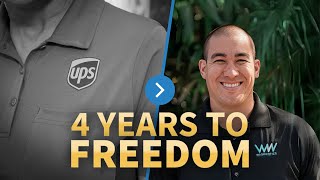
This is a YouTube video titled "How I Quit My UPS Job and Build Wealth Through Real Estate" created in June 2025. It features a conversational interview between Whitney and CJ Calio, where CJ shares his personal journey from working as a UPS driver to achieving financial freedom through real estate investing. The discussion covers strategies for investing out of state, building a real estate portfolio, transitioning from residential to commercial properties, overcoming challenges in the market, and the importance of mindset and mentorship. CJ also offers practical advice for new investors on finding agents, evaluating markets, and creative financing options. The content is motivational and educational, aimed at inspiring and guiding listeners interested in real estate investment.
We have another guest who's going to share with you today how they reached financial freedom. His name is C.J. calio. And it's an incredible story that I hope inspires you to take action. If you feel like you are struggling, you're in that place where you can't reach financial freedom, you can't buy that first piece of real estate. Listen to CJ today. He's going to break down a number of ways that you can get started today to start learning ways to, to find that market and to start taking action. He coaches lots of people on doing this exact piece, but you're, you're going to hear some actionable things today from cj. Cj, welcome to this show. I was honored to meet you in person just a few weeks ago. And a mastermind was very impressed by you and your wife Jasmine, I think the brains behind their operation. Right. Somehow she let you on the show to do the talk. And I'm not sure how that works.
But a chance with that.
Yeah. Well, grateful to have you on. I'm looking forward to just drawing out some of your expertise today because I know you are training lots of people and getting in real estate and doing it successfully from no matter where they live, by the way. And so I'm looking forward to talking about that. But I know you also started as a UPS driver and there's still a lot of UPS drivers still out there. They're probably wishing they could be doing something else.
Right.
But that relates to so many people I know that are listening. But now they're raising, you know, many millions in real estate and just growing a very large portfolio to now helping so many people do that. Give us a little bit of that story. Like, how did you do that? It's so difficult for most to break free of the W2 and it's scary world out there. CJ, how did you do that?
Awesome. So my story goes back to I'm born and raised from Hawaii and I was taught at a very early age to go and look for a stable, consistent, safe job. So when I grew up, that's exactly what I did. And I found myself working for ups, which is a union, safe, well paying, good benefits job. And it was interesting because I liked it for a long time. I just opened the tap that Christmas and started pouring in so much packages that I found myself overwhelmed and tired and working so much. I didn't see my family. And I just remember one day on route making my deliveries and just it's so late. It's. People are sleeping When I'm delivering, and it's well past my normal finish time. But the packages weren't going away in my truck. They were just constantly there. It's like a recycling of packages. Every time I delivered one, it's like another one popped up and choose into hard work temporarily to have that financial freedom abundantly. So we really game plan around our lanes, and I realized that I'm really good at networking, creating relationships, finding deals, funding deals, and she's really good on the back end. The logistics, the stabilization is what we call it. Where you keep the. The money. It's not just how much you make, it's how much you keep. Right? And the legalities and contracts and all the stuff that makes me go, I'm tired. I don't want to talk about that. So we, we separated our lanes. However, our work schedules were completely different night and day. So as a UPS driver, I had a later start time. And for those of you that don't know on your podcast, my wife was a mail carrier, so we were in very similar professions, but her start time was like three or four hours before me. So we already had a staggered schedule. We found ways to maximize where, okay, when she's free, what can I do to support her so she can get her things done and vice versa. And we got creative. Being that we were on the road, we leveraged a lot of technology phones and zoom calls and be able to listen to podcasts like yours to get information and updates on markets and trends and so forth. But really networking with people got us confident enough to pick a market to get started in a deal. And it's all about the numbers. And you know that, Whitney. And for your listeners out there, if you just simplify to what is my strategy and goal and do the numbers support really takes away all the fog of all the different strategies out there. So back to our story. My goal is to replace my income. We felt the best way to do that was to create passive income through cash flow. That eliminated a lot of strategies, and it isolated to a few. And we identified the one we thought we could do best, which is buy and hold and create our own portfolio as active passive investors.
Yeah, I love that you all just, you took action, right? You figured it out and really you went into it knowing, hey, it is going to be pretty chaotic for a little bit. Right. But it's a transition we had to go through as well. And I think you just got to face it head on. Right. But together, I love that you all were unified in this really massive Decision, right. To take control of the future for your family, not knowing if it was, if it was going to work out, you know. Now speak to, you know, how you got started in some of the first deals. You know, I know you all were in Hawaii. You know, I know a thing that you have mastered is not having to invest locally. Right. Speak to why that's important though, and why you all started that way or did you, or, you know, how did you figure that out?
Yeah. So our strategy was to place our income numbers in Hawaii, where we live. Just didn't support cash flow for me to be able to quit. So we looked into the stateside and we found markets that had more affordable housing that could actually cash flow. And how we identified our markets, we didn't do like some analyzation of micro and macroeconomics. We simply talked to other investors who were doing it and we kind of coattail wrote their experience or their recommendations. And we found, I mean, we started off our first few properties, return key properties, because we didn't know different ways of acquiring assets outside of just simply finding something that was rented and going and put a down payment and getting a traditional mortgage. So we did that for our first handful of deals just to get started, I like to call it. In our community, we talk about getting the results so you have a proof of concept. From there you can make a decision on whether or not you want to continue or maybe it's not for you, because we didn't know this is what we were going to do forever, but we knew we had to do something. We had to take that action like you said, because if not, I'm going to have to own the fact that I'm going to be doing what I just experienced with Amazon flood and the Christmas without seeing family and the overwhelming stress. I needed to accept that that's what my life's going to be like for the remaining of my career at ups. And I, I chose that that wasn't. So we took a dive into states like Kansas City, Missouri, Indianapolis and Florida to just get our feet wet with investing out of state.
That seems scary, right? I mean, like, I mean obviously we invest out of state, but yeah, like especially being in Hawaii, right. It's not like, you know, the tenant calls, oh, my dishwasher is torn up and you're on a plane flying to Kansas City to fix the dishwasher. Right. Speak to some of the biggest challenges that you see now that like especially being in Hawaii. Right. It's not like, you know, the tenant calls, oh my dishwasher is torn up and you're on a plane flying to Kansas City to fix the dishwasher. Right. Speak to some of the biggest challenges that you see now. That and maybe we fast forward here just a little bit because you've coached so many people and now you probably have lots more data than just your own story. You know, as far as some of those challenges that are they keep most people from buying that first property or at least moving in the direction you know of getting started. What's especially you know, out of state, like what are give us some very tactical things they could do even start looking into today.
Sure. One of the most common things I experience working with investors who are looking to invest out of state, even from Hawaii, I have a lot of students from Hawaii is the fact that is this a real property? Am I buying something or am I getting scammed? Right. And, and for me that's the, the simplest way. I like to simplify everything so that it's it as a step somebody can take quickly like you're sharing right. Taking massive action but, but being decisive in your decisions is important to creating that initial result. So simply putting it once people are able to establish a market that makes sense so they find something that cash flows if that's what they're looking to do. The next step is to find and create teams relationships. Your easiest go to to start a relationship build is finding an agent, somebody who you can have boots on the ground for you that can go and walk a property you found on Zillow or truly or realtor.com and, and verify that it's actually there to give you a peace of mind and then send you videos, photos. I mean they can give you some, some tangible things to chew on so that you can overcome that fear of am I being scammed? Is this a real property? Right. The other part of the the agent aspect is they're very good networking. When you find good ones, they have resources available to pass you off to their network that can establish the whole team you would need to find success on your first deal when you put yourself out there. But you got to be willing to talk to agents. Say my, my years of investing. I think I'm at about 500 agents I've worked with just simply because it's a high churn profession and I'm not a good fit for all agents and it's like speed dating. At some point I'm looking to, to find that one or two that I'm looking to connect with. But I'm going To run with them until I create the result because I need them to know I'm a serious investor. So for those that are looking to get into a market that they're unsure of, look for an agent interview. Agents, I always Recommend Interview about 20 and then bring it down to like your top three. And then among the top three, see who helps you get your first deal. But close on the deal, don't waste their time. Agents get paid after the deal is closed. They put a lot of front end work up. So speaking to all my agent friends out there, I'm looking to help you guys with investors and investors, you have a role, you have a responsibility. Please don't waste their time.
Help us to pick out those agents a little bit. Like give us some something to narrow that search down pretty quickly. Right. How do we get to that 20 and then what's going to really determine who we're going to want to work with? Why are they going to take us serious? Especially if we've never bought a deal before? Right. You know, why would they work with us, you know, in the first place?
Yeah, I mean for me the simplest way to get a bunch of agents is to look for social media groups and put yourself out there, hey, I'm out of state investor. Looking to connect with agents who work with out of state investors. What does that do? It should give enough context for agents who are looking for that kind of clientele to want to connect with you directly. Right. Then from there you got to put in the work, you got to talk to multiple agents because the first person you talk to, you may not understand like or, or know what you want to say. And it might be a rough start to a relationship. But when you're about 20 in, you have a good flow of what you're looking for. In seeing patterns of what agents may or may not say that are conducive to your vision and goals and how are you sharing your vision and goals. So the reason why I think agents are willing to work with a lot of my investors I mentor are is setting up expectations and also coming prepared. Here's what I'm looking to buy, here's what I'm looking to create. Right. So an example would be is I'm looking to buy 100 $250,000 single family home in your market that rents for about 1000 to 1500 in rent. Clear expectations around a product that they can service me in without them needing to do a lot of work in discovery. I also come prepared with, I'm qualified or I Have capital proof of funds that I can produce to back my offers. I'm making with you. On the flip side, investors want to make sure that this agent is an investor friendly agent. I know it's a very loose term. And through questions in an interview, I like to call them interview opportunities. Interviewing an agent, you want to ask questions. How many investors do you work with that are out of state? How many transactions have you closed on in the last six months? Right. Is there a specific type of real estate property you focus on? Because single family home and you coming from a multi site, Whitney, you would know not all agents operate the same in different, you know, you know what I mean?
Yeah.
All these little specific areas in real estate because there's so many different types of products out there and finding the agent that works best for what you're looking for.
Yeah.
Does that help?
It's very helpful. No doubt about it. Come prepared. It makes a massive difference how you show up and no different than when you show up in person. Right. It's the same on the phone. They're making judgment about your responses through their questions. You don't, you don't have a clue what you're looking for. Well, they're like, okay, this guy's not very serious. Right. They're probably not going to send you very much.
Right.
You know, I think it's great. I wanted to back up just a little bit though because really the first thing you had mentioned was establish a market that cash flows. And I wanted you to be able to elaborate a little bit on how do we determine something like that. Maybe give us just some steps on, you know, the listener. Hey, how could they narrow those markets down a little bit? Maybe we find, we hear what markets you're in. It's kind of like McDonald's and Wendy's. We don't have to go evaluate the market, we just go where you're at. I don't know. But you know, how do you guide students, you know.
Well, you know what I mean?
Yeah.
All these little specific areas in real estate because there's so many different types of products out there and finding the agent that works best for what you're looking for.
Yeah.
Does that help?
It's very helpful. No doubt about it. Come prepared. It makes a massive difference how you show up and no different than when you show up in person. Right. It's the same on the phone. They're making judgment about your responses through their questions. You don't, you don't have a clue what you're looking for. Well, they're like, okay, this guy's not very serious. Right. Picking that market that's cash flowing. So we're not wasting our time.
Yeah, geez. A lot of the students just coattail ride what we found success in. And our primary market is Kansas City and Kansas City, Missouri. The those two states have been very good for us with not just deal flow, but relationships with the right team members. A lot of them get to come in and fast track to success because it's established and performing over almost a decade of investing now. However, if you're not looking into those markets, everything we teach helps you apply anywhere you want. The simplest way to look at it is take for example, what you're seeing.
They're probably not going to send you very much.
Right.
You know, I think it's great in.
Your backyard and run numbers there. I'm not sure if your listeners are.
Aware of to back up just a little bit though, because really the first thing you had mentioned was establish a market that cash flows. And I wanted you to be able to elaborate a little bit on how do we determine something like that. Maybe give us just some steps on, you know, the listener. Hey, how could they narrow those markets down a little bit? Maybe we find that we hear what markets you're in. It's kind of like McDonald's and Wendy's. We don't have to go evaluate the market. We just go where you're at. I don't know. But you know, how do you guide students?
You know, the 1% rule. And the 1% rule is basically a rule of thumb on how to get a good feel back in a napkin analysis of whether or not it cash flows for say a single family home. So the 1% rule looks like this $100,000 property should rent for $1,000 gross rent. You should be positive cash flow. Right. And using that as a template, look in your backyard. In Hawaii, it's a median house price of $1 million. But the average rent for a million dollar house is $4,000. That is not anywhere close to the 1% rule. So I can quickly eliminate that as a possibility that I'm going to get cash flow. But I go say into Kansas City and I'm looking at $100,000 house that runs for $1,000. Now I found the market that could cash flow. And you can do this by quickly.
Searching Zillow and breaking picking that market that's cash flowing. So we're not wasting our time.
Yeah, geez. A lot of the students just coattail ride what we found success in. And our primary market is Kansas City and Kansas City, Missouri. Those two states have been very good for us with not just deal flow but relationships with the right team members. A lot of them get to come in and fast track to success because it's established and performing over almost a decade of investing now. However, if you're not looking into those markets, everything we teach down the criteria for your searches for price point and then flip it from buying and selling to renting and cross compare the purchase price of a home to what the average rent is in the market and that way you can identify wherever. I mean we got students who are investing in Texas, in Florida, in Tennessee, in Cleveland, Ohio, all using the same model but in a market they feel they want to grow in.
Yeah, that's incredible. So helpful just I don't know to break it down a little bit so it does still doesn't seem so overwhelming maybe right. You know, when you're getting started. But I want to transition to or to talk about, you know, you going from this thinking. Right.
More residential helps you apply anywhere you want. The simplest way to look at it is take for example what you're seeing in your backyard and run numbers there. I'm not sure if your listeners are aware of the 1% rule. And the 1% rule is basically a rule of thumb on how to get a good feel back at a napkin analysis of whether or not it cash flows for say a single family home.
So the 1% rule looks like even commercial speak to. To you know, just maybe what led you to think about that transition is.
$100,000 property should run for $1,000 gross rent. You should be positive cash flow and.
Where you're at now or you know, even why.
Yeah it got to a point where we amassed such a large portfolio that it became more burdensome than rewarding for my wife. Remember, her role is like behind the scenes stabilizing, making sure the properties are performing, managing the property managers. Yeah ensuring that we're taking care of all the, the not so glamorous parts of real estate investing like evictions and turnovers and stuff like that. But we got to a point where our door count was so large that it, it was overwhelming and it, I could see it affecting her. Like the return was good, but we were like there's gotta be a better way. And, and I'd say that was about year three and a half, four when we started seeing that and we were like what else out there could we shift? And using that as a template, look in Your backyard in Hawaii. It's a median house price of a million dollars. But the average rent for a million dollar house is $4,000. That is not anywhere close to the 1% rule. So I can quickly eliminate that as a possibility that I'm going to get cash flow. But I go say into Kansas City and I'm looking at a hundred thousand dollar house that runs for a thousand dollars. Now I found the market that could cash flow and you can do this by quickly searching Zillow and breaking to that might be more simple for her to manage. And that became traditional commercial. So what does that look like? Office building, retail, medical, strip malls, you know, warehousing to industrial. That's what we shifted to. But the cool thing was is our portfolio, we like to use monopoly as analogy. We stacked so many greenhouses that it was time to trade them in for the Red Hotel. The Bread Hotel in our analogy is commercial driven assets. Which then allowed her to get rid of the yearly leases, the tenants, termites and toilets and the, the volume of property she had to overlook to plug it in a way with a business that is responsible to take care of the whole entire property that's going to be there for 5, 7, 10, 15 years depending on how the lease is structured. So it took the pressure off of her having to micromanage month after month to where now she's still managing, but it's very efficient for her because she's dealing with business owners less down the criteria for your searches for price point and then flip it from buying and selling to renting and cross compare the purchase price of a home to what the average rent is in the market. And that way you can identify wherever. I mean we got students who are investing in Texas, in Florida, in Tennessee, in Cleveland, Ohio, all using the same model, but in a market they feel they want to grow in.
Yeah, that's incredible. So helpful.
Just the emotional aspect where it tends to be more on the residential side.
Yeah, no doubt. You know, when do you see most people making that transition or do you see a lot of students that just want to stay in residential or you know, I guess what's their the typical path to commercial real estate from your students?
Yeah, for me it's, it's, it's less door count, it's more mindset. So somebody who's willing to train and level up quickly can get results very fast by coattail riding what we've already done because they don't have to reinvent the wheel. We've already found success. You're just Mirroring what we did and doing it yourself. We have students that have done it.
Within a. I don't know, to break it down a little bit, so it does. Still doesn't seem so overwhelming maybe. Right. You know, when you're getting started. But, but I want to transition to. Or to talk about, you know, you going from this thinking. Right. A more residential year of working with us.
And we also have students that are six, seven years in, that are still.
In the residential to even commercial, you know, speak to. To, you know, just maybe what led you to think about that transition and where you're at now or, you know, even why.
Yeah, it got to a point where we amassed such a large portfolio that it became more burdensome than rewarding for my wife. Remember, her role is like a space, but it's okay. See, we're not, we're not looking to, to force any model on anybody. We want to work with them where they're at. And if they want to be in the red hotels or the commercial assets, they get to start to develop the mindset. Be prepared here for that. Because, you know, being in that space as well on the multifamily side, that it's a different animal. You're playing with different level of, of of team members, of competitors, of lenders. Like there, you add zeros. We like to say you, you simply add zeros to your mistakes. Are you. Somebody can that can handle that extra zero or two that's added to a missed opportunity error you made on your part. If you can't, you're not ready behind the scenes, stabilizing, making sure the properties are performing, managing the property managers, ensuring that we're taking care of all the, the not so glamorous parts of real estate investing like evictions and turnovers and stuff like that. But we got to a point where our door count was so large that it, it was overwhelming and it, I could see it affecting her. Like, the return was good, but we were like, there's got to be a better way. And, And I'd say that was about year three and a half, four when we started seeing that. And we were like, what else out there could we shift? So it all depends on their mindset.
To me, yeah, I, Yeah, I told. I was part of a little real estate meetup for years or a couple years before I actually did anything. And I told them that I wanted to start or built, made some friendships. I told them a couple of them that I wanted to start in commercial real estate. And a couple guys specifically pulled me Aside and said and they cared about me. They were, they were really genuine and trying to help me and they were amazing. But they said Whitney, that's, you know most people just buy a, buy a single family home and then maybe they buy a duplex and then they, you know, it's gonna be hard to get started in that way. And, and, but so I valued their input but I still thought just gotta go, gotta go bigger. You know. But like you had to build a team, right? Had to. You know it was, it just made me think differently as well. You know, it's the, the 10x is easier than 2x another Dan Sullivan book, you know, type of thinking. But so no doubt. But it's, it's a mental hurdle too.
That might be more simple for her to manage. And that became traditional commercial. So what does that look like? Office building, retail, medical, strip malls, you know, warehousing, industrial. That's what we shifted to. But the cool thing was is our portfolio, we like to use monopoly as analogy. We stacked so many greenhouses that it was time to trade them in for the Red Hotel. The Red Hotel in our analogy is commercial driven assets which then allowed.
That's got to be crossed there that some be at some time, right. Some piece of the, of the time that you're. You're trying to push towards success. But what about. So what's the biggest challenge today in, in your business or maybe scaling or the next deal or what does that look like?
For me personally the biggest challenge is just finding sellers that are realistic because they're still hanging on to that Covid time frame of you know, how evaluations were and the low interest rates. Like yeah, it's not worth that anymore. So more of educating sellers on what their properties are worth both in the residential and the commercial space seems to be the biggest challenge for us in our, in our model and for those that are looking to get started. One of the biggest hurdles I'm hearing a lot of is I need to wait till the interest rates come down. I need to wait till the deals get better or to get rid of the yearly leases, the tenants, termites and toilets and the, the volume of properties she had to overlook to plugging it away with a business that is responsible to take care of the whole entire property that's going to be there for 5, 7, 10, 15 years depending on how the lease is structured. So it took the pressure off of her having to micromanage month after month to where now she's still managing. But it's very. And we, we Both know, and I think you would agree with me with this that there is no perfect efficient for her because she's dealing with business owners less yield. I like to come from the thinking. Do you have the skill set to create the great deal?
Yeah, yeah. It's a, there's always a reason not to do it.
Right.
Yeah, no doubt about it. And we want to do our the best due diligence we can. Right. But man, eventually you do have to make move forward. Right. And you're going to do your best due diligence. Like I said, we're not going to be careless with anybody's capital. But there's definitely always a way to find an excuse not to do a deal. And interest rates have definitely played a toll in that. But I wonder, you know, you talked.
The emotional aspect where it tends to be more on the residential side.
Yeah, no doubt. You know, when do you see most people making that transition? Or do you see a lot of students that just want to stay in residential or, you know, I guess what's their. The typical path to commercial real estate from your students?
Yeah, for me it's, it's, it's less door count, it's more mindset. So somebody who's willing to train and level up quickly can get results.
Talked about just really sellers thought process and what their property's worth now. Right. And us included, we're kicking ourselves. Right. We didn't sell a number of other assets what, two years ago or whatever. Um, but how, how do you handle that conversation A little bit how, you know, coach the, the listener in, you know, just talking to that seller a little bit about really what your value's worth today. I'm sorry, but it's just not what you think it is.
Yeah, it goes back to creating and training and running teams. So like agent interviews, the, the basic fundamentals. Once you have that down, you start to have rapport with your team where you can speak into them, different strategies to present the opportunity. What I found really works is presenting multiple opportunities to a seller. So instead of, hey, your property's worth this, I'm buying this, I could come in with a cash offer, I could come in with a financed offer, I can come in with a seller finance offer. But now you have three options. So depending on what you're wanting, I can steer and guide my offer more catered to what you find value in most. Right. And that's what's really working for me is, is having team members understand that I will make multiple offers on the same property with different Offer prices and terms and rates depending on what the seller wants. But it's got to pan out. So factually, the numbers don't lie. I mean, math doesn't lie. It's either right or wrong. And if the knot says it, cash flows. I can offer this, this, and this. But if it doesn't, I'm not offering that. I gotta adjust my numbers because I'm not buying a deal to just buy it. It needs to make sense.
Yeah, no doubt. I love that. The having the three different options for them, it's not as. It keeps them from having a fast. No, right, right. You're right. You have to think about it. And more options are. Yeah, they just. Yeah. They don't feel as trapped either. Right. It's a sales technique that's used in lots of fields. I love that, too. But, yeah, I think, too, without offering that, they, the seller, let's say seller financing, but that wasn't one of your options. That might be a lot better option for that seller. And they don't even know it is an option. Right, right.
I mean, it, it's something that I'm finding a lot more success in over the past year or so where we've been able to create a solution. Because the reality is if they're selling, they. They have a problem. They want to get rid of a property. I'm providing a solution. And if I don't come up with creative offers or multiple offers, I'm really limiting my services to the seller. And seller financing is a tool that has infinite possibilities limited to your ability to create. That's why it comes back to mindset. So if you have the mindset of coming from possibility, every deal can make sense. And you can go from what looks like a bad deal with traditional financing to an amazing deal with creative financing. But you got to be able to create.
All right, CJ Transition just a little bit to a few final questions. What's your expectation just for the, say, the real estate market over the next 6, 12, 18 months?
Yeah, I, I'm prepared either way it goes. I'm. I'm hopeful that with the new shift in everything that's going on in the government and the environment, that real estate is going to start popping again. Meaning properties I bought are going to shoot up in value, which then prepares me to trade in greenhouses for more red hotels. I'm hopeful that rates are going to come down, which then is going to make a little bit more of a juice flow through real estate, and people are going to start wanting to come Back in it and know your numbers. Like, I'm constantly training for both avenues. If the market changes in a. In a way where it's less desirable, where rates go up higher than what we've seen, how do I still create and find and move forward in real estate? Because I don't want to be tied to things I can't control. What I can control is how I think, how I create my options and where I find and look for opportunity. So that's what I'm looking for in this, this new season of real estate.
I think that is so wise. How did you really learn that mindset? Because I feel like it's like a, it's a, it's a, it's not something we're just like, born with to think, like you just said, right. Like, oh, I'm going to be creative and be able to make something happen no matter what the market does. Right. Where does that come from? Whether it's mentorships or other things. How did that come about?
Yeah, Whitney, that's a, a great question. For me, it's looking for mentors, and it doesn't always have to be a person that's living right. Napoleon Hill, Think and grow rich. You got, I mean, we got access to wealth of knowledge if you're willing to seek it. And I love masterminds like where we met. Right. In person. Surrounding yourself with others who are. Are crushing it and doing well and all aspects of life and willing to be a student. Like, for me, I'm, I'm, I'm always willing to learn and grow because I know I haven't arrived and I don't want to ever arrive. I always want to be able to grab a lesson from anything I do. So that way I'm, I'm open to improvement. Right. I, I was told once by one, one of my mentors that you're either growing or you're decaying. There's no in between. I always want to be growing. So I would encourage, like, your listeners out there, if they're willing to come from a I'm always learning and growing model, which is what I live by. You will go and actually seek out those who you feel will best speak into your life.
Yeah, incredible. No doubt. You got to be active in doing that, in seeking those people out. But I love the, just the, the way you desire, and I push this in my boys. I was just talking to them this morning about this before 7:00am it was, you know, the importance of being humble and teachable. You know, my pastor once said he said that's what he looks for when his daughters are looking at. Looking for young men to marry. It's like, are they humble? Are they teachable? You know, that has just stuck with me. I want to be humble and teachable. You know, it's. Yeah, but also, no doubt, we got to seek those people out just like yourself, like where we met. What's your best source for meeting new investors at the moment?
Best source of meeting new investors is like mastermind groups and meetups, local meetups. I think it's an underutilized resource for investors, whether new or experienced, is to go to local meetups and meet who are in your area that are doing real estate and just chat network. It's fun.
I think that's even a skill that you got to push into. Right. And grow in a big way. Were you all you and your wife outgoing like that before Ann, or introverted? Extroverted?
Jazz is a little bit more reserved. I'm more of an extrovert. I love to go and network, especially when there's an intention behind it, like, yeah, I will go out and network. But Jazz has practiced that skill and honed it in to still be able to be somebody that goes in network. I mean, you got to meet her, she talked. She wasn't closed off in the the corner, but she didn't start that way. She had to make a conscious effort to work that muscle in the right environment with the right intention.
Yeah, yeah. No, it's incredible. You all are a great team. We even went fishing together and share that with the. With the listeners. But that was fun. What about what are the most important metrics that you track? It could be personally or professionally.
Metrics I would track. For me, it's just of acquisitions, like how many deals I'm constantly doing. If I'm not doing deals, am I staying present and up to date with the market? With experience, like being somebody who mentors people, I need to first be able to do so that I can teach. Not here to tell them, go do this because I think it'll work. It's do this because I found it works. Right. So I lead to action. So a lot of metrics I follow are acquisitions. Deal flow, capital raised. Right. Transitioning from residential to commercial. Like, how many properties do I need to trade in to get the Red Hotel now and then use those types of things to then guide and advise others who are in a similar position that may not need to wait to the large portfolio. We got to be able to scale up into the Red Hotel.
Speak to daily habits that you are disciplined about that have produced the highest return for you.
For me, I'm a man of faith. So just praying daily, you know, just having that quiet time with God for me really centers me. You know, it puts everything into perspective that I'm not going to keep what I've acquired here. And it makes me want to be more generous with and purpose driven. So that's one thing that I do consistently. And the other thing is just setting aside intentional time with my wife and kids. It is something that's easily overlooked. And I went through a season where even in financial freedom, I found myself so consumed with the pursuit of real estate that there was hurt happening internally. So just making sure that this is just a vehicle for that.
Yeah, love that focus. No doubt about it. C.J. how do you like to give back charitable donations?
Right? Volunteering time, resources, and just being able to pour into kids. You know, growing up from Hawaii and coming from like a broken home like that, that kind of resonates for me. So working with middle schoolers and high school kids who may have that type of opportunity in their household and be able to speak positivity into them, that even though you can still be successful, even though God loves you, even though you have a purpose and a place in this world and you bring value.
Cj, I'm grateful to have had you on the show. And I feel like the listeners, hey, if you've never done a real estate deal, at least right now you can go and find hopefully some markets that are cash flowing or at least start practicing that skill set, right? And even talking to agents and be prepared for that call and going to be a lot closer to making a deal happen, to say the least. Cj, grateful for you. Tell the listeners how they can learn more about you. I know you're holding events in Hawaii. If you, you know, listeners are there, this may be after their event, unfortunately, but either way, there'll probably be more events. Right, and so how do they learn more about you?
Yeah, I mean, the simplest way is to go and go to our website, so wn properties.com and I'm giving away a free call where you can book a call with one of my team members, my top advisors, and they'll walk you through on this call, looking for your number one problem and strategizing a plan to break through that so that you can walk away confident, moving forward towards whatever you're looking to pursue in real estate.