How to find properties without leaving your state
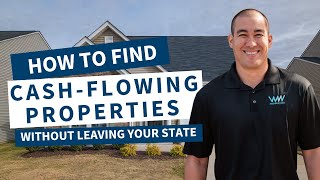
A real estate investor explains how to buy cash-flowing properties in other states without moving there. Build a remote team, use systems to manage from afar, and pick markets where your money stretches further than it does at home.
I built a large portfolio of rental properties all from Hawaii, investing in properties that were over 4,000 miles away. Want to know my system? Well, here's exactly what I did to find cash flowing properties without ever leaving my state. I used to think that being local was essential for real estate investing. Living in Hawaii, I felt stuck. The local market was so expensive and properties weren't even cash flowing. And I thought my dreams of building wealth through real estate were just dreams. Then I discovered something that changed everything. I realized that the key to successful real estate investing isn't about being local. It's having the right systems and the right team. Today I'm able to manage successfully my large portfolio of rental properties thousands of miles away. And I'm going to show you exactly how I do it. In this video, I'm going to break down my complete blueprint to finding and managing cash flowing properties from anywhere remotely. I'll show you how to identify the right market, build your Essential Core 14 and create the systems that let you manage everything remotely. This is the exact process that helped me to build a large real estate portfolio without ever having to leave the state I live in. Before we dive in, I want you to know that I've spent years perfecting this system. I've made all the mistakes, learned all the lessons, and now I've got it down to a science that anyone can follow. Whether you're in an expensive market like Hawaii, California or New York, or you just want to expand your investment horizon, this video is going to show you how to do it right. Part 1 Market Selection the Foundation of Remote Investing I want to tell you a quick story about my first attempt at remote investing. I was so excited about the idea of investing out of state because the numbers made sense and I jumped into the first good deal I found online. I didn't do the proper market research. I didn't understand the local economy and honestly I was just hoping for the best. Well, that property ended up being a dud and a headache because I didn't understand the fundamental principle I'm about to share with you. Here's what I found to be true. Successful remote investing starts with selecting the right market. Not just hopping into any market because the properties are cheap, but a market that makes sense for your investment goals. Let me walk you through exactly how to do this. First, you're going to need to look at three market indicators. Is the population growth trending in the right direction? How is the job market and is it diversified and stable? Are there rent to price ratios that support positive Cash flow for me. After analyzing multiple markets, I decided Kansas City was an emerging market that fit perfect for what I was looking for. The city showed steady population growth and had a very good diverse market. Large companies like Sprint and Ford were there. Most importantly, properties there could generate strong cash flow from day one. Building your Core four team here's where most remote investors get it wrong. They find a good market, get excited about a property and then try to manage everything themselves from thought thousands of miles away. To me, that's a recipe for disaster. See, the secret to successful remote investing is what I call the Core four. They're your essential team members who become your eyes, ears and hands on the ground for you. Let me break down each role and show you exactly how to find and vet these team members. First on your team member list, your real estate agent. Your agent needs to be more than just someone who shows you property. They need to be your market expert. When I was building my team in Kansas City, I interviewed hundreds of different agents before finding the right one. Here's what I looked for when I was interviewing them. I wanted to know how many years of experience do they have working as a real estate agent specifically with investors. I tested their deep knowledge of different neighborhoods that I was looking to invest in. I wanted to see how strong their network is in the local market along with their quick response time and proactive communication. I wanted to see how strong their network was of local connections so that I could benefit from their network network. I also looked into how quickly they were able to respond to me and be proactive about our interview call. Testing their proactive communication. Second on the team is your property manager. This is arguably the most important member of your Core four team. They're the ones that are running your day to day operations and keeping your investment running smoothly. I like to say they're your quarterback of your team. Here's the proven process to finding a great property manager. Look for companies that are managing a lot of properties in the market and area you're looking to invest in. Ask them about their tenant screening process just to ensure that they're just not taking anybody with a credit card in a pulse. Check their maintenance response protocols to understand how their systems work. You're going to want to see how they provide financial reporting so that you can manage your cash flow from afar. And you're going to want to call at least three of their current clients as references to get a real life experience referral on whether or not they're a good fit for you. Third on your team is your lender when Whether you're using conventional financing or you're working with private lenders, having reliable funding source is important. I recommend building relationships with local banks, those that are in your target market. They tend to have a good pulse on the economics in the area and have really good terms and rates for investors. National lenders who understand investment properties tend to have very good options for financing, which then gives you a lot of different avenues you can take to fund your investment property. Another in the finance field is a mortgage broker. They can go and shop you around so you don't have to do all the legwork and find the most competitive offer out there for your funding. The last person on your Core4 team is your general contractor. Look, even if you're not looking to do a full blown rehab, even turnkey properties have repairs or will need renovations. Here's how to build this relationship. Well, you're going to want to start by getting recommendations from your agent and or property manager and they already have go to contractors that they use for your properties or for other clients. You want to start with these contractors on small projects to test their work, test their communication, test their accuracy of their bids. You're also going to want to establish clear communication protocols so that you guys are both on the same page as an investor and a contractor. Personally, I like to set up video walkthroughs for larger projects so they can walk me through their thinking and as if I were there with them. Part 3 Systems for remote success Once you have your core four in place, you need systems to manage everything effectively. Here's what I've been developing over years of remote investing. First is communication systems. Having weekly updates from your property manager is great. Being a remote investor so you almost have eyes on property remotely. This gives them the opportunity to update you on the performance and anything that might be coming up down the road. You need to prepare prepare for monthly financial reviews. This could be with your lender or your property manager. You want to make sure that your financial house is in good shape. I also encourage to have quarterly team meetings so that everybody can get back in sync to the overall goal for the year. And if you're working with a contractor, a shared project management tool for tracking progress and tasks is extremely important to maintain clear and honest communication. Next is documentation systems. As a remote investor, it's very important to be able to keep track of all your documentations. Things like digital property files are important to have with your property manager. This will help you to ensure that you are managing the maintenance requests viewing the tenant screen process and having good response to emergency calls that may be needed at your property. What I found work is technology stacking asking my property management to get good property management software if they don't already have it. Using video call platforms like Zoom so we can have meetings face to face. And I don't know about you, but there's something different when I get to see somebody and have a conversation with them. Making it easy for tenants to make payment using digital payment systems and most importantly having cloud storage for you to store all of that information so you can pull it up anywhere you are finding deals remotely. Now that you have your market team and systems in place, here's how to find those cash flowing properties. First is create a buy box. Set your minimum cash flow requirement for subject properties that you're looking at. Understand what type of properties you are preferring over the others. Is there a specific neighborhood or standard you're going to want to buy in? What's your maximum purchase price that you are qualified for? These parameters help to design your buy box so you can dial in the properties that make the most sense. Number two, Use technology. There's a lot of great websites out there that give you access to a lot of information around real estate. You can even find market analyzing tools online. Virtual tour platforms like 3D walkthroughs are extremely beneficial. Being a remote investor, you can walk property without physically being there. 3. Leveraging your team after you create your buy box and you've leveraged tech to find these deals, have your agent preview the properties. Let them give you real life feedback from their professional point of view. You could also reach out to your property manager around these properties to see what the rental potential could be. And if you have a contractor and the property needs some work, ask them if they'd be willing to estimate any of the repairs that you found. And the last thing is get your lender's pre approval so you can take quick action and make that offer. So here's the thing about remote real estate investing. It's not about being in the right place. It's about having the right system. The process I shared with you today isn't just a theory. This is exactly what I use to build my large portfolio. It's how many of my clients have found success in investing from their home state. Remember what the key elements are Choosing the right market based on data, not emotion. Building your core four team, getting out there and expanding your network, implementing solid systems that work and following proven processes for finding deals. If you're feeling stuck in your local market like I was, or you're ready to expand your investment horizons. Take this blueprint and put it into action. The opportunities are out there. You just need the right system to capture them. I'll leave you with this. In today's digital age, your location doesn't have to limit your investment potential. With the right team and systems in place, you can build wealth to real estate from anywhere in the world. And if you found this video helpful, hit the subscribe button so you don't miss out on all the real estate updates I'm about to drop.