How to Find a Property Manager Who Won’t Destroy Your Cash Flow LF V2
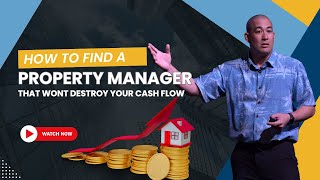
A real estate investor explains how to find a property manager who protects your cash flow instead of draining it. Learn what questions to ask, which red flags to watch for, and why systems and scalability matter more than you think.
Do you want to know the number one reason real estate investors lose money? It's not the market. It's not bad tenants. It's choosing the wrong property manager. I personally manage over 90 plus doors and I'm going to show you exactly how to find a property manager who will protect your cash flow instead of destroying it. Here's the thing. Your property manager is your quarterback. They're the one running your entire investment operation day to day. You get this wrong and everything falls apart. I learned this the hard way when I first started investing out of state. Some studies show that a poor property manager can decrease your returns up to 30%. That's not just a small dip in your cash flow. That's the difference between building wealth and bleeding money every month. But here's what most people don't realize. The best property managers are often the hardest to get when you're first starting out investing. But don't worry, I'm going to show you exactly how to find and vet property managers who will treat your properties like their own. Whether you have one or 100 properties. In this video, I'm going to walk you through my proven system for finding property managers who care about your success. I'm going to share with you some questions that I ask and the red flags to watch out for that most don't know about. How to make sure that they have the systems in place for you to scale with them and grow your portfolio. Let's dive into two main ways to find Find great property managers and then I'll show you exactly how to vet there. Method one is networking and building relationships. This is very important as a real estate investor. In general, the first approach is to put yourself out there in spaces where property managers are actively looking for clientele. In this case, being a remote investor. You're going to want to leverage social media and online platforms where property managers are actively hanging out. The advantage here is that you can often schedule one on one video calls so you can introduce yourself and and get to build that relationship very early. Want a pro tip? Don't just look for property managers. Look for other successful investors in your target market. Why? Because successful investors already have done the hard work vetting property managers. Ask them. See if they give you a referral, who do they recommend and who do they recommend you avoid? On top of that, a referral from a successful investor carries a lot of weight when you're new to investing. This gets the attention of the property manager and makes you a priority in their eyes. Method number two get strategic referrals this is the second approach and often the most effective. It's getting referred by another investor or a real estate agent. But not just any referral will do you want referrals from investors who have similar investment strategies as yours? If you're focused on single family homes in B class neighborhoods, you're going to want to find somebody who's doing the same thing so they can refer you to a manager who who is managing in that type of area. Now here's where most investors go wrong. They stop at finding a property manager. But finding them is only half of the battle. The real success is in the interview process. Let me share with you what I found. Success with Interviewing Property Managers When I'm interviewing a potential property manager, I break it down to two parts. One Sharing my vision and goals. Two Verifying that they're truly aligned with what I want to achieve. Making sure that we're a good fit and pairing for each other. Let me share with you some questions that I ask and why they matter. Do you work with out of state investors? This is always my first question. Because I'm an out of state investor. I don't live in the market that I'm investing in. If they don't have experience with investors like me, they probably won't have the systems or communication style that I'm looking for. You want someone who's used to sending detailed reports, doing video walkthroughs and being proactive with updates like text messages and emails. Next question. What systems do you have in place for property management? This is important because I found property managers without proper systems will destroy your cash flow. You're looking for specific answers about this. What is their property management software? How do they handle maintenance requests? What's their tenant screening process? How do they report out the financials for your property's performance? What is their eviction procedures? Here's a red flag that I found. If they're still using Excel spreadsheets or handwriting records, that's a major warning sign. They're not up with the times. You want a property manager who uses professional software that gives you real time access to your property's performance. Next question what is your current door count and what's your maximum capacity? Industry standards suggest that a property manager can effectively handle between 100 to 200 doors if they're already at or near capacity. They may not be able to give your property the attention it needs to. But here's the key follow up. What systems and team members do you have in place to handle the expanded growth this may change everything about how you consider them as a property manager. Next question what areas do you specialize in managing? Not all property managers manage the same type of properties or are experts in all properties. A good property manager should be able to tell you which neighborhoods they focus on, what areas they avoid and why, and give you realistic rent expectations for different areas that you're looking at. I also want to see if they're up to date with market trends and want to get their feedback on what they're seeing coming down the pipeline. Next question what's your approach to setting and adjusting rent? You're going to want to listen very carefully to how they answer. You're going to want to find a PM who does thorough market analysis. They also want to take into consideration the condition of the property and the types of amenities it has. I'm looking for a property manager with a strategic approach to tenant quality. I also want to see if they understand that there are seasonal factors and what are they to them. Lastly, I want to make sure that I can understand their marketing strategy so I can have clear expectations on how long it should take to rent. Next Question how do you handle maintenance in emergencies? Being a remote investor, this is a very important question to ask. Do they have a 247 emergency response system? Do they have a vast network of relationships with reliable contractors or subcontractors? Can they show you their maintenance markup structure so you understand what your all in cost is going to be? What is their approval process for the different expense levels? Another question I ask is walk me through your tenant screening process. I'm looking for them to say that they do income verification, employment verification, criminal background checks and credit checks. And if possible, get past landlord references. With this information they should be able to give me clear acceptance criteria. Final Question what's your fee structure and what's included? Understanding what you're paying for is so important. Working with a property manager. They don't all charge the same Some common fees you might see with a property manager are monthly management fees. They range from as low as a fixed fee to as high as 12 or 15% of your rent. There could be leasing fees, maintenance markups, renewal fees, eviction handling fees. All these numbers are important for you to know before deciding to go forward with the property manager. Here's a tip from somebody who's worked with many property managers over the last decade. The cheapest option isn't always the best. Focus on the value in the system rather than just the lowest fee. Let me end with this. The most important thing I've learned about finding a great property manager is it's not about their experience, experience or fees. It's about their system and their ability to grow with you. Remember, a property manager who can't scale their operations will eventually become overwhelmed, and that's when the mistakes happen. That's when your cash flow starts to suffer. But if you follow the interview process I've outlined here, you'll be able to quickly identify the property managers who have potential to be great long term partners in your real estate investing journey. The right property manager can be the difference between a thriving real estate portfolio and one that barely breaks even. Take your time with this process. Ask these specific questions. Add questions if you must. Don't settle for anything less than excellence. Your future cash flow depends on it.