A Leader and Being Black
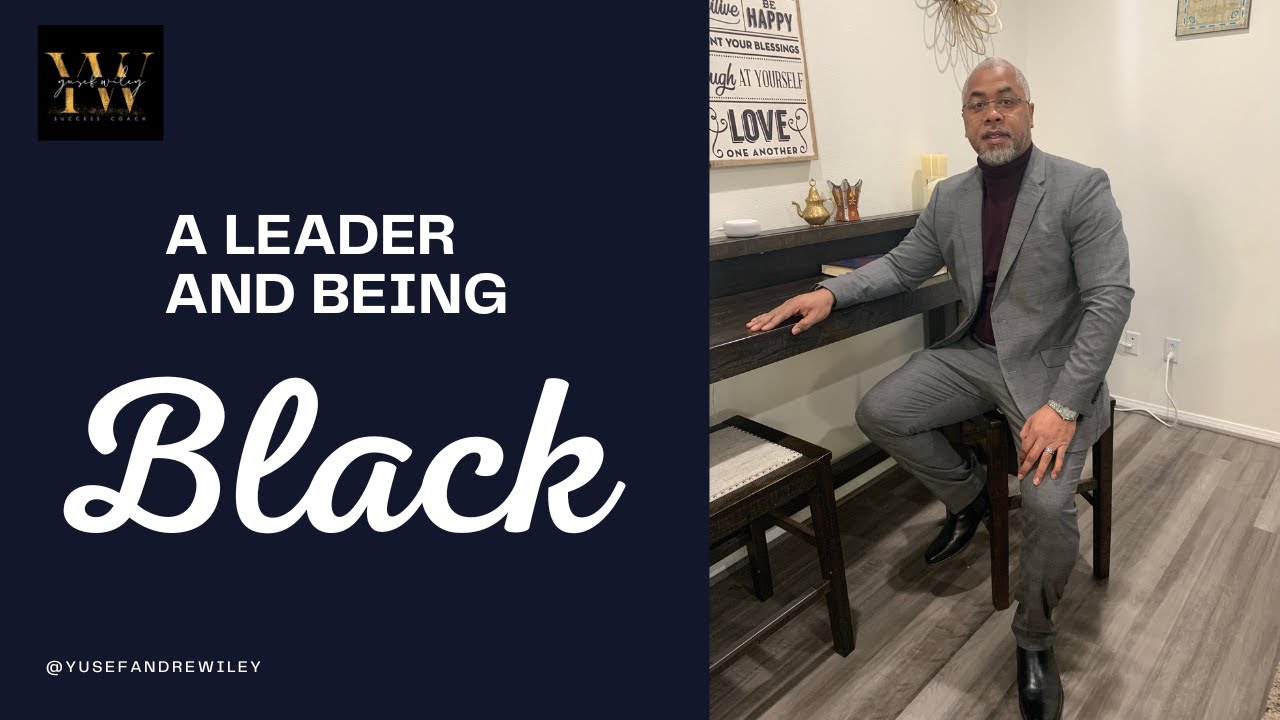
Yusef-Andre Wiley and Cortez Chandler discuss the pressures Black leaders face across family, corporate, and community settings. They explore how stereotypes, colorism, and community expectations create obstacles, drawing on Wiley's prison experience and his father's mentorship. The hosts suggest practical tools: confidence, clear communication, vision boards, and journaling.
Chapters
So welcome, welcome on this Monday to the Yusef-Andre Wiley Show. Me and Cortez once again coming at you. Uh, yeah, um, this topic that I have today is called, uh, A Leader and Being Black. So A Leader and Being Black, you know, uh, the pressures that we face from all sides. And you know, we can look at that in a lot of different ways, my brother. So I mean, think about that for a minute while I welcome our listeners. Um, hopefully you guys are tuning in to us here on our podcast, our weekly podcast that, uh, typically happens on Mondays. We also have our Straight Talk on Point broadcast, our podcast that happens on Fridays, same time, 3:30 PM Pacific Standard Time. So here it is, it's 3:30 on on Monday Pacific Standard Time. And the topic today is a leader, essentially being a leader and being Black at the same time, right? And the challenges, you know, that come with that, the pressures, the stressors, the you name it. And we're talking about a leader, well, whether it's in a political sense, whether it's, you know, religious leaders, whether it's, uh, entertainment industry, uh, athletes, you name it, it's a lot of pressure, right? I know you guys out there looking at social media and we see it all the time. There's something, always something new, something coming up. They're not talking about Jay-Z, they talking about Kanye West, they talking about all these people. And I'm not suggesting— I mean, in some way they are leaders because the media or, or their brand puts them out there in that space where they're being taken as role models or leaders, if you would, right? So I'm just here, you know, let's talk about that. Let's talk about being a leader and being Black at the same time, and what are some of the obstacles, some of the things, the pressures that we face, um, whether it's in the corporate space, the the, the social space, you know, the political space, the family space, you know. You know, we get it from—
I like that family space one. I like that family space.
You're doing too much, come home. You know what you're doing? Why are you still at work? You know, you didn't get off at this time yesterday, why are you getting off at this time today?
Right?
Yeah, it's just those battles, those challenges. That I wanted to talk about today. So what's your thoughts on that, man?
Let's talk about that. As Black leaders, you have to give more, you know, because we've always had to be measured up to the other people in the community. We had to be better than everybody else in the community. My sister works for North Ord, and she has to actually do more work because she always feels that, you know, people are going to talk about her, or look, they're lazy. All the stereotypes that go along with being Black and being in business, you know? So, and for me, being home and being a father, grandfather, that's amazing in itself. To be a leader in your household, that's where I think it starts at. Because our parents, our history always had somebody in the household that would show, hey, this is how you be a man. This is how you lead your household, you know? And a lot of times my mama led the household, you know? My dad was in the military, he was gone, you know, 9 months out the year.
That's deep. What was that like, man? What was that like?
Well, that, you know, you come— your dad comes home after doing 9 months out to sea, and he comes home and he'll tell you to do something. Your mom already, you know, she already have a floor plan laid out. This is what you do on this morning, this is what you do Saturdays and Sundays. Aretha Franklin come on, you know it's time to clean, you know. So My dad would come home and try to change that, her setup, you know, and not just as being a man and he's a leader, but my mother was the leader of our household. And then my father, he, he led us in other directions and other things that he was doing in his life.
So would you say us as Black men and fathers and all that, we like to exert ourselves, right, in that leadership role sometime, right? We come in the room, we want to be respected, we want to receive the same thing that our white counterparts oftentimes receive, you know, that are seen in the media as the leader or as the one that got it, right? Oftentimes African Americans are not pictured in media as, oh, they got it, they got it going on, that's the man, that's the boss, right? Unless you're an entertainer or athlete or something like that. What's up with that? Why, why is it so hard for us to receive that same level of regard and honor as a man, as a Black man, that a leader— not even Black man, just a man. But because we're Black, obviously we run into other obstacles, and this is something that we face, uh, continuously.
So it's a struggle. And like I said, uh, before The Cosby Show, how did they look at Black fathers? Let's go back to J.J. Evans. Let's go back to Good Times. You know, he always got, he ain't had no job. He was always running. The mother took care of the household till successful black family came into play. That was a different look. It's like, wait a minute, they're not poor. They're not struggling. They're not living in the projects, you know? And now—
Yeah, that's deep. And you've, that's funny you mentioned Bill Cosby, you know, I'm gonna go into some other stuff in a minute, but Bill Cosby, they got a show coming up right now. I think it might be a one day. I think it might be, Netflix or Amazon. It said, We Need to Talk About Bill Cosby, um, something to that effect. It's like, Let's Talk About Bill Cosby. That's the name of the show that's coming out. And some of the things that you just brought up right now is, is I think one of the highlights of the show. It's like, hey, you know, this is somebody, an icon that we looked up to as a— the idea Black father, you know, whether you want to call it the suburban father, Black father But typically, the Hollywood before then didn't really, you know, picture or depict, uh, Black folks in the way that he was depicted as a doctor, as a professional, and his wife a lawyer, things like that, right? I think she was a lawyer, right? Wasn't the wife a lawyer? And, um, I mean, you got The Jeffersons though. You got The Jeffersons and Moving On Up, right? Um, there were some things there that kind of gave us a little bit, but often the African American as depicted by mass media, by Hollywood, never really getting the credibility of being that ideal leader. Um, and I think we have to do something about that. We, we need, we need to receive that respect. We need to receive that honor uh, that others are receiving. And, um, we was just talking about R. Kelly the other day, uh, you know, R. Kelly, here it is, somebody we considered the king of R&B. That was his title until he fell from the throne, if you would, from the stuff that he did. And but again, there's always these things that happen to us where you'll see us put up in these industries as at these levels and then knocked down. Um, he's not the only one. There's been plenty of examples of, uh, African-American men or males, uh, and I hate to say that, but I'm saying that for a reason, are given this type of, uh, view. Um, it's If you go in a store, if you go into Dubai, let's look at the action figures, dolls, right? Before the Black Panther, man, well, no, who was buying? What heroes did we have? And we talking about make-believe, bro. We ain't talking about real life. You know, we had, I mean, even Obama, we had a Black president, right? So we had these few little instances where African-American men has been taken as credible, and in other instances where we're just this thug, lazy person, you know, uh, criminal. Uh, uh, I see somebody talking to us, uh, I want to get it, get him in there. Tyrone Young, Wesley Snipes, Blade. I didn't watch all of the Blade, uh, series. Um, you know, uh, I saw a couple of them, but here it is now. They actually— I know they've been after him too, like the IRS. I think they're trying to go after, um, uh, uh, uh, Kevin Hart as well, or Chris, uh, Chris, uh, Tucker, right? So they come after us hard, right, when we get to moving up and people— and we get power. And, uh, you know, someone like Kevin Hart is gaining power. Watch it, just watch. Uh, there's going to be, uh, controversy. There's going to be, uh, times where they're going to come after us. They're going to continue to come after us, and we have to figure out different things, different strategies. We have to approach things a little bit differently. This is 2022, and I didn't even say Happy New Year's. You know, Happy New Year's. Folks that are listening. Um, but man, we dealing with some stuff as Black men and, and these pressures. Not to mention the pressure of once you get somewhere in life, get out the hood, and you have the hood trying to pull you back, telling you, you know, you ain't doing enough for me, hook me up, homie, uh, I need a job, I need some money, you know. And, and folks end up getting killed. You know, the Nipsey Hussle and the, you know, um, uh, uh, just recently we had, uh, we talked about it before on one of the podcasts, and my— I don't know why my, my memory right now is eluding me on, on these recent rappers that's just got killed out there, man.
Um, you're a Black leader right now, you thinking about everything else that's going on.
I know, man, it's crazy though. That this continued to happen to us. This thing continued to happen to us, man. And, um, um, Dolph, you know, Dolph, another one. So you have these situations where being a leader, being a Black man in America, and having that strike, then having that record, felony record strike, then— and some of us, our case of Muslim, if we Muslim, that's another strike. Um, all of these other things, right, factors that are pressures that we're dealing with. And we're one— we want to be the best of the best. Um, do we get the same second chances that our white counterparts get if we make a mistake, right? Those are some things to think about as well.
I was, I was actually thinking about when me and you were, uh, walking at Venice Beach and, you know, we were feeling ourselves, we was looking nice, and we was coming from a meeting, it was a positive meeting, and we hear the N-word, you know? And it's a white guy telling us this, you know? And like I said, you know, that's why we're terrified to even step outside that box because people look at us in a certain way. And the first thing that come out of, white man's mouth is the N-word towards us. And we don't look like no criminals, we didn't look like no thugs, we wasn't acting like that, right? But that was to knock us down. So in my mindset, when somebody called us that, we didn't react to it. But at the same time, our mindset was like, no matter what we do, we always gonna be that to them.
Yeah, to some people, right? Yeah, yeah, that's, that's deep, man, because, uh, you know, like, like you said, we was dressed apart dressed nice, had our suits on, and coming out of a meeting, and, and then get hit with somebody calling us the N-word, and we just looking at them smiling and laughing. Like, you know, if you just— I know we was thinking in the back of our head, if you really knew us right from back in the day, you, you probably would think twice about saying that to somebody like us, right? But obviously that's not who we are today, and, and this is what a lot of our folks are facing. Right now. Um, and you have people that are afraid to be leaders because of the pressures that come with being a Black leader. Think about that. Yeah, afraid to have money, afraid to go back to their own neighborhood, in their own communities, because you know what might happen to them, because they seeing what's happening to other folks.
Yeah, Uncle Tom, uh, sellout, all this comes involved with being a leader.
Yeah, being called Uncle Tom. See, these are the pressures. So the topic today is being Black, being a leader and being Black. So, you know, all of those pressures that come with that. So I like that you brought that out as well, uh, Cortez. Um, one of the things that I wanted to bring to the, to the mix of this is that, um, if we do decide at some point that, you know what, I'm about to take on this role, I'm about to become a leader, you know, whether it's a political move like becoming a senator or trying to go after becoming a congressperson, assembly person, or something like that. Again, the same pressure from our folks, from our, our people, you know, a lot of times that's where it comes from. Not to mention the other pressure that we're getting from just being in that space. Think about it.
Um, you know, political—
yeah, Donna said something about what about Black women that are leaders. True. I mean, I think it fits in the same category. I think that's a whole nother level. So check that out. So a Black woman being a leader, think about that. A Black woman being a leader. So we just mentioned some of the pressures that Black men face So just imagine for the Black woman. So not only is she catching it from all of the— all the above that I already mentioned, she's also catching it from her Black counterpart men, like, who you think you are, right? That type of thing. So you have the Black woman stepping into this space and being leaders. Oftentimes they're not paid the same way that, that the men are paid. Right, in their roles. Um, and the fact that they don't— they're not given the same status. They're not given the same status. They're not looked over at in the same way with the same level of respect when they walk in the room, right? They're gossiping and talking and trying to figure out ways to knock her down, you know, so that a man can take her place, you see. So those are additional things that a Black woman has to go with. See, what is her counterpart? Her counterpart is probably the Karen, right? The Karen don't have that problem, right? You know, the Karen that's married to the, the police officer or whoever else that wields some level of power, right? So these are things that we're— so both the Black man and the Black woman have these obstacles to deal with in those leadership capacities. And as a result, oftentimes we won't take the rock— we won't take the job, we won't take the role of being leader because we're afraid of those challenges. We're here to say that no, don't be afraid, but to step up to the plate, step up into your role and be that leader, be that queen, be that king that deserves that role in that position, right? That we were the people of old that created these roles in the first place. See, we don't even have to go into the history. We, if we start dipping in the history about this, when it comes down to, you know, orchestrating and organizing and all this good stuff, that come from us, that come from us. So, uh, that's another subject. But the topic today is just talking about the challenges and the obstacles of being a leader. And I think for us, um, in the role that we have, in the capacities that we have as, you know, nonprofit leaders or, you know, business leaders, business owners, you know, we face the same, same challenges. So, um, what is something that you would think be a good way, uh, as far as a solution? Because, you know, we're here to talk about solutions too, man. So what do you think would be a good solution?
Just even like this format, people being able to express and talk about it with dialogue comes up with something magnificent, you know. Just like the comment Donna said, we were thinking about— because we're Black men, we just thought about Black men. We didn't think about the women. We didn't think about our whole community, how we can We got to be able to develop leaders. That's my thought. I want to be able to develop leaders to understand this is how you got to go about it, this is what you need to do.
I like that. Yeah, I like that. Which reminds me, Cortez, um, you know, beginning on this Wednesday, I'm gonna be doing, uh, that workshop. I'm gonna be starting that workshop, um, to help develop entrepreneurs, uh, called the Success Mindset Matrix. Um, you know, it's funny I use Matrix. You know, Matrix is out, like the new, uh, rebirth or the resurrection, uh, of the Matrix movie. And, um, you know, just when you think about the concept of the Matrix, if you're familiar with that, that movie, um, I just decided to go with that, you know, because Matrix, when you define the word, it has other meanings besides just, you know, we think about mathematical equations, but you know, matrix has other meanings, you know, as far as bringing something together that shapes a structure of something, right? And so that's why I call it matrix. So it's going to be called a success mindset matrix because I always talk about success mind stream, uh, mindset. That's my hashtag. I use that hashtag quite a bit, success mindset. And I'm hoping that folks join it. It's actually, if you go on my Facebook page, uh, Yusef-Andre Wiley, uh, on Facebook and Instagram. You'll see the, um, you might find the, uh, the Eventbrite. Just sign up, it's free. It's a free event that I'm gonna be doing. It's gonna be a workshop. I think it's gonna take about 6 weeks to complete. And, um, but it's gonna talk about all of that that you just mentioned about developing new leaders, uh, because we definitely need to develop new leaders. And, um, we need to develop leaders that are already leaders, folks that are already in leadership roles, that are already entrepreneurs, that are already business owners, CEOs, directors, managers. Um, we definitely need to have them with us. So, um, we have someone else talking to us, uh, friend of mine from back in the day, Tyrone Young. He said Um, before, example, I had a leadership role at work, but the hate that made me step back after a while came from my own people. I had to work hard to win people over, but by the time I had it, I was stressed out. You hear that? You see, that's what I'm talking about right there. It come— a lot of times it comes from our own people because they hating on us.
Right?
So let's talk about the hate, the hate that hate produces, right? That's one of the famous, uh, I hate to even use that because actually, uh, white America actually tried to paint that picture of the Nation of Islam back in the '60s, '50s and '60s. But we're talking about hate now from our own, you know, the hate that we receive from our own people. When we do get a position, when we get promoted. Just say a promotion. Say we get promoted at a job. You got 10 other people think that they should have got that job, right? 10 other people think that should have been my job, and they hold this position against you. Now, you probably was the best of friends, used to be in the lunch lounge together and talking and had all kind of good positive conversations going. And you got promoted and went to another department on them, and now they don't like you and they gossiping about you, right? Ain't that something? All the time. Something though. Yeah, yeah, yeah.
Hey, you, like you said, that word hate, you, you, we've, we've had many discussions on that word hate and being a hater and all that. I mean, it's our slang, but at the same time You gave me the definition what it really is, you know, and that's jealousy.
Yeah.
Envy. They don't like that you won, you know, or you sold out to the system. You ain't with us no more, you know.
Yeah, but let me define that again since you brought that up, you know, defining what that really means. You know, this hate that we talk about, it's so famous for people to say, "Stop hatin'." People say that all the time now, right? So, But hate, in reality, like I said, is from jealousy. It stems— it originates from jealousy. It originates from envy, right, which leads to hate, right? But in reality, the meaning of it is the realization that you have a blessing and someone desiring for you to lose that blessing. Right? And they don't care what happens to you as a result of you losing that blessing. That is the definition of the hate that we're talking about. The hate, or the desire for someone to lose— for you to lose your blessing that you receive. It's nothing they can do to remove that blessing, but you got it. But they would love to see that blessing removed no matter what, right? So that's, that's something. It's deep, man, when you really think about that concept. If, if that's what you have as a person, then you're a hater. If that's what you have in you, if you feel like, man, I don't want this person to have that then you're a hater. That's all you have to say. If I have— if I feel that this person should not have this, I want this to be removed from this person, I don't want to see this person with that blessing, then that's a hater. You're a hater. That's— you are a hater. That's what that means. Okay, so, you know, this is what we're talking about. And, um, We hope that at some point— that's like I said, that's going to the solutions. We're going to have a quick station break and, you know, tell our listeners to chime in with us every week. Um, so we here, the Yusef-Andre Wiley Show, that comes every Monday, same time, 3:30 PM Pacific Standard Time, and we're just talking about the various topics around leadership, around entrepreneurship, around business, around us, around our people, around our community. And we're here every Monday. Uh, likewise, we also have our Straight Talk On Point podcast that airs every Friday at 3:30 PM Pacific Standard Time. So both Monday and Friday you can tune in with us. You can find us— you can find this podcast on the Yusef-Andre Wiley Show, uh, on Spotify or any of the other podcast platforms. If you're an Apple user, you can find it on Apple Podcasts. As well as Straight Talk On Point. So yeah, we talking about leadership, we talking about— like I said, Donna threw in there, um, uh, you know, what about Black women leaders that are— that become leaders? And, and you hear quite a bit, man, you know, from, from the women as well as the men, but more so I hear more from women where women always say how, uh, they don't want that responsibility, or I don't want to be a leader, or I don't want that promotion. They refuse a job promotion because of the pressure, the very pressures that we were talking about. They are refused— they refuse that pay grade, their checkup, you know, more money. Just think about it, that's deep, man. You have refused that pay grade increase and just the status of being the leader. Because you don't want the pressure. And we're talking about an additional pressure that typically only African Americans experience, right? So that's what we really need to be looking at. That's what we need to really examine. And I, I want to give some solutions. I want to get some tips about how I've dealt with it, you know, because people ask me that, like, what's your secret sauce? How are you dealing with that? First of all, you can't be a coward. I'm gonna just say that straight up, you know, and I, and I want to really be, uh, uh, frank about it. You can't be a punk, you can't be a chump, you can't be a coward. You really have to be brave to be a leader. Literally, you have to be brave. You have to show some heart. You have to have some heart. That doesn't mean you lack compassion though. You also need to have that. You need to have a balance of compassion and a balance of strength and power and not be afraid of people and circumstances. Don't be afraid of people. Don't be afraid, afraid of circumstances, right? Don't be afraid of challenges. When you know that you're going to face a challenge, embrace the challenge. Don't be afraid to ask questions. Just because you're a leader doesn't mean that you shouldn't ask questions. Doesn't mean that you don't have mentors. It doesn't mean that you don't go to class and take up workshops and do other things to increase your level of knowledge, to build upon that skill set. You have to do those things, and you can't be afraid. That was one thing I'm gonna show you how I taught myself even when I was in prison. When I was in prison and I would face various challenges just from being in prison. My— one of the things I kept in my mind, man, is this. I said, look, regardless of where I'm at, I'm gonna be treated with dignity and respect. I don't care who it is. I don't care if it's the warden, the captain, the lieutenant, CO, whoever. I'm not about to be treated disrespectfully, nor am I gonna act that way towards someone. That was a principle that I followed to the T. And I recall now, you know how sometimes we were in prison together, my brother, and you know, you would have instances where a CO, a guard, would come in there in the housing facility, housing unit where you're housed, like a new one for example that don't know you, don't know the inmates in that housing unit, and be pushing their weight, like, you know, walking around, hey you, and talking to you sideways. 'What's your number?' 'What's your—' You know, just really trying to degrade you. I never allowed that to happen, and I would accept the consequences if that was attempted. If I didn't— if I wasn't clever enough to talk that person down, then I deserve to be in solitary confinement. That's how I looked at it. I literally took that to heart, bro, you know. And a lot of people may not know that about me, but that was me. And I remember being called to the desk where the COs are standing and, and he came at me kind of sideways, right? And I walked that all the way up to him, like my face was that close to his face. And I said, first of all, I'm a human being. We, we both humans. You're a man just like I'm a man. I might have on blue, you have on green, but I'm a man. So explain to me what you're trying to get from me, and we're going to go from there. That's what we're going— that's how we go talk. And that's fixed it. As soon as I did that, he recognized that, look, I'm not talking to a chump, I'm not talking to an inmate, I'm not just talking to a prisoner or a convict, I'm talking to a man. I made him see that he was talking to a man. And I say— and I'm saying that to say, in society, in life, we have to be that way with people. It doesn't mean we rude, doesn't mean that we're supposed to come off harsh, disrespectful. I don't even use profanity. Y'all, everybody that knows me, when I communicate, I don't have to cuss you out to communicate. I just talk, but I'm very stern and firm when I talk. Okay, so I'm saying you could do that with compassion. You could do that and still be balanced, right, and thoughtful of other people. But our problem is It starts right there because we come unglued. As soon as we feel disrespected, oh, you know, it's going down, you know what I'm saying? Yeah. But then you're not going to be treated with dignity now because you're okay, you're on that level. That's how people are going to see that. Oh, you on that level, that's you, you turning, you're cutting your eyes and doing all this body gestures and all that. Oh, you wanted him. That's how society's already judged you. So you're acting out in that way that society has judged you because you haven't showed that dignity. You haven't straightened up and say, okay, excuse me, um, let's have this conversation. Bring them up. You might have to bring them up a little bit, right, to have that conversation. To me, those are the first principles that I've gained for myself in learning how to galvanize, uh, leadership qualities, you know what I'm saying? And I think if we all take lessons from that, just that, we'll do much better in our communication, even in our households with us, with our spouses or with our partners, um, you know, just in life. If in our religious faith communities. Wherever we are, in whatever spaces we're in, we'll find that people will look at us differently and treat us with another level of respect on how we present ourselves.
So one of the qualities you're saying that a leader should carry is value, value of self-worth, value of understanding and being able to communicate with the other people, you know. 'Cause if you're a leader, there has to be somebody that's following. Mm-hmm. Okay. So how do you develop the people that are leading to communicate with the people that are following? Mm-hmm. That's a question that I always want, because a lot of times people, they see a leader, they respect the leader's position, but at the same time, they don't know how to communicate with that leader. So it escalates into gossiping, and I told them about this, I told them about that. Right, because we get a lot of that, you know, where it's miscommunication.
Tyrone, you don't say something here. I'm looking at the comments. He said, uh, communication is key, our presentation is key. He said presentation is key, you know. Um, and like I said, let me take the quick station break again, man, because I'm seeing some folks and I want to get— bring them in. So those of you guys that's out there listening you know, share this, uh, podcast, you know, share this, get folks in this conversation. If you're online, if you're listening to us on Facebook, go ahead and share the link, um, of this podcast, or on Facebook Live, and get folks in this conversation. Like I said, this is the Yusef-Andre Wiley Show, and my partner Cortez Chandler, my VP, my vice president, one of my other lead consultants, um He's here with me, uh, helping me out on this podcast. So I just wanted to put that out there because, you know, Tyrone, he, he's someone, um, I grew up with in the community, solid brother. And, uh, you know, and he, he's listening in. And I'm, I want to bring other folks in like that, uh, to engage this conversation around, uh, leadership and, and being Black, uh, leadership and being Black. And, and really that's what the title should be, not necessarily Black man. And Donna, I'm glad you corrected me as your brother on that. You know, Donna is my sister. Um, so yeah, uh, being a leader and being Black, and you know, it's a lot comes with that, a lot of baggage, a lot of, a lot of, uh, but like I said, that's, that's— we've fallen back into the, the solutions, uh, portion of this segment. Of this podcast and, you know, just talking about solutions. You got any other solutions, uh, Cortez, to bring up, or you want me to address?
You've touched on a lot of it, man. It's just with that story alone, it opened my eyes and make me see other things on people, you know. Yeah, it's like we was talking about the color of people's skin. Just because you're Black, you ain't Black enough, or you're too light, you know. And that, that's just being a leader in that form, you know, that light-skinned guy, that light-skinned girl.
Oh yeah. Oh yeah.
Oh yeah, better jobs, you know, better opportunities. That's not always true, but you know, that's how people see it. They don't know who's qualified for that position, right?
And I've been called that one, the light-skinned dude and all of that. But, but again, I, going back to the original, I'm gonna go from that position that I mentioned earlier about how I suggested, um, uh, you know, first of all, being firm, speaking the word direct to people, uh, making folks look you in the eye, face to face, not being afraid. You can't be afraid, uh, when you speak to people, when you deal with folks. You don't show fear, um, you can't have fear as a leader. You cannot have fear. And you can— there's a natural fear that comes with the role of being a leader, which is fine, but I'm saying in terms of your position in, in the way you Dignify yourself. And then there's certain things you just don't dignify. You know, I see a mistake that leaders make too is they respond when they should be quiet, right? What do I mean by that, right? Something has come out to them from left field, like, this doesn't even make sense. It doesn't even carry enough value to even speak or to give it a response. You follow me? So certain things that might come out against a leader, towards a leader, if you're the leader, shit doesn't even require you to respond. Your silence is the answer. Your silence is that answer that you should be given that. So certain levels of ignorance shouldn't be responded to. Don't respond to it. Because if you begin to going back and forth with that ignorance or with that ignorant person, Then they— again, the way things have been framed, oh, I got that person to get to this level. Now they're down here with me. Now we can battle it out down here on the ground, like the little people, right? When I say little, I'm talking about big ego but little, right? You get what I'm saying? So it's, it's better to just like ignore— certain things should be ignored. As a leader, certain things should be ignored. But on the flip side, if that person— not the, the thing that they said, but that person— needs a response, then you let that thing that happened or it was said pass for a while. Let it pass, and then you revisit the person, not the thing, not the, the statement or whatever that ignorant thing that transpired. You revisit the person and you don't give any weight to that thing that was stated because it was ignorant. That's another way I do business, and that's how we have to do business as leaders. That way you pull that person up, because the reason the person said that is to get a reaction and to get a response. But why? There's something deeper going on with you that where you needed a response from me. Something else is deeper at the root of our issue, which required a response that you needed to make you feel good about yourself, to make me feel, uh, some kind of way. But if I don't respond to it, then you're stuck with it. But then I come back later and grab you and say, what's going on? Let's look at the deeper issue that caused you to utter those words up out of your mouth. Let's look at that. See, that's how leaders have to respond and behave with situations, okay? Um, and then taking it a step further, once that is aired out and all of that thing comes to light, now you can put compassion on and say, you know what, I understand you, I feel— hey, look, Let's move on. Let's have lunch. Let's have a cup of coffee or tea, right? Now you can put the compassion on it now. And that same person might be your partner or your ally in the future, right? So these are the things we have to do, but we cannot run from the responsibility of doing it, you know?
One thing I've always learned through my father and through history. And for anybody to follow you, you have to carry that kind of confidence. You know, a lot of times we, we, we don't think we have something. I, I might not know everything about it. I might know a little bit about it, but I have the confidence to let you know I'm gonna learn more about it, or I know what I'm talking about. Because if you, you know, there's a whole bunch of people say, I know what I'm talking about, don't know nothing. But if you carry that confidence and invest in your education, and I'm not just talking about going in the book, but actually studying and learning about what you're talking about before you open your mouth. Because if you lack confidence and people know it, they'll read straight through you and they'll be like, oh, you ain't no leader. As I said, when you were saying about talking to people that I wouldn't say that are beneath you, but the people that, that can bring you down, them the people that, that if they rock your confidence at one moment in time, they got you. That's how they feel. All right, yeah, I already know him, I read him already. That, you know, he don't know this, he don't know how to do this because he doesn't have— he doesn't carry that confidence. There's one thing I've walked in rooms— me and Yusef-Andre Wiley used to have these conversations— walk in the room, hold your head up high, carry that confidence.
You know who you are. Absolutely.
You know, we, we don't have to take kibbles and bits. Oh yeah, yeah, we in business right now. We ain't— we're trying to help the community. We got to go in there like we want to help the community, you You know, yeah, don't be played.
Don't be treated just no any kind of way, like, you know, like your time is not valuable, or that what you got going on in life is not valuable. Like, if people not coming and meeting you, uh, at when they say they're gonna meet you at meetings or engagements, don't waste your time. Don't waste your time. And, you know, you, you need to be respected. And if they're not respecting your time, that, hey, I got other things to do just like you do. If you're not gonna show up on time, don't waste my time. It's gonna be a lot, it's gonna be just that much harder for you to get a meeting with me next time. And I hold people to that. I really do. I'm gonna hold you to that. Um, if you're gonna continue to, uh, not value my time, then that means you don't value me. Okay? And maybe I have to teach you that, but I'm gonna teach you that on my time then, since you didn't, didn't, Since we couldn't come together and meet when we said we was gonna meet, now I gotta meet you on my time, when I have time for you. That's not arrogance, that's not cocky, that's reality. That's just, you have to value yourself. As a leader, you have to value yourself. You have to have a level of confidence. That's not pride, that's not ego, that's not arrogance, right? That's just the right thing to do. If you're gonna lead, you have to show people how to lead. You gotta help people get better. But if you're weak and look easy to rattle and, you know, get you off course like you just said, or they got you, then who's gonna follow you? So you have to have a level of strength and power. You have to wield a level of power in your words when you speak, when you deal with folks. That has to come out. And it's unfortunate that so many of our, our children are not taught this. How many— I mean, if for our audience that might be listening, how many of your kids getting this in school right now? Elementary school, middle school, high school. How many of your kids being taught this? How to lead, how to be leaders, how to be entrepreneurs, how to, how to manage, uh, money. You know, financial literacy, right? Stock market, all that stuff, which I'll talk about on my Wednesday workshop, right? The success mindset matrix. So I mean, they're— most of the public school systems are set up, especially those that are in our communities, Black and brown communities in particular, they're not given this level of confidence and they're They not putting this in our kids. And that doesn't mean that there's not some good, you know, educators out there that are doing good work and helping our kids and bringing them up. But very few, I guarantee, are going in there and really empowering them kids. You know, when I was teaching in the private school sector, I made a point to the kids that I had that was my students in the high school space, I was giving them power. It was about power. I was giving them, look, don't be afraid, don't— look, hold your head up, that kind of thing. So I appreciate this conversation. So I want to take this time now, we only have about 15 minutes left on this, um, conversation. We're talking about being a leader and being Black. Uh, any listeners out there, if you got any questions or any uh, comments. You know, we'd like to hear your feedback. You know, come on with it. We— it's about solutions. And the basis of this podcast, as well as Straight Talk On Point that we have on Fridays, same time, 3:30 PM Pacific Standard Time, is all about solutions. At the end of the day, we want to talk solutions, and we want to help you. We want to help you become better leaders, men and women, Black and brown folks. We want to do whatever is necessary to help you build up your leadership qualities. And the more that you have, the better you do. The more that you're informed, the more that you're able to inform others. Okay, so this is what it's about, and we hope that for those of you, if you have any feedback, if you have any comments for Ashu, Yeah, Cortez, so, um, it's deep, man. And, you know, my father, you know, he recently passed away, man. And, you know, I think about him. I was just today, I was like, every— whenever I'm in a, you know, doing stuff and I'm in meetings, and I'll be thinking about my dad. And, you know, he showed me a lot of this too. And that's one thing for sure, my dad was not let nobody disrespect him. You know, you are not about to disrespect my dad. I don't think I've ever seen somebody just outright disrespect my dad. And if they tried to, they got checked, you know what I'm saying, real good, in a good way. He knew how to do it. He had a way with words. And he taught me so much, just, you know, listening to him, watching him as a kid growing up, seeing him, how he talked to folks, how he treated folks. And, you know, he deserved everything that he got. As a leader. He was definitely a leader. And, um, and I'm glad, and I can say that. And, um, you know, there's a lot of other people that can't say that. And, uh, um, you know, because they didn't have a father, they didn't grow up with a father or strong male figure in their house. And I, and I'm a firm believer that that's needed in every house, regardless of what today's times, the society talk about— I'm for support everything, you know, different cultures and all that good stuff. But at the end of the day, I'm a firm believer that a strong man is needed in every house, period. That's just, you know, there's nothing to take away or add to that statement. Uh, I'm just saying it and making it plain. And I, and I just feel like for those of us that were raised without that, it's not too late. You know, like our timeless statement, it's never too late to change. It's not too late to, to learn, to gain insights, to, to grow as a leader in your household, in your community, in your faith community, in your company, in your business or organization, whatever it is, or whatever space you find yourself, you can be a stronger leader and we're here to help you do that, so.
Most definitely, man. I mean, that was passionate, bro. You know how I feel about Pops. So, you know, it really, you jerked the nerve right there, brother. You jerked the nerve. And he was a leader when he didn't even have to lead, you know? That's what I liked about Pops. He would tell you something that was profound and it came with his wisdom. And he would just tell you and you'd be like, "I never looked at it like that." You know, he gave you a different perspective on a lot of things that were going on in today's time from his pastime. You know, it was like, "Wow." You know, so when I see people talking about certain things and I'm going, it's always a little picture in the back of my head talking about, "Boy, you better listen to this. I got something for you." You know, and I used to listen to him when he used to tell me stuff. And I'd be like, "It ain't gonna be no 5-minute conversation.
We gonna talk." Yeah, and you know, I, I, you know, I'm grateful at the end of the day, man. I, you know, I had my dad with me, and, and, you know, the time that I served and then getting out of prison and, uh, had at least 10 years, almost 10 years with him in free society, man. I mean, you know, can't take that back, you know. That, that's good. I got that. And, you know, then all the time that I was incarcerated, that he still was feeding me sent me letters, dropped nuggets on me when I called, and he dropped nuggets on me in the letters. But, but I always had his guidance. I always had him as a leader, as a father, and in so many different ways. And, uh, it is deep, like you say. And, and I say to everyone that's listening that, you know, don't feel that you can't learn anything new. Um, and this is for the older generation, of course. Don't think that you can't still learn something. Um, I'm still learning. I'm 52 years old and, and I'm still learning a lot, uh, at 52 as a leader. And then if you're taking from people— if it's not your spiritual advisor or, or psychologist or therapist helping you to become a leader, and somebody trying to tell you something and they haven't demonstrated themselves what leadership is and who they are, then I mean, you know, sometimes you're wasting your time. And that doesn't mean you can't get wisdom from anybody, you know. You can find a man on the street and gain wisdom. But I'm saying in terms of leadership, we're talking about here, um, you know, we've been there and done that, and now we're showing, uh, what leadership look like and what it could look like. And, and for us, it's only getting better. You know, we have organization experience now, we have business experience, we have a lot of different experience to bring to the table and we wanna give it back. We wanna give it back to our community. Whatever it took for us to get to where we are today, from thug life, from thuggin' to being in prison, to being in that life, to being where we are today, we wanna give it to folks because I'm sure there's many folks out there struggling to figure it out, to figure out that secret sauce. What is the recipe to getting into this mindset, success mindset that I always talk about, and actually getting somewhere in life where you build generational wealth for your family, right, when you're long gone? How do you do that? So these are some of the things that I like talking about And it's hard to talk about it here in the podcast. That's why I have a workshop that's going to be happening on Wednesday at 3 o'clock. So if you can find that, um, Eventbrite, uh, it's on Eventbrite and you probably can search it. Uh, it's called a Success Mindset Matrix and, um, you'll be able to find out. I think I shared it also on my Facebook page, the Yusef-Andre Wiley Facebook page. So Um, thank you guys, you know, we appreciate you every, every time we hear, um, you know, listening to us. For those of you that wasn't able to be with us live, um, you can listen to a recording later. And the recording you could find on the Yusef-Andre Wiley Show on your Spotify or Apple Podcasts, Amazon, uh, Audible, all of those ones out there. Um, you'll be able to find this show, uh, recording of the show. So any last thoughts or comments, uh, Cortez, on your own?
Uh, you know, I always take a bit of every day that when I learn something and I see something historically, it'll come back in my mind. And if one thing it was, being a— for a solution of being a leader, have you a vision board. You know, I know women do it to decorate the house or or somebody has a plan, but have a vision board where it could be pictures. It don't even have to be words. It can say, look, this is what kind of car I'm gonna drive, this is what kind of house I want, this is what kind of business— my business is going to elevate in 3 years, this is where it's going to be. But you have to have a plan. You don't just say I'm gonna be a leader and you don't have a plan. You have to physically— me, I'm physical, and, and I have to physically see it every day, you know. Like I said, I'll go in there It might be on my computer. It might just be the screensaver. But I put it on there. It's something for me to see every day. This is where I wanna go. This is what I wanna do. You know, and when I wake up in the morning, I have that same plan laid out on my screensaver, on my phone or something. You know, when I go right now, my mind is on Black Lives Matter, you know? So that's where my mind has been at, and it's better to help my community, you know? So that's my vision, you know? Okay, now I'm gonna work out what I need to do.
So I have a vision board. I like that. So vision board, remember that, y'all. You know, Cortez talking about having a vision board. You know, I'm a note taker, so you know I like taking notes, and I always encourage people to take notes and stuff, um, or journal. You know, journaling is really good, um, if you have like a book where you can journal, uh, regularly. That's a good thing, you know. Try to journal, always journal, because those thoughts you can always come back to and remember that very moment in your mind where you were at, uh, when you wrote that, that note. You know, you— it brings you back. It brings you back because life is life. So you, you— if you don't write something down, you know, moments later you totally forget that state of mind you was just in. Of course, days later, then you way somewhere else dealing with another task, another situation is happening, right? Um, but when you write it down, at least now you can go back and like, aha, I remember the state of mind I was in when I, uh, when I, uh, stated that. Um, Donna said she did the vision board before. Um, uh, my niece, thank you. Um, yeah, so yeah, write, write that down, you know, write things down. Create a vision board. Uh, those things are really good. Uh, of course, I'm always saying technology— learn the different tools, uh, that's out there that you can use. And, and, you know, there's so many different tools you could use. Learn technology. That's my point. You know, there's a lot of new technology out there, and don't get left behind because the advancements in this world are happening with or without us. And if we not following it, like Zoom, for example, if, you know, many people still haven't got with Zoom and we see it's taken over since the pandemic and everything. And people still trying to figure out how to get on Zoom. No, you shouldn't be still trying to figure out how to get on Zoom. You should have a Zoom account by now, right? Because everything is happening on Zoom or Google Meet or Microsoft, a team, whatever, right? So there's things that we have to stay in tune with even as leaders. Don't expect everybody is going to do that for you. Don't wait for nobody to do that for you. Um, you have to learn other technology. Like, we use Slack, you know, you have it as an app, you can add it to your phone. But is the commercial just came on yesterday, a Slack commercial came on yesterday and it meant— and it said that Slack was the new way of workflow. And remember what I said when we first started using Slack? This is going to help our workflow. That's what I said. And they— and it's a commercial out right now that's talking about how it's going to basically be the future. It's going to be the future workflow in the work— in the workplace. That's essentially what the commercial was saying. And, and I, and I said that, and, and we see how Well, it's working for us as an organization. We got over 85, 86+ employees, and, um, you know, it's working really well, um, in the workspace for the workflow. So Slack— there's other things that you can use as tools for leaders to be more efficient and more effective when they're working with their employees. Use them, use those tools, and you'll see that Those things also make you a better leader, being able to present these new tools to your team. So with that, I appreciate this space. I appreciate you all. You know, we talked about being Black or being a leader and being Black today. I hope we didn't say anything that was offensive to anyone out there that might be listening or will be listening to the recording. It's not about that. We love everybody. We are people of faith. We are people of humanity, and we love all people. And we definitely appreciate opportunities like this to educate and to empower, uh, people so that they can be stronger, so that when they wake up the next day, they've added more to their arsenal. They could do just that much better the next day they wake up because they receive something. From what we've given them. That's what it's about, okay? That's what it's about. And we appreciate y'all, and we hope to see y'all again live next Monday, The Yusef-Andre Wiley Show, as well as our Straight Talk On Point podcast that happens every Friday, same time, 3:30 Pacific Standard Time. One love, peace out, love y'all, y'all stay safe.
More from Yusef-Andre


Are you a Democrat or a Republican? How do you feel about adding a third party? #democracy
Luxury Fragrance Store coming soon. Dukhan Khafif #ould #luxurylifestyle #luxuryfragrances