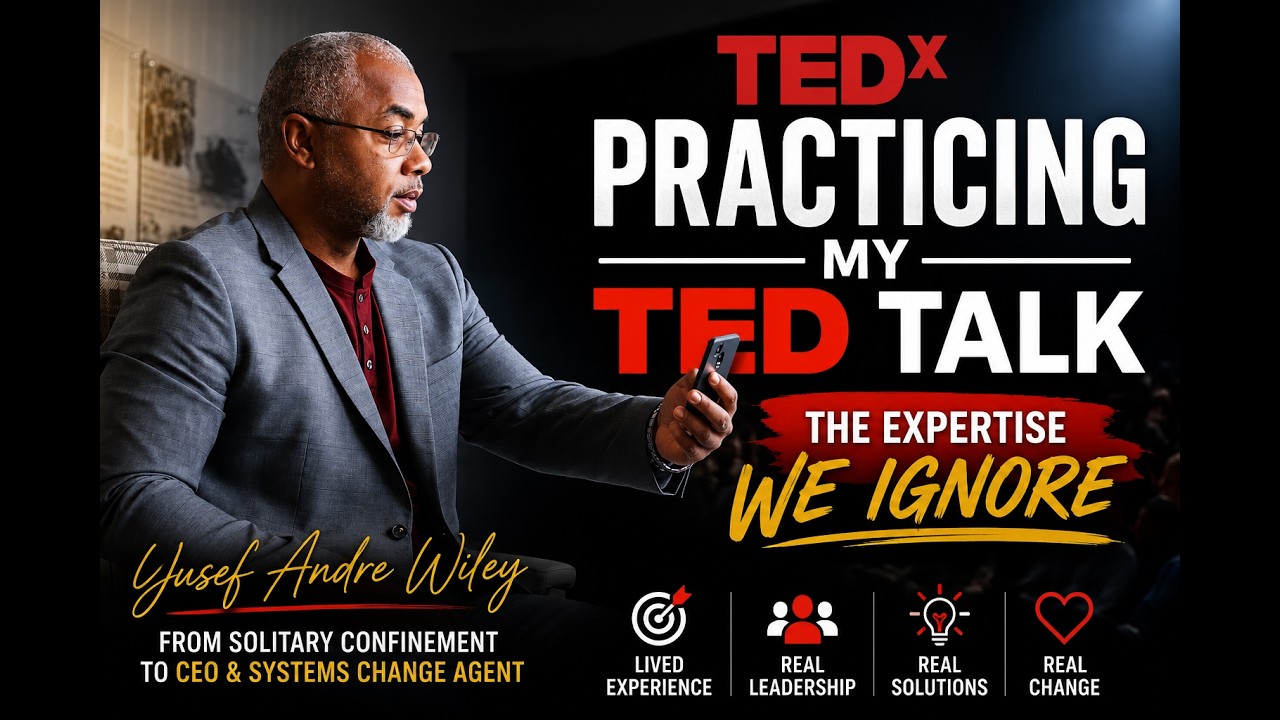
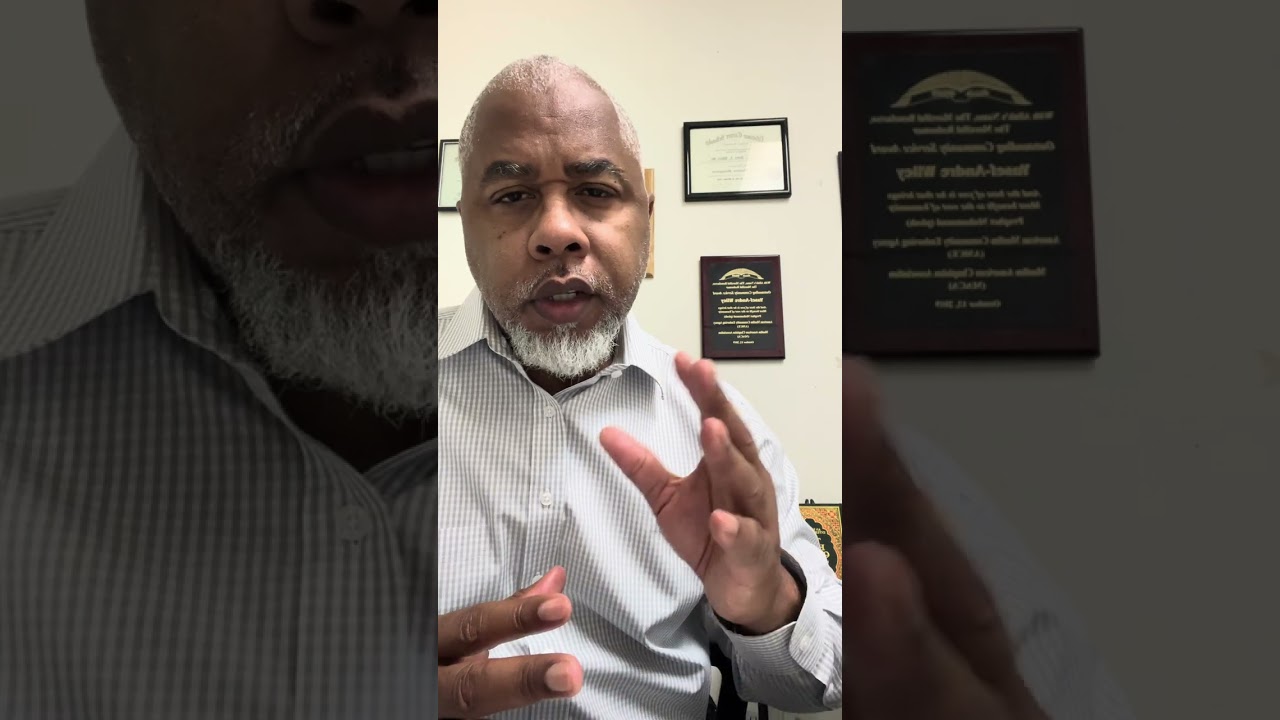
In Episode 2 of his series, Yusef‑Andre Wiley reflects on his upbringing in South Central Los Angeles during the early 1980s, describing how the erosion of school arts and extracurricular programs left many youths vulnerable to street life. He chronicles how the rise of hip‑hop, funk, and gangsta rap—citing artists such as Run‑DMC, Eric B. & Rakim, Parliament, and George Clinton—provided a soundtrack that intertwined with emerging gang identities. Wiley details the cultural symbols that signaled gang affiliation: specific car models (Cutlass Supremes, Regals, low‑rider Chevys, Impalas), fashion choices (loose fits, sagging, loose laces), and self‑assigned monikers drawn from movies and street lore (Maniac, Psycho, Capone, Scarface). He explains how peer pressure, the desire for belonging, and the de‑valuation of academic achievement pushed him and his peers toward gang involvement, despite continued passions like football. Wiley emphasizes that these dynamics are not relics of the 1980s but persist today, affecting contemporary youth through similar mechanisms of music, peer influence, and lack of supportive programs. The episode concludes with a plea for community action—encouraging viewers to subscribe, share, and help “rescue” young people, positioning the series as a vehicle for turning negative trajectories into positive outcomes.
Chapters
Hey, hey, hey, welcome to episode 2. Uh, just a recap, quick recap on what we discussed in the first episode on Unleashing the Best from the Worst. We talked about my experience with my nephew and my cousin, uh, roughhousing in the front yard and playing football and my father coming home and noticing this football, this desire to play football and sports, being athletic. And we talked about the fact that many of the programs have been taken away from the schools. Uh, many of the arts programs and activities that would typically are designed to keep young people out of trouble and to keep us occupied, to keep us doing something besides the street life, right? And we're talking about a period of Reagan— Reaganomics, what we call Reaganomics back then. And the older folks obviously know what I mean when I say Reaganomics. And then we got to the point of meeting new friends on the football field and off the football field, around the neighborhood, in the parks. That I spent time in where we had football practice and we played for the Sheriff League. And I— and as I prepared you for this episode, I explained that we will begin to go into this idea of the realization that one has become, I mean, a gang member. One realizing that, wait a minute, I've taken a wrong turn somewhere. And what do you do? What does a young person do in that situation where you realize that, hey, it's going down, um, this is it, I just have to embrace it, just go with it? So many young people, so many youth find themselves in these situations. Now keep in mind This scenario that I'm painting and drawing for you, it's not just something from the '80s, it's not something just from the '90s, it's not— this is not unusual. This is something that continues to plague our community today, uh, the whole, uh, idea of influence and peer pressure. Those things still exist, those issues, wanting to belong, wanting to be a part of something. All of that is still here. It still affects our young people in a very negative way. And oftentimes the parents don't catch it early enough to get involved, to try to disrupt this thing of going away from the cradle, if you would. To the streets. But we have to do something about it, and I'm just giving you something to explain in a way that I've experienced it, which again, even parents of today will see it for themselves, that it's still relevant, it's still happening, it's still having a very bad negative impact on our communities, right? So 1982 going into 1983, 1984, we are talking about the era of hip-hop, the era of, you know, music taking on a whole nother, uh, sound. We gangsta rap, we talking about gangsta rap. Beginning to develop. At this time, when I was a young person in the '80s, it was Eric B. and Rakim, it was Run-DMC, it was EPMD, it was Slick Rick, Doug E. Fresh, right? Those were the rappers, those were the hip-hop artists of my era. And even though the language and the things that were talked about in the rap, in the music, wasn't like it is today, obviously, it was the beat, it was the sound that came through to people that had the most impact. Biz Markie, right? Um, you know, the Vapors, the It did something taken from the James Brown sound. Uh, many of the artists, many of the hip-hop artists took from the George Clinton sound, the Parliament and the Funkadelic sound, that, that, that bass, that, that heavy, uh, bass and drum, right? And just this hearing this music, hearing this new music coming through. Um, I'll never forget this one song when I first started really getting into the whole gang, throwing up gang signs and realizing that I'm involved in the gang. It was the song by actually Parliament. Parliament was still around making music every once in a while, even though hip-hop was coming in. Run-DMC and Kurtis Blow, all of those folks were, were happening. But you know, that sound— many of the hip-hop artists were using that sound already. So it was okay, you know, we was going to listen to it, right? When George Clinton come out with something, because he's, he's the man, right? The song that came out was called Pumping It Up. Pumping It Up, right? And for you young people don't know what I'm talking about that might be listening, uh, to this video or viewing this video, check it out. Check out that song. But by George Clinton. It might be listed as, uh, P-Funk All-Stars. You might— you can probably look it up, P-Funk All-Stars or Parliament and the Funkadelics. But the song is called Pumping It Up. I feel like pumping it up, feel like pumping it up. And it just had that music, that sound. Those of us, you youth at that time, hearing this music come through with the loud sound. We had the boomboxes, uh, we had the big stereo systems that our parents had in the house. You know, we had graduated from the component set, the little small component sets, to the, to the big stereo systems with the big tall speakers in the house. We would turn that stuff up and hear that sound, and you just seen us move. You just seen us just— it put a certain move, you know, a feeling with it, you know. And it became a part of the culture. It became a part of the, the thug, the, the gangsta culture. It became a part of how we identified, you know. You, you see us pull up in our— back then, um, Marley Carlos uh, Cutlass Supremes and Regals. Those are the favorite— those are our favorite cars outside of the lowrider '64 Chevys and the '63, '62 Impalas, etc. You know, these, these other cars, you know, the, the, the '78, um, the, the '79, the '76, uh, Monte Carlos, um Uh, and, and Cut the Supremes, those became gang member cars in South Central Los Angeles. Those are the cars we drove. And somebody pulling up with that, right, it just automatically put this move and this feeling and made your boom bones move a certain way. And it created— it was creating something in us. And you can see it simultaneously as this gang culture was growing in South Central Los Angeles, so was the music. So was new artists coming out with new music like this. Using that same sound that I just described. It was coming out, right? Uh, De La Soul, he was one that came out. Now these guys, most of these were New York artists, and they were sampling this music, you know, from James Brown and Parliament and the Funkadelics and, you know, Cameo, all of these old school funksters, you know, Rick James. That, that was the funk. Gap Band, that was the funk sound, the funky, the boom. Now you have lyrics coming in, you know, this rap coming in, right? And it was so cool, and it attracted us. It attracted us. And as the music was coming in, so was the identity. How now we need a name. How do, how do we identify? What I'm— what am I going to call myself and my block, my street, my crew? We have to start identifying these things with the music and with the sound, with who we are becoming, so that we can separate ourselves from the normal, from the folks that were not falling to the wayside. We had to separate ourselves from that crew. We wasn't the squares. We didn't want to be square. Being square was not popular. Another cold way of saying being smart wasn't popular. Going to school and getting good grades and turning in your homework was not popular. That didn't get you that, you know, folks looking at you and say, oh, right on, bro, right on, right on, homie. It didn't give you that. So guess what? We, we roll with it. We continue to roll with it. And as we roll with it, we felt famous. We felt like we were somebody special. We, we were becoming somebody. We have the music, we have the cars, we have the sound, we have the swag, we have the dress. Now we have to, you know, alter some of that a little more, cut with the colors and with the way we wear our clothes. With the way we wear clothes on our bodies— loose fit, sagging, shoe laces a little loose. We had to be different. We were becoming something, and we thought it was all that because we're not over there with those people that don't get no love, right? We are becoming gang members. We're becoming thugs. So the more we go down this path, the more you see this development of this forming of these characters, these characters, maniac names like Maniac, Psycho. We were giving ourselves these names, and these names, many subconsciously, were coming from the movies. We in South Central Los Angeles, we in Hollywood, we People see us and see Hollywood. When they see someone from Los Angeles, California, they identify us with Hollywood. Hey Hollywood, do you know— you know, many times we encounter somebody from another state and first thing they ask is, hey, you know, uh, Eazy-E? You know, uh, Ice Cube? You know them guys? They just automatically identify us with that element. So we start taking on these names. Capone. Those are names from the movies. You know, there was a Capone, there was a Scarface. We, we're naming ourselves after these characters in the movies because we're famous, we're becoming something. In the streets. So we have to start identifying with famous names. Dillinger, Ace Capone, Capone, Scarface, Psycho. These were the names we began to take on. Incredible. Bear. Pooh Bear. We have these names. We have all kind of names. Lunatic, Maniac, Insane. These are the names because we want to— we want— when people hear that name, they want people just like, oh yeah, that's those guys, that's them. This is what— this is what we want to get from people. Go to school and they call us by our real name. Jerome! Mr. Stanley! Mr. Wiley! Can you answer the question on the board? What? I'm not educating myself anymore. I don't study anymore. I don't read anymore. I don't do those things. So I gotta look cool and, nah, y'all good, pass it to somebody, let somebody else answer that. And this swag and behavior is just a diversion, a diversion. The people around, oh, that's dude, that's the guy, that's one of them guys, that's one of them gangsters, that's one of them gang members. So I get to do that, I get to do that. Yeah. Divert attention away from myself because of my lack of education, my lack of no longer going to school and getting good grades, ditching school because I'm hanging out with the fellas, I'm drinking 40 ounces, I'm smoking weed now. I'm becoming and have become a gang member. So those things we don't do anymore. Grades going down, but I still like football. How do I do that with bad grades? Oh man, I'm, you know, I don't want all my boys to start thinking I done got soft. I gotta, I gotta stick to this and just play as long as I, I can. Before the coaches and my teachers telling me I can't play anymore, and my, my parents or my father or somebody say, oh, with those grades you can't play football anymore. So what does that mean? More into that path of gang activity. And this is the making of gang members, and there's many makings of gang members right in front of you. And it's not just gangs anymore. It's cliques, it's, it's crews, it's all kind of stuff. This is still happening today. This, what I'm describing, is happening today. There's parallels, whether it's music parallels with drugs, just the, the influence of friends. This stuff is still going on, and we have to pay attention to it because it destroyed my life. As a youth. So this is what we're talking about. And in the next episode, hopefully you'll join me, continue to join me on this, on this journey of Unleashing the Best from the Worst, because there's a lot more to go. Thank you for joining me. Subscribe, please subscribe, share this video, talk to people about this, because we have to rescue our young people. For sure, we have to. They're our future. So please subscribe. Yusef-Andre Wiley coming at you. Peace.