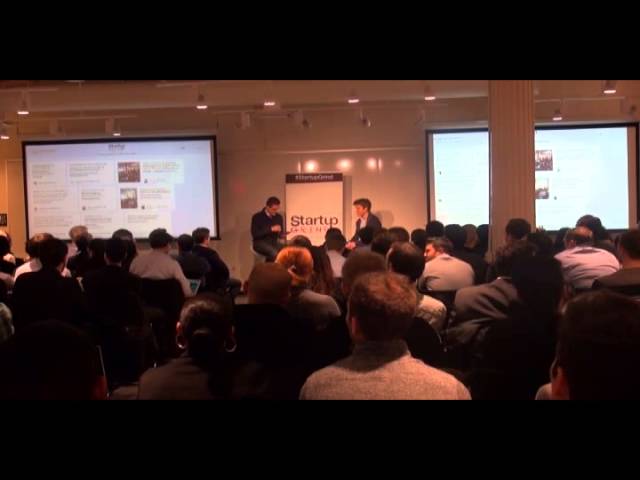
Zach Sims & Bobbie Johnson - LeWeb London 2012 - Plenary 1

In a LeWeb London 2012 plenary interview, Codecademy co‑founder Zach Sims discusses the startup’s rapid growth, product philosophy, and future plans. He explains that Codecademy teaches programming through an in‑browser, learn‑by‑doing approach where users write code directly in a terminal. The platform has attracted a global audience—over half of its traffic comes from outside the United States, with users in every country, including developing markets, and has logged more than 100 million code submissions in its first year. Sims announces a $10 million Series A round led by Index, Kleiner Perkins and other investors such as Richard Branson, bringing total funding to $12.5 million. He outlines the company’s international strategy: leveraging community‑generated translations, low‑bandwidth design, and offline capability to reach low‑resource regions. Monetization is deferred for now; the service is free, crowdsourced, and the team (nine people) focuses on scaling the marketplace that connects teachers (programmers) with learners. Quality control relies on beta‑testing, star ratings, and analytics on completion and drop‑off rates. Hiring is global and intensive, exemplified by a three‑day, $1,000 interview trip to Jordan to secure a key engineer. Partnerships include a White House “Code Summer Plus” program and ad‑hoc adoption by governments and universities. Sims differentiates Codecademy from Coursera and Udacity by emphasizing practical, job‑ready coding skills and community‑driven content rather than university‑level curricula. He touches on security monitoring, the potential for misuse, and user‑engagement features such as badges that motivate learners. Throughout, Sims conveys optimism about scaling, a belief that everyone should learn basic programming concepts, and a commitment to keeping the product lightweight and accessible worldwide.
Chapters
So thanks for having us. So I'm here with Zach Sims from Codecademy. Now I'm not sure who knows Codecademy. If you even— if you think you don't, you might do because it has a very famous user in Michael Bloomberg. The mayor of New York. But Zach, I wonder first, for those who don't know, can you tell us what's your hot, exciting education startup? What does it do?
So we teach people to program online. We're the easiest way for anyone to learn to code. So it's a network of teachers that are creating lessons and a network of students that are taking lessons.
And you've also got some news to share today, which went out a little bit earlier.
Yes, so we just closed a $10 million financing round from Index and Kleiner Perkins and a bunch of other people, including, I believe, Richard Branson.
Yeah, who's, who's now decided to reinvent himself as a startup investor. The less said about that, the better, I think. So you've now got— you're only— you're just under a year old, and you've already gone on to your second round of fundraising. You've raised, what, $12.5 million so far? There's got to be a point to that. What I'm led to believe that you want to expand internationally and sort of look at, become a global teaching resource quite quickly. How are you going to do that?
So we have more than, more than 50% of our traffic is from outside of the United States, and there were people from day one that were sending us translations of Codecademy, the lessons, translating the lessons on the site. So it's really an international phenomenon, you know, where there are no access to programming elsewhere, programming education, we hope to be there in people's languages, on the ground with meetups and people in all these other countries.
So, you know, so you have users from all kinds of countries who log on and go through your sort of— it's a very interactive process, isn't it? It's, you know, lesson by lesson, step by step.
Yeah, it's very learn-by-doing, so it's based on, you know, you're actually discovering the concepts of programming by writing programs yourself. Itself. So it's a terminal in the browser that you're using to write code.
Yeah, and can you talk a bit more about, you know, what international means to you? Half of your users are outside the US. I'm led to believe the UK is the second largest, with about— you've got maybe 700,000 users in the UK. Where else?
So we have users in, I think at this point, every country in the world, and a lot of developing countries, and big countries like China and Russia. It's really going everywhere, and that's sort of what the point of the next few months for us is.
And what numbers are behind that? 700,000 in the UK. What else?
Many millions that are using the product globally. And so we've done more than 100 million submissions of code have happened on the site since the founding of the site, which is less than 12 months now.
But many millions.
That's as good as it's going to get. That is as good as it's going to get.
Come on. Give us more. So one of the things I wonder is education. A lot of people look at education as an area to be disrupted. But at the same time, education is not renowned for being a highly profitable market. Look at students. Or maybe somebody at the top of the tree is making a lot of money. But do you want to be at the top of the tree? How are you going to turn this into profit?
So education is one of the biggest markets globally, and just in terms of spending, you know, traditionally education and technology has been sort of less well regarded by venture investors and everyone else. But, you know, we're operating with engineers and programmers, who are the most highly sought after profession now, and there's definitely ways to make money with them.
So subscriptions, or teach, you know, paid lessons?
I'll let you speculate.
I'll keep speculating. I mean, you could, if you've got 100 million lines of code, You could just run ads against the site. And all of your submissions, your teachers, they don't pay to— or there's no money involved at all at the moment.
So right now no one's paying. We have people that are creating lessons, so it's all crowdsourced. And everyone's taking lessons for free. So right now you don't get charged for anything.
OK. That seems kind of unsustainable.
I would imagine.
Yeah. So it's all about scale now. Monetization later.
Yep. Yeah, I think we've heard this before.
Yeah, from, from one or two companies who have, who have done, you know, their IPOs have gone spectacularly well. So, okay, so you're a year in now. You know, seems like you're going pretty well in terms of traction, in terms of users, in terms of fundraising.
Yep.
That's pretty hectic year for someone who was 12 months ago was still in school, right? And you took the long, the tried and trusted route of dropping out for your startup.
I'm almost too much of a cliché.
Yeah. And yet you're, you're there to educate the world despite having turned away from, from education yourself.
Yeah, it's been a, it's been a hectic 12 months after, you know, I think it was like a year and a month or two ago I was still at Columbia as a political science major teaching myself to code, and now, you know, things obviously are flipped around.
Yeah. I wondered the— there's a big meme around at the moment of, you know, everyone should learn to code, everyone can be a programmer, which is why, for example, Bloomberg got involved, really was to sort of surf along on the back of that. Is that what you believe? Do you think everyone should learn to code?
Definitely. I don't think everyone needs to become a programmer, but everyone should learn the basics of algorithms and the basics of programming. You know, we have people who just learn a little bit of programming, you know, they can build their own websites, they can— enhance what they're doing in jobs that aren't traditionally thought of as tech-savvy or programming-centric jobs, whether that's being a journalist, or whether that's— we have a lot of librarians on the site that are writing new programs to categorize books in their library. So they're not becoming professional software developers, but they're using what they're learning on Codecademy to enhance what they're doing in their regular lives.
But isn't— I mean, it's a very typical response to go to a startup, and they say, ah, everyone should do what we do. You talk to a programmer, of course they think everyone in the world should be a programmer.
Not always, though. That was where the discussion started, was from a programmer who said not everyone should be a programmer.
Yeah. He was mainly worried about people taking away work later on, wasn't he? I think he was worried about his salary going down, effectively. But, I mean, isn't it just maths at some point? Or math, sorry. Aren't you just talking about learning better math?
So it's learning algorithms, step-by-step processes, and how to automate things, and how to better use technology. We talked to a journalist yesterday who had written a piece with double spacing, had gone back and deleted each of the spaces after the period, when what he could have done is written a script to delete all of that in a few steps instead of going through the whole article. And that's really just like one example of automating a process that you don't really think of unless you're a programmer or you know what algorithms are.
Okay, so in terms of expansion then, I mean, that's a good example because you're really talking about the practical application of traditionally hard-to-access teaching methods or teaching products. So that could be applied theoretically. I know you're called Codecademy. I always get that wrong. Sorry. Codecademy. But this could apply to all kinds of learning, couldn't it?
So we're focused on coding, but it's this notion of, like, learn by doing, of community-generated lessons. And it's scaling very well within coding. And I think that philosophy can be applied outside of coding. Coding as well.
So as you expand into other languages, the site expands into other languages, you could also expand into teaching those languages, for example. Teaching foreign languages? Yeah, if the site is in Japanese, it makes it easier to teach. You've already done some of the work to teach people how to speak Japanese.
I think it's different. I think what we've built with Codecademy is the best way to learn coding, but maybe it doesn't necessarily apply to foreign languages well.
But if you want scale and you want the users, you're going to have to go in some extra directions, aren't you?
We may.
OK. So one of the things I'm really interested in is you've got a ton of coverage. You've got endorsements. You've got a lot of PR. But you're a team of 9 people now. And you weren't that big then. So how have you done it? I mean, what's your secret PR strategy that you've been using to get all this coverage? I can't share the secret, no.
A lot of it's really just been, I think, you know, picking up on this theme of, you know, we're having issues with unemployment, programming is super important to solve that, and also to retrain workforces. So it's not just kids, or it's not just people, you know, that are leveling up in their own jobs, but this is a way for people to find and train themselves for new jobs. So it sort of fit into the cultural zeitgeist of what was happening. And at the same time, you know, I think there's really a story around what we've built and the scale that it's achieved. And so a lot of the press unfortunately, has sort of come because of that.
And, for example, your Bloomberg endorsement, you know, "Hit Twitter and say, 'Yeah, I'm learning to code.'" That wasn't created by you? That wasn't set up by you?
So that, actually, I found out about that from a reporter who wrote a story on it. We didn't know anyone at Bloomberg, and he told everyone that he was learning to code with Codecademy as part of this program we did in January called Code Year. So he pledged that his New Year's resolution was to learn to code with us. It was pretty surprising around the office to find out from other people.
And how's he doing?
I don't know.
Come on, you've got to check up on him.
If I look at his account, I'd have to look at yours, right?
Uh, yeah, okay. In which case, don't ever look. Don't ever look. So the reason that interests me is because, you know, you're effectively creating— you're building a tool to help the world learn new things. And you're a couple of fairly privileged kids from America, from Connecticut, I believe, and you're putting this resource out there. It feels like you're very connected to the establishment with Bloomberg. The endorsements are big and traditional. Is there any friction there between going out and teaching the world, you know, it's almost like Coke, isn't it? You want to teach the world to code.
Any friction between—
between you as a company and the, you know, the kid in India who wants to learn? I mean, is there an imbalance there?
Hopefully not. I mean, you know, what we're working on doing is extending the opportunities that, you know, you had and I had when we were able to get educated to everyone else, to places where there isn't programming education, oftentimes there isn't education. In places that are just starting to get computers, and just, you know, can start from the beginning learning things like this, becoming really digitally literate.
And how do you— how does that change the product, though? I mean, when you look at a new market that's emerging, does your product have to change radically?
Not that much. I mean, what we've built is, you know, it works over low-bandwidth connections. There's no video, there's no audio. A lot of it works when you're offline. So the product sort of just naturally evolved into something that you can use no matter where you are in the world, no matter what sort of internet connection you have also.
Okay. So what have you learned? You're out there to teach the world, but what have you learned from the last year or so? What's been the tough stuff?
A lot. I think, you know, if I were to go back and do things all over again, there's a lot of things I would do differently. We spent 4 months waiting to hire our first employee, and we interviewed over 100 people before we found the first person that we ended up hiring, and the first person we hired was actually in Jordan. So, you know, it taught me a lot about what to look for in people, how to run interview processes, and—
And you actually flew out to interview him and spend like 3 days with him in Jordan.
Yeah, in Amman.
That's a pretty high-end recruitment process. Maybe not the best use of your funds, is it? Or has it made a difference?
I think hiring a really good engineer and someone who really fits into the culture, and at the early stages, the first 4 or 5 people that you hire at the company, It's amazingly important. So I think the 3 days and the $1,000 that it took me to fly to Jordan have paid off for us for sure.
Yeah. So is that something you'd extol to other people?
I think the moral of the story for us has been go wherever you can to find talent, right? We're in New York, and we're hiring people not only that are in New York, but that are in San Francisco, that are in Jordan. We hire people where there's amazing talent, and we try to bring them all together regardless of how hard it is to bring them to New York.
And how fast do you see yourself growing now? I mean, you know, you're still only, as I said, 9 people. And given that you have to spend 3 days and thousands of dollars interviewing everybody you bring on, it's going to take a while, isn't it, to staff up? So how big do you see it being?
So I think, you know, we want to stay small for a while. I think that what we're doing, because, you know, we're not a publishing house, we're not creating courses ourselves, we're building a way to sort of connect two sides of a market. So it's a real marketplace. So we're building a product in between. And I think, you know, now we're 9. We'll definitely be, you know, somewhere around 15 or 20 hopefully by the end of the year. But not aiming to really scale up, just sort of as necessary.
Okay. So I think we'll probably get some questions in a minute. So if anyone has any questions, then you might want to put your hand up soon. I'm sorry to keep going back over this. But I really, I really want to know more about the business. You know, you're talking about a marketplace there, and I know, you know, that's something that would have been very attractive to those investors who came on board, because marketplaces are a big business. You know, going back to eBay, all the way through, marketplaces are what people love. So over time, can we expect to see more marketplace activity, however you monetize it? How might you look at— what sort of things are you thinking about in terms of the marketplace?
Definitely. I mean, you know, we're connecting, as I mentioned before, we're connecting people that are programmers and are teaching other people to be programmers with those that are learning, right? So there are a lot of ways in between where the two sides might pay each other for things. Or just really connecting people is— there's a ton of different things you can do both with, you know, people working on projects and people talking to each other. And for now, everything on the site is free, right, where we have— people that are teaching lessons for free. But who knows what will happen in the future.
Yeah, okay. I don't think we're going any further than that on that one, are we? So are there any questions in the audience? I think it would be really interesting to hear if anyone's used Codecademy and can give some insight. Because I'm a terrible coder. You know, going back to a few lines of BASIC when I was 10 or something. And I have tried Codecademy, but my brain is too small as a journalist to understand and to learn. But if anyone's got any questions, then please put your hands up. There's a couple. Yeah, hi. Hi. From Italy. The idea was that people get to learn programming, and this seems something very smart also for the government side, the public side of things. Were you approached by government in Europe or other parts of the world?
So, so far we've done some stuff with the government in the U.S. You know, we did a summer program with the White House called Code Summer Plus that targets, you know, it's— they're doing distribution to underprivileged kids to learn programming online and setting up, you know, areas and meetups that we're doing with people as well for that kind of stuff. But that's sort of been the extent of it so far. A lot of it's happening organically. So there are, you know, governments that are using this in school systems. It's being used in universities. But a lot of it's sort of ad hoc. But we'd definitely be interested in doing stuff like that.
And what friction are you finding there between, you know, between yourselves, the governmental organizations who are interested in what you're doing, and the existing educational publishers or providers who may see you as a threat?
So we focus, you know, on things that are outside of the institutions. So it's been— we've grown totally naturally from outside universities, from outside governments, not working with publishers. I think that's really the easiest way to generate change. And then eventually that sort of stuff, you know, will come into universities and come into governments. But for now, you know, we're a consumer education product. We're not selling to schools or doing anything like that. We're sort of just naturally being adopted.
Yeah. I think we have a question over the back there. Hi.
I think it's great what you're doing. And I think there's lots of sort of interesting innovation in sort of education, education platforms. Obviously most people have heard of Khan Academy. There was sort of Sebastian Thrun and the Stanford professors, and that sort of forked into Coursera and Udacity. I think it's interesting Coursera is sort of more— it's sort of like an automated platform, so there's no sort of human interaction, and it's sort of you put your input and you get the automated feedback, whereas I guess Udacity is slightly more high fidelity. It's sort of video and there's forums. Who do you see as the closest rivals for Codecademy, and how do you think that's sort of going to play out over the next sort of few years?
So I think we're all very different. You know, Udacity and Coursera are bringing university education online. What we're bringing online is the ability for anyone to learn skills that will get them a job, right? Like concrete, hard skills. So it's programming, not necessarily computer science, even though you can learn computer science sort of as a function of learning programming sometimes. And the most important thing for us is really that the lessons are community-generated, right? That we're finally making— allowing people that haven't been in institutions to become teachers. So, you know, software developers and startups are teachers. Someone who's learning, you know, material in school can all of a sudden become a teacher as well. Whereas if you look at bringing a lot of universities online and what has traditionally been done with online education, it's usually bringing the current system from offline online. And what we're doing, I think, is, you know, designing something where we're using the marketplace dynamics of the web, crowdsourcing, things that are in other consumer products and bringing them finally to create consumer education as opposed to bringing what's offline online.
And just to expand on that a bit more, I wondered what quality control you have to put in, or maybe you have to think about putting in in the future in order to— you know, if anyone can create a lesson, then there needs to be a really good reputation system or balancing act there.
So lessons go out to a few thousand beta testers. Every time new courses are created, they get sent and they get rated by people that have volunteered to go through content and rate it as— I think it's on a star rating at this point. So as soon as they reach the general public, they've already been rated. And you know sort of what to expect in terms of quality. And then, you know, as courses are taken, we're using a bunch of different metrics as you go through. The percentage of people that are completing things, you know, the percentage of people that are dropping off, and calculating how good a course is based on that. So both hard numbers that we're getting just purely on a metrics perspective, and then other numbers that users are submitting and commenting on courses also.
And so how much of the activity that happens around a lesson, you know, or how many lessons qualify for your 100 million lines of code?
So there are— I think there's somewhere in the few thousand courses that are on the site right now, which is tens of thousands of lessons, and, you know, more exercises, which is sort of the smaller, more granular part of what people are creating.
And is the distribution of those even?
So obviously the first course, which you take when you hit the home page, is the most popular, but we're seeing a lot of people that are not just coming to learn, a whole course or a whole learning trajectory, but they're picking up, like, small niche concepts, like we need to learn one thing in Ruby or one thing in JavaScript.
What about the possibility of learning, like, black hat stuff? You know, what if somebody learned on Codecademy how to break into Codecademy and, you know, wipe the servers clean? Is that something you have to watch out for?
I think, you know, right now we definitely watch out for things like that, but it hasn't been a problem. I think it's sort of take care of things on a case-by-case basis like that.
Maybe you need to spend a few days going and hiring a security guy to make sure you're protected.
We do a lot of security stuff in-house now.
Yeah, fantastic. Have we got any more questions? Yep, there's one in the middle here. I think this is the last one, so make it snappy.
I'm Adria, and earlier this year I took probably about 50 exercises on Codecademy, and I found them to be very easy to follow along with, so I wanted to ask about usability. Also, I saw that badges were a big aspect of going through the coursework, so just kind of the background on usability and thinking from the learning perspective of the student.
Yup.
So we, the story behind the site is that we actually built it for me when I was learning to program. So we sort of pulled from a bunch of different aspects that I found frustrating with programming, and the fact that it was hard to stay motivated, and the fact that the only part of it that was fun was actually building things. So we tried to bring that into the learning experience, you know, give people badges to help them be both extrinsically and intrinsically motivated, hopefully more intrinsically motivated. But we really keep the focus on actually building things and having a finished product instead of, you know, it's not you finished a chapter, but you finished a series of lessons, and now you can build a blackjack game or build a website or something like that. And we've hired a few people actually internally as well to focus purely on the learning and pedagogical side of things to make sure it's scientifically sound in addition to a good experience for users.
Fantastic. Well, thank you, Zach, and thank you very much for having us. Cool.
More from Zach


Teaching Millions of People to Code with Zach Sims, Co-Founder & CEO of Codecademy

Zach Sims (Codecademy Co-Founder and CEO) gives career advice to students during WayUp Lunch & Learn