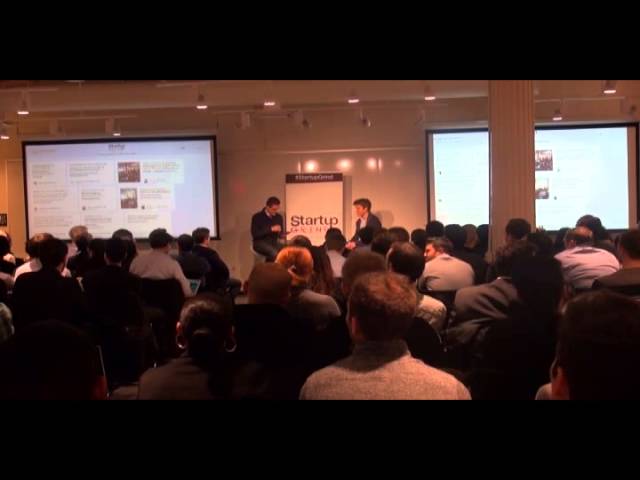
Zach Sims, CEO & Co-Founder, Codecademy - Leaders@AppNexus 8.5.14

Zach Sims and Ryan Bubinski launched Codecademy with a single JavaScript tutorial in June 2011 after frustration with the gap between college theory and real-world programming. The product reached 200,000 users in three days and scaled to 25 million learners worldwide, 30% in the U.S.
Chapters
Zach, we met under interesting circumstances. You may not know this, but Zach Hobnobs— I'm not even sure what that means or how to do it— but last year the World Economic Forum named both of our companies technology pioneers, and we got to go to the World Economic Forum event at Davos. And I think you and I were probably two of the most out-of-place people there. At least that's how I felt.
Yeah.
And so we kind of bonded, being New York tech people sort of confused by weird politicians and world leaders and important people. And so we ended up just tobogganing.
I think most people thought we were crashing the party.
No, I think we were crashing the party. And so we were like, hey, when we get back to New York, let's hang out. And so we're back.
9 months later.
So I guess relationships built in Davos, you know, stay in Davos. But that's cool. But I think what would be helpful for everyone here is to tell the story of how and why you started Codecademy.
Sure. So we started Codecademy in July of— sorry, June of 2011.
So we're a little over 3 years old at this point.
When I was, when I was in college at Columbia, I was a political science major. And I watched my friends and I go and interview for jobs all across New York. And I realized that nothing I was learning in college was really relevant to what I wanted to do after graduation. And I'd worked in a bunch of different tech companies. My co-founder was a computer science major. And what we realized was that there was this huge gap between people that were using skills on the job and programming and using all these digital skills and what we were teaching in college. Which was theoretical and not really related to programming. And so we decided to build something for me, to teach me how to program. We started by building, you know, one JavaScript course online, and we figured if someone as dense as me could understand what we were doing, that we'd probably have an audience. And so we did.
And are you now a coder?
I am a good enough programmer, but I do not write code for the company because that would be a mess.
Hmm, not sure how I feel about that.
There are—
Eating your own dog food.
Definitely eating my own dog food. There are times when people see my pull requests at the company and they just shake their heads and they're like, "I'm just gonna do this myself." Well, I took your first JavaScript class when it came out.
I thought it was a really cool idea. I also found that as a more or less self-taught programmer that there weren't resources like that out there. And I immediately sent it to my then 11-year-old half-brother and sister in Seattle and said, "You guys should learn to code." And they did the course and were like, "This is awesome. Now what?" And it was pretty obvious that it was going to be a really powerful meme.
It was really obvious after we launched the company.
Yeah. Yeah, well, it's funny that there's a company too. I think at that time it was like, "Okay, this is cool. Great." "Can I get a job?" But now, I mean, I'm curious. This just exploded. I mean, it feels like this just went completely wildfire. So what was that like?
So when we first started the company, I think there was exactly zero people who told us this was a good idea. We spoke to a couple venture investors, and they all said, "You know, there's 100,000 programmers in the US, and no more than 10% of them will ever use your thing, so there's your target market. 10,000 people will use your product." And I talked to my friends, and they didn't even go that far. They were just like, wow, you're a nerd. And it's like kind of cool in college, and programming was not cool. And then we talked to some people that were also learning to program, and they said, you can't ever put something like this online. So we are notorious— or my co-founder and I are kind of notorious for just not listening to what people have to say to us, which can be good and bad. And in this event, we said, you know what? We'll build something, and we'll see what happens. We figured I was out there, and there had to be other people like me. So we built the first version of the product. And we showed it to one of our early investors. And he told us that you should be really embarrassed when you launch a product.
And we're like, good, we're on to something. And then he pauses for effect and looks at us and says, but never this embarrassed.
So we went home that night and cried for a while.
No, I'm kidding.
So we took that. And of course, being, again, kind of thick, we just said, pfft.
He's probably wrong, because everyone's wrong.
And in this case, we were right. And so we launched the product one afternoon in August. And we thought, like everyone else, that no one was going to use it. And at the time, Ryan, my co-founder, and I had made a bet. Ryan bet me something like if there would never be more than 500 people on the site at the same time. And I said, this is ridiculous. Give it 10 years. There will definitely be 500 people on the site at the same time. And we went out and we got bagels. And then in the middle of lunch, my phone just started going berserk. It was all these crazy famous people tweeting at me, sending me emails. And my phone's saying, there's like 10,000 people on your website right now at the same time. And so Ryan and I thought we'd set up the monitoring wrong. And that someone's email was forwarding to me, or Chartbeat was off. So we raced home.
And then we realized that nothing was wrong. It was just that we'd built something that people wanted.
And that was crazy, because for the 72 hours after that, we didn't sleep. And I got emails from all these people who I hoped I would meet once before I was dead, who were emailing me saying, this is the coolest thing I've ever seen. And so Ryan and I stayed up, and we tried to fix the product as best we could. And more than 200,000 people used Codecademy in the first 3 days that it was online.
So that was a pretty good proof point to turn around and take to the people that said only 10,000 people would ever use it over the lifetime of the product.
Product. So it's kind of been like that ever since. When we first started the company, everyone said no one is interested in programming. There's no need for software developers. And people that aren't software developers just aren't interested in learning to program. And we kind of made a bet that both of those things were wrong. And so far, it looks like we were right.
There's a funny quote. I think it was maybe from Paul Graham about you guys as Y Combinator founders?
Yeah. At some point during the summer, we had changed what we were working on a couple of times. And Paul called us— I think it was actually Sam Altman who told us you're two of the smartest people in the batch with the dumbest ideas. That was a real confidence booster. You kind of go home at night after that and you're like, "Well, good. So I'll just squander all this intelligence and that's that." But we took that as, "Well, if we keep just trying enough things, it'll eventually work out." And really the thing that we ended up with, which was Codecademy, was where we started. We just didn't spend enough time and energy when we started perfecting what we were building.
So I think that's a really fascinating point for the everyone in the audience who maybe don't start companies because either their idea doesn't seem like it's going to work. I mean, this is a completely counterintuitive idea until you launched. And now it seems totally and completely obvious, and I can't believe it didn't happen before you guys figured it out. And obviously for really smart investors like the Y Combinator folks, I mean, it just seems really interesting that there were so many haters and doubters for something that was so obviously needed and compelling. And to have, I mean, there's gotta be 50 Girls Who Code sitting right in front of us who are spending their precious summers before you have real jobs. I mean, for all of us adults, are you crazy? You're learning to code in your spare time? But this is the Codecademy story. This is people really wanting to.
Yeah, at this point more than 25 million of them all over the world.
Yeah.
I mean, and this feels like, I mean, so what is it? Are we trying to unlock the world we live in? I mean, as a programmer myself, it feels like if you don't understand technology, it's really difficult to imagine living in the world we're in. I mean, this is the code of our universe. I mean, everything we do relies on software of some sort. So is that how you feel? And what's your 10-year vision for Codecademy?
Yeah, so I think there's kind of two separate questions there. The first is that everyone looks at Codecademy and they assume that we're trying to turn everyone into a software developer. And that's absolutely not the case. I think it's great to be a software developer. It's great for programming to be your full-time job. But actually, that's not the biggest market. The biggest market is normal people who are using programming in the course of their jobs that may or may not be directly IT-related. So the statistic you hear bandied about all the time is is that in the US there's 120,000 jobs every year that go unfilled because we just aren't producing enough people that have programming skills. And those jobs are in IT-specific companies. That doesn't include companies like a grocery store that needs to hire developers to make its website, or a small business that wants to sell things on eBay. All of which, those people are kind of awakening to the fact that technology can help empower them, make their lives better, and kind of bring them into the 21st century, as it were. And that also leaves aside the literacy argument, which is just to understand the world we live in today, you should understand programming it. You know, you're carrying a computer in your pocket. You're driving in what effectively is a large computer. So that's the programming side of things. When it comes to what we're doing over 10 years, when we first started the company, we had a pretty simple mandate that I think is pretty audacious and hard to achieve, which is we want to teach people the skills they need to find jobs. And that could be any job, not just programming. I think when you look at the education system in the US and abroad, you find that education and labor are super disjoint. And in the US, we have a specific distaste for any educational institution that's tied up specifically with labor. And because of that, what we have is unemployment. When US college students graduate, more than 50% of them are unemployed or underemployed a year after they graduate. So there's no ROI on investment in most cases. And that's fine when you don't pay for it, like you don't in most European countries. But here, when you're spending $200,000 on a 4-year degree, it's not fair. So we exist to give people just the skills they need in order to put food on their family's plates.
Interesting. I'd be curious to talk to some economists about that because the return on a college investment is still extremely high vis-à-vis the alternative. So even if they're graduating without those skills, at least the economics folks still say there's a lot of return there. Yep. So it'd be interesting to sort of tie that investment in college to the skill gap. I mean, I graduated from Princeton. Really not knowing how to do software engineering, even though I had a computer science degree. And so there's certainly a gap. But that said, I wonder how much the investment in, say, reading Slavic literature or exploring the great works, like reading Joyce's "Ulysses," certainly doesn't benefit me on a day-to-day basis. But I suspect the gray matter was somehow altered in positive and interesting ways.
Yeah, I mean, I'm the product of a liberal arts education, albeit I didn't finish, but I'm a proponent of one. I just think that that's applicable when you're at a really, really great educational institution like Princeton, right, that prizes discussion like that and study like that. But the vast majority of our institutions aren't that good, and consequently, you're getting a subpar experience. You're not getting that gray matter that you'd get at a good school. I think we bucket college into this panacea of everyone has this amazing 4-year experience where they're intellectually challenged, And that's not the case.
Yeah, I think it's also interesting if you look at this. I used to talk to a bunch of people who are 10 or 15 years out of Princeton. There's an alumni network. And this is when, it was probably 2001 or 2002 when the whole world fell apart. And there were really major job gaps. And these were people who were mid-career looking around going, now what? I've made it as far as I really want to go in my industry, whether that's finance or consulting. And they're like, now what? And there was a— it wasn't about skill gaps per se, but it was about wanting to do something different. And so I think it's really inspiring that, you know, you don't necessarily have to completely go back and, you know, study from scratch to get somewhere if you can actually pick up the pieces from, you know, whatever Codecademy, you know, 2017 looks like. I think that's a— it's exciting. The other thing I think about when you talk about that is this idea of a global economy, which is we have the best universities in the world here in the U.S. Now, you may not think they're building those skills, but I think, you know, we see just based on the number of applications to college from places like China that the world wants to come to the U.S. And we can have an immigration debate. Anyone here who's not trying to figure out a way to get our wonderful government to fix immigration is not helping the entrepreneurial community at all. We have these people around the world want to come to the US to go to college. But now you're in a way unlocking these key skills and making them available to a global audience. So I'm curious how many of those 25 million people you see from the US versus overseas.
It's 30% from the US. So the vast majority of the people that are learning on Codecademy are from not the US, which we hope to extend opportunity to anyone in the world. And the amazing thing about computers is that for the first time the means of production programming and distribution are kind of wrapped together in one machine that anyone can buy for, what, $200? And in many cases get for free if they have access to school or a public library. So, you know, how long is it until you see someone who didn't go to high school but had access to a computer, learned on Codecademy, started a company, became self-sufficient? I mean, we've seen it. We have these stories at Codecademy. And that's really what we exist to do is democratize that access, not just information and knowledge, about what you can then do with that information and knowledge, which again is further yourself, further your community.
So let's talk a bit about monetization, because as a business, I suppose you have to make money, which I get. What is your thesis? Do you monetize the people who are learning the skills? Do you monetize companies that want to hire those people? How do you think about making money from this audience and the skills you're opening up?
And we think about serving ads— no, I'm just kidding. Definitely not serving ads.
I love that.
Seriously, yeah.
Yeah.
I've heard there's a business model there.
I'm writing this down.
Yeah.
Call Zach.
Now's a good time for us to have this conversation, right?
No pressure. Yeah.
With 200 people as my witness, no. So we think about this a fair amount, obviously, because when we first started the company, we had the option to be— or not really the option, but a lot of people were pushing us into being a nonprofit. A lot of really prominent donors came to us and they said, look at Khan Academy. You guys could be the same thing. You just raise gobs of money and never worry about making money.
But in our case, we looked at the long-term horizon for a lot of nonprofits and for-profits.
And we realized that the best way to carry an idea forward in the world, I think, is with a for-profit because it keeps you focused, constrains your resources, and really makes you think about impact. And the governance structure is better. And so we're still pretty young at doing this, being a 3-year-old company. And we've been lucky enough that we have great investors— Union Square, Index, Y Combinator, a bunch of others— that have allowed us to really focus on scale and growing user experience. And we believe that being the dominant global player in teaching people the skills they need to find jobs lends itself to a few of the ideas that you had mentioned and many more.
But for us, the focus is still on growing the the product and the platform.
Excellent non-answer.
Done this a few times before, you know.
I'm not going to call you out on stage for that. So let's shift gears for a second. Because for me as a founder, I was a CTO of Right Media before starting AppNexus. And so while I'm a first-time CEO, I had the benefit of watching the sort of rocket ship that Right Media was on. And I could learn from my own and other people's mistakes. And so I've learned a ton as a CEO and a founder over the past few years. So I'm curious for you, what was the most unexpectedly difficult part of starting a company?
I think you realize you're on your own, which is kind of a scary thing. But it's good once you realize that. Inasmuch as you can ask anyone for advice, but it never has the same context. You can ask people for their recommendation, but honestly at the end end of the day you just kind of have to make the decision yourself and then you take the blame for what happens. And most of the time if you're doing it right, I think the success hopefully should go to your employees and not to you. So that was an interesting realization the first. And also that if you're not doing things, like no one else is gonna do them in the early days of the company. Like if you wake up on a Saturday and you decide not to program, turns out no one else is gonna do the work for you.
It feels like, you know, just from listening to you talk that there was this sort of difficult initial phase where you didn't really figure out the idea, and then you finally launch. And now from the outside, it feels like it's just been rainbows and unicorns.
I wish.
Since then. That's how it feels when you read the story. So what do you think? I mean, looking back on this 3 years in, that first phase of figuring out the idea and getting to that probably very stressful bagel run, or post-bagel, as we in the industry call it. That's actually an industry term, bagel and post-bagel. But for you personally as the CEO, 'cause founder and CEO are really different at some point, have you come to a point where you feel more like a CEO than a founder?
I think so. Yeah, I think the challenges are always new and different. And the role description is fungible as you build an organization. And ultimately it's my job to hire people who are smarter than me to do the things that I'm not good at, which is most things. So that's kind of how I see my role, yeah.
So talk about the challenges you face today as a CEO.
Sure.
Hiring, scaling a company. So we're still pretty small. We're 23 people full-time.
And we're hiring more if anyone's interested.
And building a team is hard. Finding the right people for an organization, finding people that can work well together, and then finding out how to really validate the things you're working on as fast as possible, which is the most cliché thing to say in the world, but true.
So can you give us an example of that? Because I think for many folks, thinking about running a 23-person company, it's kind of hard to imagine. I know when AppNexus was 20 people, it was— I think in many ways the best time, just from a team perspective. There was this sense of really knowing the people that were here, really having this deep shared purpose. And we still have it, but, you know, as you can see, AppNexus has grown a lot. And so I just don't have the same personal relationship with everyone at AppNexus that I used to. Just math-wise, spending that much time with everyone would be impossible. I miss that, but I also love some of the advantages of being larger and having more resources. So I guess for me, looking at your 23 people, like, you know, what does that really feel like on a day-to-day basis as you walk around the office, as you sit here? What is it like to be the CEO at this stage of the company?
Yeah, I mean, I think there are— the challenges are different, as you had mentioned, between where you guys are now and where we are. Really, we're focused on growth. So we're focused on making 23 into 30 and then 40 and 50 and hopefully as large as you guys one day. I don't know exactly how I'd characterize like the feeling every day. Otherwise then, you know, there's an immense, there's pressure, right? 'Cause you have 23 people who you are trying, I'm trying to build something with 23 other people that, you know, ends up hopefully changing the lives of millions of people around the world. But also changing the lives of the people that work at the company. And you're leaving them better than where they were before they started.
Interesting.
We'll have that conversation again in a couple of years. There will be a very distinct feeling of the life of a CEO, which I can characterize through the eyes of my 4-and-a-half-year-old daughter, which is meetings.
Yeah. We're there too.
Yeah.
What do you do all day, Daddy? You go to meetings.
Well, yeah.
It's lots of fun. So you talk about growing the company. What qualities do you look for when you're hiring and building your team?
We look for people that are really smart and ambitious, and I think that's simple to say. Screening for that is different, and usually we look for people that have shown a track record of taking on a lot more than they're expected to. So usually that might mean, you know, you're an analyst somewhere, but you do basically do the job of your MD if you work in finance or something like that. People that really consistently drive to better themselves. And as part of that, we look for people that are really good at getting feedback and giving feedback. And who are able to kind of constantly iterate on, on who they are and how they work. Because, you know, in our case, I'm 24 and my co-founder's 25. The only reason we're able to do what we do is because we get lots of feedback, try to become better immediately, and, you know, that's kind of all we have to rest our laurels on.
So yeah. Interesting. Talk for a moment about this community you've built across the 25 million people on the site. I mean, many of us liken you to a young Mark Zuckerberg. Build your company, drop out of school, instant overnight success. Movie in the works, as I understand.
Know anyone who wants to buy the book I'm working on?
Exactly. But I think what's powerful when you get to that kind of scale is really that sense of how do you connect those people back to Codecademy on a regular basis? So that seems like a real opportunity. If you look at the scale of a Twitter or a LinkedIn, you're not dramatically far in terms of the size of your community. And you could argue that this is much like the people you just described in your team, a highly motivated audience who's ambitious and looking to grow and change, who's curious. So how do you think about that aspect of Codecademy?
Sure. We want to create a global community of people that have kind of the right ethos as they think about using the skills that they've accrued on the site. And so what that means is really imbuing a vibe of community, of responsibility, of these skills really being transformative. And then providing the settings that people need in order to exemplify those. So we have discussion forums where people can help each other. We have hundreds of open source projects that have been started by someone who has an idea in a forum and says, "We should work on this together." And then 10 people pile on and work on it together. Companies that have been started the similar ways. We have community centers where people— you know, one of my favorite stories is a woman named Martha, who's 18, learned to program on Codecademy. She lives in Nairobi, and then got 2 or 3 of her friends together, put them through Codecademy, and they started the first developer school for girls in Nairobi called the Nairobi Dev School. And we've seen this happen again and again, where someone will take the knowledge that they've built, kind of become obsessed with the same concept of teaching and learning that we try to imbue everything on Codecademy with, and bring it to their own communities. So they'll start teaching. They'll start TAing, or helping their fellow students, and really trying to empower the people around them. And I think that's when we feel most successful, is when not only do we have an impact on the person who takes the course on Codecademy, but also on the people that those people help.
So I mean, that's incredible. It must be a powerful feeling to know that you're not just inspiring, but you're helping people all around the world. But just from my experience running a company, it can't be all, you know, good feelings. What keeps you up at night?
Everything. I don't sleep. Look at these bags. No. Yeah, everything. I think that the— as you mentioned, everything from the outside in every organization looks really glamorous. And my favorite part is that every company is screwed up in its own way. And you see this— I've been to events like this with people who have companies that are 10 times, 20 times our size. And I've spoken after or before them.
And the best part is watching the 5 minutes after someone has a conversation like this, where they sit on stage and they pretend like they know what they're talking about.
And then they go backstage and the phone rings. And they answer the phone and you hear a string of expletives of, oh my god, the site went down for 5 minutes. We just lost $40 million. This person quit the company. 3 of our star developers are leaving, someone stole our intellectual property, and it just never changes. And, you know, I remember I used to think like, wow, everything that we're doing, this is just such a mess. And then I met people whose companies are much bigger, and I realized their problems only get worse. And as you mentioned, you know, in between the meetings you get bad news. And I think ultimately what makes it worth it is what I started with, which is you have to be super passionate about what you're doing and about the people you work with. And that makes it worth everything burning all the time. So that's what keeps me up at night. It's literally everything.
I'm depressed.
Start a company.
And, you know, I certainly have been very public with many of those same challenges. I think it's really important as New York develops as a true technology center that we encourage the ecosystem to develop, but we also educate. And I think one of the most valuable things that we as founders can do is to share those experiences and also share how we've pushed through those hard times. And I think that's something that, you know, there's such a great sort of PayPal mafia in the Valley and all of these people like Ben Horowitz or Marc Andreessen who are so generous with their time in helping entrepreneurs. I'm curious, as you think about your own role as a 24-year-old startup veteran here in New York, what is your sense of how New York is developing, of being in New York versus Silicon Valley, and how we can develop the New York ecosystem over the next few years?
Sure, I mean, I think the first thing is that if I'm a veteran in the New York ecosystem, then we have a problem. And to a lesser degree, this is changing. You have companies like Tumblr that have had billion-dollar exits.
But they're—
when you really wanna grow a company, and you and I had talked about this a while ago, and you wanna hire seasoned, been-there-done-that executives to the organization, it's really hard to find them in New York. And so this first class of companies that are— that's becoming successful and growing New York is having to import a lot of talent from San Francisco. We started an engineer and a designer last Monday and they both moved from San Francisco. So we find ourselves doing that a lot. And I wish we hired more people in New York and we're creating a lot of jobs in New York. We're just filling them with people who don't live in New York. But for us, the two cities are distinctly different. We started the company in Sunnyvale, California.
And, you know, I'll leave that aside.
But New York is, is the best city in the world, I think. And, and for us, what we do is build a product for people that aren't entrenched in the tech industry and don't stare at code all day. And, and so for us to think about empowering different and diverse groups of people, it makes sense to be in, you know, the most diverse and different city, I think, that you possibly could, and that's New York.
I think that's a very good rationalization for being in New York. I tell people that we're an exchange advertising company and we're in the city with the biggest exchange and the most advertising companies. But the reality is we're here because DoubleClick was the first ad tech company. It was founded literally on this floor in this building in 1996 or something like that. I mean, this is where it's always been. And I think you'll, in 10 years, be able to say, "Well, this is where online advertising education has always been. We founded it in Sunnyvale. That's after Yahoo buys you, actually, that you say that.
God.
Seriously. They're gonna have a lot of money soon. Gotta buy something.
Show lots of ads, online education.
Could buy AppNexus.
Ad-funded, I'm saying. I think about this. I mean, it really is, we're right now at the probably the pinnacle of New York tech. Not just Codecademy, but we have companies like Newton, we have Yext, we have Mongo, Gilt about to go public. We got Zocdoc in the middle of a major fundraise, big valuation, Etsy. There's a lot going on in New York. And the fact that I can list that many sort of billion-dollar-scale companies that quickly is a real testament to our ability to to create immense value here in New York City.
It almost feels like the real PR heyday for this was about like 6 to 8 months ago though. I remember like it was really trendy to start a company in New York, right? And then Tumblr sold and Foursquare, you know, started having some PR issues. And I think the consumer internet sexy that used to be New York is no longer applicable. Think about the companies you just named, Yext, you know, Yext, Mongo, like a lot of enterprise ad companies. So for consumer internet companies, there was a period where there was this heyday of like Kickstarter, Tumblr, Foursquare. And it seems like that's kind of wearing off a little bit.
My sense is that consumer is hard though, because consumer, either it works or it doesn't work.
Mm-hmm.
Right? I deleted my Foursquare account on January 1st this year, because a friend of ours who is a counter-terrorism expert mentioned that by checking in on Foursquare, what you are basically doing is giving anyone who wants to follow you around or, you know, otherwise figure out your location and patterns would have very little difficulty just by following your Foursquare check-ins. And I thought to myself, "That's a really good point." Like, "mayor of" means, like, "often goes to." Do I really want that out there?
The obvious question here is, "What do you have to hide?" Well, you know, I will tell you exactly what you'd find.
A serious obsession with hot chocolate. And that's the truth. Like, I checked in at L.A. Burdick on 20th Street so many times that they actually had a stack overflow on Foursquare. It really freaked them out. They're like, "Is this possible? This must be a bug." So for what it's worth, that's what I was hiding.
Some people are the mayors, and then they have the stalkers.
Yeah, I know. Single-handedly keeping it in business. But I think you're right that this is always gonna ebb and flow. I think you'd say the same thing about the Valley, that there are moments where these things happen. It's just the number of companies there and the breadth of those companies means it's more of a portfolio effect.
I think at a certain point you hit a critical mass, though.
And now I think what people wanna see is, is New York stable enough to start a company in, to, in some, for some people, have the company not go well and then start another company here.
And the question is, is the ecosystem there?
Is the capital there? Are the people there?
And will it all go away? And we'll see, right? Will all those people pack up and move to the Valley? You know, I had a moment like 3 months ago when a lot of my friends who were my age had sold their companies and just decided like, I'm gonna do this the second time, but I'm gonna do it in Silicon Valley, 'cause why not? And that, you know, I think New York is still small enough in terms of being on the tech radar that that could still happen. I don't know.
I think I would probably say the opposite. That, you know, the enterprise companies are a really good sign that, you know, you could have— 'cause Gilt's a consumer company, just to be clear. Like, it's not— Etsy's a consumer company. There's enough here that we'll see this really be sustainable. And, you know, you've got major firms like Venrock. Which just raised a $450 million fund with a key focus of investing here in New York. I think there's a lot of money from the West Coast coming here. There's a lot of really positive things. So I feel very optimistic about where we are, but I respect the cautiousness on that front.
No, I mean, definitely bullish, but there are things to be conscious of.
Fair enough. So let's talk again about sort of the challenges of being a CEO. Because to me, you're still early in this process, and so I think that's really important. But one thing that I remember personally feeling back in the day was this sense of never sleeping because of everything that was going on. That was before I didn't sleep because of my daughter waking up in the middle of the night. So now I can't decide which one is keeping me up. I have two excuses. So for you, though, I mean, what is the inspirational thing? What inspires you as a CEO to keep doing what you're doing?
I think it's what we've talked about. It's the people that use Codecademy and the way in which it changes their lives. I mean, I think as an individual, what do I want to be doing? I think it's the most high-leverage thing that I can have the largest influence on people in the best way that I possibly can. And that's doing what I'm doing, is affecting millions of people around the world with online education and hopefully empowering them. And I think that's what makes it okay to go through all the stuff that you'd mentioned. It's really at the end of the day you're doing it for a pretty noble purpose, right?
We're not just here to make money.
We're here to change people's lives. And very few jobs where I feel like people can wake up in the morning and consciously say like, "Today, you know, hundreds of thousands of people will learn a skill that will make their lives better because of the work that the people around me are doing." Yeah.
It's really exciting. Let me change gears. What's the craziest Kickstarter that you've ever funded? I don't really know.
I mean, I've funded a lot of Kickstarters.
I don't know. I funded a pair of like smart bike handlebars. It's kind of weird.
Yeah.
What does that mean?
I don't know. They came like 3 weeks ago, and I'm afraid to open it. So I don't really know what it means.
Hmm.
I'm not sure what to make of that. My mind is blank. Self-driving bike, you know, no.
Yeah.
It's funny. I think it's really cool to see how the Kickstarter movement has sort of evolved. Just so many interesting ideas being funded. And what I love about Kickstarter is that it's all tangible. You actually get something in the mail.
Sometimes.
Sometimes.
Yeah. Yeah.
I've had some bad experiences, certainly. With Kickstarter.
What's the craziest Kickstarter you've backed?
There's one I just don't understand.
Did you back potato salad?
No, it's stupid. There's someone trying to paint— I think it's almost like a slum neighborhood in Brazil. There's this artist doing this project to paint the entire— I guess it's called a favela or something. It's a beautiful art project. That has the social benefit of all these people get their home painted, but I really just can't get my head around, like, why, what this means, why I funded it. Like, it's one of those things where— I don't know if you have friends like this.
2 o'clock or 3 o'clock in the morning when you click "buy." Yeah.
I have this friend who is one of those, like, really wildly artsy people, and at some point I just have to say yes because I don't really understand. You know? It's like, she's like, "You need to fund this." And I was like, "Well, why?" And she's like, "You know, look, you don't understand art." People that work for him, take note, you know?
Confusing enough argument was that.
I completely agree. Maybe more liberal arts courses would have helped me in this. So there's a few I funded that I really just can't quite get my head around, but I kind of was like, "Sure." But my favorite project that I funded was Robot Turtles.
Good one.
Big fan. Yeah. If you're not familiar with this, this is a board game where you basically tell your turtles to move around the board. But it's something that my daughter, who's 4, can actually play and finds fun. And she doesn't realize that she's programming the turtle. And of course, she'll make a maze, and I'll just stack up like 30 cards and be like, watch Daddy do magic. And she'll turn over the cards and move the turtles, and she'll be, "Oh, how'd you do that? How'd you figure out how to get the turtle there?" But she's executing my programs. And so what I really want to do is make a version of this game called "Do the Dishes." Right? "Make me breakfast." Right? It's just, turn this one over, open the fridge, take out the bread, take out the peanut butter, Put it in the toaster. No, not the peanut butter in the toaster.
Oh no! No, not the—
darn it. That's a bug. That's a programmer joke, by the way. But I actually really enjoy that. And what's cool is in the game, like in the instructions, it says her name. Because you get paid $50 or whatever. And it's like, in the manual, it's like, thank you, Anjali. So she loves that. She's like, "How'd you do that, Daddy?" I'm like, "Kickstarter, kiddo." Paying enough, yeah.
Magic.
So that actually makes her want to play the game more, because it's her game. But I love that. I think there's just so many really interesting Kickstarters that are either like that case where it's a dad who basically beta tested the game on his kids, and there's a really cool community around it of people, and now it's become a commercial game. Like, you can go to a toy store and buy this game that's actually getting girls, like, little girls to code, which to me is something I care a lot about, both as a dad and a geek. But also, I think it's a way to start plugging in these ideas very young. And of course, since I learned to program in Logo, and you move the turtle around the screen—
Near and dear, yeah.
Right? There's a total inside geek joke there that maybe 10 people understand. So I like that too. That's Kickstarter at its best. Very meta, very real, good parenting points. If I could achieve that every day, I'd be done.
Just back a new Kickstarter, you get 3 extra months of your daughter doing things without you paying attention.
Yeah, but I think that's one of the hardest things for many CEOs and founders, I think, is just all the different tensions in life. I'm assuming you don't have kids. I'm sorry and glad to hear that. But I think that's, you know, you have all this to look forward to. Real life problems. Enjoy it. Have a great time. So one more thought I had, going back to the beginning of our conversation. Is, you know, going back to the education system. So I think you made the point that people are graduating college without the skills to really be able to get a job. And, you know, I'm curious from your perspective, can we fix the education system?
I think it really depends on the problem you're trying to solve. And as much as I—
so I remember when we met in January in Davos, I mentioned something on a panel where I said that We're not evaluating the ROI of education.
And someone stood up and threw something at me, and then called me an intellectual terrorist.
Sorry about that.
Yeah, it's actually fine, yeah. So there are definitely people out there who— and then he came up to me later, by the way. It was really scary. So there are definitely people out there who think that you shouldn't tie education to ROI. And so for those people, maybe the education system is not broken. But I think whenever you introduce money into the education system, when you have to pay for a good, you should evaluate its effectiveness. And so I think we're getting— the problem with education reform is it— there's a couple different tracks, right? There's the K-12 system.
There's the college system.
There's lifelong education. Our perspective has always been it's best to fix the system from the outside in.
So what that means for us is we launch a consumer product. We didn't do partnerships with schools. Turns out a lot of people use it. And now what happens is that the same schools we would have had to sell on, even looking at the product, use it without us having sold directly to them.
So for instance, again, when we started the company, everyone said, "How will you sell to schools and get this product in schools?" And our take was, "People will just use it on their own in their free time, and it's lifelong learning." And now, 3 years later, we've kind of come back full circle where we work with governments who implement nationwide programs to teach their students to program. Starting in September, every student in the United Kingdom in primary and secondary school will learn to program, most of them hopefully with Codecademy. That was something that was unfathomable a couple of years ago.
Yeah, it's amazing. They have a hard time with English. I mean, you know? Funny accents, I'm just saying. You know? Hate to see their code. Our London office is probably asleep, so I can say that. Don't even bring up quote unquote football. Sorry.
Quote unquote.
You watched the World Cup.
I did watch the World Cup.
Now they're going to watch the video tomorrow. Adam's laughing at me. Oh, sorry, Euan.
I meant—
I know. See, what if he threw something at me? It would be like a perfect full circle. Yeah, exactly.
Yeah.
It's interesting. I'm, I'm curious to watch this over the next few years because I think what you've proved is that, you know, you don't have to take the traditional approach into the school systems and into educating people, whether they're kids or adults. And it may well change the ROI equation. Maybe not in the United States, maybe more overseas where there's just less access to education. And I think there's few people who would argue that our education system is screwed up. The question is, is there a better alternative? And maybe it is massively online courses or— I'm missing a letter in my acronym. But it seems like those also have challenges. That there's completion challenges. There's some of the gaps between— We don't want to introduce the opposite, which is the gap other way, where people have skills but not the life experience or the breadth of knowledge to be able to apply those skills, which I think is not a risk today perhaps, but a risk potentially in the future. So I'm not expecting you right now to have a prescription to solve—
Here's my 5-point plan.
No, I'm kidding.
No, I love it. But I do think it's a fascinating time. To watch just the breadth of innovation across education, the use of technology, the use of the internet, really to change lives of millions. It's just kind of unfathomable. And I'm really curious to watch for my daughter growing up in this crazy world, just the incredible access to knowledge that she has and to learning these things will just be dramatically different than when I was a kid, when programming was so distant as to be effectively impossible. So it's gonna be really interesting, and I, for one, just commend you for what you've done and what you're doing, because I think it's gonna have a huge impact on all of our lives, directly or indirectly.
Thank you.
So with that, I'd love to open this up for the audience to ask questions. We've got at least one mic right over there. Zach told me before you can ask him anything. Hi.
My name is Helen.
I'm a TA at Girls Who Code. So all our assignments at Girls Who Code, they're all team and project based. And they're all addressing real-world problems. For example, our ladies today were making a to-do list. What I wanted to ask was, what's your educational philosophy? And what values are your assignments based on?
Yeah, sure. Very similar. So we're project-based. And you can see that the first couple of courses that are recommended to people when they start on Codecademy are build the Airbnb website, build a Flipboard website, build popular things that you would see online and might use in everyday life.
But one of the key other things is that we're not the only people making content on Codecademy. So we're a platform. And we have more than 100,000 people around the world that have created courses on Codecademy. So their educational philosophies vary.
What we believe is that people should learn real-life projects and applications more so than they should learn individual languages.
They should learn together with others, so we have a lot of features based around group project and team collaboration. And they should learn by doing, so that's step by step, interactively, with constant response along the way.
Thank you.
Yep.
Oh.
Hello.
My name's Ashley. I'm the curriculum director at Girls Who Code. We're all rainbows and unicorns. So, and our biggest problem is unicorn poop. There's just a lot of it. So my question is, I've had a lot of students who have used Codecademy. And I think it's a really great exposure tool for me as a teacher, and— but the number one problem that I've encountered is a student will finish, like, the Python set of problems. Maybe they'll finish with lists. I'll be like, "Awesome, let's build Hangman." And more often than not, they can't. And I'm wondering what you think is the missing piece in your curriculum that would enable a student, after finishing your lessons, to build something from the ground up.
Yeah, so we're building a lot of this stuff now. Inasmuch as we have a learning experience that's focused on learning by doing, creating projects, but it's very scaffolded and doesn't lend itself to independent learning. And so a lot of the work that we're doing now is focused on how do you take what you're learning, continue to apply it in an environment that doesn't include close scaffolding and instructions, and fosters independent learning as well as directed learning.
Hello.
I'm a 17-year-old about to be high school senior.
I'm a web developer intern, programming for years, and also not looking to go to college.
What is your advice to me when I go looking for a software engineering degree, or career?
Go somewhere where you have really great mentors. We offer this program at Codecademy called the Codecademy Fellowship, where we ask students between the ages of 18 and 22, or like roughly college age, to either take a year off from college or not go to college and come work with us. And that program is really structured to make sure that you're learning how to be a professional software developer. Because working on your own and building projects is great, but unless you have the mentorship to turn you into someone who can work in a professional environment, it's hard. So I would look at opportunities that offer you that, which you probably won't find in a small startup. And then when it comes to getting that job, I'd really focus on having projects that you can show people. So that's the number one thing we ask people is, like, your resume's great, but what have you actually built? And so having a lot of concrete examples that you can point to about your work is important. Yeah.
Hi, I'm Victory, a student at Girls Who Code. And I know you spoke a lot about all these great testimonials that you've had. How else can you evaluate kind of like the success of your courses other than like really great outstanding testimonials?
Sure.
We look at a lot of data.
So we do surveys while you're taking courses. We do a lot of in-person user testing. We have tests that we develop along the way to see if small subsets of users are completing projects.
And then, you know, one of our—
the guy who we have running product right now is actually the director of data and analytics for Teach for America. So we spend a lot of time thinking about how to evaluate student outcomes and whether content works and curriculum works and whether it's effective. For us, ultimately, we're trying to teach people the skills they need to find jobs. So ultimately the biggest success for us is does someone who starts on the site with the intention of finding a job, acquire the skills that they need in order to do that, and then find that job. And that means we are successful.
Thank you.
Mm-hmm.
Hi, I'm Emily, also a participant of Girls Who Code. From what I've seen of the languages taught on your website, they're all very web-oriented, I think. I haven't— from what I've seen— I don't remember the last time I was on your site, but Java was not there, and Java is the language that which I think all AP Computer Science courses across the country are taught in. So I was just wondering, how do you choose the languages that are taught on your website? And are you expecting to expand that?
Definitely.
Do you know how to program in Java?
A bit.
A bit.
How would you compare it to other programming languages?
Not a lot.
Yeah, I mean, so our experience is that for beginners, Java is really daunting. I learned in Java.
Fun. So when we're evaluating languages that we add to the site, we look at interest level from our user base.
We look at employment statistics. So where are the most jobs? And then we look at the difficulty of adding a given language to the site and what people want to build with it. And so for us, we're focused on entry-level— we want to get people to become entry-level web developers. And Java is not a relevant tool in that skill set for web developers, for the majority of people there. It is definitely a relevant tool for some small subset of them. But we add new languages to the site all the time, and Java is a popular request.
Thank you.
Hello, my name is Ana. I'm also a student at Girls Who Code. This question is very relative to me because at home my youngest brother, he has ADHD and dyslexia. So he has— he's considered— you know, dyslexia is considered a learning disability. And my question is, How do you deal with various kinds of learners or people with learning disabilities? Because most of your curriculum is written. So, and also, like, people from different backgrounds.
Sure.
We try to be as accessible to everyone as we possibly can and, you know, test on different and diverse groups of users and take their feedback and incorporate that all into the product.
Okay. Thank you.
Hi, my name is Roger. I work in Citigroup in analytics. What'd you say? Sorry, I missed that. But yeah, I'm curious. So I'm teaching myself to code with your site, and I really enjoy it.
Thanks.
The thing that intimidates me, though, when I look at jobs in technology is there's terms like a NoSQL database. Closed tube. And I'm wondering— and I've found that it's very difficult to find resources to really understand that in layman's terms. I'm wondering if you've thought of providing modules on the kind of high-level content encoding. Yes.
Keep an eye out.
Yeah, one thing I'd suggest is digging into big data. If you can explain it to me.
There's gonna be a prize at the end.
No, seriously, like, that could be, like, a really cool thing. Like, jargon.
Advertising.
Yeah.
Like, you could do NoSQL, cloud, big data. Like, seriously, anything that people put in venture capital pitches, I think there should be a whole part of the site called "How to Get Funded." Use words like scalable.
Yeah.
Architecture.
Yeah.
Exactly. Decoding.
Yeah.
Decoding coding.
Marketing.
Right?
Yeah.
Hi.
My name's Maddie, and I, too, am a student at Girls Who Code. And I've done my fair share of Codecademy tutorials. And I was just wondering, from my personal observations, I've seen that it's really geared towards teaching how to code, but it doesn't really deal with the fundamental concepts behind computer science, such as algorithmic thinking and concepts like that. So do you think that somebody could be a good and talented computer scientist without a background in thinking like a computer scientist?
That's a multilayered question. So I think a couple things. I think programming essentially can be a trade, but that doesn't mean that people don't need to know the fundamentals. And I would disagree, I think, with the notion of algorithmic thinking, which I think has been defined you know, a couple times.
There were a couple of great MIT Media Lab papers on this.
You know, Seymour Papert did Logo and a bunch of other stuff on early computer science learning. The answer is you can learn a lot of algorithmic thinking and simple fundamental concepts by doing the exercises on Codecademy.
We think it's important for people to have a grounding in theory.
We just weigh the practice aspect more heavily.
But the theory thing is very important.
Yeah.
Thank you.
I'll throw in that as a computer scientist, the answer is no. That— and I'm not— I agree completely and have referred people to the site, and I think there's a lot of really interesting pieces of that. But at some point, if you can't take the next step and layer in at least a decent amount of theory, you know, Java being a good example, Understanding how to take a complex set of tools and use them at some point requires a certain amount of theoretical knowledge. And that's, I think, a key and important point, which is it's not algorithmic thinking per se, because I could teach you how to think algorithmically. But there is something that differentiates a computer scientist or a computer engineer from a web developer. And I think that's a key question for you is, are you unlocking web development, or are you trying to build people who can write code for an AppNexus? And I think that's— if you can inspire people and unlock the idea of, wow, I can do this, hopefully people will go say, OK, I want the next piece, which may be a different path. But I would just say, let's not confuse web development and computer science per se.
Yeah, I think that's exceptionally well put. I think what a computer science degree does is give you a grounding in the computer science theory that you need, which I also separate from algorithmic logic thinking, which I think is a more base-level competency that you need to have in order to just understand what programming is.
But again, we exist to teach people the skills they need to find jobs.
Most of these jobs are in web development. Most of these jobs do not require intense computer science theory. Therefore, as a first order of business for us, it makes sense to focus on teaching people the programming skills. As a second order of business, you need to help those people get further in their career. It makes sense for us to teach them computer science theory. But What we look at is where we can have the biggest impact, and that's the shortest path for someone who is unemployed or looking to change careers to find a job. And usually the answer there is to give them the skills.
Thank you.
All right, we have time for one more question.
Hi, my name is Alex, and I'm also from Girls Who Code. I know there's been like 10 people from Girls Who Code up here tonight. I'm actually more interested in humanities, and I was wondering Are there a lot of people on your team who are more interested in that? And if so, do you feel that they tend to solve problems differently than people who are more interested in heavy math and science, or even just coding tend to solve problems?
We do have people like that. You know, we have— I'm trying to think of people with that background, and I would say a large majority of the team actually has a humanities background. You know, we have someone who has a master's degree in environmental policy who became a programmer. I'm a political science major. So I have a bias towards— it's not a bias, I guess, it's just an appreciation, I think, for what a humanities-driven education will give you. I think it's actually in cases like yourself where you can have an almost outsized impact because knowing how to program in a field that is non-technical for the most part puts you leaps and bounds ahead of people that you're working with or competing with and allows you to have an outsized impact because you're thinking about the tools you can use in a different way from everyone else who you work with in that field.
Thank you.
Awesome. Thank all of you for the excellent questions. I know there's more folks who want to ask questions. Zach, if you can stick around for a bit, we're going to have cocktails and nibbles and stuff like that outside after this.
Nibbles?
Is that not the technically approved term?
Oh, thank you.
Hey, this is great.
More from Zach


Teaching Millions of People to Code with Zach Sims, Co-Founder & CEO of Codecademy

Zach Sims (Codecademy Co-Founder and CEO) gives career advice to students during WayUp Lunch & Learn