Dr. Ellie Campbell (integrative family physician) recounts a severe car accident in December 2016 that caused three herniated cervical discs and a significant concussion which took nearly two years to recover from. She lists many treatments she tried (IV vitamins, supplements, chiropractic, functional neurology, vestibular rehab, physical therapy, traction, hyperbaric oxygen) that failed to fully restore function. After a SPECT scan with Dr. Daniel Amen showing areas of decreased perfusion, Dr. Sadiq Al Amin at the Gwinnett concussion clinic recommended neurofeedback; conventional neurofeedback (about 40 sessions, costly) helped, and she later used IASIS microcurrent neurofeedback—which she describes as faster, stronger, and cheaper—to achieve further improvement. She presents follow-up imaging showing marked improvement and invites viewers to Campbell Family Medicine for IASIS microcurrent neurofeedback.
Questions this video answers
December 2016.
Three herniated cervical discs and a significant concussion.
Nearly two full years to recover.
Dr. Daniel Amen.
Gwinnett concussion clinic; Dr. Sadiq Al Amin.
Chapters
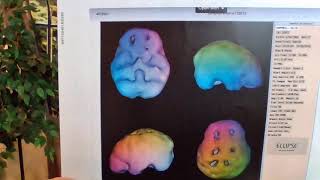
Hey, it's Dr. Ellie Campbell, your favorite integrative family physician. And I wanted to tell you the story about my brain. In December 2016, I had a very serious car accident. I was sitting still. I was rear ended by a semi. Truck smashed me between his vehicle and the car in front of him. And I ended up with three herniated cervical discs and a significant concussion that took me nearly two full years to recover from. Along the way, I did everything that I knew of that I could use to treat brains. I did IV vitamins, I did oral supplements. I did chiropractic. I did functional neurology, gay stabilization and vestibular rehab. I did physical therapy, I did traction, I did chiropractic. I did hyperbaric oxygen. So many things I did for my brain and it still wasn't quite where it needed to be. I was very blessed. I was able to continue working throughout the duration. I only worked part time. Many of you didn't know that I would only see patients a few hours a day. But I was able to work and I didn't lose my business. However, my brain didn't work right. I had the opportunity to go see Dr. Daniel Amen. And I had a SPECT scan in my brain. And this is your brain on concussion. So this contrast medium goes where the blood flows. So. So where you see these holes in my brain, these are areas of decreased perfusion, areas that are not getting the circulation that they should. This is a picture of an unrehabilitated concussion. Despite all those things I've done. This right here is the frontal lobe, the underside of the brain, and that's the areas of focus and concentration. No wonder I had a hard time staying on task. So I went to go see the Gwinnett concussion clinic, and Dr. Sadiq Al Amin told me, you need neurofeedback. So I'd heard about it before, but it was, you know, a long time. 40 sessions and expensive. Thousands and thousands of dollars. So I did it, but it changed my brain. It turned the lights back on. And throughout that course, I Learned about the IASIS type of microcurrent neurofeedback, which is faster, stronger and cheaper than the conventional kind. And it turned the lights back on in my brain. It gave me the ability to recuperate that last little bit. I'm still not perfect. I think I have some permanent injury from that accident, but it's so much better than it was. And this is my follow up scan. So look what happens to my brain after neurofeedback. Amazing difference in the structure and the function and behavior of my brain. And if you want a better brain, come see us here at Campbell Family Medicine. We'd love to explore ISS microcurrent neurofeedback with you.