Bye Bye... Dynamic Search Ads (Google Ads DSA & What Replaces Them)
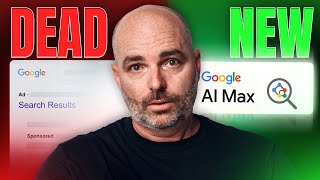
Google is phasing out Dynamic Search Ads in September 2026, replacing them with AI Max, which uses Gemini to auto-generate ad copy and targeting. Aaron Young says AI Max isn't ready for most advertisers yet and recommends testing it separately before migrating, comparing its current state to Performance Max's unreliable 2022 launch.
Chapters
Google is officially killing Dynamic Search Ads and replacing them with AI Max. And when it comes to this topic, there is two types of advice going around. The first one is, is that you should just go all in 100% to AI Max. And the second one is, is that Google is completely robbing us of control. Both of these are focused on panic stations and both of them are wrong and can cost you a lot of money. So what I want to do in this video is I wanted to break down what is actually changing. We'll also go into the timeline of when these changes are taking into account And then most importantly, we'll go through what should you do with your Google Ads for your business. Because the reality is, like, all these new features or campaign types that are coming into Google Ads, they all definitely have their place and they all can definitely work. It's just a matter of whether you are using them in the right way and at the right time. But right from the start, so that this is not one of those wishy-washy videos, I'm going to give you my opinion right now on AI Max in 2026. Now also as well, this video has been recorded in May 2026. So if you're watching this video in a couple of months, or if you're watching it once this rollout has changed, we may be playing with a slightly different environment. But where we're sitting right now is that AI Max is a feature that I am not using really actively. And right now we don't have any accounts that are in our direct coaching programs that are currently using AI Max. Now, I actually do have really high hopes for AI Max, and I do believe that it'll be a significant feature in the months and years ahead. But where I see AI Max right now is that I position it very, very similar to what Performance Max was in 2022, in that when Performance Max was first released, it didn't really give reliable results. Yes, there were some cases where you could see it work, but it was pretty unstable. And many of you may remember if you're doing Google Ads back then, you would see, you know, a really good month of Performance Max and then it would drop down, or also as well, you could get it to work really well in one account and then other accounts it would just absolutely tank and waste money. Now fast forward 4 years from when Performance Max was first released, and it is a really, really reliable campaign when you use it in the right way. And in fact, the vast majority of all of our accounts— I'd say well over 90% of all of our accounts— actively use Performance Max. I still do have high hopes for AI Max, and I do even see a world in the not too distant future where especially lead-based campaign or lead gen-based businesses will very much be using search campaigns with a combination of AI Max. And there could be a really valid reason for many businesses not to even go down the Performance Max path. But that's not where we're playing right now. So that's why I wanted to give this video on where AI Max is sitting right now in the middle of 2026. And I do wanna clarify that for the vast majority of businesses, AI Max is not something that you need to be using right now. So let's get into what's changing, when that, what the timelines are, and what you need to be looking out for inside of your account, especially if you're using Dynamic Search Ads right now inside of your Google Ads account. Now, before we jump into a graphic so I can show you the full map that Google has laid out, I do want to make it really, really clear that inside of Define Digital Academy, we are heavily leaning into different opportunities that you can use to increase the performance of Google Ads. And one of the core tools that we're using is our Google Ads Optimization Tool. And this tool is a tool that we use inside of Define Digital Academy, and all of our current students and coaching members are actively using this tool. Now, what this tool does, it's got 5 individual individual tools in it. One is letting you know which campaigns are ready to scale. The second one does a full keyword and search terms and even product feed data report, so that can be used for either lead gen or e-commerce. We've also got an ad copywriter, a landing page CRO expert, and also a smart bidding coach. And just because you're watching this video here on YouTube, I can give you free access to our keyword and search terms audit tool, which completes a full SWOT analysis of your account, and it also does product data. So whether you're lead gen or e-commerce, this is going to be a valuable tool for you. If you want to get free access, all you need to do, follow that link in the description below. And if you'd like to upgrade to full access and get all 5 of those prompts, which are exclusively in our Google Ads Mastery Program, if you also use the promo code YouTube, you also get a 20% lifetime discount. All those details, just follow that link in the description below. But right now, let's head into a screen share so I can walk you through the exact timeline that Google has given us for the release of AI Max overtaking your Dynamic Search Ads. All right, so it's important to note that Google has already released AI Max, and it's been a feature that you've been able to use for well over a year now. So that was in May 2025. But what has changed really, really recently is that Google has moved AI Max out of its beta phase, and it is officially live. And that was announced on April the 15th 2026. So just a mere matter of weeks ago. Now, at the time of recording, this is before Google Marketing Live, so no doubt by the time I've even released this video that Google is very, very soon going to be releasing some more updates in regards to AI Max. But what's important to note here is that the important date is September 2026, and that's what's called a forced migration. So this is quite common. We saw the same thing when Google released, uh, Performance Max. So right now you cannot start any new Dynamic Search Ads or search ad groups. Now, if you've got current Dynamic Search Ads or ad groups active, they will still function. But it is important to note that come September— so only a mere matter of months away— you will no longer have that option. So right now, as it sits, you can't create new Dynamic Search Ads, but come September they will not exist, and any current Dynamic Search Ads that you have will migrate across to AI Max. So it is important that if you do have Dynamic Search Ads active in your account right now, that you do keep in mind that September 2026 timeline. Personally, for me, uh, I would recommend that you do start moving over if you're using Dynamic Search Ads. You do start moving over now to AI Max, but we're going to talk more about this soon. But I would be warehousing that into a separate campaign and not having it inside of your current search campaigns. So now we know the timeline of how this is going to be rolled out. What I do want to go through is what does this actually mean and what are the core changes. Now Google has really broken this down into targeting creatives, controls, reporting, and also your campaign workflows. But for me, there are some extra things you need to be aware of. So let's jump in and discuss these further. So let's now talk about the actual difference between Dynamic Search Ads and AI Max. And I first want to focus on how it actually finds its queries. So now, traditionally with Dynamic Search Ads, I know you could do topic and intent targeting, but the main way that people or people who saw great results with Dynamic Search Ads would use Dynamic Search Ads they would supply Google with URLs and Google would then scrape that, those individual URL pages, to then go through and match it with inquiries or search terms. Now Google's released and it's saying that for AI Max, it essentially got users more data than just what's on the landing page. So what it also does look at is the ad headlines, the actual keywords inside of that ad group, and then it also looks at real-time intent signals. So essentially, rather than just looking at the landing page, it's also taking into account other things inside of that campaign would mainly be the ads, the, the other keywords inside of that campaign, and then of course other wider intent signals. Now the one thing that Google has not confirmed— they haven't really got down in terms of keyword intent and in terms of keyword matching— they haven't gone through and really explained how this is different to the targeting that occurs inside of a search campaign that is using broad match or inside of a Performance Max campaign. So that's the data that we don't have. Now, we do know the differences between, you know, because obviously Broad Match is just about keyword targeting. So we do know that AI Max leads into ads and creatives. In terms of the actual keyword triggering, we don't have that full piece of information yet. Now, the second big difference between Dynamic Search Ads or DSA and AI Max is that with Dynamic Search Ads, it would only create the headlines for you. So you would still go through and write those descriptions. But with AI Max, it does leverage Gemini to not only write your headlines but also write your descriptions. And once again, it pulls that data in from the website and also your other ads inside of that campaign. Now, one of my big concerns with this, and this is why I'm hesitant to recommend AI Max at the moment, is that we are seeing some early results that this ad customizations can pull up some data that isn't going to be fitting with the brand. A perfect example is that, you know, even in the middle of 2026, it's referencing things from 2025. Now, in Google's defense, yes, you can create those guidelines and you can go in and create rules about what it can say and what it can't say. But for me, that is a limitation right now, because if you are going to enforce a full AI rollout, the features should be able to get some of those basic guidelines set without you having to create rules and really babysit the algorithm. Then the final difference between the two is, as I said, when it came to your Dynamic Search Ads, especially if you were giving it the URLs, it would target searches to those URLs. Whereas AOMAX takes it a step further and it not only goes out and finds potential new search terms, but it also then lines it up with the best landing pages that are on your site. So you do then have to make sure that if you are going to turn on AOMAX that you need to make sure that either all of your pages are ready to go or you're creating a really strong set of rules so that it's not targeting things like different blog pages or things or pages which do not convert as high. Alright, now this is partly where it does get a lot bigger, is that you— before you could run a dynamic search ad inside of another campaign. That's not something that I would really recommend to do, but it was possible to do that. Whereas now AI Max is set at the campaign level. So this is something that if you turn it on, it is going to affect that full campaign and all of the ad groups within that campaign. So that's the technical differences between DSP A and AIO Max. But the big promise with AIO Max is it'll give you a 7% increase in your conversion rate while holding a similar CPA or a ROAS target inside of a campaign. And for me, this is one of the biggest problems with AIO Max right now. As I said at the start, I think this will change over time, is that we don't have any rock-solid data, and Google is not giving us that data of what are the minimum benchmarks you need in terms of spend, clicks, and conversions in order to see that 7% Uplift. So I am going to be recording another video where I am going to be going further into this. So, so if you want to make sure that you're staying up to date with not only AI Max but everything in the world of Google Ads, make sure that you not only follow but you turn on that notification bell so you know when I do release any new videos. Which at the moment we're releasing 2 videos a week. But I did want to go into my biggest fear with AI Max. And this is just purely that right now in 2026, I don't have a clear pathway for where it sits. As I mentioned to you before, when Performance Max first was released in 2022, there were some up and down and some irregular, irregular results. And sometimes it would work, sometimes it wouldn't. But what gave me confidence with Performance Max is that because it was sitting inside of a separate campaign, we could sort of shield that testing from our current search and/or shopping campaigns so that we would make sure that we weren't ruining our underlying performance. And this is the difference with AI Max, is that the big messaging from Google is that you just turn on AIO Max within your current search campaigns. And that's something that I would not recommend, and especially at the moment where we just don't have enough data about it. Right now in 2026 is that I do know that search is changing and it is changing drastically. But it's important to remember that we can kind of get stuck because if you're running Google Ads or if you're in the industry, you're thinking that everyone is using AI tools like Gemini or ChatGPT or Claude, and that not only are they using them, that's the first place that they go to. But even at, even at the start of 2026, 90 to 95% of internet users are still going to a Google search first. So while that will change, AI tools and large language models will become the norm, we're not there yet. And it's for that reason that very much now most businesses do not need to be using a tool like AI Max because they can still scale through their current bottom of funnel campaigns, your search campaigns, When you're ready, you can then move out to broad match and smart bidding. And then when you're ready again, you can start integrating Performance Max. And for me, that's still the safer path that many businesses will be able to use. And if you have gone through and exhausted everything, so you're using broad match with smart bidding, you've got Performance Max over the top, and you can't scale those campaigns anymore, that's when I go, hey, why don't you go through and try IO Max? But for the vast majority of businesses, it's just not something that needs to be tested right now, what I believe in 2026. So I'd be interested to hear your thoughts about AIO Max, whether you've used it, and if you have used it, what are the results been? And if you have, please give me your thoughts in the comments below. Thank you for joining me, and remember, if you want to get access to that free Google Ads optimization tool that we have built with either Claude or Gemini, follow that link in the description below. And if you'd like to watch another video right now about when I use AIO Max, I want you to go through and watch this video right now. See ya!








