My Tips To Review Google Ads Performance & Improve Your Results in Google Ads
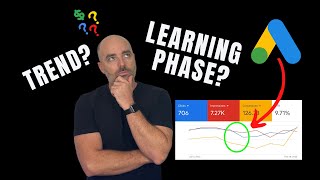
In this tutorial, Aaron Young—self‑described 15,000‑hour Google Ads expert—guides viewers through a systematic process for diagnosing and fixing sudden declines in Google Ads clicks, impressions, and conversions. He first explains how to distinguish a temporary learning phase (typically a two‑week period when new competitors enter the auction) from a lasting negative trend, emphasizing the importance of not making drastic changes during the learning window. If the dip persists, he advises focusing on two core performance levers: click‑through rate (CTR) and conversion rate. Practical tactics for boosting CTR include search‑term audits, adding negative keywords, and refining ad copy with keyword focus, authority signals, calls‑to‑action, and emotional triggers. To raise conversion rates, he recommends regular ad‑copy split testing and landing‑page experiments on a 21‑30‑day cadence. Finally, he stresses prioritizing optimizations on the highest‑spending ad groups by analyzing cost‑per‑conversion over a three‑to‑four‑month window, targeting under‑performing groups that consume a large share of budget. Throughout, he offers supplemental resources—a free Google Ads Optimization checklist and a linked “Ad Copy Secrets” video—to support ongoing, structured optimization. The overall message is to adopt a data‑driven, measured approach rather than reacting impulsively to performance drops.
Chapters
I'm going to take you through the three steps that you need to follow in order to improve the performance of your Google Ads campaign. Because let's face it, you're probably watching this video right now because your Google Ads campaign isn't giving you the clicks and conversions that you need for your business every single day. Or even worse, your Google Ads campaign is currently going through a dip or a crash where you're not seeing the same levels of clicks, impressions and conversions that you were seeing only a couple of weeks or a couple of months ago. And you've come to this YouTube video because you're sick of looking at your computer and screaming, what are you waiting for, huh? What are you waiting for? Thing that you do need to remember is that in some stage throughout the life cycle of your Google Ads campaign is that you will go through a stage where you will see a drastic drop in the number of clicks, impressions and conversions that a particular Google Ads account or campaign will see. So in this video, I'm going to take you through the important metrics that you need to monitor, and then I'll also take you through the important steps that you need to take in order to recover those clicks and impressions to so that you can start getting more conversions for your business with Google Ads. And just in case we haven't met yet, my name is Aaron Young and I'm your 15,000 hour Google Ads master. And this is where I help people like you to grow their business with Google Ads. So if you'd like to learn more about how you could use Google Ads to grow your own business, I would love it if you could give me a really quick subscribe. Thank you so much. Okay, so if you have seen a decline in the number of clicks and impressions and then conversions that you're seeing in your Google Ads account, the first step in the process is you need to actually work out. Is this a learning phase or is this a new trend? Because you always need to remember two things about Google Ads. One, it is an auction process and two, Google Ads is the way that Google makes money. So if a new advertiser or a new group of advertisers come in and start targeting the same keywords that your campaign is targeting, Google is going to give their shiny new budget a chance to see whether it can have better click through ratios and and better cost per clicks than what your campaign is giving Google. So because it is an auction, Google will start testing those new ads from your competitor to see how they perform against your ads and all of the other ads which are running for those same search terms. So that is the immediate flow on result for why your ads may not be appearing at the top of those positions like they were doing before these new competitors started bidding on those keywords. And especially if those new competitor ads start to get clicked on, and if they have a bigger budget, meaning that they're willing to pay more per click, Google will start to show their ads more and more, which is continuing to put that pressure on your ads being shown less and less often. But before you go through and increase your budget and start a bidding war with your competitors over those same keywords, you need to firstly stop and work out whether this is a learning phase or a trend. Because one of the likely scenarios which happens time and time again, is that when a competitor enters into the market, you can see a reduction in your clicks and impressions for a period of one to two weeks. But then your clicks and impressions will return without you doing anything other than your usual optimizations. And the reason for that is that yes, your competitor may have been able to get some clicks, but throughout the testing period, they weren't able to achieve high conversion rates or high usability scores on their website. Meaning that Google has lowered their ad rank. And then because of that lower ad rank, their ads start to go down the rankings while your ads start to go back up. Because Google trusts not only your click through ratio, but also your ad quality. Because Google knows that your ads give those users a good user experience. Because yes, while it is an auction, you do need to remember that it is not only the highest bidder who wins the auction, because Google also takes other factors into account like the landing page experience. So I want to stress that right now, if you've got a campaign that is seeing a reduction in the clicks and impressions, the most important step is to not panic. And in the first two weeks, especially if you have a high click through ratio and high conversion rates of above 5%, don't do any other drastic changes apart from your regular Google Ads optimizations. And the reason for why I want you to wait for two weeks is because Google's learning process takes around about seven days. So that means when new competitors come into the market, Google is going to be assessing their campaign for the first seven days and then they'll look at those results versus your campaign results. And that is why we want to wait for that second seven days. Because the first seven days is all about Google learning about your competitors campaign. And then that next seven days is where we'll actually start to see what the new norm is going to be. And that's why I say you need to wait those 14 days so that you can work out whether it's just a learning phase in that new competitors come into the market. Yes, your clicks and impressions do drop for a week, but then they return because your campaign has better core metrics or if it's a new trend. And with a new trend, that means that your new competitors have come into the market and they have matched or increased the ad quality that you have in your own campaign. And in this case, if you're facing new trend, it means that you are going to need to add in some extra optimizations so that you can get your campaign back up to the performance you were seeing before those extra competitors came into the market. So let's right now jump into a screen share so that I can show you the markers for what you need to look at to work out whether it's a learning phase or a trend. The first example I'm going to show you through here is for a brand new campaign. So you can see when this campaign first started, the clicks and impressions went up, they then dropped again, they've then gone up and then they've dropped right away. And then the new norm has sort of settled down. But what I want to do here is I want to show you what happens when we put the click to ratio metric over the top. So with this account, you can see here, this was the initial testing phase that Google gave from March 2nd through to the 16th. So that was that first 14 days. But once it completed that learning phase, Google had worked out, yes, that it was getting some clicks, but obviously there were other performers who had a higher click through ratio. So we then went through and updated some of the searching queries and also the ad copies. And then we saw this click through ratio increase and spiking up here up to that 20%. And then we had other days of above 10%. And then from there you can start to see these clicks and impressions start to grow on that daily basis. So that's the example of what can happen when you've got a new account. But on the second example, now this is a more established account that had been running for 11 months up until this stage. Now just ignore this dip here because that was Christmas and this is a service provider. So they were closed over that time. The main time that I want you to have a look at in here is this dip right here. And I've taken a screen shared so that we can show it through Here, so you can see from here is that we saw a really rapid decrease in your clicks and the impressions. And when we go back into the Google Ads dashboard, you can actually see that that same period also coincided with that reduction in conversions that was purely driven by the lower clicks and ultimately the lower traffic this website was seeing. Now on this example, the clicks and impressions started to drop around about mid January. And what I want to do is I want to take you over to the Auction Insights report and I want you to see here in that mid January period, look at all of this extra competition which has entered the market. So we knew that with this account, the reason for the reduction in the clicks and impressions purely came down to more competitors competing on our same keywords. But the good news with this example is that this was a pure learning phase and not a trend. And because what you can actually see is that after that two week period, our clicks and impressions and ultimately conversions started to return and we actually rebound to actually be higher than what we were previously. And that rebound of results in 14 days is why I tell you not to do anything drastic in those first 14 days like madly increasing your budget. Because the chances are that if you've got strong core metrics in your Google Ads account, that your campaign will rebound and may even have better results after Google has finished that initial learning phase. However, if this becomes a trend or a new norm because the other competitors who have entered the market have either stayed in the market or they've got better core campaign metrics than yours, I want to take you through the two next important steps. And that next step is that you need to focus on improving the two most important metrics in your account. And the first one is your click through ratio. Now the reason for why your click through ratio is so important is because remember once again is that Google gets paid when people click on your ads and they get absolutely nothing when someone sees your ad but doesn't click on it. So if you can get a higher click through ratio than your competitors, it means that Google is more likely to show your ads because Google knows there's a much higher chance of your ad getting clicked on as opposed to your competitor's ads. And it's a simple formula. If you're willing to pay $5 to with a 20% click through ratio, that means Google is going to get paid $100 for every 100 times they search your ads. 5 times 20 equals that 100. Whereas if you've got a competitor who's willing to pay $10 per click but only has a 5% click through ratio. That means that out of every 100 searches Google is only going to be paid $50. 5 times 10 equals that $50. So by increasing your click through ratio, it gives Google more incentive to show your ads versus your competitors ads. So if your performance hasn't returned after those first 14 days, I want you to get your click through ratio to above 10%. And if it's already above 10% and you're still seeing that dip, you need to work on improving your click through ratio by at least 10 to 20%. Now some easy ways that you can increase your click through ratio is to firstly run a search term audit and go through and add some extra negative keywords to filter out any searches or which are not getting clicked on and are also not relevant to your core product or service. And then the second core action that you can do to improve your click through ratio is to update your ad copy, making sure that your ads have that keyword focus. But along with that keyword focus, making sure that your ads also have those authority markers, call to actions and emotional triggers which are all going to encourage people to click on your ad versus your competitors ads. And then the second thing you want to focus on is your conversion rates. And the reason for why this is so important is because your conversion rate sends a strong signal to Google that people are finding your landing page highly relevant. Which then goes through to increase your ad rank. And the higher ad rank will help you start to win those bid auctions over your competitors. Now to increase your conversion rate, you can do this by running rounds of different ad copy split tests. And I'd recommend that you're running these split tests every 21 to 30 days. And then you also want to be testing some different landing pages. So the core steps are here is that you're split testing the different messaging in your ads and those different call to actions. And then you're also testing the effectiveness of different landing pages on your website. Now this is such an important topic that we don't have time to go through today. But if you stay around to this end of this video is I'll show you how you can go through and watch my ad copy secrets video at the end of this training. So now that we've worked out whether it's a learning phase or a trend, and if it's a trend, I've shown you the core metrics that you need to focus on of your click through ratio and your conversion rates. And that brings us to the final step. And the final step is all about focusing your optimizations on the ad groups where you are spending the most money. And the reason for this is simple. If you are optimizing and increasing the performance of those ad groups which are spending the most money, you will then have the greatest effect to improve your total campaign and total account performance in Google Ads. So the way that you want to do this is you want to go into your campaigns and then your ad groups, and, and then I like to grab a longer data grab of about three to four months. And then I also like to use this segment function and go segments and then add in these conversion actions. And then that gives us the different conversion actions which are happening in each ad group. And then you want to go over to the metric and you want to filter it down by cost. And the reason for why this is so important is because this is then letting me know what each ad group is spending. And we can look to focus on the ad groups which had the highest cost but are underperforming. And the metric we're going to use for that is our cost per conversion. And you can see here, our high spending ad group is actually under the account average cost per conversion. Same with our second highest. But if we look here at the third highest spending ad group, we can actually see that that cost per conversion is about $30 above the account average cost per conversion. And then if we also go down to our fourth high spending ad group, we can actually see that there's been no conversions. So these two ad groups right here are spending around about $1,000 off a total of three and a half thousand dollars spend. And we can focus on these two ad groups which are taking around about 30% of the spend for very little return. So by focusing our efforts on these two ad groups, we're going to be getting a much faster result and our total account. So then when you've actually identified those ad groups which have a high account spending but low conversion rates, you can then focus all of your optimization efforts into those ad groups so that you can recover your total account performance as fast as possible. And with those identified ad groups, all you need to do is to start running through your regular Google Ads optimization process. Now, if you don't have a structured process for how you optimize your Google Ads account, I want to give you my free Google Ads Optimization checklist, which is a checklist that lets you know what optimized actions you need to take in your Google Ads account every 72 hours, every week, every month, and every 90 days and you can get your copy today just by following the link in the description below. Now remember, earlier in the video we were talking about increasing your click through ratios and your conversion rates through improving your ad copy. So if you'd like to learn more about my Ad Copy secrets, I want you to go through and watch this video right here. Once again, thank you for joining me and I look forward to seeing you in my Ad Copy Secrets video right now. See ya.








