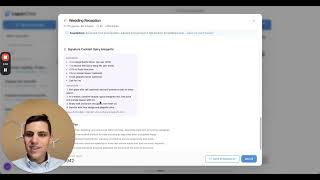
Live FAQ: LiquorChat AI & How it Helps Employees

Interview (YouTube Live FAQ) with Alden Morris of Intention Creative about Liquor Chat AI, an industry-specific AI platform for retail liquor stores. Alden explains the product: an AI engine fine-tuned to the beverage industry that connects to inventory, past orders, kiosks and web chat to speed employee answers (target: <3s), support training via modules and quizzes, enable upsells and personalized SMS marketing, and integrate with POS/kiosk tiers. The video covers ease of onboarding (free demo, ~3 minutes to start), pricing positioned as low-cost ("less than a gym membership"), and the agency-product relationship (separate companies; product built from agency experience). Schema Explanation: Format: YouTube interview transcript; Sections seen so far: intro, product overview, employee training, day-in-the-life usage, onboarding/pricing, agency relationship, closing.
AI for the Alpav industry and specifically for retail liquor can talk about what is it, what's it about, why is it important and why we think that this will actually drive real value to liquor stores and it's not just the hype sort of product.
Great. So. Hi Alden, I'm going to jump straight in. So what exactly is Liquor Chat and why should liquor store owners care about it?
Yeah, yeah. So, so effectively. So we've had the agency for, for three years. I'm the founder of Intention Creative, the agency. I have Margot here who's a director there as well. And now I see exactly why you were waiting with the pause there in the beginning. But the biggest thing that we saw is that it's such an antiquated niche and vertical where it's just people are relying on old systems. Everything from in store to like the POS system systems, ecom and now with the advent of AI that how can we leverage this across all the different channels and bring all the information together and we can, we can decrease costs, we can increase efficiency, we can increase in store sales in addition to driving new customers. So it's, it's. What is this engine across all the platforms that can benefit retail liquor stores? And just given kind of like why us? Because. Cause we've been working with liquor stores for three years across the entire country. We're the number one marketing agency in the US and it's. So we funded around and we just released this product and I mean the feedback that we're getting is incredible. Which just helps us improve the platform. But holistically you can think of it in two ways. There is just the overall AI engine which is fine tuned for the app bev industry altogether and then how that translates to actual practical use. Like any web enabled device like this is literally it. I was looking for a summertime line earlier. We have literally it's right over here, literally the kiosk that goes in stores and then also floating chat which all of those get connected to your inventory, to your customers past orders. So you can imagine when you start feeding all this information with it, your employees start using it, people in store are having conversations, they're able, you're getting marketing contacts. All this information comes together and you can, you can just imagine how it's helping your for for instance, helping your employees help customers to upsell, to increase basket ring to everything to marketing to people to win them back or show them offers. And what's even cooler, like the one thing that we're coming out in a Couple of weeks is one on one personalized marketing as well through sms, which is the most effective marketing channel that's on the planet. So it's like imagine sending a thousand SMS messages and every single one of them is tailored literally as if you texted your best friend. Like that's what our platform does. So I know I rambled there, but that's, that's, that's Liquor Chat.
No, it's great to hear the excitement. So one of the biggest challenges that I hear is employee training. Okay. A lot of liquor stores do share that with me. So what does it typically cost a store owner to train staff? There could be thousands of products to obviously get through, as we all know. But what happens when the employee tends to quit? So how does Liquor Chat fit into that kind of solution?
Yeah, so this is a wild topic because so like I worked in retail liquor. I started in August, so it was right before ond, so and this was in a Costco sort of location, so high volume. And then so we had to double the staff when OND came. And you can imagine me learning. And then you can see the transition of when you have these fresh people who are usually, I mean any seasonal employees usually have no experience in beverage. I at least came from other, other aspects of three of three tier system. But in terms of what it costs, you can think of it very simply as it's not even what it costs, but who's going to do it, the manager, the owner. Like everybody's busy. So it's even like the physical resources don't exist or even if they do, there's no structured way to teach people. So, so what we're doing is we're trying to give back time and actually put the structure behind the resources, make sure that the resources are actually useful. And it's not just trying to pull together random Google searches or anything like that and just have that available at scale where like let's say like, oh, like you just add a new employee to, to Liquor Chat. They go through all the materials, they go through everything. They're also familiar with the program now, so they can assist one on one with customers or they can help customers in terms of what it costs. I mean honestly the biggest cost is when they leave to what you're saying that you have to start from scratch, right? So like you spend all this time just like bringing somebody up. And again like realistically like where do you even start? Because then you have somebody ask like how do I, what do I pair with a steak? And they're recommending a peanut right instead of a cab. So it's, there's so much to train that it's like to even break down of where you start is hard. So what you get is these new employees who are just giving recommendations that don't make sense or might actually give a bad experience. Like if I'm looking for a wine and somebody and I want something that's, that's full bodied, high tannin and somebody steers me to something that's like very light and just like it tastes like skim milk, like that's just, I'm gonna have a bad experience. I'm not going to trust the staff, quite frankly. But if I have a good experience, even if it's from the kiosk or from an employee, I'm going to want to come back because again, it's like what's the statistic? It's like 10 times harder to get a new customer than to retain a current one. So don't mess up your, don't mess up the first experience. And that's how you grow is the retention as well. So in terms of training, you get somebody started day one and worst case scenario they can just ask the question on, on the app at the kiosk and then in, in a long term effect, like let's say they leave, like, doesn't matter, just bring a new one and train them on Liquor Chat. So I know that's a roundabout way of doing it, but in all seriousness, the, it's, it's usually the resources and the time much less than the cost because you, you have limited resources. Like you're already trying to cut hours, you're bringing people onto split shifts. So it's, it's just that balance. And if like, let's say that, I mean there are dead times. I remember what from 8 to 9, it was, it was, it was crazy. Right next to Costco, it was dead. You could like force your employees to like go through training modules and at that time and you can track their performance so you can see if they're actually doing it or not. And quite honestly, you could quiz them as well. All these features that we're building up.
Yeah, that sounds great. So how does it give them the opportunity? Obviously they're going through the training, but how does it get them to be that expert? If you could just maybe walk through the day of an employee coming in and using Liquor Chat, that'd be really great. Just to get a real day to day sort of view.
Yeah, and I think the, the number one thing to remember is because like we've like onboarded stores and the perception of individuals or store owners is like, okay, somebody's going to be glued to their phone and like that's, that's what they're doing all day. I mean quite honestly, I look at it a holistic approach where like let's, let's say you have five employees and let's say they only answer one question a day. And that one question takes like an upsell. You go from a $20 bottle to a $50 bottle or you go from one bottle to a bunch of bottles, like whatever it. So like I look at it even like, like what's the value of it being used two times by an employee? And just like whether it's a retention of a customer or an upsell or like honestly just having a good customer experience, which like a five star review on Google is one of the best things you can get right? So I think as opposed to like looking at it all day, like how's the person gonna use Liquor chat? It's like if you can find a couple instances a day where it's like, okay, I'm stocking shelves and how many, how many cases of Tito, like handles of Tito, how many cases of Tito do I have in the back? And instead of having to go to the desk and look at the computer and look at the inventory, just whip out your phone and ask it. You're gonna have literally an answer in about two seconds. So there's like the micro. And if you're stalking all day long, like you're not like picking up a desktop computer and walking around with you, you have this thing which again it can be on any web enabled device. And we give stores the kiosks when they sign up for the POS tier. Um, so it's, there's the mini efficiencies there. But if a customer comes in like, like oh, what do I pair? I had this, like if they have an image, you can upload an image of some like obscure wine wherever it is and it'll analyze it and it'll give you all of the product details for it. So like that's like that and if they don't have it in stock, it'll recommend something that is in stock that is similar to that taste profile. So there's the, the micro instances of use and then there are the larger instances. And that was why it was so important for us to, to get that like the, the time, the latency. For the latency. The time to. The first answer is three seconds or less. Why? Because physically like back when it was 15 to 25 seconds, you try standing in front of a customer and be like okay, give me a little bit while this thing loads. Right. So that's why like number one thing for us, it's going through the vector database, it's going through the inventory, it's going through our database, it's going through everything and it's spitting out an answer in less than three seconds. And like that's literally our KPI. Every time I have an answer I'm literally counting 1, 2, 3.
That's amazing. That's really fast. So what would the impact be, I guess the cost to a liquor store if they did not address this?
I. It's funny that one, that's one of those questions where like I could answer it but it's like, like a liquor store just kind of knows, you know what I mean? So it's like really, it's kind of like it's a, it's a pain in the butt like if you don't address it like I would put it as simply as that because there are the frontline costs which is going to be like okay, you spend two weeks trying to get somebody even in a remote shape to help a customer during O and let's just take seasonal employees during OND and then they quit for whatever instance. Like retail liquor is so finicky when it comes to hiring and the people who even apply so like much less getting a competent employee, much less somebody who stays. Right. So it's, it's the time, it's just like honest. It's the energy of hiring. It's just that that's honestly biggest cost. It's just a headache. But take everything else aside.
Yeah, of course. And I think the impact it would then have onto the customers. So is I guess liquor chat really easy to use and how would somebody get started?
Yeah, yeah. So you go to our website like chat AI and there you can, you can read all additional things like you can see what it's like on the kiosk, on the floating chat, like on web enabled device. So we actually have a free demo. So you hit the get started now any of any of the, any of the buttons will get you there and, and you get a certain number of free messages and it takes you on a tour of how to use it. So really is dummy proof. And we even have Google SSL single sign on. So even logging in is dummy proof. You have to set up just your organization just for the sake of us Being being able to help you more and kind of geolocate to where you are. But it really is, you can get started in about three minutes. And I know that because when we have to create additional accounts or whatnot, we go through the exact same flow. So it really is like three minutes or less. And like literally from that you can start snapping photos and trying it out. You can ask it whatever question you want. The one thing that's not enabled obviously is the POS connection. So it's more like a web enabled chat. If you want to think of it that way though it is still fine tuned. And I think you notice we have these smart cards, we have embedded features, you can share Things via shareable URLs or QR codes. So there's a lot that you can do for, for free. And then if you like it, I mean it's so low cost, it's literally less than a gym membership a month to sign up and you have access to believe it's up to three, five employees. Three or five employees. And then it's just additional cost per because obviously there's token cost to us and just managing the whole thing. But it really is, it's dumb, simple.
Awesome. So I think if someone wants to say I'm not very tech savvy, this, the platform itself takes them through a tour and shows them how to use it. Really nice, really easy and simple. So I'm going to ask this question because you also run Intentionally Creative, the agency for liquor store marketing. What's the relationship here between Intentionally Creative and Liquor chat?
Yeah, and actually I'm just going to, I'm going to shoot back to your last message. When you sign up you might get an automated just welcome. More likely than not that myself or Margo or like somebody else on our team is literally going to text you or reach out to you. Because right now we want to make sure that we can help anybody in any way to get started. And again like I'm more than happy to take anybody through a full demo and literally like in their store and take them through. And if they sign up for the kiosk and the POs that we will, we have, we set aside dedicated meetings with the staff to train them and get them acclimated to it. So when it comes to support like the half, at least half the people that have tried it so far over 55 years old. I'm not saying that's old, but just take it out. We want to. But what was your question?
How, how does it actually. How do they work together. The intentionally creative agency and Liquor Chat.
Yeah, yeah, so, so two separate companies all together. How they work together is we've taken all of our knowledge and the fact that we actually know the industry. We took that and that is the base of everything. So you don't just have a SaaS company coming in or somebody outside the niche that's just trying to fake it or make it just because it's a good opportun. This is bred and born from the fact that our pain points, I mean we got 16 employees.
Right.
We work with people all over the country. Like we know where the pain points are, both in store or online. A majority of what we do is in store stuff. I literally worked in liquor store. Right. So like, I think like it's the expertise and the fact that we're probably one of the best people to even try to accomplish this, quite frankly, just because of the background of what we do and the fact that we work with liquor stores.
Yeah, no, I definitely have to agree with you. This will be my last question. So what's the one thing that every liquor store owner just does need to understand about Liquor Chat? Why it exists? Anything else that you'd like to sort of add in just before we wrap up?
Yeah, I think it's literally one of the case studies that we have on, on the website. But it's kind of one of those like in, in the age of AI, nobody knows really how to use it, utilize it in a way that is effective and useful to them versus just like, okay, just another like hype sort of thing. So our goal is that it's useful, but quite frankly, believe you can believe me, you cannot believe me. But why not just go try it for free? What does it cost you? About five minutes of your life. So I think it's one of those things, honestly, just try it. We think that we've come out with a great product. I mean the feedback that we've gotten is tremendous. And if you hate it, honestly, I would love to talk to you and see why you don't think it's a effective. Because more likely than not, this is. Honestly, we've literally been doing this since we launched that. I'm talking to everybody to understand what they like, what they don't like. And we are literally making changes to it and that's how our road map is made. Anyways, all, all then this was literally the way that we created the product is the fact that we went to our, to our, our high value retainer clients and we asked them like, what do you want to see? And that's literally the, the business plan is what the investors came out on. But. But yeah, I think that's. That's it. Like, why not give it a try, right? It's free.
Yeah, exactly. Well, that's it for this series. And I know we'll be coming back in to talk more about Liquor Chat, but as Alden said, jump onto Liquor Chat. AI Check it out for free. Share your feedback would be very appreciative. And I hope you're having a great day wherever you are.
More from Alden
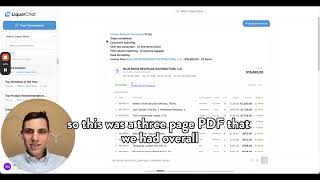
Liquor Store Owners — AI Just Killed the Need to Upgrade Your POS for Invoices
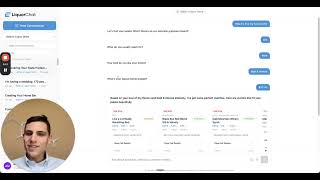
What If Your Liquor Store's AI Recommended the Perfect Bottle in Milliseconds?
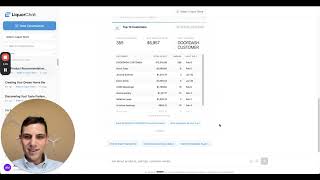
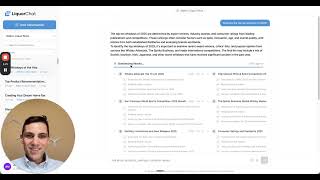
Liquor Store Owners — While You're Running the Floor, This AI Is Doing Your Research.
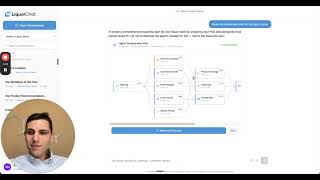
Liquor Store Owners — This Isn't Basic AI. It's 11 Agents, 37 Tools, Built for You.