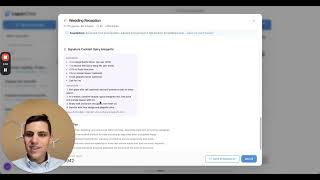
The Role of AI in Retail Liquor: How to Stay Competitive in 2025

Panel discussion (hosts: Alden/Adam and Margo) about how AI can help retail liquor stores compete in 2025. Speakers characterize the industry as behind other retail sectors but rapidly catching up; recommend low-cost, practical AI steps (use ChatGPT or industry-specific tools like Liquor Chat) to improve marketing, employee productivity, inventory accuracy/forecasting, and customer discovery. Emphasis is on AI as augmentation (employee enablement, SOPs, micro-experiences) rather than wholesale replacement; inventory and employees are noted as the two largest cost areas AI can reduce. Future outlook: AI embedded everywhere — stores that adopt will gain competitive advantage.
In retail liquor and how can it actually be useful or what overall is the state of it today? My name is Alden, I'm the founder of Intention.
Right.
And we have Margo here who is the director within our agency. We are the leading in store and digital marketing agency for retail liquor stores in the United States. And then otherwise. Margo, I'm so sorry I cut you off. Go right ahead.
No worries. I was just going to say hi to everyone and intro us but thanks Adam for doing that. So let me get right in. So Adam, what do you see as the state of AI for retail liquor now?
Yeah, so I think it's early days. I mean it's early days for just AI overall. But then especially within Alpev, it has always, you know, we're using 80s 90s tech still and even like the most up to date solutions. Like there are a couple new players within the last couple years but it's just, it's so new that there's nothing really out there. There's a couple piecemeal sort of solutions. There's of course what we do, but it's, it's still early days and there's a lot to go. But there are definitely small things that everyone can do that can drastically increase the efficiency of their business. And again we're going to go into, I believe we're going to go into just what are these one or two things that any retail liquor store owner can do to improve again their efficiency of their business. And on this it's more so going to be how can you become efficient and decrease your costs versus increase your revenue? I think it leans a little more that way at this moment, but we'll, I think we'll touch on a lot of things today.
Yeah, great. So do you think AI adoption in this industry is lagging compared to other retail sectors? And if so, what's been holding it back?
Yeah, 100. I mean open AI anthropic, all these, they have been, they've been testing kind of how does E commerce fit into the space again because they're going to get a kickback and literally yesterday OpenAI and in Walmart signed an agreement where they're going to be just like really diving into E Comm there. So they're overall, like I said, early days. But there are these massive partnerships that are going underway and the second that we see that, that it's going to start slowly perpetuating into all the individual niches. I think like 2025 has been the year of when okay, AI is here and then with ChatGPT3, when that really came out, that was a turning point. And now it's people going into the individual niches. And like, what is the application of AI as it's practical to the individual niches versus this? Just like, ask a question and get an answer or just be a helpful assistant. And so I think that's really important to keep, keep to keep in mind. And as it relates to, let's say, other retail sectors, they're already like, they're pretty much everybody has an embedded AI tool within their platform. Whether or not it's useful is always kind of what I look at when we test new ones. But like, online, it can be a chatbot, for instance, in store, I mean, like kiosks and anything like that are nothing new. But with the models being as smart they are as they are, and with the speed, speed and accuracy and complexity of answers that they can handle now that there's a massive opportunity for everybody. And ALPEV has always lacked and just lagged behind, just in general. Let's just take POS systems, for instance, as one example. So, yes, it's definitely been lagging, but I think it's going to speed up really quickly.
So do you believe now then, I guess is the right time for liquor stores to start integrating AI?
Yes, but then I'm gonna put a little caveat on that because I think for a lot of people it's like, oh, okay, like A.I. is going to take over the world. It's going to do xyz. The way that I see AI integrating for retail liquor in general is how can it kind of run in the background? Or again, I go to the idea of efficiency. So there's obviously like, how can it help within the pos, how can it help in ecom, how can it help in store? And each one's going to play a different role and it might have very small impact. And. And again, it's new, uncharted territory. So everyone's playing the game for the first time and it's kind of like who are going to be the winners? Everyone's going to come out with something and who are going to be those top winners? But that's everything in, in life and just business in general. Liquor store owners would know that better than anybody. So I, I think there are small things liquor store owners can and should do that don't have to cost a lot of money, don't even have to cost any amount of money, and they can solve really small and immediate issues. So for instance, like okay like with marketing you could go into ChatGPT, liquor chat, even better. But ChatGPT and just ask you like, oh, I need a social media post for XYZ again my propo like us being on the agency, my I'm the biggest proponent on just, just get something out there, right? Like don't overthink it. We see so many people overthinking things. And again like a lot of people say stuff, not a lot of people do stuff. And the people who overthink and don't move on actions quickly and implementing stuff, they are the people who their businesses are suffering versus people who are just testing things. So I think what are these micro transactions of information and usefulness for liquor stores that they can apply AI and that doesn't have to be anything crazy, it doesn't have to be small things can make a big difference as they compound.
And I'm assuming many would understand that, you know what you're saying. There's often fear that AI will replace people. However your approach seems to focus on other areas such as employee enablement. So how can AI enhance the in store experience?
Yeah, so I love the question on AI will replace people. You know what's funny? And we have this internally. Honestly, anybody who gets at AI, usually they are the ones who get promotions and who get raises. Why? Because they become themselves incredibly more efficient. And what AI does is it empowers good people to be great. And honestly I think like if you know how to use AI you can boost your personal IQ by like 30, 50 points. Right? But it's, there's, there shouldn't be a FE. Like yes, like autom automation is the bigger aspect. But again like everyone went into Salesforce, like all these companies they went into like AI agents and like replacing their customer success team. And like, like you being on the sales and customer like support and customer success side. Like AI is like like yes, you have like 11 labs that can do perfect voices and like honestly they are perfect. Like you have all these tools but nothing if you actually want to have a good experience is going to replace and I don't think for honestly a long time like what humans can still do and what they still can play. So like even in store, let's say you set up a kiosk, kiosk can help when there's way too many people, you get into OND and there's way too many people at the door on Christmas Eve whatnot. And then people can go there as a fallback, but still somebody walking around and actually helping Customers is going to be number one. And again like, for like when you say like our approach like with like Liquor Chat is our tool again, just like a helpful assistant for employees. The, like if an, if a customer asks a question that an employee might not know. My number one goal is honestly like in like we focus on training is that that we train the customers. We train the employees so that they actually can help the customers independently. But they're gonna be those people who ask questions or like show you a picture of ball in some obscure region of France that they had when they were on vacation. Of course it doesn't distribute because they only made 50 cases and it didn't leave like literally that compound, that villa. But it's, it's. I think it enables people and it can help with enhancing experience. But it's definitely not a, a replacement. And I think that's how people should see the, the role of AI overall is that it's here to support and enhance. It's not a, it's not a way to replace and just operators and people who you can get that to train them and use AI, that's, that's the superpower. And like, like, you know, like within the agency or like honestly even any other agency owners or just businesses that we know that are trying to get their employees to learn AI and whatnot is actually a massive struggle. So it's just in terms of like the idea of prompting by itself. Prompting is hard. It's not hard. You just have to know how to do it right. It's actually really easy. You just have to know like what the LLMs are looking for and how to give it the context. Kind of like a, you are X, Y, Z. Here's the output that I need here. Examples like that whole, that whole sort of thing. There are a lot of tools that are helping with making this easy. Like I love clay clay clay.com, like for. With their enrichment tools that they will create the prompt for you. I think these tools that can. And for instance like with Liquor Chat, that's kind of like what we do is like we help enhance what people are thinking so that you actually get the output and we back that up with. With additional data and enrichment. So there's so much. It's all the information that the model and the complexity in the vector with the vector databases that, that it needs in order to give you the right answer. And again, our goal is always to as fast as possible. And again like it's. I don't want people talking in chat. I Want there to only be one response and that response is the solution. So I know I dove into our, our product a little bit which is, doesn't really matter in this conversation, but that's my thoughts on it.
Yeah, no, that's great. So there's this idea that AI is really only for the big players, for deep pockets. What's the actual barrier to entry for a single location store versus 50 store chain? Is it money? Is it knowledge or is it just the willingness to change?
It used to be money. It is no longer. So I think now with the adoption of tech like before, like, like Walmart could write a $50 million check and have like a whole kiosk system or whatnot. And again like you see like in Target, like you see like there's some of these chains that do such a good job at utilizing technology, not like take AI out of it like using technology to assist in the in store experience. There is no excuse for people not taking advantage of tech now. I just, I just, I just, I just believe that so much. There is no excuse. And so what it is is laziness. Quite honest. I'm gonna just be completely on there. So it's willingness to change because people think it used to be really hard, it is no longer really hard. You make it as hard as you want to make it. Because again like even like we use this internally with the agency is if you're not sure how to do something, just ask Chat GPT. Like if you, if you need help creating a prompt, just ask Chat GPT to make you the problem, gets the superpower and then use that prompt to actually ask your question. Right. So I don't think there's any barrier to entry at this moment just because there's thing there are things that are either low cost or free. So like when you go from a million dollar like investment in order to build something out, which is going to be irrelevant in two years to free to $20. Yeah, I think it's just willingness.
Yeah. Awesome. And I think I want to kind of shift into this question. So inventory management, this is where I think, you know, many stores really bleed money. So over ordering, under ordering, missing trends. Can AI actually solve this better than a seasoned buyer with 20 years of distributor relationships and gut instincts?
Yes. The two biggest costs are going to be employees and inventory. And that's everything from. Honestly like when we talk about inventory, it's everything from like a. Sometimes like your inventory is saying you have five cases and you look, you only got one case, okay. Where the four Cases go, was it stolen? Was like XYZ sort of thing. So there's so many, there's so many aspects that can happen with inventory. And I know we're not talking about employees, but that's, that, that's a whole conversation. But when we're talking about inventory management, I think the beauty of AI is and they're like solutions now where you can just take a picture of, of receiving coming in and that's gonna, it can scan everything, it can analyze and it can put the information in the right place. So I, I think the advent of AI within retail occur and just like just, just brick and mortar in retail in general is this idea of it helps tracking an organization. I mean everything is communicate. Everything in life is communication and organization. Right? When you really boil it down and then relationships. So communication, organization. That, that's AI. What you said about with the, with the seasoned buyer, 20 years of relationships. That, that's relationships. So you are going to know your clients better than AI per se. And like again it's like if you either have a gut, gut instinct or you don't and if you don't, you go out of business. If you do, you stay in business and you thrive. But I think that again AI can help the, the, the, this like the buyer with just gathering their thoughts and making just correct assumptions. But when you talk about data and data management, if you can take the last three years of all of your receipts and everything of all your past purchases and be like, and then have AI analyze it and it'd be like okay, based off your past past like couple of years that you're going to run out on this. Like here, here are the projections that we see. Here's the run rate and here's what you should be reordering. And that way like a lot of so many stores are on like COD and just like they're really worrying and they're, they're not being able to stock their shelves. That's like you don't honestly need to carry 5,000 SKUs, right? Like you can carry much less. And then like another thing is dead stock. Identifying dead stock and then getting, getting rid of dead stock automatically. So like let's say there's like a one on one SMS or email messaging tool. It's like hey, do you like this cream liqueur? We have this other cream liqueur which for you has been sitting on shelf for, for two years and you only have one bottle left. Do you want to learn more as a way to push people into these Products and get rid of. Because I think what, dead sock is like 40% of. Of inventory or something. So for sure, 100%. Yeah.
Great. So the browse and discover experience is what keeps, I guess, independence alive against online ordering. How does AI enhance that instead of turning us into a vending machine?
And, and I love the. When you say vending machine, I think that's just that. I don't know if that totally makes sense to me, but. But I love it. And I know what you're getting out there. But yeah, browse and discover again. We're getting into customer experience. And so many people like, two things I know about liquor stores. One, they all want a custom website. Two, actually, three things. Three, they think social media organically is like the thing that's going to turn around their business. Three is that everyone wants customer experience and to increase their customer experience. And that really just translates into customer support as well. In terms of customer experience. It can actually enhance it because, like, let's say that you have a particular display and you have a new barrel pick or something and you. Again, like, I will just loop AI in with traditional tech tools. So like QR codes like ours, for instance, like, you can scan a product. So here's, here's an exact example. And we're just going to use liquor chat in this instance because, like, there is really nothing else in retail liquor. So you can have a product and you can take a picture of a product and be like, oh, make me a cocktail with this. And so now you have this cocktail. We have this innovative feature like that you can share anything, which will create a share code or you can email or text somebody, but it'll give you a QR code as well. So you take that QR code, you can print it as a sticker, you can put it on that product shelf and be like, hey, check out our recipe. People scan it, they get that exact link and then they can interact with it. Like, we have this party planning feature too, within the card where it's like, it'll give you. It'll adjust everything that you need to purchase and give you like an estimated price of what, what it's all going to cost. So that, like, will take all of about. Take out the printing and whatnot. I'll take all of about like 30 seconds to do that. So that's like a very small example. But you can start utilizing it in these sort of like, micro experiences. And that's how you can enhance what you already have and make it more interactive for the customer because the second that the customer like, oh cool, they have like, how did I sell high end tequila? When I was doing tastings, I sold, I didn't sell high end tequila. I sold margaritas. And that's honestly, like nobody wants to take shots of tequila, but everyone does love a good margarita. So honestly, how do you sell spirits when you're doing tastings? You have really good cocktails. So that I think these again, microtransactions, and not in a monetary sense, but microtransactions of experiences of purpose and just that's how you use AI and retail liquor. I think as, as one of the ways, again, there are many ways to integrate it.
Yeah, like I definitely have to agree with you. These are really key elements. So if I'm a small liquor store owner and I'm watching this, what's one AI driven decision I could start making today to compete with larger chains?
Yeah, honestly, that. And I'm gonna say the simple one and then I'm gonna say the one that I want to say. Simple one, Go to chat GPT, get a free account and then just start asking it questions about anything that's going on in your business and it'll give you an answer. What's the one that I recommend? Go to Liquor Chat AI use our tool, which is actually made for the beverage industry. And it's essentially, it's essentially chatgpt on crack for the beverage industry. And that's what I would do because we've already set it up to where you can ask it for emails, push notifications, you can ask for cocktail recipes, about products, you can scan barcodes, take images, you can do xyz, everything imaginable that the store needs and like you get a free trial with it. So like you don't have to pay, like no credit card required. Just go try it out. Honestly, like you'll ask us, oh, should we try this? I guess free. What do you lose? About like three minutes of your life. Right, Right. And you can give it to your team. So that's what I would do. Just like start using it for like these simple questions as a way to just assist you. Even something as small as getting a social media caption instead of you having to even think about it.
Yeah, definitely. So look, most ecostore employees aren't really tech savvy, so they're people who know products and they like talking to customers. How do you introduce AI tools without alienating your best staff or making them feel replaced?
Yeah, and I, and I know that we hit on just employees and Adoption, it's, it's a struggle for every single business owner in the country. Just everyone. Everyone. But what I would say is find the easiest, you essentially have to think of it like sops. Anybody who can run a business, anybody who runs a business should be using SOPs or just running inefficiently. But find a process and tell somebody how to do it in just plain English, simplest steps and then just have them just rinse, repeat. So let's say you're an owner just like okay, here's how we're going to get social media captions and just write it down three steps or less and, and then that's just what you follow. If there's a prompt that you like, then you keep that prompt and you are just going to put in whatever the variable is and it's just rinse, repeat. So again, if you're a business owner, your whole goal in life is to your, your time is worth X amount of money. You are trying to always unload something that you can pay somebody less and make more off of and that's, and that's your profit margin. So like that's our thing, that's why we always love hiring is because we can of course like we pay people fairly. Right. But it's, that's how you grow is utilizing really talented people to do, to do things and then supercharging them with tools like AI. So in terms of yes or no tech savvy, the tools are so easy to use that I find like we help like 70 year old people with tech. So I don't think it's an issue nowadays, honestly.
Yeah, great. So let's wrap it up. What will the future of Liquorita look like in 5 years if AI becomes the industry standard? And what role will your product, Liquor Chat play in that evolution?
Yeah, so I actually, I want to take a thousand feet up and say that AI is going to be embedded everywhere. I mean like you may not even, it may not be like, like you even know but like it's processing all the data, it's making better decisions. So it's, it's, it's going to be working all the time and what the difference is going to be people who lean into it and are willing to explore and learn and adapt to the new world of tech. Which again like, let's take it like, like the, the dot com era. And like people didn't, or like cell phones. Well, cell phones came out. People didn't think cell phones were going to be a thing. Right. And then when The Internet came out. People didn't think the Internet was the thing. This is the next thing. It's going to supercharge people or it's going to put people out of business. So I mean, that's everything. Like, and again, I'll just relate it back to like our marketing agency, for instance. The people who, the agencies that aren't going to exist in a year are the people who are not using AI so stores and everybody in the world. So retail liquor can get on the bandwagon now or they can go out of business in five, in five years, because those are going to be the people who have the competitive advantage. It's not that you can't run a business, it's that you can't keep up with a competitive advantage. Because let's say that like again, like humanoids and like, like, like robots, like running the cash register is not going to come anytime soon. But like, AI can replace certain aspects of things. So like, do you need an accountant anymore in five years? Maybe not. So there are the people who can do things for cheaper and increase their profit margin, and they're going to be people who just can't keep up with the costs. And that's where the world is coming, is going in general as it relates to our product. I hope that, that we are able. I mean, our goal is to just create what already exists before this industry and make it convenient and easy to use. So were it my way, I'd have every retail store in the country have this tool which we have made dumb stupid simple and also dumb cheap and just give it to all your team. And the goal is not that AI is like, I go, somebody's on their phone all the time using any sort of tool, whether it be ours or another one. It's that if it's a compounding effect of if you can do one thing every single day and it compounds over time. So like one times 30 is 30 actions times five employees, that 150 actions. Right. What's the difference with that if that affects one order versus what you're doing now? A lot. So I think that's the future of just AI in general, but especially in retail liquor. Retail liquor is going to lag, but not for much longer. Like, it's like, I think like retail liquor has been like this and I think it's, it's just about to skyrocket. So it's just. Who are the winners?
Yeah. Awesome. Well, I guess that's it for today and thank you so much for all that are tuning in, make sure to jump in, check us out on the Goodchat AI and please share any feedback with us if you have any questions.
Margo, thank you so much and this has been great.
Awesome. Thanks. Adam.
More from Alden
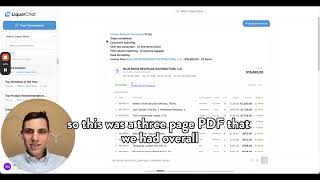
Liquor Store Owners — AI Just Killed the Need to Upgrade Your POS for Invoices
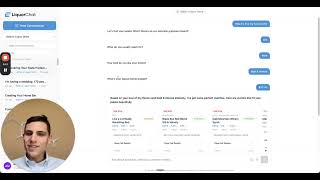
What If Your Liquor Store's AI Recommended the Perfect Bottle in Milliseconds?

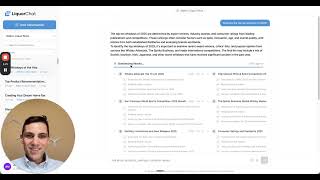
Liquor Store Owners — While You're Running the Floor, This AI Is Doing Your Research.

Liquor Store Owners — This Isn't Basic AI. It's 11 Agents, 37 Tools, Built for You.