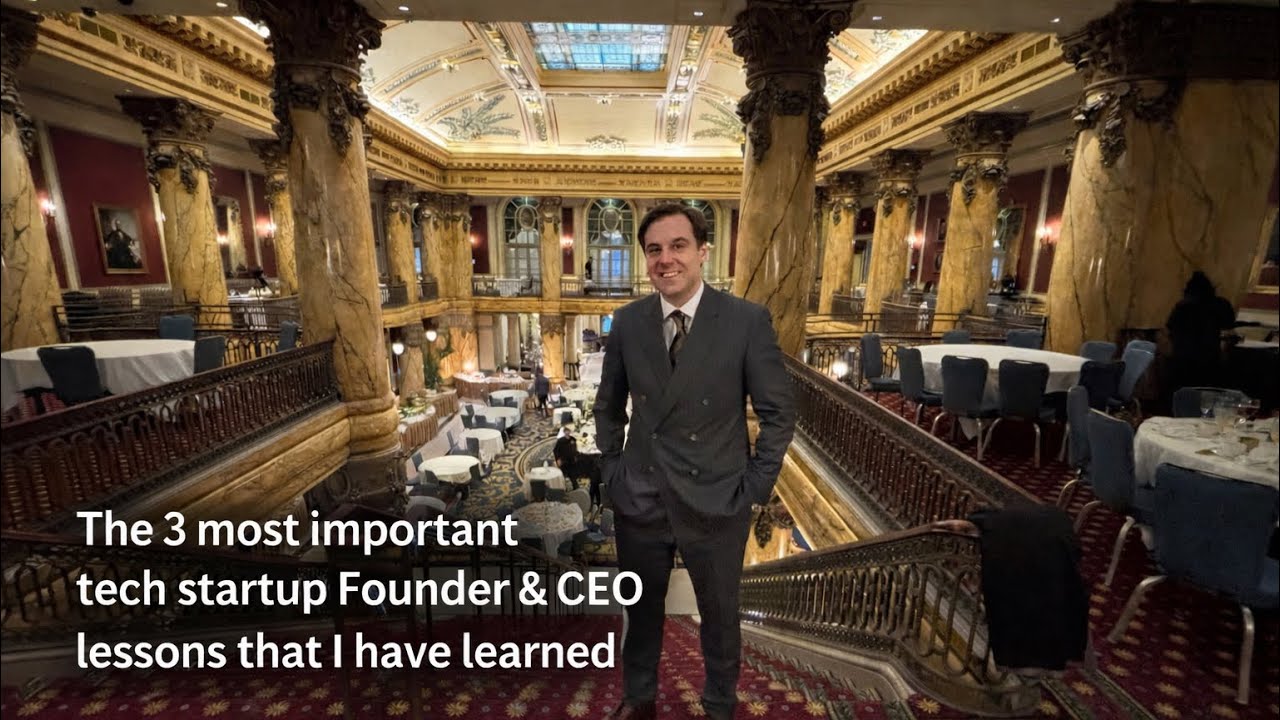
In this monologue, business coach Andrey V. Karpov addresses the common entrepreneurial challenge of being overwhelmed by multiple communication channels. He outlines a practical hierarchy: email and LinkedIn are his primary channels, each subdivided into dedicated inboxes or groups (e.g., work email, personal business email, volunteer email). LinkedIn messages are usually low‑stakes introductions and need not be answered immediately. Text messages serve as the emergency/rapid‑response channel. Phone calls are placed at the bottom of the priority list because they often represent telemarketing or non‑essential chatter. Project‑management tools such as Teams or Slack sit somewhere around email in importance, with urgency determined by the sender. Karpov emphasizes that entrepreneurs must consciously filter this noise, otherwise they risk losing control of their time and effectiveness. He concludes with a call to action for viewers to like, subscribe, and adopt an agile mindset.
Chapters
How's it going, guys? This is your business coach, Andrey V. Karpov, from Hire The Best LLC. So I'm gonna make a small segment moving forward on entrepreneurship based on some of the questions, some of the feedback that I've been receiving from some of you people wanting to know— what is wrong with my hair? That's so funny. I have like certain hairs that are living their own life. But coming back to this video, so segment on certain entrepreneurial questions that you've been asking that worry you very much. So one of them is, how do I approach communications with clients, with business partners, and with anybody for that matter when I have too many communications, too many channels, too much noise going on, and I have only so much time physically during the day or during the night allocated for that? The answer is very simple. What you have to do is you have to make sure that you prioritize the channels that you use for communicating with certain constituents. For example, for me, my two main channels of communication are email and LinkedIn. Furthermore, inside those channels, I will use certain inboxes or certain groups or segments that are more important for a particular situation. So for my work email, for Nagaro, I will respond to that foremost immediately. For my personal business, Hire the Best, I will respond to that secondary. And then I have the volunteer emails. So I already know how to prioritize those channels. Furthermore, I have folders that I can use to segment all of these channels of communication. And then when it comes to LinkedIn, you also have to understand the nature of these requests. Most of them are typically designed in such a way that someone is offering something to you People usually do not reach out to you on LinkedIn typically if they are looking to form a secondary connection or if they are already scheduling something with you. That's honestly usually for initial connects or just like referrals or introductions. So with that said, do you have to jump at these opportunities right away? Typically not. So with that in mind, there also should be a channel of communication that you use for emergency basis or for rapid response basis. Those happen to be, believe it or not, text messages these days. Those people that need to find you and they need to contact you for quick communications, they will know your phone number and they will text you. And last but not least, I'm going to tell you something unconventional: phone calls. A lot of people grab phone calls right away. They jump at them. They're hungry to talk to people to, you know, get business done, or they call other people. Those come very last. And it's not that I'm not for communication, verbal communication, physical communication. It's that oftentimes those phone calls do not mean anything when they're just telemarketers calling you or people just wanting to chitchat with you and waste a lot of your time. So keep that in mind because this will help you understand what lines of communications are important for your business, for your activities day to day and how to prioritize them given all of the things that are happening in your life. There's other ones as well, like project management tools or tools like Teams or Slack, right, that you can use. Those obviously come also at importance to you and probably somewhere around email because they are ones you would use at work. But even then, you have to separate. So Teams messages typically may be critical, may not be critical, just depends who it came from, and you can see the preview on your screen. Project management tools can also be not as important to respond to right away. They usually signal about some kind of status updates. So as you go on in your career, as you expand the number of tools and number of communication channels, you will understand fairly quickly how to gauge which ones are more important, which ones are not. But most importantly, what I want to leave you with is do not allow all that tremendous amount of noise neurotically control you. If you do, you will never be a successful entrepreneur. You will never be a successful C-level executive, and you will constantly be chasing, you know, that catch-22 situation where all of the noise outside, all of the people outside that are wanting to take a piece of you, they're basically controlling your time and not allowing you to prioritize it yourself. I hope this was helpful. Um, please hit like, subscribe, and comment. And as always, may the true agile force be with you. See you next time.