The Art of Entrepreneurship & Why It’s Not for Everyone
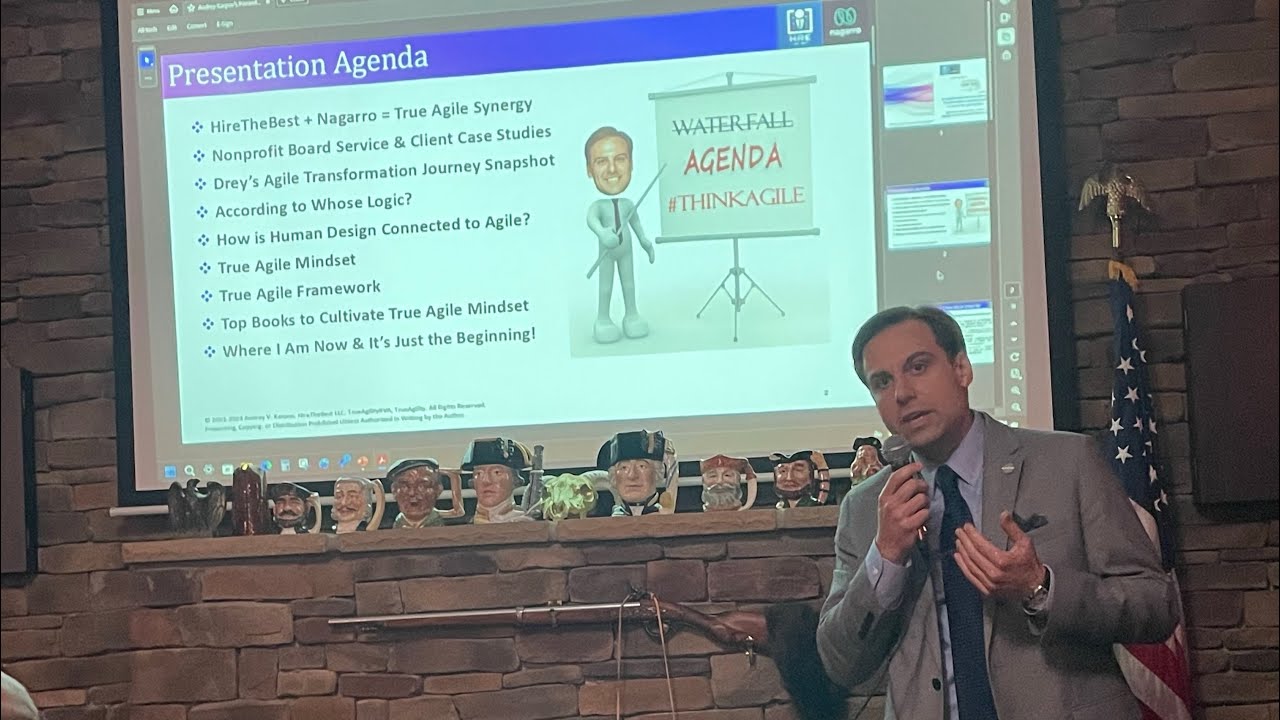
In this 1‑AM solo monologue, coach Andrey V. Karpov outlines what it truly means to be an entrepreneur, especially in the realm of social‑impact and consulting businesses. He argues that entrepreneurship is driven by purpose and impact rather than pure profit, and that it demands a dynamic, always‑on mindset. Karpov describes the relentless grind, the lack of a fixed schedule, and the need to balance work bursts with personal downtime. He maps Agile and Lean concepts—Kanban boards, MVP thinking, sprint‑style task limits, and ROI‑based time valuation—onto solo and fractional‑consultant ventures. Cash‑flow‑first financial management, lean tooling (spreadsheets, Trello), and judicious spending are presented as essential survival skills. He stresses the value of mentors while warning against outdated or free mentorship that lacks modern tech insight. Personal branding, presentability, and the art of selling oneself are framed as non‑negotiable for credibility and revenue generation. A strong emphasis is placed on mindset: rejecting the illusion of stability, cultivating positivity, and aligning subconscious beliefs with entrepreneurial goals. Karpov shares his own journey—from top Uber driver to founder of Hire the Best LLC and TruAgility RBA, now immersed in AI‑driven consulting—illustrating how incremental hustle, hybrid employment, and relentless passion can evolve into a multi‑brand enterprise. The talk concludes with a call to action for viewers to embrace entrepreneurship, especially social entrepreneurship, by staying passionate, dynamic, and health‑conscious.
Chapters
What's up guys, this is your coach Andrey V. Karpov recording for you now at about 1 AM in the morning. Uh, today I want to talk about the life of an entrepreneur. So obviously I talk a lot about health, mindfulness, you know, and all the things that keep us in shape, keep us moving, rejuvenate us, keep us young, healthy. I do want to talk a little bit about the lifestyle of an entrepreneur, anyone who's considering becoming one, what it entails. It's not for everyone, let me just tell you this. Like, you have to understand that if you are pursuing your dream— and by the way, right away I'm going to tell you one thing— pursuing your dream doesn't necessarily only or even primarily mean making all the money in the world. Because money is a tool, right? So it's an outcome of all your results, good life, you know, other things that come into your life. So the money itself, if that's what you're pursuing, you don't have to become an entrepreneur. You can be a hired employee. You can get all the certifications, education, credentials, and other things, or you can be a really good salesman, and you can make a lot of money, and you can live a pretty good life. Pretty balanced life, I would say. If you want to change the world, if you want to create an impact, if you want to leave a legacy, that's when you become an entrepreneur. That's really what entrepreneurship is about, especially social entrepreneurship that I'm involved in, which entails working with nonprofits, academic institutions, the government sector. I'm trying to change the world, as crazy as this sounds, right? But It's about changing the world around you to be a better place for you and for others. And most importantly, understanding why you're doing it, what kind of emphasis you're putting in that, what are you defining as the world change, right? Um, understanding the problem, subcontext of modern-day philosophy, psychology, um, politics, economics, and other things. And I've been in those fields for for quite a long time, both internationally in Eastern Europe and here in the United States. So for me, changing or impacting the world is much more important than anything else that will come as a reward from daily grind of entrepreneurship. So with that said, I'd like to tell you just a little bit about my lifestyle and, um, It's not 100% reflective probably of every single entrepreneur out there, but it's just something to be ready for, to be ready about if you want to start your own business. I will be speaking mainly about consulting businesses or coaching businesses, so businesses that are not your classical brick-and-mortar, but a lot of, you know, a lot of things I'll mention, they are very much, you know, applicable to brick and mortar as well. With the only difference is when brick and mortar, typically you're hiring employees, you are monitoring different locations, you know, there's different factors, many different costs that go into this. When consulting business, when you're working for yourself as a solopreneur or as an entrepreneur that has fractional consultants or partners, which, which is what I do, uh, and it's a different story. So with that said, the grind is continuous. You don't have a schedule, okay? That's very important to understand. You have to work as much as you physically can, and most importantly, as much as you physically want. It's not about, again, uh, a situation where you are trying to tell yourself, okay, I'm going to work this much and then I'm not going to work later down the day. And why not? So what does the word entrepreneurship mean? Entrepreneurs, which means you take action, right? You immediately jump on the opportunity. It comes from France, right? From French language. So the idea of an entrepreneur is you are available as a sort of single universal soldier to counter the enemy, to take the Bastille, or to sort of conquer any grounds. And that's what essentially business is. You are constantly trying to maintain business continuity, business as usual, but at the same time you're growing. So your aspirations are about growth. In continuous evolution. You're not trying to sustain that much what you have because you understand risk very well. You understand that the risk of your business failing is you being out on the street, is you not having money to, you know, to afford shelter, which is your home, to afford food, to feed your dog, which I'm walking right now, and that's why I'm recording this video so late and the lighting is probably not that good. But the whole point of this is what I'm telling you, and hopefully you are finding it useful, the juice, right? It's not about the quality as much. We'll get to that once I have someone recording me, giving you good lighting and all the wonderful, you know, how to say this, graphics around it. So the point is, again, you are grinding, you are working when you can, when you have to. If an email from a client comes in and it's important, you have to jump at that email. If a call comes in, you have to answer that. Now, of course, you will have situations when you don't answer those emails, you don't answer those calls, when you're not feeling like it, when you just need to nap, when you just need to sleep, when you just need to go to the gym, or you need to go to the pool. Of course, those situations are okay. You have to have that time for yourself, your downtime. But in general, when you're operating, you're operating with full understanding that you have a Network Operations Center, a NOC, or sort of a battalion at your disposal, which means you have all the arsenals available, you have all the tools available, you are ready for the battle, right? I'm using this analogy just to kind of make it fun and simple for you. I'm not a military person, but I kind of like to use these analogies because I think they resemble very much what a business owner does and is. And So the situation of having a business is that you also can, you know, overburn quite a lot. You can get very tired. So you have to choose your battles carefully. And it's not about working hard and working a lot. It's more about actually understanding the efficiency, understanding the return on investment of your time, understanding the value of investment on your time. Value and investment is probably the most important criteria for assessing what you will be doing, how you will be doing it, when you will be doing it, and will you be doing it yourself or will you be delegating, will you be automating, and so forth and so forth. So sometimes you just gotta let go, and these are some of the things I've spoken to you before in my videos on social media outlets. Letting go is extremely important. Because some things, they just don't have value. They are very pedantic, very mechanical, very useless tasks that just force you into a mainstream of, "I gotta get this done." And the question will be, "Why?" And what will help you in that regard is to not get into this rabbit hole, is to realize that you're part of the true Agile process, right, that I've been talking about, that you've been listening. Hopefully now you in some way or the other. Tragical Process believes that you are the product owner, you are the Scrum Master, you're the developer of your life, and you set the acceptance criteria. So with that said, you can define the value of each task and ultimately set the minimum viable product standards that you will hopefully achieve by the end of the sprint. The sprint you can define yourself as well. There's no really true hard parameters in terms of when you will complete something, and it's continuous pull system. So if you will, in an entrepreneurial environment, when you're solopreneur, when you're operating with just a few fractional advisors, you are operating in a Kanban fashion, right? So you limit the work in progress, and the limits are set mainly by your physical resources. Your physical capacity, and at the same time you define the value very strictly. You understand what that value will be to the end user and ultimately what the return on investment is, how much time you're putting in into this. Do you see a good conversion on your activities? Um, and that builds empirical knowledge base that you can transcend to subsequent similar tasks. Other than that, you also have to be very judicious about your financial streams. So, um, and this is a tricky one because you have to be very presentable, you have to be very credible, you have to be the company owner at all times almost. Because you never know when you're going to be transacting business, right? Or networking or presenting yourself. So for that, you need to dress well, you need to have a clear mind, you need to be able to speak language of the audience that you're targeting. So having the knowledge, continuously learning, and, you know, investing in yourself. Again, you have to do it mindfully from the standpoint of that it doesn't deplete all your resources, because as a business owner, and this is probably one of the most important things I'll tell you, you will be operating from a cash flow perspective. You will not be operating day to day from the standpoint, oh, okay, so I'm gonna do this, this is gonna bring me so much profit, I already know how many taxes I'm gonna pay. You're not gonna be doing that. You're gonna be operating from the standpoint of cash flow. And I learned this long time ago, or some time ago, whatever, when I was doing rideshare driving, when I was one of the top Uber drivers in town of Richmond, And I really enjoyed it. I was passionate about driving. I built a lot of contacts. I understood agility. I understood algorithmic approach to driving and picking up passengers, you know, how social engineering works in applications like this, and a whole bunch of other things. I had a good mentor who I'm not going to mention here, but definitely grateful to him. And That's another thing, having mentors in your business is very important. Mentors don't have to be constant people who you pay money and you meet with them on a regular basis. They can be, that's really good if they're truly interested in helping you and it's not just about money. Some of them actually do it for free. However, it's not always good either because free mentors are not sometimes the best ones because they may be just doing it for fun. They may not have the experience that you're looking for. And furthermore, what I've also experienced, they may be from a different generation when business was done differently. There's some good Napoleon Hill foundations there, but in terms of understanding technology or the modern approach to work, they don't have that foundation. One example probably would be my dad, who I love, but he at times when I speak to him he doesn't understand all the complexity of the technology we deal with these days, and that I literally sometimes have a full-time job— sometimes, not always— sometimes I have a full-time job of just answering emails and LinkedIn messages and texts and voicemails and a whole bunch of other crap that I truly think it would be easier to just call someone and get it over with and understand. But people need to think, people don't like to pick up the phone, people don't like to meet in person, which I personally love. People just are not as business-oriented as back in the day when he did business and it was different. So from that standpoint, um, understanding the modern-day environment and what kind of coaches, what kind of training, what kind of resources you need is very, very important. You got to be realistic about all that, and you have to be truly agile enough to adapt and inspect to this type of environment and try to find happiness and productivity in that. Not conform, but try to really understand why it's the way it is right now. And if that is your niche that you're operating in and you need to use these tools and approaches, frameworks, methods, and models, That is what you got to do. You just got to accept the reality of things because business is a game. It's a game of impact and generation of revenue. And if you don't want to play that game, business is not for you. You probably need to work for someone where your directions are guided closely, where your impact is limited, where your time is capped, but you are utilized to the maximum potential to build someone else's dream. And the question to you is if you are okay with that. And again, hopefully that's a good person that you're helping to build their dream, and they will take care of you. But most of the time, it's not that way really, and I have experienced that as well. So I would highly, highly, highly encourage you to consider becoming an entrepreneur. You can start out in a hybrid mode, working for someone and trying to build your dream like I did, doing all kinds of consulting work, coaching work, making money on the side, hustling with 2 jobs, whatever works, whatever doesn't completely kill you mentally, physically, because again, it can be very draining at times. But if you're building your passion, your dream, that's how you got to do it. There's no other way around it because out of the gate, out of the box, you're probably not going to have people who will be just as motivated, just as passionate as you are. It hardly happens. I can tell you, I tried that. It's hard to find people like that. People are enthusiastic when you talk to them, but when we get down to business, when we get down to visioning, when we get down to strategy, tactical application, the location of resources, a whole bunch of other things, people are not willing to step in. They want that comfort, they want that stability that simply doesn't exist. And I hate the word stability. I just hate it with all my gut. The reason I hate it is because it doesn't exist and because it doesn't drive us forward. So always remember, dynamic approach to life, to work, to health, to family— everything has to be dynamic in your life. Dynamic doesn't mean fast, it just means that it's evolving. So forget the word stability and If you hear someone tell you how stable their life is, how stable their marriage is, how stable their work is, kind of question that, right? But you don't have to tell them about that, but just be questioning that in your head because the reality is it's usually not that way. And people like to create an impression of things that are not that way because they are seeking validation, social validation that you don't need. You don't need that if you're an entrepreneur. You are seeking Validation only from yourself. You're the product owner of your baby, your business. You're impacting others, you're giving them value through assessment, through understanding that you are in the market for providing quality goods and services. And if you're getting good feedback, that is not validation, that is justification of the fact that you are providing value. Okay, so understand all these concepts. Remember that you're operating from a cash flow perspective. Be judicious about your spending. Track your spending. Spreadsheets are great friend. You don't need a lot of complex things as you're starting out. Um, be very lean. Use Lean Startup model. You don't need to again go into heavy systemic approach of we need this system, we need that system, we need to write a business plan, we need to hire an accountant, we need to hire this, we need to hire that. Incremental, sprint-based, iterative approach to evolution of your startup or work. As you go on, you will understand exactly what you need, and as long as you, you know, put all that down on a big canvas or in a Kanban board, as I prefer. I love to use Trello. You will understand exactly where you are at a particular point in time, what you need in terms of resources, people, tools, systems, and you will achieve that. And remember, most importantly, remember that every day brings you opportunities and also challenges, which is good because it helps you grow. Take every day with grace. Be grateful and don't be afraid. Most importantly, do not be afraid. Whatever you do every day, operate from the standpoint of opportunity. If you are afraid, you will draw negative effects into your life. You will draw problems into your life, and you will not get those calls, those emails, those opportunities that connect you to greater things that will help your business grow. The world is not against you. That's something you gotta really, really hardwire into your head. The world is not against you, the world is here to help you. But understanding how the world runs will help you configure it in such a way that it will come to you, everything will come to you, your subconscious will start working for you, not against you. You gotta fine-tune your conscious mind. And for that, you can watch my previous video which I recorded on that, How Life Really Works. But for today, I wanted to speak to you about my entrepreneurial journey, which has been growing steadily and surely for many years now in different capacities. But this one that I'm on, Hire the Best LLC and TruAgility RBA previously, has been evolving since 2019. Yeah, basically pre-COVID, right before pre-COVID when I was laid off, when I was looking for opportunities. That's how it all started for me. With multiple brands, with multiple ideas. And now, one year later, I'm really, really soaked into AI technology data. I'm doing work nationally, internationally, going on conferences, looking to join a major startup as a— in the AI space as a co-partner and strategic advisor. So a lot of things that are going on, and all of that would not be possible if I was afraid, if I was not thinking positively, and if I allowed myself to indulge into the luxury of building someone else's dream. I don't want to do that. I want to build my own dreams, even if it takes time, which is totally fine. Do everything at your pace. You're not competing— that's another thing— you're not competing with any major brand. Even if you're doing something which is totally similar to something else. And remember, by the way, you're not recreating the wheel. You're probably offering something unique. Unique, not better or worse, just unique in your particular field. So run at your own pace, be confident in what you do, have passion for what you do. 100% passion. If you're not passionate about business, if you're not passionate about entrepreneurship, it's just not going to work. Again, it won't be for you. I mean, it kind of applies the same way when you work for someone, but the truth is, uh, there you are operating on fear somewhat. And the reason you're operating on fear is because you know that you could be fired. You know that there are other people competing against you. You know that you're being assessed based on biased parameters like, you know, how much education you have, how much experience you have, do you know this person or this company, and so forth and so forth. So a lot of bias, which sometimes doesn't really matter. What really matters in your entrepreneurship and in your corporate employment is really all your grit and determination. So one last thing I'll leave you with, and this was hard for me to hardwire into my brain, into my conscious brain, for it to reflect correctly into my subconscious: selling is not bad. Selling, marketing yourself is not bad. I've been a salesman all my life, so 20+ years I've been selling, I've been marketing, and I've been doing it in different fields. And if someone tells you that's bad, they're wrong. There's nothing wrong in that. Even a real estate agent, you can carry yourself in the right way. And the reason I use even a real estate agent, because that was just something that my parents were advocating on me for a long time, that I should become a real estate agent, a real estate broker, or something of that matter, since I didn't want to become a doctor or a lawyer, which they wanted me to become. So I went into business and was in financial services and investment side of things, then in government contracting space, then in project management, nonprofit space, you know, then became an entrepreneur ultimately. But you can be whoever you want to be, it's, it's totally fine, even a musician. But the truth is you're constantly selling yourself, and that's where presentability, that's where cash flow That's where productivity and efficiency come into perspective because you cannot effectively sell or market anything if you are not ready for it, if you don't have the mindset. So let go of all those fears, realize that you are marketing yourself foremost. If you build the credibility with people, if you build the rapport, if you are known as a nice person and you're about providing value, building connections, solving problems, or, you know, basically untangling challenges, as I like to say, you will be the go-to person for whatever you offer, whether you're selling candy bars or whether you're selling high-tech ERP solutions like I do. So I hope this was helpful. I know it was long, and I hope you did watch till the end, or maybe this video will be watched until the end at some point in my YouTube channel life. I really hope it will be because this comes from the heart. These are all of the things I've learned so far, and we could dive in deeper into every single aspect of all of this, but the bottom line is It's not that hard. You just gotta have passion and you gotta have determination and you gotta make it your, your full-time job with small incremental breaks and sleep and, and, you know, dieting and exercise and other things, reasonable ones of course. Your body will tell you which ones, your subconscious will tell you, but you gotta really love being an entrepreneur. And once you build that passion Success will come into your life. Love will come into your life. Friends will come into your life. Health will come into your life. Like, everything will align correctly. So I highly urge you to try entrepreneurship, especially social entrepreneurship, which is geared around impact. Thank you for watching. May the true agile force be with you. Much love, and you've got this. I believe in you, the universe believes in you, and you should believe in yourself as well. Take care for now.
More from Andrey
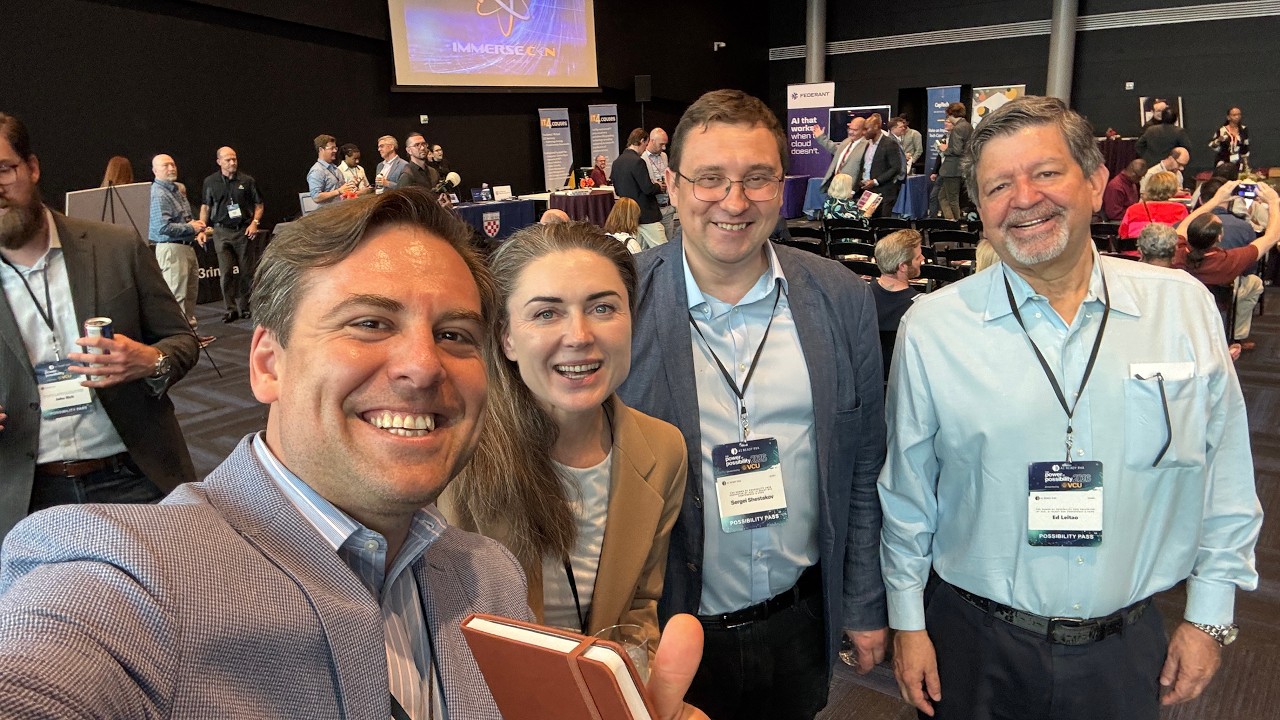
Founder's Interview Showcasing Vicktoria AI at 2026 AI Ready RVA Conference: Power of Possibility
Vicktoria AI 3-min Pitch at TechStars Startup Weekend in Richmond, VA at Robins School of Business
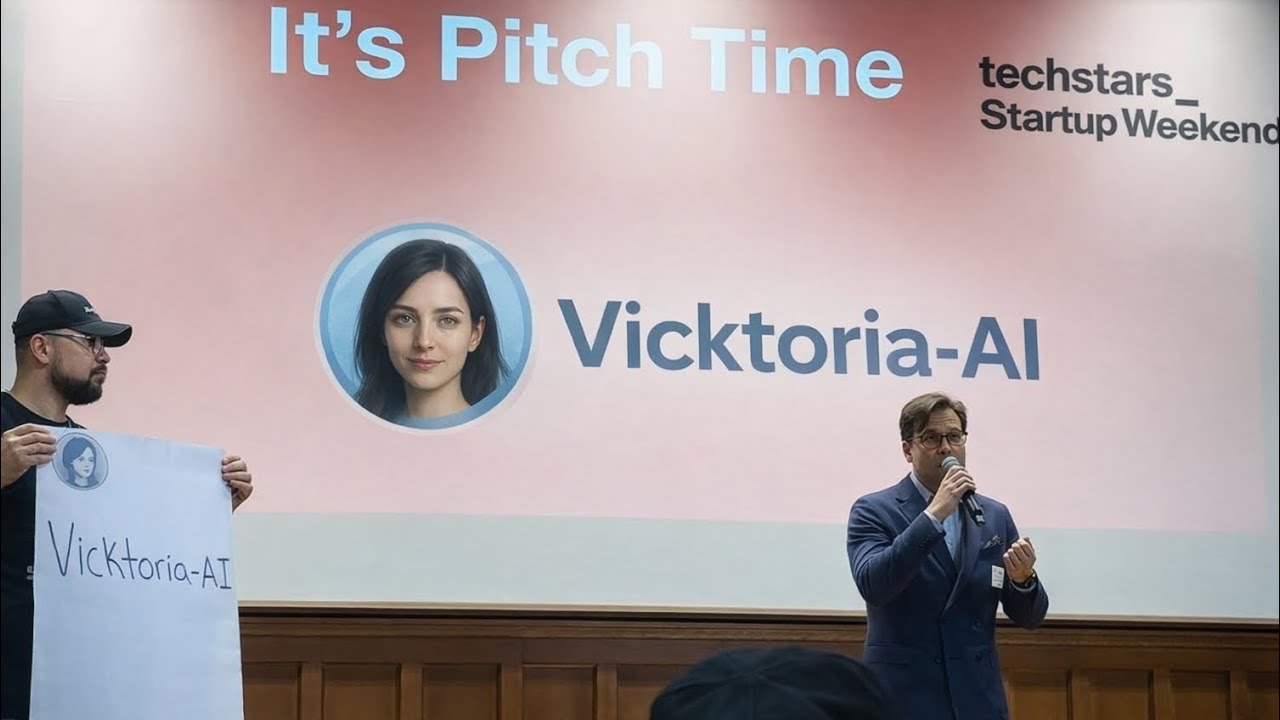
Andrey Karpov’s 60-sec Tech Startup Pitch of Vicktoria AI in Front of the EdTech Community


Life Without Impact is a Wasteful Life or How Focusing Just on Self-Enrichment Will Get You Nowhere
Leading vs. Managing People and How to Attract the Right Talent into an Early-Stage Tech/AI Startup

Anxiety vs. Depression, Neuroscience, NLP, & AI - Deeper Meaning for Everyday Success in Life & Work

The Concept of Delayed Life or Why You Don’t Need to Earn Your Right to Happiness, Choice, & Freedom

Mother Freaking Nature or Why Bonding with It Regularly Will Keep You Energized for Life

You Do Not Owe Anyone an Explanation or How to Find Happiness Within During Challenging Life Times