1. Kareim Cade: Are You Backing Up Your Talk With Execution?
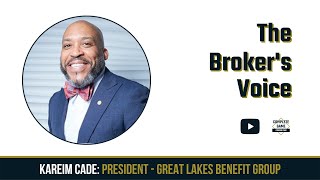
Kareim Cade founded Great Lakes Benefits in 2006 after studying insurance at Clark Atlanta, teaching special education, and struggling early in the industry. He used voluntary benefits as a way into health benefits and stresses that execution matters more than ideas: most brokers talk big but don't follow through.
Questions this video answers
November 5, 2021 (dialogue: 'we're doing this on... Friday, November 5th.'; developer metadata confirms 2021).
Clark Atlanta University.
1998 (he says he 'came back into the business in 1998').
April 2006.
Chapters
All right, welcome back to the Broker's Voice. I am psyched about this one, because if you have not met this man, you're about to see energy like you've never seen before. So if you're watching this early in the morning, grab your coffee because you're going to wake up really quick. I am excited to have Kareem Kade on from Great Lakes Benefits. Yeah.
Good morning, Andy. How are you, my friend?
Good. I got a question for you that I've been wanting to ask all week, and you and I didn't set this up with you. You're wearing the jersey. I just want to know, dude, what's going on with the Chiefs?
Oh, my goodness. You know what I think it is? It's like any other winning organization. You know, I had someone tell me years ago, andy, a lot of times you're drinking the wine, but there's sometimes you gotta stomp the grapes, brother. And right now we're stomping grapes, man. We're just getting the wine ready again, man. You know, we had that run when everything seemed to be easy. And it's like business sometimes you have that run where everything seems to be easy, but when the true challenges come, that's where you see the character is, man. So I'm looking forward to seeing what they do going forward, man. It's test time, baby.
Well, they play. They play my. We're doing this on. On Friday, November 5th. They play my packers on Sunday. And quarterback is not playing without Aaron Rodgers, so. So our. We're not looking really good. And I'll tell you, Kareem, I'm a fantasy football guy. I'm not a big fan of it, but I jump in, I do it with my family. And I picked up Kelsey and Nicole Hardman this year thinking they're going to be rock stars. And Mahomes has angered me as far as fantasy football is concerned.
It's tough, but I love my guys.
Let's go, boys.
All right. Well, Kareem, for the people who don't know you, which is few and far between in our industry, talk about how you got in the insurance industry, then out, then back in. I know the story, but it's so interesting, man.
Well, I appreciate you sharing with me. So I have to take it back to the fact of in college, that I was in college, my third year in college, and my parents called me and I'm at a school, historical black college, Clark Atlanta University, and I'm partying and having a great time, and my mom calls me on the line and says, hey, you know, it's year three, we're not paying for any more than four years, so you need to figure things out. And so I go to my advisor. I had taken a couple insurance courses because my mother was in insurance business. And my advisor said, hey, you can get this degree in insurance and risk management and get out of here in four years. And I'm like, great, let's do that. And so I graduated in four years, go back home and get into the insurance business. And I start. My mother sends me to New York Life and says that you need to have training. This is good, solid training. She was with Colonial Life at the time. And she said, you know, you need to know about the industry. And I'm like, great, mom, I'll go do that. I go there, I fail miserably. Told me to write down 100 my friends and, and call them up and sell them in some and some insurance. And I'm like, hell, my friends are still drinking beer and eating pizza right now. They don't have any money. This is not going to work. So I fail. I go over to Colonial Life with my mother and she says, hey, I'm going to show you this payroll deduction business. It should be fantastic for you. And I bomb. And she calls me one day at home. And this is before the advent of cell phones. I'm dating myself a little bit, Andy. And so she calls me and I'm at home in the old school answering machine. And I pick up the phone in the middle of the answer machine. It's 11 o' clock in the morning. And she's calling me because I have some paperwork that I need to turn in. And she says, what are you doing at home? It's 11 o' clock in the morning. I'm like, well, you know, I'm going to get out in a minute. She said, do you know my top agents have been out since 7 o' clock this morning. They've already had several meetings this morning. You're still at home. You're not going to make it in this business. And so I go back into the office and she said, you know what, you probably need to go find a job now. Remember, you got to understand, I'm the only child born on my mother's birthday. So I'm very close with my mother. And so she tells me, you know what, you need to go find something else. And so I leave and go teach. Now, if she was here telling the story today, she would say that I didn't fire you. She would say, to me, Kareem, you fired yourself. And I think a lot of times people forget that. But I did fire myself because I was lazy. I was triumphant. I wasn't willing to do the work. So I taught school for two and a half years in Pontiac. Public school, special education. Best thing that happened to me, though, and one is that she fired me. Two is that I went to teach because obviously I had the ability to be able to talk and communicate, but I was a horrible listener. And teaching school taught me how to listen, man, at another level. And so I came back into the business in 1998, focused, ready to go, and the rest, as they say, is history, man. I came back here ready to go get it, and we've had a great ride ever since then. But I always say my mom fired me. Best thing that ever happened to me, brother.
Well, let's talk about that. And if everybody listening in, you heard him say he taught in the Pontiac school district. Kareem's got Great Lake benefits, which is outside of Detroit. Fantastic health insurance consulting firm. Actually. Now, two locations, as we've talked about, you guys are. A couple of you are heading south of Florida, which is so awesome. Go back to the firing. One thing I heard you say is, number one, you took 100% responsibility for it. Your mom, you know, your mom said, sorry, Karim, you fired yourself.
Yes.
When you got back in, after the two years out of the industry teaching, you got back in. What lessons did you apply from the first time around that you think really helped you take your insurance career to where you are today?
Well, I'll tell you what's interesting, because during that two and a half years, I continued to just develop personally. Right? And so in that space, I was picking up the book at that time, the big read of the time was Rich Dad, Poor Dad, Robert Kiyosaki. And so I was a Kiyosaki fanatic at that time and just learning different things, training my mind to think differently because I realized that I had squandered the opportunity, that it wasn't anybody holding me back, but I kept myself back. The other thing that I did, though, and that was critical to where we are today was is that I watched other agencies around the nation, and I found an agency in Long Beach, California. It was a Colonial Life Agency. It was a gentleman by the name of Bob Blake, and he was the agency manager, man. And they were running hard. I read different articles about them, and I was just amazed. I called Bob about 16 times. Andy trying to fly out to California just to meet and see what they were doing. And it kept. I kept calling, kept calling, kept calling. Finally, Bob took my call and. And he said, man, come on out. Spend three days with us. And I went out and I was looking for something magical. I was looking for that, oh, my God, there's a silver bullet. And when I got out there, Andy, what I realized is that, hell, they put in a good day's work every single day. They did it with a great attitude. They trained themselves on sales techniques and putting themselves in the right position to be able to win. And they had camaraderie that was different than what we had in our office. Even though we had competitiveness, we didn't have the camaraderie to go along with it. And in that three days, I came back and said, wow, you know what? I thought this was a bigger move, a bigger task and a bigger ask, and it really wasn't. It was coming back and getting focused. And so we came back and did that. The office that I worked with at that time, when we came back, Andy, we were the number one office in Colonial three years in a row. Made the USA Today the whole nine yards. And from there, I took that momentum and just carried it on in, which actually led me into the health insurance side of the business in the late 90s. And I begin to transition. And even in transitioning to the health insurance, it's interesting, I had a client that was asking me about voluntary benefits and simply said, hey, can you take over everything that we're doing? And I'm like, I don't know what that means. And I remember he's still a good friend of mine today. Was superintendent at the time, Dr. Kilgore. He said, I'm assigned this little letter, and they're going to start paying you commissions. You just need to figure out how you take care of us moving forward. And that broker record letter came, and commission started coming. I'm like, oh, shit. This kind of work, I kind of like this.
This is.
This is different than what I was doing before. And then I had some great mentors that just started teaching me about the business along the way. Because I was hungry, though. They saw in me where I was trying to go, and they started helping me along the way.
Well, and that's the message I don't want anybody to miss is number one, go back to the Colonial Agency in Long Beach. You went out there on your dime to learn how they were doing, what they were doing so you could apply it to your practice. Self development, Investing in yourself. That is Something that cannot be overlooked. When I look at the top advisors in the industry, they all invest in themselves.
Yes.
And so you took it back. You applied what they were doing to your business, and then you talked about you made that jump into the health insurance industry from just selling Colonial supplemental. What made you make that jump?
That's a great question. It was really out of kind of anger, and here was my anger. At that time, I was reaching out to brokers trying to position voluntary benefits inside of their respective practices. And at that time, you're talking late 90s, you know, the voluntary insurance benefits side of things, that was bottom feeder. You know, that was like the catfishing and insurance business. Nobody wanted, you know, like, nobody wants to do this payroll deduction stuff. I'm too busy with all my other pieces that I have. And so I was considered a bottom feeder. And so as I would go in and talk to these guys, they would kind of blow me off. And I'm like, wow, this doesn't feel good. And once I got that first group where Colonial was the entree, and I'm like, wait a minute, I think I've got something here. Because these brokers won't talk to me. Let me go into these groups talking about Colonial, and then pivot into how I can take that and arrange a program for them tied around voluntary benefits, which, again, was not fashionable at that time, and come in and take everything. And that thing started moving. So it was really out of some competitiveness. I was tired of hearing these brokers tell me, oh, yeah, I'll get back to you. I'm not gonna do it. And I'm just like, you know what? I'm gonna take your business. And that's what we started doing. You know, we got some attention there, Andy. I mean, people were looking like, where the hell did they come from? And my secret weapon at that time was voluntary benefits. Nobody's talking about. So now I laugh when I see everybody's talking about voluntary benefits. Every company is involved in it. Everybody's got an accident policy and all that stuff. When I was out there, you pretty much had Colonial and Aflac were the top two. They were going head to head, and they controlled the market space. And so I utilized that as really my Trojan horse to get in and take over more business.
It's so interesting because, you know, over the past year, few years, a number of Aflac Colonial carrier reps I've talked to where they made a decision to make the leap into the health insurance because they were working with brokers and they watched what they were doing or not doing, and they're like, man, I could take their business so easily. And that's what they did. They made the leap and here they are with a successful business.
How long have you had Great Lakes Benefits?
I started Great Lakes benefit in April 2006.
Okay, so we're going 15 years. Congratulations.
Yes, thank you.
One thing I know you're a big believer in is execution. And let's talk about that for a sec. We were talking about this offline. You know, where do you. What do you see as a problem in the industry right now when it comes to, you know, we've got all these outside the box ideas. Cost containment. Great. Do you see a gap in agencies actually executing on what they're talking about?
Absolutely.
So.
So I may catch some heat for this, but I'm going to lie, Andy. You know, I've been shooting straight to you for years. And so I see a lot of healthcare celebrities out here, right? And, and they've done a phenomenal job in marketing. And, and I'm, I'm a capitalistic guy. So I figured out if you figured out a way to do it. But there's this disconnect between concept and execution. And I liken it to that college degree where you've been sitting in there and you've been looking, listening to concepts, concepts, concepts. But if you've never done it, then there's a total disconnect. Excuse me, the real world side of things. And so I think today what I'm seeing with agencies is that people have gone out, they've taken some of the things that they've heard and they've gone out and run it out and just kind of running like the fire hose, you know, you go out and you spray everybody with it. But when it comes down to actually looking at the key performance indicators, there are none. There are very few. And they end up finding themselves in the same position. Putting people in fully insured plans with a little bill, a little bell and a little whistle over here, but really no true change than what they've done before. And I think the biggest thing is, is that you read all those concepts and you got to figure out how you start taking it piece by piece. You cannot implement everything at one time. If somebody's been thinking fully insured their entire time with their benefit side. And now you come in and you're talking about all of these fancy things like me back to my cheeks, you got all these gimmicky plays and that kind of thing. You know what it takes time for those gimmicky plays to actually be able to execute them into a space. But you've got to do simple X's and O's to get it started. You've got to do some simple block and attack and add a piece here, add a piece there, and then that takes you to the next level where you can do those things. And so what I'm finding is that as I go out and speak with these organizations that maybe have heard some of these concepts. They've heard the concepts and because the folks have not focused in and executed, now they're starting to be bad blood in the water. As someone saying, hey, you know, I heard this, I tried this, and now I'm kind of shy because that person, that broker, that consultant, whatever they want to call themselves, they didn't follow through, Andy. And I've got a huge problem with that, man. That's a big deal.
You used the term Trojan horse before. I think too many brokers are you verbally using, using a Trojan horse of saying the right things to get the business. But you're to your point, they're not backing it up with execution. I, you know, offline. Offline. I said there's a big difference between pontificating and executing. Absolutely. And I think there are a lot of people pontificating right now. You know, I'd be, I'd be curious for your opinion too on this. We, you know, a lot of young advisors are getting influenced by this.
Yes.
Because they want to be different. And I'm, hey, I'm help people build their brand message. I help agencies build their brand message. I want you to be different, but you got to execute different as well. Where do you see opportunities right now, Karim, to train the young advisors in our industry? Because I see too many of them come in that are excited or eager, they're passionate and within a couple years they're burned out and ready to leave because they get no training.
They get no training.
What do you, where do you see? Where would we best serve the young advisors in our industry right now?
That's a fantastic question. And I think if I take a step back, Andy, to go forward, I think it's the agency owners that you've got a lot of old school guys that have been around for a long time and they are just not ready to move. And I remember, I'm reminded of the book I read years ago, who moved my cheese, right, him and haw and sniff and scurry. Right. You kind of just been doing the same thing. Nobody wants to move in. So you can't even attract the young advisors and keep them long enough. Let's think about it. The attention span of younger folks is short, right? And so if you can't connect with them, there's no technology involved, there's no new concepts. You're not gonna keep them engaged long enough in order for them. So it starts with the agency owners to own the fact that they've gotta do something different. What I've looked at in our agency is that those new concepts, those new ideas, I need to have fresh perspective and fresh thoughts. And so I could train somebody new as they were training me at the same time to learn how could I do this thing more efficiently and differently. So for new advisors, the first thing that I'll say is go back to what we were talking about before, which is simply, you've got to invest in yourself. I don't care, don't tell me you don't have the money, you don't have. You have got to invest in yourself because no one is going to do this but you. First and foremost, that. That is just it. No one's going to do it but you. But you also have to commit. You've got to understand that the first three years of this business are the apprenticeship years. You've got to take three years to learn this business before you think that you're just going to go out and run it. So when I think about somebody saying, hey, I've been in the business, I tried it, I. And I'm like, well, how long were you in? I was in two years, three years. I'm like, oh, you didn't even get. You didn't even get to scratch the surface yet. If you were only in two or three years. It's taken me that long just in learning and changing the curve on our business from what it was seven or eight years ago. It's taking the time to just kind of change how we think about it, how we position ourselves. And so that new advisor needs to first buy into the fact that he or she is going to have to be three years in the game to learn the business. Right? That doesn't mean that they have to starve. I'm not trying to give them the old concept. We walk three miles of schools with no shoes on, you know, but you got to suffer a bit to learn how to do it and to learn how to do it right. The next thing I think is that those of us, yourself, the coaches that are out here that understand how the business has changed is really giving them the right insight, right insight of how they connect new ideas and concepts again with execution. What does that look like? And I think that still today is so complex. So before, when we talk fully insured, that's simple X's and O's, There's. There's no schemes on that. It's very easy. Here's your renewal. Here's your spreadsheet. Go for it. When we get into complex things of carving out pieces, I know you and I did some work some years ago carving out pharmacy and, you know, getting really kind of specific and all those things may be basic. And starting out, when you get into direct contract, you get into rbp, you get into all these other things, man, you've got to have some training on that. Somebody's got to show you. How do you actually position that where the client is going to win. And my thought has always been Andy, because I know that I'm going to be here next year, the year after, and begin to develop that mentality that this is what I do. This is not something that I'm trying, but this is what I do. When people talk to me, they know that this is what I do. They don't need to question that. Then you buy into the fact that, you know what? I want to be here. Let me pinch my tent, and let's get ready to go. Let's get ready to grow at the same time. And so I just think that we've got to do it better. Those of us that are in the space that have been in the industry for some years have to now mentor those kids, those young advisors that are coming in to give them a reason to say that this is the last thing I'll say before we move on. When I speak, whether it be in colleges and or high schools, and I'm talking about the industry, I'm like, this is the only industry where no matter what, this thing continues to move day in and day out. I've never had a bad year. I've never had a year where I'm saying, and when I say never had a bad year, now do you have some ups and downs physically, mentally? I've never had a bad year doing this, man. Because I always knew that if I got out and did more, I could change my position at any point in time and I could move outside. And now with the challenges of COVID now I can be everywhere at the same time and do this thing, man. So my territory just expanded. I'm excited about that, brother.
Yeah. No, you're absolutely Right. And I want to, you know, throw a plug your way. I mean, we thought you talked about what we did together a couple of years ago. Like when I saw that, you know, you talk about executing on what your mouth is saying. I mean, the fact you guys are carving out pharmacy from fully insured plans in the state of Michigan where the biggest Blue Cross Blue Shield exists, it blew me away how you guys are actually doing that. So kudos to you again, backing it up with execution. So, last question, Karim.
Yes.
If there is a young advisor listening in, he she's 28 years old, young, excited right now, still eager, new wet behind the ears a little bit. What advice would you give them right now? Knowing where our industry is going?
Yes.
If you were to give them one piece of advice right now, what would it be?
My one piece of advice would be as you're looking at social media and you're looking at advisors, whether you're attending conferences or what have you, finding someone who is actually doing what it is that you believe that you want to do and picking up a mentor and remembering that when you call that person the first time, they may not respond, the second time, they may not respond. Part of being a good salesperson is the fact that we've got to have thick skin and be able to continue to have the fortitude and resiliency to press. And so you've got to find a mentor. If I was young, coming in this thing, I would want to know what in the video game world, they talk about the cheat codes. I want to know what are the cheat codes, man. And the cheat codes are in the minds of. Of people like you and I and other advisors that have already done this, have already been where they're trying to go, that can at least give them a head start as to where they're trying to go moving forward. And that would be my thing. I would not try to go at this alone. I tell people all the time, I still do joint field work. Joint field work is critical. So I would have a mentor. I would have joint field work. And as a young advisor, I tell you what I would do is if I was calling a mentor as well, I'd say, hey, I'm willing to give you 50% of this case to be able to learn from you as to how I go, I'll give up the commissions because at this point, I don't know what I don't know anyway. But if I put myself in position where I can learn from you, and I know you're taking your time, your Talent and your treasure to invest in me, I've got to bring something to the table. And so I think that that is the other thing that I will look at and say, hey, let me identify a situation. Let me take a real case that I can execute on and not sit back and just talk about it and practice, but let me actually go get in the game. I'm thinking about that bullpen mindset, that mindset that you always talking about, Andy, and let me get in the game, man. And the thing that I've always done with a young advisor, come in and say, okay, this is great. Go find a case. Go find somewhere where we can go in and we can actually execute and do it. Because if you're with me, step by step when we do it, you're going to learn so much more in that process than me just sitting down and talking to you about it. And you've never seen it in work.
So let's just wrap up. I mean, how does somebody get ahold of you if you, if somebody's listening, Kareem, I'm raising my hand. What's the best way to get a hold of you?
I tell you what, on LinkedIn, it's fantastic. And then the other way is just, just shoot me an email, man. I'm still old school, man. That's perfect. So, so it's so funny. My daughter tells me I'm a dinosaur. They all call me dinosaurs, man, because I don't have any social media but LinkedIn. And I'm like, that's the only thing I operate on. Everybody's like, oh, you gotta do more. I'm just a high contact person, Andy, So I'll go everywhere. You know, a good cigar will take you anyway. But if they will reach out to me, send me an email. Reach out to me on LinkedIn. I am one that wants to share. And here's the thing that I will tell you that is probably different. I don't want anything from you. I just want to be able to share some concepts, some ideas with you if I can give you some help. I think it's about making an impact. And that's where I am in my career right now, is what impact can I make on the folks that are coming behind me such that they can go out and continue to take this thing to the next level, man. I'm excited about that.
Well, and that's why I love you, man. So, yeah, get a hold of Kareem if you, if you want to know how to execute, man, this is the guy you Want to talk to. So, Kareem, I. I just realized I wanted to ask one more question to bookend this interview. I asked you a chief's question to kick it off. I'm going to ask a chief's question to wrap it up. I'm hearing word that the Chiefs should go after Odell Beckham Jr. What are your thoughts?
Well, don't they have enough weapons already?
I think we've got enough weapons, but I also think that you've got to always be looking at the chemistry. And again, I don't know enough about Odell. I don't know him personally to speak on. I just know what I've seen through the media.
Right.
And that can always be tainted. However, I think that when you're grooving like that, you've got to have brothers in that space that you can trust. And you cannot have a challenge where there's going to be additional turmoil. And, you know, at that point, it has to be about we win a championship. It's not about who gets the most carry. It's not about who gets the most catches. We are here for one reason, and that's to get a championship. And if that's not the focus, I think that you have to pass on someone that is looking at simply how many times I'm going to get the ball, how many times I'm going to be in position to score, how many times can I pat my stats? But really looking at. At the end of the day, we're here for one thing, and that's a ring. And if you're about a ring, Odell, we want to have you, baby. Come on. I just. We picked up Josh Gordon. I don't know where Josh Gordy is right now, but I think all those weapons in the world, we don't stop turning over that ball if we don't stop doing some of the other mental things that are kind of there, you know, I just hope at the end of the day that Tom Brady didn't take our heart, man. That's all I can hope for, man.
Well, one thing I love about the Chiefs is they, they understand you can't. You can't teach speed. Yeah. They've got it all over the field and I, I kind of root for that, except for Sunday when they play my Packers. So, Kareem, I want to thank you, man. This has been. I always enjoy our conversations. And if you're listening in, guys, this was a 101 on how to. How to elevate your career to the next level. So you know what happens when you mix clarity, you mix confidence. They come together, massive action happens. So go make it happen today.
Go make it happen. Go get them, baby.
More from Andy




If you want producers to succeed faster, help them create a sales message that creates confidence.

Sales isn't a zero-sum game! You can have tough competition and still grab a beer after



Option 1: Meditation, a fast walk, a podcast, and protein. The ultimate morning routine!

How you do one thing is how you do everything. Ill elite producers fuel their body.


Stop living in the gray of maybe! Your job in sales is to get a clear yes or no