103. Paige Lawrence and Arianne Jones: Fueling Your Mind and Body For High Performance
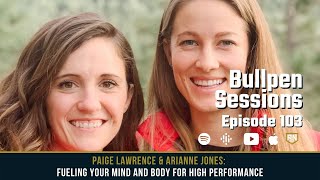
YouTube Bullpen Sessions interview (host Andy Neary) with Olympic athletes Paige Lawrence (figure skating) and Arianne Jones (luge). They recount underdog origins, Olympic experiences at Sochi 2014, and mental/physical preparation for high-pressure moments (training to 'not get it wrong', cultivating performance-state routines). They introduce a 12-week "Podium Performance" program focused on "eat, drink, think"—combining nutrition, hydration, and mindset for high performance. Themes: resilience, practice, focusing on controllables, failure-as-feedback, and creating pre-performance rituals.
Questions this video answers
2014 Sochi Olympics
12 weeks
Chapters
All right, welcome back to Bullpen Sessions. I'm excited today. Anytime I get to not only interview athletes, Olympic athletes, but badass athletes. Like, it's like the perfect trifecta. So I'm excited today to have both Paige Lawrence and Ariane Jones join me for the Bullpen Sessions. How are you guys doing?
Excited to be here?
Yeah, we're great. We're excited to hang out with you today.
No, this is going to be fun for those listening in. You know, I often preach taking care of, taking care of your body. And whether you're an athlete or you're in business, you have to, you have to go at your days like you are an athlete. So we're going to dive into that today. You guys are going to find what Paige and Ariane talk about today to be super impactful. We're going to share a little bit about what they're doing to help business executives, entrepreneurs up, level their mind and body. Before we get there, we're going to have a little fun talking about their Olympic careers, which, for those that are listening, north of the U.S. border in Canada. You remember, you may remember these names. Paige Lawrence, Olympic figure skater for Canada in the 2014 Sochi Olympics, right?
Yep, that's it.
And Ariane, same thing in the luge. You represented Canada in the 2014 Sochi Olympics?
Yeah, those Olympics is where Paige and I met each other.
Awesome. Well, let's start. We're going to start with a little ping pong back and forth. Paige, I'm going to start with you first. Just share. I know you've, you've been on the podcast before and you're actually the first, second time interview in the history of the Bullpen section podcast. We're on episode 100. What is this 102 so or no one. Oh, three. So you're, you're definitely. You're the first time. Yes. Tell us a little bit about your Olympic journey. You know, everybody saw you on stage on the ice in 2014, but what was that journey like as a child up until that moment?
Yeah.
So my journey, I mean, I think like everyone is near and dear to my heart, but essentially I was a small town kid. I grew up on a ranch outside of a town of 200 people. Like teensy tiny little town. And essentially.
I have the story of the kid that should never have made the Olympics. I mean, we train in like an old tin, practically a barn that was like minus 30. My coach and partner, skating partner, none of us knew what we were doing. We literally taught ourselves off of VHS and TV on the rink.
But we were just the story of two kids that had this dream and they really believed in themselves. And so they always found a way to progress forwards. And so I went from that little ranch kid to a kid that chased a dream all over North America and the world and ended up on the Olympic stage. So that's the long and short of it.
I like that. Well, I like that a lot because I think a lot of people, when they think about Olympic athletes, they think about these.
Cyborgs, these robotic humans that were born and raised and in a genetic lab to become these super Olympics. I think it reminds me of like the East German athletes from the 1980s.
But how about you, Ariane? How about, you know, you. You definitely also participated in a very high risk sport, the luge. How does somebody get into luge as a child? Tell me about that journey.
Yeah, well, it is a really interesting segue you said there about, you know, the cyborg go golden athlete. Because neither Page or I were the athletes that were supposed to be good. Like we were the. The underdog. The Count it out. The why are you here? The. These people suck at the beginning. So I think that that's like important to start. We were not some like golden children that were picked out of obscurity. Absolutely not. So, yeah, getting into luge, so for those people that don't know at luge is because a lot of people don't know what it is. Like, I love that Andy's like a super L fan, which, like, I'm feeling great about.
Never happens.
But for those that don't know what luge is, a lot of people know what bobsled is, but it's kind of like I get to go down a frozen water slide down a mountain. But luge is solo on my back, feet first on the sled, just to clear that up. But I got started in it because I live in Calgary and Calgary hosted the 1988 Olympics. And so because of that, I'm what's called a legacy, baby. Meaning I got into this sport because of the Olympic legacy that was left behind in the city. Meaning there's a lose track in my backyard, practically in the city. And so I just was a kid who was active and sporty and went to a camp where I got to try all of these Olympic sports and mountain biking, ski jumping, biathlon, all of these different sports. And I got to try luge. And I thought it was so super fun and really exciting. And at the end of the day they said, hey, you're pretty good at this. You should come back. And I went home and told my mom, hey, I'm going to do luge. And she immediately was like, what's luge?
That's awesome. How does. So you know, again, love the story that you guys weren't elite athletes out of the gate. I wasn't either. Right. I had a chance. You know, Ariane, you may not know my story as well as Paige does, but I spent a few years in the professional baseball, and again, I was that definition, that undersized pitcher. I wasn't somebody who was supposed to accept at the levels he excelled at for that. That young athlete or that young, even that young business professional entrepreneur out there. What are some of the lessons you guys took away from your journey, from this undersized, maybe underdog to the Olympic stage that somebody could use and tie into their own life?
Yeah, so I. I would say I have a pretty big one to start with. Is so in my luge journey. So luge is a gravity sport, meaning the heavier and bigger you are, the faster you're going to go. It's speed down a mountain. So I like to use the analogy of, like, if you're at the top of a hill and you had a bowling ball and a golf ball and you push them both down, like, which would get to the bottom first. Right. Obviously the bowling ball. I'm the golf ball, to be clear. So in this story, obviously, it's a podcast. People can't see me. I'm not a very big person.
In height or size or bone structure, and therefore, I was the wrong size for my sport. So, you know, I got into my sport. You're a kid, it's fun, you're progressing, you're doing pretty good. But around that time, I hit about 16 years old. I was quickly told as things got more serious in the sport, you're not the right size to be here. You need to change. You don't belong here. You're not enough. You're never going to make it. Like, you're definitely never making it to the World cup, to the Olympics. You're never going to win a medal. You might as well quit. And that was from, like, all the voices I was hearing from higher ups, coaches, trainers, everyone pretty much in a position of authority and obviously spoiler. We know now that I went to the Olympics and won medals and all of these things for a decade.
But in those moments, I had to decide really quickly, am I going to listen to those voices or am I going, what am I going to believe. Am I going to believe their view on me, or am I going to believe my view on me? And I think that, you know, I'm not just blindly thinking I can do this. I'm going, wait a second. I'm getting good results here. Wait a second. What if while I what I lack in size, I make up for in heart and work ethic and mental strength? What if I'm more aerodynamic than other people? What if someone would think outside the box with me here? And I had to quickly ask myself the question of what if the opposite was true? What if I do belong here? What if I can make it? And even though these voices were telling me I couldn't, I had to choose. What am I going to believe here?
That's. I love how you said that. Because 1. Not listening to the voices, you know, not. Not. I. I tell people all the time, you can't. Don't get too, too many opinions because most of them come with ulterior motives, you know, or people are placing their own shortcomings on you with their opinions. And so what you just said there, Arianne, is so important because it's a matter of just applying your skill day after day and knowing that you have the ability to do that and just keep doing it long after everybody else decides to quit.
Yeah.
And I think focusing in on what you are in control of. Right. So there's pieces there. I couldn't get 6 inches taller, so I had to let that go. I had to be like, I can't control that. I need to stop letting that weigh me down every day because it's heavy to carry around all those voices. Let it go. What can I control here? I can control my mindset. I can work harder than everybody else. I can be a better driver than everybody else. I can have a faster start than everybody else. Take what you actually can control and then double down your efforts into those pieces.
That's a great point. Paige with you now, I want to ask you this question because with Ariane going down, I love how you said this. A big frozen water slide.
In your. In your sport. You know, people watch Olympic figure skating on tv, especially the pairs, and they see these people doing flips and triple axles and all this for you. When I watch a female figure skater do a triple ax, I'm like, how do you even begin to practice something like that? You know? And so when you're having to perform that at the highest level, when the spotlight is on you, what does it take? Because I think people listen that and they think that they're either given the God given talent or they're not. What allowed you to go from somebody who didn't know really how to skate at first to being able to do a triple axel when millions of eyes are on you around the world?
Yeah, it's a really great question. I think there is no, there's no easy answer there for me coming from a kid that wasn't super talented. Like, I wasn't, I wasn't the, the best person on the ice at a young age. So again, I was the hardest worker. I was the first person on the ice and the last person off it. But I think it was more than that. I think one of the things that allowed me to really grow my skillset was the fact that I was like a sponge to feedback. And now I realize now what I was doing was using that feed forward. So anytime I heard something that I did wrong, anytime I did something that made a mistake, like every time I was focused on a fault, I quickly corrected that fault to what I wanted to do better. In my brain I heard the feedback, the negative feedback, and I transferred into what improvement do I want to make? And because of that, it was like I was a machine who was constantly finding ways to get better. So I think that that right there was what allowed for the growth and gave me the foundation to learn these awesome, fun, scary tricks. And then when it really comes down to competing and performing under pressure.
I.
Think it comes down to the fact that, that I had worked so hard and left no stone unturned in the training for years and years and years. But in the moment, it comes down to trusting, it comes down to executing, it comes down to a really firm.
Almost ability to shut off all the negatives and focus on the what I'm ready to go and do. And I mean, like any athlete knows, that's all about muscle memory, right? It's about shutting off the talk and just going and doing what you're doing, what you've been trained to do.
Well, yeah, go ahead. Let's keep going. I'm sorry.
No, it's good.
But what I was going to say was I, I have a. I have had a. Last week I had Sean Pete on. So I've got my little string of Canadian athletes rolling here. Sean played some minor league hockey. He's from Vancouver island and he said something to your, to the point you just made there, Paige. He's now in NASCAR and he runs a pit crew team for the Chip Canassi Racing Team, teamed out of North Carolina. And he said, we're okay with failure. In fact, we ask our guys to fail quickly, but we keep practicing. We don't practice, so we don't get. How did he say it? We don't practice to get it right. We practice until we can't get it wrong.
And I think that was so, like, what you just said. How did. How does. How does a skater. How are they able to do a triple axel like it's nothing? How's Ariane able to fly down that. That track like it's nothing? It's practice until you can't get it wrong.
When Paige has the saying, actually, that she came up with when we were filming our course, and I was like, stop everything that's golden, where she said, failure isn't final. Right? That's what we're kind of talked about in society is you fail. That's it, it's done. And that's not the case at all. Both Paige and I can speak for this. And I think most people in life that have accomplished something big in no matter what the arena, the failures are actually the key crux moments that lead you to something bigger. Right? Like there is so much opportunity in failure. It's not a final moment.
Well, and I love what you said, Paige. I never thought of feedback as feed forward. That is. That was a golden nugget. I think, that you kind of slipped in there that people may have missed.
But Paige has so many golden nuggets. Just wait for it.
Trust me. Trust me. So let me ask you this. This is a. Another Olympic question. And either one of you take this one first, but I want both of you to answer this, Paige, whether you're standing on the side of the ice rink, ready to go, and those are the TV moments, right? That when we're. We're the. The consumers watching it on TV on NBC, we see that, you know, the camera's on page as she's looking down at the ice, giving her last thoughts before she takes the ice. Ariane, same thing with you. We see the camera on you as you're staring down the track and you're about ready to go. What's going through your head in that moment.
For. For me, again, those are. Those are moments that you train for. People don't understand, right? It's like that for us. It's when I'm holding my starting position and I'm waiting for the music to start, and it's just dead quiet in the arena. Those are trainable moments. And for me, it was all about cultivating A. A powerful confidence that I could just feel in my body. There was not even. It wasn't even about thoughts or last minute, like, things to tell myself because too late for that. For me, it was about getting in that ideal performance state. And for me, that was just oozing confidence. Like, I mean, I'm picturing it. I could like feel it in my body again because it was. For me, it was all about just getting into that zone where I know I'm ready to go because then I trust and then I go and then I do.
That's awesome. How about you, Arianne?
Yeah, a similarity there, right, where people, you know, the media that you're watching, the Olympic moment it starts, you get to first see me hands in the handles, about to go down the track. That's not where my day has started. Right. Like, I have crafted the last hour of pieces that I do, timed down to the minute that get me ready to sit in those handles. So the interesting thing is when I would sit down in the handles, so like the loose start handles for people that again, don't realize this. I don't run at the start. I would sit and pull with my upper body. I would like a big thing for me is I would take like a slow breath, like three seconds in, three seconds out. And when I would sit down in my sled, it's quiet, it's calm, it's calm confidence in that moment. But the thing is, I've created that again, I'm not some superhuman that every time I sat down in a sled, I created that I would create the hour before I was sitting down on the ice where. What music am I listening to? Okay, I'm super nervous when I get to the tracks. I'm going to dance around to music and go for a run. And then my warmup is there. And then this piece and this piece, all the pieces that I've honed in for years that I know work for me to get me into that ideal performance state. And that's something that can be taught in any arena you're in. You know, if you're a writer and every morning you need to get up and write four chapters, you're going to find out, like, what do I need to do first before I sit down that gets me into that ideal flow state. These are things that are unique for every person, but through trial and error, you craft it to find that performance state for you.
And I like what you both actually said and just very subtly subtle, different ways, is it's easy to look at both of you in the starting gate, whatever the, you know, the gates are in your sports. But your, your moment had started hours before that. And I, I say the same thing as a pitcher. You know, you think you see me on the mound ready to throw pitch one of the game. No, no, no. I was preparing two hours before that. And I think that's, I say this all the time. Whether, you know, people want to be Tom Brady throwing a touchdown, The Super Bowl, LeBron James hitting the shot in the finals. They don't see the boring, crappy work you have to put in every single day that makes that moment possible, I think. And, and Paige, you talk about that Olympic moment, right? In fact, I have you speaking to one of my groups in about a month about that Olympic moment. It's going back to the basics every single day. That's what it's about, right?
And also knowing for people that, you know, when you see people in that moment going like, God, look how confident, cool and collected they are. There was also the moments a week earlier where I was sitting in the start handles freaking out because I couldn't figure out a corner down the track, right? Like, it wasn't this easy. You just see the easy highlight reel, you see the Instagram highlight reel, you see those moments, it's never the full picture.
Well, and the reason I'm glad, I'm glad you said that because again, the audience that's listening in is a mix of athletes or just business people who, you know, sales producers, whoever that might be. And it's the same holds true no matter what industry you're in. If you're an athlete, it's the work you put in off the field when no one's watching. If you're in business, it's the work you put in off the field when no one's watching. It's not, oh, this guy just has natural sales ability. No, no. He probably put in a hell of a lot of time off the field outside the office to make sure he is extremely well in his Olympic moment. Quick question I want to ask, given the environment we're in today, patriotism, right. Whether it's United States, Canada, I want, I personally want us to get back to a greater sense of patriotism, especially here in the United States. And Ariane, in your profiles, I love this about your profiles, you said something in that profile, the Olympic profile I found of yours about Olympic moments that inspired you. And here's what, here's what it said. One of them was tough looking guys at a pub erupting into high fives when figure skater Joanie Rochette won bronze.
What does the Olympics mean to you guys from a country perspective?
Yeah, that's a big one.
Okay.
And I was so scared when you were like, I read this, you said.
And I was like, oh, God, what did I say?
Maybe this is a better way to ask the question. When you knew you were representing a country.
Did that add any extra stress or, you know, as. Because you now you're not just representing a team. You play for. This team happens to be every single citizen of the country you live in. Was there added pressure, added stress to that, or no?
I would say for myself when I answer, I'll answer that there wasn't any added pressure or stress. It was almost like.
It was almost like an added source of, like, energy and joy.
It's not very often, like, I mean, the lead up to leaving to the Olympics was so beautiful because I'm from a small town, and no matter where I went, I would have people stopping me to say, like, oh, can't wait to watch you. We're so excited to see what. Like to see you in the. In the Olympics. And. And so I carried that sense over there, those. Those individuals who are just so excited and so proud of you no matter what. So for me, I think there was that sense of joy and pride, and.
I really just felt grateful. I know that sounds maybe cliche, but I felt grateful to be representing my country and all of those individuals.
And I think, you know, in reference to what you said before, and patriotism is like that. I love what the Olympics does, is because it brings countries together, it brings individuals together. Like, you're right. There's a bunch of guys high fiving in a pub over a figure skater that they've never watched figure skating before, you know, but it's so beautiful what sport can do. And I think that it offers this opportunity to see what the world really is capable of, what individuals are capable of when they choose to see the things that bring them together rather than the things that separate them. And so for me, it was just a really beautiful experience to compete at the Olympics, to wear a maple leaf on my back and to know that I was doing people back home a lot of. A lot of good.
Yeah. That's awesome. How about you, Arianne?
Yeah, I think that it's so, so funny. I think I gave that quote or that story so long ago, I didn't even remember it. Now it's made me all nostalgic and, like, brought up really good memories. But I think multiple points on this. You know, when you say, was there a lot of added pressure when you had that maple leaf on your back? I think something that's also interesting to remember is that the first time I ever got a Canada coat that had that maple leaf on the back, I was 16, right? And that was a huge moment for me, and I was so proud, and I was proud to have that maple leaf on my back every day since then. But so going to the Olympics, while it is its own beast, it also. The mental prep that you do leading up to the Olympics, you also have to mentally not think of it as its own beast. You have to be like, this is what I do. Because I agree. I think if I went into the Olympics being like, the whole country is watching, oh, gosh, it's pretty easily to spiral into panic, right? Instead, I think I very much, like, compartmentalized and got there and went, I've been wearing the same Canada coat for the last decade. It brings me immense pride. It brings me confidence. It brings me, like, that grounded pride. But also, I have to remember that everyone I'm competing against today is who I've competed against for the last decade. I know what I'm doing. And so I really did focus also in 2014 was kind of the fringe before social media. So, like, I had turned off all of that. I was very much in that bubble of, like, I just gotta come here and do what I know I can do. But then it is true that after the fact of when I. After I competed, I kind of opened up the floodgates, and then all these messages came in from people, screenshots, watching me on tv, all of those pieces that, yeah, made me just feel so much pride and so grateful to have played a really small part in. In the beauty that is the Olympics of bringing people together, where they focus in on exactly what. What connects us versus what divides us, right? Those big burly men that are football players that are cheering for figure skating, they're focusing on the connection of, like, look at that badass girl for Canada, right? Like, I think that there's. Those are the beautiful moments. So to know that I got to play a small part in that makes you feel really grateful.
Well, and again, you both said that so well. The moment's only big, and there's only a lot of pressure on it. When you put the pressure on it, when you make it bigger than it is. And this is the theme of today's episode is it goes back to practice preparation, mindset. And if you put the work in and you stay consistent with it. Yes, the moment appears big because you're representing a country, you're in the Olympics, but to you on the ice or you on the sled.
It'S where you've been every day for the last four or five years.
Like, I, I think that's so important to point out is that, yes, these are huge milestone moments, but you train, you train for the similarities. You train to do what you do every single day. I honestly think one of the last things I said to my partner as they were about to call our name, I was holding his hand and I was like, we're, we figure skate every single day and we're going to figure skate again today. Let's keep that in perspective. And. And then they called our names and we went and figure skated.
Exactly. We went. And that's. That's great. That's a great simple way of saying it. We went and figure skated. Right. Now I have a question for you guys. I want to ask one last question. We're going to dive into your podium performance program you two have coming on. That's really why I wanted to have you on today is last question. Because as a, as an athlete, especially Olympic level athlete, and I'm assuming you guys apply the same principles to your life today, you have to be able to unwind, you have to be able to get, you know, get back, you know, get away from the focus of the sport so you can refocus and re energize for that sport that you're doing or that business that you're running. What are some of your hobbies today, guys? Paige, I'll start with you. Like, what do you do to take your mind off work these days?
It's a good question. So now working out has become a hobby, whereas before it was a full time job. So I love, I love being in the gym. I love hiking or biking, being outside. My husband is an avid fly fisherman and he's convinced that he's gonna make me one as well. So I do enjoy doing that.
And then I'm also a secret nerd, so I love just curling up on the couch with a book.
That's awesome. Arianne, how about you?
Yeah, some similarities there for sure. Again, I'm such a nerd. I love reading. It's always been an escape for me. So I read a ton. That's a big one for me. But a big one for me would be the combo combination. I'd say, like the trifecta of like moving my body Nature and food. And I only say that because I'm like, sometimes it comes across obviously, like, cooking is a big, calm passion for me. So just being in my kitchen, like, good music blaring. But then sometimes it combines like, nature for me is a big one. Tuning out. So it's like going for a hike, but like bringing delicious snacks and like having a snack break like that all coming together. So anything really for me, that's like nature moving my body, eating really good food. All of those pieces are my happy place.
If you're hanging out with Jones, you're eating some sort of yummy, delicious, nutritious food. I love it.
Well, this is a great segue because what it sounds like is you like, creating the experience. Oh, yeah. Oh, yeah. And the reason I wanted to ask you guys that question is again, doing a little research on YouTube, you know, I think a Paige, her off, off the court, off the field. Hobbies, badass. I like watching rodeo, fly fishing, hiking. And then. And then when I was reading about you, Ariane was like zen. It was like hiking, yoga, paddleboarding.
Yeah, I think it's true. I think, yeah, I do think it also came from kind of sport days. It's like luge was real on and intense and nervous system. 12 out of 10 that it was like, when I wasn't doing that, it was like I had to swing the pendulum. The complete opposite end of the spectrum and be like, what is the calmest thing I can do?
No, it's so good. And I think to tie a bow on this comp, this part, this segment of the conversation you're listening in right now. Take notes. These two performed at the highest level in their sports, but it wasn't because they were given the God given talent to do it. It came down to preparation, mindset, practice. And to me, the biggest thing is showing up every day. That consistency of showing up every day and doing the same things over and over again, literally until you couldn't get it wrong. And so that's where I want to segue because the podium performance program you two have coming out to me just sounds really exciting. And it's about fueling your mind and your body so that you can perform at the highest level every single day. Let's just dive into it, share with the audience, kind of. What was your inspiration behind putting this program together?
You want to start, Jones?
Okay, I'm on it. Both, like, nodding at each other. We're like, you go, you go. Okay.
Yeah. So it really is how to eat, drink and think to be High performance you to be the best version of you. And I want to clarify on that, because the best version of you doesn't necessarily mean you have to be the best in the world. That might be it for you. But like, to put it into perspective here, best version of me when I'm competing at the Olympics is actually to be one of the best in the world, right? Like, there's those parameters. Post sport, I got diagnosed with a chronic illness. It's something I struggle with and live with every day. Best version of me now looks very different than it did before, but there is still a best version of me every day, right? A still a high performance version of me every day. And so Paige and I really came together with this because she would be working with her clients, these amazing individuals in business, trying to get them to be their best productive, efficient, creative, bring their huge goals to life, and to be the full picture of that. Eventually the conversation would come up where there's only so many mindset things you can do before, why don't I have any energy in the afternoon? Has to do with the fact that you're eating crap. And so the food conversation would come up on my side. I'm working with people, getting them to feel their best self right through what they eat and lifestyle changes and all those pieces. So much of that has to do, like creating new habits, has to do with mindset. How are you approaching it? How are you speaking to yourself? And so those come together. And Paige and I realized we were both super passionate about helping people become that best version of themselves. And taking those tools that lead to greatness are the same in almost every arena that we've lived and we've learned and we've taught and we went to make real change in the world here, we need to create this together. And that's going to get the biggest, most incredible change for people, is to combine our superpowers together.
I like that. And I'm going to ask you guys a couple of questions about the program page. I want to ask you, when you guys put the program together, who's it geared for? Who did you have in mind?
Yeah, so initially we, we. We really, like, talked a lot about this.
Like, who is this for?
And a couple of things came out, like, the. The psychographics of, like, passionate, driven, ambitious humans. Like, we're like, those are our people, those are us, right? And we see those kind of coming through a lot of entrepreneurs, a lot of elite athletes. But then we also wanted just to leave space for those badass go Getters who are, who recognize that they can be doing better in their own lives and are willing to show up and put the work in. So it's kind of those, those three categories. Recognizing that it's, it's really comes down to personality traits of, hey, are you, are you ambitious, driven, passionate about what you're doing and really willing to put the. Because none of this course is about, is a quick fix. We don't offer band aids. We don't offer these like seven steps to success. It's not about that. It's about making real, tangible, sustainable changes in your life. And that takes effort. So really it's just for the people that are willing to put in the work and who are also ready to reap the rewards.
I like that. So let's, I want to maybe if you guys wouldn't mind sharing some tidbits of each. Ari, I love what you said. Ariane, what you eat, drink and think. So let's start with the eating. You know, everybody knows, okay, I've got to eat healthy. I've got to put the right things in my food, you know, right things in my mouth. What's your approach from the eating perspective? So think of that business executive, that entrepreneur that you guys will be serving. You know, I talked about it before, like, you have to show up every day and you have to play all out, but if you're, if you're going to do that, you have to be, you have to be feeling good. What are a couple tips in the eating category that you guys could plug out there right now? That for somebody who's listening and going, yeah, you know, I know that my diet could be a little better. Yeah.
So I'd say the first thing is like, my food approach is not, we're not about the counting calories, fads, trends, all of those pieces. Right. It comes down to eating whole. Real foods is the biggest thing here. But the cool thing in our course, because it's 12 weeks, is we build it up. Like first building block from the bottom. Let's get hydrated here. People don't realize that being dehydrated. There's some really interesting stats about, like being dehydrated to a certain amount means that you perform on tasks the same as you would, like driving under a DUI type pieces. Like, we have some crazy stats like that where it's like, those are the basics. But people are like, oh, water, Right. I'm good on coffee, not so much on the water. Right. That's a super easy thing for people to do. And there's actually a formula to find out, like, exactly how much you need to optimally hydra. And we build up from there. Every week we talk about, like, stronger snacking, right? Like how to actually snack to balance your blood sugar throughout the day so you don't eat something, you get a quick 15 minutes feeling good. It's what should we be eating here? So that I can have this even keel energy and mood all day long and then as well down to, like, meals, right? Healthy eating meals. People think healthy means boring, means flavorless, means tasteless. And that's so not true.
Or just chicken, rice and broccoli athletes. We've all been there before where you eat chicken, rice and broccoli for every meal.
And I'm not about that. I'm like, food should be delicious. Food should look good, it should taste good. But also, we've tailored all of these meals to the busy person. So I'm like, I'm not going to get you to spend an hour in the kitchen every night. It's, where are you at? Here's how to batch prep this. But it's all the recipes are like whole, real food. They're super nutrient dense. Tons of vitamins, tons of minerals, all those pieces low on the inflammation piece, right? Like, those are some of those key factors on food. And then another big one that we do in the middle four weeks of the program is we actually do a 30 day, no refined sugar challenge. Because cutting out refined sugar, like, I just want to scream it from the rooftops. Like, it was the very first nutrition thing I ever did pre being a nutritionist or chef, just when I was.
More from Andy




If you want producers to succeed faster, help them create a sales message that creates confidence.

Sales isn't a zero-sum game! You can have tough competition and still grab a beer after



Option 1: Meditation, a fast walk, a podcast, and protein. The ultimate morning routine!

How you do one thing is how you do everything. Ill elite producers fuel their body.


Stop living in the gray of maybe! Your job in sales is to get a clear yes or no