113. Brian Covey: Lift Fast, Drive Forward
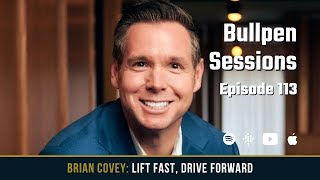
This is a Bullpen Sessions episode (host Andy Neary) interviewing Brian Covey (former pro goalkeeper turned real-estate executive and author). Brian recounts growing up in Memphis, winning multiple high-school state championships, playing at University of Memphis and professionally (including with the Nashville Metros in the USL), and overcoming physical/size limitations by emphasizing decision-making, foot skills, and leadership as a goalkeeper. He describes the transfer of those lessons into business as a VP at Lone Depot and a Forbes Real Estate Council member, and explains the genesis of his book Conversations with Covey (practical lessons, mentorship, and stories of adversity). Core themes: mindset & decision-making, leadership and team organization, overcoming adversity (rapid action, gratitude, small daily steps), habits of successful entrepreneurs (gratitude, fitness, continuous learning, team-building), and designing exceptional customer experiences. The book is available on Amazon; audio version in production.
Questions this video answers
Memphis, Tennessee.
Franklin, Tennessee (just south of Nashville).
Goalkeeper; played professionally including with the Nashville Metros (USL).
Conversations with Covey: How to Win at Life No Matter Where You Are.
Amazon (hardback, paperback, Kindle; audio edition noted as in production).
Chapters
And one. All right, I'm excited for this episode on this week's Bullpen Sessions. Anytime I can get an athlete from a sport that, you know, I played as a kid, but I did not excel at once. I got into my teenage and high school years. So, Brian, Brian Covey, I am excited to have you on the Bullpen Sessions. Welcome aboard, man.
Andy, thanks for having me. I know we got a lot of mutual friends and fellow former pro athletes in that mindset. We typically get along really well. And I had some friends that were baseball players through college. So, hey, you got to respect the sports and the athlete mindset. That got you where it took you as well.
Yeah. And I could already tell Brian, you know, you and I just met offline. If you're listening in and you're. You're needing. You're in need of some energy today, this is going to be the episode you want to listen to. So, Brian, let's just level set Somebody tuning in right now saying, okay, who in the world is Brian Covey? Why don't you just start a little bit about where are you from and maybe where do you live today?
Yeah. Background. I grew up in Memphis, Tennessee, and my parents both still live there. My brother lives there and all that. And that was a great community for me to grow up with soccer. And I started from a young age, literally, my brother's five years older than me, so I started like that younger brother. I was on the soccer fields at probably two, three years old, chasing him and his friends around, and grew up, went to high school there. Our high school team was most well known for. We won three state championships. We had pretty unheard of. There were four of us that went on to play professionally, not just college, but on. So we had a pretty unique high school team that was ranked top in the country, went on to play collegiate at University of Memphis. Ironically enough, there's a backstory to it. I thought I was going to another college. The coach retired, ended up getting picked up by University of Memphis by a phenomenal coach and ended up being one of the best choices I could make, then moved on through the pro ranks a little bit there as a goalkeeper, which those of you that don't know, I am not six feet tall. I am not your prototypical goalkeeper. So I had to fight the odds. From an early age, I realized that it was more about physical and that kind of attribute you're given. You had to work hard, you had to be intelligent, and a lot of things that have carried over today. But fast forward to now got three beautiful kids. My wife and I have been married almost 19 years this August and we live just south of Nashville in Franklin, Tennessee.
That's awesome. Great, great introduction. So much to unpack because so much of it resonated with me. Number one, I played soccer as a kid. I was pretty good at it. I think when I went out first, first league was U8, right?
Right.
Yeah. Balls were a lot smaller and as you remember, had some early success in soccer, but I ended up gaining a lot of weight when I was about 9 or 10 years old. So guess where they put me? They put me in the goal.
But the other part that resonated, two parts was I was not a tall. I'm not a tall individual myself. You know, five foot nine is not what I would call the prototypical size for a pitcher. So that, that definitely hit home. You're. You two played a position at a very high level with a. With metrics that wouldn't be the norm. And so let's talk about that. You know, early on playing soccer, Brian, at a young age, were you always a goalkeeper?
No. So around I had made the. It's kind of interesting transition. I made the state team, which is kind of like ODP Olympic development. You move on to regional team. And that's where the separation started is I was a good enough field player to play in the field at like a state level. When you move up to goalkeeper at that next level is where I got selected. And they said, hey, you're good. I played basketball and at that time, what was weird is I grew and I can relate to what you're sharing. I was a little bit overweight. Unfortunately, seventh and eighth grade is where I started to kind of make a shift. Ninth grade really got healthy, but I was about 5, 8, 59 at that age. Didn't grow much more after that. They put me in the goal and then I ended up going on to play on the Olympic team and all. But that was where I had my field skills. Paid off later in my career is I always had that passion and drive and would work on my foot skills, which at that point, look, a lot of goalkeepers didn't have foot skills. They were over six feet. And what they had was height and genetics. And what I realized was at a young age I was going to have to have other things like intelligence up here and I was going to have to be great with my feet and a lot of the style would play out of the back and just to be someone that they could have an outlet and they could trust with the ball at their feet, which at that time, goalkeepers and even watch some today, that that's an area they have to continue to work on. It's not, it's not normal.
Well, and I think one thing I respect so much about the game of soccer, they call it the beautiful game, right? Like number one, people don't realize the strategy that goes into a 00 tie. And the fact, if I'm repeating this correctly, soccer players are running probably what, six to seven miles on average?
That's the norm. Yeah. Some typical less, but yeah, that's about right for a 90 minute game.
So as a goalie, where you're not running up and down the field, back and forth and across it, what skill set? You know, I remember again growing up playing soccer, I started off as a forward and then ended up in the goal. What would you say, what skill sets did you have to have back sitting at the goal where you can see the whole field in front of you, maybe, versus being up at the front as a forward where your job is to try to score.
I love this question because now that I've gone on to get my B license and I coach, my daughter is actually 14. As a goalkeeper, the number one thing I would share with you, if you listen to any great goalkeeper, it is absolutely the mindset and the ability to make decisions. I put that before the physical side because yes, the physical side matters. But look, when you get up to a certain level, some of the physical attributes, they're going to be very close to each other. So I start there because decision making, meaning, am I quick off my line? Am I good with my feet? Do I understand how to read the ball on crosses? Do I understand where the ball is going to be? Can I organize my team? And something I would share as a coach and I still do, is the best save as a goalkeeper is actually the one you didn't have to make. Meaning I organize my team in such a way that we shut off the offense on the other team that they don't get a chance to shoot. That's the best save. Yes, the wonderful saves that we're diving upper 90 and we're making these beautiful, you know, acrobatic, gymnastic plays. Wonderful. You need to be able to do that. But if you can't organize a team and have leadership and make the right decisions at the right time, you could actually cost your team a goal. And you'll see this today. Even some of the elite in the Premier League World cup, they make the wrong decision. About coming off their line too fast, maybe they didn't come off their line. So that decision making is there. And what I would tell you what I had to fight with, you know, Andy, for me, I wasn't a tall goalkeeper. I was just under six feet. So I had to time crosses in such a way that my timing and decision making made me look and feel like I was a 6, 3, 6 4. Because my timing, I had to be at a jump high. But the timing of being assertive and winning the ball was important because as you move up college and professional, the ball is played through the box quite a bit. And so you got to be able to do that and then also go back to smart decisions out of the back. Because when you win the ball, you do not want to give it back to the other team and keep that pressure. And I looked at it as, look, I was an on field coach and that's a lot of the leadership principles I've taken off the field. But I would say those are the things, right. And you look at quickness, ability to read, there's a lot of speed and agility, a lot of things that are there. What people missed in conditioning though, is I would run with the team. I was the guy still trying to do the two miles in 12 minutes. But I was also working on a lot of plyometrics, my quick twitch. I had to be in a move fast, make quick decisions and make sure my body followed. So I'd say in a nutshell, great goalkeepers are able to encompass all those things today.
Well, I get my head went so many places when you said that. Number one, like watching a Premier League game, for example, rarely do you see the goalie grab the ball and then just punt it downfield. It's probably rolled to a teammate. And that strategy that's going on. And when you're watching the game on tv, you're following the ball to the other side of the field. What you don't see is the goalie back here is still talking to his team. Like you said, you're the chess player. Yeah. And would you say I'm curious because like in the game of baseball, you see so many catchers go on to be fantastic baseball coaches because they were the quarterback of the field.
Yeah.
In the game of soccer, is that same thing hold true where a lot of goalkeepers go on to be very successful coaches? I'm curious.
Yeah, there are a lot. And I think it's that perspective of being in the back and seeing the field and understanding, wow, if we move this way, this is what happens. This is the result. And it's one of those, I tell people, is you're in the goal. You make enough mistakes over time because nobody really plays a perfect game. You learn what works and doesn't. But I think that vision of seeing the entire field is something very unique. And so I know I was growing up, I was blessed. I had my club coach. So our travel team, we obviously played at a high level and competed. He was actually a former goalkeeper for the Polish national team. And so I was fortunate and all through. It's a specialized position that I watch even my daughter today. Not only, you know, Andy, she does the team practice, but she does speed and agility, and she has specialized goalkeeper training. So imagine as an athlete, you're getting all of that training. And so it is. It's a very different position. Look, you wear a different color and uniform than your team, so you already stand out. You're in the back. You are the last line of defense. If things go wrong, no one's really looking at, hey, who. Who did they beat to get to you? It is at that level, you're a great goalkeeper. You're expected to make a lot of those saves. And so there's a lot of pressure that comes on. But I would say, yeah, that transcends today into leadership, coaching, and a lot of areas that I think if you can rebound from that, your confidence and how your mental toughness is built, there's a lot of things you can take from that and go do successfully outside of the pitch.
Well, and you always think about the YouTube videos, highlights of soccer games. You see where the goalie creeps out a little too far, and then that defender on the other side of the field boots the ball down over the goalie. You know, it bounces and rolls into the goal. You know, I gotta believe, too, you and I are. You and I are exactly the same age. Training back when you were in college. High school and college is probably a lot different today than it was back then, especially the specialization for goalkeeper.
I'm curious. So, okay. Very successful high school soccer career, three state championships. What resonated with me there, Brian, is I came from a smaller town. We didn't win any state titles. We made a state championship my senior year. But out of my one team, three of us went on to play pro baseball. And so, you know, we. You would think we would have won more state championships with that, but we didn't.
You go on to Memphis, have a very successful career, and then you get the chance to play at the pro level.
Yeah.
And I believe if I have it right, you were with the Nashville Metros. Yes. It's at the USLA league.
Yeah, usl.
When you got to that level, Brian, so now you're the goalkeeper protecting a goal at the professional level. How did the game change from Memphis to the pro ranks for you?
Oh, that's a great one. I was actually just talking about this with someone the other day that played as well. And the speed of play and the intelligence shifted quite a bit because everybody in college, I felt like there were really good athletes. They were fast, they were strong, they were powerful. You had that. The teams though, I noticed were think about they're in college and so they're not quite all the way developed. They haven't maybe played pro. The intelligence and I would say the speed of the game changed. Where you get out there and it's literally like you're playing in your conference. Like we were Conference USA back then. And if you were to take the all conference team, it's basically, that's the pro team you're playing every week. They're highly skilled, they're highly physical, but they also brought in an intelligence to the game that you started to learn very quickly why they made it to that level. And it was as much what they did off the field as they did on the field. Right. When you're playing 20 plus games in a season, you got to take care of yourself. So I'd say just the speed of play and the intelligence of the players. No longer could you just rely solely upon your athleticism. And so me, for a goalkeeper, I couldn't always say, you know, in college I can come out for this cross every time I know I'm going to dominate my box. In the pro ranks, you better know who you're up against and know your opponent well because there may be people on that team that is not the right decision for you to come out of them. Right. And just smart.
That's such a great progression too. I think in high school one player can dominate a game. Right. And then you get to college where guess what? We were all hometown heroes. Everybody on that roster was all conference, if not all state, then you get to the pro level and now you're not dealing with just some of the better players in the area or even the country in some cases, you're dealing with some of the better players in the world.
Yeah.
And it's just a totally, totally different level. I'm going to ask one very goalkeeper specific question and then I want to move on to chapter two of your life, which has been equally successful. You're sitting in the goal, it's penalty kick.
Oh yeah.
And that guy is staring down at you. As a goalkeeper, what's the decision you have to make in that moment? I'm curious.
So what I watch and this goes back to the mental strategy. If it's not too early in the game. I've probably scouted the team or I've seen them play for let's say 90 minutes maybe. I've seen them play for 30 minutes. I know if they're right footed or left footed. I know their tendency to shoot to this side versus that side. I as a goalkeeper was very. I had to use my intelligence to overcome, you know, obviously some of the not being over six feet and some of those things I would know on a regular basis. Which side did you prefer to shoot to? Look, you might have already shot on me. If you're a forward, which typically midfielders or forwards usually take the penalty kicks, they've probably already had a shot on me or I've seen them warm up, I've seen them play another game. I will know your tendencies and I will watch your body language as you're approaching the ball. Prior to you shooting though, there is eye contact and I tell everybody it matters, your confidence in the moment. I'm jumping up and down, I'm kind of moving to the side, but in a very calm way. I'm not going crazy and I'm showing them I'm confident. This is my goal, this is my box. And at a point before they shoot, you need to have at least my strategy was have a side that you think predetermined they're going to shoot to because if somebody puts it far in the corner, look, you can dive all you want. Spks you are not getting to like you see it today. So I would have that viewing of them. I would watch their body language up to the ball. But there comes decision time and you got to make a choice. If you wait to react what I found at the collegiate level in high school, you might still be able to react and make the save. Pro level, you need to have had a side picked out and be going all in because look, if you don't dive, you look silly if you dive the wrong way. Well, at least you went for it. They were expected to have made it. And so I thought, well, why not just go all out and hope that you make your body as big as possible and you'll save some. And I loved Penalty kicks, because it was as much mental as it was skill. I felt like.
Well, and I love what you said, because as a pitcher, you have a scouting report of all the batters, right? You want to know their tendencies. And once in a while, you may know the tendencies. You may make the right pitch. If he puts it in the gap or over the fence, you got to tip your cap, like you said. He puts that right in the upper right corner, where you literally cannot extend your body far enough to hit. Sometimes you have to go, well played. That's it is the highlights. The highlights to me, that blow me away. And it's usually guys like Cristiano Ronaldo and stuff like that that can take a. Take a free kick from 30, 40ft out, 50ft out, and wrap it into the corner where it's almost impossible for that goalkeeper to get it. This still blows me away.
Yeah, they could tell you where they were going. And even some of those shots, you're still not saving.
That's just like a messy highlight reel. It's like, what? That's not even fair.
No, no.
All right, let's talk about chapter two. Your life, because it's been equally successful. You're the VP, one of the VPs at Lone Depot. You've had a successful real estate career. You're a member of the Forbes Real Estate Council.
Let's just start here with a successful business career. What have you applied from soccer that you use in the. In your business world?
The number one thing I would say, and you probably have the same thing, Andy, is like, that competitive drive for me is, you know, a lot of people set goals, and that's good to have goals. Right, because you have those, and those will kind of bring you forward. But that competitive drive, that competitive spirit that we have ingrained in us is the game's never over, the season's never over. There's always a next season. I'm always looking at how we can continually improve and get better. And that takes me back to just fundamentals as a soccer player from a young kid all the way through playing pro. And even now, as a coach, you can always improve your fundamentals. Having great mentors, coaches around me has been a huge kind of fuel, I believe, for my success, because I'm not going to settle at this level. The next level is always awaiting us. And so I'd say that competitive drive and always believing and aspiring that I can continue to get better at fundamentals, which will make me better all around. I'd say that that's the number One thing that separates me from, from other people that I noticed that I go, I'm just, I'm not willing to give up, I'm not willing to quit. And I recognize I don't have it all figured out well.
And I think what's so important there, and for the listeners that are tuning in, take note of this. Even having been in business now for what, 15 plus years, you still understand that it's what you do off the field that makes you great on the field. And I think so many lose that. I know I lost that actually early in my business career and that's why I failed early on is like, wait a second. It's the same lessons you're applying to sports. It's the, the go, the goalkeeper specialization work you put in off the field that made you so good on the field. By, by, by out of curiosity are, I have to guess you're probably pretty good at strategy too, wherever you've been. Just because again, having been a goalkeeper, seeing the whole field and understanding what each player's role is within has to make you such a good strategist.
So I should tell you a story. I was going for a promotion opportunity to move up in one of the organizations I was part of. I didn't get selected for the role, which, which happens. Right. And that happened in sports. So. So I knew kind of how to respond to it. But one of the people that was on the panel. So imagine there's six people sitting around a table like it's like you would envision in a movie, and they're asking you questions and they're interviewing you. And guess what? There's four or five people that are going to interview that day too. I was not selected. But out of that day I found someone who became a mentor for me for the next three years that took me on a journey of understanding strategy and actually how to strategically plan. Because these words sounded great, they sounded sexy. But what does strategy mean? What does strategic planning mean? Like, all this stuff was foreign to me and it was only about eight to nine years in my career. And I remember this mentor helped me out quite a bit and gave me that book Emotional Intelligence 2.0. And it set me on a journey that I'll never forget back to them. And that was something I had to learn. It was not something given. So yes, I could take some things from the mental toughness in organizing a team. I think there's some natural innate abilities that I've learned through sports, but I had to learn the next level to build Out a team of. There's 11 players in soccer, but our team right now, like our team at Lone depot, is over 200. So now, how do you organize 200 is very different than organizing a team of 11. And I've had to learn that piece of it and then pass that on. So it's a learned skill that I found.
That's awesome. That's awesome. Well, let's, you know, people see you today, they look at your resume saying, damn, that's impressive. You're the host of the Brian Covey show, which is a top podcast, but you also just came out with a book.
And I want to go into this today. Conversations with Covey, how to win at life no matter where you are now. Number one, I'm attracted to the book because David Meltzer is also an author of the book, which. Which you couldn't find a better individual to. To team up with. But I definitely want to go into the lessons that you teach in the book because I think it's so important whether you're an athlete or beyond your sports career in business, for you to apply these lessons you're teaching in the book. So let's just start here. Brian, why'd you write the book?
I believe there was an opportunity that I had great mentors and coaches, like I was sharing in my life that had helped me get to where I am. I didn't get here by myself, and guess what? I'm still learning and going through. But what I recognized was there was a way for me to give back, that it would be very difficult one financially or to have the connections that I had made over those 20 years to actually share all of their wisdom and insights. And so this idea was birthed of what if? And it was during COVID and all these things were happening. What if we could put together almost a virtual best in class? The people that you would pay thousands and thousands of dollars to go hear them do, like a little mini TED Talk. What if you could get access to all these people in the same stage in the same day, same weekend? What would be the lessons that you would want to hear about? And I looked at my development and those that are around me and what were the topics and what were the things that really mattered? And your point, you know, Andy, whether you're in business for yourself and you're entrepreneur, maybe you're an entrepreneur with a company. Maybe you are just, you know, trying to get a business off the ground and you're early on. Maybe you're an athlete, maybe you're a Coach, whatever it is that you do. These lessons were pretty impactful across the board. And so we took everything that wasn't just hope filled inspiration, motivation, that's important, that's in there. You're going to leave feeling good. But the stories of adversity that people share, that they went through and went over, what you will find there is a common thread amongst all of us in that book. We've all failed and we failed big. And if you were to listen to our stories, you'd recognize like falling flat on our face on some things and you don't see that or hear about it enough. So I wanted to share that. But then how do you then move forward? And we gave you actual actionable steps of how did the people I personally selected in the book, how did they move forward to become great speakers, authors, you know, David Meltzer, for example, and everything that he's doing, people that are speaking on stages today, make an impact. I want to bring them all together and share with you behind the curtain, access that you couldn't have had probably on your own. So that was really the genesis and we had a blast putting it together. It was.
Well, I'm excited to dive in because selfishly, this is stuff I'm going through right now. So I know that just having this conversation is going to help me. But before I dive in, we dive into the principles. I'm just curious, how did you cross paths with David Meltzer?
So here's something I learned in Covid. Nobody was traveling like they were before. They weren't on speaking stages. I found David online and Dave and I had a couple of mutual acquaintances. Right. Like we kind of all do. I believe you're that one connection away from somebody really big in your life making an impact. I actually reached out to Dave's team several times and strategically I had reached out, followed his content, engaged, commented, liked it, sent him personal notes about how he was making an impact on me. What I realized with guys like Dave is they're driven to make an impact in other people's lives. I was feeding him reciprocation. He's putting this content out there to impact people. Well, if I don't tell him he's impacting me, I've deprived him of the gift that he's given me. So I actually just reached out to him cold and several times over and over and over and got his attention and said, here's what I have in mind. I would love to collaborate on this very specific thing with you. Got in touch with his team and Went from there. And what I would tell everybody, the lesson in that is don't be afraid to ask. And I did it in a way that I was giving before I ever asked for anything for months. Right.
That's awesome. And I think the lesson from COVID was the world shrunk. You are now closer to those influencers that, that you thought were untouchable a few years ago, now more than ever. And it's just having the guts to reach out and ask and do it in a way.
I would add this as those of you listening to this and like, I'm just going to reach out to all these people. Don't miss the steps. I went in and over several months engaged in what they're doing and gave them feedback and basically affirmed what they're doing without asking for a single thing.
That's awesome.
That's the way. And it was authentic because it was like, man, you were teaching me so much. And that's how a lot of the people in the book actually have become friends, is they've made an impact on my life and hopefully I can reciprocate and make an impact back on them.
That's awesome. Let's dive in because this is like a modern day Think and Grow Rich, except you compacted it to one conference, not a bunch of interviews, right?
Yes.
So let's dive into the first one. This one. I'm really intrigued by the secret. What's the secret to getting on big stages and how to leverage your platform? For me, that's something. As a coach, keynote speaker, you know, I always get great feedback, but I'm like, man, how do I get this thing on a bigger platform? What would be your secret to success there, Brian? On how people could get their, their message, their platform to a bigger stage?
Yeah. So a couple things. One, you've got to know your story. And more importantly, I think a lot of people have moved into that first stage, which is they know their story, but you've got to bring people in it. And so it's how I can take you on the journey with me. For example, you remember back when you were playing sports as a kid, I bring you into my story by sharing it that way versus when I was a soccer player at 4 years old. I'm talking about myself. You need to bring people on the journey, whether it's two people, 20 people, 2,000 people. When you're speaking, you need to speak in a way that brings the audience in with you. If you don't know how to do that today and what Your story is and what your message is. You need to start there before. Before you get on a stage and actually start to do those things. Work on your stage. And probably like you, I'm sure. And a lot of people I've talked with that are speaking on big stages. I volunteer. I'll speak at our church. I'll speak at our soccer teams. I volunteered for, like, Fellowship of Christian Athletes. I started the podcast to start speaking. I'm a guest on other podcasts. I'm speaking at a lot of housing events, doing stuff with Forbes. I'm working on my craft all the time, and that is something that will continually refine. So I'd say working on that is important. The second thing is, where do you find these stages? Well, same thing as podcasting, right? And I would say that's been a platform for me that's allowed me to get on stages, is now that people are starting to open up and do live events, your ability to network and build a group that you'll have an opportunity to speak. Look, I'm not going to be the headliner somewhere. I'm not naive enough to think I'm on that level today. Maybe that happens down the road, but today I'm figuring out how I can get on stages that fit where I am. So find people that are already on stages and network with them. See how they got on stages and find out in your local community today, there are probably toastmasters. There's probably places that you can speak at. And look, it might be for free. But guess what? As you start to build that audience and you start to share that on social, document what you're doing, because that journey, then documented on social media, will allow you to share your story. Someone will find it just like they have with me. And I don't speak on that many stages because that's not really my thing today. But I've shared a lot of that on social when I do speak and when I do go on podcasts, and I've become a great marketer, and I learned how to take those lessons I've learned and to bring people on the journey with me. And kind of like you were talking about Andy's like, well, people want to know how to get on stages. Well, guess what? I'll give you a couple tips today, but along the journey, I'll continually share those things with you. And so I think that's how we've built kind of a tribe of and people on the same journey you're on. You just got to find them. You got to Connect with them and add value, and then you'll be invited to speak on whether it's stages or podcasts.
That's such a good, good message. Because, you know, I think too many people get bogged down on wanting to be the keynote speaker at an event. And instead of trying to go to the event to say, how do I get on your stage? Go to the people that have already been on that stage and model and ask and see what they've done to get to that point. And I love the fact you talked about, hey, hosting a podcast is a form of speaking. Being on somebody else's podcast is a form. Like, there are so many opportunities for people to practice speaking right now, but they feel like speaking means you being on stage. Well, just you sharing your message on social media and other avenues is always a form of speaking. I absolutely love that.
Yeah.
All right. You talk about how to overcome the worst adversity possible and still create an amazing life. There's a lot of people going through adversity right now. You and I are having this conversation spring of 21. There's still a lot of after effects from the last 12 to 13 months. What are some pieces of advice you'd give there, Brian? If somebody's sitting at that, you know, valley in their life.
Man, think back to.
And I'm sure you went through this. So I. I tore both of my ACLs playing soccer and probably some of the lowest points when I were to look back where when you have that, it's not a career ending, but it could have been. Many people have that and don't come back and play. So you know what's there. That taught me some lessons today that when I'm in a valley, whether it's in a relationship or business. And look, 0708 taught me quite a bit when financially, we hit rock bottom. We had just had our two kids, both under two. The market crashes. We're in Florida. We're having to sell our home for, like, half of what we had paid for it. Cashing out, 401k savings gone. Like, everything's hitting rock bottom. I try to look for patterns in those. And I would encourage everybody today. If you're in that, what have your patterns been in that? Do you rebound quickly or do you soak in that? And do you have people around you that are consoling you, telling you, man, just tough luck, you know, that's just the way it is. And, you know, that's just tough. And they're almost commiserating with you. When I Look back the patterns for me. When I rebounded the fastest out of the valley, when I took action faster, I surrounded myself with people that didn't console me the most. They told me, brian, it's time for you to get back up. And great, great advice right now, right? Just tore my bicep tendon. I'm going through this. I can't work out and do the things that I love to do. There's so much I couldn't do. I focused on everything I could do, and every day I started with gratitude. What are the five things I can do today? What am I grateful for today? And I had people specifically in my corner pushing me, saying, brian, you're going to be back stronger than you were, but you got to do the work today. You can't sit on the sideline forever, right? I gave myself a week to kind of let things heal, follow the doctor's orders. It's how fast you rebound out of the valley that's going to prove to yourself, number one. But to other people, how can you deal with adversity? And how do you rebound from it? Because, look, we're all going to have it. You're going to have it again in your life. How bad it is, I don't know. You don't know. But I have found in those moments, the faster I can move forward to take action, whether that's a small step, like in my case it was, I just wanted to get outside and start walking again, right? And just do something. It is those small steps every day that you take when your mind and your body saying, man, don't worry about it. You don't have to do that today. That's the voice inside your set, your head. You have got a squash, and you need to go in that moment when you have that basically that voice saying, you don't need to go do that. You know, you need to do it.
Go do it.
Go pick up the phone, Go make that call. Go reach out to whoever it is you need to reach out to. Send that sales email, follow up with that investor you need to work with, follow up on an opportunity, get out there, get on the podcast, show up. Too many people cancel themselves and they quit on themselves before anybody else quit on them because they quit on themselves. You got to get up, put your shoes on, get back in the game. Nobody scores any points and wins by sitting on the sideline or warming up. And so I use that analogy all the time, is, do you want to be on the sideline forever, or do you want to get Back in the game. You got to put yourself back in the game.
That's awesome. I mean, every. You are going to have valleys in your life, but everything, everything in life is a choice.
Yeah.
And one, the choice. How do you perceive that valley? To the choice of who you surround yourself to get your butt back out of that valley. And number three, the choice of the actions you're going to take and how quickly you take them to get out of the valley. Which leads me to my next point that I want to ask you, because this one's really intriguing. Everybody wants to know this one. In the book, you talk about the simple things top entrepreneurs do to structure their day.
Yeah.
What are some of the common traits you see among the best entrepreneurs out there?
This is what was really interesting. I went through the book and you can read all the backstories and you can look at how successful people are there. What I found is there is some common denominators throughout their day. And I'm going to start with one which was shared a minute ago about the gratitude piece. You know, psychologists have said, and my dad's a psychologist, by the way, so if I speak about, like, the mental side and like, how that all works, it's because I was a psychologist, kid. Right. It's very hard to be sad and angry when you're practicing gratitude, because gratitude is an action. Right. It's not just a feeling. If you actually say, you know, God, I'm grateful today that I have a roof over my head. I have food today, I have shoes. I have an opportunity to go earn money today. I have an opportunity to serve someone today. It's hard to go through gratitude and have your other feelings. So I would say that part I have learned with all the successful entrepreneurs, they find what they're grateful for and spend time there 80% of the time, versus the other, where unsuccessful entrepreneurs are 80% of the time. Tell me why it's not going to work, why it can't work, why they don't have enough money, why things aren't where they should be beating themselves up. That is not a recipe for success. So that'd be number one. Number two, I believe it is physical fitness. And a lot of people skip this. Whether you're walking, Whether you're doing CrossFit, whether you're doing like I do, Iron Tribe, whether you're cycling and doing those things, there is a connection that is undeniable between you getting out and pushing your body in a state that's uncomfortable. Because every day, if you get uncomfortable soon enough, you're going to be comfortable being uncomfortable. And there's a mental switch that I believe is flipped that when you are riding your bike, and I'm sure when you're cycling and you push through that plateau, if you're like, man, that was really hard. I'm breathing heavy. I got the lactic acid in my legs, but I pushed through it. Guess what? The next time I know I can do it, and the next time I probably have a little more capacity to do even more. So I'd say you need to push yourself, because the physical benefits we all know of, our heart, our mind, our body, all those things matter. People that are successful entrepreneurs, you need to have an engine that can run. You're going to work hard, you're going to be running at a fast pace. You need energy. Well, help yourself, build and sustain more energy with physical fitness. I like group classes. It kind of helps me with the whole thing of it gets the social aspect, but it also gets the physical aspect. And the last part, I would tell you, number three, all successful entrepreneurs have a strong innate desire to. To learn and grow. And they recognize they don't have it all figured out. They're willing to take risks, and they surround themselves with mentors and coaches and people that are doing what they want to do and they're learning the skills that they know that are necessary. And I would even add, Andy, they build teams around themselves. Once you know yourself, I know what I'm good at and I know what I'm not good at. I've built a team around myself to say, this is the people I need around me for us to be successful as a team. Because even as an entrepreneur, it is a team sport. You're not going to win by yourself. And you need people around you that will push you, motivate you, encourage you, but also make you and whatever that service is, you provide better.
I don't know why I thought of this, but it made me think of, you know, time and time and health are the two biggest assets we have in our life, right? And I heard a Jesse Itzler interview recently where, you know, he's one of the owners of the Atlanta Hawks and one of the team player, one of the players dads had said, jesse, you know, can you have a conversation with my son? He wants to go buy a Lamborghini. And Jesse's advice to the player, he didn't name the player's name. He said, listen, if you want to spend money, go put a massage room in your house and hire the best masseuse, the best PT that you can possibly hire so that you can elongate your career and instead of buying a Lamborghini, you can have a hundred million dollar contract in five years. And I was like, that's genius. Because we all think about the stuff, but we don't think about the investments we're making in our time and our health. And so I absolutely love that. Well, the last one I want to talk about and then we're going to wrap it up, Brian, is you mentioned experiences. Creating incredible experiences is table stakes today. And as a coach, somebody who's going to be hosting retreats in the future, who hosts masterminds, I am so curious, like to you, how do you take an experience or how do you create an experience for your customers that are next level?
Wow. I think it's going to vary depending on what the services you offer. But if you look at just core DNA of human beings, right? And so when we kind of take our customer, that ideal avatar and we think about why did they come to us in the beginning and our product isn't that sexy in our world. So I'll take that as an example because it's probably tough for some. You're getting a mortgage. Well, you didn't come to us to get a mortgage, right? You didn't come to us to get a debt and to have to pay that off and to pay that back and interest and all that stuff, that's not sexy. That's probably not fun. So where are the areas that I can make that simpler, easier? You actually came to us because you wanted a home for your family or for yourself. And you had dreams and aspirations of why you wanted that home. So that experience. What we have learned is today technology needs to be your friend. Whatever service you provide, we've all learned whether it's automated text updates throughout the process, people want regular updates. They want the application, if that is an application process, right? Maybe even to come to a boot camp or mastermind. They want it to feel simple. The last part I would tell you that we have learned with customers is after you've kind of delivered the basic needs, I say is, is it easy to find you? Is it easy to apply? Is it easy to get to your services? Okay, check the box. When they come to you, where are the areas you can over deliver? And in our world, can I save them time? Because look, nobody wants to give me hundreds of pages of documents to get a mortgage. Nobody wants to come to a retreat and have to figure out all the details of what hotel do I need to be at? How do I get there? Where's this? You need to make it so stinking simple for them that they can just show up and be focused and receive the value and the coaching and what you're providing and where are the areas you can over deliver. And it's small things, right? So when someone shows up, let's say it's a coaching mastermind. And I've been to several of these. Gear is a simple way. I love this. If they show up, it's a way for you to brand it, right? If they're coming to an event with me, do I have jackets, T shirts, handbooks, pencils, pens? People love free stuff. Give them gear that also is going to rep your brand as they leave. And the last one is, and this comes back to psychology. Everybody has a desire to be affirmed and for connection, I believe. So when they come to your event or they're going through the process, the more relationships and touch points that you can have them connect with people and have their story connect. What we try to do in the mortgage application is I need to know you so well that I know where your kids are going to school. I can add value. Do you have pets? Can I give you advice about where to take your dog to the groomer? Like all these things you might not think about is the mortgage process. But guess what? If I give you those tips and you're moving new to Franklin, Tennessee and you need those connections and you need where to connect up with people for those services. I'm not just your mortgage person now. I've become a connector for you. And I found the church you want to go to. I found out where you want to go work out. And if we started to view ourselves in more of a holistic view of how can I serve this person might not be my product or service, that's actually the end result, but I am the person that's going to add value in this person's life. You can do that in so many ways. And I'll steal one from Jesse because since you brought him up, one that I'm starting to implement is he talked about sending, I think it's two or three memo, like voice memos, calls, handwritten cards a day and how that stacks up to almost a thousand in a year. What if you were to actually treat your customers and your team members that way and you actually started to recognize them in a way in two or three a day? We can all do that. That's a choice we can make. And I think that's where the great leaders, the great entrepreneurs, the people that create these great experiences are gonna do the small things. It's back to fundamentals in sports. If you do the fundamentals well over time, consistently, you're going to win.
Yeah, I, you know, because I think so many people with experience, they instantly go to the gear, the hoopla, the, the, the. The all the, the, the. The flashiness that you see at events and things like that. But sometimes the experience you want to create a wow experience, keep it simple, deliver a result and let people know you care.
That's result and showing you care because they may leave. And if you can help them make one change that can be a ripple throughout the rest of their life, man, why not be the catalyst that does that for them? We all have the opportunity every day to do that.
Yeah. So again, it's conversations with Covey. How to win at life no matter where you are. Now, Brian, what's the easiest way and the simplest way for people to get a copy of the book?
So Amazon, they've been great. They've got Kindle version, they've got the hardback soft back there. We're actually working on the audio so those that like to hear it read. And the audio version, we're finishing that up now, but Amazon has got it and the outpouring of support on that.
Spin killer, so that's awesome. Well, I'm going to put that in the show notes as well, the link to the Amazon so somebody can buy that book directly. Brian, you're. This episode was full of nuggets, man. I can't thank you enough. We're going to actually wrap up by going around the diamond here with four questions. So you don't know what these questions are. I'm putting you on the spot. And just give me the first question, the first answer that comes to your mind. You ready?
Okay, let's do it.
All right. Being a soccer fan, who is the best team in the world right now?
I grew up as a Manchester United fan, so I got to go with, man, uh, ooh.
One of my clients is a diehard Manchester City fan, so I hope he did not hear this.
I know. Hey, I will support them with Zach Stefan in the goal. I can, I can give them some love.
Awesome. Okay, you're in the goal.
Who is the one player that you've watched growing up or today that you would love to see standing on the other side of that ball?
I got to go with Messi because of the physical side that he wasn't the tallest and most physically impressive. But I got to imagine the hours he had to work to have the skill level and what he does. And I'd actually like for him to have scored on me and for me to make a save, of course, as well. But that would be. That'd be an encounter. I'd love that.
That's awesome. Now, let's go to the business side. Last two questions.
What? What one book? If there's one book out there that has changed your career or impacted your life the most, what is that one book?
That's a good one. I'm going to go with extreme ownership. Jocko Willen.
Love that book.
That came at a time in a season that I needed it, but I have referred back to it so often. And then the dichotomy of leadership. And there's guys I've followed since then. I would go with that. Extreme ownership changed my thinking and the.
Stories they share in there. Just talk about sucking somebody in with your story. Holy cow. Last one being, we talked about events and energy and influencers and excitement. If there's one event, if there's an entrepreneur listening in right now, there's one event they should be attending right now that you've been to where you have seen energy unlike anything you've seen before. What would that event be?
Oh, that's a good. So this last week, I wasn't able to travel yet with my arm, but Bradley put on one that had some people there that was killer. For those that are part of the Arte Syndicate, I'm part of that group. That's Ed Mylett and Andy Frisella. They're putting on a live event in May. So if you're part of that group, that would be killer. Another one, one of my coaches that I work with pretty close here, Coach Michael Burt is putting on his first live event later this year in October. I believe it's called Flip the Switch. I'm gonna put a. I'm gonna put a plug for him because I know the guys he runs with. I know the people he hangs around with from like Tim Story and some of these guys. Like, it's going to have not only inspiration and some of that motivation, but he's going to have some of the best coaches and from the insurance world, like, I know you spent time, financial planners, entrepreneurs. That one. I think there's something special about that first year conference and I know some of the people that are already going to be there. So I'm going to be there.
That's awesome. That's awesome. Yeah. I think people are craving live events again. I think for most of us, we're excited that they are coming back here, so. Well, Brian, man, I can't thank you enough for taking time today. I know you have a very busy calendar, but. But I hope people got as much from this as I did. Whether you're an athlete, current former pro athlete, or somebody who has now gone on to chapter two of your life, this thing was full of nuggets. And I can't wait to actually get the book myself because there's stuff that I know I'm going to be able to apply to my own business. So one last time, Brian, thank you for joining us.
Andy, thanks for having me, man. I love. I love what you're doing. And it's cool for all the athletes out there, man, like, think back to wherever you are. There are things we've all learned and we've been built for something even bigger than what we did on the field. And so take that out, because there are people that I believe we went through some of that tough training and mental toughness to now be able to serve in our communities and do something really big.
Well, I appreciate that. And especially if you're an athlete listening in, someday that sport is going to come to the end, come to an end. And it's so easy to let that sport define your life. And the purpose of this podcast is to help you bring that confidence and clarity to know that there is a chapter two and you can leave head on to chapter two. Very, very successful. So, Brian, thank you again. If you're listening, when confidence and clarity collide, you know what happens. Action happens next. Go make it happen today.
More from Andy




If you want producers to succeed faster, help them create a sales message that creates confidence.

Sales isn't a zero-sum game! You can have tough competition and still grab a beer after



Option 1: Meditation, a fast walk, a podcast, and protein. The ultimate morning routine!

How you do one thing is how you do everything. Ill elite producers fuel their body.


Stop living in the gray of maybe! Your job in sales is to get a clear yes or no