12. Paul Stone: Building the Ultimate Wellness Platform
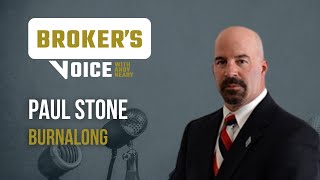
Paul Stone moved from stockbroking to benefits consulting and agency leadership, then joined Burnalong as Director of Strategic Partnerships. Burnalong is a wellness platform with 2,500+ instructors and 15,000+ classes covering physical, mental, financial, and social wellbeing, claiming 4-5x typical engagement rates. Mental health engagement spiked during COVID.
Questions this video answers
Over 2,500 instructors.
Over 15,000 live and on-demand classes.
Approximately four to five times typical engagement.
Mental health — "it's off the charts."
University of Richmond.
Chapters
All right, welcome back to the Broker's Voice. Today I've got Paul Stone with me. I'm excited to have this conversation because Paul is a baseball guy himself. Paul, welcome to the Broker's Voice.
Thank you, Andy. Man, I'm great. It's great to be here. Really is.
No, this is gonna be fun, I think. Is this the first time we've actually ever met each other, like, even though virtually face to face?
Yes.
Yeah. Because we had a phone call, right?
Yes, absolutely. Yes.
No, I'm excited for this because you today, you work with Burn along and I don't know if a lot of people know about Burn along or, you know, more should. And so we're going to give people a chance to learn a little bit about you as well as Burn Along. So I'm excited to have this conversation, but I always like to start with this question. Paul, most of us did not find our way into this industry by design. How did you get in the insurance industry?
You know, it's, it is a funny question. I don't know if you know Mike Lindstrom, but he asked that question of a group of. He consults with a lot of people in our industry as well. And he asked a group of us one time was about 50. It was at a Benefit Advisors Network event. And he's like, how many of you growing up, you know, want to be in the insurance industry or want to be a benefits consultant? And I think one hand went up and that's because his father and his grandfather, you know, and it's like, we all get here kind of weird. So for me, I was an economics major in college and I started out as a stockbroker. I actually trained on in the one World Trade center, trained there for a number of years and actually worked for a firm that's now part of Morgan Stanley. And I was working in pension plans with hospitals and so on up and down the east coast and somehow found my way over to the health and welfare side of things. And I was kind of, I was doing self funded work with, you know, hospitals and larger employers throughout, up and down the East Coast. So kind of got thrown into the deep end. I was working with large employers, self funded, very unique things you could do. But luckily I was surrounded by some very bright people and they taught me the ropes at about 25, 26 years old. So it's pretty cool.
Now that came off the heels of you playing some college ball too, didn't it?
Yes, sir.
I can't let that go since, since you played some College baseball. Where did you play and what was that experience like?
Yeah, thank. Yeah, it's fond memories of that, for sure. Many years ago, but I played at the University of Richmond, which is a small D1 school. We at the time, we were in the Colonial Athletic association.
Conference, which was a, you know, pretty competitive conference back then. I think they said we were ranked fourth in the country, but tons of, you know, tons of fun. Got to travel around, play ball. Who could ask for more? I know your experience. You went on to play some professionally. I think my only professional experience, I played for a summer for a league that they paid us like a hundred dollars a day and paid for our meals.
What league was that?
You know, I have no idea the name of it anymore, but it was fun. I mean, it was just a bunch of guys that play college ball that, you know, we had a sponsor and he was in the baseball and he would pay us to, you know, nothing, basically. Just. Just enough for a gas. Yeah, basically. Yeah.
Yeah. The Richmond Spiders, I love. You know, one thing I like about college baseball is you talked about Colonial Athletic Association. Not a huge conference. Right. By any means. But when it comes to baseball, man, those teams in the, you know, Virginia, I don't know if I'd call Virginia the second south, but those teams in the Mid Atlantic South, I don't care what conference it is. It's damn good baseball.
It was. Yeah, we had some. Really. We played East Carolina, North Carolina, Wilmington, UNC Wilmington. You know, we had a lot of great conf. Teams in our conference, for sure.
Yeah. Yeah. Okay. So now college baseball's over, you're in the industry. You've had some experience as well running some insurance agencies.
Correct.
And, you know, I. I'd love to ask you this question. I don't mean to put you on the spot, but, you know, in running agencies, what did you see, you know, when you look at agencies that run, well, have success and agencies maybe that are on the brink of failure or just not running the way they should. What do you. What are the big differences you see between those agencies run well and those. I'll call it agencies run by somebody who's just. Who's just really good at selling insurance.
Right. Yeah, right. Well, you know, it's. That's a great question. I think it varies a lot, too, on the size of the agency. So just to kind of. My experience was in agencies, growing them from, you know, a million dollars in revenue to $5 million in revenue. So I was in that smaller agency segment. But I will say it always comes down to people, and it starts at the top and it goes all the way down to, you know, everyone. I say down. That's not the right term. But throughout the organization, I think at, at the leadership level, the ownership level, the whatever, you have to have vision, you have to communicate that constantly, have to have ethics, you have to do. Want to do things the right way for the right reasons. And, you know, you hire people that has. Have that same mentality that, hey, they're going to do whatever's right for the client above all else. And they, they buy into the vision that you have for the agency and, and, you know, it all kind of melds together from that. And it's pretty cool. We used. I'm not sure if you're familiar with the collaborative way. It's a way, you know, to kind of communicate in business. We all come from different backgrounds and different languages, and it kind of gives you a common language. And what's so neat about a program like that is. Is pretty evident pretty quickly when someone doesn't fit the culture, you know, and so you can help them with dignity and everything else move on and help them transition. And it's no, you know, no bad feelings or whatever. But it's also really great for the team members that are still there that buy into the vision, that are really in tune with the leadership and all working together to be able to communicate and have those tough conversations sometimes when you have to have them in a loving, you know, I'm for you type of way. So that's.
I, I would love your opinion on something. You just gave me a thought because I've seen a trend in the industry that is a little concerning, and I've actually been a part of an agency or two in the past where this happened, where you have a producer who's really good at selling, right? So revenue's coming in. But if, if you really wanted to be honest, you're kind of a cancer to the team, right? They don't treat the team with respect.
How does an agency owner or a management team inside an agency deal with that? Because the trend I'm seeing, which I think is concerning, is instead of addressing it or potentially getting rid of the cancerous problem, they just kind of put the producer out on an island and let them do their own thing, which I don't see as a benefit to the agency.
You know, it's not. And I wish I could say I handled those situations as well as I should have in the past, but the truth is I didn't you know, because a lot of times it's, it is a lot of revenue and that person is super successful and it's, you know, you know, if you get rid of them, you're going to have to take two steps back to get what was very hard territory to gain, if you will. If you look at it from that standpoint, I will say that looking back, if I had just had a longer term outlook, sometimes those decisions would have been a lot easier to make. And we, we all, we all knew it. I mean, you know, we knew it needed to be addressed, but it's so difficult. And I tell you what else makes it difficult is, you know, in this world, in the consulting world, insurance benefits, it's. Every day is a grind. You know, it's like you're working hard. I enjoyed it, I loved it. But you are fighting for everything you have. You're fighting to hang on to what you've got and you're fighting to get new business to grow. And the thought of taking the time to have those step back moments is sometimes scary. But I do think it's all about the frame of, you know, the time frame that you look at it from. If you look at it from a longer term time frame, those get an easier decisions to make. If you're looking at it from a year or two, they're tough because you know it's going to take you that to get back.
I think you just, you just gave the punchline. I think that's what it is. Our industry tends to think very short term, right. And, and they're looking at tomorrow's revenue and it's easier to let that individual stay within the organization. If they're still bringing in, if they're bringing in revenue tomorrow, immediate revenue, you're going to let that situation kind of fester over in the corner versus if you had the long term mentality, you're like, I get it, they're producer, they're producing, they're selling, but they're not a long term fit.
It's like a lot of things I think, you know, Andy, it's like, you know, it's a pain every now and then. So therefore it's easier to ignore it than to address it. Even though you know that pain is going to keep coming back, it's just, it's not in your face every day. So therefore it's almost like our prospects, the people we're trying to gain business from, the pain they feel isn't, it's not active all the time, it's latent and so in order to bring out that pain, sometimes it has to be like perfect timing or you have to have questions that bring it out. So it does make it active for them.
Exactly. Well now, as recent as this summer you took on the role as director strategic partnerships with Burnalong. So I would love to just hear about that. How's it going for the folks who don't know what or who Burn along is? Why don't you take a minute or two to fill us in what you guys are doing and how you guys are helping. What's, what's the niche you play in the health insurance space?
Yes, absolutely. I think I'll start with why, you know, Burn along and who they are and why. That was very attractive to me. So Burnalong is a comprehensive well being platform. It's physical, mental, financial and social well being. And the really, I guess, star that Burn along has is we tend to be able to get engagement from a population that typically doesn't engage with these type of platforms. So you know, the 10 to 20% of folks who are ex athletes or that are into working out, running, yoga, whatever the case might be, getting up and meeting their buddy at the gym, whatever the case might be, they're going to do their stuff. I mean you don't need programs like Burn along to get them engaged. But what about the other 60, 70, 80% of the population dependent on industry? And Burn along does some really unique things there to get engagement. So number one, our diversity of programming is unmatched. So we have over 2,500 instructors, over 15,000 live and on demand classes. And I say classes, they could be on financial budgeting, they could be on understanding beta and finance and how that relates to variability in stocks. It could be about how to meditate, it could be how to reduce stress, be resilient. It could be your typical yoga, Zumba, whatever class. But the point is, is that we have 2,500 instructors that look like the population of the employers that we're in. They're not all 25 year olds with six packs. You know, they match the diversity of the population so people can find relatability and we can meet people wherever they are. You know, we have folks that come on the platform that say if I could walk a mile today, that would be a great accomplishment. And then a year from now they're, they're running 10K. So we use machine learning to match the programming to where they are, to meet them wherever they are. So we, the machine kind of learns what's important to them at that point and directs them to content. Kind of like a Netflix, if you will. It knows what you like and so on. We also have a very unique social component. So Andy, if you and I were on the site, I could invite you to a workout at 5:30 tomorrow morning. You might cuss me out for that. But, but we could work out together while doing a program and we could interact and we could encourage or give each other a hard time with probably what we would do. But you know, but we could encourage each other. I could say, Andy, that's not a proper push up, you know, come on man, go all the way down. Give me a real good one. But the point is you get that interaction and you, you can imagine some of the stories we hear from people on the platform, how they've been able to stay connected to family and friends across the country or whatever through this Covid period especially. And that's where that's given them motivation to continue and to, you know, further better themselves that they wouldn't normally have. And then lastly for my broker consultant friends, we have client success teams that help an employer and the consultant make sure these programs are launched correctly, that they're get engagement, keep engagement, keep engagement throughout the course of the course of the year. So all that kind of puts together for really great engagement.
I'm curious, how do you ensure that your utilization and engagement is high? Because one of the things I've seen over time with some of the solutions, especially in the wellness space, is they rely on the member, the employee, the spouse, the whoever's in that plan to, to initiate the outreach. And that's where often that gets, the utilization gets hit. Right there is people aren't taking the time to make the outreach to actually engage with a lot of these great solutions that are out there. How are you guys bridging that gap to ensure that there is good engagement and great utilization?
Yeah, so we average four to five times the typical engagement of platforms. And I know that's just a number and it's great to say, but it's really all the things kind of together that work synergistically. It's the diversity of programming to begin with. So we have specialty programming for people with diabetes, adaptive workouts for people with disabilities, arthritis, cancer, all these things that could get people on the platform to begin with. So it draws them in because of the diversity. Then once they're there, there's programming. Let's say I'm just going to use diabetes because we have this partnership with the American Diabetes Association. I have diabetes. I come onto the site and I might be directed to a program that takes me from what is diabetes, understanding it, and then what things can I do to manage it better? Losing weight, whatever the case might be. And it's a program that we've developed for them. So they're on their site, they're doing that because, you know, they want a better quality of life. They'd love to get rid of this diabetes. Then they start going, you know, I've always kind of wanted to learn how to meditate. So they start poking around. They do the search for meditation, or they told the machine that they wanted that. So machine starting to recommend programming me to them. And they start to do meditation. And then it's like, hey, the meditation person said that they like to kind of do that during yoga, you know, so you get all the. The diversity of the programming kind of brings them in and then maybe their 401k, it's time for up for that. So they go, I better check out the financial wellness stuff because I don't know anything about, you know. So it just, again, that helps. The machine learning is important because we keep relevant content in front of them all the time. The social component's huge. You can't imagine. And, you know, we. Everyone on the platform gets four sub accounts that they can give to family and friends. So a lot of times the person working at the company, whose company did burn along isn't the driver in the household of we're going to eat better, work out more or whatever. It's the spouse or even maybe the children. So being able to bring them in is really important. And I can't devalue at all this the customer success teams that we have, because that's what they do every day. They know what's working, they know what's not working. They know different industries, different things work. So they're working closely with the HR department to make sure that we're launching it correctly and then continually promoting things that are going to resonate with their population. So all those things together, you know, it's four different things, but they equal seven. You know, they, they work synergistically. It really works really well.
So I'm curious, given that we are now going on two being in this COVID pandemic.
Yes.
Have you guys. I know you just joined Burn along in June. Have you guys seen a pretty big uptick in any specific one of those categories? Whether it's financial, wellness, physical wellness, spiritual, societal, or have you seen a big uptick in Any specific one?
Without a doubt. I mean, it's mental health. It's off the charts. So every year people on the platform choose their favorite. It's America's favorite trainer. We've used trainer, but it's anyone like the mental health, financial, physical, all are eligible. This year's winner in 2021, it's announced, I think right at September, was really a mental health professional. She had done a lot of programs on resilience and things like that. It really resonated with our, our base and with our subscribers, our members. And she was voted the favorite trainer on the site this year. So I think it speaks volumes to obviously where we are as a country, but I do think, you know, selfishly or patting ourselves on the back, it also speaks to the platform and the, the, you know, the way we do things, the fact that we are comprehensive and we have huge diversity in our, in our folks. So.
Cool. Cool. Yeah. No, that's all mental health, man. I don't think we have yet to see the effects of what the two years has done, you know, to our society at large.
Absolutely. You know, and I feel like I've come through this pretty well, but it's still not like it, you know, it still feels weird.
Yep.
You know, and it's still dealing with that type of thing every day.
So resiliency is the one. If there's one word that has to define.
Us today, it's resilient. I think. I think every one of us has to try to be as resilient as we can because that's, that's what we're going to do to make it out of this thing successfully. So. Yeah. Well, I'm going to go back to now. I'm going to ask a couple final questions of you here. One, one is more on the humorous side, if I can ask you. So your LinkedIn profile says Paul Joey Stone. And I asked you, you know what, which name you go by? He said, well, professionally it's Paul, but if we're at the bar, it's Joey. So I need to know what, what, what's behind Joey Stone?
That's interesting. It's a very short answer. But, you know, it's funny. So I always joke around when I talk to people. I say, Paul works so Joey can play. But the truth is I grew up a Joey, right? I mean, I was Jo playing ball in college. I was Joey Joey Stone. That's how everyone knows me, that's known me my full life. But when I graduated and became a stockbroker, you can imagine. So here I am in New York City and training there and coming back and starting to call folks. At 20, I was actually only 22 years old. I was a September baby. So I graduated early and calling people asking for a lot of money. It's like, hey, it's Joey Stone. And, and they're like, I could just feel the, the kids calling me for money, you know, So I just said my dad was Paul. I was a junior and he had passed away unfortunately, just about that time. And so I was like, you know, I can become Paul now. And so that's kind of what stuck from a business standpoint. And you know how it is. Once you become something in the business, it's hard to go back. But most times and family and if you called me Joey now, it would make me, you know, my heart warm.
So was Joey your middle name?
Yeah. Paul Joseph.
Okay, okay, okay.
Paul Joseph Stone.
Yep. So you've been in the, you're a veteran in the industry.
Yes.
And we just, we just talked about resilience.
Yes.
If there's a young advisor listening to this, because you and I both have had this conversation. One thing I think we do lack in the insurance industry is good effective training for young advisors. What advice would you give a young, that 22 year old version of Paul that's getting into our industry today? What advice would you give him?
You know, I think about this often because one of the most.
Rewarding things running agencies was seeing young people come in and really grow into like just beyond their belief, basically. And, and you know, Andy, you and I had it because we were athletes, so we had mentors, we had people push us every day. We had no really other choice than to be resilient. And in baseball, good lord, you fail most of the time way more than.
Seven out of 10.
Yes.
It's a, it's a Hall of Fame hitter, right?
Yeah. Better be resilient. You better find a way to be resilient. But what I would say is to find that mentor, whether it's in your agency or someone, and this is, you know, a pitch for you, Andy, or someone like Andy that you can be accountable to, that's been there and done that and can help you get through these times and realize that, you know, today's failure is just a building or step to tomorrow's success. And yeah, that, you know, it's, it's, it's human interaction. It's why our social component of what we do so important because people need to know that they're not alone. In their journey. Right. Whatever that journey is, they need people have been there that have success and know how to help them have success. So I would say find that mentor. Make sure they're, they're, you know, goals and their values are aligned with yours. That's hugely important. And if they are and when they are, then really latch on to that. And again, whether it's in their agency or in their community or someone like you, Andy, who has a lot of experience with that, just do it. You know, it's worth every penny. It's worth every minute, and you're gonna need it to be.
Yeah, you're right. And I think, I think, too, if you're a young advisor expecting and waiting for someone to train and invest in you, you're gonna be waiting a long time. You've gotta go find it. So, last question. If an advisor is listening, a company's listening in and they want to learn more about Burn along or connect with you. What are the most effective ways to do that?
Obviously, I'm on LinkedIn big time, as you said.
Joey Stone.
Exactly. Yep. My email address is okay to give that out? Yeah, absolutely, Paul, period. Stone@burnalong.com and you can always call me. It's. I'll tell you what, I will leave the number off for now, but not that there'll be a flood of calls, but email LinkedIn, probably the easiest way to get a hold of me.
Awesome. Yeah, it's. What you guys offer today is something that, you know, we could argue it's always been needed, but now more than ever, especially that mental wellness aspect. So, Paul, thanks for joining us.
Andy, thank you.
You bet. And anybody else has been listening in. I hope Paul's words have been insightful for you. Paul's journey is one that many of us have taken. Most of us didn't get the industry by design. So my ask of you is if this gave you a little clarity. I hope it gave you some confidence, because when you get the confidence, you know what happens next. You take massive action. Go make that action happen today.
Yeah.
More from Andy




If you want producers to succeed faster, help them create a sales message that creates confidence.

Sales isn't a zero-sum game! You can have tough competition and still grab a beer after



Option 1: Meditation, a fast walk, a podcast, and protein. The ultimate morning routine!

How you do one thing is how you do everything. Ill elite producers fuel their body.


Stop living in the gray of maybe! Your job in sales is to get a clear yes or no