126: Michael Clark: Leading To Confidence In New Ways
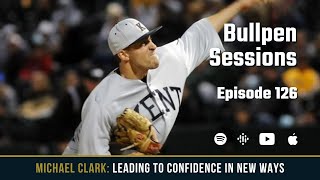
Michael Clark played college baseball at Kent State and made it to the College World Series in 2012 before injuries ended his pro career. He now runs Promentor, an app that connects young baseball players with mentors for virtual training and advice.
Chapters
And one. All right, welcome back. I am excited this week to have Michael Clark join bullpen sessions today. Michael, welcome aboard.
Andy, thanks for having me. Excited to be here.
Yeah, man, I'm, you know, this will be a fun conversation. One, you're an insurance brother, right? So we're not going to spend any time talking about health insurance and the intricacies of health insurance, right? That, that doesn't, that, that's not sexy. That doesn't interest anybody. But what I really want to use today's episode, Michael, is to talk about one, your baseball career, because it's obviously, it's very similar to mine and this is why I'm excited to talk about it. But more importantly, I want to talk about the work you're doing not only outside your career as an insurance advisor, but what you're doing to help young baseball players today, which I think is really cool. So I thought a good.
Place to jump off from would be your high school.
Career because I did a little research on you and I'm kind of a sports geek and I noticed you went, you started at Massey in high school in Ohio and ended up transferring to American Heritage down near Miami. Now, I also know those are two football powerhouses, yet we're talking a baseball story. So I'm actually curious back at that age, what led you from transferring from Ohio down to Florida?
Yeah, so I actually started at a school, it's a smaller private school in Akron, Ohio, which is called Akron Hoban.
Okay.
And up until about the last five or six years, Hoban was not known as a perennial powerhouse when it came to football. Now they've won, I think five out of last six state championships. So they've, you know, obviously had a lot of success lately. But at the end of my, or actually the middle of my sophomore year, my mom was who very involved in my career as an athlete for all sports, wanted me to transfer to Division 1 school. So Masson Washington was just coming off of a state runner up appearance. They had lost the Saint X and you know, the very, very close game. But they were returning a number of their starters and their quarterback was graduating who was a, you know, three or I think a three or four year starter, was a senior. And so it was a great opportunity for me to transfer into a Division 1 school that had, you know, an offensive line that averaged 270 pounds across the board, had a couple three, four, five star athletes. And so, you know, we decided to do that. We relocated, we bought a house down in Massillon and I transferred to become A Tiger. And if anybody's familiar with, you know, the Massillon Washington Tigers, there's a movie they made, I think, back in, you know, the 90s. Go Tigers. And it was kind of the story before, you know, the Odessa, Texas type rivalries. I mean, it is a football town through and through. You know, so much so that, you know, boosters, I mean, it's incredible some of the stories that you hear over the years of, you know, how football has taken presidents. You got a huge indoor football facility. So as opposed to, you know, 20,000 seat stadium, you know, brand new turf almost every other year. And then they've got an indoor football field as well, you know, for as a training complex. But great people, you know, great tradition and played there for two years. Had the injury bug, you know, similar to, I think a lot of people in baseball as well, but couldn't stay healthy. So I, you know, wasn't recruited at the level that we were hoping I was going to get recruited at and decided that, you know, know, maybe the path isn't football. So transferred, you know, then when my mom did the same thing she did for me when I was at Hoven was okay, you know, where can he go to be, you know, what will give him the best opportunity to get seen by scouts? So American Heritage was coming off of, I think a national championship or national runner up that Eric Hosmer, a couple of big name guys that, you know, ended up making it to the show. And it was also a place that she loved to visit, which was, you know, right outside of Fort Lauderdale. So we, we packed up and we moved down there and it was myself, my sister and my mom. And you know, we, we went in, I think mid year. My, actually right after the football season, my senior year, we transferred down. She rented a place and got in there with, you know, American Heritage and, and got connected to that program. And it was, you know, just the same tradition that I think Maslin had on the football side, American Heritage had on, on the baseball side.
But they too have it on the football side too, don't they? Haven't they become known as the football powerhouse?
Yeah, they do. And I think they just set a record with the most draftees. I don't know if they had something on the NFL draft. The most guys drafted in a single class and it was like four or five guys came from American Heritage.
Wow. So we're here to talk about your baseball career. Little did I know you were one hell of a football player. What was your position?
I was a quarterback.
Oh, okay. At a southpaw, right?
Yep.
Yeah. Oh, nice. All right, so you're down at American Heritage playing in, unless, you know, baseball hotbed. Yeah. As a kid growing up in Wisconsin, you look at the kids from Florida, Georgia, Texas and California with some envy. Right.
When did you realize or when did you start getting the looks? And I know you started your college career at NC State. When did you start getting the looks from the major college programs as a left handed pitcher?
You know, I think one of the biggest differences was the network that my head coach had down at American Heritage. You know, whereas up here he had a great network around football, the football coach did. So you could get in front of, you know, any of the Mac schools or any of the, you know, smaller D1 schools that I could have potentially played at. And down there it was, okay, let me make a call. And there's 20 scouts at our first game, you know, so I went from playing in front of maybe five scouts the entire year to we've got, you know, 20 scouts at a, at a game or even a practice. And that was a big eye opener. Another thing too was the competition. I mean, in Ohio, you know, you're lucky to see if somebody's throwing a righty or, you know, even a lefty. That's 88, 90. I mean, they're a stud. People know them in the community and the county. I mean, they're one of the top players. Every team down in South Florida has somebody throw a 90. I mean, and not only that, but they can throw off speed for a strike, you know. You know, whereas up here you just, you didn't see it as often. So.
It was definitely a transition to a completely different environment when it came to not only competition, but, but I'd say the resources too, from, from a.
Coaching standpoint, you know, I'd be ignorant if I didn't acknowledge your mother. That is one supportive mom, you know, and I think about how supportive my mother was. My dad was the head, the head coach at our high school. But when I think of a supportive mother like she was at every game, she was cleaning the uniforms. But taking it to the next level where you're literally willing to move just so your child has a, has a better chance is pretty phenomenal.
Yeah, he left everything. So that's, that's, that's very, very fortunate.
Do you believe making that move down to American Heritage did set you up to play Division 1 college baseball because of the level of competition that you saw at that level versus a lot of kids coming from Small towns or lesser competition, and now they're playing Division 1. It's like, whoa, everybody's all State here.
Yeah, absolutely. No, no doubt in my mind that, that, that played a major role in getting not only more exposure for me, but getting me more exposure to the players around me. You know, I had, I had guys on my team that are still playing, you know, that are. That are big leaguers that just having that kind of type, you know, that type of communication, you know, hey, how should I be, you know, gripping this change? Well, here's, you know, here's what. Here's what you should change. You know, your thumb is too high on the ball versus, you know, in Ohio. I mean, no offense. Again, we just didn't, you know, our head coach was, Was our math teacher, you know, our head coach down there, you know, he played in the bigs. I mean, he had, you know, 15 years under his belt in pro baseball. So the exposure of the experiences that they went through, the training, you know, even the mindset of expectations completely opened up, you know, doors that would have. Would have never been open for me up.
That's interesting. Baseball geek and me wants to know any guys you played with that we are still in the league today.
So. Yeah, I mentioned, you know, Hosmer, Devin Marrell was our shortstop. He's going in and out. So. I played summer ball with Manny Machado.
Oh, wow.
I played summer ball with Nick Castellanos. I played summer ball with Stephen Barron. I mean, you look at the guys that I was exposed to being down there. I played for the Florida Legends and the Florida Bombers, and every single one of them either got drafted or went to, you know, Miami or Florida. Steven Perez, you know, Paco Rodriguez. I mean, a lot of these guys that are household names. Yeah, they were in that small circle in South Florida at the time when I was there.
Well, not only just names, but these are guys playing at the top of Major League Baseball right now. We're talking about some all stars, so. Wow, that's impressive. Well, the transition continued because after a year OR 2 At NC State, you end up transferring to Kent State, back up in Ohio. What. What led to that transition?
Yeah, I was. I don't want to say it was a, you know, highly touted prospect, but I was going in with the expectation that I was fighting for that Sunday position, you know, which in the acc Freshman Sunday was, Was a. Was a big opportunity, a big role for me. And, you know, I went in and I just couldn't figure it out. I couldn't Throw a strike. My head wasn't in the right place. My mom actually passed away as soon as I got to campus, you know, so I was, I was mentally, wasn't 100% there. And then like I said physically I just couldn't get it done. You know, I was, couldn't throw strikes. It wasn't a good place for me and it was the best coach I had ever had. Elliott Avent was, you know, he was an on field general, but in a sense that everybody respected him. You know, you knew that he had your best interest in mind and you know, it was really, it was a very difficult decision to leave, but I needed some sort of stability and coming home and my grandparents were up north, you know, so I came back to Akron, wasn't even going to continue playing. And then you know, they said, hey, Kent State, you know, you should look at them. They made it to a regional the year before. I think they lost the Texas Taylor Youngman. And so I, you know, enrolled at Kent State and I tried out for the team and you know, they want to try outs. Coach Strickland came over and he said, hey, you know, go, go sit on the bench. We're going to, you know, we're going to have you on the team. So it was, and it was great because I didn't, I don't want to say I didn't care, but I was getting back to having fun, you know, versus at NC State. There was a lot of pressure to be the guy at Kent State. It was, well, I don't really care if I play or not. You know, I'm ready to let it go. And it kind of, you know, relit or reinvigorated the flame within me to play the game that I love and the competition. So it was the best thing that I could have ever done. And you know, luckily I went, I walked into two fantastic coaches, you know, so it's not like I was, I mean Scott Strickland was an incredible coach. You know, he's been incredible at Georgia since he left Ken. And then Coach Birkbeck, you know, one of the best pitching coaches in the nation.
Well, and I think that's such a powerful message because today when you look at the kids that are getting recruited out of high school and baseball, honestly my opinion is a lot of kids are out punting their coverage with the schools they're going to because they got exposure at some tournament or some camp and then they go there and they don't play. And you know, these mid major we could probably call Kent State, just like uw Milwaukee was a mid major, division one program, but there's some damn good baseball being played. We're about to talk about one really cool story, you know, the Kent State 2012 season. But I want to go back quickly and ask you a question because I want parents of players to hear this. Out of high school, you got drafted, right? You got drafted in the 32nd round by the Red Sox. Why didn't you sign?
I actually went up. So when the Red Sox had their draft that year, and I don't know if they still do it, but they invite all the players to come up and play at Fenway for like a draft D game. So my whole family and I got drafted on my birthday, you know, so we all made a big ordeal, ordeal out of it. My grandmother. My grandmother, who doesn't fly, got on a train, went to Boston. We met there, you know, we made a. We had a really nice time. Got to meet, you know, entire ownership, coaches. Everybody was there, and I played in a game and, you know, it was, again, it was. It was a great experience. But my mom had always. And she wanted me to sign, to be honest, you know, she wanted me to sign. And I'm so glad I didn't, because if I would have signed, I needed structure. You know, I needed somebody to not just teach me baseball, I needed somebody to teach me life. And that's exactly what NC State and Coach Avent did. And, you know, the things that have made me successful in my career now.
I learned on the field or I learned, you know, in the locker room from, from coaches, you know, so. And especially in baseball, I mean, I think baseball is one of the greatest teachers of all time. You know, I agree. You're going to fail. No matter what you do, you're going to fail. And it's about that next pitch, it's about that next at bat. And that's. That's what baseball teaches you.
Well, thank you for sharing that because, you know, in the short time I was in the brewers organization, I remember playing with a few guys that came out of high school. And I mean, these guys are drafted 30th, 40th, you know, 40s, you know, in the 30s, 40s, rounds. And one, the money's not that great, right. As a signing bonus. But two, these kids only lasted a few years, but now they have nothing. Yeah, like you said, they lack the structure. So I'm glad you said that because I think for Most, when you're 18 years old, you're still. Let's Be honest, especially as a. A boy, you're. You're lacking structure. Yeah. Well, now let's talk about. This is what I really want to talk about. Your 2012 season at Kent State. Timing's perfect. College World Series just ended. And.
Back in 2012, Kent, you had a. Kent State had a good team, but you guys went on a magical run. And I want to talk about this because I love these Cinderella stories. And, you know, going back to the tournament, you guys qualified for the ncaa. NCAA Tournament, right? You, if I have my math correct, you are a three seed in the Gary Regional, where Purdue was number one. Talk about you guys end up winning that region. You knock off Purdue, you knock off Kentucky. Like, talk about what it was like to be a three seed there and knock and end up coming out of that regional.
If I could. Andy, I'm going to take you back a couple weeks before that because there was a moment that kind of lit the fire for us. And, you know, we had a really slow start to that year. I think we were down in Georgia Tech. You know, the first weekend, I think we lose two out of three.
We go out. I know we go out west because I remember we played against Aaron Judge and a couple other guys out there that are big name guys. Chris Bryant and, you know, we just have a very slow start, which isn't uncommon for a team that's in the Midwest, because I think the first time we were out at Georgia Tech was the first time we'd been outside. I mean, because there was snow back in Ohio. But it was a very, you know, mediocre start to the year. And we got into Mac, you know, we got into to Mac play. And again, you know, nothing crazy. I mean, we're splitting, you know, we're winning two out of three against teams we should be sweeping. And then I remember we get to the turning moment. Bowling Green. So I don't know if you've ever been out in Bowling Green, but we had a, you know, Friday night, Saturday, Sunday game at Bowling Green. And we have our Friday night game. And I think. I don't remember if we win or not on the Friday night game. I think we win the Friday night game and then.
You know, this. I hope the coach doesn't watch this, but we all, we all go out Friday night. We got caught, so he knows we went out. We all go out Friday night. And as, you know, like what, every morning you've got a team breakfast and everybody should be at the team breakfast at 7am or 8am whenever it is. And we get out. We go out Friday night, and we're out until like three or four in the morning, you know, so. And there's a lot of us. There was like maybe a half dozen or ten of us that go out and they're all starters. And, you know, we go out to some bar, we're having a great time, and come back, you know, quiet, coming back. We don't get caught. We. We get up in the morning at like 6, and we were. Because I remember there was like three rooms that were right next to each other. We just had the doors open. So we were all, you know, going back and forth and the alarm goes off and I got it. Let's go take the bus to breakfast. And we're like, I can't. You know, we'll just. We'll cash it in on breakfast this morning. We'll get something later. So nobody goes to breakfast. And the coaches are there ready to, you know, for the Saturday game. And there's, you know, seven people at breakfast, and they're all, you know, freshmen. And so Coach Strickland, you know, comes to the rooms and he, you know, he's furious, which I would be too, if I was the coach. Why wasn't anybody at break? Well, we weren't hungry, you know, whatever. So eventually they find out that, you know, we went out and everybody skipped breakfast the next morning. And we have to run wind sprints for about two hours at their indoor facility as we get ready for our game. So we get there early and he's, you know, every single person, he's going down the line. Michael Clark, you know, I gave you an opportunity. I gave you new life, and this is how you repay me? You know, I won't say names, but, hey, you got a chance to get drafted this year to the next guy, and you're going to do this. And so we're all running wind sprints for, you know, hour and a half, two hours straight. We get ready for the game, the Saturday game, and it's a close game and ends up. And he said, everybody suspended. That went out. So it was like there was probably 10 of us that he suspended because he. I think he figured that, all right, these are the guys I can suspend and we can still win. And I was one of the ones that got suspended. So he's like, you know, stay in the dugout, be a good teammate. You're not playing today. So it ends up going into the eighth or ninth inning, and.
We'Re down or we're up one run and he says, clark, go to the bullpen. I don't have cleats because I didn't expect to be playing. So I borrow cleats and I grab a glove and I go down there and I warm up. They call me into the game. I strike out the first two guys on six pitches, and I was on fire. And I was like, you know, everything felt great. And then I just like hit this wall and I walk the next guy I hit, the next guy ends up being bases loaded. And it was like they're three or four hitter up. And like I said, we're up one run. I think it's the bottom of the ninth and.
Swinging bunt and it's down the third baseline. I run over to grab it and I air mail it, you know, into the parking lot. And they end up walking off and winning. And, you know, that it was almost like that moment we realized, or we, you know, we. I don't know whether we came together, what it was. And we always had great camaraderie at Kent State. I mean, we partied together. We, you know, we did everything together. And that really turned our season around, you know, because I think we kind of looked in the mirror and said, all right, you know, we have an opportunity. We're having, you know, we've got great players here. We've got four or five guys that are potentially going to get drafted. And I think we won because we won the next game. It was like 30. It was like a football score, 30 to 15, I think, the next day. And we won like 17 or 18 in a row. So fast forward going into the Gary, Indiana regional. First game is against Kentucky. I think we were the three seed. So we're playing the two seed, and Valparaiso is a four seed. Purdue was a one seed. We're playing Kentucky and it ends up going 21 innings. So I throw from, I think the 16th inning to the 21st inning. We get the win. And then, you know, our Saturday guy plays great on or pitches great on the. The next game, I think it was against Valparaiso. And then we ended up winning it and going, you know, going to the next. Going to the super at Oregon. But it really was that one moment, you know, we went, I mean, it was incredible. We, like, if you go back and look at the scores from the regional super region of the College World series, even the Mac championship, we won like 10 games in a row by one run. Wow. You know, so the bullpen was just, I mean, we were, you know, we had all the momentum in the world going into the. Going into the College World Series.
Well, and I think that inflection point of your, you know, the loss to Bowling Green, when you weren't, let's be honest, guys weren't prepared, is when you probably first took yourself seriously. Like, guys, yeah, we have great culture, we like to have fun, but this is a damn good team. We got to own it. And I love that story because here you are now. You. You come out of the Gary Regional, you go to the super regional against Oregon. And if I. Again, looking at the stats historically, I think you guys lost the first game. It's two out of three. You lost the first game, come back and win the last two. What was that moment like, winning game three? Little Kent State from the Mac Conference going to the College World Series. What was that moment like?
So we win the first one, lose the second one playing on. Playing on the, you know, third game, and it was. Derek Toadvine was on second base, and.
Jimmy Ryder was up to bat. They had a guy named Jimmy Sherfy who's in the big leagues now. He's a great closer. I mean, you know, he was 92 to 96 with a wipeout slider when we played him. And.
It was bottom of the ninth, and I think it was tied 2 to 2 or 3 to 3. And Jimmy hits a little duck fart over the shortstop's head, and it gets into kind of the Bermuda Triangle, you know, shortstop, third and left field. And like, he. I mean, you can. If you watch the video of it happening, Code vine, our second baseman was at second. You know, as soon as he hits it, I think there was two outs. He's going. And his helmet, you know, as he's running third, his helmets flying in the air because he takes it off and everybody's running in from the bull. The place is, you know, everybody except for us is. You can hear a pin drop. And it was just incredible. It was crazy. You know, it was like, we. What are we doing? You know, you're like, what is going on? I mean, this is like more than we can fathom. So we just. We just rode it, you know, we rode the wave.
Yeah. What was that like? So, you know, here you are now. You've. You've. You're in the College World Series. And ironically, that year, there was another Cinderella story going. I think Stony Brooklyn, yeah, Made the College World Series as well. And, you know, you guys had a good run. You won one, you lost two, and you were eliminated. But you also beat, I think, in the Process the number one seed, Florida. Yeah, for, you know, as a team and as an individual, you. I assume you got the chance to pitch at the World Series at Rosenblatt, you know, downtown. Omar TD Ameritrade, downtown Omaha. What was that like?
Yeah, it was crazy. I threw against Florida in that game. We won, and I. It was. It was incredible. But, you know, if looking back, and again, I'd love to talk to some of the other guys to see what their thought process is, but I feel like we could have had a better attitude in the sense, like, we can win this. You know, I don't know that, you know, we faced Arkansas, who had DJ Baxendale, I think, started against us. We faced Michael Roth, you know, so we have faced all big league pictures, pitchers. But getting there, you know, we. We were in a position. I look back at, like, Coastal Carolina a couple years ago. You know, anything can happen. And I think that we were just, like, so tied up in the moment that, you know, you realize, like, man, we're one pitch away. We can win this whole thing. And I look back at it, like, because we were. We were facing South Carolina on the elimination game, and there was a rain delay, so they ended up getting another day. And then they threw Michael Roth, who was lights out. But we were going to face a guy that, you know, we could hit. I mean, I think he was like a righty that was, you know, low, low 90s. I mean, somebody that, you know, isn't going to blow you away or doesn't have the stuff that Michael Roth had. And it's amazing to me, just after watching the recent College World Series and same thing, you're facing rain delays. It's amazing how at any time, you know, NC State, it's a great example. Nobody had them doing what they did. And I know they had this, you.
Know, I want to ask you. Can I. Right there, though, I had this question pegged for you. I want you to go back to your journey. Transferring from Akron to Massillon, transferring from Massillon to American Heritage, NC State, transferring from NC State to Kent State. I mean, think about this journey, man. And then all of a sudden, here you guys are a max school. You find yourselves in the College World Series. I want you to put yourself back. Imagine you're sitting in a position where you are in the winner's bracket, and then the NCAA says, oh, by the way, you can't make it to the finals because somebody tested positive for Covid. If that were you in that moment back in 2012, how would you have felt. I'm so curious because I feel so bad for those NC State kids.
Yeah, it is. I mean, there's really nothing you can say. I mean, it's so un. You know, unfortunate is even the right word. I just, I feel for those kids so much because, you know, forget the fact of the experience and it's, it's, you know, once in a lifetime experience doesn't capture what it is. You know, it's so much more than that. But a lot of those kids were probably on the brink of, you know, potentially being, you know, you're talking millions of dollars that they could have additional, you know, earned additional if they would have had a great performance or, you know, being invited to play for USA or all of the different opportunities or doors that were shut, the student second that they were, you know, I don't want to say disqualified, but I just. You got so much respect for Coach Avent, the way he handled it. You know, I think the entire NC State administration, but the players, he just, man, I feel for them because they played, they were playing so well. And I watched, yeah, I watched the regional. I watched their super regional. I watched it all the way through. So you got the, you know, you start seeing these kids that.
You know, you feel like, you know, right. You're watching them every weekend. You know, I mean, it's the one thing that on TV that I really look forward to watching every year is, is the, you know, college baseball playoffs. And these kids, they put it all on the line and it, and then the amount of pressure, I mean, at that young age, you know, it's. It's incredible seeing those guys succeed and you know how they just, it's. They have fun doing it so well.
And, you know, if you're unfamiliar with what happened and not a college baseball fan. So NC State, they were also three seed, just like Kent State was, and they, they went on a magical run, got hot. This is why I love baseball. You made a point, like, even at the major league level, it's why some of these wild card teams, man, are dangerous because they got to win a lot of games at the end of the year and go into the playoffs with momentum. And that's exactly what you guys did. NC State did the same thing. They get to the College World Series. They knock off Vanderbilt. Right. Right away, I believe. Yeah. And so they're literally sitting in the winner's bracket and Vanderbilt's got to come back and beat them twice, which they did beat him the first time. And then NC State is Disqualified or told they can't move on because of a COVID test. And so a positive COVID test. Yeah, yeah. It has nothing to do with your talent. It has nothing to do with your abilities. And a score on a. Numbers on a scoreboard. It was literally a technicality of a positive COVID test. You know, you feel so, so bad for those guys.
But. But you look at that team, and I always. I equate this to great coaching. That first game against Arkansas, they lost like 22 to 3. I mean, I saw. It was like. I was watching the game. I'm like, man, they're out of the league. You know, and then they come back and they're just resilient. And they beat them twice.
Yep.
And it's like unbelievable. And then even down when they were. They were down to 13 players.
Yeah.
I mean, how incredible was that? They were right there. And I don't know if you watch the game, but they were right there. They were one swing away from winning that game.
Yep.
And you got a pitcher starting first base that's never hit. You know, it hadn't hit the entire year. And it goes three for four.
And then such a cool story for you as somebody who played at NC State and played for that coach who's still there today.
Yeah, that.
That's really cool. Well, man, you know, and then you went on to have, you know, you signed as a free agent with the Rangers.
Got that chance to play some professional baseball. Unfortunately, I think injuries took their toll a little bit on your professional career.
Yeah, I was. I was just out of my. My league. I, you know, I had kind of. I think I peaked my sophomore, junior year of college. I got drafted by the Astros. I want to say it was after. It was after the World Series year and decided not to sign. Came back, got a bump in Velo, you know, on that off season. And then that's when I was playing my best. But it was short. Right. And then I get hurt, and I just never come back the same. So. Yeah, like a lot of guys, you know, a lot of guys, it's about. It's about how long your body can withstand it, I think, because, I mean, even like in other sports, you know, the LeBron James of the world that have had. I know he got hurt, you know, this year, but he's had such a long career, a healthy career, and that's, you know, that's half the battle.
It is. I couldn't agree more. But here's what I love about you, man. You know, you. You went on and you're having a very successful career in the insurance industry. However, you decided you wanted to give back to the game. That has given you so much and given so many of us so much. And now you've, you've started a company called Promentor. And I'd love to have you talk about that, which is, if I have my, you know, my definition correctly here, my description correct, it's virtual training, virtual coaching that baseball players, young athletes can receive from some former major league baseball players. So why don't you talk about what you're doing with pro mentor? Because I think it's fascinating.
Yeah, thank you. The problem that I saw is when I would, you know, when I was, my short time in pro ball, when I would come back in the off season, I needed a way to make money, you know, and I did go to school, but I wasn't ready to start a career because I still had to train and I had to have the flexibility with my, with my schedule. So I found a local place to give lessons. And, you know, they really propped up the fact that, hey, I played at Kent State, hey, I played professional baseball. And you know, they're going to charge $80 an hour to take lessons from me. And I loved working with kids. I still love working with kids. And I do, you know, I do spend a lot of time throughout the year working with, you know, family, friends and even other kids that I, that I see out there. So I figured, think if I could find a way to, you know, eliminate the people that might not be in the business for the right reason, you know, and people that don't have the pro ball experience and, you know, even the high level college experience of being able to train these kids. And they're charging 40, 50, $60 an hour for these lessons. But what are they really getting out of it? And is it just a transaction to them? You know, because as you know, baseball is a long journey. You know, your career, whether you stop playing in high school, college, or you make it to the big leagues, it's a long journey with a lot of ups and downs. And to have somebody as a mentor that can take you through, hey, here's how you deal with certain things. You know, hey, I just went 0 for 4. Here's how you step into the batter's box next time and you have the right mindset, you know, knowing that you're going to get a hit. One of the, one of the greatest experiences I've ever had playing baseball is I played with Russell Wilson when he was at NC State. And I'll never forget we were playing UC Irvine at, in South Carolina at a tournament and he was over four with four strikeouts. It was like on 12 pitches. And I mean, I'm serious. I mean his swings looked terrible. Like I could go up righty and I would look, you know, I look like I was having better. He couldn't hit this guy's slider. But every single time Russell went up the bat, he had this mindset that this is my opportunity, I'm going to get a hit here, my team needs me. You know, there's no doubt in his mind. He's just like an internal optimist and he ends up hitting a walk off home run and his fifth at bat. You know, and I always try and think like, man, his mindset and I think that's obviously transition to the football field. And you look at his success now it's about that next play. It's about, you know, the next at batter. You know, even for us, it's the next meeting, you know, and that's. I want to be able to, to transition that mindset, the coaching, you know, not just the physical aspect of it, but the mentorship aspect of it, of how to not only approach it at bat, but how to approach life. Because, you know, life can be tough. Things happen. I mean, NC State was a, you know, tragic, right. But a lot worse things happen in life. And if you keep that mindset of, you know, the next at bat having, you know, positive, optimistic approach, I really truly think you'll be successful whatever you do. And that's kind of the basis of the Promentor app is let's create relationships with people that have that passion, that coaching mentorship passion. And you know, let's instill it in these kids. We're going to give them all the access to. Here's the training regimen you'll see with the Texas Rangers or here's. And here's what the Columbus Crew does to train their goalkeepers. But it's so much more than, you know on the field. It's how do you succeed in school? You know, how do you handle work life balance or practice school balance? And you know, that's our goal is not just the physical aspect, but also that, that mental and mentorship approach to being an athlete.
So if you're a young baseball player or a parent of one, like how do you take advantage of the pro mentor app? How does it work? How do you connect with some of these mentors? Explain that a little bit.
So it's in the app store. You download the app, you create a profile. It takes about two or three minutes and then, you know, depending on how detailed you want to get. So we actually have kind of an algorithm that's built out that says, okay, Andy Neary, he had Tommy John, he was a left handed pitcher, we know that. You know, here's our database of players that have had Tommy John that are left handed pitchers that are in, you know, low a, high a, double A, whatever, you know, whatever level you want to take a lesson from. And here's what he focuses on training. So he focuses on training the mental aspect of pitching or how to increase your velocity or, you know, whatever it may be. And then it connects them with a mentor. So then you can look at their schedule and say, okay, you know, Andy is available at this time on this date and I'm going to schedule a session with him. So then you can actually take it a step further and say, all right, as, you know, as the amateur, as the player taking a lesson with the pro, going to upload video. So I'm going to upload video, my son, you know, throwing his last game or hitting off a tee. And then you will get that as the pro and you'll be able, prior to the lesson to analyze it. And then you can actually go through it and say, okay, you see how your elbow dropped and you're throwing your curveball. That's why it's sailed a little bit. So here, you know, you go on the app and you'll draw a line that says make sure your elbow is above your shoulder so that you're staying on top of it, you know, and you're getting the proper release point.
That's awesome because I think it's, I gotta believe it makes it easier for somebody to find the right mentor. Not just the mentor or the coach or instructor is who is in his or her town. And you know, give me the. Share the one example with me. You and I connected several months ago on pro mentor and I love the story you shared about the, the one, the one kid who was at a tournament. Didn't he jump on the horn with a mentor, tell that story?
Yeah, so he was, he was one of our first. He's like our beta testing and he was a family friend, kid who, you know, I think he's 8 or 9 years old, loves the game of baseball. And we connected him with Johnny Fasola who's going to be on the show, you know, next week. And they started off just, you know, understanding what do you love about baseball, right? What are some of your challenges? Tell me about, you know, when you have a good game, what's working? When you have a bad game, what's, what's not working? And they started to get more mechanical into, you know, some of the things that he does when he's successful. And a lot of it for him was just mindset. You know, a lot of it for him was knowing that he can do it and having the confidence that he can do it. And you know, after, you know, probably four or five training sessions, hitting off a tee, live video, hitting off a T. So there's a lot that went into, I think, you know, the success story. You know, we get a call and I say we one of the other founders and myself who was the friend of the family and they said, hey, you know, I wanted to give you a call, you know, so. And so he went 4 for 4. And the first thing that he said to me was, I need to do another lesson. This is, I got to tell Johnny what happened because what he told me to work on, I did it and I hit a home run and I was the tournament mvp, you know, so it's just, so it's exciting seeing that because you're, you know, whether or not it's call it a placebo, call it whatever it is, but the kid now has confidence that he didn't have before. You know, he's doing the right training, he's doing the right drills. He's got this level of passion that I don't think he had before knowing that he can do it, you know, and, and he's had, I think about a dozen lessons since of just, you know, weekly updates or bi weekly updates. Okay, here's what I want you to work on this week. And you know, he's excited to have his mom film it or have him self film it and, and have that session.
Yeah. I think one of the unintended positive consequences of 2020 was the world shrunk and you're closer to people you probably thought were inaccessible a few years ago than you than we've ever been right now. And your app is a great example of that. You're, you're fingertips away from some of the best coaching you could receive in the sport. So I know you mentioned, you talked about the app stor. I mean, what are. If I'm a parent right now of one of these high school athletes, what is the best way to leverage promentor or at least get in touch with you guys to figure out what that.
Next step is, you know, especially from the parent perspective, understanding the recruiting process is not easy. It's extremely challenging. You know, I look back at my mom, who would do. Who would have done anything for me to go to, you know, a large D1 school? And we didn't know where to go. I mean, she didn't play college softball or college sports. And it was kind of like, all right, you know, we'll go to the local training facility, we'll ask for questions. You know what we think we are good questions, and we'll see what they say. Then we'll ask the head baseball coach, who's actually also the math teacher and tutors on the weekend, and we'll see what he says. And, you know, what's really cool about this is it's not only getting you ready for the process, but it's the process in general. So, you know, we've got a lot of parents that get on and say, hey, what showcases should my son be going to? Okay, should he be going to this Perfect Game event or this PBR or what types of steps should we be taking so that he's ready for a college visit or he goes to the college camp? Is that worth the thousand dollars and the fifteen hundred dollars that. That they're going to charge us? You know, so it's. It's not just about the training, but it's also about how to set them up to be successful, you know, whatever success looks like. But, you know, as far as what parents can do, download the app, you can take a look at it, play around with it, schedule a lesson if you want, and see if it's, you know, see if it's the right fit for you.
All right, well, that's. That's awesome. Michael. I love what you're doing here, because I think what I just heard you say, which I didn't even think about, was the term mentor. This app is as much mentor to parent as it is to player.
Absolutely.
I absolutely love that.
Yeah. I mean, not. Not everybody is going to have the knowledge that you and I have of the baseball community and the baseball world. And these parents, they want their kids to succeed, you know, and part of it is just knowing what to do, who to talk to, and make sure that you have the right guidance.
Well, and it's one thing to turn to the right people for that guidance, but two, it's important as a parent to understand you're not the one who has the answers. And I see that a lot, too, with the parents who think they know best. Get the right guidance, get the right advice and your, your son or your daughter is going to be much happier because of that. So let's finish up. We're going to go around the horn quickly. Michael, you ready? I ask a quick, quick set of rapid fire questions and then we'll wrap this thing up. First question, you were southpaw pitching at NC State and Kent State and a little bit in the Rangers organization. Three, two, full count. What's your go to pitch?
I'm throwing a fastball.
All right.
Yeah.
Inside, outside.
I'm throwing it right down the middle right. I'm trying to throw. Andy, I'm just trying to throw a strike.
You're just coming with the heat. I love it. I love it. Whether it was in college or in the Rangers organization, who is the best batter, best hitter you ever faced?
I faced Aaron Judge, Chris Bryant.
I mentioned Castellano, Smatty, Machado. You know, Chris Bryant was a tough out. He. You asked it. It's funny you asked that question. The first thing that came to my mind was when I threw against San Diego and I had a 3, 2 count against them and I threw a slider and he put it over the right field fence into the dorms. So he's probably the best player that I, that I threw again.
It's funny, I interviewed. Did you say it was that Bryant or Judge?
Chris Bryant, Yeah.
I interviewed my former college coach, Scotty Duffick a few weeks ago. Who's the head. Still the head coach at UW Milwaukee. I asked him the best college player he's ever coached against and he said, Chris Bryant.
Yeah, he was good. He was really good. I mean, Judge was great, but he was a little. He wasn't as polished as he is today. Chris was just like. I mean, the guy looked like a big leaguer when you play.
Yeah, yeah. No, I mean, he can. He obviously had a massive career at San Diego. I think I know this answer. But if, if a World Series pitted the Indians against the Reds, who you rooting for?
The Indians.
Okay. I think I knew that. I knew you're from Akron, so I'm gonna go with that. That thought as well. Last statement. This is a very important question. If you could give any piece of advice today to a parent who has a baseball player in the house who is very talented, what would that advice be?
Enjoy it. You know, enjoy it every second you can. Because at some point, you know, they're going to not be playing anymore. They're going to throw their last pitch, they're going to have their last at bat. So enjoy every, every last second you can and really, you know, don't take anything for granted.
That's awesome. Well, Michael, I appreciate you being on man. One, really enjoyed you talking about your college career and your journey to the professional baseball and two, what you're doing today with Promentor and how you are helping mentor both the player and the parents to make sure that the kids making the right decision and getting the right coaching is so important today. So thank you for actually putting maybe your time and effort into creating such an amazing app.
Absolutely. Thanks so much for having me and.
I really enjoyed it. And if you're listening in, especially if you're a parent of a young athlete who's got some talent, take Michael's advice. Seek the right guidance, enjoy the journey, enjoy the process because when that kid has the clarity and confidence they will take massive action and have massive success. Thanks, Michael.
Thanks Andy.
More from Andy




If you want producers to succeed faster, help them create a sales message that creates confidence.

Sales isn't a zero-sum game! You can have tough competition and still grab a beer after



Option 1: Meditation, a fast walk, a podcast, and protein. The ultimate morning routine!

How you do one thing is how you do everything. Ill elite producers fuel their body.


Stop living in the gray of maybe! Your job in sales is to get a clear yes or no