13. Erick Kuhni: Helping Health Insurance Brokers Shine Through Quoting Technology
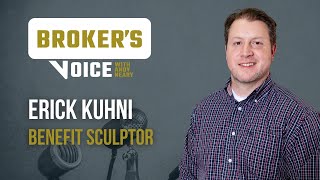
A recorded Broker's Voice interview (Mar 18, 2022) in which Andy Neary speaks with Erick Kuhni about Kuhni’s path into the health insurance brokerage business, frustrations managing small-group renewals, and the genesis of Benefit Sculptor — a software platform that centralizes market quotes, lets brokers filter plans live with clients, and streamlines renewals to enable more consultative sales. Kuhni explains the problems (volume, opaque quoting, educating clients) and positions Benefit Sculptor as a small-group renewal decision-support/dashboard tool.
Questions this video answers
March 18, 2022
benefitsculptor.com (also spoken: 'ericenefitsculptor.com' as an email/ contact string in the audio)
More than 10 small groups (Kuhni: 'if you've got more than 10 small groups, I think you're a good fit')
Small-group health insurance (described repeatedly as 'a small group tool')
Chapters
All right, welcome back to the Broker's Voice. I'm excited today. I've got Eric Cooney with me, the founder of Benefit Sculptor. Eric, welcome aboard.
Thanks. Good to be here.
I'm excited to have this conversation. So, Eric, I'd love to kick off all of these broker voice conversations with the question of, you know, most of us did not get in the industry by design. I know. I did not. How did you find yourself in the health insurance industry?
Yeah, no, I mean, you're right. None of us find us here by. Find ourselves here by design. When I was. I've been in the industry since I was 21, and I was brought into the industry by my dad, who was a longtime broker, and I had just taken a job working with some of my friends at a. At a call center selling credit cards and hated it. And my dad kept coming to me and saying, hey, you know, you really ought to get your license and come and work with me. And so I did call center work for a little bit, and I said. Finally said, well, what goes into getting a license and doing all of this? And so that's what I did. I went to the test, got the license, and began working with him. And then shortly after, his practice merged and became a larger kind of a corporate practice here in. In Utah. And so I. I ended up working with them for about 10 years.
Yeah. For those that are listening and don't know where Eric is, you're in the Salt Lake City market. I'm curious, since you started your career in the call center, does that mean you actually like cold calling?
I didn't mind it. You know, I mean, it's.
It's a challenge because it's the. You're going to make a lot of calls to people who don't want to talk to you, but you get used to it.
So it. It wasn't that bad.
Yeah, no, it's. It's something, you know, when I work with clients, you know, I was a terrible cold caller. And I think it's something 90, 98 of the industry really tries to avoid. I know I did, especially when I was producing. So for those that love it, kudos, because most of us absolutely hate it. Eric, let's talk about this. This is really where I wanted today's conversation to go. So you ended up your. Your. Your father sells the agency.
Mm.
And you're working.
Sells out of it. Correct.
Sells out of it. And so you're still working at that agency, which primarily, correct me if I'm wrong, was a small group benefits Agency in.
Well, it was. It was actually a full house agency. But by the time I left, I was what they called the director of small employer. So I was overseeing. My world, as far as that agency is concerned, was just small employer. So I was overseeing the small group block. I was personally managing somewhere in the neighborhood of 50, 60 small groups doing their renewals, open enrollment. We had a small staff of people that would help, but I was kind of that key broker representative to those people. And then additionally, I was managing a department of other brokers and service staff that were responsible for an even larger block of business. So we were managing a couple hundred small groups at that point in time collectively.
But there came a time where you said, okay, I think I need to go do this on my own.
Yep.
Talk about that. What led you down the path of, okay, it's time to make that jump? This is where a lot of advisors struggle. They may be on that point where they want to do their own or go out on their own, but for whatever reason, they're just stuck. What made you finally say, it's time to take the lead?
Well, the. I didn't actually decide to go on my own. I actually decided to get out of the business because it was. I was frustrated with the business.
To put this on a. On a calendar. This was. The time I left, was 2009.
That's when I left that firm. And I just kind of hit a point where I was worn out and emotionally worn out with the business. You know, this is right when ACA was starting to roll out. And that wasn't actually my motivation. It wasn't some dislike for aca. It was a dislike of everything prior to that. You know, as a broker, you were never the person who your client was most happy to see. I had good relationships with my client. Right. But my relationship was always best with my clients at the middle of the year. The point in time when my relationship was the worst was at renewal. And I had to show up and deliver these ridiculous rate increases. You know, you're delivering 12, 20. You know, I mean, I've seen 38% rate increases in small group. I've actually seen that. I obviously never recommended that the client take it, but I've seen it. And you have to show up and you have to say, hey, you know, your health insurance carrier is throwing this at you, and this is what you're gonna have to deal with. And rates across the board went up. And this was in underwriting days for small group. So we weren't dealing with community Rating you had to actually apply for coverage, and you had. In Utah, we were a + or -30. I think it was the total. The total implication was an 85% price difference between the quoted rate and the maximum. And we were, you know, I mean, at least half of the time we were getting the 85. And so, I mean, that's. That was just the. The language that would roll off our tongue. Hey, we got the max rate or the 85% rate up. And, you know, you've got to go to these people and deliver bad news to the point where it was difficult in marketing because I would end up usually pricing the product at the 85% level and say, it might be lower than this, because that was a better sales pitch than saying, here's where it starts, but it might be higher than this, you know, and double is. That's a. That's a lot higher.
We brought back some memories because I. At the same time, I was in small group back in 09, 10, and I remember those days where you showed preliminary numbers and, you know that the final numbers might be nowhere near what those preliminary numbers look like. But I. You know what? You. Your message really resonated because it was 2011 for me, and I hit a point where after ACA started, it was official. Right.
Right.
March 23, 2010. I was like, I can't do this anymore. And I actually went into my. I was running a small group's department, and I said, I quit. I literally said, I quit. And if it weren't for a phone call from an agency I had wanted to work with for a long time, about a month or two after that, I probably would be out of the industry today. Huh? Because at that time, I had. I was like, I don't want to be doing this anymore. This is frustrating. It. I wasn't getting a ton of resources, and I was like, I can't do this anymore. So I. I was right there with you at about that same time.
Yeah, I was about 30 and kind of. I had been doing college all the way through that. I was doing. I was doing college in tandem with working as a broker. And I. I took a year off and just said, you know what? Forget it. I'm going to go finish my degree and maybe there's another job in greener pastures for me.
Go ahead.
No, no, keep going.
Well, that was it. Just, you know, I was just. I. I mean, I was. I was just burnt out. I wanted. I wanted to be behind something that would allow clients to be a little bit happier when I was showing up, and something that. A product that they would be a bit more enthusiastic about.
So let's talk about that. Because you. You got out of the industry, but 2010, you got back in.
Yeah, so what. Well, what happened was in 2010, we started and by. We. My dad had left his firm, and we got approached by a former vendor business partner we had been working with in the benefits industry that was selling recruitment tools for hiring. So these were tools that you would give to an employer to basically test or survey their employees and grade them on psychological scales to determine job fit. And it seemed like a fun business. And so we jumped into that and began going out and trying to sell this product. But this was in 2009, 10, right after the housing bubble, and every place we went into. And I was a bad salesman at the time because I would go into these businesses and say, hey, we've got this great tool that will help you hire better. And they're all looking at me and saying, hey, we're cutting staff by 20%. You know, and. And I probably should have been looking at him saying, well, I've got a tool that will help you do that better. Which I didn't do, but probably what I should have done, but I just kind of looked and said, okay, whatever. And I was networking and trying to sell. And, you know, it's funny because it's. It's a. I don't think it's quite Murphy's Law, but it's something like it that, you know, never in my entire career have I had more people come up to me and say, hey, you know, Eric, we don't care about what you're doing, but we're. Are you still doing benefits? Because we need someone to take over our benefit plan. I have never had more of that than when I wasn't selling benefits. And so I would start referring them out. I had some friends in the. In the industry that I would say, okay, well, I've got a guy, and I'll help you set up a plan. And I would do that. And I did that about four times before I finally said, I got to quit doing this. You know, nobody's buying these. These assessment tools. Nobody's buying this hiring stuff, but they're coming to me for benefits. And so maybe I just need to bite the bullet and accept that I was a. I'm a benefits guy. And so I. My dad and I actually both jumped back into the business about 2012.
You know, I'm glad. Thank you for sharing that, because I wanted to set up the stage of where you've been that journey to lead to where you were. Because now you're in the benefit space, you're back in it. And let's start talking. This is where benefit sculptor the solution we know today really started taking shape because you now were servicing clients as an advisor. Again talk to the advisors listening in, especially those that may service may work more in the small to mid size space. What were some of the challenges you started experiencing working with such a volume of small group clients?
The.
Well one was just getting back into it and having to get over that emotional piece of saying okay, well how do I make this a better experience? The other thing was that I had come from a firm that, you know, the firm I was with was actually a pretty large firm. I mean they had about 35 employees, they had departments and divisions. I mean, so we had management positions and those kinds of things. And so I had a lot of resources that I could lean on. I had other people I could go to for help. I had back office support. So you know, if I were doing things I could just go lean on that. Running quotes for example, I could just lean on other people to help me prepare that and then I would go present it when, when I stepped into it again and we were running our small, I didn't have any of that. We were, we were supporting the whole thing and we had a pretty large block of business pretty fast. And so you know, figuring out how to better use our time was, was a big challenge. How do we get more bang for the buck out of the time? And the other thing that was going on was I was never satisfied with the processes for, for quoting and decision making in general. You know, when I, when I first built benefits culture, what I was actually trying to build was a tool that was decision support around ACA and trying to help a company determine whether its contributions were going to justify it to offer a product to its employees or whether its employees would be better off just going to the individual market. That was what I actually initially started building and there, there wasn't really a lot of demand for that. I have people ask about it, but I've never really had anybody bite on. Seems that a lot of employers are kind of committed to the, to the decision to offer health plans. And so especially those that are, they're not really looking for a way out of it, which is kind of what I, what I thought at the time. So the other challenge I had was that the way I presented information, I was, you know, like a Lot of brokers, I understand these insurance concepts really, really well. I can start talking about deductibles and copays and coinsurance and how each of these things has a trade off with premium. We can talk about networks like, you know, I mean, any broker can talk about the hospitals in their area like they talk about their own kids. They understand, you know, what works and what doesn't, what the reputations are, but your client doesn't. And so when I would go in and sit down with these clients, trying to find a way to, how do you tell the story? How do you, how do you sit down with a client and say, okay, here's the work that I've done. Here are the things that you need to know so that you can make a decision. And then here's what I have done to simplify that decision and really cut it down to a couple of variables that allow you to say, if you're interested in this, you go here. If you're interested in that, you go there and do it so that they have the confidence that they understand that the decisions they were making. That was my biggest struggle. How do I use Excel? How do I use reports to tell this story and then do it in a way that's turnkey. I can, I can do it. I can go to the next client, do it. I didn't spend 30 hours per client building a custom report because I didn't have time to do that, obviously.
Well, and I, what I, what I think is so cool about what you did is in building Benefit Sculptor is you solved your own problem. And instead of going and seeing if there was a solution that could fix it, you went and bought and built it yourself, which is a process very few would actually take because of the work that goes into it. And so let's talk about Benefit Sculptor, Eric, because today what you're really doing is you're helping advisors streamline the renewal process. Correct. So that they can get through it with less stress and make sure the retention rate stays high. Because I think far too many brokers are tied to rates, right? When it comes to their value is in the rates they provide at renewal time. And you know, what you're doing is turning them from a broker to a consultant. So let's just start talking. You know.
What problem or problems is Benefit Sculpt. So for those listening in, it's a software platform that lets you streamline your renewals. What problem? And become more consultative at the same time. What problem or problems are you really seeing? Advisors have come Renewal time Especially when so many renewals are in December and January.
Yeah, well, there's two levels of problem. I think it would be helpful maybe to just kind of say that one of the things that I had going for me as an opportunity in this is that I'm also a programmer. So I actually write what you call a full stack developer. I can write back end code, front end code, and I've hired a team of better programmers than me to solve a lot of these problems. But we're not to solve problems, but to do the design stuff. But I was able to solve a lot of these problems in code and I was able to do things that I wasn't able to do when I was just relying on Excel and those kinds of things earlier. The problems that I were facing were two parts. One was.
I knew that the only logical way to do quoting if you actually wanted to just forget the work that goes into it. If you said, I want to do my best by a client to quote and recommend a renewal to them, I have to. One, I have to take into consideration their needs. So their needs are going to come down to budgets, networks and benefit design. And then maybe on a, on a fourth case is acute needs. So a specialty medication that has to be covered or covered in a certain way. Those kinds of things, those are going to be the client's needs. They're going to vary from client to client, but that's what the client is ultimately going to be concerned about. In order for me to do a good job, I have to be able to look at every product in the market in a perfect world and be able to evaluate or crash test every product, if you will, against that, that that battery of client needs and be able to say, okay, which of these products is optimal? Because it would happen very regularly where we'd have a carrier that, in Utah we've got a dominant carrier, for example, that tends to be the, the favored one just by virtue of who they are. And occasionally we have some of the other carriers that are still great carriers as well come in and actually beat them in terms of products and prices. But, but very few people know about it because you're not looking at it. And part of the reason we're not looking at it is because those getting those quotes is far more difficult sometimes with the other carriers. And so I knew that you had to have a way of being able to get all of the data, get it into one place, be able to evaluate it against that set of client needs, and then distill it down to an Algorithm that says, okay, simply just a process that says, how do these products square with the client's needs? And can I, can I take this and filter it down to a manageable list so that we can make logical recommendations? That's problem one, problem two. So that problem one was educating myself, essentially. And I was a good broker. I felt like I did as good a job as anybody else. I worked hard to make recommendations. I was never casual in how I approached a renewal. But that's a hard thing to do when you're going into independent quoting systems or even when you're using a third party spreadsheet generator and you're getting this data on spreadsheets and you have to kind of sit and evaluate it. The second challenge I was having was even once I had done that, I would take these quotes into my clients and I would sit down and try to explain to them what I had just shown them. And they would be looking at me and saying, okay, they'll either take my word if I'm lucky, which about half of them would. They liked me, trusted me, so they'll just take my word. And I knew they were making a decision by throwing a dart and just saying, I hope Eric's right.
The others would say, okay, well, I've got a few other people coming in and bringing me quotes in. And I'd be scratching my head saying, every quote they're going to bring is right here, you know, why are you, what are they going to bring you that I'm not bringing you? And this is before ICRA and level funding and those kinds of things, you know. So you say, how am I going to get my client to understand the process so that they can have the information they need so that they can be partner to making the right decision as well. How do I educate them on the fly? Because we can talk about educating a client. But what I found is nobody wants to be educated on insurance until they absolutely need to be educated on insurance. And there's only two times when that happens. That's when they're buying insurance or when they're using insurance at every other time they don't want to know it. So how do I get the information to them that they need to make a decision and then present the decision making information as well so that they can act upon that information? That was the challenge that I had.
Well, and what I heard you just say is, you know, I think it's easy. A lot of brokers do a fabulous job at renewal time kind of guiding the client of, okay, Based on what's going on. Here's what we suggest. But let's be honest, especially when you're dealing with a lot of volume at renewal time, it's kind of easy just to spreadsheet a bunch of numbers and go, hey, Mr. Mrs. Client, which one do you want?
Right.
And so you're helping these advice again. Brokers move to more of a consultative role by being the guide. The client wants to say, okay, based on what you're really trying to accomplish, here's the plan you need. And I think what you're doing is you're solving the problem of the frustration brokers get when clients talk to other brokers at renewal time, even though you're all producing the same numbers. But talk about the secret sauce, which where you realize because of the platform you built for yourself, the software platform, you were actually helping clients make decisions in the same meeting versus dragging out the renewal process.
What we did was we took the process and converted it down to essentially what I felt. One of the other things that I ran into in meeting with clients is I would go meet with a client, we would present our.
Proposal, if you will, of here's kind of what we see, here's what we think. And the client would leave us usually with one of two results. And I mean, this is like 80, 90% of the time. It was rare that we would get a client say, okay, sign me up, let's sign the renewal and be done. Most of the time they'll say, okay, thank you for this, let me think about it. And whatever that means, usually it means it's going to go in the corner until the next time you meet. Or they would say, can you go back and rerun the numbers? And so essentially that first meeting was a fact finding meeting. You show up, you would get some information from the client and then you would go back and redo that proposal process a second time and maybe a third time. And so you're going back and forth. What I wanted was a tool that had enough control and dynamic control over the market that I didn't need to walk into a client and know anything beforehand, that I could walk in, sit down, have all the data at my fingertips and have it in a visual, visual way rather than a tabular way. I mean, we can do all that, but having charts and graphs that communicate logical information that we're all used to seeing nothing that's so overwhelming, but that moves that, that I change a parameter, I can apply a filter and the data changes and we can answer every relevant question. On the fly. So a client, I walk into a client, the only thing I need to know is I've got their employee census loaded in the system. I can start from scratch, I can know nothing about the client, and right there I can say, okay, here's what you need to know. Your decision is going to come down to networks, to price, to acute needs perhaps, and then to benefit design. So what kinds of questions can we ask that will figure out which of those things are a priority? What's number one to you? Do you and I, this is usually where I start. I just say, do you have a doctor or a hospital that's a total deal breaker to you? And usually it'll come down to like a facility or a network. So then I just jump into the dashboard, I filter out every network that doesn't have that, and then we just keep drilling down in the presence of the client. With this live dashboard, all these questions tell you've taken a set of plans that might be anywhere from 130 to 250 options, we've cut it down to less than 10, and now we're looking at the client saying, okay, based upon your requirements for network, for budget, for plan design, these are the ones and here's probably the one I'd recommend based on xyz.
It's kind of like the image I get of Carmax, right? You go on and say, I want this model this year, this color, this, and it keeps filtering it down to like, here you go, here's your two cars. You're doing the same thing with your software with benefit. Sculptor is an employee, a broker can walk in knowing, man, there are unlimited number of plans essentially that my client can look at renewal time. But if I ask the right questions, literally on the fly in front of the client, we can go bring it down to the, the five, six, seven plans that are going to be the best fit for them, which again is saving massive amounts of time for the broker at renewal time.
Right?
So let's, let's wrap. Here's the last question, Erica, what you focused on, now we know what it is it's doing because this is a game changer, especially for brokers who are dealing with volume at renewal time. Time is valuable. Who is the ideal fit as an what kind of broker is ideal? And if they're going, okay, I need to see a demo of this thing. How do they get ahold of you?
They can get a hold of me through LinkedIn or email ericenefitsculptor.com My website, benefitsculptor.com is a place where you can get a hold of me. The ideal fit is really, I mean it's any broker that deals in small group.
It's a small group tool.
You know, we have certain states that we're focusing on right now, but we have the ability to serve the entire country based upon response. So conversation is welcome from anybody. But if you're dealing with small group business and I think your volume point is it, I don't think you need a lot of volume. If you're doing, if you've got more than 10 small groups, I think you're a good fit for benefits culture. If you've got one or two that might be somebody who, it would be overkill for what you're doing. I think you've probably got enough time on your hands right now to manage that. But you got more than 10 groups, you probably want to be looking at a tool like this. You know the, we're looking at all markets so we can do things in self funded, level funded small group.
ACA plans and we're even looking at Ichra here coming up. So we're, we're not just kind of pigeonholed into one place like ACA plans. That's one of the things that has been a surprise to a lot of people is that your level of funded options can coexist inside that same environment.
So I'm telling you, for everybody listening in, especially the advisors who said, yeah, we got a lot of volume, especially at the end of the year, fourth quarter. This is the reason sometimes you lose team members at this time of the year. It's frustrating because renewals can be so overwhelming, especially when they drag out and all you want to do is try to put a close to them. This, I've seen this software platform, it's game changing. So if you are that advisor who's listening in and saying, Eric, you just basically described me, give this guy a call, man. This stuff is, this is going to help you streamline your renewal process, make it easier, give you more clarity, give more confidence and when those two things happen, the sky's the limit. So, Eric, I want to thank you.
Thank you.
This is awesome. Guys. Go check it out. I'm going to put Eric's contact information in the notes. Check out benefit Sculptor today.
Cool, thanks.
More from Andy




If you want producers to succeed faster, help them create a sales message that creates confidence.

Sales isn't a zero-sum game! You can have tough competition and still grab a beer after



Option 1: Meditation, a fast walk, a podcast, and protein. The ultimate morning routine!

How you do one thing is how you do everything. Ill elite producers fuel their body.


Stop living in the gray of maybe! Your job in sales is to get a clear yes or no