14. Seth Denson: Creating a Brand Built For Success
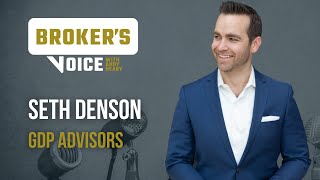
Seth Denson, co-founder of GDP Advisors in McKinsey, Texas, built a national personal brand through op-eds, a TED talk, and TV appearances to grow his firm. He started in insurance via community college internships, launched JDS Benefits in 2011, and pivoted toward healthcare's financial side. Denson shares how public speaking and visibility drive credibility and new business.
Questions this video answers
McKinney, Texas.
2011.
Two years later (approx. 2013).
About 300 on-air media segments (per year, as stated).
4:00 AM.
Chapters
Foreign.
Hey.
Hey. Welcome back to the Broker's Voice. All right. This is going to be a special one because it's not often I get this man to get on the calendar. He's not an easy guy to get a hold of, but I'm excited to have some. Seth Denson, co founder, co partner, managing partner, GDP Advisors in McKinney, Texas, join me for the Broker's Voice. So, Seth, welcome aboard, man.
Andy, thanks for having me. You make it sound like I'm on some secret island somewhere. There's all these people you have to go through to get to me. I promise I'm not that hard. And for you, I'll always take a call.
If I recall our last conversation, sir, you referenced over 300 TV interviews last year.
So.
And we're going to dive into that. So let's start here. I said this offline. I think you're one of the best kept secrets in the industry. Because when I talk to advisors, I feel like we go to these conferences, many of the conferences you and I both are aware of, and you feel like this industry is just 200 advisors and nothing more. And when I see what you're doing, as far as personal branding goes, you know, it's something that speaks to my heart. And let alone what you and John have built at gdp, you guys have built a machine. What I want to talk to you today about is your brand. How have you used the brand when you came to that moment that, hey, I have got to step into this thing because this could help grow our business. But quickly, before we get there, I love to start the conversation. Seth, none of us or most of us didn't get here by design. How did you find yourself in the insurance industry?
Yeah, definitely by default. You know, growing up, my father was pastor of a church and we jokingly now say, well, he sold eternal insurance. So it made sense that I would go into, you know, the non eternal side of it. Insurance was a language I could speak. That's a joke because I certainly did not grow up thinking I'm going to be in this business. It was actually in college. So my originally I thought I was going to kind of follow in the family footsteps and become a member of the clergy and you know, following my father's footsteps and joining the ministry. And it was actually my father who pulled me aside and going into college I had, you know, had offers from multiple schools to play baseball. Wasn't quite as good as you, but enough to pay my way through seminary school. And you know, and I was really trying to decide what I wanted to do. And my dad said, you know, why do you feel like you're called to vocational ministry? And I said, I don't know that I am feel called to do that. And he said, well, then don't.
Those are the guys that end up just not going so well for. So you need to, you know, if you don't feel led to do it, don't do it. There certainly is no pressure for me, which was a great thing and I appreciated my father for saying it. But the problem was, and you know me, Andy, personally, I have to have a goal. I have to have something I'm driving towards. Now all of a sudden, for the first time in really my entire life, outside of me thinking at one point I wanted to be, you know, maverick on Top Gun, I now have no plan. And, and so my freshman year, I stayed local. I grew up out in West Texas, so I went to community college in my hometown because I didn't want to go pursue a, you know, theological degree if I wasn't going to go into full vocational ministry. Turned down baseball scholarships. Ended up ultimately, you know, staying home. Community college five times my freshman year, I changed my major and, you know, it's community college, right? So, you know, so finally on my fifth time, my guidance counselor, Mrs. Reed, she's fantastic, pulled me such as that, you know, you're taking, you know, English 1301. There's, there's no need to declare a major at this point. I said, I get it, Ms. Reed, but if I don't have a goal, I'm not going to ever achieve it. So I got to be working towards something. She said, okay, what do you want to do? I said, I have no idea. That's the problem. So what do you like to do? I said, well, I really like to play golf. And she said, well, how good are you? I'm terrible. I'm a former baseball player. So 18 handicap on a good day is a really good day. And she said, okay, here's what you're going to do. Go down to the local golf course on Wednesday. I see you don't have any classes on Wednesday afternoon at around 1 o'. Clock. Ask the guys that are coming in to make the turn. So it's obvious they've been playing already nine holes. About to go play another nine in the afternoon. What they do for a living that allows them to play golf so much and whatever that is, that's what you do. And they're all in the financial services industry. So I got my start I was offered an internship at Merrill lynch, ultimately turned that down with work for another financial firm there in Midland, Texas. I was given the insurance desk because it was the thing you give the kid that didn't know anything because it was so easy to just renew and do. And so that's. I was given and. But fell in love very quickly with the business. It took me about a decade to realize my true passion in it. For the first decade, I played a lot of golf, but that's what ultimately landed me here.
Well, you know, it's interesting because you brought back a story, a memory for me, because when I was playing ball at uwm, I started out as an architectural major. And I remember getting into my sophomore year, the studio director of the architectural school basically said to me, you got to pick baseball or architecture because I was leaving studio every day to go to fall practice.
Sure.
And when they said that to me, the next morning, I was in my guidance counselor's office becoming a business finance major. Because I'm like, I know why I'm here. I know what's paying the bills. And architecture ended that day, and business started. So that's really what started me down the path of somehow ending up in the insurance business. But here's where I want to go. You know, you people can see it right now if they're watching this. I look terrible. My lighting's horrible. You've got a beautiful set. What we're going to talk about is branding, Seth, Because.
I don't think our industry quite understands what it means to build a brand, especially a personal brand. We come from an industry where it's like, hey, you buy logos on business cards, and you know, what you've built as far as your brand is, I believe, untouched in the insurance industry. But let's go back to the beginning.
Take us back to that moment when you're like, you know, I have got to try something different. I've got to start stepping out if I'm going to get the attention I need to win the business I want. Take us back to that moment.
Yeah. And I'll give you a couple steps as the lead up to that, because I think if I just go back to that moment, there'll be a little bit of backstory that'll be missed. So I left the firm I was at in 2011 to launch, at the time, JDS benefits. Two years later, I merged with my still business partner and one of my best friends in the world, John Powder, which, interestingly enough, we became business partners and best friends after we really engaged in business. But anyway, it was kind of a, you know, we always talk about lightning happening or magic, and it certainly was. You referenced John at the very beginning and what we've been able to do together. And it's. He deserves so much of the credit, certainly even more than I do from a business leadership perspective. But so fast forward from when I, when I started jds, that became gdp, it was to say, hey, listen, this industry's messed up. And I've referenced a number of times, you know, I talked about my, my friends call, my Jerry Maguire moment, right? The moment where I said, hey, I'm playing a lot of golf, I'm making good money, but I'm really not bringing value to my clients beyond just shopping for rate and being the lesser of evils. And so it was really that moment of, let's do something different. Let's really focus in on really what healthcare should be and how it could work. And if we can build out a blueprint, start implementing it, we could have a real impact for our clients. And so met with John. We developed a strategy. We started implementing that strategy. Fast forward 2016, I'm done. I'm burned out. I'm over it. And it was just because you try to be all things to all people, and what you find is to try to be good at everything, you're actually good at nothing. And so I actually remember sitting down with John and Kerry, our CFO in 2016, and saying, man, six pack and a Happy Meal, and I'll sell you my half of this gig. I am done. And I don't know what I want to do, but I'll do anything. And really, it was, this is really important to have good people around you. It's why I love doing what you see and what you're doing with coaching, because you really need people that are imparting wisdom into you. And so I had that and I had a coach, and we sat around and we really formulated what was the best use of my time. And it was the best use of my time having to be the things I was really the best at. So all the other noise, all the other things, I had to get in my own lane and get out of those things. But once you formulate that and realize, hey, this is what I'm really good at and this is what I need to do, most of the question then became, well, how do I get more people to want to hear me do it? And what I realized was, and you said at the very beginning, I'm the best kept secret in the industry. And that warms my heart. Thank you. My head doesn't need to be any bigger, but that's actually somewhat intentional in that I didn't care if people in the industry knew who I was. So I didn't decide. Certainly there's some good events that people should go to. So I'm not. I'm not demonizing those things. I think you need to go, you need to learn. And I do some of that. But I know I wanted to be the guy that everybody outside the industry, when they thought of the industry, said, oh, that guy. And so I really started recognizing that in order to be the best, I need to figure out the one key area or two key areas that I could be the best at. Again, not the jack of all trades, the master of one. And so I really made it a focus of understanding the financial components of both business and healthcare and how they correlate together. And so I started reading and researching and writing op eds and they were getting turned down by everybody and writing blog posts and doing anything I could. Right. And then that thing happened where I got the call one day. And so the whole idea behind my brand was I wanted people throughout the country to think financial components of health care set. Then some pops in their head. That's the guy that understands the overall financial components of health care. Because if you can understand that, you can understand what is arguably one of the top things in any business is P and L. And if you can then formulate a conversation around solving for it or even a conversation around understanding it, then people are going to reach out to you and say, hey, what is your take on this? What is your thought on this? And as you know, Andy, you know, lo and behold, within a couple of years, well, within that first year, I was writing talking points for some of the biggest names in the news media whenever they'd have a story. Timing was a good thing, too. It was right in the middle of election season, so politics played a role and every candidate was talking about health care. I had a thought. I got a TED talk. I ended up getting an opportunity to write a book about it. Launched the book. It was an Amazon bestseller for about five minutes. My mom bought a lot of copy and then. But that led to what ultimately is now averaging about 300 on air media segments. And today, man. Well, I still love talking healthcare. I end up talking a lot more about business than I do healthcare anymore. So it's just kind of morphed into that.
Yeah, no. And that's what I love about what you're doing with the branding now, as far as the TV appearances, you're talking anything. It really, I think I feel like you're talking healthcare the least amount of time. And you know, I have personal experience of what it's like because I can remember a few years ago when you called me one day and you're like, hey, man, I. IHeartRadio in Houston wants me to jump on to talk healthcare. I can't do it. Can you do it? I was like, heck yeah, man, I definitely want to help. And then you go, oh, by the way, the interview's at 4am in the morning. And by the way, I'm mountain time, so that's 3am in the morning. And I remember sitting in a hotel room and getting up at 2:30 in the morning, slapping myself so I could be ready for this iHeartRadio interview. But I can only imagine what it's like when you're doing three, 300 of those. And here's what I want you to talk. I want you to go. Because I think a lot of advisors are hesitant when they think of branding. They think it's selfish. And talk about when you leaned into it, because you and I have talked about this, at first John was like, eh, I don't know, what are you doing? But then when he saw the benefits that it had on GDP's bottom line, John became one of your champions. But talk about when you leaned into building Seth Denson. One, was there any hesitancy? And two, did it have any impact on business where clients were like, well, I don't know if Seth's helping us anymore. He's spending so much time over here building his brand.
Yeah. All great questions. And the only thing I'll say a little bit different than what you led up to there, Andy, was that, interestingly enough, it was John who was pushing me out.
Oh, okay.
In it because for me, I was probably like, a lot of producers are out there right now. You know, humility is an important virtue, right? And if you really want to have humility and so many in our business don't, you know, that didn't sound very humble. But you know, so many, you don't want to say, well, hey, here I am, everybody look at me. Right? And so there was a balance of that of how do you put your brand, Put your name out there, but do it in a way that doesn't look like, hey, look over here, look at me, I'm awesome. Well, I will tell you one quick way to round that is have other People say how awesome you are. And when Fox News is calling on a daily basis to say, can we get you on here to talk about this? And then CNN and then some of these others, you know, it's other people saying you're awesome. So that's a, that's a, that's an absolutely positive thing that can happen. But I think there is a way to balance out humility, and you talk about it all the time. And I will tell you, one of the first times I was introduced to you is because I found your content online. And I said, I got to know this guy because he's, he's. Everything he's saying is stuff that I agree with, too. He's doing it in a way that is capturing. It's simple enough for anybody to understand, but it's taking complex issues and breaking them down in a way that, that makes sense. And so I reached out to you. I think that's how we got connected. I said, man, I don't know you, but I want to. And so that's really the first thing. You got to have the content, but it's got to be in a way that doesn't say, hey, look at me. It's, hey, look at you, and here's the information you need to help. And so for us, it was that putting content out there. From a blog post. Vlog. Vlog, I think, is what the kids call it. I don't know. Anyway, putting content out there just, hey, short snippets on social media of, hey, just 30 seconds. I want you to understand something. This came out today. And really, when all that started taking off for me was during the 20. I guess that was 2016. 2017. It was 2017 when healthcare repeal and replace was being proposed. And of course, I looked at it and said, republicans are out of their mind. This isn't going to do anything to solve health care. Not the ACA did. But this is just, you know, one bad thing doesn't make another bad thing go away. And so I just started putting out little snippets. I think I started with my 10 topics and we put them out, 10 things to cure healthcare, if government was really serious, and here's things you could do. And so it was that content that ultimately led to it. And so my message, I'm going a long way around the barn, so I'm probably missing some of what you wanted here. But, you know, I think the big thing for me was recognizing, hey, you know, I got to just put content out there, and my name's going to be attached to it. So it's got to be accurate. You know, it's got to be genuine. That's really important. But if that does, ultimately it was making sure those around me recognize that as my a rising tide lifts all boats and if my brand goes up, guess what, GDP does too. And so that was really important. The other part of your question you asked though was did any clients reach out and say, whoa, whoa, whoa? Yeah, absolutely. But I will tell you, I war gamed that a little bit from a perspective. I reached out to a few clients ahead of time and I said, hey, this is a direction I think is really important. I think it's going to make me better for you because I will tell you, the last thing you want to do when you're going on a national media broadcast in front of millions of viewers live in the morning or evening or any other time is to not know your stuff. Because almost to a lot of people, I have no idea what I'm going to be asked 99% of the time. And, and so you're going into these moments live. Ready? I was on one time, 30 seconds before I went live, told in my ear from a producer in New York, oh, by the way, I'm going to have you debate one of the architects of the Affordable Care Act. Okay, go. And it was on Fox News, you know, million five viewers in that segment, you know, and so all of that to say I reached out to clients ahead of time, said, hey, this is direction. It looks like it's going to go. Are you okay with this? I think it's going to make me actually better for you. So I'm going to have a better understanding of what's going on economically, politically, all of that, policy wise. But since then there have been those clients who've reached out and just said, hey man, are you even looking at my stuff anymore? Are you still involved? And you know, one of the great things I was really proud of was when we started hiring people that quite frankly are better than me at what I always have done. And we've got a team of that here at GDP now, they can run circles around me. And so to those clients though, it's important I'm still involved. But I am still very much involved, Andy. As you know, I get up at 4am every morning and I've done a full day's worth of work by 8. And then when I get here, I work on a bunch of other stuff and you know, by usually 8:30, 9:00, clock, I'm ready To hit the hay, but, you know, it's a long day. But time is the great equalizer. And I knew early on that if I wanted to maximize it, I need to get up and not sleep in.
Well, and that's. I mean, we could go on a whole different episode about time management, how to use it effectively to grow your brand. A couple questions I have, and I know we'll wrap this up in the next few minutes, is two places I want to go. Number one, let's talk about how you have leveraged the power of public speaking to grow your brand, because that's something you and I both feel very.
Very. What do I want to say? It's very important to our businesses. Right? And when Seth hits the stage, guys, you can tell immediately he is the son of a preacher, and he's got that perfect stage voice, which is. Which is mesmerizing. Seth, talk about why advisors, the ones who are willing to go there, how and why public speaking can be such a powerful piece of your prospecting arsenal.
Yeah. And you've heard me say this is preparation leads to knowledge, knowledge to confidence, confidence to enthusiasm. And enthusiasm sells. That is the mantra that I wake up and live by on an everyday basis. It all starts with preparation and knowledge. That has got to be the foundation if you're going into a situation where you're going to be publicly speaking, as you know, because you're phenomenal, attitude is you got to know your stuff, and you got to think through it. And those that do it well understand how to take that complex subject, put it in a way that is not just informative, but it's entertaining. You want people to be engaged with it, but you want them to feel your enthusiasm behind it. And so anybody that's skeptical of doing that, recognize that every time you present to a prospect, you're public speaking. Anytime you're presenting to a client, that renewal, you're public speaking. You're trying to put forth yourself as an expert, and you want them to not question at all the level of confidence that you have in whatever it is you're recommending them do. And I will tell you, anybody's listening to this, if you're trying to be an advisor and you're ever showing a spreadsheet, if you. You ain't advising, you inform it. That's it. So you want to be an advisor. You have confidence, say, yeah, here's the spreadsheet. Here's where things are. That's what you need to do. And here's why I think you need to do that. And so what public speaking will allow you to do is really refine that message in a way that when you come across, you do it in a succinct way that you're not going and, well, you're stumbling over yourself. Everybody should public speak, everybody should do it in a small dose and then grow with it. Right. But there's certainly. I love what you're doing with the academy and all of that because I think the major league mindset stuff, because I think that people need to be coached in that area. I have a coach, I still have a coach. It's extremely important. And I do, on average, I do a national news segment every day on camera, live in front of a million people. And I still have somebody coach me. I'll reach out to them every day. What did I do right? What did I do wrong? How could I have done it better? How could I made my points? Public speaking, even if it's at your local Rotary Club, is a huge way to start building that level of confidence. You have to prepare, you have to develop that knowledge. You're going to have to get that confidence up. That's going to show that enthusiasm and you'll be amazed when you get in front of that prospect, that C suite prospect. The confidence and the enthusiasm it will exude from you and it'll make that CEO CFO go. That's who we want to help advise.
I experience that now with the coaching business. And I get people who will reach out and say, I don't know, you know, I just want your help. I want your energy, I want your enthusiasm. And I'm sure you hear the same thing. And I think what you said, Seth, there, which is where public speaking and presenting form a perfect marriage is. I think we have to do two things well in this industry. We have to do no math numbers and we have to storytell. And I've witnessed you, I've witnessed you on calls with prospects. And it's a, it's a, it's a, it's a, it's a presentation filled with math and storytelling is really what it is. And so last question here. I know when I leaned into my brand several years ago, some of the employers, some of the companies I worked alongside with were not very happy about that. And you have said the way you articulated is so good. If there's an agency principal listening in, somebody running an independent agency who has producers who are trying to do what you are doing, maybe what I'm doing, what advice would you give that principal? Because they're typically hesitant to let the producer do it because it's just focus on the agency's brand. What would be your message to that?
What do you have to lose?
Honestly, what do you really have to lose? You're gonna, if nothing else, nobody listens to anything they have to say. They're gonna gain knowledge, they're gonna gain that confidence. And so, you know, here's the reality. Everybody's got a brand. Everybody does. And I don't care who. I say this all the time when we're bringing new employees on board here at gdp. Listen, you are not renting my brand. I am renting yours. And so when you come into these walls, I have now adopted and rented your brand. And so anything I can do to help you elevate your brand to a level of performance professionalism is going to be valuable to my brand because I'm renting you. And I will tell you, business owners, firm leaders that don't recognize that they're being very short sighted, they're missing the boat. And I think they will ultimately fail in the long run because people won't want to be part of what they're doing. They won't feel like they can grow and expand in their own abilities. And so the, the more that you empower your people to develop their brand, recognize there is some quantitative value on the back end. Because when they go out into the marketplace with that brand that they've developed, man, you're getting the reward of that. Because I assure you, if they go to the marketplace with your brand and they haven't developed their own, they're gonna tarnish yours. They're gonna tarnish it because they don't know what to do with it. But everybody will have personal responsibility of their own brand. And if they won't, you don't want them anyway. And that's gonna snuff itself out. But you made a point just a minute ago when you said storytelling, dude. I've said this all the time to a lot of people. They said, what do you do? I'm a professional storyteller. Right. That's my job is to take mathematical challenges with real solutions, but wrap a story around it. Where people go, I understand it and I want to be part of it because that's really when things get powerful.
That's why I think you and I have been aligned from the day we met. Man, I appreciate this. If you're listening in, do yourself a favor. Number one, connect and follow this guy on LinkedIn and Instagram and all the other, all the other social media platforms. Number two, go get his book, the Cure. It is an awesome book. And it's a quick read, right? It's an awesome book. It's a quick read filled with nuggets. And the guy gave you a ton of nuggets here in the 23 minutes we spent. So, Seth, thank you again for doing this. I know this meant a lot to me, and I if anybody listening in, I know walked away very enlightened. So thank you very much, man.
Thanks, brother. Always enjoy spending time with you awesome guys.
Hey, if you listen, this guy, Seth Davey, a lot of clarity, which is hopefully going to give you a lot of confidence when you mix those two, magic happens. So go make it happen today.
More from Andy




If you want producers to succeed faster, help them create a sales message that creates confidence.

Sales isn't a zero-sum game! You can have tough competition and still grab a beer after



Option 1: Meditation, a fast walk, a podcast, and protein. The ultimate morning routine!

How you do one thing is how you do everything. Ill elite producers fuel their body.


Stop living in the gray of maybe! Your job in sales is to get a clear yes or no