212. The Mindset of an Entrepreneur with Samson Jagoras
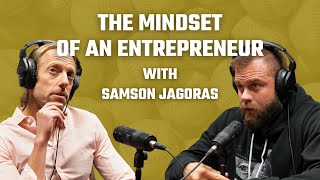
Podcast interview (Andy Neary with Samson Jagoras) exploring Samson's journey from a blue-collar upbringing and late-start in football (walk-on, transfer to University of Colorado) through careers in commodities and marketing (Madwire) to becoming a multi-venture entrepreneur (Gyms, GrowthView, Paying to Profits podcast, land development). Core themes: perseverance (chip-on-shoulder mentality and "go long" persistence), deciding to leave a family business for fulfillment, building self-managing/lifestyle businesses, and concrete daily disciplines: early-morning routines (Bible study, journaling, walking, workouts), strict calendar mastery (time blocks, family "no-fly" zones), and running businesses with the EOS/Traction operating system (VTO, 90-day rocks, Level 10 meetings) to create freedom of time, money, relationship, and purpose.
Chapters
And they just don't go long enough to actually see the fruits.
You're absolutely right. You know, I asked that question because when I started my company, now Complete Game Consulting, I think a lot of people in the insurance industry didn't take us seriously at first.
Yeah.
And I, even through the. Through the grapevine was told people call me a gimmick, all this stuff. And I just was like, yeah, keep breaking it. Like, I'm about to prove you all wrong.
Beatbox to kick us in.
There's another talent.
Yeah, it was actually. I had a friend in high school that was really good beatboxer, and I wanted to be like him. His name was Ross.
Ross, if you're out there, man, beatbox. Well, I am excited. I've got Samson Jagoris joining me today, and I. If you've been following the bulletin Bullpen Sessions podcast, you've known that we have put the interviews on pause for the summer because I felt like I needed to come back with a new, better strategy. And here we are. Yeah. Not only are we back with the interviews, Sampson, you've been on the show before, so I'm excited to have you on again.
It's been a while. A couple of years.
I think it was episode. I just looked at this this week. I think it was episode 33, which, by the way, is my favorite number. So there you go. But my goal was to make these a live podcast. Yeah. Same room, one interview, one conversation. So I'm excited to have you. So, Samson, if you're not sure who Sampson is, serial entrepreneur, you have what, four different.
Four different things I'm working on, things.
You are involved in right now. We've got Pains to Profit. The podcast, which I've been on. Yep. We've got the gym pursuit. Yep. We've got growth view and then some land development. So you got your hands on a lot of shit.
Yes.
But for the audience who hasn't listened to the first podcast doesn't know who Sanson Jagoris is. Let's just take us back to a little bit about yourself, where you grew up. We'll get into the story. You played some college football, which we're going to talk about. But yeah, let's just start kind of quickly at the beginning. Where are you from?
So, grew up California kid. Raised on a heavy dose of punk rock music, skateboarding and sports. Blue collar family. You know, money was really hard to come by. But for what we lacked in that, we were taught about hard work. You know, my. My dad had been on his own since he was 13. Working since he was 13, which is how he became a carpenter and craftsman. And he just instilled that in me. Not so much by his words, but just by his actions. You know, he. He's up at 4 o' clock every day, still 65, cranking away. That's just the way that he's wired. He doesn't know anything else.
So I, I played soccer, played baseball and skateboarded a lot and loved skateboarding. And then something happened around my freshman year. I was jokingly say it was probably girls and lifting weights were the two things that attracted me to it, but I became drawn to football. I didn't even like football. Never played it, never really watched it. But I show up to my first practice and they say, you look like a linebacker. I'm like, sweet. I don't know what that is, but sounds awesome. And so I line up to do angle tackle drill in that first practice, and they're just like, run downhill. Hit this kid as hard as you possibly can. So I'm like, sweet. I do it. I run downhill, completely unlace this kid, and he's got snot bubbles in his nose. And I actually jump up a little hesitant, like, oh, my gosh, they're going to be pissed. I shouldn't have done that. And the coaches were going nuts. They're like, oh, my gosh, yes, let's go. So I'm like, I got to do this for the rest of my life. So that was the hook for me into football, and then it pretty much dictated the rest of my life. Um, you know, everything from training to nutrition. I wanted to learn and know as much as I possibly could. Um, I'm not an incredible athlete. I'm, you know, 5, 10 and 3/4, maybe 5, 11 on a good day if I'm wearing the right shoes, and wasn't particularly fast, but I like to work. And so I was trying to get every competitive advantage that I possibly could. And most of that came from training and nutrition. So that's what drew me towards that. I went to school, studied human physiology, and then graduated. Thought I was going to go in the world of, like, strength and conditioning. Even thought about, like, orthopedics, being a doctor, and then realized that I met my wife, fell in love and wanted to care for her. And that was a long, hard road to go, you know, be a head strength coach or even go to med school or do something like that. So I settled on, I'm just going to do, you know, go figure out how to be in Sales or something like that. So I got an opportunity to go join a commodities trading firm and become a commodities broker. And that's where the journey really gets wild because I graduated on a Friday with a degree in human physiology and walked into a commodities brokerage on a Monday. And about three months later I was a newly crowned broker. And the Dow Jones fell 777 points in a single day which set off the economic housing crisis. But you know, I had negative money to my name and I. That was really the start of my career and kind of what drew me towards entrepreneurship.
You know it's interesting because I want to talk about the football side of it for a second, but talk about that. You started your commodities industry like right as the Dow Jones is plummeting during the housing crisis. I remember.
Guy that I follow, Ryan Sirhan, who is million dollar listing New York talked about how he got in the real estate business. He said literally the day he got his license was the day Lehman Brothers filed bankruptcy.
Awesome.
And it swim from there. And so hey. But it led him to an amazing career. And you likewise. So but go back because again people could hear this if they will listen to the first episode. You ended up having a lot of success in football in high school.
Yes.
And I know you know your journey from going to play juco. Yeah.
It was a D2, but.
Or was it D2 actually the same thing? Okay, I thought it was juco. I apologize.
It might as well have been juco.
But then you ended up playing. Was it Big 12 football at the time or was it already Pac 12?
It was Big 12.
Big 12 playing with, with Colorado. Yep. Talk about that for a little bit. That's a big deal. Because I think that's where part of your story was built too. Just from remembering our last conversation where it's not like you were this highly five star recruit coming to play at Colorado. You had to work your ass off from D2. Not many kids get the chance to upgrade. Let's call it transfer upgrade from D2 to big power football. When you look at that part of your journey, what do you think gave you that opportunity to go from western New Mexico. Yep. To the Colorado Buffalo.
Damn. I'm going to say that's the good lord. But to. To preface that, you know, my parents were awesome in the sense that they never pushed me into any sport. They always supported whatever I wanted to do.
And now owning a gym and seeing a lot of athletes come through, too many parents are just like you think their kid's going to be the next Tom Brady and push them into all these things and they burn out. So I wasn't burnt out. I had a lot of energy. I had visions and dreams of playing on the big stage. Knew I wanted to get my school paid for by playing college football. My parents supported me in that fully. And they never told me that I couldn't do anything. Maybe they didn't necessarily know how to get there, but they never said, oh, that's a dumb idea, Sampson, you shouldn't do that, or what are you thinking? You know, we're just some blue collar people. So I had no limiting beliefs in that sense. I was crazy enough to think that I could do it right.
And then I was heading into my sophomore season, I was just not happy. I was just totally miserable. I was playing college football, but it. People don't know D2 college football is. It sucks. I mean, you're. Our coaches had CDL driver's license because they drove the bus. We didn't get to fly commercial. I remember the longest trip I ever took was a 23 hour bus ride where we had to get off the bus and like four hours later we had to play and then we had to get back on the bus after getting our butt whooped and drive all the way back. And that was literally the moment I was like, I'm not doing this anymore. I'm either going to go big and just fail miserably or I'm going to go home. So I called my running back coach or my, my running coach back in California and he called the University of Utah and University of Colorado and just, you know, said, hey, will you let this guy walk on? And so I sent him my tape and he sent it because according to the, the rules of, of the ncaa, I couldn't contact those coaches directly. So they said, yeah, if he has a good sophomore season, then, you know, send us the tape and we'll let him walk on. So a lot of it was just probably a lot of dumb belief in myself and a lot of faith that I could do it. And if I got there, that I had, one thing that I knew that would take me far above and away from everybody is I was just willing to die for it. Like I was. Everything I had was riding on the line. When I showed up to my, my walk on at the University of Colorado, I still had to make the team. It wasn't like I was guaranteed. So I showed up. I think there was like seven or eight people at the tryout and three of us made the team. And by the end of that spring ball, the other two guys had quit. I was the last man standing, which is actually kind of good. I wore that with, like, a badge of honor. Like, yeah, couldn't make it, you know, but.
There'S. It. That's actually a really awesome place to be. Most people don't take themselves there enough to say.
I'm putting it all on the line, and it's do or die. I'm gonna burn the boats. And literally, like, not making is not an option. And so, you know, every day was game day for me. And they and my teammates hated me for that because I was always trying to take their scholarship is what I would tell them.
And then one day I got an opportunity. They said, hey, you know, you play linebacker, but would you ever consider playing fullback? And I said, yeah, I'll play fullback. We had two seniors and one, two freshman, and we had a ton of depth at linebacker. I actually love linebacker way more, but I'm not an idiot. And so I was able to see the opportunity of, like, wow, if I can go over there and kill it, then that's a scholarship. And so a lot of it was just, you know, being willing to put my neck on the line, go after the things.
Literally.
Yeah, literally be willing to go after the things that, you know, the good Lord put on my heart and just not being afraid of the work. I genuinely love the work. There's no shortcuts. I'm actually rocking a painter profits hoodie right now, and it literally says no shortcuts. And, you know, there's. There's no magic secret sauce to it. It was just I was willing to go longer and harder than everybody else, which meant wake up at 4am, run in the dark so nobody could see me training. It meant go harder, be first in line, you know. And then when everybody went to go eat, training table, I sat in the hallway and ate my fricking top ramen, you know, and it just fueled the fire even more. Like, that's right, you're soft. You need to eat a whole meal of food. I'm gonna eat this top ramen. So there's a little bit of an edge and a chip on the shoulder. And that comes from my dad, for sure. You know, you'd be on your own since you're 13. You're not. You're a little chippy, you know.
What are your thoughts about this? Because talking about the chip on the shoulder, you know, I think as an athlete, the chip on the shoulder thing is often viewed as a negative thing. Like oh, you shouldn't have that negative energy around you. But I still use it today as fuel. Like when people doubt me, I'm like, oh, yeah, keep doubting me. I'm about to prove your ass wrong. Do you use that even today? I mean, that was 20 some, you know, 20 years ago. Do you even use that today in business when that chip on your shoulder to feel like, you know, I'm here and, and I, I love when I have doubters because I'm about to prove you all wrong. Do you still use that as leverage at all?
Not as much as I used to. I think that's just because I've been validated through some successes that I don't need that as much. But I am competitive and I do like to win. And above all, I like just creating. I love creating great things, you know, so I love creating a great environment for my employees, of creating a great experience for my customers. I love creating a great partnership with my partner and partners. And.
I just get a lot of joy out of being great at things. So a lot of that has gone away just because I've achieved a certain level of success. I've been validated.
But, you know, I can distinctly remember when I walked into my coach's office at Western New Mexico and I said, hey, thanks for the opportunity. I'm getting ready to leave. He could have said a lot of things like, hey, good job, you're going to do great. I believe in you. But he made the fatal mistake of saying, I don't think you're going to play. And I literally shook his hand and said, you can watch me on Saturdays. And I left.
And so, yeah, I guess it depends on the situation. I just haven't had those in a while. And I also just have a lot more experience under my belt that I just know that time in the game matters. Your willingness to go long enough and hard enough.
Will be rewarded. And most people are just digging holes when they really need to dig a well and they just don't go long enough to actually see the fruits.
You're absolutely right. I asked that question because when I started my company, now Complete Game Consulting, I think a lot of people in the insurance industry didn't take us seriously at first. And I, even through the grapevine and was told people are calling me a gimmick, all this stuff, and I just was like, yeah, keep bringing it. I'm about to prove you all wrong. And I just, I was curious being.
Well, you, you're also kind of pioneering a old school industry.
It Is. And. And so. But again, this. That fuel. It's one of those reasons I wake up every day just to get after it, because it. You know, again, that doing something people may not believe you've been. You were able to do, you're not going to play. Watch me.
That also convert that. That rolls over into like, big vision, a big mission of like, the. The industry needs this. It's important for the industry and more importantly, for all the agents that are out there trying to make it happen. And so our mission is, you know, it's bigger than just me against you. It's, you know, it's me taking on. It's David and Goliath. I'm taking on the entire industry in the way that it's viewed and trying to change it.
Good way of putting it. One last question about the football career, because I'm. I'm very interested in knowing this. So your football career started when you got on the field and it was it. You said, freshman year.
My favorite freshman year, I was ninth.
And they said, go hit that kid. And you just lit him up. Here you are now in the backfield playing Power 5 football. Was there ever a moment when you're in that backfield and now your job is to go light up that linebacker and you're like, holy crap.
Yeah.
And you realized how far you've come from that freshman kid who just didn't know what he was doing, just went and lit a kid up and was like, yeah. To. Here you are playing Division 1 college football, and your job is to do the same thing, but now you're taking on superhumans. You're taking on these linebackers, these linemen at Division 1 football that are freaks of nature.
Yeah. I mean, when. When most game of my career was we beat Oklahoma, when they were number one in the country. That was pretty awesome. I had some pretty big hits in that. But I think the. The biggest, like, whoa moment was when I ran on the field for the very first time, but behind Ralphie the Buffalo. It's probably one of the greatest traditions in college sports, probably one of the most recognizable as a scholarship athlete. Right. So one year, pure suffering. I lived in an apartment, I had no car, had no cell phone, atop ramen, took the bus everywhere, didn't drink, didn't party, worked my tail off, and then finally got validated, ran out starting fullback on scholarship. It still gives me chills right now, just talking about it. Like that moment was like, wow, okay, this is amazing.
I think that, you know, that moment for college football or College basketball, I think is, is something that a lot of athletes like you can experience playing college baseball. There's no. That, there's no running out onto the field. Right. Like there is in football or college basketball when you come out of the tunnel. Right. That. I gotta believe that first time when you come out of that tunnel with a full, full, full crowd, with a, with a full stadium, that's got to be just.
Oh yeah, it's unreal.
Yeah. So let's fast forward to get to really where I want to talk about today, which is daily habits and rituals and things you're doing to manage all the, the businesses you're involved in. What led you to basically, I'm going to say jumping off the cliff and starting what you have today with growth. View the gym and everything else because you had a nice job right. At Mad Wire and madwire. A lot of people know who Mad Wire is. You know, with the Marketing 360 program, like what made you realize, like, okay, this is my time to go off and really jump into the world of entrepreneurship.
I think it was skills development was a big part of it. You know, I always had the itch, I think, but I didn't have the confidence to do it. And you know, you work. I think it was 12 years in sales, marketing and we scaled a company from zero to 100 million and 600 employees and two acquisitions. So gives you a lot of confidence. But we were specifically working with small to medium sized businesses. So I got to poke my head inside of thousands of businesses, some great, some not so great. And some of the epiphanies you would have is, man, if this guy can do it, why can't I do it?
And then I started to lose fulfillment in the work that I was doing.
Because I felt like I had a. But effectively grown to a point where the next move would be, hey, I would step into the CEO role and go run this company. And that wasn't going to happen.
And just differing opinions about how we should grow and how we should lead and how we should treat people. And.
It'S hard to run a company. There's no perfect right or wrong answers. But at a certain point when you.
Explain it like this, and I think this will make the most sense, imagine you're an incredible musician. You can play every instrument, you can write music, you can sing, you can play the piano, the guitar, the bass, the saxophone, et cetera. And I say, Andy, that's good man. We love that you can do that, but we just, we just need you to Play bass guitar and we're only going to play cover songs. You'd be like, damn, like, I know I can do that. But that's just not the best. It's a gross misuse of my skill set and it's not very rewarding or fulfilling. It doesn't allow me to create.
When I was probably eight. Eight years ago now. Yeah, eight years ago, I think it was about 30, I woke up and I had a panic attack, thought I was gonna die. And it was riddled with really bad anxiety for like eight, nine months after that. But through that whole thing, what I realized was what I was most scared about is that I was going to die and then not do the stuff that I wanted to do. I wanted to open a gym, I wanted to be full time in real estate investment. I wanted to do a podcast. And so I just had to make a decision on, you know, what was.
More difficult? Continually doing what I was doing and not being happy and unfulfilled or just, you know, pulling the ripcord and going all in on the stuff that I wanted to do. To me, entrepreneurship is like, it's like writing music. It's a form of creativity. You see this thing, you have this idea, this brand that you want to go create and you get to go do it and you get to go do it with a team of awesome people and not being able to express yourself in that way, man, that's demoralizing. So yes, there's some push towards like monetary reward, but it's, for me, it's ultimately about fulfillment.
So I love what you said because I think what the next question I'm going to ask you is going to be so helpful for many of my listeners because I get, most of my listeners are professionals in the insurance industry.
Yeah.
And I, when I look at the agencies that I work with, you have a lot of family businesses. Right. And I, I see a lot of that second, maybe even third generation in the business, sometimes more out of obligation then they are truly in love with what they do. Or you get the reverse, which is what you just said, they love what they do. But that analogy of that musician, they know they're, they're, they want to play the piano, but they're like being told now we just need you to play guitar right now.
Yeah.
Because what most people don't know is you were leaving a family business. I mean, your brother in law and father in law started the business. Yep. Was that a tough decision?
Yeah. I'm an incredibly loyal guy, probably almost to a fault. I probably get that from my dad.
You know, is my, and I say that because my dad, I use my dad a lot because he's taught me a lot about that. But you know, when you're 13 years old and your mom dies and your dad walks out on you, you can go one of two ways, right? You can say, hey, you know, everybody's against me, or you can become one of the most loyal people on the planet. And that was my dad. So I learned that from him. And I didn't want to let them down, you know. But if you're talking to real entrepreneurs, they get it, you know. And so actually when I had the conversation, it was way easier than I thought it was. They basically said, hey, you're like a stallion and you need to go run free. And we're trying to keep you in the stable. And so we get it, like go do your thing, you know, so probably more the anticipation, anxiety of having the conversation. And I let it go on for far too long because I would start to be resentful, maybe mainly because I'm not going and doing the stuff that I want to do. I'm just having to go do work that I don't really love to do.
On the note of family businesses, I was thankful for, like, you know, we all kind of grew up into that business together. My father in law was a serial entrepreneur. But I've seen friends who, you know, come into the family business and they never quite feel validated and a little part of them always feels unfulfilled. And you know, honestly my biggest advice to them is you should probably just go and do your own thing. At least you'll have perspective that maybe the grass isn't greener or that you do or don't have those shops that you think that you do. You can always come back to the family business if you leave it. Well, but you should probably get out and go just spread your wings a little bit and do your own thing. So that's what I see most commonly.
And, and, or maybe they think they're doper than they actually are, you know.
Well, I think you bring up a good point though. You just made me realize this. I think a sign of a good entrepreneur is somebody who runs a business and when they have entrepreneurial people working for them and that day comes when that, that, that employee wants to go fly.
Yep.
Giving them the, the permission to go fly. I see it in our, in the insurance industry all the time. I don't know if I can call the owner of that agency an entrepreneur when one of his or her producers wants to go start their own business and they just basically treat them like crap.
Yeah.
Because they're trying to become who you are.
Yeah. It's the weirdest concept to me and I'm thankful because I've seen that go really wrong. I've seen people do some really dumb stuff to their former employees who wanted to go off and you know, you're a big organization and you're like worried about this little two man shop over here. It's like, what are you guys doing? Like, go water your own grass. You know, what are you scared of?
I think entrepreneurs do that out of a. It's a fear response because they've done a really terrible job of doing two things. One, building a business that can operate without that person and two, actually pouring into that person to the point where they feel like they don't need to leave. And with entrepreneurial people.
If they feel like they can't go spread their wings and fly or their ideas are not resonating and not being leverage or utilize, then they're just going to take their and go somewhere else and do it where they can. And you know, nine out of ten times it's going to be to do their own thing. So that's on the, that's on the entrepreneur, that's on the owner of the business. 100%.
Think about your coach at Western Western New Mexico.
Yeah. Exactly.
When you left. This is you going out flying. You're flying, you're opening your wings here to go play Division 1 football.
Yep.
He could have said, man, that's awesome. And instead he said, you're not going to play well.
It's like sales 101. Right. It's like how desperate?
Right.
The more desperate you seem, the more like it's dating one on one, the more desperate you seem. She's like, okay, dude, get away from me. Right? You gotta play it cool, man. You gotta let them go and.
Yeah.
Do their own thing. And, and guess what? Like, good job. You raised up an entrepreneur inside of your company who went on like, that's the merit for me. If I, if I have an entrepreneurial type of company and my people want to go on and do that. Awesome. I either needed to create better opportunities so that you could go spread those entrepreneurial wings or rock on. I also know sitting in the entrepreneurial seat how freaking hard it actually is. So if you think you're that dope and you can go figure it out, shit, go for it. But you know, like one Thing I'm not worried about is in the gym business, people going and starting at a gym to compete with me because I know how hard it actually is. And you know who my best trainers are? It's the trainer that said, no, I tried to go start my own gym. I couldn't do it.
I was thinking about the whole analogy of the transfer portals that exist now in college sports. And one of the things I think the portal is really good for.
Is when you have a kid who starts off D2, D3 and they blossom and all of a sudden they want to transfer up like all power to them. I think about the kid that went from D3 to playing college basketball at Michigan and now he's playing pro basketball.
Wow.
Likewise, when a kid starts here and he or she says, oh, I'm a little over my skis and they want to transfer down more power to you.
I see that. I see entrepreneurship the same way. If you work for somebody and you're ready to go fly or upgrade, more power to you. And if you're at a company where like, man, I. I don't think I'm a fit here like your gym owners that try to do it themselves.
Yeah.
Said not my jam. I'm gonna come work for you. All the power to you.
Yeah, go for it.
You got to know where you belong. And so here's what I would love to talk about. Samson, you know you had me on your podcast, Paying to Profits. If you are not listening to that, make sure you listen to that podcast, Paying to Profits.
We talked about the mindset of an entrepreneur. What I would love to talk to you about, a man running four businesses now have and has a family.
Yep.
How the hell do you do it all, man? Let's talk about habits. Like, what are your mornings like? How do you get yourself in a mental and physical state to take care of your family, spend time with your family, but also manage four businesses?
So it's twofold on the biz. On the personal side, there's like seven pillars. Faith, family, finance, business, my physical health, my intellectual growth, and my social life. And it's really making sure those things are in check and in tune. So my daily practice is I wake up somewhere between 4:30 and 5, depending on the day. Sometimes it's earlier and I literally go downstairs. First thing I do is I'm getting ready to go work out, slam some pre workout, drive in the car, sit in the parking lot and I hit my Bible study, I journal and then I go walk for like 30 minutes. And in in basically an hour and a half, two hours, I've.
You know, worked on my faith, I've worked on my body, and I've worked on my personal growth because I'm usually listening to some sort of podcast and some sort of or book or something like that from a personal development. So I've grown intellectually. How the day starts is how the day goes. The rest of my life is really controlled by just. I master my calendar, so nothing really happens to me. I know exactly what's happening in the day. It's incredibly rare for me to get sideswiped by something. And the biggest problem with having multiple responsibilities or companies that you're responsible to is over promising and under delivering. And so if, when you don't master your calendar, it's really easy to be like, oh yeah, I can get that done tomorrow, when in reality you can, it's going to be done next Wednesday. But nobody has a problem if you tell them it's going to be done next Wednesday. They just want to know when it's going to be done and that you can actually live up to that. So that's how I really control my life. The other thing I started doing probably in the last two years is I started taking time on my calendar and I have like, what I call blocked or no fly zones. So that's how I manage my personal life of like, hey, dude, between the hours of, you know, 5pm and 9pm at night, like, that's family time. I can control that. Maybe there's a little emergency or something when I. So when I look at my calendar and people say, oh, can you do beers at five? It's like, no, I don't have time at five o' clock because it's a meeting with myself and with my family and that thing that's important to me.
And then when it comes to my business, I'm just. I've become a practitioner of the EOS system and I run it in everything that I do. We run it in the podcast business, we run it in the development business, we run it in the syndication business, and we run it in the gym business. And.
Having an operating system for your business not only allows you to better lead and have clear direction and focus on where you're going and what you're doing and what's most important right now, because you're getting a thousand things thrown at you every single day, but then it also makes everything that I need to do in each of those businesses very practical and actionable because, you know, you meet every single Week you solve issues, you said action items and to dos, and then you spend the next week actually getting those things done. So it's a very tactical like block and tackle type of approach towards hitting your 10 year vision, your three year picture and your one year plan. The byproduct of that is my entire team now knows that system. And so if I'm gone or I'm out of the equation for whatever reason, let's just say that we had a meeting today and I had to go fly to go look at an apartment complex in a different state. The next person who's in line stands up, they can run the meeting, they know how it goes, they know how the scores card system works, they know what the expectation is and the business still hums.
And so basically from day one, I've been trying to build businesses that don't actually need me to operate because my ultimate goal was freedom of purpose. Right? Just basically four freedoms. There's a great book called self managing company. The four freedoms that every entrepreneur is chasing and in the order that they need to get them. The first one's freedom of time, then freedom of money, then freedom of relationship and then freedom of purpose. And when you're building a business, you're building an asset. You're building a self managing company that continue to produce cash flow and frees you up with irreplaceable people that run the organization so that you can go, whatever, grow your endowment, spend more time in your church, whatever that thing may be. So I was just fortunate enough to go through, watch business grow up in a business, make those mistakes, see it not done well, see that lack of balance in people's life and say, I'm not doing that. I'm not building a company to go take it public. I'm building lifestyle businesses that allow me to live the lifestyle that I want. And when you have that system, then you can plug great people into the team and everything gets easier.
It's a good point. It's something I have to take to heart because when I look at my business, we're growing, things are great, but a lot of it still relies on me. And that's the part that scares me because like you just said, you want to build a business that can operate without you.
Mm.
Talk about eos a little bit. I've read Traction and I actually did the VTO even before I had any employees whatsoever.
Perfect.
Which they tech, they tell you you're not supposed to, you should have a, have a team. But I'm like, I'm do it anyways.
I don't, I don't agree with that at all.
Okay, good. Because here's, here's what I would love to know just from your perspective, for folks who've never read Traction, don't know what EOS is just at a high level in your, in with your, in your opinion, what are some of the highlights of running EOS in your business?
Yeah, so it's an operating system. So if I pulled out my iPhone right now, do you have an iPhone?
Yep.
Okay. And I handed it to you, you would know how to use it. Why? Because it has a common language and operating system.
As an operating system, as an operating system.
So EOS is, it's not revolutionary in the sense that like they just created some new viewpoint on business. They've just organized it and they said basically most people are building businesses without clear direction on where they want to go. And that's what your big hairy 10 year audacious goal is. It's kind of fuzzy, but like you got to have vision. And that vision could even be, is, hey, within 10 years I want to have a self managing company that I can then pass down generationally to my son or whatever. It may be. Cool. That's where we're going. That's important because then you use that information to say, okay, great, what do I need to do in the next three years in order to put myself on pace for that 10 year goal? Now it becomes a lot clearer. Three years from now is not that far. You're starting to get down to measurables, numbers, metrics, revenue, employee head count, team tech, things that you need to actually be able to do that be on pace, not at your 10 year goal. From there I can then back down one more step and say, okay, what do I need to do in the next year to be on pace for my three year goal? Okay, great. Based off of that, what are the most important things that I need to get done in the next 90 days? And then I'm going to live my life in the next 90 day week world crushing the most important action items. Now you can't do everything at once. So what? There's a great book by Gary Color called the One Thing, Right. What is the domino, the biggest domino that I can knock down this quarter that's going to set me up to knock down the next quarter and the next quarter and the next quarter. That level of clarity is incredibly important if you're an entrepreneur because you need to be able to lean into your team to carry that baton forward. And most entrepreneurs are absolutely garbage at explaining to their people on where they're going and why they're doing it. So that 10, 3, 190 day life is very easy for them to get their head wrapped around. And then guess what happens every 90 days to both the entrepreneur and the employee. They get a little shiny object syndrome. They get a little tired and fuzzy. What are we going? What are we doing? What do we do? We pull back up the VTO, we pull back up the 12 month plan and we say, hey, this is what we're doing. Here's the next most important things you need to get done in the next 90 days in order to be success.
That level of clarity is vital and it is the difference between businesses that are successful and those that aren't. From there, everything else within the EOS system is all about who sits in one seat, what seat, who do I need on my team both now and maybe in the future, you know, that I haven't even really thought about yet. And then we meet at the same time, same place, every single week with one goal and one goal only, which is to solve problems and issues in the business. Most people have meetings and they're, if you're listening to this podcast, how many meetings have you sat down on where you walked out of it and you're like, wow, that was the biggest two hours waste of my life. So you have what's called a level 10 meeting every single week, same time, same place, same format. And the bulk of that 60 Minutes is what are the most, what are the biggest roadblocks and issues and challenges that we have that are preventing us from getting to our 90 day goal and target, that are setting us off pace for the next 12 months? Everybody take analysis of what those things are. Let's agree consensus on what the most important issues are. And then more importantly than all that, let's solve them right now and then set action items and to dos in and around that in order to get that done. And then the following week.
We'Re going to display some accountability and say, where are we at? Did we get this thing done? Do you need help? How do we need to move it forward? The byproduct of that is inch by inch, step by step, week by week, you are tracking, hence the word traction, which is what the name of the book is towards your goal.
I love that. I mean, if somebody's listening in, would you recommend their whole team reading the book Traction?
I would start with the leadership team. You know, if you're doing an implementation and if you're, you have a leadership team and you have employees. Step one is you got to get it implemented with the leadership team. They have to know it, understand it and implement it. That probably take about three months. After that's dialed, you then implement it with the team. And the way you run it with the team is a little bit different than the way that you run it with the leadership team. And then depending on the size of your team, that can then pipe down chain. So for example, you have a VP of sales, he's in the leadership, right? So the leadership has the leadership meeting and then that VP of Sales, he goes and has level 10 meeting with his sales team or his, his downline next and next in line until it all the way gets down to the, to the bottom and the employees. And really at that point you're just like telling them like, hey, this is what we need to go execute on. You might be gathering feedback on issues and problems from them, but you can't have, you know, the democratic process for every single decision. You know, so the smaller, more intimate group is the one. And then all the resources and materials are available and free for people to go download and exercise and use. And so I would suggest they do that. They also have a personalized version now. So if you're a single producer within an organization and you don't have a life plan, they create a vision traction organizer for your life so that you can start to design your business and your life and around what your 10 year goal is.
I love it. You gave me a homework assignment because our team is full time, employees is small right now, but it's all leadership. And you've given me a homework assignment that I need to get them the book and we to start implementing this as a team.
Yeah, you can even hit it on the audio book and, and then go and install it. I, I can share all the materials with you too. For you specifically.
I appreciate that it, it's ironic you bring this up because just this morning one of my peers, I was on a call with him and he said, what's your end game? Yeah, like where are you taking this business? And we're infant stages, but we're, and we're having fun, we're growing. But, but it hit me when he said that I didn't have a clear answer. What's my end game?
And it becomes clear. So it's not always perfectly clear when you start.
But as you start to get some success, you then go and you say okay, what do I want it to become? And that you have to look really hard at that because I'm not here to go take a company public, but you know, would I like to go build 10 more locations of what we're doing and a 20,000 square foot gym facility that does $3 million a year in revenue? Hell yeah. Are we on pace for that? Hell yeah, we're on pace for that.
Right.
Because we have a clear vision and a goal and direction of where we're going.
But the hardest part you're going to have by not having a clear vision and clear direction is getting people on the bus. And if you want to build a real company.
A real asset and give yourself optionality like we talked about in the book Built to Sell, then it's going to be really dependent on building a killer team. And they got to feel confident that Andy, I don't have to worry about vision because Andy's got that really well said.
One more question for Rebecca on the disciplines and habits you talked about owning your calendar and being a master of the calendar, you know, that's something I'm good on at days. Some days my people pleasing I think lets others put themselves on my calendar and all of a sudden before I know it, my calendar's filled up. What advice would you have for somebody listening in who is bad at time management? And they look at their calendar and they could admit not everything on the calendar is top priority. Like what would be your words of wisdom around putting guardrails on your calendar?
So I always have blocks or free times for when I want to.
Meet with people or need to do some of those extracurricular activities. But the way that I block time on my calendar is really outcome goal based. So hey, this is time when I spend time on marketing activities, this is time when I spend time on interviews, this is when I spend time on back office stuff, this is when I spend time on podcasts or other things or you know, I tend to backfill all those other things that aren't really priorities within the seats that I sit within the organizations that I'm responsible to. And so the levers, the levers that aren't directly affecting the role and responsibility that everybody's accounting for me to do. I that's when I can fill in my extra time. So really outcome goal based because the to do list never goes away. There's always a to do list. And people who prioritize their day off of getting their to do list done will leave every day feeling incredibly unfulfilled or finished because.
They checked off three and they added four. Right. So you definitely can't do it by that. So my to do list is just there. And then when I have the block or the time to go do it, that's when I do that. But more importantly, this goes back to Eos. The things that go on my calendar are based off of the to dos and the issues that I'm responsible for solving. That's what gets prioritized. Nothing else matters. Because if everything's a priority, then nothing's a priority. And so by having that clarity of like, okay, within the gym business pursuit, here's the five things that I'm responsible to. I gotta get those done this week. But within the podcast and entrepreneurial content platform, pain to profits, here's the one thing. I just have to do one thing. So there's time allocated for that. Right? And within the growth view business, okay, I'm raising some capital right now, so I gotta reach out to my network. So just allocating time to do those priorities and that's it. And sometimes it feels like there's not enough hours. I'm literally not afraid to close the book and just be like, yeah, blocks done. Move on to the next thing in.
My life that's important. That's the golden nugget. Because that's something I'm guilty of, is when you hit the end of a time block and you're not done with said project. Find another time block. And the way I heard it explained, which I thought was so good to me years ago, is one of the first courses I ever bought. Darren Hardy, and he was talking about the name of the course was Insane Productivity. And he talked about this concept of shelving. When you time block what you're doing, you're saying, I'm taking this priority and I'm shelving it till Thursday and I don't have to think about it till Thursday. And I think that's where so many people make mistakes, especially new startup entrepreneurs. Is this to do list of everything is always in their head constantly. And that's why they're stressed out. They're always working on the most urgent, not the most biggest priority. Where if they would just time block and shelve and go, I got it. That's in my calendar for Thursday and I'm working on this today. And I don't need to think about that until Thursday.
A hundred percent. And you're gonna have seasons where you go through that and it'll feel that way. I do highly recommend the one thing, if you haven't read that book, Changed my career. Yeah. So on that note, right, you have to like have the what's the most important thing that I can do right now so that everything else becomes unnecessary or unimportant. Right.
That's the focusing question. Right. And so that's still applied. You look at your to do list, your block comes open. What's the one most important thing that I can do right now so that everything else becomes unimportant or unnecessary? Do that thing. Great. Blocks over, close the book, jump on the sales, call and enjoy it. And be present, be present for the podcast. Don't worry about the other thing. Those things will never go away. Your, your scorecard helps you dictate of like, are the actions that I'm doing actually getting me towards the goal? Am I tracking? Is revenue growing in the way that we want it to go? If not, then okay, you can solve that issue. Then maybe you're not focused on the right one thing, but you can't if you're not given enough time this season. How do you know? It's like, it's like working out. It's like, oh, I did it for a week, I don't have abs. Better go back to eating like an. It's like, no, that's not how that works.
You know, Last question. As we put a bow on this, a lot of people always ask, like, if you could go back and talk to your 18 year old self, what advice would you give them? Here's what I want to ask you, actually from an athletic standpoint, one thing about sports is as you get older physically, the worse you get. Typically, right, there comes a point, you can't play that sport anymore. You just don't have what it takes physically. But knowing who you are now mentally and everything you've gone through in a business perspective, do you think the way you think today.
Would it have changed the performance you had on the football field 20 years ago?
Without a doubt. And the biggest thing being, I genuinely do not give a shit what you think about me for the first time in my life and it took me a while to get there, but I actually did a post about this this morning. I used to work out because I cared the way that I looked for everyone else or I cared to be a better athlete or whatever, but it was really because I wanted to be a better to what everybody else thought outside. I work out now because of the people who are counting on me. Two totally different perspectives. You don't think I have the perfect physique right now? Well, perfect, great. I'M not doing it for you. I don't give a shit. That's not why I do what I do. And so if I was better at saying, I don't care what you ultimately think about me, it would. I would have been less hesitant and less scared to go, you know, play all out on the field or do the things that I did. You know, I was too worried about what other people thought. And so, yeah, I would just say, hey, God made you unique exactly the way that you're supposed to be, and embrace that. Funny example, but this is. We'll get personal. The beard that I have right now, I used to hate being hairy to the point where I would shave my chest and my arms. My dad's a hairy guy. We're Greek, and I'm Greek and Italian. I'm like, all the hair, right? I'm 100. I always say, I'm 100% Greek. I'm 100% Italian. That's why I'm so hairy. But, like, you know, he was the guy that had the hair coming out of his shirt, and I didn't embrace it. And, dude, I give my wife so much credit because she loves me exactly the way that I am, and she's helped me love myself more. And the moment that I started embracing that, like, dude, this is the way that God made you, man. You're a hairy son of a bitch. You know, like, just like. And people started going like, dude, I wish I could grow a beard like yours. And I didn't even know you could grow a beard like that. I'm like, this thing is kind of sweet. You know what I mean? So that's why I've been embracing it so that. That's the difference, man. It's just. Entrepreneurship's a lonely road. Sales can be a lonely road. And if you're worried about what everybody else thinks, you can't. You're not going to create content the way that you should. You're not going to communicate the way that you should. You're going to try to people please everybody, and people want authenticity, and they want real, pure intent. And if you do that, you're going to win. You're going to win in the content game, you're going to win in the sales game, and you're going to win in the business game.
I love it. Couldn't agree more. I think the number one piece of advice I would give somebody starting their own business. You can't give a shit. Can't give a shit what people think. So I know you got a role, man. If somebody listening here is like, this dude's awesome. If you can't see him, you just think the name Samson. You think of beast and this guy's a beast. What is the easiest way for people to get in touch or to follow you?
LinkedIn is by far my best channel. It's where I do the most engaging in talking with the community. And as you know, most of it goes down in the DMs. My name is super unique. There's only one Samson Jagoris on the Internet, period. S a M S O N J a G O R A S. You can find me on LinkedIn easy. Connect with me. Don't send me some super lame pitch. Just send me like a real authentic message. Heard you on the podcast. Would love to connect. I'm always happy to do that. I hang out on Instagram too and. But yeah, just LinkedIn's probably the best channel for sure.
Well, Samson, it's been a pleasure.
Thanks, dude. Appreciate you. Love.
If you're listening in, take advice from Samson, man. This, this man knows what it's like to run many businesses at a high level of stress. But he keeps his life little stress because of the way he manages it and the way you go about your daily habits, man. So thanks, bro. Proud to know you.
Yeah, same. Thanks for having me.
More from Andy




If you want producers to succeed faster, help them create a sales message that creates confidence.

Sales isn't a zero-sum game! You can have tough competition and still grab a beer after



Option 1: Meditation, a fast walk, a podcast, and protein. The ultimate morning routine!

How you do one thing is how you do everything. Ill elite producers fuel their body.


Stop living in the gray of maybe! Your job in sales is to get a clear yes or no