224. Finding Your Roots In Music with Willie Shaw
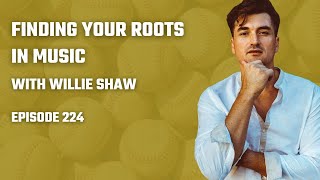
Willie Shaw played college baseball at William & Mary before a shoulder injury ended his career. He moved to Nashville, wrote songs prolifically, turned down The Voice over contract concerns, and now releases music independently, including his project Roots. He networks with artists like Kane Brown and Sam Hunt through basketball.
Questions this video answers
Born in La Habra, California; grew up in Yorba Linda, California.
Orange Lutheran High School (Orange, California).
William & Mary (College of William & Mary in Virginia).
Tore his labrum and rotator cuff (shoulder injury) and subsequently redshirted.
He visited and fell in love with Nashville around summer 2015; moved there after finishing school/playing.
Chapters
We were like in the 12th inning in a high school game. Well, I had to go sing in like the gala for the school that night and they actually had to pull me out mid inning and send me back to the school to go sing. And like I was pulling out of the game. I was a varsity shortstop, like, freaking out. Garrett Cole was our pitcher. Like, he was our ace pitcher. And so like Garrett was, you know, on the mountain that night. And I'm like, hey guys, I gotta. I know we're in the thick of it here, but I gotta go sing a song.
Always wonder what it felt like.
Welcome back to the Bullpen Sessions podcast. I am excited for this one. Anytime I get to talk to a former college baseball player, I am always in my element per se. But in this case, this is the first former college baseball player that is now a musician. So this is what I'm excited to talk about today. So I have Willie Shaw joining me live from Nashville, Tennessee. Willie, welcome to Bullpen Sessions and thanks.
For having me, man. Excited to be here.
I. If you're watching the video, I'm a. I'm a dog lover. I. I noticed a little guy behind you.
Yeah, she's actually. She's not that little. She's a white wolf.
Ah, there you go.
Okay, so she, she thinks she's protecting me from the squirrels that are running around.
I was just gonna say she's definitely in protection mode. That's. That's awesome.
Yeah, that's a. That's a bodyguard. So you might get a. She likes to howl at the fire trucks to drive by. So if you just hear howling, then everything's okay. It's just Bella going nuts at the fire cup.
So that's awesome. Well, I'm excited to talk about your one year baseball career and two, now you're now music career. And I know you're a high school teammate of a gentleman I had on recently, Bob Wheatley. So let's just talk about. Go all the way back to the beginning. People don't know Willie Shaw. Where were you born?
Yeah, I was born in La Habra, California, but grew up in Yorba Linda. Same same town as Richard Nixon. For those of you guys that are Richard or history buff, played baseball at Orange Lutheran High School in Orange, California, where I played baseball with. With Bob, as well as football and basketball. And.
Sports were just pretty much a part of my life. And found out that I actually had an interest in music. One, because my family, everybody in my family is musicians, but I spoke too much in freshman choir with all my football teammates. And to get your A back. Because basically your, you know, your. Your grade would get docked for talking in the back of class, going and so forth. Punishment to get your easy A back. Because it was just a concert. There's like 200 people in it. You had to sing a solo in front of the entire choir. And the choir was freshman to senior. And so me as a freshman, I was like, oh, my gosh, I got. All right, well, I can't tell my parents that I gotta be in concert choir. And so I went up and I put an ipod in my ears back when ipods were still a thing. Put the volume all the way up and. And sang you are the sunshine of my life by Stevie Wonder. And I closed my eyes, sang it into the microphone over the auditorium, the whole thing. And the choir director came up to me afterwards. It was like, have you ever thought about singing? Like, do you want to, like, sing in the finale? And I was like, absolutely not. I do not want to do that. But if it gets me my A back, like, if that's the next step, then sure. So developed passion for music. Picked up a guitar, taught myself how to play guitar on YouTube. And once I figured out the girls like athletes and then they like athletes with guitars even more, it was just kind of game over. And it just happened, you know?
Well, there's so many places I want to go with that, because number one. So it's. It's interesting. Here you are with a music career, but really the. The voice side of it, the singing side of it, started with just so you could get an A. Yeah, right. But what was life like as a high school athlete, also in the choir? Because I could tell you 30 years ago, when I was in high school, there are very few athletes that were in the choir.
Yeah, it kind of felt a little bit like high school musical. Unfortunately. I. I remember there was this one game, sophomore year, I was. I was on the varsity team. We were playing a really good school. We were in a tournamen tournament. And it was like, early on in the season. And it went into extras. It went. We were like in the 12th inning in a high school game. Well, I had to go sing in, like, the gala for the school that night, and they actually had to pull me out mid inning and send me back to the school to go sing. And, like, I was pulled out of the game. Like, it was a huge. I was a varsity shortstop, like, freaking out. Garrett Cole was our pitcher. Like, he was our ace pitcher. And so, like, Garrett was, you Know, on the mound that night, and I'm like, hey, guys, I gotta. I know we're in the thick of it here, but I gotta. I gotta go sing a song. Luckily, we won that game and we ended up winning the tournament. But, yeah, it was wild, man. I mean, anytime. Anytime, like, the school wanted to show off, like, the diversity of the students or anything like that in terms of, like, skill set. And I was always like, the first phone call, like, okay, we need you to talk about sports and seeing and all that stuff. So.
So, man. Okay, pause for a second. So your high school team had Garrett Cole. And was Bob on the pitching staff at that time?
He was, yeah. Our high school team was loaded. So Orange Lutheran, we're in the middle of what's called.
The Trinity League. And so it's all the private religious schools in Orange County. And there was a streak there for a while, starting with Garrett. I think it was like seven or eight years in a row. We had a first rounder from our league. I mean, it was something ridiculous. So our pitcher, Bob was like the fourth pitcher on that team too, because we were two years younger, so Garrett was the senior. We had another guy named Aaron Gates who went to Pepperdine. He played in the. In the minor leagues for a while. Brandon Maurer was our third pitcher, and he was a reliever. He was bouncing around forever. He probably has five years of service time as a reliever. And so our team was pretty. We were pretty stacked. It was pretty ridiculous.
What was it like? Quick question that. And I asked Bob the same question. You know, growing up in California, I grew up in Wisconsin. And back then, from a recruiting standpoint, like, northern kids didn't get looked at very much because we couldn't play outside all year long.
Yeah.
Playing in California youth sports, whether it is baseball, football, basketball, what was that like? Because the competition level had to be on a different level.
Yeah, the competition was. I mean, it's. There's a lot of competition, just plain and simple. And the reason for that is that since it's nice weather all year round, everybody's just more polished. You just have more time to go work on things. You go take ground balls. At any point in time.
There was always something going on. And so, like, growing up, I played travel ball and basketball, so I was an AAU basketball player. I played football. I also was playing travel baseball. And I mean, weekends were basically like, you know, you got a game at nine for basketball. Change out of those clothes, jump into your baseball clothes, go play a double header, you know, in junior high, like, so on and so forth. And so competition level was nuts. I mean, if you hit.300 in our. In our high school league, you were a Division 1 athlete, plain and simple. Like, because every day when you went to the yard in high school, you were facing a guy throwing at least 88 miles an hour that could get three pitches over for a strike, because that's just the. The competition of Southern California. Like, that's what you're facing. So the amount of guys that. That are in the bigs now that we had to play against that, at the time, we had no idea that they were. You know, we knew they were good for, like, the local area. But, like, we. We played Nolan Arenado, we played. Cole Irvin's a pitcher with the Phillies right now. I faced a guy, Matt Hobgood in high school that went number five overall the following year to the Orioles, and he had a ton of surgeries. Tyler Matcick, who's with the Braves right now, I'm two for five off of him lifetime in the playoffs in high school. Like, not that I'm keeping track of it or anything, but, you know, like, it was just. It was. It's different. And then I went to school at William and Marriott, Virginia. Like, I'm sure that my teammates thought that I was just blowing smoke all the time when, like, Christian Yellich would be up at the play and be like, oh, I played him in travel all my whole life. You know what I mean? It was just, yeah, Christian doesn't know that, but we always do. Like, don't get behind on that kid who's gonna take a yard. That's.
That's. And that's what I'm talking. That's what I'm talking about. Being a kid from Wisconsin, we can't. We can't equate with that, because in Wisconsin, back when I. It's. It's better today, but back 30 years ago, there'd be one or two that were just above everybody else. Like, if one kid out of Wisconsin got drafted high, it was a big deal. And so, yeah, when. When I played pro ball with the guys from all over the country that, you know, California and Florida, like, this was their whole life. Like, they're used to this stuff. It's no big deal. Yeah. Now, was there a point. I'm curious, was there a point in high school and it might have just been your. Because it was so competitive, where you're like, yeah, I have a legit shot to play D1 College here.
I didn't realize that until.
Like, the competition. How do I say this officially? I don't think I realized that until I saw the competition for schools showing up to games to see you. So, like, especially in. In high school sports. I'm sure it hasn't changed since I was in high school, but there's a lot of pressure around parents and who's in the stands and who's talking. Oh, that kid got a letter. Why hasn't this and all that stuff. I remember I was one of the first guys to get a letter at our high school, and it was from ucla. And like, felt like that had immediately put a target on my back. Not in like a malicious way by any means, but all of a sudden it was like everybody kind of, like, looked at me different. And I was, you know, I was like a freshman. And it was probably because I was like 6:2 as a freshman. You know what I mean? They're like, oh, like projectable, whatever. Like, everybody else ended up getting their letters too. But that was the first time where it wasn't just a game anymore. Anymore for a lot of my life. Like, I was always good at sports, but it was, like, fun. It was fun. Like you win. Like, that was the only thing that mattered is just win. Well, then you. Then it like, opened up this whole world. Like, oh, my gosh, there's schools here to see me specifically to, like, get to the next level and so on and so forth. And also we definitely had. Both Bob and I, we had a different experience. We had Garrett Cole on our team. Garrett Cole, he was a first round draft pick out of high school. Turned it down, went to UCLA, and that was number one overall. Like, when he pitched, there was like 30 professional scouts in the stands. And if you like, usually there was somebody on the other team that everybody else was looking at too. It was just. It's a different environment. So with that, there was a level of competitiveness. There's a level of pressure that I don't think I realized when I was going through it.
But.
But it. It kind of all of that coming together, I was like, oh, my gosh, like, all I got to do is hit.300.
Well, but you also bring up a really good point. I can tell you a number of guys I played in the minors with that.
Got the college more of the college opportunity. Because a recruiter was at a game watching the stud. Yeah. And that guy happened to have a really good game. And because the stud on the team was. Had all the recruiters, you're getting more exposure Exactly.
Yeah. There was a, there's a travel ball game that, that happened to me like a summer ball league game. Arizona was there to see some big lefty in some summer game and I laced two balls off of him. And all of a sudden I was in a conversation with Arizona and I was like, what, what is happening right now? It's just, that's how it goes sometimes.
Oh yeah. Oh yeah. The benefit of, of showing up when the moment matters, that's what I, that's what I refer that to.
Absolutely.
So I'm gonna ask my, my sports brain is gonna ask the obvious question in my head. It might not be obvious for others. How does a kid from Orange county end up at William and Mary in Virginia?
Yeah. So.
My senior year I basically was like deciding where I wanted to school and go to school. So there was a couple offers on the table and there was, there was some excitement. And then my senior year, I just tanked, man. I folded under the pressure, straight up, like had the worst year of sports in my life and. And I ended up having to go to a junior college and so go to the junior college, play pretty well. And then my software, sophomore year at junior college, I was getting straight A's and I was in the back of my political science class and I put together film of like batting practice, ground balls and stuff. Just like very, very amateur. Like, I'm sure the video is still on YouTube somewhere, but. But I put together this film and it was probably a minute long. I got my unofficial transcripts and somebody that I knew, they were in recruiting of some kind, they gave me the email list of every college coach in the country. So basically like they had gone through all the school websites and just pulled whatever was listed. And I sat in the back of that classroom in the audit, in the, in the lecture hall of my political science class my sophomore year, junior college at Golden West College in Huntington Beach, California. I emailed every single coach in the country during those classes from D1 all the way down to D3. Like I'm sending emails to schools I didn't even know exist. Like something somewhere out by you. I didn't realize there was an Oakland in like Michigan or Minnesota or whatever it is, you know. So I'm like, I don't know where that school is. Here's my film, you know what I mean? And so I ended up getting a ton of responses back, like way more than I thought. I had some walk on opportunity, like preferred walk ons to places like North Carolina, Clemson because they had to Wait to see what's happening in the draft. But it came down to I was either gonna go to Villanova or William and Mary. And then there was, there was a few other, like, I had preferred walk ons ucla. I had a USC opportunity and I could go to Cal Berkeley as well. I just, I felt like I needed to grow up. I wanted to leave California and like figure it out. You know, I. I'd seen a lot of guys. There's kind of a.
A scouting report on guys coming out of California that once they're exposed to anything else, they kind of fall apart.
Right.
They go to a four year and they're so used to being the stud and used to be whatever. I don't want to be in that, in that grouping. And so I got almost a full ride offer to William Marion, a great school or somewhere. I knew I'd be on the field. And luckily when I went there, it was, it was about as good of an experience as you could have drawn up. Is amazing.
That's awesome. And I'm going to tell you without even knowing yet, without even knowing the answer, you were that guy that I probably was so jealous of in college because you're playing baseball, you're on my team. You would have been my teammate. But you're the guy at the, at the party who's gonna pull out the guitar and get all the girls because you're pulling out the guitar and you're singing the songs.
Yeah. You're not wrong. But the problem was is that like college kids, we don't have a lot of money in college right now with, with the Nils, it's different today, but man, the kangaroo court finds that would come from. That would just bankrupt me, man. But yeah, you're right.
It was talk quick, talk quick. Because you and I both know what a kangaroo court is. But if somebody's listening.
Yeah.
What the heck is a kangaroo court? A kid explain it.
Sure. So kangaroo court, basically for our rules, it, it kind of differs between teams, but our rules, you couldn't actually penalize somebody for anything that happened on a field. Right. So it was all like extracurricular things, but basically there was like a written code among the players of like, if you do something stupid, I'm gonna write a fine and like you have to pay.
25 cents. Our mind was, I think $2. And so you would levy fines against each other. And we do it Sunday. Our. The last practice before we went on our Monday off day. We would, we would levy fines against each other in the locker room. And at the end of the year, you know, we'd use that money for, you know, a party or whatever. And, and so the fines could be anything from like, you know, going to a date party and like making a dumb decision with a, you know, a sorority girl. Or it could be like, I don't know, all sorts of stuff. But it was usually humorous in nature. It was not ever like an attack on a human by any means. It wasn't, you know, anybody listening. William and Mary didn't have any hazing or anything like that, but it was, it was usually humorous. Funny things that were inside jokes.
This is very, it was very harmless, but I, I still can remember some of the funniest moments are when people have to stand up and make their case as to one, why this person deserves a fine. But then the guilty gets to stand up and defend their case. And, and, and it was, those moments were awesome. Well, so let's talk about your career at William Mary. This is, this is what really excites me because I went to UW Milwaukee, mid major division one program. And honestly when I got there, we people, some people at our school didn't even know we had a baseball team. And by the time we left, we had qualified for our first NCAA tournament. You know, we, we put the team on the map and it was really exciting. And, and I might be wrong, but it sounds like yours was very, your experience was very similar because in your bio and stuff you talked about you guys broke team, like a lot of team records. Talk about that a little bit. Being that mid major D1 program. I know you guys qualified for the NCAA tournament. Was that in 2013?
Yeah, I think so.
What was that like being, being again the mid major program? And now here you are breaking team records, you know, probably putting William and Mary baseball on the map.
Yeah, so William and Marriott actually had a history like, you know, generations before me where they, they had run some really, really great teams together, but they were in a dry spot in that year. Specifically we were scheduled, you know, preseason rankings within the conference where they project you to finish. We're second to last. That's what that was our projection. Luckily we had some really great pitching and we had two great all Americans that luckily they hit behind me, so I got to see a lot of fastballs. But basically it just, it was a team coming together and figuring it out, figuring out each other's roles, buying in. And we, our coach was really hard nosed and kept everybody accountable. Basically it came down to accountability and we just started finding ways to win. There wasn't anything spectacular about it.
My junior year there, we had great pitching and great defense and we'd find a way to win. And then we ended up, we lost in the, in the championship of the CAA tournament, which would have guaranteed us a shot to get to a regional. Well, we lose, we go home. And we had beat some good teams that year. We opened at Clemson, we split with them, we had beaten Rutgers, we had beaten like some notable names on our schedule. We had actually gone toe to toe and took some series from guys that we really didn't have any business taking series from. And so somebody, we're like cleaning out our houses and apartments to go home or go to summer ball, right? And somebody's like, you know what, let's just turn on the selection show just in case. And we're like, dude, why are you gonna do that? So sure enough, we pop up and not only did we get it, we were the three seed in our bracket. So we, it was, it was.
NC State was hosting and they had a guy named Trey Turner and they also had another guy named Carlos Rodon. And. And then Ole Miss was the two seed and they had set a bunch of records. Like everybody on their lineup hit.350 or more. They, they had some donkeys on their team. It was ridiculous. And then Binghamton had gotten in and Binghamton had, I don't know how Binghamton got him, but they had some dude throwing 97 and it was just like, what are we getting into? So we go down to NC State. Well, Ole Miss saved their Friday guy to go toe to toe with Rodon. Assuming that, you know, we're gonna beat these guys, we're just gonna go to the next round. We ended up beating him 4 0. And then we go and face Rodon and everybody's like, like, who the hell is William and Mary? And our team was really big. Like I remember the catcher at NC State was like, dude, after the series, like, I thought every time somebody stepped up the plate, you guys were gonna hit a home run. Because like our infield, like our shortest guy on our infield was 5:10, 205 or something like that. Like he was our second baseman. I was at third, 63205. First baseman, All American, 6:4 2:25. Our shortstop was 6:4, 200. Like it was nuts. And so we end up getting in into a pitchers duel with Rodin. Rodon had a no, no through six. And I'll tell you what, man, like he was so nasty that night. We had a Scout was there to watch it and he, he told our coach and we found this out like years after. But. But he told our coaches, like, Carlos Rodan could have gone a no hitter through six against every major league baseball team that there was that night. Like, he was just. Everything was moving. And I remember my first bat, I got 20 on him and I, like, I wasn't even seeing the fastballs. Like, they were just by me, by me. I mean, it's like I look up at the score where it's like 97 and it's moving like that. I'm like, oh, my gosh, dude. All right. So I remember I flew out to center, my first to bat, and I was like, dude, that was pretty solid contact. I'm pretty thrilled about that. But it got my second at bat. I was like trying to see pitches and I. It dawned on me halfway through the bat, I was like, dude, every ball is coming out of the same slot and I don't know what pitch it is until.
Yeah, when it's. You're. You're done. When it's coming out of the same spot.
I was like. I was like, everything looks the exact same and sometimes it's going around my back ankle and sometimes it's going by my chin. Like, I don't know. And so I, it was, it just became reaction. So I actually ended up. I broke his no hitter in the six and like, I have no idea what pitch I hit. I just know that it went through the 34 hole and I was on first and I totally blacked out. I was like.
I and my coach, like, way to get a barrel of that. He's like, what'd you see? I was like, I don't know. I have no idea.
I just said I was gonna swing at that pitch and I did.
Yeah, I saw a white thing that looked like this. No seams. Just threw a bat and somehow it went where it's supposed to go. I don't know what happened. So we ended up losing that one zero. And the guy that drove in the reference he. State was Ofer's last 13 got fisted and it just. It went over the mound and hit second base and caramed into center to. To. To beat us. And so then we got to go back to Ole Miss. We play Ole Miss again, beat them again, like 7 2, 7 3. And they're just distraught. They're like, how on earth did we just get. We lost two to William and Mary and then we went back to NC State. And at that point, as you know, with being mid range, we didn't have the arms to go that long. And you know, NC State's just rolling out the next guy that throws 90 and, and we lost to him. But man, it was a hell of a season. We broke records for everything from like, I think I had 40 walks that season. We had 38 wins or something. We, we broke the record for hit by pitches because we like, basically our offense was like, stand on the plate and wear anything inside. But we had a great year. And then the following year, I got hurt that year. I tore my labrum, my rotator cuff.
And red shirted. But our offense that year, for like the first half of the season, we were the number one offense in the country. Like, it was ridiculous. And so I had a fantastic experience there. And then I was able to, you know, trade some ligaments and, and some shoulder pain for a master's of accounting degree. So I can't really complain.
Well, I want to ask you a couple questions on that. You brought up some memories for me. Number one, you were talking about the size you're infield. I was looking the other day at the Yankees roster and I'm like, imagine being a pitcher facing the Yankees right now. The first four guys in the lineup stand 6, 4, 6, 7, 6, 6, 6, 4. I'm like, good luck.
But your memory of the tournament. So we made the tournament my junior year and we are the number four seed. Rice. It was really weird. Rice was the one, but Texas Tech was the host.
That is very weird.
And so Tech hosted and we, and we had to play Rice. And it was one of the coolest experiences because again, nobody knows who UWM is, right? We end up beating Rice. It was like the upset heard around the country, like, who's uwm? They just knocked Rice off. But one of the coolest moments, Willie, was as Tech fans were rolling in for the next game because they were playing Rutgers.
Everybody in Texas hates Rice because it's the private school. We all of a sudden had 6,000 fans cheering for us. Yeah, it was one of the coolest moments. And, and of course we end up losing the Tech in the next game. Have to come back against Rice. And they were not too pleased, right?
Yeah, yeah, but you touched on something good, man. One of the, I mean, the atmosphere of that game, I'll never experience anything like that again. I mean, there's just something to the college atmosphere, especially in, in a place like NC State or that has some tradition to it where, where there's actual fans, like there's a lot of baseball around the country where, like, nobody shows up to the games. You know what I mean? And they're prominent Division 1 schools, right? But especially as you get into some of those more nostalgic places, like playing an NC State to a packed house, like, even. Even when they hit a home run off of us that eventually would knock us out, like, hearing the roar of the crowd, it's like, you don't forget those things, you know?
Well, I'll never forget. I didn't. I didn't start. I started the Tech game, but the Rice game, I'll never forget. We're beating them, right? It's getting to be late in the game. And Wayne Graham was the legendary Rice coach, and he's kind of just not the nicest man in the world. And I remember he was complaining a call. He was on third base, coaching third base, came to home plate to argue a call. And I'll never forget a Tech fan with this long western Texas draw goes, wayne, shut the hell up. You're getting your ass kicked by a four seed.
Yeah, man. I mean, and that's. That's not uncommon to hear stuff like that in a crowd like that.
Like you said, though, you never forget it.
Oh, yeah.
Quick question for you, though. I was very curious coming from California.
Going to William Mary, which is mid major, Right. Did you.
How did you.
Did you feel like the. The level of competition because you had spent your whole life playing in California, like, probably made you very well prepared to play at that level?
Yeah, it was. It was actually when I was getting recruited from my junior college.
So our junior college system in California is just as stacked, you know, and even when it. When it gets to California, there's NAI NAIA schools that could probably beat D1 schools across the country easily, like, because guys just don't leave California. Like, that's just how it goes. And so.
Yeah, when I got to. When they came to. So William and Mary flew two coaches out to see me play a couple games in juco. And they basically said, like, your junior college conference is what you're gonna like. Pitching wise, that's what you're gonna see in our conference. Like, you're already there, so we're not worried about that transition. And sure enough, when I stepped a foot on William and Mary's campus, like, it was stuff I'd already seen before. So I just kind of, you know, slotted in nicely and was able to join a team that had already had some cohesion going on, and we just got hot.
So all Right.
You end up tearing your labrum, which rotator is a bad deal.
Pro career isn't in the works.
Correct.
You get a degree in accounting. But here we are now, Willie Shaw music. So let's talk about this. How. How does a man from William and Mary with an accounting degree end up a pop musician? Which I want to talk about a pop musician in Nashville, the home of country.
Yeah.
I don't know, man. I went and visited Nashville after I was done playing, and I had no qualms about not going professional or anything like that. I was like, look, baseball's been very good to me. I'm. I am happy. So I visited Nashville, and this would have been, I don't know, 2015, summer 2015. And I just fell in love with the city. It wasn't what it is now. I mean, now it's like, you know, all over the world, people have heard about Nashville, and if you're a bachelorette party, it's like, you know, that's destination number one now. But when I got here, it was. It wasn't quite that pace yet. And really, I knew I wanted to do music. I enjoyed music. I've released some. Some, like, demos at William and Mary, and they got downloaded a hundred and something times by everybody in the athletic department. So there was like this. There's this thing. So we. There's a thing called a home brew at William and Mary, which basically any entertainment act could sit in what we called the Sadler Center. It was like a student auditorium kind of thing, and you could perform. And there was just given night. Think of it like almost like an open mic night, but you'd have to try out for it beforehand. So they made sure that you weren't going to like, defame the school or anything like that. Well, the first time I did one, like, the entire athletic department came out to watch me sing. And like, from that point on, I was like, man, I might be able to do this. Like, this is sweet. And so I moved to Nashville. I did not know a single person here. Like, I did not have a connection here. One of my. One of the guys that played with me at William Mary, like, some of his extended family lived here, but, like, I got coffee with them one time. I was like, I don't like, thank you for being generous, but I don't, you know, you don't have friends my age here. You're older with kids and whatever. So, yeah, I moved here. And long story short, I started. My first job was I worked as a project manager role kind of an externship kind of role for NASA. So I was a NASA job employee and worked on very, very insignificant things at the time because I was fresh out of college. Ended up hating working for the government. Just a ton of red tape.
And I didn't.
I couldn't figure out who I was actually helping. And it bothered me. So then I went into. I was recruited by Northwestern Mutual to come sell investments in life insurance and was pretty good at it. Really liked the client facing aspects of it. I felt like it suited my skill set really well.
And while I was there, the Voice reached out to me and. And during this time, I was writing songs, like, kind of networking my way through, trying to figure out how it all works. Because the music industry, I. I don't. It sounds like I'm the first one to talk about music on you. It's called the music business, but it makes no business sense at all. Like, it is the wild West. If you can get somebody to sign the dotted line, then, like, that's the new rule. Like, there's no, like, precedent or legal. Like, it's. It's. It's just let it fly and see if you make it rich kind of thing. It's nuts. It is. It makes zero sense. Especially when you get to, like, the money aspect breakdown and who gets paid and how you get paid. It's just a mess. So I'm like, trying to figure this stuff out. I'm writing, I think, in that those first three years I was here, I wrote like 150 songs on my own, trying to figure it all out. And while I was at Northwestern Mutual, the Voice reached out to me with a direct message saying, hey, we saw your stuff. We like who you are. We want you to come try out for the Voice. You're going to skip the line. We're going to fly you straight to la. You're going to sing for the producers in Burbank. I was like, all right, so I do it. And at the time, I had been burned by some people in music. There was a producer that I worked with. We had a falling out. There was another person that. It's a very long story, but she was. She actually was a fraud and wanted in, like, two different states. And like, basically what I come to the conclusion, anybody that works in a get rich fast business, which music is, for a lack of a better term, like, all the sharks are accumulated there too. Like, people are just trying to find a way to make money. And I was like, I'm kind of done with this. It doesn't fit with my morals, my beliefs, my faith, anything like that, kind of over this. And so when I got the invite from the Voice, I was like, you know what? I want to know that I was good enough to make it. And I kept going. Like, it was like. It's kind of that athlete mentality, right? Like, I. At a certain point in. In specifically with baseball in the minor leagues, like, you get to a certain point, it's like, okay, I have just as much talent as anybody else. I'm just waiting for the guy heading me to get hurt, traded, cut, something. You know what I mean? I wanted to get to that point, so I was, like, comfortable to walk away from it, basically. So they're like, hey, you made it on the Voice. We're really excited to have you. They hand me a contract. It's like 300 pages long or something, and they're like, you need to get this back to us in three days. And I just handed the contract back. No, I'm good. And they're like, what? Like, they were stunned because, like, who would turn that down? Like, no, I don't. I don't. I don't want it. And so I remember I was. They were trying to get me to join, trying to get me to join. They kept calling me, calling me, calling me. And I was at the Kentucky Derby with a mint julep in my head. Mint juleps are terrible, by the way. Gosh, they're so bad. But I was at the Kentucky Derby. I'm gone. And. And for reference, this is the time of my life. I'm still pretty young, right? So, like, I went to the Kentucky Derby two years in a row. I didn't see a horse. Like, I was in the infield, and, like, we were just having a good old time that I looked up, I was like, oh, the race is over. When did it even happen? And it happened to be two years in a row. I was like, man, I gotta reel this in. But. But, yeah, I'm literally. You know, it's like day two of being at the Derby, and this person calls me and says, hey, we really want you to be on the Voice. I'm like, no, I'm good. Like, I'm. I'm good. And she's like, well, why would you do it? And I was like, look, because the Voice is just for the coaches. Like, that's it. Again, nobody on your program has had a successful career. Morgan Wallen hadn't happened for the Voice yet at this time, but nobody. Nobody is successful off this thing. It's purely PR for the coaches. I don't want to be involved. And luckily, the mint julep was talking, but it was totally right, and so I turned it down. A couple weeks go by, I get introduced to a friend of mine through some crazy, miraculous circumstances. But basically, I had met a family at the Voice, and we were talking about our churches and whatnot. They lived in Atlanta, and they said, hey, next time you sing, we're gonna. We'd like to come up and see you. And I was like, all right, whatever. Like, you know, sure. I don't sing anymore, though. I'm kind of. Kind of putting that in the rearview mirror. Well, I run into them when they finally get to Nashville, and I'm sitting down, and I'm having a pensions meeting with a buddy of mine at this bar in town.
So you're still at Northwestern Mutual?
I'm still at Northwestern Mutual doing this thing. So I go to a. It's a restaurant called San Aniejo. It's a tequila bar here. It's fantastic, by the way. I. I'm having a pensions meeting with a buddy of mine, and in this family, they were coming to see me. Seeing. It was like a Thursday, but I didn't know that they were already in town. And so I'm like, oh, what? Like, good to see you guys. Hey, when I'm done with my meeting, I'll. I'll pop over. And there was this guy that was wearing, like, suede shoes, like, a velvet jacket. And, like, as soon as I saw him, because, remember, I'm pissed off at the music industry, thinking everybody's. As soon as I see him, I'm like, f that guy. Like, I want nothing to do with him. Guy's a shark. Probably just robs kids that don't know what they're doing to music. Like, whatever, right? And so go and finish my meeting. Come down and sit down. And the dad of. There's the girl, their daughter. She was 16. That's why when you're there, you have to be 18 or older, or else you have to have parent with you. Like, when you're on the Voice campus kind of thing. So her dad goes, well, why are you gonna do the Voice? Just the exposure alone. Like, it seems like you would. You would want to do this. And I looked at him, and then I looked at the guy in the spreadsheet, and I was in a really bad mood that day. I do remember that. I was a really bad mood, like, very. Like, you know, when you're, like, you're doing Sales, you get your teeth kicked in, like, six times in the last.
But it also makes you not afraid to say anything at that point.
Exactly. It's like I'm feeling like. Like Superman, because how much worse can it get, you know? Like, I got nothing coming in the door on insurance. Like, here we are.
So.
So I. I looked at this guy, and I said, if I got 35, 000 followers on Instagram from essentially a reality TV show, and the next season is coming six months from now, are you gonna sign me? He said, no. And I looked at the dad, and I said, that's why I'm not doing this show. Then this guy looks at me, and. And one of the caveats. And. And I don't plan on talking about faith too much, but one of the cabinets. The two people that have burned me in music, I went to church with, too. And so it was like this. That.
This.
Like, what the heck, man? Yeah, but this. This guy looks across the table, he's like, I don't know you. I don't know what you sound like. I don't even know if you're good. I feel like God's telling me I'm supposed to help you in music. And it took everything in my soul not to reach across the table. Gonna punch this man in the face.
So he comes to my show that night. I sing a couple songs, and I walk off the stage and. And he goes, hey, my name is Jeff Greg. I'm one of the partners at caa. I'd like to represent you. And so I end up having a couple meetings with him. Within a month, I had my first publishing deal. Now, for those of you that aren't music aficionados, a publishing deal is basically a songwriter's contract. There's two deals. You get a record label deal, you get a publishing deal. Nowadays, a publishing deal means you get ownership of some of the songs that you write, but you trade a portion of that ownership so that the company can then go and basically push your songs. Like a sales team, you're also paid a sales draw. And so any money you make off the songs that you write, you have to go back to paying that sales draw, which is your form of salary. And then once you recoup all that, you start splitting the money after that. So it's a very interesting way to go about it. But. So I signed my first publishing deal within a year from that. I had a great lawyer at Logan Lowe, and I was signed to Maroon 5's management team. Working with a lot of guys from the Maroon 5 team flying back and forth from LA to Nashville. So my. I get on a tour with a girl that was on Atlantic Records here in Nashville. And our first show is a place called the Basement east here in Nashville. It's not, it's a good spot probably, I don't know, like a 400 head room. So it's like, it's a, it's a nice spot start and we're gonna hit Nashville, go to Atlanta, we're gonna do dc, Boston, New York, Detroit, Chicago, either Cleveland or Cincinnati, I don't remember which one. So that, that tour was going to start in May of 2020, March or February of 2020 here in Nashville. A tornado goes through and takes the Basement east off the face of the planet. It's gone. And then three weeks later the pandemic starts. And then that, that all washed away.
And I ended up walking out of my deal. I asked out of my deal and, and I started doing music on my own and luckily doing very well and it pays bills and, and I still do work on the side to just keep things going for my resume. So right now I'm working for a venture cap tech firm and. And when I'm not doing that, I go write songs for. Now a lot of my country friends here in, in Nashville, you know, Sam Kane Brown, those kind of guys.
That's awesome, man. Like, you know, and one thing I'm intrigued by because I, I'm such a fan of people who go against the grain, you know, you're in Nashville. You're in Nashville, right? Like home of country music. Yet your, your genre is more pop. And so I'm just curious, like, what's that like living in the home of country and playing music that doesn't sound like everybody else in Nashville?
Sure. Yeah, sure. So there's a lot of big distinctions between, you know, I'll call it la, but LA encapsulates New York and in London with, you know, minor intricacies for the culture of those cities as well. But.
LA is very much about what's hip, what sounds cool, like what's going to sell, like what's going to get, you know, the ear worm, how are we going to hook this person? So on and so forth. Nashville is much more the song craft, the storytelling, the I need to meet somebody at their heartstrings and like craft a song that speaks over their life. Now they don't always do that, right? Sometimes they just write a song about beer or trucks or jeans or whatever. Like that happens too. But some of the most classic songs come from a Nashville style of writing that you listen to because there's. It's almost like there's something nutritious about the lyrics that you're listening to. It actually has a. It does something to you while listening to it. And you know, we. Without going into the science of what sounds and things do to influence you. I mean, think about movies, right? There's certain music that's playing behind in the movie. You don't really recognize it, but it's doing something see you internally or at least on a subconscious level. So there's that big difference. There's much more of a craft around songwriting and an intention behind it in Nashville, as opposed to la. With that said, LA is a lot more experimental and willing to go outside the box. They're willing to go against the grain. And by la, I mean pop music. They're typically a little bit further along the. I guess like the evolution of what the mo. Like the latest sound is, so to speak. So you hear cooler things coming out of LA and then Nashville kind of catches up to it. But those are probably the two, two or three biggest things that, that differentiate. If you're a Nashville writer, you're. Or a pop writer. So.
And I'd be curious your take on this because I didn't intend to ask this question, but it is, it is. It's got a lot of geographical irony to it. So I'm a member of Brand Builders Group. That's how I know Bob.
Yeah.
And I also am Story Brand certified. So. Don Miller, who owns Story Brand in Nashville. Both. Both companies are in Nashville. Stories telling is. Is a big piece of what we do to build our brand when it comes to writing in a song, you know, I think for the ignorant, when they think of country music, they think of my tractor, my dog and my ex girlfriend. Right, Right. Is there a craft, is there a specific way you're writing a song? I know it's about storytelling, but when you sit down to write a song, is there very much a formula to the way you write that song?
I think there's multiple formulas.
Right. And.
And there's a level of spontaneity. But the phrase you'll hear most in Nashville when it comes to songwriting is put some furniture in the room. Right. So like pop music is going to tell you it's going to be a lot of feeling based like words.
Right?
So like right now, sad, sad girl pop is like a thing, right? Like it's. Because it's. It's feeling induced. So to speak Nashville says no. Like, give me the details. Put furniture in the room. You're the interior designer of this three minute movie. Like, give me the details. And so a lot of that goes back to the story, right? And that's why you see a lot of chronological stories within country music. That's why you see a lot of, like, well, when I was 15 years old, I was doing this and I was driving grandpa's truck, and now I got a truck in my own. And it's because one that, that hits to mainly middle. Middle America.
Right.
Country is countrywide, and those are experiences that small town people experience every day. And, and so if you're from a city, like I'm from a beach in Southern California, like when I first got here, I was like, why do you guys always talk about this stuff? And now my fiance is from small town East Tennessee. And I'm like, I get it. I know exactly what we're talking about now. And I, and, and really there's an appreciation to it. And I think that there's actually an irony, like the people that are like, like, you know, bro, country, like, like all that kind of vibe. Like, there's like an irony of like comedic, like laughing at themselves. But like, yeah, that's me. That's. I did follow that part. Like, that's me. There's like this fun, like, I don't know how to explain it. You just gotta experience it almost. But it's, it's. To your point though, like, the story behind it matters that way.
It's you. What you just said is it absolutely aligns with what we teach, with storytelling. When I work with my insurance advisors that we, that we code and they're telling stories, whether it's on stage or in front of a prospect you've got. We talk about using the five senses. You've got to bring feeling to the story set. Like you said, you know, put the furniture in the room so people can feel like they're a part of the story. They can almost get the vision of that story. That's beautiful. Well, I've got two more questions and I'll let you run.
Yeah.
So you've got a album coming out, Roots.
Yeah.
And. And I know you said offline that you're going to be releasing one song at a time, not the entire entire album. Talk about this album a little bit. And then where can people find it when it does come out?
Yeah. So my mom was a huge influence on my listening. Right. My parents were seven years apart. Right. So my dad was born in 62, mom born in 55. My like musical index, I got to hear two different generations because of that. Essentially they were, they were far enough apart that I got to hear two different sounds really. And my mom always played Laurel Canyon. Like songwriters like that kind of vibe and, and I just always loved it. I thought that it sounded awesome. Reminded me of kind of what the, the Southwest is about in terms of the landscapes, the dry air. Like there's this, there's this cool feeling like people, you know, think Joshua Tree. Well, some people think Joshua Tree. Other, other people think other things about Joshua Tree. But, but there's like this, there's this thing about being by ocean and desert and there's this sound and there's feeling that goes around it. And so Roots was really like, okay, hey, I've in my musical career, although not a lot of you've heard of me, and that's totally fine. Like, I've seen a lot of different worlds. I've been in Nashville, I understand the country thing. I was flying out to la, doing the pop Rider thing, doing all that stuff. I've seen that world. Like I just wanted to get back to my roots. I wanted to get back to the music that, that was so near and dear to my family. And, and so a lot of the songs that I'm releasing right now, one in music, the reason you see so many singles now is because it doesn't make sense to pour a bunch of money into a full length album where people are only gonna listen to one song. You could think itunes for that, you know, however many years ago when they allowed 99 cent purchases per song. But so you see one song and then one song and then one song and Then finally you see the collection of all the songs together. And so the, the EP or the, the project that I'm putting out is called Roots because it's, it's, it's a lot of the sounds that I grew up with. It's not going to be the flashy pop music that you hear today. And I know that going into it, but there's gonna be a lot of harmonies. It's gonna sound like the Eagles. It's gonna sound like you're driving through, you know, the highways of California in the desert. It's gonna, you're gonna get that dry air, like, adventurous feeling behind it and, and really like, I just love it. Maybe it's a record for me. Maybe the whole thing is just for me to enjoy.
I don't know.
But so far the, the early, the early Signs are people like it. And you know, if it makes me a super famous rock star, great. If it, if it makes, you know, one person's day, that's, that's just as good for me too.
Well, we're about to take my girlfriend's mother to Palm Springs, so very much the desert Joshua trees. So the music is very timely. I appreciate that. Well, I'm curious, I got to ask this. I was looking at your bio and if you can't give me the answer, I am, I'm okay with this. But you made a comment in there that play while playing basketball with some a list country friends with man.
Yeah. So in my, in my Instagram bio, I have professional basketball player with an asterisk. And the reason for that is every significant relationship I've met in music that has projected my career, launched me into something else, has come from a basketball court, started the downtown ymca and now I've essentially worked myself up to. I play basketball with Kane Brown and Sam Hunt and John Party's been out there before and.
And like other random ones like ex NFL titan players play with us now. And so it's like what I've found. And this is directly applicable to business, right? If you can prove your mettle as a human away from your industry to like, almost.
Clarify who you are as a person, doors open much quicker in the actual industry you're working in, right? So it's, it's almost served as like, like, and you know this being an athlete, right, like, you can learn a lot about somebody. You could probably learn more about somebody in how they approach a game or an. Or how they carry themselves in a game and what they like. If it starts breaking down, are you blaming the other guy or are you saying, hey, let's pull it together, like, here we go. You can learn way more about a person's depths by playing a sport. And so basketball has literally been my business card for music. Like everybody that I met in music has been from basketball. And it helps that I'm not terrible.
At it so well, and I think of like a lot of people know who Gary Vee is. Gary Vaynerchuk, who's in the media world, he plays hoops every week too. And that's where he does a lot of business and makes a lot of good connections. So I love that. Quick question, then we'll wrap up. You go back to your athletic career, mainly in baseball. You look back upon that career and what impact has your sports career had on being a singer songwriter today? Way.
It'S Incalculable, frankly, specifically being in the. In the music industry, it's not all that different from the minor leagues. You know, like, you get to a certain level with your talent, you're like, I'm just right there. But it's identifying.
I think, the ability as an athlete because a lot, specifically country. A lot of former athletes are very successful in country. Specifically, like Brett Young pitched at Ole Miss. Sam Hunt played. He was. He made it into mini camp with the Chiefs. Like, like, there's a ton of athletes within. Within music. And. And I think there's a reason for that. I think it's because, one, we identify adversity quickly. We tend to not run from that adversity. We tend to take it head on. And then three, there is a level of understanding there's only so much I can control. You know, like, pitchers are always taught, as soon as the seams leave your hand, you have no more control over the situation. You've made your pitch, and whatever happens, happens. I think that there's an ability to understand that a lot quicker than someone that. That might not have had that experience. And because they haven't had that experience, they don't have as much practice containing their emotions or frustrations or whatever towards the event happening in front of them. I think that that that stuff matters in any industry, not just music.
So, so true. That's so true. And. And it's also, when you're on stage playing, it's no different than you're standing at the. The plate and you got to perform and all eyes are on you. Yeah. So. Well, thanks, man. This has been awesome. How. What is the easiest way for people to find your music?
Hey, wherever you listen to music, I'm there. Just type in Willie Shaw, Spotify, YouTube, Amazon, you know, itunes, whatever you listen to, I'll be there. And. And give me a follow. Come say hi. Drop me a direct message, man. I'm actually the person behind the keyboard on the other end of my social. So come say hi. I'd love to meet you.
I love that, man. Well, I'm going to be in Nashville March 8th through the 10th for another brand builders group event. So I would love. Be great if you had time to grab a drink or something with Bob or a dinner. I'd love to buy you dinner, man. This has been excellent.
So, yeah, consider it done.
Cool. Well, hey, if you were listening to this guys, this was fantastic. Like I said, this is my first former athlete, now song singer, songwriter. So this was great to have. And Willie, I really enjoyed this conversation. So for everybody else.
Yeah. Hey, thanks for having me, man.
Take what he learned. Remember, with clarity comes confidence. With confidence, you do amazing things. So go do amazing things. You will.
Awesome. Where the moonlight's dancing on the water tonight.
And it sure looks good on you.
And the stars are singing out a lolo.
More from Andy




If you want producers to succeed faster, help them create a sales message that creates confidence.

Sales isn't a zero-sum game! You can have tough competition and still grab a beer after



Option 1: Meditation, a fast walk, a podcast, and protein. The ultimate morning routine!

How you do one thing is how you do everything. Ill elite producers fuel their body.


Stop living in the gray of maybe! Your job in sales is to get a clear yes or no