226. Overcoming Adversity Makes You A Stronger Leader with Aaron Golub
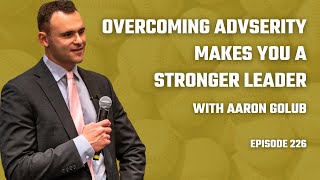
Aaron Golub grew up legally blind near Boston and became a long snapper at Tulane, playing Division I football before exploring pro opportunities with the Saints and Rams. He now does full-time speaking and entrepreneurship, offering four signature talks on adversity, gratitude, disability inclusion, and performance, plus a five-part roadmap for building a speaking business.
Chapters
I'm so thankful and grateful that I was born legally blind because it's made me who I am today. It's helped create the relationships I have, the businesses I have made me as the athlete I became. And when you can find gratitude within the challenge that you're facing, no matter how hard the challenge is, no matter how small the gratitude is, you become a better leader because you become happier, healthier, and more fulfilled. And everyone else around you sees that and emulates that.
Hey. Hey. Welcome back to the bullpen sessions. I am really excited. This is actually a part two. I had this gentleman back on the episode, way back, episode 49. This is episode 226. Today I have Aaron Golub joining me. Aaron is a professional speaker, entrepreneur, and consultant. He became the first legally blind Division 1 athlete to play in a football game when he played at Tulane University. He started his journey as a speaker in high school. Aaron was asked to go on Morning America when he committed to play football at Tulane. And he knew he immediately had a message that would impact millions. And this experience threw him into the deep end at 17 years old. And since then, he has traveled the world sharing his message. So anybody who loves speaking is near and dear to my heart. So, Aaron, I am super excited to have you back on, man.
Yeah, Andy, I mean, appreciate you. We've stayed in touch over the years and really excited to be back.
No, this is going to be fun. A lot has changed in your world since you were first on the podcast. But for the folks, folks who haven't heard, who haven't listened to episode 40 49, are just too lazy to go back and listen to it. Tell your story. Where were you born? What was your childhood like growing up as a legally blind, you know, individual?
Yeah. So grew up outside of Boston, Massachusetts. And, you know, look, growing up, there were a lot of challenges, a lot of struggles. I wasn't athletic. I wasn't the most confident kid. I tried every sport out there was picked last for all of them. You know, never, never was good at anything, whether that be basketball, baseball, soccer. Tried everything. And in seventh grade, I started playing football. And, you know, I was terrible at that to start, too. But that's, you know, what led to my journey of, you know, eventually finding the right position for myself.
So growing up in Massachusetts and, and looking to play, I'm curious with this question. You know, you had a quote unquote disability, and here you are wanting to play a sport or sports with other kids who often did not have that same disability. Did you ever Feel like, you know, you were at a disadvantage or did you just see yourself, hey, as, hey, I'm another kid just trying to play the sport here, foot game of football, basketball, whatever it is.
Yeah, I mean I knew I had a disadvantage, I knew I had a limitation. But at the same time, you know, my goal is just to play and be a part of the team, team. Especially at that age, you know, it doesn't matter if you're the number one person on the field. Of course everyone wants to be that. But I wanted to be decent, but I wanted to play and that's how I saw myself as a kid.
That's cool. Well, you know, and one thing I love about your story, man, at that age, as you're growing up and you're very impressionable, right? As any 10, 12 year old would be. It's so easy to take the advice of others who are like, you know, Aaron, it's a great dream you have, but let's be realistic. At the same time, when you started getting to that age, call it middle school, entering high school, and in your head playing football was something you wanted to be a part of. Did you ever get any of that feedback that told you, Aaron, this isn't just, just isn't going to be a possibility.
I mean, not from myself. I mean others definitely thought it was a little ridiculous. But you know, look, in seventh grade, starting off, you know, of course I wanted to be the wide receiver, the quarterback, the star player and you know, that wasn't really realistic. You know, could I catch a ball 50 yards downfield? Absolutely not. And so I started as an offense and defensive lineman and at that time, you know, like I said, I wasn't the biggest, I wasn't the fastest, I wasn't the strongest, I wasn't the most athletic. But hey, just hit the person, the other color jersey, try and knock them over and then make it 10 on 10. That was my goal instead of 11 on 11. And even now, like I wasn't, I wasn't great, but I didn't play a ton the first few years and my goal was how do I add value to others, add value to the team and be a part of this game. It didn't matter if I was the number one person there. It was, how do I be a part of the team now? My sophomore year of high school, there was a transition where I was the third string junior varsity athlete and I'm sure we'll get into this and I was sick and tired of it and I made a shift. But in the first few years, it was, I wasn't great. It was just trying to fit in and be a part of the team.
That's a, that's a really good transition I want to talk about because one thing I didn't mention to you offline is a lot of our listeners. Listeners are, you know, I come from the insurance industry, so we have a lot of advisors listening, but there are a lot of them are parents who have children, you know, who are the age you were at when, when this was all going on. And I think a lot of parents struggle with what kind of advice do I give my son or daughter who is playing a sport. Maybe they're not the best on the team. And you made a transition that I, I really love between probably that middle school age and into high school, where it went from, hey, I'm happy to be on the sideline and be a part of the team where you're like, dang it, I actually want to be a football player.
Yeah. Yeah.
When did that happen and why did that transition happen? Yeah.
Sophomore year of high school, I was a third string junior varsity athlete and I was so sick and tired of the position I was in, the person I was not being confident, not being athletic, not living up to my full potential. And I really had a decision to make. Was I going to continue to live the life I was living, not play, not develop confidence, not become a better athlete and just sit on the sidelines? Or was I going to make a shift and find a way to accomplish my goals? And I chose the latter. You know, I found a position, long snapping, and I realized that this was such a unique niche position that no one wanted to be. If I got really, really, really good at it, I could play at an extremely high level. And that's where my focus went.
And from that moment on, did long snapping become your primary focus?
It was, it was my obsession from then on out. I mean, it wasn't even just like a focus I was obsessed with. Every morning the rest of the my time in high school, I'd wake up at 5am, go practice long snapping, go to school, go to practice with the team, lift weights every single evening. That was my life the next three years. And it got to the point that senior year of high school, you know, I was ranked as one of the top long snappers in the country, one of the top overall players in the state of Massachusetts. And then from there, which was the next challenge, was the shift of how do I actually get attention from coaches? You know, even though I'M ranked highly. I'm not a top quarterback, I'm a top long snapper.
Yeah, we're gonna, we're talking about that second. But you said something I want the audience to, to take note of.
Not once in that conversation or that shift did I hear you talk about even though I knew I had a physical disadvantage. What you realize, and here's what I love about this is where can I exploit an opportunity to get on the field? When I hear that, I think of there's a gentleman in our industry, Robert Steele, who had, who spent a year or a couple years in the NFL with the Cowboys and the Vikings. And he tells a great story about when he was in training camp, he was a wide receiver and there's 20 wide receivers, you know, trying to vie for four spots. Right. And what he realized is one way, one exploitation I can find is actually go be an, a superb punt blocker because that they always want people who can serve multiple positions. And that's how he found his way on the team. When I think of baseball, it's the same thing. A left handed situational pitcher, the guy that comes in to get one out, those guys are often the most valuable and have the quickest paths to major league baseball. So I love that you found this opportunity as a long snapper. What was that like when you realized, okay, I found my position. Now all of a sudden you're like, wait a second, I'm actually talented at this. And you started getting attention from recruiters. What was it like to go to the camps and the in the where you're looking to get the attention from those college recruiters?
Yeah, look, I mean, I was by no means talented. I remember the first camp I went to, there's a video of, still on YouTube, probably of me snapping a ball and going like 20ft above the punter's head. You know, I was not talented by any means, but what I realized was given my limitations, If I worked 10 times harder than everyone else, then I might have an opportunity. I'm a strong believer that if you do the things that other people aren't willing to do, you will get the results that no one else is able to get. And that's what I just put in place. Like I didn't care. Like I said, I wasn't very good, I was not talented, but I worked 10, 20, 30 times harder than everyone else every single day. And that eventually compounded to the point where, you know, yes, I was at these camps and I was, you know, one of the top guys there or the top guy there, because senior year, I had done this for three years, every single day. And while other people were sleeping, I was long snapping. While other people were going home and napping after practice or playing video games, I was lifting weights and I was doing everything that no one else was willing to do.
Oh, I knew there was a reason I had you on again. This, that, that message right there, that could be the end of the podcast. And I think we have a good episode because what you just said, you know, I don't want to keep going back, but here you are, right? You're legally blind, physical disability, you don't even think about that. You're like, you know what? There's one thing I can control. I'm going to outwork you. I'm going to put in all the work when no one is watching. And while you choose to play video games, you guys choose to go out with friends. I'm going to be long snapping and I'm going to be putting in the work in the weight room. And that, that message speaks to my heart, man. So when did this become a reality? So here you are, you're starting to get attention as a highly rated long snapper. When did it, when did it become a reality for you that college football was actually a real, a potential opportunity?
Yeah, look, I mean, I think spring of my junior year, summer in between junior senior years, is when I started to be, you know, very highly ranked. And like I said before, though, I wasn't a top 10 quarterback. You know, I was a top long snapper. And so for me, it was, how do I grab the attention of schools? And you're gonna love this part because that was my first lesson in sales. I got the contact information, I went online, I found the contact information for every single college coach in the country. Not just every D1 coach, every college coach in the country. I cold emailed all of them until they told me to stop or didn't respond. 15 times. I cold called all of them until they told me to stop or didn't respond. I showed up on more campuses than I can count, waited around in the football office until I got kicked out or they came out and was like, hey, sorry, we're not looking for someone like you. And I consistently did that. And I got told no by every school and eventually two line said yes.
I, I think of all these influencers you and I probably both know, right, that talk about their first book launch and how many no's did they get from publishers, you know, before that one finally Said yes or that. How many banks turned them down for a loan when, when that one finally said yes and the rest was history, what do you think it was, man? I mean.
Going after anybody and anyone just to get that opportunity to play college. What do you think it was at Tulane that made them go, huh? Let's take a, let's take a risk on this kid. Let's take a chance on this kid.
I think they saw that I was a good long snapper and I could be a part of the team. You know, I told them I was legally blind. They knew that and they were willing to take a risk on me. Now, look, if it didn't pan out, then, you know, we might have parted ways, but they were willing to give me that opportunity. They saw the work I put in, they saw I could elevate others, they saw what I was willing to do as a leader and they gave me that shot.
That's cool. What, what year did you graduate high school?
2014.
Okay, so this would be very applicable to you. I'm going to ask an ignorant question because we talk, you know, today you've got all the recruiting rankings, especially in high school football, right? 2, 4, 7 and all that. They do all these camps where you see how the quarterbacks are getting their four and five stars, the receivers, the running backs, the D backs, are long snappers invited to camps like that.
So I, on two, four, seven, I don't remember if I was like a two or a three star. I mean, it was because I was a long snapper, obviously, but I was, I was ranked, I was like, I mean, I think I was like the number 11 overall prospect in Massachusetts for any position. And then I was like 20 something of long snappers in the country. I was like a four and a half star or something like that for long snappers. But yeah, no, they get range. It's different types of camps in different environments. But yes.
Oh, that's cool. Take us to that moment because I can remember my moment when I got that call from UWM and they offered me a scholarship and I realized I was about to play Division 1 college baseball. Here you are at first saying, I just want any opportunity to play college football. Division three, two, one, I don't care. But not only did you get the opportunity, you're now playing with a school that today is in a group of six, right? Tulane. What was that moment like when you got that offer? When you've got, when you were told, you're notified. Walk us through that experience. Where were you what happened? Because those moments are moments you'll never forget.
Yeah, look, it was, you know, probably one of the best feelings ever. You know, basically what happened was, you know, a coach had, you know, responded to my emails. We had been chatting. You know, we had a couple phone calls, and then he, you know, sent me. Sent me a note and said, look, do you have time to chat? I'm pretty sure I was at school. I'm pretty sure I left class because I saw the email and I was like, yeah. And I gave him a call, and he said, look, like, we'd love to offer you a spot. We, you know, want you to come down and visit first, but we. Before making your decision, because, you know, we want you to, you know, make sure it's the right fit for you, but we want to offer you an opportunity. And, you know, three days later, on Friday afternoon, I was on a flight with my mom down to New Orleans to go check out the school.
So this was not one of the campuses you showed up on?
No. No, this was not.
That's awesome, man. So I got a question. You know, when that happened, did you ever. Did you ever. If you look back on it now, and I think what's cool about this story is even when I interviewed you in 2020, I would probably say Tulane was going through more of a rough period with college football. And here they are. Timing of this. They just came off a very. A season where I think they ended up ranked right.
We were ranked number nine in the country at the end of the season, after we won the Cotton bowl, they beat.
Came back and beat USC in the Cotton Bowl. So Tulane football has a whole new meaning today than it did just three years ago. But did when you look back on that and. And realize that you. Your hard work.
Gave you the opportunity to play Division one football.
Does that still give you a sense of pride today?
Yeah, and. And it 100% does. And there's a story in there I kind of want to dive into. And so look, sophomore year of college, I played for the first time. It was my first game. I. I got in against ucf University of Central Florida. Two months later, my coaching staff that recruited me got fired. We had gone three and nine my freshman and sophomore year. It was time for them to move on. Now I was put in this position of like, of anxiety, of fear, of scarcity, because I'd put in all this time, all this effort, and the staff, the one staff in the country that gave me that shot was no longer there. And oftentimes we Build up these moments of conversations. We have to have actions we have to take in our head, and we build them up to the point where the action or the conversation isn't that hard, but we delay it, which causes more anxiety within us. And when the new coach came in, who's the same coach today, Coach Willie Fritz, who's a today great mentor and friend of mine, I didn't know what to do. I didn't know what to say. I didn't know how to have this conversation with him. And eventually it got to the point where I had to. And I had sat down with him and we talked about it, and it wasn't as scary as I thought it would be. And he said, look, you know, I know about your story. Never worked with someone with a disability, but, you know, I'm open to it. Let's do spring ball, see what happens. If we have to chat after this, you know, after spring practice again, then we can never had that conversation again. Two years later, he named me a team captain because of, you know, what I was willing to do on and off the field for my team. You know, was I the best guy ever?
No.
But was I able and willing to push my team on the field, in the weight room, in the classroom, and be a true leader and teammate every single day and change his mar, his mind, his heart and the rest of the coaching staff? Yes.
You know, I. One, I didn't realize it was Willie Fritz because obviously Willie Fritz is the reason they're having so much success today. And I imagine at some point here, he is probably going to get a nice promotion. I hate to say it, but he's probably going. He's. He's a. He's a coach that's a hot coach that's probably going to be wanted here at some point.
You know, when you look at that moment where you. You came into your first game against ucf.
I think the media. I'd love your. I'd love your feedback on this. I think the media is. Loves highlighting that moment for somebody like you. Right. Because here's the first legally blind Division 1 athlete to set foot in a football game. Yeah, but for you, was it just another day on the job?
Yeah. No, look, it was. It was. I had snapped tens of thousands of footballs, and I knew if I went out there and did the same thing, I would be good. And, you know, it meant absolutely nothing. I mean, it meant a lot to me. But in the moment, you know, I didn't think about it at all because as a long Snapper. If you. And it's probably similar as a pitcher, you know, if you go out there with too many emotions, if you go out there nervous or you go out there excited, I was either going to roll the ball back or throw it over the punter holder's head. And so I had to go out there extremely calm, take some deep breaths, snap the ball, block immediately, and tune everything else out. If I didn't do that, I would have had a bad snap.
Okay, so the world wants to know, Aaron, number one, was it a good snap? It was perfect. I want to know this, too. Here's something I want to know about the long snap position, because it is also one of the best ways to have a long NFL career. Right. What. How do you block right after snapping? Because your head's down, you're not looking. What is the. What is your goal after snapping that ball?
Yeah. So, you know, when you snap and release, the way that you do it, at least on a punt, field goals, is a little different. But, you know, on a punt, you snap and you slide back a little bit, and then you have to pop up very quickly.
Okay.
And so you just have to get really good at snap, release, pop up. I mean, when your head's down completely, they're technically not supposed to hit you, but, like, as you're starting to pop up, they can. And so, you know, you just need to be very quick at doing it.
And in a field goal setting, is it more of just a snap and.
Get down snap, and then kind of, you know, you stay low and you block. But the interior linemen are going to help in that situation of blocking in.
Got it. Cool. I love that. Well, man, this. You're an inspiration. The question I'd love for you to tell the audience is if there is somebody listening who has a child maybe with some physical disability, and there's that thought of, there's no chance my son or daughter could ever play a sport because of this. What advice would you give them?
Yeah, look, allow them to fail at, you know, everything that happens, you know, whether it be sports, whether it be something at home. I don't know. I think the biggest issue with kids and parents with different disabilities is a kid struggles in something and the parent two seconds later just goes and does it for them. And if you do that, the kid will never learn. You think I'm good at cooking even today? No. But, you know, I fail at it and I learn and I get better, and that's how you learn, especially if you have a disability and you know, if you don't allow your kids to fail, they'll never get better at it.
Dude, you sure you haven't been in my house before? You talk about a failure of cooking. Yeah, every. Every night for me. So. Okay, so the NFL is not in your future.
And you knew there was going to be a chapter two to this, right?
Yeah.
And.
One of the reasons I created this podcast is because I love talking to former college pro athletes who had a lot of success on the field but have gone on to. And I. And I actually take this back. I'm gonna. I'm gonna correct myself. There was a time you were an NFL free agent, is that correct?
Did my pro day. Talked to a few teams, but I didn't pursue it past, like, kind of a couple tryouts and things like that, because I wanted to not myself, not set myself, you know, back in the world of business. And, you know, yes, if I got an opportunity right, then I would have taken it.
Out of curiosity, who did you try out with?
I had conversations with the Saints and the Rams.
That's awesome.
And I had studied finance at the time. I wanted to go into finance. The world of speaking. Entrepreneurship wasn't really even on my radar back then. And, you know, had a job offer from a very good financial firm and, you know, went to that, you know, after college.
Well, and this is where we're going to go now, because one of the reasons I host this podcast here is I love talking to athletes who. Former pro college athletes who have really gone on to have success in chapter two of life. Because it's something athletes struggle with. Right. That sport, for so many, it defines you. And then all of a sudden when it's over, you're like, what next? And you've done an amazing job. In fact, when I interviewed you in 2020, you were a financial planner, financial advisor. But today you have actually gone on and done even better things. You're a full time keynote speaker. You own a consulting business. So let's talk about that. Where did your where and how did your keynote speaking career take off?
Yeah, look, after college, I went into the world of finance, like I said, and I started doing some speaking soon after. It wasn't really much. It was, you know, maybe going on podcasts or, you know, a free thing here or there. I had done that in college when my coaches would ask me to, and I just, I wanted to keep sharing my story and giving back and things like that and helping others. And I kept doing it. Kept growing a little bit here and there. And then eventually I realized, like, look, I don't really want to do finance full time, or maybe I want to do both of them full time. I didn't really know. And so I started to really put time and attention into speaking. That started to grow. I started to travel, you know, speak at companies, events, schools, all over the country, all over the world, and eventually got to the point where, you know, I was doing a lot better at that than I was at finance, mainly because I enjoyed it better. I liked entrepreneurship. I like growing and scaling a business. It's fun for me. I like, like, helping other people. And I left. I love finance. And, you know, speaking has developed into, you know, doing workshops as well, doing consulting, doing so much more. And it's just. It's. It's such a fun path to be in the world of entrepreneurship. Now.
Got a question for you on that, the entrepreneurship side, because I. I know, I feel it, and I'm curious if you do as well. Do you view entrepreneurship a lot like being an athlete?
I do, and it's mainly because in, like, look, I'll. I'll put it this way. The number one thing that I focus on in my businesses is how do I help and impact others. That's. That's my number one goal every day. My number two goal is how do I grow a profitable business? I love, like, money is not my number one thing, like I just said, but it is in my top two or top three because it's fun for me, man. I have very specific goals of, like, I want to do better. I had a great January. I want to beat that number in February. And that is a fun game for me. The same way athletics was fun. Like, it's. It's. It's not that I need to make more money or want to make more money. It's just genuinely fun for me to be like, how do I do better this month or this quarter this year? Like, I enjoy that.
No, I think it's a really good point. There's nothing wrong with profit because at the end of the day, money allows you to do even greater things for people. And I think for me, it took me a long time to dive into the world of entrepreneurship, much longer than you. And I realized when it really became fun is when I started viewing it like I did as an athlete, which is when I put all the work in off the field when no one's watching. And I do that consistently. I know I'm going to have a successful business. And. And when it. When you're confident in that result, I think it allows you to also have some patience as an entrepreneur.
And it's, it's really deploying the same strategies you used on the football field and I used on the baseball field.
Yeah.
So let's talk about this because you, you're doing a ton of keynote speaking now on leadership, and you have workshops on leadership. And what I love about what you've built is you have four, call it signature talks slash workshops that you provide to very large organizations. Some you shared with me offline. I mean, Fortune 500 type companies. Let's dive into the first one, which is adversity based leadership. Talk to us about that.
Yeah, you know, look within that. It's really talking about despite the obstacles, the challenges, the adversities that we face, how do we come up with the right strategies and techniques to help us overcome them, accomplish our goals and create success? You know, that's really diving into my story, talking about the adversity I faced and talking about the strategies that you, yourself, your company, your team, your event can use to overcome the challenges that you face at hand as well.
Cool. And when you think of adversity today, let's equate this because. Right. Your adversity obviously is more very well known. But when you think of a, when you think of adversity based leadership today, what do you see as some of the bigger adversities leaders face today in corporate America?
Yeah, look, how do you get your team to perform? How do you overcome all the fires that are coming at you every single day? Look, there are these general ones that you see across the board that present themselves. But at the end of the day, the biggest adversities are probably the ones that we don't see. And they're unique to ourselves. They make us different. And I always ask this when I speak, when I do that, think about the adversities that you face. You know, my greatest adversity is something that no one ever sees. How do I navigate an airport? And how do I navigate crossing a street without getting hit by a car? Those are my biggest adversities. Mine aren't harder than yours, yours aren't harder than mine. They're just different. They're unique. They make us who we are. And when you can think about your adversities, whether it be those personal ones, whether it be the larger ones, as a company, you're able to dissect them, understand them, and come up with strategies to overcome them.
And I also think, you know, when you think of those as well, like you just said, with your own adversities. Your adversities are things people don't even think about every day. Right. I don't think about the adversity of crossing a street or going through an airport. But likewise that having that empathy as a leader to go, do I actually recognize the adversity my employees are going through?
Because especially today, there's a lot of adversity, mental, physical, whatever it might be that so many are going through. And I think as a leader, you have to recognize that.
Yeah.
How about your second signature workshop and talk this one. I love gratitude based leadership. I know it sounds obvious, but let's talk about what gratitude based leadership means.
And look, this is probably my favorite one to do because it's focusing on if you can lead with gratitude. I'm a strong believer that people are more willing to follow you and work with you. And so I say all the time, I'm so thankful and grateful that I was born legally blind. If I could go back to birth and change it, I wouldn't do so because it's made me who I am today. It's helped create the relationships I have, the businesses I have made me into, the athlete I became. And when you can find gratitude within the challenge that you're facing, no matter how hard the challenge is, no matter how small the gratitude is, you become a better leader because you become happier, healthier and more fulfilled. And everyone else around you sees that and emulates that.
That's cool. No, that's. I love, you know, I know people with physical limitations and physical disabilities. Even my own girlfriend has a physical disability where when she was born, her, her umbilical cord was wrapped around her leg. So now one leg is shorter and much smaller than the other. And that, that's its own form of physical disability. But like you just said, I don't, most people, I don't think would go back and change it. It is, it has shaped who they are today and, and if they had the right mindset, it shaped them positively. And so I love how you said that. Let's talk about the popular one today that everybody knows about the DEI based leadership. You know, DEI is a very popular subject today in corporate America. When you dive into this topic because it could be a touchy one. What is your angle you take with DEI based leadership?
Yeah, and look, that wasn't something, when I started off speaking that I spoke on or wanted to speak on, but I consistently got asked about it because these companies had someone from, you know, coming who's, you know, maybe a different Gender, a different race or, you know, one of those. And a lot of companies didn't have someone who came from, you know, a different disability background. And so I started to get more into that and start developing a talk around it. Now, look, do I touch on any of those other boxes? Absolutely not. I'm not an expert on any area of DEI except talking about DEI when it relates to disabilities or, you know, inclusion and belonging as a whole. I make it very clear up front. But when it comes to that, it's like, how do you create an inclusive environment where everyone feels belong, where everyone feels like they belong within your culture, within your environment, you know, despite who they are, despite their differences, despite the things that make them unique. And you know, talking through that with companies within organizations.
Yeah, no, I like that. In fact, I, I'm doing a workshop series this year with a peer of mine in the insurance industry as a collaboration and we're talking about DEI from a different perspective because something that has shifted in this, in this war, in this society in the last couple years is diversity of thought, that it's okay that your employees, people within your own organizations have different beliefs about things. And, and that's very important. You establish that. Well, let's get to the fourth pillar, the fourth workshop, fourth keynote here. And then I'm going to ask you some questions about speaking because you've done a fantastic job with this. This is my favorite because it's probably the athlete and me. Let's talk about performance based leadership.
Yeah. When it comes to that, it's pretty straightforward. How do you get the most out of your team, out of your employees, every single day? What do you need to do to push them to accomplish their goals, to be a players day in and day out? And that's, you know. Yes, that one's probably more of a motivational style one, but it's really, how do you push everyone around you to perform the best? What do you need to do as a leader to get there?
That's cool. And I imagine the punchline to all this is as an organization, if you view your leadership from the angle of adversity based leadership, gratitude based leadership, DEI based and performance based, you're gonna have one fine, well oiled machine. Definitely. Yeah. No. Now you have taken these talks, man, and remember, this is what makes me so proud of you, is not even three years ago, you and I sat here and you were just starting your financial planning career.
Yeah.
Here you are now, entrepreneur on your own with a consulting business, out publicly speaking. Did I hear around the world?
Yeah. No, it's. It's not just the U.S. i mean, 90 of it, 95 of it's the U.S. but, you know, other countries as well. I was in Canada for a few days with a company back in October. It's. It's a lot of fun.
That's fantastic, man. So I'm gonna ask a question I know I have, and. And so many others have.
How do you go about making public speaking a big part of your career?
Yeah. And so, you know, let me. Before I answer that, I'll say, you know, one of the ways that I do consulting, as we talked about, is, you know, I run a business where we help speakers or people who want to be speakers grow and scale. And so that leading into that will answer your question there. And so I break it. We break it down to, you know, five sections. Clarity, marketing, lead generation, sales, and growth and scale. And when it comes to clarity, first figure out who do you want to speak to and what do you want to speak about? You can't just say you want to be a speaker and not understand that, you know, do you want to speak to companies? Do you want to speak to schools? Do you want to speak to associations? Do you want to speak at conferences? What do you want to do? Yes. You know, someone like myself, now that I've done it for, you know, a handful of years, I speak at a variety of, you know, different areas, but my biggest is corporate. But someone starting out should really pick one and focus on that one, and they should also figure out what are the topic or the topics they want to speak on. Once you have that clarity, you understand that audience, then you can start getting everything else together, you know, within the marketing and lead generation sections.
Why do you think so many people fear public speaking? You know, something I heard from a mentor of mine that we work with today, Rory Vaden, is public speaking is the quickest path to cash because it's a great way to create a following. Why do you think so many people are afraid of it?
You know, it's funny because it's the biggest fear that most people have. They're. They're afraid of that more than death. And they don't. They don't know what to do. They. They are just scared to be in front of other people. They're scared of being judged. They're scared of being criticized. And, you know, they need to get past that. That's. That's the biggest thing and biggest obstacle, I believe.
I'm gonna ask you a question, and I'll Be very curious of your answer and if you don't want to answer it, feel free to say, I don't want to answer. But, you know, I think one reason, I think a lot of people are afraid, right, is they get on stage, they see this room full of people, whether it's a hundred, five hundred or thousand, you know, and immediately they freak out, right. They. They freeze in your case, because you have, you know, you're legally blind, and many you. You literally can't see that audience.
Yeah.
Does that help you get in the zone of. Of a talk and just almost be in your own element?
Not really. I mean, look, I can see people are there. Can I see, you know, their eye color, the shirt color? Can I see the details? No. Can I tell you your eye color on this, you know, zoom right now? No, but, you know, can I see that you're there? Yes. And so I still know people are there. I think the biggest thing is just getting into, you know, a state similar to, like athletics, you know, understanding what. What does that flow look like for you? You know, how are you going to be the most confident? How do you control your breathing? How do you prepare? You know, if you're prepared, you're not going to fail. You know, every single person in that audience wants you to win. I think that's the biggest thing that people need to understand and I. They don't want you to fail. They want you to win. They want you to succeed.
Thank you for saying that. I say that so often. Aaron, you know, for you speaking, it's just. It's that it's like running on the field against ucf. You got a job to do. Just get that ball to the punter, right?
People are there to help you win.
Because if you win, they win. They learn something, they're motivated, maybe they take the action they have been holding off on. So to have this fear that people are actually in the room to watch you mess up couldn't be farther from the truth.
So talk to us about how if. If there is somebody listening in who does want to take their public speaking career to the next level, how could they. They work with your consulting firm to help make that happen?
Yeah, look, I mean, just reach out to me. My, my Instagram, my Twitter, my email. Aaron, Aaron goll.com Our website is initiateconnections.com where we, you know, lay out the roadmap. But, you know, regardless, if you work with us or you do it on your own, I think the biggest advice I would give to someone who wants to Become a speaker or grow as a speaker is develop a system to consistently get leads and get stages. Too many people. And this happens all the time. And we cancel calls because this isn't what we do. If someone signs up and we see it on their form, we cancel the call. Too many people either say, you know, say, oh, I just want an agent or speaking bureau to do it for me. Look, that's not how the world works. A, until your speaking fee is 15,000 or more, any credible agent is not going to touch you. That's, that's the first thing. Second, even when you have agents, I work with a couple agents and bureaus. I don't get many gigs from them once in a while, but 99 of my gigs come from me doing outbound messaging to people. And so you need to set up systems to do cold emails, cold LinkedIn outreach, maybe doing cold calls, maybe whatever, setting up marketing to, you know, get people in the door. But the fact of the matter is I see so many speakers. Doesn't matter if you've never started or you make a $500,000 a year as a speaker or you're really good at business who are like, yeah, I just want to get booked and pay. I'm like, that's not how it works. You know, no one's just, that's not how it works.
Yeah, that speaks to my heart because we are right in the middle of a season at our company where we are sending out our media kit and everything to as many speaking opportunities as we can. And I know, Aaron, with almost 100% confidence and accuracy that when we do that, you'll see a lot of keynotes booked in the next six to eight months. It's, you've got to put in that work. Just like prospecting in sales, finding speaking gigs is no different. Yeah, and, and what I love, I'd love to get your opinion as well, because something I see from, from the insurance industry when it comes to speaking is speaking is a craft. So just like you becoming a long, a highly recruited long snapper, Highly rated long snapper. It took thousands of snaps. Practice after practice, snap after snap. Do you believe the same applies to speaking? If you want to get better at your craft, it's all about the work you're putting in off the field.
Definitely. You know, if you are actually practicing, you are going to get better. You know, part of it is, you know, not always the best speakers get booked for, for keynote. So I'll just be completely upfront with you. This speaker who looks like they are the best online, who has the best marketing materials, who has the best lead generation system, who is the best at sales is the one who's going to get booked. I can promise you that. However, if you show up and you don't deliver, you're not going to get brought back. So you need to practice, you need to be good at what you're doing.
Great. I love that. Well, man, it's been fantastic. A couple last questions for you. Number one, somebody is listening and they're like, I'm not going to leverage speaking, but man, this guy's inspiring and I want to follow him. What are the easiest paths to following you?
Yeah, look, go, you know, Instagram or Twitter, Aaron J. Gollub is my username. You know, my website's Aaron aaron or aaron goll.com and you know, if I can ever, you know, help in any way, email me, reach out. I'm always happy to connect.
Okay, fan, fan question here. Is Willie Fritz going to keep Tulane ranked this year?
I hope so. I think so. You know, we, we lost our, you know, running back this year. He's going to the draft and he's going to play for a team next year, I'm sure, who is, you know, he was one of the top running backs in the nation. But I think, I think he's built a great program and I think they will be very good next year.
At least that's got to be, that's got to feel good. When you see a program like that put up, be put on the map and that's, that's a fun thing to see. Last question, man, you're, you're, you know, you're few years out of college now, a few years out of football, onto very successful things. If you were able to sit down with your 12 year old self.
Is.
There any other advice you'd give that younger version of you today that maybe you didn't know back then?
Yeah, you know, I think it's.
I think it's understanding that it's okay to try and fail and understand. I think I understood that to some degree back then, but I think it's a really big lesson because too many people believe that failing at something is the end of the world. We're brought up to believe if you get a D or an F on a paper, on a test, you know you failed and that's not true. If you get an F on something, if you fail and you learn from it and then you get a C and then you learn from and you get a B and you learn from. You get an a on the 17th try. That initial failure wasn't failure. You turned it into success because you kept going. Too many people fail once and then quit. But if you keep trying and you keep learning, you'll eventually succeed.
That's awesome. Yeah, I, I go back to your your first snap you ever took, how far over the punter did it go?
Like 15ft.
How many people in real life, insert, insert 15ft over somebody's head to a failure, selling something, putting out a social media post and somebody rips on you. How many people would have quit after that first nap?
Yeah.
So many. And man, you are just an inspiration. And like I said, seeing where you are today, even compared to when you and I connected three years ago, it has been very, very impressive. So I want to thank you one more time for being on, taking the time to be here and for everybody else, if you're listening in, if you're not inspired, check your pulse. But I hope you are going to take what Aaron shared with you today. Love to fail. Fail fast, fail often, learn from it, because that is the only way we grow. And you know what happens when you mix clarity with a little confidence. You go on to do some pretty amazing things. So I wish you the best. Go do those amazing things and have an amazing day. Be well.
More from Andy




If you want producers to succeed faster, help them create a sales message that creates confidence.

Sales isn't a zero-sum game! You can have tough competition and still grab a beer after



Option 1: Meditation, a fast walk, a podcast, and protein. The ultimate morning routine!

How you do one thing is how you do everything. Ill elite producers fuel their body.


Stop living in the gray of maybe! Your job in sales is to get a clear yes or no