228. Be The Leader Others Want To Follow with Andre Young
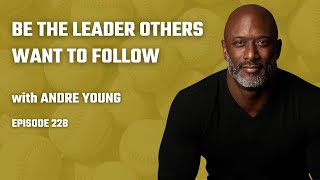
This YouTube interview (Bullpen Sessions ep. 228) features Andy Neary interviewing Andre Young. In this segment Andre recounts his Philadelphia upbringing (born 1976), witnessing the 1980s crack epidemic, and the protective role of his parents. He describes early school experiences (George Washington Carver Engineering & Science magnet school, later Martin Luther King High School), being academically ineligible and playing semi-pro football at age 15 so he could continue competing, then returning to play his senior year and earning a scholarship to Kutztown University (Division II). At Kutztown he struggled academically at first, suffered an early injury, then hit a turning point entering his junior year after nearly being asked to leave and discovering an engaging sociology class. Themes include resilience, mental toughness, leadership development, ADHD/inattention (self-identified), and the importance of mentors and second-chance opportunities.
Questions this video answers
1976
Episode 165
15 years old
George Washington Carver Engineering & Science (9th–10th grade), then Martin Luther King High School
Kutztown University (Division II)
Chapters
So I believe in tone setting hits and that's applied to now my business. When I take that stage, this is someone different and this is a new experience and it's a tone setting hit in a more pleasant, I love that way and I teach my kids when you walk on the court, when you walk on the field, you make eye contact with everyone you respect, everyone you fear, no one start fast, you go hard and you know, it's amazing what will happen.
Foreign.
Hey. Hey. Welcome back to Bullpen Sessions. My name is Andy Neary and I am excited this week because if you've been listening to my last few weeks of interviews, you've noticed I brought back on some guests from the past and today is going to be no different. I look at the people I've had on the podcast in the past, whether it was a year ago, two years ago and I some folks I just, I am very, very intrigued to bring back on. Number one, they're just good people and two, they talk about, they're, they're focused on topics that are very, very timely today. So remember the common tie they all have is their former pro, college or pro athletes, but they have gone on to chapter two of life to have tremendous. Andre is a professional speaker, author, leadership trainer, founder of you Evolving now llc. He works, he worked as a mental health therapist for 919 years, played sports at every level from high school to professional. He's been an employee, a business owner and self employed and has written four books focused on enhancing leadership and work life harmony. So I'm excited because if you listen to Andre, he was on episode 165. He's had a hell, a hell of a sports career. He's had a hell of a career as an entrepreneur. So Andrew, welcome back my friend to Bullpen Sessions.
Wow, thank you so much. Such an awesome introduction and always a pleasure to spend time with you and you guys listening. Thank you for letting me steal some of your time. And I would say, well, I had an okay career but an awesome is about five minutes in the pros and out of there, but a great experience nonetheless.
In baseball we call that a cup of coffee. Andre. And, and, and I, I too had a cup of coffee in pro baseball. So we're going to talk about that for sure. Quick. Before we dive into your, your story though, who do you got this weekend, the Eagles or the Chiefs?
You know, I have to go, I have to go with what wins championships. So I'm going with the Eagles. I'm from Philly, but I'm a Steelers Fan, I like to see the Eagles win. However, I would not be upset if Patrick Mahomes gets two. Two Super Bowls solidifies you in a, in an air that can't be reached. However, I know that running the ball and having a great defense wins Super Bowls. So I got to go with the team that's been consistent on defense all year long and has been able to run the ball all year long. So from that, I have to go with the Eagles.
Yeah, well, and I, I, I, I will say I'm kind of a sucker for good stories, and I actually find it that how many, you know, how many people doubted Jalen Hurts as a quarterback when he got drafted, and here he is leading the Eagles to the Super Bowl. Heck, he could easily be the MVP this year.
He's the MVP in, in my world, regarding mental toughness, I mean, we're talking about sports, athletics, athletes. We're talking about leadership. Look, at the end of the day, mental toughness matters. And your middle, strength matters. It's not always what you do in the beginning, although important, is not always what you do at the, at the end, which is important. How do you do your middle? And I don't think anybody's done their middle better than Jalen Hurts.
Yeah, no, we're going to talk about that because you spent a large chunk of your career in mental health, and I think that's a big thing we need to talk about today. So. But before we get there, you know, people can go watch or listen to episode 165. Let's go back there. Where were you born? Tell us. We're going to start with the upbringing of Andre Young.
Oh, yeah. I was born in Philly. Philadelphia. Inner city Philly. Who was that? Born and raised.
I was gonna say. It's kind of a, it's kind of a Will Smith story here, right?
So it was, you know, it was cool.
Interestingly enough, though, like, I was born 1976. However, being a kid, 9, 10 years old, it's when crack cocaine came out. And I have never seen anything like it. I mean, you talk about the zombie movies and World War Z. You, it, it was like a, a plague, a tidal wave that just hit my, my area where I lived and just wiped through everything. And it was, you know, one summer. Everything's good. You, you know, people, there's friends down the street and all of these different things. And the next is like, you know, so hard to watch people that were just straight A students last year laying on the top of a Cadillac and can't get up. You know, it was. It was a hard experience to see and go through. Very dangerous experience at times. However, what a life lesson of what to do, what not to do. And I was very blessed and honored to be able to have both my parents at the same time. And being a guiding force to say, listen, you got to leave the house, go that way, not this way. And being very mindful about who you spent time with was really, really important. So I really honor them for leading us through that, especially while we're out there in the world pre cell phones and they have to listen to gunshots and drug deals and this and that, and just praying that your kid comes home. I can't imagine what it must have been like for them.
Well, and it's funny you bring up the cocaine pandemic, right? Like, I remember I was born in 77, so a year after you. But it. I've heard this a lot lately on podcasts, people who grew up, you know, maybe in Philly or New York. The 80s was defined by that cocaine pandemic in some of those big cities. Yeah, even. And, and think about. I, man, I was, I was looking at something a little while ago about, I think it was like the 1985 or 86 NBA draft. And how many of those first round picks never did anything because they were banned for cocaine?
Wow.
They were out of the league in a year because of drug abuse. And that defined that time, unfortunately, you know, but you said something, you know, thinking about being born and raised in Philly, you said something early in the podcast about being a Steelers fan. I gotta ask, man, how does a kid born in Philly become a Steelers pant fan? That becomes. That's like sacrilegious.
You're gonna get me in trouble here. With all of the Philly people listening and you guys at home like, I love you great people.
That time in my life, I was just really falling in love with football. I got into sports late, you know, by all concerns, like, so about 13, 14. And there was a stretch of the Eagles where I compare it to. It's the girlfriend you love. You love her to death, but she keeps freaking cheating on you. And at some point you just gotta let her go. You gotta let her go for your mental health, you gotta let her go for your future. And they were just so dag on bad. And at that time, I was falling. I fell in love with football, and I was a defensive guy at heart. I wanted to hit, I want to smack now. The Eagles had a great defense at one point. Like, early 90s.
Wow.
I can name every single player from that team. However, the Steelers. I mean, I. I could name everybody from their team, just the way they played, the way that, you know, and then their offense and the winning, and it. It was a really, really transformative time for me, and it really stuck with me.
Yeah, you think about that early 90s, man, that defensive line for the Eagles, that was legendary.
I can name every single one of them.
Who is the guy that died or Jerome Brown? Was he the gentleman? The guy that died, that died while he was, you know, too. Way too young. But I mean, Reggie White, Jerome Brown, Clyde Simmons.
I can name the linebackers, the safeties, the DBs. Great, great, great. However, around 94, 95, when I was really coming into my own high School wise, like 93, 94, the Steelers were really.
Yeah.
At the. At the top. And it was fun to watch them.
Yeah. No, you're absolutely. So what. What. What high school did you go to in Philly?
Well, I went to. I left because they couldn't have been more different. So my 9th grade and 10th grade year, I went to engineering and science, so George Washington Carver, Engineering and science. It was a magnet school, really smart school in the city.
And I failed out of there real quick with four Fs, two Ds, and a C, and I left. But what I understand now is that I'm adhd, you know, inattentive type. My son has the same thing. However, I didn't know a name for it back then. All I knew is that I was sitting in class listening to the teacher.
But I couldn't maintain time. Like, her voice. She was speaking English, but it sounded like Charlie Brown's teacher. Wah, wah, wah, wah, wah. So I'm in school every day, and I remember my mom looking at my report card and it's like, what is this? Like, she's never seen the letter F before. And I didn't know how to explain it to her because I was in school. I was there every day.
So I was not even. I was coming into my like and love for football at the time, and they didn't even have a football team. So it was so fortuitous that I got sent to my neighborhood school, which is Martin Luther King, and guys, please forgive me. You're listening to this in Philly at that time, and, you know, it was the worst school in the city. We had a mobile police station that sat out front that couldn't leave. There was multiple. It was. It was a lot going on. I won't get into all of it.
And now I'm with my neighborhood friends. And to be very honest, I mean the school had a lot of great charter programs, but nobody ever told me I didn't know anything. And I'm the starting running back and linebacker. And then they come to me the day before the game to say, son, your grades just came in, you can't play. And I remember crying like a baby.
And that's when I decided to play semi pro football. And I wasn't getting paid so I can go and play my senior year. And I made the team for this adult team with 20 year olds and 30 year olds and we were the Northwest Giants. We had authentic Giants uniforms. We played the Eagles, we played the Steelers under the lights and I was the running back. And I remember scoring my first touchdown against the Raiders in the snow in the playoffs. Still remember my dad coming out of the stands giving me a hug. The, the, the, the team raising me up, it was so called 15 years old, you know, and then I got to be able to play my senior.
Year and earn some scholarships, I was going to say. So that's really interesting, a really interesting journey to coming back to high school football. I didn't realize that. So you were actually playing like a local semi pro league because you were academically ineligible to play in high school and playing like you said, probably with adults. Here you are 15 years old. So a couple thoughts that come to my head right away. Now you come back to high school football your senior year. Do you believe being a 15 year old playing with adults helped you when you came back to high school football and now you're playing against guys your age?
Yes and no. So.
Who I was playing with or against never meant anything to me because it was all about me. It was about my dream, my passion, my will, and nothing was going to stop me. And that's the way I encourage everybody to look at their dream. You marry your dream, but not the path. So who I was playing against didn't matter. It seemed to matter to everyone else, you know, to a degree where, you know, and it's really interesting, nobody at that time was saying they were proud of me. I still remember my mom saying, well, once you take one of their hits, you're going to come back, you know. And I remember saying, why would you say that? However, I now realize as a man that that was a mom scared that her baby was going to get broken in half. Not everybody that says something that offends you is hating on you. Sometimes they're scared for you or they wouldn't do it, or they see danger that you don't care about. So that's a life tip. And there were some people in. In the neighborhood that, you know, maybe didn't like that. I was doing that because I thought I was too good to play. And now, now I'm a challenge or something to conquer, like, so I didn't really get a lot of accolades for it. However, I do remember one big hit that I took. I forget his last. The league. We're going to talk about the Eagles from the 90s, right. I remember catching this path and this man hit me so hard, I remember flying the other direction. It didn't hurt, but I'm sure it looked really bad. And at that moment, if he didn't break me, no one could break me. So going to play high school football.
Was, you know, it kind of became a cakewalk. I hate to use that terminology, but you know what I love about what you just said, Andre, is when you were told, son, you can't play, you're academically ineligible, it would have been easy for you to shut down, but you decided to take a different path and do something most people wouldn't have done, which is, I'm going to go play semi pro with these adults because I want to play football. And I think your point about your mom's concern for you, a lot of people are going to put what sounds to be offensive is them just placing their fears on you. Right.
But there's a lesson in that to be learned, that when you were hit with your first failure, which is I'm academically ineligible, you decided to do something about it, which was go to play in the semi pro league.
Well, and for. For me, like, from how I operate, it wasn't like this big thing like, I'm gonna go conquer this. I just wanted to play.
Yes.
So I give. I give so much credit to the coach that let me play on an adult league at 15 years old. And what that's really done for me is I hope to your listeners there's going to be people sometimes that come out of the blue that you believe have no business or the capability to do the job and the task they're asking for, but the fact that they're in front of you and asking what will happen when you give them a shot.
I was just. You just hit it on the head. I was going to say every success story, I think, has two parts. Number one, your mindset, the mindset of that individual to overcome the failure, which you did. By saying, I'm going to go play semi pro ball. But part two, the second part is somebody there to give you a chance. A success story always has to include somebody willing to give someone a chance. And that's exactly what happened to you. So you're back playing high school football. Walk us through the journey. You ended up at Kutztown in Kutztown College in PA in Pennsylvania. What was that journey like? How did you end up playing? I believe that's Division two.
Yes.
How did you end up at Kutztown?
Well, what. I had aspirations, as many athletes do, of going Division one and maybe I could have the talent or not. I was so raw because I had played little league for one year, I played semi pro the next year. Okay. And then high school football. So I was so raw and I wasn't this overly big six four, 220 pound kid. Okay. So.
Getting the scholarships and I'm looking around and Kutztown felt like home. And it couldn't have been more different from home. I'm coming from inner city and I told you the culture and what was going on where I was at, not that it's bad people, a lot of bad things happening and a lot of fun things happening. And then I go to Kutztown University and if you know nothing about it, it's Amish town. So now I'm hearing the clickety clack of horse and buggies. Yes, you heard me correctly. Horse and buggies. And, you know, the biggest transition.
The biggest transition for me personally and athletically so personally was getting used to safety.
Every player that I saw come up from any inner city afterwards me, it was a two and a half month roundabout adjustment to the quiet and not having to look over your shoulder, people walking behind you briskly and not having to look around your shoulder, people apologizing and saying sorry for nothing or I'm sorry I bumped into you. I'm sorry. Like that wasn't happening where I and a lot of, you know, other recruits were from. So it was. That was the bigger adjustment of how to relax, but then also how to return home because, you know, you know, now you have to readjust.
Athletically and academically.
It was, it was in the old adage of time management.
I did okay. I got hurt my, my first year. Wish I would have parted a little less. Okay. Drank a little less, worked out a little more. So what I learned is it's about creating a marriage. You want to be successful, you want to be a leader, you have to start marrying and be curious enough to marry what you want to do and give with what the person receiving your effort needs most from you right now. So I want it to work out a certain way. I'm saying I want to be good. I want to do this. I'm going to do that. But I never asked my coach, what do you need most from me right now? What do you need from me so I can start and I can be great here? And there could be a freaking statue outside when I come back? When I'm in my 30s and 40s with my kids. And although I took football further than some people did, I was not the greatest player at Kutztown. I played with a guy that went 15th overall in the draft from KU. From good style I went. I played with guys that were naturally touched by God to be football players. I had to work at it. And I never asked my coaches, what do you need most for me right now? So I. To this day, I am frustrated and embarrassed that I'm not going back and my kids don't see something with my name on it that aggravates me.
Two questions.
You know, ironically, though, even though Kutztown is a Division 2 program, it's had a few guys go to the NFL. I think the one that you played with, was it Mobley.
Yeah. Yeah.
Who ended up having a nice career with the Denver Broncos, Two Super Bowls. I say that's an okay career. Right? Two questions that I. I ask as a former athlete myself. Number one, when was that moment, what I call it, your rock bottom moment, when you realize, like, dude, you've gotta. I've gotta change if I'm gonna have a successful career here?
Yeah.
And then number two, playing Division two, knowing maybe you had a shot and the ability to play Division 1, did that cause you to have a chip on your shoulder at all while you were playing at Kutztown?
To answer your first question, the rock bottom moment, it was going into my junior year. It was five years at Kutztown, going into my junior year, and almost failing out of the university for the second time.
You know, I was there to play football when I got there. Classes were optional, fun was a must, and I had a ball.
But I. I would say it was to my detriment, because at one point I looked around, and it was the second time. Look, I'm about to, you know, academically be asked to leave. And I looked around, and most of the people, 95% of the people that I came in with weren't there anymore. And at that time, at that moment, I Remember the moment. Not this precise day, but the moment. And I said, I have swam too far. I'm swam more than halfway. You wouldn't turn around and swim back.
Finish.
Finish. And I encourage every single one. You want to be a leader of your life, professionally and personally, you gotta listen and apply your epiphanies. We all have them. We all have that moments where it stops us like a ton of bricks in a millisecond of a thought of enough finish. And that was the day everything turned around. And it really did help that I found sociology classes. And it was the first time I found classes that piqued my interest. I love people, I love studying people. And this was a class all about people and the way the world works. And my grades went from Fs and Ds to. And being eligible. Okay, the whole goal is be eligible now to A's and B's. And it really changed everything.
What about the. Yeah, I love that. You know, it's funny, I think of college programming today. Looking back at my career, I almost feel like psychology, sociology should almost be a required course today in college. Yeah, the ability to study people, read people, interact and adapt to people. I think it's something society is missing horribly. So, so I, I thank you for saying that, that that class had a big impact on you. Because I look back, I didn psychology courses, but I look back and go, man, I wish I would have it all over again.
So much of it is theory. I would really like for them to start putting some practical, real life application things of it. Because you can learn theory, you can learn why it's helpful. But how do you use it with your wife or girlfriend, husband, boyfriend, at the moment, your coach at the moment. Let's take some of these things in theory and really make them applicable to today to allow the student to, to really prosper where they are right now. Not with simply getting a job later. Which no one's going to ask you about your sociology class.
Yeah, what about that chip on the shoulder? You know, folks, if you're listening, this is. We're talking what, 1996, 97. There were no nil deals especially. Especially Division 2 football playing out. K. Town. What city, what's. What city is that located in? Pennsylvania? Kutztown, Pa. K.
Did you, you know, did you play with a chip on your shoulder?
I didn't necessarily have a chip on my shoulder. All I wanted to do was hit.
I wanted to hit, I wanted to go. And.
The chip on my shoulder really came from me being I was a small linebacker, Okay? I was already small, so the chip on my shoulder really became me, thinking that everybody that saw me thought they could beat me. You thought you could take me? You thought this was.
More from Andy




If you want producers to succeed faster, help them create a sales message that creates confidence.

Sales isn't a zero-sum game! You can have tough competition and still grab a beer after



Option 1: Meditation, a fast walk, a podcast, and protein. The ultimate morning routine!

How you do one thing is how you do everything. Ill elite producers fuel their body.


Stop living in the gray of maybe! Your job in sales is to get a clear yes or no