230. Making The Successful Shift From Sports To Business with Clay Harbor
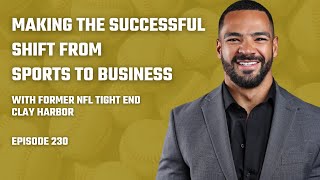
Clay Harbor grew up in small-town Illinois playing multiple sports before becoming an all-state athlete and NFL player. He credits discipline, daily routines, and coaches who believed in him for making the jump from limited opportunities to professional football, then into business and media.
Chapters
In mid fourth round, I get this call from Phillips Eagles. That's Andy Reid. Clay, Andy Reid here. We're going to draft you. How do you feel about being a Philadelphia Eagle?
Hey, hey. Welcome back to the bullpen sessions. My name is Andy Neary. I am excited today because I get the opportunity to sit, sit down with Clay Harbor. If you are unfamiliar with who Clay is, Clay is a former tight end in the NFL. You're going to learn here very quickly. He played for some of the best coaches in NFL history. So that's going to be exciting. But what I love about Clay's story is he grew up in a small town outside of Chicago, became a football sensation at a small high school southwest of Chicago, went on to play college football at the FCS level and then turn that career into a successful NFL career. And, and most important, Clay has also transitioned into a very successful chapter two in life as well. And he is a, a consultant, a sports media analysis, a keynote speaker. All things that speak to my heart. So all things I want to love, I'm going to love to talk about. So Clay, welcome aboard. Welcome to the podcast.
I appreciate you having me on, man. I appreciate the time and you know, I love talking about those things as well. Those things are very dear to my heart. I love talking about, you know, habits, routines, disciplines, the things I was able to do to become successful and then share some of my story and some of the experiences I had that kind of shaped me and helped me especially with some of these, you know, big time coaches like you mentioned, Bill Belichick, Sean Payton, Jim Caldwell, guys that really had a, a big impact on me as a personal player and in my career post football even after I was done playing. So I'm looking forward to it, man.
I know it's, I love, let's call it the X's and O's, right? This is why I love talking to former athletes. It's the X's, X's and O's of life. Well, let's, let's start at the beginning, man. For the people who have no clue who I, Clay harbor is. Where, where were you born?
I was born in Libertyville, Illinois. That's a suburb of Chicago and I lived out there for about 10 and then I moved south to a really, really small town called Dwight, Illinois. It's a very small country farm community, 3, 000 people in the whole town. It's very predominantly white. Very small, you know, country oriented town there with the closest movie theater was 30 minutes away, the closest Walmart was 30 minutes away. Like we didn't have a stoplight. So it was, it was an interesting upbringing. But you know, I, it made me who I am and I, you know, I appreciated it out there.
You know, it's funny, I. Last summer I had a speaking engagement in Peoria and I actually had to fly in a midway and drive down. So I believe I drove right past Dwight, Illinois. What was that like, you know, being a, a star athlete? Because I know you played more than just football in high school, but when you. What is life like as a star athlete in a very small high school? Because I would have to guess you probably just had a few hundred kids in the high school. But what was that like playing? Because you're probably playing, I hate to call it small division, but at the high school level you're a star playing amongst a lot of small programs. What was that like?
Yeah, I mean, I mean you said it. We had three, we had 300 kids in our high school. And.
You know, it was different because you wanted to play against the best competition. And you see all these bigger schools get a lot of the hype. So we didn't really get to play against, you know, the stars. And it made it difficult, more difficult to get really noticed by the bigger schools and the colleges. When you're playing against these small town kids and you're good and you're having the success, people tend to think that you're only good because the competition you're playing, playing against, you know, you're playing against this guy who's, you know, 510 in basketball, you know, 160 pounds. And you know, you're crossing him over and you're giving him points and you know, you're shutting him down on defense. But then the college that's looking at you goes, oh, look, this guy's playing against, of course he's going to be successful. So it makes it more difficult to get exposure. So it was just another, you know, another step that you had to take and to be that much better than your competition. But overall I enjoyed it. You're playing against, it was your town versus the other town. And there was just this sense of ownership you had for each game and you're really close with your teammates. You went to school with these kids in first grade, second grade, third grade. All the way up through high school, everybody knew everybody's family. Nothing like the Friday night lights or the, you know, the Friday night basketball game in these small towns. The whole town shuts down and really watching you. So it was fun. It was really fun and I enjoyed it.
You know, my almost like. It's like that varsity blues memory right when. When those lights go on and there's this. Nothing like the Midwest. I grew up in Wisconsin, so nothing like the Midwest on a Friday night in a small town. Because you're right, the entire town shuts down to go watch the high school football game. What now did you play basket? What other sports did you play in high school? Basketball. Anything else?
Yeah, I did basketball and track. And honestly, if I had to rank my sports, I would say it was basketball, track and field, and then football is my third best sport. And you know, basketball is what I really wanted to go to school in. I was a point guard. I was a lot smaller back then. I could jump, you know, I was quick. And I ended up breaking my ankle my senior year of basketball season and missed it. It's probably a blessing in disguise because I probably would have went to college for basketball instead of football if I would have had that senior year to really secure the offers that I wanted in the statistics and everything I needed to get to that big D1 school for basketball. And I also missed track too. And being a three time state qualifier in, in track and field, high jump and long jump throughout high school and having my school records and all that. If I would have had my senior year, maybe I would have been.
Maybe I would have been more inclined to go to school for those. So looking back, it's crazy how life kind of directs you and points you in these directions. I end up going to school to play football. And looking back, I mean, I never would have made the NBA. I don't think I would have made the Olympics. And in high jump or long jump, I wasn't that good. But in football, you know, with enough work and progress and improvement, I was able, you know, to have a good NFL career. And it really was a blessing in disguise to lead me in that direction towards football.
That, that is actually really interesting because I think anybody listening saying, okay, this guy played in the NFL for nine years.
Yeah.
Would not have thought football was actually your third sport.
Yeah, yeah. I was not good man going growing up my, my freshman year, I'm from the small town. Half the team goes up to play junior varsity, half the team, then half the team's only 20 guys. So 10 guys go play JV. I didn't get to play JV. I wasn't one of the guys they brought up. So I was never that good at football. I improved. I started working out. I started. I Didn't know everything I know today. But looking back, that's when I first noticed that I had a different type of drive than a lot of the other kids and I was able to do the things that they weren't. Even at this young age when I didn't know what it meant, I didn't know the 1% better every day and the habits and the routine and discipline. I started just putting more time than they did and wanted it a little more. And that's why I was able to keep improving. Go from a kid who couldn't play junior varsity as a freshman to, you know, as my senior year. I'm all state, you know, I'm all state, one of the best players in the state of Illinois. So for me, I noticed at a younger age that I, looking back now, back then I just wanted to be better than everybody. Didn't realize what it meant that I did have, you know, a little bit of that drive.
Yeah, no, I think you answered my next question. I was going to ask you, how does a kid go from not even cut being put up on the JV program when there's only 20 guys so half the team is going to be brought up to all state. Senior year, you just wanted it back. You wanted it worse than everybody else. I love it.
I started, yeah, I started hitting the weights, you know, and doing things that the other kids didn't want to do instead of, you know, in summer they're going on vacations with the family and they're hanging out with friends. I started doing more things, I started eating more, I knew I was skinny, I started lifting more weights and I got stronger. And then, you know, I'm noticing I'm more explosive on the field and next thing you know, I'm one of the best players in the state. After not even being good enough from this small 300 person high school to go play the, on the junior varsity team. So it really, I mean, even going back to dating back to then, you know, overcoming odds and in really using the discipline and the habits to become better. And my whole life has been a testament of that. You know, even, you know, even going through high school in that situation, like neither of my parents graduated high school, that's something that, you know, I was able to do. Obviously me and my brother and living in a trailer with 10 family members, like we grew up very humbly and being able to go from there to where I am today, just looking back at all the, the situations I'd overcome as well as my brother. I always use him in a lot of my speeches and when I'm talking, because me and him were, you know, one in the same.
He.
I went. He went to Missouri State University for college. I followed him. He was very successful after college, you know, and then I kind of used him as someone that I could look at and see the things I needed to do.
Yeah, that was really. I love that. You know, I also think about, you know, my audience, and it's. It's mostly business professionals, but. But they're also parents of kids who are playing high school sports now. And I think it's important for them to hear what you just said, which was, I was a kid who didn't even get brought up as a freshman to the JV team, to becoming all state by the time I was a senior and then going on to play college football, because I think a lot of parents these days have this feeling that if their kid is not the star by the time they're a freshman, no chance, right? With all these travel teams and all this stuff, they're not the star by the time they enter high school. They have no choice. And I. I still disagree with that. I think kids grow, right? And I think it comes back to what you just said. It's. I just wanted it worse than everybody else. It was that simple. Was there a moment? I'm curious, Clay, because I feel like there's always these moments in our athletic career where, like, you realize, holy cow, I have a chance to play at the next level. Was there that moment at all for you in high school when you're like, I know if basketball and track were probably the things you thought about going it playing at the next level, but there. Was there ever a moment you're like, wait, I think. Think I can actually play college football here?
Yeah, definitely. And it was kind of seeing my brother the year before me, you know, he was an all state player. I was an all state player in our high school. Wasn't even that good at football, wasn't that good at sports until we kind of really got there and, you know, and kind of changed that culture there of, of our school just being, you know, the lovable losers. But seeing him have that success and then go to college and. And he did get red shirted, but have some success there, I thought, okay, you know, my brother can do this, then, you know, maybe I can do it. And I was at this small school that didn't have guys. People didn't even go to college, much less the NFL. Nobody went to Division 1 college. You might go to a D3 school and NAI school and, you know, you're going to pay to play and you're not going to get that scholarship. And, you know, and then just seeing him, my brother, do it kind of gave me that confidence. And I didn't even know. Nobody in my family ever graduated college, went to college. Like I said, my parents didn't even graduate high school. This was something that at first I didn't realize I had the opportunity to do. But when I, when I started getting better, like I said that I couldn't make the JV team. Next thing you know, I'm all conference. Next, you know, I'm all state, and I'm really passionate about it. And, you know, talking to some coaches, I had some good coaches that were very influential in, in, in my career, in my life, and just talking to them, hey, man, if you really want to do this, you can do this. And I always had a thought in the back of my head, maybe I'm not that good. Maybe I'm playing against this competition. That's why I'm not good. But I always told myself, these kids are the same age as me. I work just as hard as they do. What makes them better than me? I know they went to a bigger high school. I know they pick, but we're the same. Why are they better than me? And I always use that as a driving factor that I'm going to train as hard as anybody and do all the things that I can do because these people are people at the end of the day, and I can do the things they do just because they don't go to a different school, just because they're at a bigger college. When I go up to the, you know, the NFL level and the in college level, start playing smaller Division 1 school just because the guy was from Alabama, I don't care. I'm from Missouri State. We're the same age. I can do what he does because I work just as hard as him.
Yeah, I, you know, I think about these travel programs today, right? Whether it's in football, you got the recruiting.
Events and stuff that they go to. In baseball, my sport was baseball, travel teams, things like that. One thing I think they have done well is it does give those kids from the small schools a chance. Because you're right when, before the days of travel teams, you would always get kind of devalued because we'll look at his competition. But nowadays, these kids can still go play the travel teams in the summer or off season and still play against the best. Even though they're playing for a small high school. And so that's where I think travel programs have done really well. Because you're right, you, you probably didn't get the same exposure that a kid playing for some big time program in Chicago.
Yep.
Got just because you were in Dwight, Illinois. And that's. But you also mentioned something very important. Control what you can control. You couldn't control. You went to Dwight high school with 300 kids. But you could control your drive and your discipline.
Yeah, absolutely. I agree with that 100%. And it's like you said now there's, there are ways to, to get out there and to get around that competition. I think that's important too. If there's like a parent watching that. Yeah. Expose your kid to the travel teams and you do get, you do rise to the level of your competition, you know, in a lot of, in a lot of aspects. But the main thing is, I always like this quote is, is you never rise to the occasion. You fall back to the level you're training. It's all about your training, you know, your habits, your disciplines, your routines and what you're doing there. Are you putting in the work? Are you just, you know, going to try to, you know, play in your small school and then go play in this travel league? But if you're putting in the work, you go to these travel leagues and you just get that exposure to those players, that higher level, I think it helps and it makes you better. And you know, human beings, we're just adaption machines. We can adapt to stressors. That's the whole history of humanity. And I think if you play in these situations against that better competition, you will adapt to it and you will become better. So a lot of it has to do with reps as well as, you know, obviously the drive and putting in that extra work. But the more reps you get, the better you become. So it's all about, you know, having that routine and everything set aside so you can, you can have more time.
More from Andy




If you want producers to succeed faster, help them create a sales message that creates confidence.

Sales isn't a zero-sum game! You can have tough competition and still grab a beer after



Option 1: Meditation, a fast walk, a podcast, and protein. The ultimate morning routine!

How you do one thing is how you do everything. Ill elite producers fuel their body.


Stop living in the gray of maybe! Your job in sales is to get a clear yes or no