234. What Your Body Can Tell You About Success with Dr. Matthew Zanis?
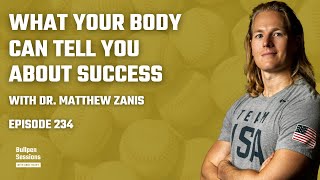
Podcast-style interview (YouTube) where Andy Neary interviews Dr. Matthew Zanis (doctor of human movement, Phoenix-based). Core messages: advocate for barefoot activity to restore foot mobility and sensory input; athleticism defined as the ability to seamlessly combine primal movement patterns to perform known or novel tasks; and a holistic five-pillar framework (movement, vitality, mindset, nutrition, training). Practical offerings: remote video-based health/coaching platform and Instagram contact; website using 'mvmnt' shorthand noted as being reworked.
Questions this video answers
Movement; Vitality; Mindset; Nutrition; Training
Phoenix, Arizona
University of Pittsburgh (athletic training); worked with Pittsburgh Pirates; Duke (doctorate in physical therapy); internship with Arizona Cardinals; first PT role with PGA Tour
About two to three weeks
Referenced a website using 'mvmnt' (no vowels) and Instagram 'Rooted in Movement'; website was being reworked and expected in a couple weeks.
Chapters
Why is it so important that we do as many things barefoot as we can? What. What is the. What's. So. What's the importance behind that?
Well, I think we first need to tackle the myth of being barefoot in a gym as being uncleanly. It's like a no, no.
And you have said you've been yelled at at gyms. Hey, buddy, get your shoes on.
Oh, yeah. And then I have to, like, punch them in the face with knowledge bombs of like, hey, listen, research wise, it doesn't make a whole lot of logical sense.
Hey.
Hey. Welcome back to Bullpen sessions. I am excited today. I have Matt Zanis joining me. Matt resides in Phoenix, Arizona. He is the doctor of human movement in an expert in human performance. He is the founder of Rooted in Movement, a company that helps athletes, coaches, and other rehabilitation providers build confidence and trust in their bodies and practices through the five pillars of movement, vitality, mindset, nutrition, and training. Dr. Zanis works with a broad demographic, from Olympians to the highest branches of military, including Navy special warfare and everybody in between. His vision is to create an awareness of new ways of working with the human body in rehabilitation, performance, and coaching circles and bring that alive through a philosophy that is rooted in movement.
With a short way of saying that, Matt, is you're a PT like none other. And that's why I'm excited to have you on. We're gonna. We're gonna talk about what you're doing to help people take care of their bodies. In a way I can tell everybody, as somebody who has heard Matt speak and gone through a little clinic with him, it's unlike anything you've seen. So I'm excited to talk about that, Matt. But before we get there, welcome aboard.
Thank you so much for having me. You know, I was so excited to actually do this podcast with you because we connected on such a deep level when we met up here for that. For that Mastermind event up in Scottsdale. And, you know, it wasn't just like the former kind of careers in baseball that brought us together. We just had some really great conversations. I'm like, man, I just need to talk to this guy more.
Yeah, no, I'm absolutely. I agree. I think our conversations, you know, for those listening in, I had Kyle on last week and we talked about his reaching beyond experiences. Matt and I were both at the one in Scottsdale, and I agree, we definitely connected on a really good level. We had some deep conversations, especially on the bus ride back. Back from what I would call the kite surfing failure.
For me, I Think we all had some level.
Yeah, let's talk about, let's start with your journey, you know, even before you got to what you're doing today as a founder of rooted in movement. Talk about your. At your sports journey because you were a good athlete in high school. Definitely had aspirations of playing baseball at a high level like myself. For the, for the, the audience listening who doesn't have any idea who you are. Tell us a little bit about Matt Zanis growing up.
Yeah, dude. Yeah. I thought I was going to be a professional baseball player. But as you're going to hear, that kind of took a different turn later on in life. But I grew up in an area of northeast Pennsylvania where like genetics, geography and opportunity kind of dictated your trajectory on life. So for me in particular, I grew up in a very predominant baseball family. Right. Dad was a left handed pitcher in college. My brother's right handed pitcher, uncle was a catcher. My grandfather was actually drafted as a catcher by the Pirates back in the 60s. So I thought it was in my blood. Right. There's that kind of genetic component of it. Grew up in an area geography, right. Where it was popular. Baseball is pretty popular sport up in northeast Pennsylvania. The only problem was is I ended up being terrible at it. It was kind of like a genetic trash can, so to speak. But I had a really hard work ethic and I would just, you know, practice more, throw more, bat more, run more. The only problem was that I kept getting injured year after year and these chronic little injuries just kind of stuck around. I couldn't wrap my head around why. I couldn't figure out what the hell was going on. Why was I not like everybody else in my family? Right. But it was because of this hard work ethic combined with being kind of like a guy that goes rogue. I could go against the grain a lot. I ended up finding weight training in high school. Now, I don't know if this was kind of the mindset of where you started your baseball app, but they didn't like it that baseball players were lifting weights. They thought it kind of messed up our timing of our swing and throwing and all that stuff, but I went rogue and went to our weight room and started training. And I learned really quick that if I ended up, if I started moving better and combined that with progressive overload of resistance training, all these little nagging pains and injuries kind of seemed to melt away. They went away. And it was at that moment that I started to shift course. Right. My path started taking the right direction because I realized I was Actually a much better coach than an athlete and a much better provider than a player because I was helping out all my classmates as well. It just kind of came natural to me. Connected with people really well and helped guide them along their movement journey. Granted, I had no idea what the hell I was doing back then. I'm like, I kind of. I read this in a magazine once or online and kind of apply it to myself and see what works. And that's kind of the other piece about what I do is, yeah, I went to the University of Pittsburgh for my degree in athletic training and actually worked for the Pittsburgh Pirates organization for a little while, but then went down to Duke for my doctorate in physical therapy. Went on from there out here to Arizona with the Cardinals and an internship. That's kind of how I landed in Phoenix. I fell in love with the area, knew I always wanted to move out here. So day after I graduated, I picked up all my bags and traveled out here and actually got my first job with the PT from the PGA Tour. So I've kind of been all these different kind of high level areas of sport and I've been able to adapt each and every one of them because my superpower is pattern recognition. That's kind of way my brain works. I'm like a puzzle guy. I really love, enjoy doing puzzles. And human body really is the greatest puzzle that we have out there because everybody's different, right? But we all kind of abide by these same rules of physics and nature and human physiology. But it's all applied to in different ways. And that's kind of where my, I guess that superpower, that brain aspect comes in, where I like putting the pieces back together. And I think I see things in a novel way with movements to be able to help rebuild the confidence in the athletes and the bodies that I work with. And not even just athletes, but like the everyday soccer mom and high school kids here in Arizona.
You know, I'd love to get your view, your take on this because you talked about discovering the weight room when you were playing baseball. And I did the same thing. You know, I came out of high school as a senior in high school, I weighed 145 pounds. Like I was not a big kid. And when I got to college at UWM, I put on 25 pounds of muscle, you know, and for most of my college career, I. My playing weight was about 170, 175. And it was my, you know, I wasn't a tall pitcher, so I needed that leg strength and that power to really allow myself to compete. And what was interesting is my last year at UWM and into my time with the Milwaukee brewers.
Everything was so never lift heavy. And I bought into it. So I. I lifted really light, especially upper body. Right. As a pitcher. And I truly feel mad it had a negative impact. I wasn't as strong as I was in college, and I. I really believe that was one thing that I impacted, that impacted my career in the Milwaukee brewers organization. So I would love your take on that. With the way we're seeing weight training shift in sports, football always been a big thing, but even like in baseball, heck, look at these guys playing golf. What is your view about weight training, lifting heavy, and how that is applied to sports today? I'd be very curious to know.
Oh, man, that. That's a great question, because there's so many different rabbit holes. We can go down with it. But I' to start this part of the conversation with a little bit of a quote. If you don't know who Mark Rippeto is, he is a very, very famous strength conditioning coach. I coach a lot of power lifters as well. But he has a line that stronger people are harder to kill, which, I mean, it has a lot of merit to it. Right. If you build more resiliency in the body through the muscle tissues and your ability to withstand forces and attenuate and distribute loads throughout the body, you're going to be more resistant, resistant to pain and injury. Right. Because your physical body can actually handle more. But there's another component of this where you could also be strength training into dysfunction, meaning you could be moving in a certain way that maybe you are aware of or you're not aware of. And it can come at a subconscious level, and you feel like you're doing the right things. You have the great intentions of getting stronger, which is great. But if you continually use the same tissues over and over again and you're strengthening into a pattern that may not be optimal because there really is no bad movement. Right. But there are optimal movements that we could do for a specific task. If you're strength training into an unoptimal movement, you could be setting yourself up for potential injury or for pain later on in life. And that's where it's like an interesting component for me, where we start talking about this idea of movement and exercise, because I feel like there's a fine line between the two. And we go back to the intentionality piece. I feel like a lot of athletes had the great intention of getting better at the Sport. They had the great intention, through their strength conditioning staff and through the rehabilitation staff to help keep them resistant to injury. But when it comes down to it is a lot of the programs that you see, and mind you, I'm not trying to take shots at any of the professional organizations, but a lot of the ones that I've been in, including at the Olympic level, there's a lot of programs that are developed that are a lot more like exercise, which is essentially like getting your heart rate up. Yes, you are moving your body, but it's usually like a monostructural kind of way, just kind of up, down stuff that can be performed in a hallway or through a doorway. And it really doesn't have any translation over into what we would term functional movement. Right. And that's why I love to see baseball players getting out and golfing. I don't know if you saw my golf swing though, during that experience. It really didn't translate well. We can get into that a little bit from a mechanics and a psychology standpoint too. We have a deep conversation about that, but it doesn't really translate over directly into performance. And that's where the movement piece comes in. Right. And that's where it's taken a look at the individual and seeing what they're missing on their like, spectrum of movement, giving them the opportunity to explore these positions, these postures, these patterns that they may have not ever given their body a chance to move into. And that's where we start to really make a headway on especially the injury risk reduction piece by giving them more bandwidth, more robustness through exploring the human body with movement rather than just getting hot and sweaty and burning calories.
So I want you to tell everybody listening in, because you did this during your workshop with us in Scottsdale, you posed a question, what is the true definition of an athlete? And I think most people immediately went to three things. Speed, size, strength, or just one's ability in a specific sport. But what, in your words, because I thought it was beautiful, what is the definition of an athlete?
Well, it's interesting, like the speed, strength and size thing. That's because everybody sees and what we kind of we portray as the, the utmost elite athleticism. We see athletes bagging weights in the gym and moving really fast, moving a lot heavy load. And we just assume that they're high level athletes. It's really interesting though, because high level athletes are not the people that we should be looking at from a health perspective because it's just a small percentage of them. They're on the far end of the spectrum of athleticism. Now, the definition of athleticism that I use is the ability to seamlessly and effortlessly combine primal movement patterns through space to accomplish a known or a novel task. And to that being like you could the known and novel task piece, meaning you are in the gym, you know you're going to squat a barbell, you're going to take it down to the ground to stand back up with it. That's a known task versus a novel task. I always give the example of like an NFL lineman kind of running down the side sidelines trying to catch a long ball from the quarterback, but they're staving off. Defenders are trying to keep their feet in bounds, mind you, trying to look over the shoulder to catch his ball and keep moving at full speed down the sideline to score a touchdown. That is a novel task because you have no idea foot position you can step into divot or a piece of grass out of place. Are there defenders over to your right or to your left? Like, where is that site that sideline at? Is somebody going to throw a towel at you from the sidelines? Like, when the code you don't know, like, there's a lot of stuff could happen. That's a very novel task. And then I like to work a lot specifically with that seamless and effortless movement piece and combining those primal movement patterns. Because to me, seamless and effortless movement is that beautiful, that natural movement that you see somebody perform because they're doing it without thinking, right? It comes naturally to them. And we as humans can visualize that. Like we know when we see shitty movement versus good quality movement. And that seamless, methodless movement is really the neurological system, right? It's your. It's your proprioception, which essentially your balance, knowing where your joints are at in space, and your kinesthetic awareness, which is actually knowing where your body is at in space without having to think about it, okay? And that, that balance and that knowing your body at space, I think about it, allows you to up a lot of energy inside your body. So you're not overanalyzing, you're not overthinking. Like I did with my golf swing a few weeks ago, right? And I really, I moved like a robot with. And this is somebody that, you know playing baseball. We definitely have some good transportational plane abilities. I just overthought it and it caused a lot of paralysis by analysis was definitely not seamless and effortless movement, folks. I'm sure there's videos out there Somewhere, if you get one. I just want to take a look at that. It's kind of hilarious, but yeah. So it's that seamless and effortless movement piece I like to work with. And we do that through a lot of movement exploration and through a lot of education and teaching about how your body moves. Because at the end of the day, we're trying to move from the state of conscious incompetence where you know you're kind of messing up. And that's when people come to see me. Like, they know that they're kind of moving in the wrong way. They've been through this roller coaster ride of pain and injury. They don't understand really what's going on in their body, but they know there's something up to this state of unconscious confidence where we are moving better without having to think about it, and we're just kind of flowing through life in a natural way.
You know, it makes me think about.
In sports. You look at like, I think of in football. For some reason, Randy Moss comes to mind. You know, when he was running routes, he made him look effortless. Like, it looked like he wasn't even running fast and he was blowing past D backs. You know, in baseball, you look at some pitchers and it looks like they're effortless, effortlessly throwing 100 miles an hour. Is that what you're talking about? When you think about that ability to do a novel task easily, these guys that just make it look effortless but still are the fastest throw the hardest, whatever that might be.
Yeah, there's. There's definitely like a genetic component to that for sure. But what you see with these guys, and there's a lot of great books out there too, like, the Talent Code is a great one to read up on. Some of the stuff he talks a lot about, like football players, meaning soccer players from around the world. But what you see with these specific individuals is that they were given the opportunity early on in life to experience a lot of different movement patterns. Right. They're put in different sports, they're put in different activities like dance and martial arts and. And then they just so happen to specialize in a sport later on in life that they got. They made themselves really good at. Maybe they were genetically gifted with the size and the strength, like a football player, to handle a lot of that. And they're kind of built for it and you just start to see it unfold kind of later in life. Right.
And there's. I agree, there's probably definitely genetics in there too. But for the people Listening in, who are parents? You bring up actually a really good point. Does that validate then when you have a child who is exploring sports at a young age, is it a good idea to get them, him or her involved in many different sports at a young age? Because that could help build up that pattern recognition.
Yes. So it gives that opportunity for movement exploration. Right. And kids are very malleable at that age. Like we can soak in like sponges, a lot of different novel stimuli, a lot of different information, then assimilate it. Like we know that our brains are really plastic in nature. Like it starts to assimilate lots of information. We can still do it as adults in life, later in life, but kids, it just happens a lot faster. Right. And different movement practices, we'll call them that. Like dance and martial arts and gymnastics are probably three that come to mind. They teach a lot of spatial and body awareness. Right. And that kind of serves as a foundation, I believe, to be being able to have a higher level of athletic potential later on in life. Because what it's really doing, if you think about martial arts, wrestling would probably be another good one here. And gymnastics and dance, there's a lot of like tumbling and moving your body around and getting knocked to the ground and learning how to maneuver in an environment that's not necessarily engineered and structured like a gym would be. Like it's very structured. Right. So, so what that does is actually works on the vestibular and the visual system inside the brain, which is essentially housing our balance centers. Okay. So everything between the ears, the other key component to that is a lot of those martial arts dance, gymnastics. Ironically enough, all of their participants are.
Doing that sport barefoot, which we're going to get into.
The bare feet is a really integral component to it as well because it's also a very epicenter of all this sensory input that essentially tells our brain how to move our body. Right. So those are kind of the key like, like the foundational pathways that we see are the parents putting their kids in to have a much better chance later in life. And I work with an NFL veteran, he's a, he's a 10 year NFL vet, was a lineman actually for the Chiefs, the Patriots, and the Chiefs, Patriots and Eagles. And he's offensive guard, tackle and kind of on the smaller side. When I say small, I mean he's still like 6, 5, 300 and some pounds when he played, but that was a smaller side for a lineman. And he really excelled in the NFL, not because of his size and strength, but it was his footwork and his hand work because he did nothing but like boxing and mixed martial arts growing up. And then all of a sudden got into high school and played football, you know, like 15, 16 years old. Found hey, I could use all this big size to an advantage. And by the way, I'm really good with my hands. That's going to set you apart.
So if you're listening in, you have kids and you're trying to think about what sports to get them into at a young age. Wrestling, martial arts, gymnastics.
Keep that in there too.
Right? And don't forget about Dan. I'm actually curious because we're going to get into the whole barefoot conversation.
Yes.
I think you've got like I said that I think that that's going to blow people's minds about what the power of actually being barefoot as much as possible can do for you. I'm actually, I'm gonna ask a baseball question though because you got me thinking. When you're talking about movements and the fluidity of movements being defining the real athlete, right. Is there any science behind why left handed hitters often are tend to have the sweetest swings, that left handed swing looks so much more fluid than say a right handed swing. Is there any science behind that? I was just curious.
You know what, I don't actually know of any direct science. I'm going to try and bullshit an answer for you though.
I'm just going to try to connect some dots because you know when you look at the difference between a right handed swing and a left hand swing, the only thing that you're changing is the forward leg, essentially right. That's going to direct the force. And we know that like ambidextrous hitters, ambidextrous throwers are way more valuable. Because I believe, and this is going to go back to the whole like balance piece of the program here is that they're utilizing way more of their body, right. They have way more movement availability or movement options. And I kind of term that as mobility and not mobility in the sense of like range of motion. But they can, they have different options they could use. They're more robust than say just somebody can only swing right handed. Right. And so I think that you're able to coordinate a lot more neuromuscularly maybe inside the system. And it does make that more fluid and more seamless and more effortless looking. But now you got me thinking, I'm gonna have to go research this one now. Thanks Andy for the.
I was just curious because you think about it Right. All the sweetest swingers in baseball have always been left handed.
Yeah.
Curious if there's, if there's something to be said about that behind the science of the movement of a left handed swing. So let's talk about this though. You know, we were down in Scottsdale, first morning that we're all there, I'm in the gym in walks this guy haven't met yet. We just met the night before. And you're barefoot. And I have to admit my first reaction was, dude, you're barefoot in the gym. Like you don't do that. But let's talk about that because really, you know, you, what you had us walk through in that workshop we did, having us barefoot, talk about that. Why is it so important that we.
Do as many things barefoot as we can? What, what is the. What's. So what's the importance behind that?
Well, I think we first need to tackle the myth of being barefoot in a gym as being uncleanly. It's like a. No, no. Because like, well, culturally that, that's the situation. Right.
And you have said you've been yelled at at gyms. Hey buddy, get your shoes on.
Oh yeah. And then I have to essentially fist punch them in the face with knowledge bombs of like, hey, listen, that research wise, it doesn't make a whole lot of logical sense. Like if you just think about it from a common sense standpoint, if you're, if you're okay. Let's just say we take the majority of people who are in shoes all day long. If your feet are inside the shoes, they are contacting a lot less external bacteria and nasty stuff outside and inside bathrooms and everything like that. And then tracking it into the gym. Right. It's why martial arts studios and yogi studios all have you take your shoes off before you get in because they keep that space clean and pristine. If we did the same thing with gyms, we wouldn't really have much of a problem. Another interesting tidbit about that is the only reason why our feet smell is because we're growing bacteria inside the shoes all day long if we never let them air out. Yeah. So it's actually is cleaner to be inside of a gym barefoot than is with other shoes as you tracking all that nasty garbage from where you've been last. So anyway, that, that's like the cleanliness piece aside. But there are essentially two major reasons why training barefoot is so, so important. Number one, from a sensory input standpoint, okay. Going, going more up to the neurological system, how it's affecting the brain and then two, biomechanically, meaning how it is taking energy that's being stored from ground reaction forces and gravity, how it's sending that energy up the rest of the chain of the body so into the hip and into the low back. And then if you're, if you're a thrower and you're a pitcher, taking it from the left leg into the right hand to release the ball, it's all directed through the feet. And I'll tell a quick little, quick little backstory because I think people might find this interesting. I'm not actually sure if I shared this story with you guys in Scottsdale or not, but when I was playing baseball as a catcher and for a long time I never knew what it was like to squat my heels down because I was constantly on my toes. Then I was in cleats from the age of four. To put that into perspective, my body is still developing. And us males, we actually develop later into life. I actually graduated high school at 5:10,170, and then I didn't reach 6'1,205 until my sophomore year of college, so. So kind of a late bloomer, so to speak. I really wish dad would have held me back a year, put me ahead because of the smarts and the intelligence. Damn you, dad could have been so much better. Anyway, so I was in these cleats for a long time. Never put my heel down when I squat it. And then I get done with my baseball career, which ended in high school. I didn't go anywhere past that. And like, shit, my feet really hurt.
And I had all this knee pain, this Achilles tendonitis stuff, this one sided low back, one sided low back pain, shoulder issues and all that. And it wasn't until I got into PCT school and started putting the pieces together that I realized that the foot is just like any other part of the body. You want to grow your biceps, you could strengthen the biceps. If you want to strengthen the feet and make your feet more mobile, well, you can do that too. It's still a body part. And that's kind of where I began my movement journey with restoring my feet and waking up my feet to normal movement and going barefoot. And to make a long story short, I essentially, over a three year time period, went from a size 12 and a half shoe to a size 10 and a half shoe. Because I took my feet, which were essentially flipped out to the side like duck feet and flippers. I essentially wobbled my way through life and restored the arch, restored more mobility to it and Made them work in a way that, that they were actually benefiting my body. They became stronger, they actually got more blood flow, they became more color back to the foot. You actually see veins that were developing. And I'll never forget the first compliment that I got from my feet, Andy. It was great. And it's like, everybody's like, oh, you got such a great six pack, or your arms are huge. How much do you bench? And I got the comment on my feet that my feet look muscular. I'm like, I finally made it. This is it, right? All this work that I've been doing for so long. And it's possible, it just, it takes some time and it takes having an understanding of how your feet actually function. So if we look at this from a biomechanical standpoint, we'll start there. Your feet are meant to be very mobile. They're meant to be very dexterous, like our hands. The only problem is, is that we put them inside all the, you know, this rubber and leather all day long that I call foot prisons. Like they're shoe prisons. You know, we keep them all enclosed and they can't move. Okay. So your feet, your foot, or the foot itself, is supposed to be able to go through an excursion of movement, meaning it's supposed to be able to flatten out completely into this pronation shape where everything kind of lowers to the ground and spreads out. Think about like the toes splaying out like my fingers are, and then into a supinated shape, which is what everybody perceives as a healthy foot, like having that high arch component to it where the middle of the foot is lifting up off the ground and it's creating this rigid lever that we could use for energy transfer. The thing is, though, is that neither is good nor bad. Flat feet. Pronation is not the boogeyman, right? It really isn't. Okay. Whereas the high arch is not the gold standard, it's our ability to be able to move through them and between them that actually matters. Like, I don't care if you have a nice looking arch, if you can't move out of it, you're going to have another host of problems. Compared to somebody that has a lower architecture ground like a lower arch that they're stuck in. Okay. And I have naturally flatter feet architecturally, but I can move, I can transition between them. And what that does is allows for energy absorption that we talked about, so we are able to yield to gravity better and absorb load. And then that rigid lever, that supination shape allows us to be able to transfer that throughout the rest of the body efficiently if we can't. So if we're stuck in any one of those two positions, we are going to overload joints, parts of the joints overload parts of tissues inside of our lower body specifically that are going to cause this overload, this over stress phenomenon that leads to a lot of the chronic pain injuries that we see in not only today's athletes, but even in the general gym goer. Right? So there's an example. One of the worst things you could do is take somebody who has a very high arch and it makes them like really lateral chain dominant, meaning they predominantly use the outside portion of their body. So think outside portion, your calf up into your hip, into your low back. It's all part of the same chain. And then you had them squat and drive their knees out, which is the common, that's the common cue that most people see in gyms. This goes back to the component of are you exercising or are you moving? Because if you're just moving unconsciously because somebody told you to do it like that, you're not really moving, you're just exercising. Right. And that caused a lot of issues because your brain, your foot can't flatten out, which allows the whole entire lower system to internally rotate. So the flattening allows for internal rotation of the lower leg, internal rotation of the femur, the upper leg, which then puts all your glutes onto a nice three dimensional stretch to be able to explode powerfully out of that bottom position. If we are constantly trying to drive our knees out and create that supposed good shape of a foot, of an arch, you're never allowing your body to actually succumb and yield to gravity and load the tissues appropriately to get the quick neuromuscular reaction to move appropriately out at the bottom. So you're essentially pressing the accelerator and pulling the parking brake at the same time. You're going against what the brain, you're trying to override what the brain is naturally trying to do. And that's where we get into the whole ego component. Like we're kind of naive to think that we're smarter than our bodies. It's not the case. And like what I do with people, essentially just give them the opportunities to listen to their body actually tune inward, create this level of attunement so they can understand what's going on and just allow it to happen and work with it rather than trying to over control it. Okay, so that's like the first biomechanical piece. So if the Foot can't move appropriately. We're going to have dysfunctional patterns up the rest of the chain in a. In a myriad of different ways and different fires that need to be put out. And that's the interesting piece with, with all the physical therapy stuff too, is a lot of PTs and CAIROs and athletic trainers end up spending 99% of their time chasing all these fires, chasing all the pain around, because they're never looking at the source of the problem. Which we could dive into that too, if you want to a little bit. But then the second component, this is actually the more important piece, is the sensory aspect, right. So I talked about earlier how all these mixed martial arts and gymnastics programs and dance, they have everybody barefoot, right? Because our feet have a very specific type of skin on the bottom of them that's called glaber skin. Don't really need to know it, but essentially what that means is that it has the highest amount of what we call mechanoreceptors found anywhere in the body. So all these proprioceptors, remember, balance and proprioception, we have the highest amount of these little sensory organelles in the bottom of our feet found anywhere in our body. Yet what do we do all day long?
Put them in shoes and socks.
Put them in shoes and socks. So the only input that they're ever receiving is the cushion of the shoe, is the cushion of the sock. They never experience what it's like, I'm standing on rubber right now, okay. Or standing on tile or concrete or hardwood or gravel or grass. We don't get. And there's a lot of components of, like grounding to this as well. But we never get the sensory input into the bottom of the foot. Now that's critical, okay? Because our brain has a picture representation of every single part of our body, okay. And our feet actually have a pretty small area, that brain map of that picture, okay. And I think it's because we actually enclosed them in shoes all day long. And we noticed that the brain started kind of down regulating the importance of that map area. But when we don't stimulate the bottom of the feet like that, that map, that picture becomes really blurry, it becomes really fuzzy and unclear. So we stop devoting a lot of energy to it versus something like our hands. Hands are free all day long, right? They have a very high representation, very clear, very sharp image that map, that picture in the brain, because we use them literally all day long to maneuver out through our environment. We feed ourselves, we comb our hair, we brush our teeth, we Shake hands. Like it's constantly being stimulated. But the feet, unfortunately, are not. So we start to shut that area down. Now you can imagine if we start shutting down neural capacity to the only part of our body that actually has contact with the ground. Think about that for a second. Most of us are actually just running around on essentially like pegs, then seriously, like pirates, like pegs. Rather than just. Rather than actual feet. We have no awareness of what our feet are doing. And I'll tell you a quick little story I think this is important to highlight. I was working with a very high level of our nation's military a couple weeks ago, and we were doing some change of direction drills. Okay. Outside. And they're all wearing shoes, right. And what we ended up seeing was a lot of sloppy movement, like knees slapping back. They're kind of falling over their feet. And this is. Here's some very high level tactical athletes, right? And we were working with a bunch of us coaches. And they're kind of like yelling at me because I'm the foot guy to coach. And cue these guys in their feet. They saw all these dysfunctional patterns kind of going about. I was like, listen, we can't even begin to cue those. These guys right now because they don't know where their feet are at. They're literally inside these moon shoes kind of flopping around, sloshing around. They don't know where they're big. I can't tell them to drive their big toe on the ground. They don't know where it's at in relation to their body. It's not going to help them at all. So what we need to do is be able to remove the obstruction. Right. The obstruction blocking the way. And start to work now with the feet to start to build this unconscious competence again and have that then translate into all their movement. That needs to be where we need to start.
When you think about.
You talk about the. The feet were meant to be. Dexter. Have dexterity like our hands. However, because we're wearing shoes and socks all the time, we're almost like putting blinders on those receptors that are letting our feet be. Have that dexterity. So here's my question. It's not what I intended to ask five minutes ago, but I'm gonna ask it. Our ancestors, the apes, the monkeys, right. Who we see them picking things up with their feet all the time and doing. Is it because they have spent their entire life barefoot and have allowed their feet to maintain that same dexterity as their hands?
Yeah. So if you think about it from an evolutionary perspective, they never enclose their feet. So from a usefulness perspective, they had to, like, that was part of their survival. That is how they were able to procreate and pass on their genes is the ability to use every single part of their body, including their feet. Not just for, you know, foraging and feeding themselves and walking around, hanging from trees, but even fighting. Like, if you've ever seen, like two gorillas go at it, it looks like a Brazilian jiu jitsu match going on, right? And I had the opportunity to witness my very first Brazilian jiu jitsu match too. And I noticed that a lot of these guys that won and women that won literally got on their backs first. Think about that. They already rolled onto their back so they could put their feet up in the air and use that as part of their guard. I'm like, this is cool. Like, I love the human movement. But then I also made that connection. Like, that's why they're doing it. Because now you got your hands and your feet to defend yourself.
So take somebody who is listening in. They've got a. They go to work where they're. Where they have to wear shoes and socks, ideally in a real life setting. Matt, how. What percentage of one's day should someone spend barefoot?
So obviously work is a different scenario. I know that and I realize, understand that not everybody has the ability to take their shoes off at work. Right. There's just some rules against that. However, we need to control what we can't control, and that's usually our home setting. If we could be barefoot as much as humanly possible in and around the house, and stay, stimulate the bottom of your feet with as many different surfaces as possible. You're going to start to actually wake up those sensory organelles again pretty quick. Okay? So it takes about what we call two to three weeks to develop neuromuscular efficiency. Essentially, your brain starting to wake these neural networks up again. And the more time that you spend, like, the more capacity that you can build barefoot, the better it's going to start to translate over into better movement. Now, I will say this. If you start going barefoot after being in shoes the majority of your day, your feet are going to get sore. Okay? They might even be a little bit painful. And that's actually okay. We want that to happen. Those are the muscles that are essentially waking up and starting to work again. And pain, the whole pain perception thing as a whole. We could spend two hours on that. Andy. About how your brain perceives pain and why it does and why everybody's is different. But this is something that it's vitally important for, for the human experience and for our, for our movement capabilities. So it's one of those things that we need to work through within a guided fashion as well too. So we don't kind of piss off the tissues too, too much.
So let's talk about this with the time we have left. You know, your business rooted in movement is founded on five pillars and you know, movement, vitality, mindset, nutrition and training. Talk about if you, if you will, those five pillars and how, you know, one kind of feeds off the other.
Oh yeah.
If we had to go through this, this, you know, this path here of movement, vitality, mindset, nutrition and training. How can one go through that journey to.
Basically, you know, I'll steal a phrase from your business, be rooted in movement.
That's good. Yeah, I should actually have them in like a diagram where it is a cycle in nature because you're right, they do all completely feed off of you. And speaking of, feed off each other. And speaking of feeding, I can start the nutrition piece. What you put in your mouth has a dramatic effect of one, how you feel. Two, your ability to recover, which then is going to directly affect your movement. Because you know if you're not feeling good and you're not moving well and you're not recovering, you're not going to want to move anymore. That's typically how our brains work. It'll just shut us down. And we see this with a lot of the hard charging people do like a high intensity workouts like seven days a week, twice a day, your body's going to start to break down and especially it'll break down even quicker if we're not giving it the right nutrients. So the hydration piece, electrolyte, balance and then eating like real food. And here's the kicker. Enough protein, no matter if you're vegan, vegetarian, carnivore, it doesn't matter. But eating enough protein to sustain, sustain your regrowth. Right. And then I think we have to put in one other piece with that. The growth component is sleep. Like if you're not sleeping, that is the greatest recovery tool that you have. That's where we release all these anabolic hormones that help you grow and recover. So you could be putting all the work in throughout the day. But if we don't prioritize the sleep component, essentially like taking one step forward, two steps back.
I'm glad you brought that up quickly. The recovery, even an exercise recovery and exercise, because I'm one Who's guilty of most of my workouts? Sometimes I do two a day. Most of my workouts are in the past, have been intense and I think you really have to have that mindset that you have to be able to mix the intensity with the recovery.
Right.
I've really tried to learn how to bring in, you know, whether it's a recovery run or whatever it is, you've got to take it easy. You gotta, you gotta let that body relax as well.
No, no, absolutely. And I don't want to people to perceive that I'm like poo pooing on any type of discipline. Right. Like if you're an endurance athlete, you're a triathlete. I work with ironman competitors out here in Arizona a lot. If you're going into like powerlifting, weightlifting or even any other high level sport, it's going to take some sacrifice, right. But you're going into it with the intention that you need to do these specific types of training modalities to make you good at your sport. If you want to be competitive with it. Right. There's a holistic way to attack it and there's a not holistic way to attack. And if you are neglecting the recovery piece and just trying to do more volume, you're going to run yourself into a brick wall eventually. And a great example are the Ironman athletes that I work with because they do so much running, biking, swimming. It's a lot of volume, it's a lot of frequency, it's a lot of stress to the body. But there are, there's one thing that they don't have they drastically need and that's strength. Because you need the strength to be able to withstand all the training volume. So it's a trade off. And that's why I try to get these guys into at least two days a week to do some structured strength workouts so they can build the capacity their tissues have to handle the heavy training volume and load that they're putting them through. And then you also need to be eating enough to sustain that amount of volume, sleeping enough to sustain that amount of volume to make you successful at that sport. So even with just like nutrition stuff, we just hit on so many different topics of this, but then you go move into the movement piece. And that's kind of where I like to play. Right. Because I view movement as play in a way because it's all about self discovery. And I've been down this road many, many times before myself and I think it's kind of what makes Me really good at what I do because I jacked up my body a lot as a kid and even into my early adulthood. I'm 32 right now, but even all through my 20s and all, I still experience some pain and injury. But it's just information. It's a lesson learned about how we're moving our body. And if we take the time to actually listen to it and discover what it's means to us and what it's telling us, we can then use it to make ourselves better and to move in a better way. And that's kind of where the movement piece comes in. Like, I don't ever tell people what's going wrong with them. I have them move like you experienced out there on the grass during the mastermind of, hey, I kind of suck at going into this pattern. Okay, what does that mean about my holistic movement health? Right, because it could mean. And we can look at a good example of this is our buddy Mike Ayala. He had all this pain on the right side of his body, right lower side of his body. And just watching him move through those couple different patterns that took him through and he felt it, he's like, wow, I'm like way more unstable on my left side. Oh, okay. So what do you think that means to you, Mike? Oh, I guess I'm utilizing my right side more than my left. So you think that might be a problem? Right. But where does everybody focus on the right side? What if we figured out that it was the left foot and ankle that wasn't moving well, was missing all this balance and proprioception, it was causing you to over dominate on the right side. We're never going to put the fire out on the right until we address the left. That's the source of the problem. So that's what I use movement as is kind of this discovery piece to help help teach the individual about their bodies. And then we use that information to develop a plan into the training aspect of things that allows them to get the necessary reps in, in these patterns that are going to make. It's going to make their body more holistic in nature. It's going to help them move better with a greater breadth of movement rather than being stuck on like one end of the spectrum.
So what I'm curious, you know, one of your pillars is vitality. Define that for me. I think a lot of people have different perspectives on what the meaning of vitality is as you see it in the work you do. What is vitality mean?
So I think, I think vitality to just sum it up is life force energy.
So do you have enough life force energy to fulfill your potential, whatever that means to you? And I think all those other components to hold the movement, nutrition, the training, all of that feeds into this vitality piece. Because that's the game that I play. I'm not about the short term fix. I'm not about the bandage that's going to get you through to the next month. I'm playing this long term longevity and vitality card. This is the game that I think most of us really, really want. We want to be able to do what we're doing now, stuff that we love, stuff we enjoy our passions later on in life for as long as we possibly can. And even some of those underlying goals is like, man, I don't want to be like 70 and not be able to pick my grandkids up. That's a problem. Or I want to golf into my 80s. Well, how can we do that? How can we set up a plan for you that allows you to then fulfill that long term piece for as many years as possible? And that's kind of where all the movement stuff comes in. It's where all the training comes in. Because we're restoring robustness in the body. We're giving you more of those mobility options to utilize rather than just digging yourself a hole and strength and dysfunction over the years and putting yourself in this position now, you can't get up off the chair. Like, that's.
And I, correct me if I'm wrong, but when I think about an athlete we all know that has really defined your five pillars well would be somebody like Tom Brady. I mean, the guy is 44 years old still. You know, he's on my fantasy team, so I'm very happy with his success this year. But he's still out there winning super bowls at age 44.
Well, okay, so here's the thing. And this Tom, Tom Brady is a great example of this. I don't much, I don't much care for Tom Brady. I'm a Steelers fan.
You're from Pennsylvania?
Yeah, he's a lot. A lot, a lot, a lot. And here's the thing, you cannot discount his abilities, right? You got to respect the hell out of the guy because he does pretty much everything right? Okay. So from a vitality piece, he's kind of pushing all the right buttons. And if you look at it, vitality can also mean like sexual longevity as well. Because our fitness, if you did look at Darwinism, is our ability to procreate. So if you have any kids. Like, I have no kids. Right. So if you have kids, you're already fitter than I am. Technically, according to nature and according to Darwin, okay, Tom Brady's got Giselle. So he's, he's at this point. Right. So he's getting his body into the most peak shape. He's making sure that it is capable, withstanding all of these. I mean, man, many, many years of playing a very, very violent, rigorous game, but then being able to go home and be a loving, caring husband as well. And probably has a pretty good sex life. I can imagine at that point too, because they all play into each other. And it's a very, very large component of this vitality piece. Our life force energy, especially as men, is rooted inside of our sexual energy as well.
Well, even the commercial, you know, the subway commercials highlight now Tom Brady and his nutrition habits and the fact he doesn't eat bread.
Come on.
We have a few minutes left, man. I want to actually ask you this question because you had a chance to go to Tokyo for the Olympics this summer. Yes. And serve as, as a coach and a PT for the Olympic athletes. And when people think Olympic athletes. Right. They think the fittest athletes on this planet. Now that you, you know, as a. Having a chance to work with Olympic level athletes, what are some takeaways as somebody in the world of physical therapy that you have taken away from working with some of the world's elite?
Oh, man. You know what, the first thing that comes to mind because I've worked with a bunch of different sports, a bunch of different disciplines within the Olympic stage. And my specialty and my priorities. Who are United States Olympic shooting athletes, because I grew up doing a lot of that in Pennsylvania as well. And I just, I love them from a move, movement, standpoint. And once again, we go deep down into rabbit hole at that. But the biggest commonality that we see amongst any one of these athletes, male, female, shooting athletes, swimmer, wrestler, gymnast, it doesn't matter. All of it comes down what's going on between the ears. It's a mindset piece from the standpoint of all of these athletes are extremely disciplined. And the big thing that I see that even separates the cream of the crop of the Olympians, that gold medal, silver medal, compared to ones that don't place. It comes down to their process orientation. Like, they are so process oriented. And you can put Tom Brady in this category I think as well too, is that they're so process oriented that they are hitting all the right buttons. They are comprising that Entire rooted in movement mindset piece where they're touching on every aspect of their life that can make them good at what they're great at what they do. And it's really interesting because we take that back to the whole competency model. They are really unconsciously competent to the point of so much success. But then it comes down to the point that they're putting in the reps, they're doing what's necessary, not making excuses. And they have a lot of confidence not only in their bodies, which I think is the foundational level. If you're confident in your body, you know, it's in withstanding the rigors of the sport. You're already leagues above the rest, and people are thinking, oh, shit, is my body going to hold up during this match or during this game? And then it comes down to the piece of the stress. Right. How well do you manage stress? Because I've seen especially shooting athletes who will shoot a perfect score throughout the entire match, then go to the final and implode. Well, why is that? It's nothing like there was mechanically wrong with you. It came down to the fact that you got in your own way because you got in your head and once again started overanalyzing, overthinking, like I was doing with my golf swing. Right. So I think a lot of this can then be tied back to that movement piece and why we do so much with movement exploration and bringing a lot of variety into their training plans. Because it does create a stressor inside of a controlled environment. They can then work through and problem solve. Because when I work with somebody, I don't give them the solution. I give them point A. I give them point B and ask them to figure out a way to get from point point A to point B. Yeah.
You know, now that we've just frustrated every guy that's listening into this episode because they're like, all right, guys, this is great, but I'm not Tom Brady. I don't have Giselle as my wife. I'm not an Olympic athlete.
You know, what you just said, though, applies to business as much as it does life. You know, you look at the people who are ultra successful in business, what is it? It's mindset. It's discipline. It's putting the reps in. And it's when you get into stressful situations, it's not imploding. It applies to so much in life.
And that's what I mentioned to all you guys when I got you all in that circle out there. It was actually a Brisk, chilly morning, and they just like water the lawn. So I have you all out there barefoot and our feet are freezing. It was great sensory input, right? That was a great example, learning moment. But we're out there, had you all in the circle and we made that analogy, right? We're all hard chargers, go getters, super successful, successful in business. And we have great intentions from our movement practice. Like, we're dedicated. We know we want to be healthy, we want to live a long, healthy life. But it comes down to being able to be more aware of what's going on inside your body. Because we put on the blinders, right? In business, because we get in a very specific routine, we know it works for us. We know what makes us money, and we keep taking that path. And with movements, it's a little bit different. Like, we need. Need to be able to figure out what's going on inside the body, to listen to the body more so we can understand what it's telling us. And then if you think about that from a business standpoint, like if you're moving better and you got more confident in your body, even from a posturing standpoint, you're going to be more proud, shoulders going to be back, you're going to be peacocking, and you're going to be more successful in life and business because people are going to respect you. It's an energy thing. We're always transmitting some type of energy information to those around us. And essentially you have a choice. You could ever. You could be thinking about how much your body aches, how much your body hurts, and you're going to feel disheveled, you're going to feel smaller, you're going to change your body posture versus man. I feel fucking great. Like, I just had a great workout this morning. My body's moving well. My joints feel nice and loose and limber. This is going to be a great fucking day. And that means a lot different when you're walking down the street and you can feel the ground beneath your feet because, you know, you're trained to be barefoot and you're wearing minimalist shoes, right? And that. Send that information and you're. Your brain's on. It's supercharged, your diaphragm's relaxed. You're not in a sympathetic state. You're more of this parasympathetic rest and digest and relax. You can make clear, critical decisions and not get caught in the chaos, the chaos that is society these days.
So let's wrap up here. This has been a phenomenal conversation. So thank you for taking the time to be on today. If somebody's listening in, Matt. And again, we know that you work with Olympic athletes, you work with military personnel, professional athletes, you name it. But you also work with the guy running his business, the mother who's a soccer mom with two kids playing sports. How can somebody, even if they're not in Scottsdale, Arizona, work with you?
Great question. So that's actually one of the largest parts of my business is this remote health coaching platform. It's like a telehealth service where we can work through all these movement problems virtually and online. And we do this through learning about our body through movement. And having to video yourself, Right? So I have a very specific set of movements, and we kind of tailor this based on what you're looking for, but you essentially video yourself moving. I get those videos, I analyze them, I pick you apart in a very loving, graceful way, of course. And then we do all the assessment virtually via zoom. And that's what, you know, makes what I do so valuable, is because of that pattern recognition brain. Like, being able to go through the reps myself and learn about my own body allows me to help others. And that's how I train my coaches and my other pts. With me as well is this ability to recognize patterns and then put together an actual program that helps you move through that problem on your own. Because at the end of the day, Andy, like, I'm not going to fix you. And that's why I'm not your standard pt, right? Ironically, I went to school to be very, very good with my hands. I spent tens of thousands of dollars, more than the $300,000 I put into Duke, to learn how to be extremely good at my hands. And that's like a 10% part of my practice now. Because what you learn to realize is that it's only a small part of the pie, right? You know, it creates a window of opportunity to help people move better. But you, the individual, you the one inside your own body, actually has to do, do the fucking movement. You have to take accountability and responsibility for yourself and actually put the reps in that are going to allow you yourself to evolve from a movement practice standpoint. And that's where the accountability piece comes in, where we get on checking calls every couple weeks. We make sure that you're moving in the right direction. And it is very unique, very personalized programming, because like we said, we're all the same, but we're all different. And it's really hard to help somebody move through pain and injury if we don't actually give them specifically what their body needs and craves.
So, last question, somebody's listening and they want less pain, more vitality, want their body to just feel better. What is the easiest way for them to get in touch with you two?
So, currently website is going under an over a rehaul right now, so that's gonna be up and running in a couple of weeks to make it more user friendly. But email and Instagram are a great way to contact me. Matthewootedinmovement.com Movement is an acronym, though, as we've been talking about. It's mvmnt. So no vowels in there, folks. Or just hit me up on Instagram. Rooted in movement.
Awesome. Well, Matt, I want to thank you for joining us today. You know, I learned a lot when you gave, gave, realized that, you know, my body was giving me a lot of signals that was telling me that I could be doing so much more to be that definition of a true athlete. So I want to thank you for the clinic and I want to thank you for what you shared today because I'm sure you've opened a lot of eyes to people who thought they were doing well, but now they're like, man, there's so much more I got to do to take care of my body. So thank you again for your time.
Yes, thank you, Andy. This has been a pleasure. I love being able to share my.
Passion with as many people, and you definitely show it. So we're grateful for that. And if you're listening in, hey, I hope this gave you some confidence and clarity to realize that vitality has a whole different definition and your body is telling you, your body's letting you know what it means to be successful. You got to start listening to it. So go make it happen today, guys. Have a great day.
More from Andy




If you want producers to succeed faster, help them create a sales message that creates confidence.

Sales isn't a zero-sum game! You can have tough competition and still grab a beer after



Option 1: Meditation, a fast walk, a podcast, and protein. The ultimate morning routine!

How you do one thing is how you do everything. Ill elite producers fuel their body.


Stop living in the gray of maybe! Your job in sales is to get a clear yes or no