3. Ben Conner: The Foundational Principals Of A Successful Multi-generational Insurance Agency
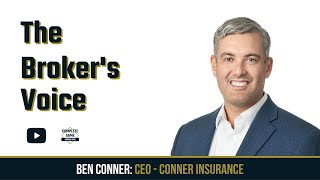
Ben Conner shares how his insurance agency built a niche serving Christian schools, universities, and churches through City on a Hill. He discusses the leadership principles that made the business work across generations and why preparation and passion matter most.
Chapters
All right, welcome back to the Broker's Voice. I am excited anytime I get to have somebody on who's not only a man of words, he's a man of action or woman of words. Woman in action. I get excited to have them on. And today this guy is, he embodies this. Ben Connor of Conner Insurance in Indianapolis, Indiana. Ben, welcome aboard, man.
Andy, thanks for having me. I appreciate it.
You bet. So I always kick off the Broker's Voice with how the heck did you get in the business? Most of us did not get in by design, but I would argue, Ben, you kind of it did because Conner Insurance is a generational thing. Talk about that.
Yeah. So Conner Insurance has been around since 1949, started by my grandfather after he returned from World War II and.
Found his wife in Indianapolis. So actually a personality profile told him he should be an insurance agent. So, you know, interesting enough. But yeah. So we're a third generation firm. Myself and several others are in the business I started in 2006. And what's funny is I didn't, I didn't really think through the, the, the whole coming into the business too, too much. So quite simply going into college I was like, well, I kind of like my dad's, you know, his freedom. He was always at my sporting events, he was always present, he, he was home for dinner and that, that was noticeable to me growing up and watching my dad.
I appreciated his relationship. So the people we did business with, I actually got to meet growing up and in high school and that sort of thing. And they were always awesome people.
And then lastly, I like, you know, the things in life that we are able to do through his work. So the kind of, the income side and that sort of thing. So I thought, hey, you know, like flexibility, relationships and decent income, like that's good enough for me. Went to college, studied business, didn't really apply myself at all. Wish I would have probably a little bit more. But then came into the business a month after I graduated college and I remember we're in a second floor suite. Andy, you've been here. And I remember walking up the stairs, putting my hand on the door handle and just kind of like pausing. And I was like, I hope I like this. Like, I never thought about insurance sales. I was like, it doesn't sound very fun actually, but let's roll, let's do this. And by God's grace, you know, it worked well for me. I gravitated towards the benefits side of our organization and it just kind of naturally fit with, I believe, the Talents that God's given me so, so well.
And I think that message right there, you and I are probably very aligned because Counterinsurance is both a property casualty and a benefits agency. And I've worked for several of those myself. But I too early on gravitated towards benefits because I think the educational piece is huge. The fact that you can literally impact someone's life with what we do. And I want you to go back, I imagine growing up in the family where your dad's running an insurance agency, you probably maybe spent a couple summers helping out, you know, or working in the office. Then you graduate college and now you're going to work, I'm guessing, correct me if I'm wrong, you were a producer, maybe not as much in the leadership role at that point. And now here you've elevated to running Conner Insurance as you elevated throughout that process over the last 10, 12 years. What would you say have been the biggest mindset shifts for you? Maybe going from I'm here to just produce to now I have to run this entire agency?
Yeah, a lot of mindset, Mindset differences in that. I guess on the more surface level side, what I found to be really difficult is going from a peer to a leader with people inside of your organization. That was hard, I think, for everybody to some extent. And you know, if some people had a harder time with that than others, that they are probably not here any longer just because that's just the way it is. But I think coming into the business, you're right. We started as a producer and then slowly got into leadership. A couple things happened. One.
I always say I was, I had, I had an incredible opportunity in front of me and my dad and my uncles, who were the second generation in the business. They were very open handed with not hiding things, being very transparent, giving me opportunities to kind of get involved and learn the ownership side or the leadership side, management, whatever you want to call it. And they allowed us to at an early age try things out. And we failed.
In some circumstances, failed miserably. And they were here to kind of coach us along the way and that sort of thing. So I certainly had the opportunity. But then I kind of found out and I think something to be mindful in this business is with the partnership of my dad and myself in my 20s, we landed a lot of business with his relational and strategic side. And then I was quite frankly, just a workhorse and I was single through my twenties. So I get here at seven in the morning and leave at seven at night. And you know, they'd ask to go to hap. My friends would ask me to go to happy hour. I was like at one point I was just like, I'm not going to do that anymore. Like, let's just figure this thing out and see if we can win. And I just kind of found out once you start winning a lot, you just start getting included in things because you have influence and that's certainly a.
You know, there's a responsibility with that. But just kind of those two things are put together with opportunity and then just some producer success in combination with my father just kind of led to kind of where we got, you know, where we're at today.
You know, I think there's no secret to success. You talked about working your face off in your early 20s and realizing what's important to you. And I think that's also why, you know, you were, was it last year a broker of the Year finalist. And that was very well deserved. So very well deserved honor. Ben, thank you. I would love your thoughts on this. And I know I get resistance when I talk about this, but one thing I find interesting in the insurance industry at large is you see a lot of people elevated to a role of leader because they were a good producer and that doesn't mean they're a great leader. And so I've had the chance to work with a lot of agencies and once in a while you see them that those that appear to have a lot outside success and then you peek in the curtain and you realize what's going on and, and they're. The culture inside always doesn't match that outward success.
To you. Now running Conner Insurance, what does leadership mean to you when it comes to running an insurance agency? Maybe what are some principles, what are some ideals that you guys strive for to make sure you are running a fin tuned machine?
Yeah, I think.
Values is probably number one.
And I'm co authoring a book and one of my things, one of my, the chapter that I'm focused on talks about just when I started out early, I was trying to copycat other people and I wasn't necessarily paying attention specifically to my personal values and how I led others and it failed miserably. So I think values and being authentic to like who you truly are.
Surrounding yourself with good people, you know, this is a team thing. I have a lot of good leaders surrounding me inside of our organization and if you get to know us, you'll say, wow, they're kind, they're, they're different. You know, Todd is different than Ben. It's like, yeah, that's why it works really well, because we complement each other really well. And I would say this. I think one of the things that my dad and my uncles really, they hammered on since we were kids is that.
Family trumps everything. And I think that parlays into relationships, you know, and that.
My dad said early on, you know, there's no amount of money worth betraying someone's trust. So just that idea that, you know, if we have a disagreement or whatever within our family, it better never be about money. And the reality is, is that, you know, with Thanksgiving and Christmas, like, you better be able to show up and be able to love your family regardless of what's going on at work. And there's a. There's a dying to self that happens when you have that mentality. And I think, you know, that's something in our organization that, like, we set out to say, I don't care what position you're in in our organization. I don't care if you're, you know, in an entry role or if you're coming in as a. As a. As a heavy hitter. Right. Like, it's not about you. And so that's kind of some of the things that are kind of core to our company and our culture.
I hope everybody heard what you just said, because, you know, you said family trumps all. And by definition, family doesn't mean blood family. We're talking everybody who's sitting inside that office.
That's right.
And I think to that point, unfortunately, sometimes in the industry, the phrase is revenue trumps all. And you see, what I've seen is an agency where maybe there's a producer who's crushing it, but to be frank here, she's kind of a cancer to the company. So instead of solving that problem, they let that person kind of live out on their own island because, man, they're producing. Just let them be. But it's actually having a negative impact on the organization at large. And so I'm so glad you brought that up. You also talked about differentiators, Ben. This is something I. If you're willing to share. When I ask agencies what their differentiators are, still the number one answer I get is our customer service.
And, yes, you may have the best customer service our industry has ever seen. The problem is your competitors are saying the same thing. You guys have one heck of a differentiator with what you've built with City on the Hill.
Yeah.
And so let's get into that just a little bit. What led you to the moment where you're like, we're going to create something that's going to be very different from what our industry. You've created a product that you are now taking out to your prospects to help them create a successful result. So what led you to down the path of we need to not just talk different, we need to start executing differently as well?
Yeah, you know, I think sometimes you just do stuff and this happens to me at least, you know, I'm not the, I'm a person of action and sometimes, you know, those things are not end up not being great ideas and we fail and sometimes they're, they can be successful and sitting on a hill, something that the concept in and of itself is, is really strong. You're like, okay, A plus B, you know, like this is connecting. But actually, now that I look back on what we've been doing for the last almost two years now, you know, it really fits into our core. It fits into our values, it fits into, you know, just who, who we can serve best. So it's so City on a Hill is a program that is designed to serve Christian schools, universities and churches. And it's an ecosystem where we can really meet people wherever they're at and solve a problem and then we can support them with a lot of, you know, other resources around their operation. But ultimately it's founded in where we've a niche that we were successful with and honestly just a couple of really strong relationships where we were, you know, we're able to broaden this thing on a national level and, and start supporting schools that, and those three segments are very different in operation. Churches and how they approach healthcare is different than Christian schools or even Christian universities. So there has to be different application. But ultimately it's core to.
Who we are and it turned out to just be a really strong program and a good fit for us.
Well, and I'd love for you to quickly talk because I think a lot of people who heard what you just said hit that pause button because they're like, wait. Your market, your prospects, that's too narrow. We want to serve everybody when you guys made the decision, because it goes back to your values, which I absolutely love that you're going to serve Christian schools, universities and churches, which people would argue that's a very narrow market. But I'm a huge believer in always go for the smallest viable market. What kind of results have you seen by going narrow?
It's kind of hard to describe because it's kind of layered results. So I'll give you a Good. So we literally just launched this program in the last two years. And in our first year, we met with over 125, I believe, different Christian schools.
Some are great fits and we can assist and, you know, some maybe aren't. And it's a process. Right? And that's great. So the volume was incredible. And I think there's a lot of clarity when you go narrow. So not only are we building, like, a really cool program, we're actually, like, just bubbling out, and you just kind of. It's like peeling back the onion of different partnerships and different things that you can add to the relationship where it's just next level. And I guess I would say lastly, along those lines, you really get to learn the right questions to ask or, you know, just the depths of the operation in relation to finances and that sort of thing. So we can ask good questions and we can be consultative because we were really learning the segment, and we knew it before, but we're so much deeper now than we were, you know, two years ago when we started out.
And what I love what you've done is City on the Hill is a product, right? And I think when people hear product, they instantly go a tangible health insurance plan, which it is. But more importantly, City on the Hill is a philosophy.
That's right.
And what you've done is by having this product philosophy, you're now going out and seeing which Christian schools, universities, and churches are a fit for it. You're not doing what most do in our industry, which is begging for business, and getting interviewed by the prospect. You're actually interviewing, viewing the prospect.
Sure.
To see if they're a good fit for City on the Hill. I absolutely love that. And so as we look forward, then, you know, with what you guys are doing with City on the Hill, it is your differentiator. You can literally go and sell that differentiator. Where. What advice would you give advisors in our industry who are trying to leverage what we have to be different moving forward? What advice would you give that young advisor today who's saying, you know, I've been doing what I've been taught, but it's the way we've always done things. How can I be different? Ben, what would you say to that advisor?
Yeah, that's a good question.
I would tell an advisor to dig deep into their passion, because where their passion is, is ultimately where they're going to excel in their journey going forward or in their career. So, you know, for instance, I went through.
K through 12. I was at a Christian school in Indianapolis called Heritage Christian. When I graduated there and went to a Christian university called Indiana Wesleyan and Marion, Indiana, my best friends.
To this day are people I went to school with. And, you know, so that those schools changed my life. And so from that experience and from that perspective, I have a ton of passion for Christian education. And, you know, that's my personal passion. And I think that lights something in me and in our organization to, you know, when we're serving the faculty and staff at those schools, you know, I can like, personalize that, too. That's the, you know, that's Mr. Watt, you know, that's Mr. Ambrose, that's Mrs. Herwig. Or name. Name a teacher. It doesn't matter. Like, it's them, it's Mrs. Wiley. And I'm caring for them and I can just reflect on, like, how much they change my life. So.
Yeah. And I can't. I don't want what you said to go overlooked. Your passion is to help Christian education.
You just happen to do it via the channel of health insurance.
That's right.
And I think that's so important. Your why is bigger than the health insurance you're selling. And that. That's what's so that's. That is why Conner Insurance is having the success it's having, which is great. A couple more questions for you. You know, when you look back on your career, you're still. You're still young and getting after it, but because you. It feels like you've been in it forever because you got out the day you went in, the day you got out of college. When you think about all the mentors you've had, from your grandfather to your father to some of the shared mentors we've had in the industry. What's one lesson or one piece of advice you have pro you can think of that has really just embodied your career?
One thing.
Huh. It's a tough question.
I think it's the lesson of preparation. Every mentor I've had, you look at what they've done. It is soaked in preparation. I mean, there's no winging it. There's no, like when they showed up. And again, this kind of goes back to my grandfather's story even. But I could talk about mentors all day long is, you know, my grandfather was actually. His story was when he was In World War II, he was mixed, missing in action for 30 months in the Philippines. And he was in the jungles and trying to survive. And he wasn't by himself. He had good support, but, you know, it was. Everything was life and death. And granted, not everything is life and death in our world today. But his approach, even after the war, was that. And I think that that just kind of is embedded in our family, that when we are approached with things that are important or things that are serious for other people, like, you prepare and you show up as if it's important and it's serious and there's no joking around. And I think it's really easy to do that in our industry and health insurance, because if we show up to an employer that's spending a million dollars in whatever, you know, their health insurance benefits or whatever, like, that's serious business. Like, that's no joke. And so you prepare and you show up.
Yeah, I think, again, people, we don't. People in the health insurance industry, we don't realize how important our job is. And our, our advice for employers could be the difference between them keeping their doors open or not. It could be the difference between a consumer, one of their employees going bankrupt or not. We have a very big impact on what goes inside organizations and what you just said. My motto right now, Ben, has actually preparation equals green lights. I don't know if you've, for anybody listening and you've read Matthew McConaughey's book Green Lights, but when you're prepared, the universe, God, gives you green lights. Remember, have you ever been driving through town one day and every. You're hitting every green light, you're just like, yeah, that's green lights. When you're prepared, life will give you green lights. So I'm so glad you said that. Well, last question, because I know you're busy. Most important question I'm going to ask Ben, and I'm going to put my athlete hat on for a second. When in the world can we expect Indiana basketball to be relevant again?
That is a great question. You know, I am hoping it's the Mike Woodson.
Coaching experiment is the successful one. I actually have really high hopes. You know, they've brought in a lot of heavy hitters. First of all, he's fantastic in and of himself, and he's got the credentials by alone to do a good job. But they've also surrounded him with other really strong leaders that they're not messing around. The challenge is, though, I will have to say this. You know, you kind of wonder if, like, are we holding on to something that's just not there? Like, are we. Are we like Nebraska when it comes to football? Or, you know, there's those teams that, like, they're, they're like, we Are we are top tier. And if someone from Nebraska is like, hey, you know, our program is top drawer, I'd be like, you're at.
You know, it's funny. My Badgers just beat Nebraska this weekend in football, and that was a conversation I actually had with a Nebraska fan out here. As I said, when was the last time Nebraska was relevant? It was the late 90s.
Yeah.
And so to your point, here's what I believe Woodson's going to help is he's an NBA coach, right? He's come from the NBA. If I'm a high school kid and I want to be prepared for the NBA, guess who I'm going to go learn from? The guy who's coached at the NBA level. So I, too, have high hopes. You're right. There could be the twins. That the glory days are in the past.
I hope not.
It just doesn't seem right when Indiana basketball isn't relevant. It's the Hoosier State. It's the state that loves basketball.
That's right. There's a basketball goal in every driveway. And, you know, if you ever have a chance to go to Indiana basketball game at assembly hall, it is an experience like none other. And yeah, it's loud. You have, you know, 18,000 referees in the stands, and it's just. It's epic.
Well, Ben, I want to thank you. I know you got to get back to work, but thank you for your time today. Like I said, any chance I get to have somebody on who is executing on an extremely high level, I'm honored to do it. And Connor Insurance is a shining example of that.
So I really appreciate that. Thank you, Andy. Thanks for having me.
Crushing it, man. And for everybody listening in, I hope you take Ben's words to heart. I hope you took a lot of notes because this is how you win today. This is how you run a health insurance agency. And I hope Ben has given you some clarity, because when clarity and confidence collide, massive action happens. So go take that action today.
More from Andy




If you want producers to succeed faster, help them create a sales message that creates confidence.

Sales isn't a zero-sum game! You can have tough competition and still grab a beer after



Option 1: Meditation, a fast walk, a podcast, and protein. The ultimate morning routine!

How you do one thing is how you do everything. Ill elite producers fuel their body.


Stop living in the gray of maybe! Your job in sales is to get a clear yes or no