4. Walt Podgurski: How To Create Effective Email Newsletters
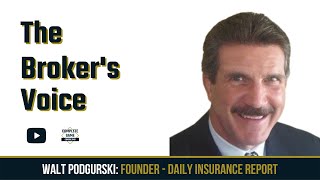
YouTube interview (Andy Neary with Walt Podgurski, recorded Dec 13, 2021). Walt summarizes a long insurance-industry career (entered 1969), founded NAICS/Workplace Benefits Association (1997), sold it in 2011, then launched the Daily Insurance Report in late 2015. He now curates and distributes a daily newsletter (Mon–Fri) aimed at employee-benefits professionals, emphasizing subject-line-driven open rates, curation over original content, and actionable messaging that highlights benefits (not features). Key tactical advice: use specific subject lines (top news item), curate trusted content, lead with benefits (example: telehealth saves time/cost), post frequently on LinkedIn and invite targeted prospects using short, specific connection messages. Primary trends covered: wellness (social, physical, mental). Business goals: serve subscribers and monetize via advertisers/lead generation.
Questions this video answers
1969.
1997.
2011.
Late 2015.
About 25,000 subscribers.
Chapters
All right, welcome back to the Broker's Voice. I'm excited today because I get to have Walt Pegurski join me. Walt, welcome to the Broker's Voice.
Thank you, Andy. My pleasure. I'm looking forward to this.
You know, Walt, I. You're kind of a mystery man to me. That's why I wanted to have you on. I see you at all the conferences. I've been getting your Daily Insurance report for. For a couple years, and I think this is a great time. I want to start this episode with giving you the platform or the podium just to tell your story. How did you get in the insurance industry? Tell us about your background.
Okay. I'll keep this very short. So I went in the life insurance business right out of. After graduating from Miami of Ohio and Oxford. And then I gravitated into employee benefits from the life insurance business. And then I eventually came to specialize in voluntary benefits or payroll deduction. And then in 1997, I founded NAICS, which was a national association of professional enrollment specialists, and then we renamed that the Workplace Benefits association people might be more familiar with and was focused on voluntary benefits with training events and so on. And then I sold that company to a large media company, Source Media, which is now Arizon, and that was in 2011. And then I briefly retired. I was going to write novels and movies and. And be famous, but I didn't have any commercial success of that. So I started the Daily Insurance report in late 2015. So it's been almost going on six years, I guess, and I'm pleased to say it's growing rapidly.
Yeah. How many. How many subscribers do you have on the Daily Insurance Report right now?
So I sent it out to about 25,000 subscribers. But I try to emphasize more the engagement with the newsletter more so than the subscriber number.
That's awesome. I want everybody listening in to hear that. 25,000 subscribers. Imagine if you had a subscriber, aka prospect list of 25,000, that you were sending a newsletter to that. We're going to get to the newsletter, Walt, in a bit. So. So what year? You know, you've been in the industry for quite a while. What year was it you got into the insurance industry?
All right, we're going back a ways. I'm gonna give my age away here, but it was 1969.
19. Wow. Okay. So I'm gonna admit, Walt, that was before I was born. But a lot has changed. The reason I asked that question is a lot has changed. And one of the questions I want to ask you is, you know, one of the things my business focuses on is helping advisors and agencies get attention from the right prospects. And when you think about that.
How. What are your thoughts, especially with the daily insurance report, how are you using that to grab attention? Because let's face it, today we're getting bombarded with email newsletters, right? We're getting bombarded with social media. How are you using that to really try to stand out in the eyes of the people who get your newsletter?
So I think there are a couple of things that people can do to get their email noticed. And the very first thing is probably the most important thing, which is a subject line. And I'll tell you what happened is that I used to publish my newsletter. Actually, I published a newsletter back with the Workplace Benefits Association. So I've been publishing a newsletter for like 20 years. And I used to send my newsletter out and it would just have the name on my newsletter. And I thought, well, people recognize my newsletter, they'll see the name of the newsletter and they'll open it up. But when I sold the company to Source Media, they had some branding experts there and they said that I was doing it wrong, that what I should be doing is I should have the top news story of the day as a subject line. And honestly, that's been a. Hang on one second.
That was great advice because.
You have to get people's attention with something specific to them, something compelling. Let me put it a different way. People aren't really reading, they're scanning. And so if you're going to stop them from scanning, you have to have something that says to them, this is something I need to know more about. This pertains to make. It's the same thing as a headline. And like a magazine ad or some type of static ad. David Ogilvy, the father of advertising, has a rule that you're. Let me just see if I can find that here.
He says, when you get the headline right, you've invested 80% of your advertising budget, correctly. So the subject line is probably the most important thing. And while we're talking about that, the idea, for instance, if I'm sending out a dedicated email for one of my clients, the idea isn't to get 25,000 people to open up that newsletter, is to get the several hundred people out of the 25,000 that are actually a prospect for their particular product or service so they can ignore the message to the 25,000 people and just create a message for the several hundred that are exact demographic who they want to approach.
Yeah, you know, and what I love about that is what you just said, right? Open rates on emails aren't very high these days, let's call it 8 to 10%. So the goal has to be to grow that list. And at 25,000, even if you have 10% opening your emails right now, that's 2500 people. And that's a ton of eyeballs that are seeing your content every single week. I got a question for you with the daily insurance report. You know, when you put together your newsletter, what kind of content are you sharing? I know you talked about start with the, you know, a main top, you know, news of the day. But I, what I love about your report is you're giving me a lot to digest and I get to pick and choose which stuff I want to look at how. What kind of content are you sharing in the, in the report these days?
So this is going to pick up on my, my elevator pitch a little bit, which I think we're going to talk about. But I really go back to my background in life insurance and particular particularly employee benefits. So I have been out there in the field. I know what it's like to prospect and cultivate a client, make a sale, all the things. And so I look for things that are relevant and I try to think outside of the box a little bit. So there are a lot of things in my newsletter you might not see in a other insurance newsletter.
You know, maybe it has something to do with technology or mindset, but if I see it and I think it's relevant to a, to the performance of somebody in the employee benefits industry, I.
Include it.
You know, and I think about what you're doing. When I open your emails, you remind me of a gentleman some may know of, but a lot, a lot may know of this gentleman. Tim Ferriss. Tim Ferriss has a newsletter. I think he's got two and a half million subscribers. Something insane. And he calls it his five Bullet Fridays. And what he's doing is in his, his newsletter is he's just sharing tips and tricks, news shows. You should watch favorite books of his. And that's what I love about you. You're just sharing trending articles. And it can be anything from employee benefits to insuretech to fintech to property cash. It doesn't matter. You're just sharing news of the day. And then I get to go in, I get to pick which articles I want to read. And the consistency in that, Walt, I think is what makes your newsletter so dang good. It's the Subject line, picking news of the day, you know, current events, but then just being consistent of the look of that newsletter. So let's get.
Go ahead.
I'm sorry, I'll say let's get. Now let's get specific with the employee benefits industry. What are some of the. When you think about your newsletter and picking current events, what are some of the topics, some of the. Some news that you see trending right now in the employee benefits industry?
Well, of course, there's a lot of things trending, but let me start off by saying I'm really not an expert at insurance or employee benefits anymore. What I'm an expert in is publishing a newsletter for people in the employee benefits industry. And if I had to pick one thing that's trending right now, I would say that it's wellness. So there's. There's a social wellness, physical wellness, mental health wellness.
And I see more and more, so many conversations and even articles, press releases and so on that are talking about wellness. So I would say that wellness is one of the biggest things, you know.
And I want to go to that for a second and get your thoughts on wellness. What you just said, though, is really important. I'm no longer an expert in the benefits space, but what you're doing with the newsletter, it's something I preach to my clients, Walt. It's called hosting the party. Whether it's a podcast, it's a newsletter, a webinar. When you host something that brings value to your audience, guess what? You are the one who benefits the most. Because you're hosting the party. You're the one they remember. So you don't have to be the expert, host the party, and it's always going to benefit you. So with wellness, because I couldn't agree more. Today we can't just talk about eating right and exercising. It's social wellness, mental wellness, you name it. How do you make that stuff actionable? Because I think that's something that's always been a struggle for our industries. Yeah, we talk wellness and everybody thinks of biometrics and, you know, 10,000 step contests. But how do you make wellness actionable?
So this really goes back to basics, which is to always talk about benefits more than the features of your product or service. So as an example with wellness, let's take an example of telehealth. So how telehealth works isn't as important as the time and money it saves. So if you were offering telehealth as part of your service, you could start by explaining how telehealth will help you be well quicker and be well easier and be well at a lower cost. Excuse me. So I would. Would lead with that.
And give me.
An example of that. So when you say lead with that, can you give me example?
Sure. And I'm thinking on the spot here, but let's just say I'm talking to a business owner and I am presenting a new package. And one of the things that we're doing with this package is we're beefing up the telehealth aspect. And so I would say, look, you know, primary care has always been a part of your package, direct primary care. But what we're going to be doing is beefing up this telehealth aspect of this. And so what it's going to do is it's going to make it easier for your employees and their families to contact a medical professional and get the advice they need. It's going to be quicker because they don't have to make an appointment a week, week later, a week from now. And it's lower cost. The cost of that telehealth visit is much lower than a physical cost in the office. So this is why we're introducing this to you this year. That was a little rough, but of course, a person that's delivering their presentation every day, they would deliver that in a very smooth manner.
Well, and you bring up a good point. You know, when you look at the benefit space specifically, there's a lot of people talking theory, destinations that are pontificating, but action's a completely different thing. Execution is a completely different thing. So I appreciate you providing your opinions on that because I think, you know, it's easy to talk about what our clients need to be doing, but actually giving them the tactical steps to do it is a whole nother story. And so I want to change the subject here for going back to your newsletter and the topic of content. So your newsletter is filled with content. And again, what I love about it is I get it, I open it. There's probably, I don't know, a half dozen to 10 different articles in there. And I get to pick and choose which ones I want to read. I'm not going to read all 10, but I get to pick what I want to read. And the important thing about that, Walt, is not every, as you said earlier, not every article is about insurance benefits. It's just articles that you're sharing to bring value to the reader. And that's what I love. So I want to talk content for a second. You've been You've been in the industry since 1969. Let's, let's, let's, let's be, let's be realistic. Our industry insurance at large still has what the average age, 58, 59. Where content is being poo pooed. How do you view the value of creating valuable content in today, today's technological world?
So I have to answer this with a bigger question and let me put this frame this way. Each week I send out 125,000 emails from my newsletter to my newsletter subscribers. And then also I go on LinkedIn and I post 5 to 10 per day. So that's 50 to 100 posts on LinkedIn each week. And then also I invite 50 to 100 people to connect with me on LinkedIn each week. I have about 15,000 first level connections, so I'm creating a lot of messages. But here's the interesting thing about that is that I don't create a single piece of content myself. Everything I share is other people's content. When I first retired, I was going to be a writer. I started creating my own content. And that is hard and it's time consuming. And then when I look on LinkedIn or if I go to Business Wire, PR, Newswire, wherever, there are other people creating awesome content. So it's so easy for me to just share other content that is tremendous, tremendously awesome without having to create it myself. So I'm not sure I'm answering your question here.
No, I love that. Because here's why I've. There's two different types of thought leaders out there, in my opinion. There's the influencer, that's the person creating the content. Right? They create their own content. I would put myself in that bucket. I create most, if not all of my content. But there's also the curator. The curator is the person who's just taking content that already exists from other thought leaders and putting it in a very easily easy, digestible way for their audience to consume it. And that's what you're doing. And there, there is no less value in that. That can be just as powerful as being an influencer. So I want everybod. Walt, you're still going at it, providing five emails a week. So once a day, Monday through Friday, you're sharing what, 50, you said pieces of content on LinkedIn.
So probably more.
You are actively connecting with people on LinkedIn on a daily basis. This is how you get it done. And you know what, you're still going at it strong. And you've been in the industry for 50 years. I want everybody to hear that. And here's another interesting fact, Walt. I don't think most people realize they might hear you say, I send out an email every day, Monday through Friday. Oh, Walt, you're just going to annoy people. Guess what, guys? You know what has the lowest subscribe rate when it comes to email? Newsletters. Daily newsletters. So, Walt, I love what you're doing now. Talk about LinkedIn a little bit because that's obviously a passion of mine. It's the business to business platform. What are some tips and tricks you could share with others listening in about how to use LinkedIn more effectively?
Well, I love LinkedIn. I mean, almost all my subscriber base, all my new relationships really come from LinkedIn. And so I send out 50 to 100 people, 50 to 100 invitations per week to LinkedIn. And this, we don't really have time to make this a course on LinkedIn. But I do the searches and searches. So I might do, in my business, I might do voluntary benefits and then capital A N D and then I might do presidents. So what I'm looking for, there are people that are presidents of their organizations and specialize in employee benefits. So I would say pick out the niche that you're in and figure out what type of search on LinkedIn will show those people. Show you a list of those people and then just invite them to connect. I think we're going to talk about.
Elevator pitch. Sorry. And take that elevator pitch that you've created and just invite people to, to connect on LinkedIn. Would you like to hear my invitation?
Yeah, let's do it. Let's. I'd love to hear, you know, because the one thing my business is built on is helping people build a better brand message. And so the elevator pitch is a huge piece of that. So yeah, feel free. Share away.
Yeah, here it is. This is what I send out. 5 to 10, to 5 or 10 people per day. It says, Andy, I'd like to connect with you on LinkedIn. The Daily Insurance Report is now subscribed to you by 25,000 elite insurance industry influencers who receive it Monday through Friday. And have a quick overview of what's appearing in the media regarding the health and employee benefits industry. Well, so, yeah, it's very, very specific. I know exactly who I'm sending it to that should respond to this message. And I probably get, I don't know, maybe 30 to 40% of the people I invite that actually connect with me.
Yeah, I mean that's what people, I think often miss is that sending out connections is a bit of a number game. Some will, some won't, and you got to have a good message when you connect. And let's face it, there's too many of these sales autobots out there that we get messaging every day on LinkedIn. So I want you to go one layer deeper on that. Walt, with messaging on LinkedIn, when you send out invites, what are some common mistakes you see people make and then what can people be doing better?
Well, first I would make sure that you're sending it to the right list. So as an example, you were started as a broker in the Denver area. So if you were going to be starting to use LinkedIn as an employee benefits broker in Denver, you would search for the CEOs or the CFOs of corporations in Denver that, let's say, have 25 employees or more. And you can find that information very easily on LinkedIn and then create a message to that group of people. It might be something like a lot of CFOs don't think about this daily, but one of the biggest line items on their budget is employee benefits. And I'd like to show you some examples of how other companies have have reduced their cost in this area. Something very direct because people are, again, we talked about scanning versus reading. Just hit them with your message and the people who have some interest will connect and the ones who don't, won't connect and who cares?
Yeah, and I think the key there is the consistency, right? You do five to 10 a day. You got to show up every day and do that. So two more questions before I let you go. Walt, just out of curiosity, with your daily insurance report email that goes out, is there an end game? Is there a goal you have? Like, what is the result you're trying to create with the newsletter? Or is it just. I just want to bring value to the insurance audience.
Well, there's two objectives I have. One is to help the people in the insurance industry.
See what's being written about the insurance industry. And hopefully some of that information is relevant and will help them do a better job with their clients. So the subscriber base is the first objective to make sure they're getting value. But then the second objective is the advertisers, and it's a commercial enterprise. So I have to make sure that what I'm doing is of value to the people that are supporting the newsletter financially and they're receiving.
Prospect branding value and leads for their products and services.
Awesome. Awesome. How does somebody who Isn't subscribed. That's hard to believe because there's over 25,000 people. If somebody's not subscribed listening in and wants to jump in on the newsletter, what's the best way to do that?
So they would just go to daily insurancereport.com and there's a subscribe link right at the top.
Okay, cool. Before I let you go, any last tips, suggestions for the audience that you would like to put out there? Again, this. This is insurance professionals listening and from all walks of life. Life, disability, property, casualty, benefits. What, what lasting advice you want to leave.
So we're just going to rehash what, what we've already said, which is think about the most fascinating and imperative benefit of what you do.
And then distill it down to just a very few sentences, keep it very short, and then get on LinkedIn and use the most unbelievably effective platform ever invented for making new relationships, and put your message on there on post. Repost other people's great content, invite 50 to 100 people per week, and everything after that, it's just details.
Got it. I love it, because what I heard you say there is know what your differentiator is, be able to communicate it very effectively in a very few number of sentences and then go share that differentiator with your. Your target audience. And some will, some won't. The ones that do, you're going to ultimately do business with. So, Walt, with that being said, I want to thank you for your time. It was a blessing to have you on the broker's voice and for everybody else listening. And guys, this is a guy who's been doing it for 50 years in our industry. I think he's got some wise SA advice for you. And by the way, listen to what he's doing every week. Email goes out every day to 25, 000 subscribers. He's on LinkedIn sharing 50 to 100 pieces of content a week. He's connecting people with every day. What are you doing? Are you still just picking up the phone, smiling and dialing? Listen to his advice. Get that message out there far, fast and wide, and good things will happen. So, Walt, thank you one last time.
Okay? Thank you, Andy. You take care.
And for everybody listening in, you know what happens when clarity and confidence collide? Massive action happens. Go make it happen today.
More from Andy




If you want producers to succeed faster, help them create a sales message that creates confidence.

Sales isn't a zero-sum game! You can have tough competition and still grab a beer after



Option 1: Meditation, a fast walk, a podcast, and protein. The ultimate morning routine!

How you do one thing is how you do everything. Ill elite producers fuel their body.


Stop living in the gray of maybe! Your job in sales is to get a clear yes or no