5. Ed Ligonde: Catching Up With The BenefitsPro Broker of the Year
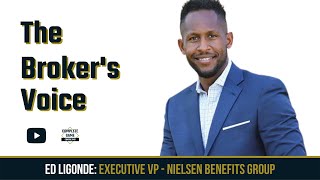
Andy Neary talks with Ed Ligonde, the 2021 BenefitsPro Broker of the Year, about his career in health insurance, the power of storytelling, and why diversity matters in the industry.
Chapters
All right, welcome back to Broker's Voice. I'm excited for this one today. I've got Ed Lagondi Joining me, the 2021 Benefits Pro Broker of the year. Ed, welcome aboard, man.
Thanks, Andy. Happy to be here, man.
We were just talking offline. Ed just got back from Maui, hanging out with his family for a few days. Missed. Good news is he missed the epic rain, the catastrophic rainstorm that they had down there.
So now you're fresh, refreshed, ready to get back at it. Ed, here at the end of the year making. Making next year even a better year. Let's start at the foundational level. You know, most of us did not get in this industry by design. I know I didn't. How did you find yourself in this industry we call health insurance?
Well, that's. That's that loaded question. I feel like a lot of us have a. Probably a pretty similar answer for. You know, contrary to popular belief, I definitely didn't study insurance and land here. I studied economics, wanted to get in the business. You know, playing soccer was kind of my dream in college and kind of taking that further on and seeing kind of where that life takes me. But, you know, life had a different plan at that point in time. So I wanted to wear a suit and tie to work. I don't know what I wanted to do, but I knew I wanted to wear a suit and tie to work. I thought that that was the. The pinnacle of being a businessman at the end of the day. And so I was fortunate enough to land a really nice internship with Northwestern Mutual. But what I didn't know is that I'd be selling life insurance during the downturn of the pandemic. Not pandemic. I've been saying pandemic for so long, but the economy back in 2008, time frame and things of that nature. So that was a bit difficult, but things that actually go really well. But chasing down my family and friends and asking for referrals all the time, it just wasn't my thing. And so I had a good friend at the time say, hey, you know, before you leave this industry overall, why don't you check out the group side of things? And I said, hey, you know what? Why not? Why not take that leap of faith? Jumped onto the group side. Honestly, I felt pretty blind to it. I didn't really understand what the group side really meant.
And, you know, took that leap of faith. I saw it as a way to. One, I got to work with a really good friend of mine. Two, I'm already Licensed at the end of the day. And three, it's a great way to build some business to business sales experience so that I could ultimately land in medical sales. I had a really strong interest in getting into medical sales at the time, so that's how I landed. And here I are, you know, 10, 12 years later, and I.
And I failed to say as well, you're the executive vice president of Nielsen Benefit Group, which is an Westlake Village, which. What mountain range is it just on the other side of from la. What mountain range is that?
We're just near. At San Fernando Valley, basically. Okay, so, yeah, not too far from, you know, Malibu. We're just through the mountains into Malibu, which is great. About 10 minutes.
Okay. Now the athlete radar in me goes. Hold on. I don't want to overlook this. You played soccer at ucla?
I did.
That's no joke, man. What was it. What was it like playing.
College soccer? That's a high level. That's PAC 12.
What.
What was that like for you?
Well, that was actually back when it was PAC 10. Right. So.
I feel like I'm dating myself already. But wow. I mean, quite the experience. I mean, I grew up in Fresno, California, and there wasn't a ton of exposure, especially for. For soccer athletes. There's there. And so, you know, I played there, had a really great time. I didn't have the utmost confidence that I even deserved to be at a school like ucla. So walking in those doors and playing with ath, we were, you know, fortunately, I was part of the number one recruiting class in the nation back when I got recruited. I mean, our recruits were from national team and things of that nature. And then they treat you like kings the second you come in, other than, you know, freshman hazing and that kind of stuff. But it was a wonderful, crazy, tough experience. I mean, the level of play, the pace of play, I mean, you had to be a man really early, so. But I'm honestly so grateful for being able to go there and play with some of the best talent. A lot of those players went and played pro, which is great.
So I went through college probably eight, nine years ahead of you. But I remember when I was in college at the time, some of the top, top teams in the college soccer would be like, Virginia, I'm forgetting North Carolina was ucla. While you were there, were you guys one of the top programs in the country?
Yep, absolutely. We were, I would say, pretty consistently top 25. In fact, my. I can't remember if it was my sophomore, junior year, we actually made it to the national championship.
What was that like? So you played the national championship game?
Yeah, it was. Yeah, it was insane. It was. I mean, here's the funny thing. We played UC Santa Barbara in the. The championship game in St. Louis, Missouri.
You guys are right next to each other.
I mean, we, we all said, why don't we just cancel this game, move it to next week and play at the Home Depot Center. At the time. Now it's the, you know, Dignity Health Sports park, but two beach towns basically, basically paying, you know, playing next to each other in the Midwest in, In snow, too. It was snowing.
Yeah. That's so funny. Yeah, the gauchos. You know, now this is all making sense to me, man, because I remember when I was at UW Milwaukee playing baseball, you know who are the best dressed athletes in college? The soccer guys. Those guys always dressed to the nines. I remember going out to the bars and they'd be together wearing their long coats and scarves and all that stuff. But now it's all making sense. You said you wanted to wear a suit and a tie. Former soccer player. Yeah, I'm now putting two and two together. So let's go into your insurance career. Now you're in health insurance here in California. What I want to talk about, if you can provide some insight, you're in a market that in our industry, we say is a whole nother country itself. Right? Health insurance in the California market, where it's extremely fully insured, not a ton of options. What's it like one, to be an advisor in the California market? Number two, how do you differentiate? Differentiate as an advisor in a market where it's easy to feel like there aren't a lot of options.
Another loaded question. I mean, yeah, California. It's so funny. Every time I leave the state, you know, people say, oh, you're from California, right? It's. And that can mean so many different things. You know, the running joke that I've. I've kind of had for a really long time here is you can't throw a rock without hitting a brokerage firm. Especially in Southern California. There's so many of us out here, and it's extremely difficult to differentiate yourself. So at the end of the day, when you work with a lot of insurance carriers and they're not allowed to treat one broker, you know, better than the other, you're supposed to get the same rates and such, you know, then you start selling services and things of that nature. But at the end of the day, you know, I've. I've Ultimately stopped believing that this is just the insurance industry and that this is a people business and we have a story to tell. And I think ultimately, as an individual and as a professional, you're going to want to work with people who enjoy working with you. At the same time, you can't just go and try to sell to everyone at the end of the day. And so once you figure out who you are and what you bring to the table as a human being, and then, of course, with the tools you have available to you, whether through your firm or through your partnerships or whatever, tell your story. And then I think that's how you end up differentiating yourself. I think when I got into the business, I would just try to sell product, right? Oh, I know. Product I would want to sell. How our firm is better than every other firm because we do all these other services, right? And you're selling all the what's in the house, but you're not selling your why. Once I figured that out, everything's different. And I've made some really great friendships in competitors. Right. You don't always have to compete with each other. You can kind of band together and just share, you know, best practices and ideas and such. And some of those people that I've become friends with, even in our community, they have that similar kind of story where they're not just selling their name of their firm. They're not just selling a product, this next shiny product from an insurance carrier. At the end of the day, they're selling the story. I think that's how we can differentiate ourselves, Especially here in California when there's just so many of us.
I was going to say, you just spoke to my heart, because it is about your story. Especially when you're in a market where there are so many logos, the agencies, you can't sell your logo. You have to let people get to know you. And I think your story, your teammate, Brian Locker, you guys have powerful stories that.
Allow yourself to differentiate, because at the end of the day, it's a relationship business. It's humans buying from humans. So when you are in a market where not a ton of carriers to work with, but a ton of brokers to compete with, man, you got to stand out with that message.
Exactly. You know, I think even for us, a lot of times, you know, even meeting people like you, Andy, honestly, and you get to choose who you work with externally as well as internally. And I think once you start banding, it's the people business, really. I mean, that's the core of it. All at the end of the day, if your heart's in the right place and you're able to share that story, then I think a lot of it just ends up falling into place.
So let's go back. Was it five months, six months? You won kind of a big. A big award. You were the. The 2021 broker of the Year benefits Pro Broker of the Year, I think that was that announced in July, May or July.
August, yes.
What did that award mean to you?
I honestly didn't believe it was going to happen. I was just still surprised I made the list in the first place, to be honest with you. Even being at the event and seeing a lot of people, you know, bumping elbows with people and, you know, people asking, do you think you'll win? Do you think you'll win? And, you know, the other. The other people that were on the stage with me are incredible human beings, and I've gotten to know some of them after the fact. And, you know, it's. It's. I was just, again, just happy I was even recognized, to be honest with you. Then once the announcement came out, it took a really long time for it to actually settle in. I was just like, is this reality at the end of the day? And, you know, growing up in this business, you know, and not to always bring minorities into the mix, but I'm a minority in this business, right. There's not a lot of people who look like me. So I never would have thought that I would have my face on a magazine as a Broker of the Year, let alone as a finalist. So I, you know, I was in my own head thinking, hey, you should be happy you're even on the stage. You're even happy you're even considered for this. But if there's any way you can win this or you can win this, then maybe someone else out there who's thinking the way you thought six months ago or a year ago or five years ago, has that inspiration to, you know, take that next level, you know, step in their career or that, that leap of faith, if you will. Because there was a lot of times I was going through my career where I was afraid to make a change or afraid to do things that I believed in because I was just afraid, right? Just fear of failure, if you will. I let that. That failure kind of cloud a lot of the decisions I would have made earlier on in life. So, yeah, I mean, honestly, that award, I think I'm going to cherish that for the rest of my professional career, to be honest with you.
It feels awesome. You know, I'm still, I'm very humbled by it, and I really just want to share it with my community and with my teammates because I, I, you know, I don't think I would have gotten that award had it not been for my mentors and my teammates and, and the people that I work with so well.
I think it was a proud moment for the industry as a whole. You talked about being a minority, and now on the COVID of Insurance magazine, I think that can't go understated. You know, when people think about insurance at large, they have an image of a gentleman who's white, probably in his late 50s, and unfortunate. The reality is, it's a reality. It's not a perception, it's a reality. And so when you get that opportunity, you see the minorities in the industry that are doing great things. And I'm going to throw females in the category of minorities because we don't have enough females, let alone with Hispanics and African Americans. It's a very proud moment for the industry because what you guys, like you, Kareem Cade, and other minorities out there in this industry that are really doing great things is you're letting other minorities know that it's possible.
And I think that is an.
Epic transition I hope our industry makes, especially if we're going to keep this thing perpetuating into the future. Now, let me ask you this. Now that you won the award, have you seen any impact on your business as a result of being named Broker of the Year?
Well, now people know who Nielsen Benefits is.
Differentiating, right? Talk about differentiating. And you mentioned it a moment ago, ago, where you kind of have a logo and sometimes people recognize it. Like if you're a big Aon and you used to sponsor Manchester United. Right? We're. We're a smaller firm based out of, you know, California and a couple offices nationwide. So, you know, people now know who Nielsen Benefits is. People now know my name. You know, at the same time, I think I've seen it kind of change it a couple different ways. One, it's given me more credibility as a professional. So I actually still don't say. I don't even tell people that this. I am who, you know, this person who won this award.
In our business. But when I connect with them on LinkedIn, they see it. It's instant credibility for me. So that's major, especially when I'm competing with some of these big boys out here. And fortunately, it's been able to help me land some new business in the last few months.
When I'm competing against some of those big, you know, kind of organizations, so.
Oh, absolutely. Like you did, what you just called it was, I would call it passive credibility. It's not that you're putting it in people's face, but when they get to, they come Google you, they look at your website, they look at your LinkedIn profile, which is your personal website, they see it and it's, you're tooting your horn without having to yell in their face. And I absolutely, that's what I love about it. In fact, when I get the invites or the, the promotions for the Ascend Conference, guess who I get? It tells me who I get to hang out with. Ed Lagadi, you're now a superstar, man. No, it's all well received, Very, very well earned, my man. Let me ask you this, okay? Broker of the year, looking forward. Nielsen Benefits Group is now getting some attention, which is great. I see you guys on Instagram, so I love it because you're, you guys are leveraging social media. Well, as you look forward, you know, people want to hear from the broker of the year. What do you, where do you see our industry shifting as we move forward?
Well, we were just talking about it a moment ago from a diversity perspective. Right. And so one of the things I want to do is kind of practice what I preach. I believe in giving people opportunity that maybe they're not necessarily always given that opportunity for. So I believe there should be more women in decisions of power. I believe there should be more people that look like me or other people of color in this business. But I also think that in order to get that talent, we need to look into different industries as well. And maybe again, you know, Michael Hill said this during our, our benefit pro panel where we have a story to tell. And I think by telling a story rather than just saying we work in an insurance makes it more of a sexier conversation, if you will. Right, because you're speaking to the heart, you're speaking to the why.
But secondly.
I just believe that there's just so much that can be fixed in our healthcare system at the end of the day. I mean, this would be a three day full conversation about all the different things that are broken from whether the way hospital systems are getting paid and, you know, how, you know, health insurance is, is, is being purchased and things of that nature. But education to me is key and that's something that I've just been pretty passionate about and something I need to focus on even better myself from, you know, with Our clients, but also I believe us as advisors have the responsibility, technically not even just the opportunity, but responsibility to make sure that the clients within our clients, right. The ultimate client at the end of the day is each member and their family. Make sure they understand everything about their plan as best as possible to make them the best savvy consumers at the end of the day. And then of course, you know, we have the opportunity to work with the employer to change the way they purchase their health care and give them the transparency to do so. So I just think that this needs to be more transparency and, and more. It's not a set it and forget it system. It shouldn't be.
Well, and it goes back to, you know, what you kind of talked about when people talk about what they do. I help agencies and advisors with their elevator pitches, right? And too, too often people say, what do you do? Well, I'm a benefit advisor. That's underselling what you do. We have a very important job in this country. You know, if you think about the problem we solve and the result we create for not only companies, but the consumers, the employees that work at those companies, what we do can prevent an employee from going into bankruptcy. That's a big time jobs. When people ask you what you do, I'm an advisor, I'm a health insurance broker. You're underselling what you do. So last question for you, Ed, and I'll let you go. There's a young advisor listening into this and they're looking at you. And here you are, fresh off the broker of the year. They're young, fresh, but maybe a little frustrated because the career hasn't started off the way they wanted it to. Let's face it, they don't get a lot of training in this industry. What advice would you give that young advisor?
A few different things. One, find a mentor. I just think if you can, I mean that's like the roadmap right there is that someone's already paved the way and if you can kind of figure out a way to follow in their footsteps to a degree, then your failures can be reduced. But speaking about the word failure, it has a negative connotation to it, but it really shouldn't at the end of the day, and I'm still learning this, and I think I'll be learning this for the rest of my life. Don't be afraid to fail. But failure, fail forward, if you will, right where you learn from each one of those and then you can next time. Even if you fail again, you're still Learning from that particular opportunity. So if there is a particular client you want to go after, or maybe a firm you want to work for, maybe start your own organization, don't be afraid to do so. Right? Obviously, do your research and things of that nature to make sure you're as comfortable as possible, but don't be afraid to learn. Don't be afraid to. To. To basically just take that next step, leap forward. At the end of the day.
That's awesome. I mean, that's. That's great advice, because I think too many in our industry are afraid to fail. I know I was at one time. And so, yeah, man, fail fast, fail forward, learn from it, and continue growing. So that advisor who now is ramped up, they're like, thank you, Ed, what is the best way for advisors that want to get ahold of you? Maybe ask you, maybe make you their mentor? What would be. What's the best way to get in touch with you?
LinkedIn is pretty easy for me. I try to. I try to keep up with that at least, you know, a few times a week. So you can definitely find me on LinkedIn or through you, Andy.
Listening to this podcast as well. So I just. I'm appreciative that you allowed me to join you today.
Awesome, man. Well, thank you for taking the time to be here. I know you're busy, and for everybody who is listening in, you just got to hear from the most recent benefits pro broker of the year, and I think his advice was sage. It's not any magic elixir. There's no secret sauce. It's just putting hard work in, knowing you're going to fail. Enjoy the failure, do it again and again, but grow from it. So, Ed, one more time. Thank you.
Thank you. Appreciate it.
Everybody else that's listening in, you know what happens when you get the clarity. You mix it with confidence. Massive action happens. So go make that action happen today.
More from Andy




If you want producers to succeed faster, help them create a sales message that creates confidence.

Sales isn't a zero-sum game! You can have tough competition and still grab a beer after



Option 1: Meditation, a fast walk, a podcast, and protein. The ultimate morning routine!

How you do one thing is how you do everything. Ill elite producers fuel their body.


Stop living in the gray of maybe! Your job in sales is to get a clear yes or no