63. Joe Bucker: From Prison to Purpose-Driven Entrepreneur
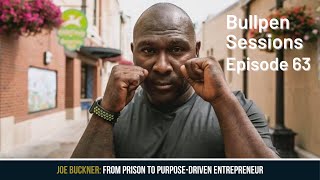
Joe Buckner served time for illegal activity after college, rebuilt his life through discipline, and founded Beautifully Savage, a boxing-based fitness concept, with $15,000 around 2016. He talks about regimen, community accountability, and why you can't build anything alone.
Chapters
Hey.
Hey.
Welcome back to Bullpen Sessions. My name is Andy Neary. Each week I sit down with abundant thinkers who are kicking ass in life. And we deconstruct the formulas they have used to have success in business and in life, to help you unpack your life, your business, so you can do the same. So put a smile on, grab a pen and a paper, get ready to take a ton of notes because you, my friend, are to go on a wild ride. Here we go. Hey. Hey. Welcome back to Bullpen Sessions. This is part two of a four part series I'm running here in October where I'm highlighting local Fort Collins, Colorado entrepreneurs. Amy and I live in Fort Collins and I wanted to sit down with some local entrepreneurs who are just superhuman beings doing some super things and giving back to the community at the same time. This week I get to sit down with the student. His name's Joe Buckner. He's the founder of Beautifully Savage, which is a boutique boxing studio. He is born and raised here in Fort Collins. So we get into his story as a child. Joe's an African American and Fort Collins not being an overly diverse community. We talk about what it was like growing up a minority in the city. And what I love about Joe is he has a passion for the community. He has a passion for helping others reach their goals, their dreams. And he was, you know, Joe was a multi sport athlete as a kid, grew up, went on to play college football. But after college, life took an unfortunate turn. After a series of probably what we could call bad choices, Joe found himself not only in jail, Joe also found himself homeless. And he was determined to fight for a better life. And this is where his story turned around. He became more motivated than ever to go after his dreams, to overcome even when everybody else told him he was was going to lose. And here we are today. He's the founder of Beautifully Savage, a massively successful boxing studio. And what I love about Joe is he has so many raw, true philosophies about life. And I think you're going to hear several of them in this episode. I love what he says here. He declares that fighting solves everything. He believes each person only needs to unleash their inner fighter to attain the life they have always dreamed of. And he is now dedicating his life to helping other people reach their full potential through the spot of, through the sport of boxing as well as he's a very, very impactful motivational speaker. I was excited to have Joe not only lead a boxing class for my complete game retreat, that unfortunately got canceled in June due to Covid, but he was also going to be one of my highlighted speakers. So I think you're going to absolutely love this episode. Joe Buckner is a fantastic human being. He's going to come right at you with the truth. So you know what, you know what you need to do? Take out a pen, take out a pie of paper, start taking notes. This is gonna be one fun ride. All right, here we go.
Shift your mindset.
All right, Joe Buckner, founder of Beautifully Savage. How are you doing, man?
I'm good, man. How about you?
Good. As I've been telling everybody I'm doing all through October, I'm interviewing Fort Collins entrepreneurs. So local entrepreneurs, as we know living in the state, we promote local as much as we can. Dude, you have one fascinating story. You and I have known each other, what, for couple years?
Couple years now.
And obviously I followed you before that because you're all over social media. In fact, this guy's been getting all over my ass about not being on TikTok.
Let's start with your story because you're born and raised. So why don't you maybe take us back for the people have no clue Joe Buckner is. But take us back to growing up in Fort Collins.
Yeah, so like the people that have no clue who Joe Buckner is probably like 99% of the people, which is cool.
Makes the story even better, man.
There's a small handful that might know. So, yeah, I'm born and raised, Fort Collins, Colorado. My grandparents house is actually block away from here. So like I've been in these bricks my whole life, which is why living downtown matters so much to me because I don't really know much else. And born and raised here. My parents were really young. My dad was 16, my mom was 18 when I was born. They got married because I think they thought they were supposed to and divorced a year later. And then my grandparents raised me until I was about 4 years old. So my grandparents are from Mexico. So if you can imagine a little jet black kid that could only speak Spanish. That was me. It's my first language actually. And from there I just had a pretty normal life of, you know, like every other poor kid in the country. Always $0.30 away from a quarter, you know, too much month at the end of the money and. But I played sports and I excelled at sports. You know, I was a. I learned five varsity sports in high school. I was all state in two, all conference in three. I went to college, played football, but I was kind of always.
Testing the boundaries, so to speak, you know, like getting in little trouble here, getting little trouble there. And then When I was 16, my mom left. And so been on my own since I was 16 years old, somehow still managed to graduate high school and then took a year and a half off and then went away to school to play football. I went to two different junior colleges before selling at Adams State University in Alamosa, Colorado, and my daughter was born that same year. And then I just started the journey of survival from that point forward, just trying to make it from day to day. And that didn't always work out so good for me.
Well, let me. I'm going to ask you a question, and feel free to tell me, I don't want to answer it. But for those that live in Fort Collins, we know we're not a very racially diverse town, right. And being an African American growing up in a town especially, you know, we're talking 30, 40 years ago, did that shape you in any way, being that historically this hasn't been, you know, this hasn't been a very racially diverse town?
No. That's a fantastic question. My answer is probably a little bit different than you think. I think it shaped me in a positive way. But I was always celebrated. So I knew a lot of kids that were not like me, whose experience was different. But as you can relate to when you're the kid that's on the front of the paper every other week and like, your life is just different than other kids. So while I was in a town that was not very racially diverse, I mean, my girlfriend was the prom queen. You know what I mean? Like, my high school growing up experience was just not like a lot of other kids. But I can tell you the first time I was called the N word, I was 13 years old in a football game, like a middle school football game, by a parent on the sidelines because I accidentally face masked the kid.
Same said girlfriend. When I went to pick her up for the senior prom, her father actually made the whole family leave the house because he didn't want his daughter going to prom with a black kid. And the mom stayed because she said, you know, I can't do that to my daughter. I want to be here to take pictures and whatever else. And so I experienced all the things. It's just maybe not as overt as if I would have grown up in, like, Little Rock or someplace like that. And also, like I said, I saw the kids that were just like John the student who didn't have the Things that I had, the gifts that I had to make their journey maybe a little bit easier.
Yep, that makes a lot of sense. That's actually the answer I wanted to hear. That's. That's fantastic.
Oh, and just real quick. Sorry, don't mean to interrupt you. The other thing, though, and this is, this is the positive, is I don't ever feel uncomfortable anywhere.
Now that I know Joe, I know.
That I've been surrounded by people that don't look like me my whole life.
Yeah.
When I was a little kid, my grandparents are from Mexico, so I was only around Mexican people. I spoke Spanish growing up. I was always around white people. When I went away to college, I was finally in a more mixed race place, but, like, I've never felt out of place. I also went to great schools. Fort Collins is some of the best schools in the state. I'd say probably in the country. The people that I was friends with, my friends, no disrespect to anyone's hustle, but their parents weren't like Jim the bus driver or Sally the lunch lady. They were like, Judge Dressel, Raymond Hale, attorney at law. Like, these are the people I grew up with. So for me, as I grew up and I noticed the names on the building, I was like, oh, that's my friend. That's my friend's dad. That's my friend's parents. Again, my experience, while some may say, well, you grew up in a place that's not very diverse. Oh, poor you. I'm like, actually, it equipped me to be able to move in any space, anywhere in time and place, and I've just always tried to use that to my advantage.
Well, and though you were different because of color, it sounds like you had one hell of a supporting cast around you.
Yeah. And you know, people.
There'S things that are, like, have racial undertones that people don't actually understand. So you can go to your friend's house and have dinner, and their parents will say, gosh, you're so well spoken. And you think, well, dude, we go to the same school.
Yeah.
Me and him.
Yep.
Like, we're in the same class.
Yep.
You know that. Oh, you're so eloquent. It's like, right, again, same school. Yeah, same class. Me and him, been friends since we're 10. You know this, right? Like, so.
Yeah.
But again, I just. I feel like being here has given me a huge, huge advantage in life. And there's so, so many. I acknowledge my privilege being born here and growing up here. So, you know, people talk about privilege a lot. I just think that privilege is a thing that a lot of us have in various forms. It's just, what do we do with.
That and see your perception of it. Yeah, absolutely. Okay, so college football career is over. NFL glory's over. You have a daughter now.
Yeah.
Business world, business life. Life after college and sports is over.
Yeah.
Where did you go next?
You know, it's funny that you say that. I never. Other people had NFL aspirations for me more than I did.
Okay.
I don't know if you remember when Ricky Williams left football and he was like, I just don't like football. He's like, I was good at football, but I don't love it. And people were just all up in arms, and I was sitting in my living room going, I can relate.
Well, it's funny because I hear people talk to us all the time. If you go to the pro athletes right now, playing professional sports, making millions of be willing to bet, at least half of them don't actually like doing it.
Yeah, that's their job.
It's their job. It makes a lot of money, generate generational wealth. So that's why they do it.
It was their way out. Right. It was my way to go to college. But when it was done, like, I wasn't one of those guys who was out playing flag football every Sunday. And I was like, I'm good, man. I've actually only played flag football once in my life. I just wasn't interested in him. I was like, I'm good. I'm gonna move on to the next stage of life. So I had my daughter and I did what I think a lot of people did. I just started working. I didn't have a plan. Yeah, my plan was to play football. Right. So I just started working. Naturally gravitated into sales because if you're personable, people say, oh, you should work in sales. What I didn't realize then that I realized now is I end up being very successful at sales. Not because I'm personable, but because I love people and I love helping people and helping people get the solution they want. Like, I spent a lot of my life as a people pleaser. So it's easy to be a great salesperson if you like pleasing people, because you're just helping people get what they want. So had a daughter. Three years later, my son came. I was working in sales, but that ever elusive American dream was just out there, and I didn't know how to get to it. Right. I had convinced myself that to own a business, to Own a home. To be anything of value financially, you had to have been born that way. It just had to be gifted to you or you had to steal it. Right. You had to go about ill gotten gains to get it. And so that's the route I took. And I started, you know, I was working at a furniture store and you know, retail. You work every weekend, every holiday, even made up holidays like Columbus Day, Flag Day, they have you there. Right. And no disrespect, those holidays, I just. It ain't like Christmas. Yeah, I'm saying it's not Christmas or Thanksgiving. And so, you know, having to work on Columbus Day, it just doesn't seem exciting to me. So an opportunity came for me to make some money doing things that weren't totally above board. And I did it. And the money started coming faster than I could count it. And it wasn't long before I wasn't selling couches anymore and I was sitting on my couch waiting for the phone to ring so I could sell illegal things.
So that activity goes on for a while. You're having financial success.
Yeah.
What was going through you at the time, mentally? You know, here you are. You know, what you're doing is probably illegal.
100%.
You're making a lot damn good cash doing it. Where was your mindset at that point? Were you fixated on what you were doing or were you more fixated on the success so you weren't overly focused on how you were getting the financial success?
Yeah, back then I used to consistently say there's a difference between doing wrong and being wrong. Like, well, I use this money to pay bills and pay for my kids school stuff and put food on the table. I'm not buying Ferraris and Bentleys. And like, this is what I'm doing to support my family.
Way before Jocko Willink ever put out a book about extreme ownership, I lived extreme ownership. I knew that what I was doing was illegal and I fully accepted any consequence that was going to come with that. Yeah, I don't care.
If this is the path I'm taking. I'm like that and everything. This is the path I'm going down. I accept whatever you're owning, your actions.
And the results that come out of those actions because a result came out of that action. Oh yeah, the law came down on you.
Always does.
So why don't you take it? Why don't you take us there and okay, you're making great money. Your retirement plan is in place because. But unfortunately you're going about it illegal ways to make it happen. And then the fun stopped.
Yeah. Yeah.
And you found yourself in a very, very precarious situation that I don't think anybody would ever want to find themselves. Tell us a little bit about that.
No, that was January 3, 2003. I was sitting in.
A room kind of like this with a member of the drug task force. And remember the dea And I knew the jig was up. And that's really the only retirement plan for drug dealers. You're gonna go to jail or you're gonna die. Very few people walk away from something that just gives you 10, 15, 20 grand in cash every week. It's hard to just walk away from that and say, I'm gonna go get a job at Lowe's. Right. And you also don't realize that there's other ways to get to that life. You just. You can't aspire to something you've never seen. So the only people I knew that really had money were either like, doctors, attorneys, whatever, and I didn't know the path they took. And then I had some cousins that were drug dealers. So I was like, they got money. And to me, money meant they had, like, nice sneakers, they didn't own properties or anything like that. I was like, oh, he dresses cool. He's got some money. So, you know, got arrested. My brother and I got arrested. I spent two, little over two years fighting that case in court. My brother, we worked together. He ended up getting an 18 year sentence because it was his third conviction in three years. I got a five year sentence because it was my first, like, big offense like that. And I was, you know, nonviolent offender. And, you know, it's easy for your attorney to trot you out and go, here's this person, you know, like a celebrated athlete, you know, someone that was someone in our community, and they made some poor choices. And so I got sentenced to five years in the Department of Corrections. But again, grace of God, I got to go to a boot camp program which was based on the Army's. Boot camp is run by current and former Army Marines. And there was one drill sergeant from the Air force. And that 100 day journey changed everything for me, changed my whole life.
Walk us through that. Because I can only imagine putting myself in that spot right now where you're in a. In jail, but now in a boot camp with literally military people running the show. What was that like for you?
For me, it was better than being in prison. And it was out of prison. It was at Buena Vista, but it's in a Different part of.
Was better than wasting my days away watching tv, playing cards. So again, perspective. I think one of my superpowers is no matter what, I've always been able to, like, find the positive in situations. So what I saw was an opportunity. It was hard to get into the bootcamp. It wasn't guaranteed. You had to pass a psychological exam, a physical fitness test. You had to be under a certain age, first time nonviolent offender, and they didn't take everybody. So there was no guarantee that you got in. So when I got in, I thought, this is my chance, my chance to fix myself. And really my mentality was, because I was already an adult at this point, I mean, 30 years old. My mentality was, how many 30 year olds get a hiatus from their life to just get better?
Hmm.
No work, no bills, no real responsibilities in here other than becoming a better man every day. So that's how I looked at it. When we got in trouble, they would trash us. Trashing was just working out. Burpees, mountain climbers, push ups. So while some guys hated it, I was like, cool, I get to work out. We had to run everywhere. I'm like, okay, I'm just working out again. I'm just working out, like. But what it brought to my life was an understanding that regimen is how I succeed. If I can take away all the options, all the freestyling, and like, this is when I wake up, this is when I eat. This is what I do next. This is what I do next. That's how I succeed. And I took really, really well to like that aspect of it. So well that when I graduated, because 42 of us started, but only 14 graduated. It's a hard program, but, I mean, you can get kicked out for anything. For talking when you're online, for arguing with someone, like, it's. It's challenging. Yeah. But when I graduated, they actually called me in to the head lieutenant's office and said, you've done so well in this program. We're actually in the time of war. So Even though you're 30, you could go. You could enlist in the army if you wanted to. And I was going to. I really was. I just thought, you know, another 20 years, I'll be 50, I can retire. Like, I really like this. I really do. And what else am I going to do? Go back to what? But I already had my children. My daughter was almost 10. And I just remember her saying, you know, dad, you've been gone for quite a long time. Few months now, like almost a year. I don't want you to be gone for another two years. So I didn't go. But I would have. I would have. I literally took to the military aspects of that. The regiment, the waking up same time, going to bed at the same time, clothes folded, Bible size, toiletries, two fingers apart from each other. Like, all of it. I was just dialed in and I just carried that over when I got out.
That's awesome. And so because you went through the boot camp, what was a five year sentence ended up being what was a.
Five year sentence ended up being reconsidered into a five year sentence in the halfway house.
Got it.
So from graduating, I was able to get my. My case back in front of the judge. But again, 14 of us graduated. I'm the only person whose sentence got res.
Considered. Wow.
So I knew that the universe, God, whatever people want to call it, had something special in store for me. The rest of those guys, even though they graduated, they started to go to prison. Some for two months, some for four years. But, like, I'm the only one that got to go home.
That's awesome. So you're. You're now in a halfway house, and I believe it was here in Fort Collins. Yeah. Right. What did you start doing at that point? You're at a halfway house with gate, which gave you the ability to work, because I love this part of your journey.
Yeah.
How did you start putting your life back together at that point?
I know it sounds hokey, but, like, every day I woke up, I was just grateful. I was just grateful to not be in prison. And even though I was in a halfway house and I shared a room with seven other dudes, it was cool, right? I got to see my kids on the weekends. And so I just changed my mentality to that. I used to go to jail like, twice a year for, like, 10 years. And I just decided I'm never going there again. I'm not being that person. Whatever it takes. So my mentality when I came out was simple. Even if I have to get a job at Taco Bell, I'll be running that joint within 90 days. I promise you, no one's gonna outwork me. I'm gonna be the first one in, the last one to leave. I'll work every shift that somebody doesn't want to work. I'm gonna outwork everybody. Well, I didn't get a job at Taco Bell. I got a job at a bagel shop and a place making calzones. Gibbs bagels and dp doe. Those are my two $7 an hour jobs, you can imagine, seven bucks an hour. And I used to walk 14 miles every day between those jobs. My days would start at 2:30 in the morning so I could get to Gibbs by 4am I'd work four to 12, walk three and a half miles back to the halfway house, quick nap, wake up, do my chores, walk back to DP Doe, which is another three miles, work from six till 3:30 in the morning, and then walk straight to the bagel shop and do it all over again the next day. But the thing is, like every single day, me and my discman, this is 2006, are walking, you're Discman, I'm looking up at the stars, everything else. And I'm just thinking, man, I could be in prison right now.
Exactly. That's where the gratitude came in.
I mean, and so I just showed up, man, I showed up and I worked hard every day and people would offer me better jobs and I knew that's what it would be. If I just show up and do my best, another opportunity will come. Like, this is just where I'm at today.
Well, and look at where you are now. I mean, you're no longer working at a bagel shop. You're not making calzones. You're now an entrepreneur with a successful business. And Beautifully Savage is something that has made a big impact on this community. So for those again listening in, who probably, you know, are not in the Fort Collins area, tell us a little bit about the business, you know, the concept and what you are doing to help people improve their health and their lives.
Yeah, Beautifully Savage is boxing based group fitness. So 12 rounds of. Six rounds of boxing, six rounds functional fitness based here in Fort Collins, Colorado. And I actually helped open a place called Title Boxing Club, which is out south. And I've been boxing since the age of six. So it was interesting to me to see like Gen pop using boxing for fitness. But I also, while I was there, realized like what I know about fighting, this isn't how fighters train. So I'm not gonna say, well, I have a way to do it better. I said, I have a way that I can do it different. So why don't I give it a shot? Because better, that's based on the person, right? But I can do it different. So circa 2016, I just decided to go for it. And we opened beautifully savage with $15,000, zero idea how to open or run a business, and a million dollars worth of hustle. And some sometimes were pretty lean, didn't have enough money for payroll didn't have enough money for rent and we just had our four year anniversary, so I think we're making it. But I've also, I've opened three gyms in the last four years. Fortunate to sell the one in loveland. Sold the one in five points on March 8th. Literally collected my check March 8th. They closed the gyms March 13th. So I'm on massive winning streak right now.
So, you know, the gym has been.
For me.
The gym was the lowest, the lowest barrier to entry. It wasn't what my dream was. I just knew I could start it with not a lot of money. I need some bags and some jump ropes. Really?
Yeah.
And I'd be good.
So let me ask you this, because you went back, let me go back to that boot camp and you said something about, you know, for others, it was very tough for you. It's like I'm just working out every day. Has did what you, the activities, the things you had to do in that boot camp on a daily basis. Has that had any impact on this business you've started? Yeah, go into that a little bit because that's where my head went right away was. So he spent every day doing, you know.
Burpees, squats, running every. And yours is more boxing. But is a little bit of what you went through in the boot camp, what you bring to your clients now just happens to be in a boxing format.
I'd say from like an attitudinal standpoint. Absolutely.
Okay.
If you're on time, you're early.
If you're.
I mean, if you're early, you're on time. If you're on time, you're late. If you're late, don't show up. I mean, it's on our website. You know, we had someone show up late today. I was like, you got to go home. Like, you don't walk. This isn't the place you walk into late. Like, you'll respect this place. You respect the other people that showed up on time. And we don't move like that here. You can do that anywhere else you want. I'm sure they'd be happy to have it. But you just don't do that here. Yeah. You know, attention to detail. Like everyone in the certain spot. You know, like how we move, how class is timed to the minute, how. I mean, all of those things came from. Your toiletries have to be two fingers apart.
Right.
Your clothes have to be folded Bible size. And they didn't. It wasn't a suggestion. They checked every day. And if there was 40 of us. And your clothes weren't folded right. They would tear everybody's stuff apart and just throw it in the middle of the room and say, okay, you guys have seven minutes to get this room inspection ready or you gotta trash. We obviously couldn't. So we would trash and then we'd try again. Then we try again. We try again. And they didn't just throw your stuff around. They would, like, tie people's blankets in a knot. They would tie your socks to someone else's socks. But the way what one person does has a ripple effect on the group. That's what I learned. So that's why group fitness was important to me. Because maybe you show up and you're having a tough day, tough week, or whatever in life, marriage, business, what have you, but you're next to me. I'm going to pick you up, right? And that's what I demand in that room. It's like if you see someone who's lagging, who's struggling, pick them up. Because one day you're going to be the person that needs to be picked up. So that feeling of camaraderie, teamwork, all those things came from my time at boot camp, because prior to that, I'm still a little bit this way, but I was very much like, lone, lone wolf, right? Like, I have friends and things, but, like, it's like me against the world. So why. When I went to college, you know, I rushed for 1100 yards my senior year. Like, I could have played running back anywhere. I chose to play defense. And when they asked me why, recruiters would ask why. So it was pretty simple. To be a great running back, you need a great offensive line. To be a great cornerback, you just need to be a great cornerback. I don't want to rely on other people for me to be great. So now going to boot camp, realizing every little thing that I do has an effect on that person, that person, that person, whether I see it or not, that carries over into the gym, too, because I really want it to feel like. I tell people it's group fitness for individuals. You're in here with 10, 20 other people, but it's really just about you. But you're still a part of the collective.
Yeah, when I love. You know, I think there's a flip side to what you said about when someone shows up and the person next to you might be having a. Might be in a dark place in life, with family, with health, whatever, pick them up. But on the flip side, I think there's a piece of Accountability, that no matter what's going on in your life, when you're here at the boxing class, you're here for the team. You're here to show up. You have to let go of all the shit that's going on in your life. And then for these 45, 60 minutes, you have to just get it and be focused, be present, be here, which is so hard for people to do right now. Right. People are dealing with so much shit right now. Kids at home, working from home, health situations. It's hard to be truly present. And I love that you brought that to the gym, where it's like, when you are here, you are here. There is nothing else going on.
Yeah. And after your first class, your family, you know, and that's why we chose a lion as our logo, and we call them the Pro. Like, lions are the only big cats that move in groups. Do you know what I mean?
Yeah.
But they're lethal as a group. Right? They take care of each other. They hunt together, they eat together. Like, they protect each other. Like, lions move like that. And so it was important to create that attitude, that expectation that the minute you come here, I don't care if you are built like a sack of laundry, like, we're gonna love on you and we're gonna help you get wherever you want to go. I don't care if you've been the most fit person in the world your whole life. We're gonna love on you and help you get to that next level or whatever. Everyone's family. The minute you decide to be a part of our journey.
Well, I think it's actually an interesting observation on your own journey. You just said to me, you know, why did you play cornerback over running back? You wanted to rely on yourself and nobody else. Yeah. And I think there's a. Was a proverb, or I forget what an African proverb I think is what it is if you want to go fast, go alone, if you want to go far.
And it's interesting now that you've built. The business is all built on the pride, the community. And so that. That's so cool. Now, you also said you've been on quite a winning streak. The hell is going on in your life, man?
I just think, you know, when you're in alignment, things just work out. Like that gym in Denver, I was putting blood, sweat, tears, every penny that I had, pennies I didn't really have into it. And for someone to make an offer, to purchase it. None of us knew this Covid thing was going to happen.
Yep.
Literally. We sat down at a coffee shop in Denver, March 8. She handed me my check. I got on an airplane to New York March 9th, March 13th. Everything shut down.
Yeah.
The lady even text me. She's like, looks like you dodged a bullet there. I was like, yeah, I planned this, right. Like, I didn't know this was gonna happen. But I'm on my journey. I'm in alignment. I couldn't be allowed to lose.
Yeah.
Because that gym down there was expensive to big space. It's in Five Points, Rhino. I mean, it's pricey. So, yeah, did dodge a bit of a bullet. But even with that, you know, my gym here rocks. Doing a lot of cool stuff with some of my brand partners. And then my business partner and I are opening a mobile sneaker shop called Good Trouble Shop. And again, that was a simple conversation. I just went to a guy that had believed in me for a long time, but we'd never done anything. I said, this is what I want to do. This is how much money I need. He was like, okay, here you go. You know, I'm working on a really cool app that I can't really talk about, but even with that, I talked to some people, and they're like, we're all in. Tell us what we got to do. So I'm just in a really. I'm kind of in that rare air right now where I just don't feel like I can lose, so I'm just swinging for the fences every time.
Good place to be in, isn't it?
It's a.
It's a mindset shift that I think.
It'S like Doc Gooden as a rookie.
Wow. Doc Gooden. Good reference.
Nobody could hit Doc Gooden.
He was unstoppable.
Nobody.
Cy Young. Did he win a Cy Young as rookie year? Yeah, he was unstoppable.
Couple questions to wrap this thing up. Going back to your journey and in where you are today, you said something, you know, when you were in the boot camp about going to jail actually allowed you to kind of almost get rid of all responsibility and just focus on you. What advice would you give somebody out there today who can't get rid of the responsibility they're not in prison. And please, by all means, don't do something to get go to prison.
Don't take that route.
What advice would you give them, though, to start focusing on themselves, to improve themselves, even though they've got responsibilities going on?
Forget the notion that it's selfish to put yourself first, because it's actually the most selfless thing that we can do. There's this, this fallacy that you have to wait till your cup is full before you can pour out of it. But in reality, like this was full and I started pouring out of it. Now it's almost empty. Nothing's been put back in. So you actually have to wait until your cup is overflowing and then people can drink from the salsa, right?
Yep.
It's the most selfless thing that we can do to put ourselves first. Because my children need me to be the best version of myself. Which is why my daughter has owned and run a successful Waldorf daycare of her own. And she's 24 years old. My son is 20 and he's working on his own website and app. My little girl is 8 years old and made 300 bucks last week tie dyeing T shirts for people at my gym. Like, these are the things that they see. And again, you can't aspire to things you've never seen. So if all your family, friends, people in your life see as you're just haggard and, and tired and worn down all the time and you don't take care of yourself, that's what they know you as. So it's your obligation, your obligation to show up as the best version of yourself every single day. So I just had a great talk with a girl. She's got three sons, she is stay at home mom, she babysits other people's kids. Like she's phenomenal. And she's constantly just down.
Yep.
I said, okay, get up earlier. I know that sucks. Get up 10 minutes earlier. What do you like to do? She said, I love to read. I never get to read. I said, get up 10 minutes earlier and just read 10 pages. Do it every day. That's your time. And even if it's just 10 minutes, those 10 minutes add up, right? It doesn't have to be some giant like Eat, Love, Pray, where I just leave everything behind and go on a journey around the world like small hinges swing big doors. So just those 10 minutes will add up. After six days, you've got an hour, so on and so forth. So that's what I'd say is like, get rid of the idea that taking care of yourself first is selfish and see it as the most selfless thing that you can do.
It's the number, possibly the number one thing I coach my clients on because.
Right now they're not putting themselves first. So their daily habits are falling by the wayside. They're not exercising like they should. And it's simple. In order for you to bring your best to everybody else, you have to be your best. You can't. You can't be at your best. I used to get ripped on, or not ripped, but told I'm selfish because I would literally go work out in the most random times. But I said, listen, I'm doing this because the feeling, the person I'm going to be when I'm done with this workout, you're going to love that person a hell of a lot more than the person if you don't let me go now.
Right? Amen.
And that's not selfish. I'm not trying to be egotistical. It's. I know my best version of myself. And right now, in this moment, I need to go work out to get there.
And so you have done such a good job. We'll wrap it up here. Of every step of the way, you've had quite the journey, but you've done such a good job of kind of learning a lesson from each part of that journey. The one we really haven't talked about yet, though, is the entrepreneurship journey. The where you are today, now that you're on this journey of you own a gym, you've sold a gym, you've sold a gym twice, you're starting, you know, starting looking to start a mobile sneaker company, you've got partners, you've got investors. I mean, what lessons have you learned from this journey of entrepreneurship?
Because I think there's so many people out there with an idea, there's so many people out there with a plan or something they want to do, but they're just not willing to take that first step.
Yeah.
I've learned so many lessons. I'd say the first lesson is you can't do it by yourself. That is false. People think, well, I can do it all by myself, and then I don't have to pay this person or that person. But you're not the best at everything. Like, I don't know how to build a website. Someone else is better at building website than me. Someone else is better at running Facebook ads and writing copy. And I'm not the best at everything. So I have to focus on what I'm great at. And then if I don't have the money to pay someone to do it, I have to find ways to outsource it through virtual assistant. Whether it's fiverr, upwork, what have you, but get people on your team. Like you said, if you want to go fast, go alone. If you want to go far, go together. Who can help you because you need support. The entrepreneur's journey is a lonely one and it's a stressful one. And it's one that can really break you down if you're not careful.
Absolutely. Find people believe in you. I mean, you just said it right with the entre, the mobile sneaker shop.
Yeah.
You got somebody who believes in you and they're like, tell me what I need to do. You're working on an app. Just tell me what I need to do. So having those people that believe in you is so important these days.
150%. So, yeah, I'd say that you can't do it alone. And then.
You only have to be right once.
Mic drop.
So let's wrap up with this question. Obviously, the beautifully savage Jim local.
Yes.
It's in Fort Collins. So if somebody's listening, that is in this market, what's the best way for them to sign up for a program? Start getting their butt in the gym and having you and your. Your coaching staff kick their butt.
Yeah, they can just hop on our website, theartofpugilism.com or follow us on Instagram. There's a free class link there and.
More from Andy




If you want producers to succeed faster, help them create a sales message that creates confidence.

Sales isn't a zero-sum game! You can have tough competition and still grab a beer after



Option 1: Meditation, a fast walk, a podcast, and protein. The ultimate morning routine!

How you do one thing is how you do everything. Ill elite producers fuel their body.


Stop living in the gray of maybe! Your job in sales is to get a clear yes or no