65. Samson Jagoras: From Big 12 Football to Big-Time Entrepreneurship
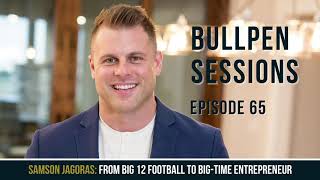
Episode 65 of Bullpen Sessions — Andy Neary interviews Samson Jagoras (part of a Fort Collins entrepreneurs series). The guest recounts his blue-collar upbringing in Los Angeles, discovering football as a teen, playing D2 at Western New Mexico, then walking on and earning a scholarship at the University of Colorado. He connects athletic mindsets (grit, "week one, day one", willingness to sacrifice as a fullback) to business behaviors: hiring strong partners, delegating, building playbooks, and scaling organizations. Jagoras currently holds senior roles at Madwire (strategy and recruiting), founded Growthview Properties (real estate investing), and co-owns Pursuit Nutrition and Training Center (gym); the interview emphasizes balance, time management, and team-based leadership.
Chapters
Foreign.
Hey. Hey. Welcome back to Bullpen Sessions. My name is Andy Neary. Each week I sit down with abundant thinkers who are kicking ass in life. And we deconstruct the formulas they have used to have success in business and in life, to help you unpack your life, your business, so you can do the same. So put a smile on, grab a pen and a paper, get ready to take a ton of notes because you, my friend, are to go on a wild ride. Here we go.
Hey. Hey. Welcome back to Bullpen Sessions. My name is Andy Neary and this is episode 65. This week I sit down with Sampson Jagoris. This is part three of a four part series. I'm highlighting local Fort Collins, Colorado entrepreneurs for the month of October. And I'm highlighting entrepreneurs who are having great success doing great things for the community. And Sampson's doing just that. He is the chief strategy officer and director of recruiting at Madwire, an exploding marketing and tech company here in Fort Collins. He's the founder of Growthview Properties, a real estate investment firm. He's also the co owner of Pursuit Nutrition and Training Center, a gym located just outside of Fort Collins. So if you haven't guessed it, we're going to talk balance and time management. How does Sampson have time to run all of these businesses and do it successfully? Well, when you learn about his journey, you'll see why he's having such massive success. He's a blue collar kid from the city of Los Angeles, discovered the sport of football in his teens, went on to play, start playing Division 2 football at Western New Mexico University, but actually took it to the next level, earning a scholarship as a fullback at the University of Colorado in the Big 12. We actually talk about that. His mindset as a fullback in football, where your job is to go sacrifice your body to plug, create holes so your running backs can get all the glory. Sampson talks about how that mindset has actually helped him build amazing teams, not only at Madwire, but create amazing partnerships with the partners he has in both Growthview and Pursuit Nutrition. And so today's episode is about balance. It's about time management. It's about understanding what your purpose is each and every day. Because in order to do everything Samson does every single day at the highest level, you have to make sure you show up every day prepared. Something he says in this interview, which I absolutely love, is show up every day as if it's week one, day one. That's the mindset he used to earn a scholarship at the University of Colorado. As this walk on from little unknown western New Mexico. And it's the same mindset he applies today. So I'm excited to bring them to you. And a quick, quick reminder, quick invite. If you haven't signed up yet for the 10 day holiday challenge where we are going to be focusing on balance, time management, daily habits, please do yourself a favor and get on it. All you got to do is text me the word. Challenge to 414-622-1462. That's challenge to 414-62-1462. It's an amazing free 10 day challenge to get you ready for the holidays. We've got a great prize and a great opportunity for you, so don't miss out. Go do it today. All right, here's my interview with Samson. Shift your mindset. All right, Samson Jagoris, welcome to Bullpen Sessions, man. How are you doing, man?
I'm great and honored. Thanks for having me on.
This is going to be fun because as I shared with you, for the month of October, I'm highlighting local Fort Collins entrepreneurs who are just one doing great things, but think abundantly and are doing great things for the community, which I think you embody all three. So let's just level set, start right here, Samson. For the audience listening in, mainly it's a lot of stuff. Sales professionals in the insurance industry, financial industry. My goal is to have a lot of more young athletes listening into this podcast as well. For the people who have no clue who you are, why don't you just take us back a little and tell us a little bit about Sampson Jagoris. And maybe before we get into the adult, the adult success business version of Sampson. Who were you before we see what you are today?
Yeah, I grew up in Los Angeles, California, blue collar to a blue collar family, skater kid, played baseball, played soccer.
I didn't even really love football. But something clicked when I turned 13, 14 years old, decided that I wanted to try it. So showed up to my very first football practice literally knowing absolutely nothing about football. And the coach says, you look like a linebacker. And I'm like, sweet, I have no idea what that is. So we line up to do angle tackle drill and he says, okay, this guy's gonna run downhill with the ball and you're just gonna hit him with everything that you have. So, like, you know, kind of hesitantly strap up, but I'm ready to like hit somebody, you know. That 14 year old testosterone kicks in and I completely unlace this kid and I get up kind of uncertain, like whether or not I Do what I was supposed to. And the coaches are just like, yeah, like freaking out. And so that was like, okay, I got to do this for, like, a really long time. So a lot of that blue collar mindset that I got from my dad growing up and skateboarding, you know, that relentless mindset, you do a trick 100 times and bust your ass 100 times, you realize that if you just do it long enough and hard enough, you'll eventually get there. So I was never the biggest, the fastest, or the strongest, but I definitely had grit, right. And so I built my entire career on just outworking people, being able to go longer than that. So went through my high school career. Fast forward to my senior year. Didn't have a ton of looks, but wanted to play football. And so I had a mentor that kind of said, hey, you should go to the University of Western New Mexico. And reached out to that coach where he played. And like 30 days later, I was on a scholarship, made my way out to Silver City, New Mexico. Little tiny town in the middle of nowhere. We used to call it Silver City.
I was going to ask you, I was going to ask you where western New Mexico is. Okay.
Silver City, it's like two hours from Tucson and two hours from Las Cruces. It's in the middle of nowhere.
Oh, that is nowhere.
It's nowhere. And so going into my sophomore season, I knew I didn't want to play D2 football anymore. And so I reached out to my running coach and reached out to my. My good friend who's become a mentor of mine, and he reached out to Utah, Colorado, and they gave me the plug to walk on. And so I transferred after my sophomore year, and that's how I ended up in Colorado. So I met my wife. That's how I got into the commodity business, the marketing business, and that's how I've been growing ever since.
Let's start right there because I think there's a couple things we can unpack that again, if you're a young athlete listening in or somebody, a sales business professional right now, there's some big, big mindset shifts I think we want to talk about. So here you are in Silver City, New Mexico, playing for Western New Mexico University, which is that D2.
D2?
Yep. D2. You make the decision, you're going to jump from D2 to, at that time, the Big 12. I don't think Colorado was in the Pac 12 yet, right?
Yep, they're Big 12.
So you're going to jump from Western New Mexico, D2. To the Big 12. Yep. What.
What was the biggest shift for you? Going from that style of D2 football playing now against teams such as Oklahoma, Oklahoma State, Iowa State, Texas. I mean, big time, big time names here for you. What mindset shift did you have to make?
The cool thing was, is I've always just been able to brush off, like, people say, like, that's crazy. You could never do that. Right. Because I've just always kind of walked to my own drum. And just when I decide and commit to do something, I can do it. When you get up to D1, everybody is great. Like, these are all top tier athletes from all across the country. And so I've always had like a chip on my shoulder. It's probably that blue collar mentality, especially not being pretty good and not getting recruited out of college the way that I wanted to. I was always just like a little pissed, like I was gonna prove everybody wrong. And so when I showed up to practice every day, I was still a red shirt guy. A red shirt, non scholarship guy. Walk on. So every single day was like, week one, day one. I need to come in and crush it. So I was in practice and I'd be like, unlacing people. Like, man, you need to calm down this practice. I'm like, bro, I'm trying to take your scholarship. I do not care if you get hurt, to be honest with you. Because for me, it was like, I have to. I burned the boats. There's no. It's junior college or bust for me here, you know? So, like, I'm all in. So that was the biggest shift of. I ended up breaking up with my girlfriend, who was part of the reason I went to Colorado because she was a sorority girl and mom and dad were paying for school and she just wanted to party. And I'm like, I live in a shitty apartment. I got no cell phone, no car, fricking top ramen. Every night I wake up and train before everybody else is awake. I catch the bus every morning. And if eight months from now, 12 months from now, I'm not back on scholarship, I can't afford this $30,000 a year. So I was all in. It was like, you know, make it or break it, essentially. And I think there's something to be said for that.
That's awesome, because actually a quote I just. You said, I just love every day is day one. Yep. Go in and go, whether, whether you're in sports or you're. You're. You're in business, Go at it as if every day is day One.
I love that because you're always the most fired up. Right. So there's like a reset of your mind. You have to be intentional about. Today's the first day of, you know, the rest of my life, effectively.
That's awesome. And again, you know, what you said resonates with me. Being a former college baseball player, I think one of the things that when you look at the athletes in college, the ones who, who exceed and the ones who flame out, one big jump for me as a pitcher was, holy crap. The batting order one through nine is really good. These are all all state players wherever they came from. Right. You go back to high school, I'm sure you played some teams that you just knew we were, as you say, unlace them. We're just going to absolutely crush them for four quarters. But you get to college, especially at the D1 level, like every guy you're going up against was, was a hometown hero and all state player wherever they came from.
Yep, 100%. I think the other thing to recognize too is just everybody has the same insecurities that we do.
Yes.
So they're thinking the same thing, like, everybody's a top tier. So I think that there's something to be said about that, like, aggressive, assertive mindset of, I'm just willing to go harder than you, you might be better than me, but you're gonna tire out before I do, and that's how I'll ultimately win because you'll give up.
So I assume you, you there is a happy ending this story. I assume you became a scholarship player. Yep.
Yeah, thankfully.
Was there any, like, you see it on TV nowadays or on YouTube nowadays? All these, these awesome ways that football programs reward their walk on players with scholarships. You know, like they got it up on the scoreboard or they bring the team together. Did something similar happen to you and you were told that you, you were earning a scholarship?
Yeah, I mean, it's, you know, the coach brings everybody together at the end of practice and, you know, has some special announcements to make. And it actually happened in spring ball, so we weren't in season yet. And I had switched from. I played linebacker, fullback my whole career. Predominantly came in as a true freshman linebacker. Got to Colorado, was a linebacker and then flipped a fullback. And so mainly because I could see there was opportunity. But that spring I was like the starting fullback, but I was still a walk on. Right. Technically, had no scholarship. And so, yeah, the coach made the announcement in front of the whole team and it was pretty rad.
I want to ask You This.
Did that teach you anything? Because you earned a scholarship in spring of your first season at Colorado, and just not even a year ago, you were playing D2 football in Silver City, New Mexico, at New Mexico University. Anything. Did that teach you anything right there and then when you're here getting this Division 1 scholarship to play Big 12 football?
Yeah, I think now I use it as just a reminder that, you know, people are gonna say you're crazy, you're not good enough, you're not capable enough. But if you're committed enough, you can. You can make it happen. I think when I first made that decision, I was just will, you know, blissfully ignorant. Like, I was like, I don't know. I'm just gonna go do it. You know, Like, I didn't. I didn't really think twice about it. So the, you know, as you get more into business and you step into arenas where you really think, like, man, a little bit of imposter syndrome kicks in, right? Because I'll give you an example, right? I got a degree in human physiology, walked out of school on a Friday and walked into a stocks and commodities brokerage on a Monday. Right? It's like, threw the last five years of my life out the window. And stepping into. They're like, what are you doing? Why would you do that?
Right?
And it's like, I don't know. Why wouldn't I do that? So that mindset, that one experience and proving it out has definitely carried forward.
I think what you just said is important, Sampson. Right? Like when. Once we get older, for whatever reason it is, when we're about to do something, when people tell us, oh, you can't do that. That's impossible, what do we do? We ponder, right? We start game planning, whiteboarding. What you just said is that added that ignorant attitude of almost like, I'm just going to go do it.
Yep.
And it's easy to say that when we were 19, 20, 21 years old, but why can't we be that way when we're 35, 40?
Yeah.
Because those are the people who have massive success are the ones going, I don't know, I'm just going to go find a way to do it.
Yeah, it's totally right. I think part of it's just the perceived risk goes up. You know, you have a family of kids, you have all these other things that you got to take care of and responsibilities. Some of it's due. Just the identity shift, you know?
Yes.
I was an athlete my whole life. And getting out of college, you Know, you're not really an athlete anymore. So how do you go find that new thing that you're fired up about and passionate about that you want to go all in on? And I. Look, I do a lot of mentorship now on helping athletes kind of make that transition, you know? How long did it take you to be at the pinnacle of your game? Probably 10 years. Of that given sport, it's going to take you another 10 years to feel like you're at the pinnacle of, you know, whatever industry you step into. Um, but what are the intangible skill sets that you have that translate over to this? Most. Most athletes are humble, hungry, smart, gritty, and competitive, and they have a lot of personal accountability. I can't teach you any of that stuff. Right. Learning how to sell, learning how to do consulting, learning how to negotiate. That's all something that's learned. Learned.
Right.
But by the time you're, like, 21, 22, like, most of who you are is pretty much set it right. And there's very hard to change it at that point. So I just really leaned into those things, right? It's like, hey, I'm more competitive, I'm humble, I'm hungry, I'm smart, I'm gritty. And that's carried me pretty far.
Well, one, I want to say thank you for being a mentor. It's something I'm starting to dive into and want to be more involved with is mentoring young athletes who are transitioning from high school, college sports into the business, into the real world. Because, let's face it, so many, few get that chance to move on to the next level, professional sports. And you know, something I think a lot of athletes deal with, like you said, you think about sales. Comp sales companies, sales organizations, they want to hire athletes because they got that grit, they got that competitiveness. But I know I can speak for myself, Sampson, that being an athlete who has played at a very high level, you also. Did you also battle the comparison issues. You battle the judgment issues. Right. In sports, you are literally judged with your peers and your competition with stats. Yep. And last question. I want to ask you about your time at playing for the Buffaloes. And it's. It's. I'm a. We're sports nerds. I could talk about this all day, but being a fullback. So you made the transition to fullback, and at one, it's a position that really doesn't exist as much anymore. Right. Because everybody runs a spread offense. Being a bad Wisconsin Badger fan, I'm still proud we have our fullback I know, but as a fullback, your job is literally to go in, get your face crushed and try to crush somebody else, to pave the way for a teammate that. Has that taught you anything that you have taken now into your business life, where, like I said, the fullback is one of the most unsung heroes there is on the football field. Your job is to create holes and opportunities for others while you literally sacrifice yourself. Has that taught you anything?
Well, yeah. First off, I always jokingly say that I was a glorified guard.
Like, I got the rock thrown to.
Me like maybe once or twice. And of course, one time was when I had a broken wrist and it just ricocheted off and never got a ball ever again after that. But when it comes to just leadership, I think that.
You can have a lot more success in business and life when you're not the person that has to have all the ideas or has to be the person that's always carrying the rock. And so a lot of how I've built my companies now is just find great partnerships or hire great people, pay them well, and then coach them, mentor them so that they can go have a ton of success. The byproduct is if they win, you win. Right. It's a team sport. It's about getting the ball over the line. Whether it's me that puts it in or him that puts it in, I don't really care. At the end of the day, it's did we win or did we lose?
Right.
The way you said that was beautiful because that's where I want to go. Now let's talk about Samson Jagoras. Post football, you got into commodities trading. But today I'm going to read this again to make sure people understand. Number one, you are still.
The chief Strategy officer at Medwire. Correct. You're also the director of recruiting.
Correct.
You are founder of growthview, which is a Growthview Properties, a real estate company. Correct. And you're also co founder of Pursuit Nutrition Training Center, a gym. Correct. How the hell do you do all of that?
It's what I just said. You hire new people and you and you pay them well or you partner up with the right people and they kind of fill in your, the gaps in your skill set. It's something that I think I have a superpower, just recognizing what people are really good at and putting them in a position to win even if they don't recognize it. Primarily, Mad Wire has been my main source of income. You know, I helped scale that company from, you know, about 5 million to over 100 million. Built five departments, hired north of 400 people. Last year I was really responsible for. I had two other partners and me. We oversaw 16 direct reports and about 350 people on a marketing team.
My skill set is really just people and organizational leadership Covid life. Things change and we're kind of shifting that company towards.
More of like marketing technology first with services layered on top. And so, you know, being in strategic business development, a lot of what I've done there is just take things that are ethereal and complex and try to give them framework and.
Some sort of like playbook that people can go execute on. So now I'm working on sassifying our product. But I have a good team of people. You know, I have three people on my team. One that specializes in content and two designers. And so we strategize together. And then I really just like delegate and help project manage that stuff. I don't necessarily have to do all the work myself. On the gym side, I just have a great partner and we hired great coaches and we've strategically put those people in a position to win, whether it's making them. One person focuses on sales, the other person focuses on running the gym. In the day to day. My job is really to just push the numbers around and marketing and finances and stuff like that. And then on the real estate side, I just have four great partners and we all have key roles. My job is to be the president and to be the capital markets capital development guy. And then I have another guy who literally is a commercial underwriter for a bank. So, you know, nobody's going to be better at doing financial modeling than that guy is. Right. And then his dad, who's also one of our partners, was, you know, 31 years McDonald's franchising, had seven McDonald's that he ran in midtown Manhattan. Nobody can manage an asset better than that guy can.
Right. So I could in a location like that.
Correct. So I could do all those things. Right. But it's. You get a whole heck of a lot more done by just working together in a team environment. And I think that.
I always think about building a business, not necessarily just being an entrepreneur. So, you know, being in marketing and working with small businesses, I poked my head inside of thousands of small businesses and you see what works and what doesn't work. And a lot of times what happens is you got one person trying to do all these things and they're just kind of winging it as they go. You know, I'd rather go slow to go fast, which is really playing with the end in mind of what happens when we have 10x the people or 10x the assets under management. How do we tackle it then? Because if we're not building a business now for that, we're definitely not going to be ready for that in the future.
Well, and you said.
More from Andy




If you want producers to succeed faster, help them create a sales message that creates confidence.

Sales isn't a zero-sum game! You can have tough competition and still grab a beer after



Option 1: Meditation, a fast walk, a podcast, and protein. The ultimate morning routine!

How you do one thing is how you do everything. Ill elite producers fuel their body.


Stop living in the gray of maybe! Your job in sales is to get a clear yes or no