67. Your Story Is Your Ultimate Competitive Advantage with Colleen Blum
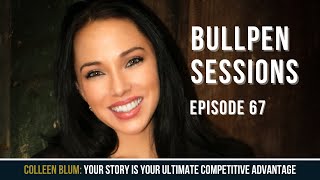
Colleen Blum, VP at Combs & Company, argues that sharing personal stories and vulnerability give you an edge in sales and insurance. She says mindset accounts for 80% of growth, skill for 20%. For podcasters starting out, she recommends Anchor, a Blue Yeti mic, and recording on Zoom.
Chapters
Foreign.
Hey. Hey. Welcome back to Bullpen Sessions. My name is Andy Neary. Each week I sit down with abundant thinkers who are kicking ass in life, and we deconstruct the formulas they have used to have success in business and in life, to help you unpack your life, your business, so you can do the same. So put a smile on, grab a pen and a paper, get ready to take a ton of notes, because you, my friend, are about to go on a wild ride. Here we go.
Hey. Hey. Welcome back to Bullpen Sessions. This week, I am sitting down with Colleen Blom, Colleen's vice president of Combs and Company, a health insurance advising agency right in the heart of New York City. She's also the host of the Try and Stop Me podcast. I'm excited to have her on this week. She's a friend of mine from the health insurance industry. As a lot of you know, I've spent many years in the health insurance industry, and one thing she does so beautifully is share her story. I have a lot of sales professionals who listen into this podcast, and I think one thing we as sales professionals struggle with is sharing our story, being vulnerable, being authentic, because we fear that if we show any kind of weakness, that our prospects just aren't gonna buy from us. And that couldn't be farther from the truth, especially in 2020. Humans buy from humans today like they never have. They don't buy from logos on business cards unless you're Nike or Amazon. So I want you to listen in to this conversation with Colleen because she does such a masterful job being vulnerable, being authentic, sharing her story, sharing some of the skeletons from her past. And she does that both in the health insurance business. She does that on our podcast, and she has used it to really allow people to get to know her, allow people to get to like her, connect with her, and has definitely impacted how she's growing the podcast, how she's helping Combs and company grow. And that's. That's why I wanted to have her on. Because, again, if you are a sales professional listening in, you need to start sharing your story. And yes, you have a story. Everybody's got a story. And so I want you to listen in, take notes. And as you're listening to the conversation between Colleen and I, start figuring out what your story is. Figure out how you can share it and how you can use your story to teach your prospects and to connect with your prospects. Also, I want to make a big invite out to you before we dive into this week's episode. So many right now, and this probably includes you are struggling with time management. You're sitting at home right now, working from home, trying to play employee, CEO, mother, father, dad, husband, wife, virtual home school teacher, all this stuff. And it's hard. It's hard for you to focus. It's hard for you to know what your priorities are. And this lack of clarity has you paralyzed. Number two, daily habits. How are you on your daily habits right now? You waking up every day locking in those habits so you can start every single day ready and locked and loaded to go. Give it your all. Or do you feel like your habits have waned? You know those good habits you had going into the start of 2020? You were exercising, you were eating well. Well, if any of this applies to you, I want to invite you to join the holiday 10 day challenge. It's going to be starting in the middle of November. All you got to do is Text challenge to 414-622-1462. Text challenge to 414-622-1262. It's going to be 10 days free coaching every single day. And if you participate all 10 days, you will be entered in to win some cash and an episode on the Bullpen Session podcast. So go do it now. Text challenge to 414-6221, 1462. And let's dive into this week's episode. Shift your mindset. Colleen Blum, welcome to Bullpen Sessions. How are you doing?
I'm great. How are you?
Awesome. I'm excited for this conversation. Why? Because you and I both come from the health insurance industry.
Yes, we do. It's the best place to be. Come on.
And yeah. Oh, yeah. But here's the thing. We're not going to geek out about health insurance. Like, although we could, we could. But enough of our peers do that for us, right? I really want to go today. Something I've been preaching.
So hard to both insurance and financial advisors. So if you're one listening out there, please take notes today. And if you're not in those two industries, this is still a great, great episode for you. But everything we do in business and in life is 80% mindset, 20% skill. And that's where I want to go today. I think when it comes to both the insurance and financial industries, I think so many advisors are focused on thinking they need more skill. Right? When they're struggling, what do they do? They go. And they go after more skill when what they're really missing is a shift in their mindset. And so you and I are going to go deep on that today if you're cool with it. But before we get there, for those listening in who have no clue who Colleen Blum is, tell us a little bit about yourself.
Well, first of all, thank you so much for having me on the show. I appreciate it. Fellow podcaster, for those of you who don't know me, hello, my name is Colleen Blum. I am the vice president over at Combs and Company. We are a full service insurance brokerage in New York City. I come from Long island, born and bred. I am from my parents. I have two sisters. I'm the middle. I try to pay that middle child syndrome card, but that never works. Ever works. You know, I came from a great upbringing. My parents were phenomenal people. My sisters are loving crazy sisters. So, you know, the family dynamic has always been there, always supportive. But the typical Long island girl. That's exactly all I could ever say. I used to be a hairstylist and now I'm in insurance. You kind of just wake up and find yourself successful in insurance. It's not something you ever think you're going to do, but that's kind of a tiny, tiny bit of a background of who I am. There's so many more layers to be alone.
So when you tell me you're in a Long island girl, is that a little of it like telling me you're a Jersey girl? Like, do not mess around with you. No.
Do not say that though. No. Come on now. Everybody's like Jersey and Long Island. If you are from Jersey, you don't want anything to do with Long island and vice versa. Like, no, if you ever tell me to move to New Jersey, I'm going to tell you there's no way I would ever move to New Jersey. And they feel the same way about Long Island. But yeah, we are very similar.
Well, as you, as you heard listening in, Colleen is vice president of Combs and Company, a massively successful insurance agency right in the heart of New York City. And what I love about them is they're doing things outside the box. And what I love about your story, Colleen, and it's something again, I feel like so many within the insurance and financial fields are afraid to do and that's get vulnerable. That's being vulnerable on social media, sharing your story, opening up because I think so many fear.
Sharing that because they feel that's a sign of weakness and prospects. Those that are connecting with would never hire and do business with them if they're vulnerable. What are your thoughts around that?
I think that's bogus to be honest with you, because at the end of the day I look at business the way that I would be looking at wanting to do business with somebody else. If I don't know you or know your story or know your family or have comfort in you, then how am I going to expect that, that I'm going to be taken care of other than just being another piece of business for you? So for me when I do business with people is I really have to be comfortable with them. I'm comfortable with them when I know more about them. And knowing more about them is on the human approach of seeing on social media the kind of day to day activities that they do or seeing their hard times and knowing they're not just a robot that hits every sale and everything is so hunky dory and perfect because that's not reality, that's not real. Show me your hard times, show me your real and then I'm definitely going to to do business with you. So that's the way we approach it. Susan Combs came up with the best tagline years ago. If you don't know insurance, know your broker. And that's exactly how we conduct every single day. If we don't know the answer, we don't know anything about it. At least you know us at the end of the day. And it's all about personality. You could choose from there.
That speaks to my heart because sales is a game of who knows you, likes you and trusts you. Right. And one thing I found especially with social media is being able to be vulnerable and tell your story allows you to resonate with people, right? And not only do they get to know you, they definitely can get to like you even before they've met you. And those could be prospects. They don't just have to be family and friends. And for those of out there listening in, the first time I met Colleen and got to know her was embarrassing the heck out of her in front of an audience. At one of my keynote speaks speeches, I had Colleen come up in front of the room and.
Throw left handed and she's right handed and she embarrassed herself in front of the audience. So that's really the first connection Colleen, Colleen and I have had. So let's go back to that part about being vulnerable and it goes back to, you know, so many out there, especially in the world of sales, I think want to, I'll put it, call it a facade. They want to put a facade on that everything is great. Right. Sometimes I remember looking back at sales training from Years ago, even when things were bad, act like things are going so great. That's just not the way things work. So if you don't mind sharing a little bit, your world has never always been great. And even though things on the outside may have looked like, man, this girl's got it going on, that really wasn't always the case. You mind diving into that a little bit?
Yeah, absolutely. And I think that everybody could take something away from that is everybody has a story, everybody has a point in their life where things were not as hunky dory as we all made them seem. You know, you could put the makeup on, you could put the nice outfit on, you can act day to day as everything is okay, but you never really know what's going on behind closed doors or what's going on in the actual person's world, you know, so it's the point of when it comes down to this perfection or everybody's uniform that they're living, that's not really the nitty gritty of what's going on in somebody's world. So I definitely have gone through some extremely, extremely difficult times in my past that I have worked very hard on overcoming and very hard on coming through the other side to look at the positive side of things, to be able to say, okay, this situation is definitely not perfect. It's definitely something that I no longer want to accept in my life. I don't want this to happen any further. So you take the steps to change your mindset the right way. And I did that in a way of what I read, what I put into my body of saying, instead of feeding into this negative and disaster type feeling that I was going through, it's like a hurricane. What are you going to do to fix that hurricane after it blows through? So what I did is I looked to the positive side. I looked towards the coaching, the motivational, the podcasts. What kind of information can I give myself? Like YouTube clips to pull myself out of a dark hole? Because we could either go down or we could go up. We can learn during the hard times, what is this gonna. What am I gonna become because of this extremely hard time? Or am I gonna use this hard time to go way back, backwards? So for me, backwards was never gonna be an option. It was, how can I take this lesson, use this experience as a lesson and flip it and use a dark time to become one of the. The greatest launchers, literally, that you could ever think of. Because once you flip that mindset of I'm gonna use what's Happening to me, to my advantage, and excel from there. It's like. It's like lighting a rocket. There's no one that's gonna stop you.
Yeah, that's a great, great way of putting it. Because I think when times do get tough, it's easy to resort to your past and go to that. Go back to that place of almost like justifying why you are where you are versus getting rid of the rear view mirror, constantly looking out the front window and saying, okay, I get it. I'm going to learn from this and I'm going to keep moving forward. I'm going to put you on the spot a little bit because I love what you said about you used books, podcasts to really put your mind in the right place. Because I love that. Again, so many think it's skill that's required to grow in business today. And I would argue that it's 80% mindset. What are some books or a couple podcasts you really dove into at the beginning that really started putting your mind in the right direction?
Oh, such a good question. And it's probably gonna be like the corniest answer ever. But that book, you are a badass by. What's her name?
Jensen? Cheryl.
She literally, as corny as it can get, sometimes you just need that. Like, I am a badass. Like, I am good at what I do or I am gonna conquer this. Like, those little clich. Corny things that we think are just like, okay, we should tell this to our teenagers. Sometimes as adults, we need to hear that shit. Because it's literally what I was like. You know what I am, I am.
So that book was great. It was just, you know, little quick reads or podcasts for me. I mean, I go to New York City every single day. I'm on the trains, I'm moving around. So I can't always sit and read a book, but I can listen to podcasts every single day. The biggest ones for me, Ed Mylett, I love him. I think he is just. He is a phenomenal man. And the way he conducts his interviews and his guests on that show, I mean, he just had one with Jay Shetty. That was just amazing too. Gary Vee, of course, he's just like the go to Oprah. Not even kidding Dr. Phil, because let me tell you, I was going through some hard times. I needed some help. So Oprah, Dr. Phil, just things that it was like, motivational, get you back into, like, spiritual, whatever you believe in or what you don't believe in. It's just amazing to be Able to see different. Different perspectives, different walks of life. And that, that's what I think that podcast can really do, is that you get the interviewee, but you also have the people that are coming on the show. So you have the interviewer and the interviewee. And they're all different avenues, different ways that they're looking at life, how they're conducting their life, their hard times that they went through and listening to similar stories sometimes and how they were able to overcome. Those are the biggest things that could. That literally saved my life from. From going backwards or going forwards. So for me, those are some of the biggest podcasts. And you are a badass book. I still have it.
You know, I don't know where to follow up on this because there's so much that resonates with you. Number one, Ed Mylett. If you don't know him, for those that don't know who he is, he's, I mean, nothing short of a business icon. He and I have very similar stories. He fell short, just short of playing professional baseball, and so I res with him right away. Being a former, you know, baseball player myself, Gary Vee, that man changed my career. I've never met the man. He doesn't know who the hell I am. But watching his videos every single day and listening to his podcast every single week, because he produces one every week or every day, the man has changed my life. And for those out there with who want to get a copy of you are a badass, I highly recommend listening to the audio.
Mm.
Because Jen Sincero herself reads it. She's sarcastic, she's funny as hell. You will be laughing your ass off listening to that audio copy of your bad. I still go to it today, Colleen, when I feel a little self doubt creeping in.
Well, it's something that it's like, like I was saying, it's quick and it's easy, digestible, quick information that it's. It's not deep into the depth. It's like, you know, just quick reminders that we're human. We're all human. We all have these insecurities in our heads that pop up no matter. I don't care how old we all get or how many years we're in business or how many you've been in this relationship. Like things happen in life that you need those quick reminders. So it's a really quick digestible book.
I love a couple very important questions I feel the need to ask.
Obviously, the podcasters have had an influence on you because you've now come out with your own podcast, try and stop me. And if you haven't subscribed to her podcast yet, try and stop me. Go do it. Once this thing is done, tell us a little bit, why did you start a podcast and what's kind of the mission behind it and the audience you're trying to attract?
Such a great question. Exactly what I was just saying. You know, podcasts, self help motivation, it healed me, it helped me grow. My choices were go to deep therapy and talk about the past and continue to harp and not saying anything's wrong with therapy. I truly believe in it. I absolutely think people need therapy to be able to really talk and get it out. But I had gotten it out. I had written it down. I was ready to then move forward, forward and create a life that I was ready to live. And for me, listening to other people's podcasts and how they were able to tell their stories and then drop the biggest value bombs at the end of every episode that I was like, I could do that. Why can't I do that? And then, you know, coronavirus really slipped into the mix. And I had talked about it for a year or so and I had mentioned it one time and, you know, it was never talked about again until I was literally sitting out on my front patio, like, just working, and I'm like, you know what, what am I waiting for? Like right now I can't meet anybody. We can't go to these networking events the way that we usually do. How are we going to continue to try to market to. Why not create the podcast and do the same exact thing that I loved about everybody else's episodes, but do it with our clients or people that I truly think are kick ass, badass people and bring them on the show to tell their story and then kind of use it as this whole networking of mixing people around, of meeting new people, highlighting your clients. You know, it's a win, win, win for everybody because I learn, my clients learn, they meet each other, you know, so it's just organically one of the funnest experiences that I've put in place so far is making this podcast.
And I'm going to reference a mentor of both of us, Gary V. He said one of the best things I've ever heard about podcasting, because when I wanted to start the Bullpen Sessions podcast, I was a little, I was like, oh, God, everybody's doing a podcast today. It's just checking the box. But he said, here's the, here's why podcasting is important. You remember that Kid back in high school that was kind of a nerd, but his parents were gone every weekend, so he held the house parties where he allowed the cool kids to hang out with the cool kids. That's what happened to him. He became the cool kid, and it clicked for me. I'm like, aha. When you're the one bringing people on, you're hosting the party. You become the cool kid. So to your point, when you bring clients and prospects on to tell their story, guess what? You're the one hosting that party, making them look like a hero. And that is inevitably going to turn into network and relationships and business.
Yep.
So let's go. I didn't mean to go here, but let's go super tactical. If somebody's listening in right now and they're like, colleen, I don't even know where, how do I start a podcast? You and I both know it's super easy.
Yes.
What do they need to do?
You literally need to go on Amazon, buy a blue yeti or whatever you could. Here's the thing. Like, for me, Google has always and will always be my best friend. Google led me to Susan Combs and Combs & Co. Because I was so miserable where I was at. I typed in successful women in insurance, found Susan Combs, emailed her service line. Now I'm the vice president there. I wanted to start a podcast. No idea where the hell to even start. Call my father. I am the worst tech person in the entire world. Doesn't matter that I'm 31. I literally like the worst. So for me, if I could figure this out, people have been reaching out to me. Kyle, I can't believe you started a podcast. How could you do this? And I'm like, all right, let me just write a quick list down of what I'm doing, and if I'm sending that screenshot to people, it's anchor is the website to post your podcast. You buy a blue yeti mic, you kind of figure it out. Google it if it's not working. Because I've watched so many YouTube clips on how to fix the sound on this thing. I don't know. Literally press, record, and hit upload. It's two simple things if you want to get into the nitty gritty of, like, the episode editing like Andy and I were talking about before the show started, that's a little bit more pulling out your hair. But if you really just want a simple show, buy a mic and upload the episodes. Buy a mic, find somebody, interview, and upload it. It's as simple as that. You know, like, you can't also expect that it's going to lead to business right away. It's not. Because it's more just getting to know people on a deeper level. And there's no better time right now to connect with somebody than saying, hey, it's a difficult coronavirus season. Can we share your story? So more eyes can be on you as the guest on the show? And then maybe it'll take a year, maybe it'll take five years, but somebody will eventually remember you were the person that did health insurance insurance. But also let them create or talk about their product on air, then they're going to want to call.
You. Boom. And I want to follow up on that, because, again, there are many people listening in. But specifically, if you're in the insurance and financial planning industries, you're an advisor. Take note of what Colleen just said. Number one, you have no excuse if you don't know how to use Zoom yet. After Covid, I don't know where you have been for the last six months, but all you literally need to do to start a podcast is go to anchor. By the way, it's free. Then you buy a microphone. It can be the yeti, it can be what I have. It doesn't have to be expensive. Under $200, you go record yourself on Zoom, and guess what happens when you download the recording? It gives you the MP3. It gives you the.
Audio.
Yeah. And then you upload to anchor, and boom, you've got a podcast. Now, you also said something very important. You are a health insurance advisor. You work for a health insurance agency. But is your podcast about health.
Insurance? Absolutely not. Nor will it ever.
Be. Please, if you're listening in with your podcast, it doesn't have to be about what you do. I see so many health insurance advisors in our industry starting podcasts, which is great. But guess what they're talking.
About.
Yeah. Health insurance. No, talk about something else. That highlights the business leaders in your community, that highlights the people you're trying to target. Like you're doing at Combs and Company, Colleen. And guess what? People are going to start networking and doing business with you. But most importantly, it's a long.
Game. Yeah. And it's got to come from your heart, too. I think it's got to be like, if you're not interested in somebody else's story, then don't interview people. Like, you don't have to be all about, like, mine is about, like, the struggles. It's. Try and stop me. Like, what did they go through throughout their life, throughout their childhood, throughout business, whatever it was, and what did they learn? What's the value add at the end for the audience to hear them on and be like, oh, I resonate with that. But if you like running or cooking or, like, find something that you actually enjoy and create a podcast or a YouTube channel with that and build a network off of it, build a social media that starts to network with other people that are interested in your content, and then slip in once in a while what you do to, like, let them know you're not just doing a podcast, you're also doing insurance. This way, you're their friend who can maybe also help them out in the future one.
Day. So let me ask you your opinion on this, because I think, again, there's that view, especially if you're in sales, that you have to be inflappable. Right. You can't show weakness. What would you say you being open to sharing vulnerability, whether it's on your podcast or even on social media, what has that allowed you to do with your prospective audience? Has it connected with you in a way that maybe you couldn't have.
Before? Absolutely. I would say the Instagram posts that I do make, the ones that are about business or kind of more structured, they don't get really a lot of engagement. The ones that you write something or it's a picture of yourself automatically when you're in the photo or there's something about real life in your post. People engage with that way more than they do on the business side of things, because again, it comes back to wanting to do business with your friend. So when I talk to the podcast, I talk to my microphone like it's my friend, because I'm talking to one person's ears. I'm not talking to an audience that has hundreds of people standing staring at me. I'm talking to one person who can maybe resonate with that story. So it's personally, like I said, I want to do business with somebody that I know like and trust. So why wouldn't I do that for my clients or my prospective.
Audience? Absolutely. That is absolutely phenomenal. So what impact or results have you seen? Maybe this is just a part two to that question, but what results and impact have you seen from your willingness to share, willingness to share your story with others? Are you finding that you're inspiring others? Are you getting comments back that you're helping change lives? I mean, what kind of impact do you see yourself having as a result of sharing your.
Story? Yeah, definitely. Everything that you just said you start to connect with people that you never thought. One I never thought I would ever connect with because these random people online that find you or resonate with your story. So how else would you have reached them if you're not at a quote unquote networking event, right? Or not at a typical business conference. So that's one way that it hits people. Because everybody needs health insurance. I don't care where you are. We all have a point where you need health insurance. So every single person that you're reaching at some point has or will need to have that conversation with somebody. There you are, There you are as the trusted friend. But also it helps connect on a real level of again, what we were just touching on. You're a person, every single person. I don't care if you come from a great background with a great family. You went through a terrible loss in your life, you went through a terrible self destructive portion of your life. You went through a terrible relationship that broke you down. Whatever the case was, somebody has a story somewhere. So if you can share your vulnerability, they're gonna automatically say, I resonate with that because I too am not perfect. So if I could show you me that Colleen is not even remotely perfect, that is gonna help us get closer on a human level to be able to connect with each other on a deeper level. Especially right now with zoom, you know, how else can we connect without being real? You know, not everybody's in a suit and tie anymore. It's very raw. People have kids running around in the background screaming. They're pulling out their hair, they're trying to figure out life, why not? Why don't we get real? Mental health is such a big thing. And if we keep faking, like everybody's perfect, that's gonna make us all more insane than we ever thought we.
Were. Well, and I think that's actually what's led to more mental health issues in this country is the strive for perfection. Because you feel like you have to be.
A classic example, you know, Colleen, that you bring to my mind is, you know, I've been speaking for five years now, and I remember when I would share my baseball stories, I never really shared the struggles and people would love hearing the stories playing pro baseball. But I was always like, why isn't anybody coming up to me afterwards? And like, oh, that was great. Thank you. So it was about three years ago. I was like, screw it. I'm going to actually just talk about my failures in pro baseball in this keynote. And I remember taking the stage And I basically told the audience why I failed. It was the first time in my speaking career I had people hugging me afterwards and I was like, aha. And so I'm sure you see that whether it's on your Instagram or LinkedIn profile where you're sharing vulnerable.
Content or your weaknesses or your struggles, I never have somebody reach out to me when I share kind of a subject matter expert post that says, man, I needed to hear that today. But when I share my struggles, that's when the comments flow in of like, man, this is. You said exactly what I needed to hear today. Thank you. And it's just that comment brings you that much closer with your, with your prospect. Now I want to go somewhere with this that I do think is very specific. It's an issue globally, but I definitely think it's something that definitely is relevant in the insurance industry. For those who are not in the industry. If you took a look from above down at the insurance industry, you'd quickly realize that it's still made up of mainly 55 to 60 year old white dudes.
Right?
Yeah. For lack of better description. One, we don't have enough minorities of color ethnicity in the industry. Number two, we don't have enough women. So I would love your perspective. If there is the. For the women out there in the health insurance or insurance industry, do you feel there is this need to be perfect or this need to never show weakness because you're already at a disadvantage in the.
Industry? Mmm, that's such an excellent question. Here's what I'm gonna say.
So where I work with Susan Combs, that is never going to be an issue. We will never. And I know this is terrible to say, but I never feel weak in the sense of we don't have one up next to the men because we know who we are and we're pretty strong personalities to be able to stand next to the men. And like I said, it's on personality. I'm going to show you one quote and he's going to show you the same quote. But nine times out of ten, I guarantee they're probably gonna like us better. Cause we're real, because we're fun, because we're human, because we laugh and joke and we're in bad mood some days and we're in great moods other days. But I don't think that there's a disadvantage for us because we don't have that dynamic in the company that we're at. If you are at a bigger financial company or a bigger firm where There is more of that old school dynamic I could definitely see. I've been in a situation. That is why it directed me to Combs & Co. Because I was at a firm where the female actually was making me feel a certain way, not very inspired or motivated or she wasn't really very nice, to be frank. And some women, they'll lift you up and other women, they will just knock you down. It's one or the other. There is no in between, in my opinion. So it's really, you have to find, where are you in your own life? Where do you feel like you are accepting something versus wanting to change something? If there's the point that men are making you feel a certain way, that you need to come up and show up and do better, be better, is that on them or is that on you? That's what I had to think of when I was leaving the other company is, okay, am I really upset because of how this other female is treating me or is it bringing out a side of me that I need to work on that I'm not always accepting of certain things? So my decision was, I'm not happy here. Why is. Am I going to sit here and waste my life on this company where I'm not appreciated or valued? So instead of sitting here for the next 10 years and wasting time, I'm going to go out and find a company that will value me, that will appreciate my hard work, that will appreciate my personality. And ever since then, I've thrived. Now, that's easier said than done in a lot of senses, especially if, like I said, you are part of a bigger corporation, but you need to create your own tribe within that corporation. If you feel like you have to one up the men, do it in a way that feels organic to you. Do it in a way that show them the feminine side, that clients actually like us. Because of that. My clients can talk to me about their nittiest, grittiest, darkest days because they feel that comfort of knowing they can open up about infertility. They can open up about their cancer. They can open up about the problems that they're having at home. I don't know if that's because I used to do hair way back in the day. So I am part therapist in some senses. But for me, that's kind of the way we go about it, is show your strengths. Because we are different. We are different than men, just like men are different than females. There are some things I'm not gonna pretend like I can hang with the boys at the Conferences, I can't, you know, I can't drink like everybody can. So for me, waking up in the morning when we go to a conference, I'll go to the gym in the morning. And if that's the way we connect and I meet with other people, cool. But I'm not going to hang out at the bar just because I feel like it's the it thing to do after the conference is over. It's just, how do you feel? You fit on your personality and what feels good internally for you. That's how you need to approach your life, your professional life, and kind of be one of the boys by not being.
A boy. You know, I call that not playing the game. You're changing the game. You know, you're playing it, you're playing it on your own terms. You're not doing what everybody else is doing. I love that. And again, if you're not in the health insurance industry, you're not familiar with Combs and Company, It's a mainly female dominated agency that's made up of a bunch of female badasses. That's about the simplest I can.
Put that.
We could hold our own for sure, but why pretend like we want to? We play sports, we're in the gym lifting weights, like we're. No, I'm a girly girl, but I also played softball for 14 years, you know, so it's like I. We know how to play both sides.
Of it. Yeah. So what advice would you give, whether it's insurance, financial or just in the business world, for that female executive or female professional who's trying to, you know, move up in his or her career but feels stuck because they feel like they're playing the quote unquote, man's game. They feel like they have to. They can't show vulnerability whatsoever. Right? They can't. Because I see it so often, they do that and they move and they grow and they grow. But. But at the end of the day, they're not living out the true person they want to be. And you can just see the pain or the struggle they have with it. They may have success by job title and money, but they really don't have fulfillment. So that female professional out there. And again, we didn't intend this conversation to go this way, but I think it's very impactful. What advice would you give somebody, some female business professional who's in that position.
Right now? Is it worth it? That's what I would say. First is your sanity and happiness every single day for the next 10 years, 20 years, because you're going to be in that one role. Is it really worth it? Does that career title define who you are to the point that it takes over your happiness? So is that title so important to you and that income and that salary more important to you than you being able to put your head on the pillow at night? And being grateful for the life that you're living and grateful for the opportunity that you have and grateful for the people that you work with. Because it's such a seesaw. It really is. Like so many people see the success and the money and the titles that defines them, even myself. You know, you said in the beginning, introduce yourself. And the first thing I say is, I go to my title of my company. How does that define us as human beings? That's the biggest problem I think society has is you have this question of, oh, what do you do for a living in the first? Or what do you do? And the first thing is we go right to our job, whether it's at a christening or a networking event for business, you know, who knows what it is? So if you are in that position, is that title, is that salary actually going to fulfill you? And if it's not, I gotta say, there are hundreds of other companies out there that would value the hell out of you. Why not try to at least dip your toe in to see if there's other opportunities for a different business with maybe more females in their firm, maybe a different dynamic. It is going to be 2021, where females, they're running shit now, you know, in some senses. So it's find a place where you feel valued and worthy of your time and energy. Because if you're leaving your kids, your babies, your, I don't know, your dog at the end of the day to go work from 7 o' clock in the morning till 7 o' clock at night at a place you're not appreciated, why waste your life.
On that? You know, I think that applies to men.
And.
Women. Absolutely. I hope there's one thing we learned here in 2020 is that life is too short. Why have a career where you feel it's all about the title and money, but when you come home at night, you hate who you're looking at in the mirror. I've been there, I've done that. It's not worth it. It's a terrible place to be. And I hope this year, more than any year we have ever witnessed, has given everybody listening in that chance to pause and go, what the hell do I want to do? Who Do I want to be? This is your chance to rewrite the rest of your future. So let's wrap up with that. Colleen, if somebody's listening and says, okay, I know it's time to share my story, because as you said, and I love how you said it, everybody's got a story. If you're struggling right now, share your struggles. What advice? Let's finish with some tactics. If somebody's out there right now and wants to start sharing their story, what are some simple ways they can go about doing it so they're resonating with who they want to. Who they want to network and.
Connect with? I think that's a great question. First, I think you need to write it down in a journal. I think you first need to get out all of your deep, really dark emotions, because there's one thing of sharing your story, and there's another thing of completely blubbering and falling apart while you're sharing your story. You know, there's that fine line of, like, are you healed enough to actually take the step to find value and strength in your story? Or are you still not broken, but still bruised from the pain that you're going through, or whatever the case is. So first thing, journal your way for the next couple of months. Just whatever feelings or thoughts or whatever are coming out of you, let that go down on paper, whether at night or in the morning, get it out. And then from there, read back on that journal that you read or wrote out so that you have kind of. You could pull parts of your story. I mean, you could eventually write a book from that. Not even kidding, but you could pull parts of your story that you said. Okay, that part was definitely a huge lesson. I didn't know it in the moment, but I definitely know now, and that could resonate with people in the future. So take out little pieces of portion and then find what's your, you know, what's your calling, what's your passion? Do you like connecting with people? Facebook, Instagram, social media, LinkedIn. There are tons of groups that you can join or just network with people and be more vulnerable, be more, hey, I'm going through it. You know, this is what's going on in my life because the second I start opening up in front of people that I always felt like I had to be super professional around, once I shared what was actually happening and my story, my entire business networking relationship immediately changed and the fire was lit underneath them because people cared more about the human and business will come. So that is what I would say is Write it down, get it out of you, then go back, figure out what's the most valuable points, where do you feel strongest now of your lessons and then start sharing that with people of saying like, hey, have you gone through stuff like this? I just want to let you know this is what I'm going through or this is what I have gone through in the past couple months. How about you be more open to changing your perspective on how we think business calls should.
Just be. We couldn't have ended this a better way because.
Humans buy from humans. They do not buy from logos on business cards. And I think being vulnerable is one of the best ways. And being able to share your struggles and weaknesses, but use them to teach lessons is one of the greatest ways and most effective ways a human can connect with another human. So with that being said, Colleen, if somebody wanted to reach out to you right now and connect, network, have a conversation, what are the best ways to get in touch.
With you? You can connect with me on LinkedIn @ColleenBlum. I'm sure Andy will put it in the show notes, but also follow me on the Try and Stop me podcast Instagram page because I would actually love to hear from you and your story and anything that you're going through. You know, it's always a great connection.
To have. That's awesome. You know, guys, this is one of my favorite episodes because vulnerability is a big deal right now. This is going to air on the heels of Mental Health Awareness Month, which is October. And I think so many are struggling out there to have success or they're struggling to put themselves out there because flat out they're struggling. And being able to share weaknesses, show vulnerability and use them as to help others who are in that same position is one of the most powerful things we can do. Because when you do that, that gives you clarity, that gives you purpose. And as I always say, you know, when clarity and confidence collide, action happens. So with that being said, Colleen.
Thank you. You, thank you, Andy. This was.
So fun. Yes. And for everybody else listening in, go make it happen.
Hey, I just want to say thank you for taking the time to listen to this episode. If you're finding bullpen sessions to be valuable to business and your life, do me a favor, please go to Apple, please subscribe, give it a five star rating. And if you have anybody else in your life, whether it's, whether it's in your personal tribe or in your business, that could also be impacted by listening to these episodes, do me a favor, share the bullpen sessions with them, I'd be extremely grateful. And until next time, go out, make it happen today. Put a smile on your face and have some fun.
More from Andy




If you want producers to succeed faster, help them create a sales message that creates confidence.

Sales isn't a zero-sum game! You can have tough competition and still grab a beer after



Option 1: Meditation, a fast walk, a podcast, and protein. The ultimate morning routine!

How you do one thing is how you do everything. Ill elite producers fuel their body.


Stop living in the gray of maybe! Your job in sales is to get a clear yes or no