73. Scott Hairston: A Family Tradition of MLB Success
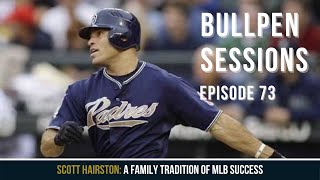
Interview (Bullpen Sessions) with former MLB outfielder Scott Hairston. The conversation traces his three-generation family baseball legacy (grandfather Sam Hairston, uncle Johnny, father Jerry Sr., brother Jerry Jr.), childhood in major-league clubhouses, development through college (Central Arizona College) and being a third-round Diamondbacks draft pick, and MLB career (debut May 2004; teams: Arizona Diamondbacks, San Diego Padres, Oakland A's, New York Mets, Chicago Cubs, Washington Nationals, Chicago White Sox; roughly nine years of service time). Highlights include a 13–14 game hitting streak early in his rookie year and hitting for the cycle on April 27, 2012 (Coors Field). Post-career, Hairston coaches youth baseball (14U), gives hitting lessons, and works as a consultant for Scout & Cellar (promoting clean-crafted wines with minimal sulfites). He is active on social media (Instagram: "Scott Harrison, 12" per transcript) and LinkedIn.
Questions this video answers
May 2004.
Central Arizona College.
Third round by the Arizona Diamondbacks.
Arizona Diamondbacks; San Diego Padres; Oakland Athletics; New York Mets; Chicago Cubs; Washington Nationals; Chicago White Sox.
About nine years (roughly two months short of 10 years).
Chapters
Foreign.
Hey.
Hey.
Welcome back to Bullpen Sessions. My name is Andy Neary. Each week I sit down with abundant thinkers who are kicking ass in life and we deconstruct the formulas they have used to have success in business and in life to help you unpack your life, your business so you can do the same. So put a smile on, grab a pen and a paper, get ready to take a ton of notes because you, my friend, are about to go on a wild ride. Here we go. Hey, hey. Welcome back to Bullpen Sessions. This week I am excited to sit down with Scott Hairston for the die hard baseball fans listening and you probably remember that name. He spent 10 years in the Major League Baseball. His career spanned time with the Arizona Diamondbacks, San Diego Padres, Oakland Athletics, New York Mets, Chicago Cow Cubs, Washington Nationals, and finally with the Chicago White Sox. I wanted to have Scott on because in the goal with making an impact with Bullpen Sessions is to really dive into conversations with former athletes who have excelled at the highest level, but who are also transitioning to have success off the field as well. Because as an athlete, whether you your career ends at the high school level, the college level, or you are fortunate enough to play professional sports, at some point the career is going to be over and you have to take that next step. And Scott's done such an amazing job. We talk about growing up. He's one of only three families in Major League Baseball history to have three generations play Major League baseball. His grandpa Sam spent time in the Negro leagues and with the Chicago White Sox. His dad, Jerry Sr. Played in the 70s and 80s with the White Sox and a couple other teams. I'm forgetting them right now. His uncle Johnny played for the New York Mets in 1969. 1969 Miracle Mets. His brother Jerry Jr. Spent a long time in Major League Baseball, as did Scott. So that's exciting to talk about what it was like to be able to grow up in the dugouts and clubhouses of Major League Baseball. And we also talked about those moments that Scott realized or felt he was unhittable. Those moments you have those self doubts in sports, those moments where you've arrived but you also question whether or not you fit. And that moment when you realize, dang it, I belong. All things athletes, people in business go through. But we also dive into Scott's life after baseball. He's now working with an awesome craft winery out of Texas called Scout and Cellar. So we talk about what he's doing there, how he's applied lessons he learned from Major League Baseball to Do great things for scout and cellar and his time now spending quite few a quality time coaching his son's baseball team. So all things, all things sports, all things mindset, all things business, and that's what this podcast is about, is bringing the athlete mindset to you to help you excel, whether it be in sports, business or life. So let's dive into this week's episode, shift your mindset. All right, this one's going to be fun. Scott Hairston, thank you for joining the Bullpen sessions.
Hey, thanks for having me, Andy. Appreciate it.
This is, this is going to be fun. So for those who don't know the name and I'm sure there's a lot of the people listening and that are baseball fans that do. Scott, you know, you spent, I've got what, 10 years, roughly 10, 11 years in the, in pro baseball at the, at the highest level, at the major league level.
Just about. Yeah, I was probably two months away from 10 years service time. So I didn't, I didn't get the 10 years, but nine and some change.
Yeah. So, okay, that's awesome. So for those listening in, Scott, you played outfield. I'm going to list them off. You were at the Diamondbacks, Padres, A's, Mets, Cubs, Nationals, White Sox. And I just remember watching myself super, super utility player, great defensive outfielder, a great hitter. You know, before we get into that stuff, the major league stardom, I want to start all the way back because for the true die hard baseball fans listening in, they probably remember your brother Jerry Jr. They remember your dad, Jerry Sr. I didn't even know, you know, your grandpa Johnny played or your grandpa Sam played, your Uncle Johnny played. I mean, you're one of only two families, right, to have three generations play major league Baseball.
I believe there's three.
Okay.
The Belles, the Boones and then the Hairstons.
Okay. The Bells. I knew the Boons. I didn't know the Bells. So let's go back to when you were a kid. Obviously you got to spend some time in major league locker rooms, you know, constantly looking up to these guys who are playing baseball at the highest level. What was that like?
That was an amazing experience for me, man. I really, ever since I can remember, I grew up in the clubhouse. I love being around the guys.
As you know, Comiskey park back in the 80s was a place to be in Chicago outside of, I guess, Wrigley Field. But yeah, I had a lot of great memories. It impacted my life. I mean, just being around the game like great players. Carlton Fisk, Harold Baines, Ozzie Guillen, and being able to be around those guys. And they were very, very nice to me and my brothers. And we'd hang around the clubhouse all the time, and my dad would let us go on the field a couple times for a series. So I was very lucky. And I never took it for granted because I knew that a lot of my friends growing up, they didn't have that opportunity like I did. And it was special being a part of that. And then, like you mentioned before, having my grandfather and my uncle.
Also share their experiences with me and their careers again, it was really tough not to love baseball growing up.
For me personally, you know, you just brought some nostalgia back for me, hearing the names, you know, Harold Baines, Carlton Fisk, Ghazi Guillen. I'll even throw Von Calderon out there. I mean, these are guys bringing back to my childhood. Right. You know, what was it like? I'm the son of a high school baseball coach, so longtime baseball coach. Where I grew up, I played for him. So I had that fortunate opportunity where I had a good mentor in the house. Right. When it came to baseball knowledge, baseball skill. But you, I mean, you had it at a whole different level. You know, I sit there and go, thanksgivings, Christmases, what were those like? When you've got your dad, you've got an uncle, you've got a grandpa who have all played baseball at the highest level.
Yeah, what was that like?
It was great, man. Like, I was the youngest of the guys, so I had older brothers, I had older cousins, and so I would just sit down and just listen. I didn't do much talking. Obviously, it started with my grandfather, and then it would trickle down to my uncles, then my dad. So they talk baseball for hours, man. And I just sit and listen and soak it all in. And my grandfather, many people don't know he played in the Negro League. So there's a lot of stories, stuff that he went through as a player that was kind of surprising. And as a young kid.
Finding out all the stuff that he endured, I just felt privileged, really, myself. And I just appreciated what my grandfather did, not only for his family personally, because he was one of 12 kids and he was the oldest of 12, and he provided for them and then raised my uncles and my dad the way that he did. And there's a lot of sacrifices that he had to make to do that. And so I think hearing all those stories as I grew up, I just kept those in mind and made me work harder, and I wanted to make him Proud. I wanted to make my family proud, make my dad proud. So that a big impact on me.
You know, I just realized this too. I mean, you probably are definitely one of the only families in history to have three generations play for one team. Because your grandpa played with the White Sox. Right, right. Your dad. And then you spent a little time with the White Sox. What was it like? You know, how many brothers you had? I know Jerry Jr. Do you have any other brothers?
I have another brother, Justin. Yeah, he's a year younger than Jerry. Yeah, he played college ball. Never played professionally, though.
Okay, what was that like? I had to believe growing up, the competitiveness inside that house had to be off the char. I mean, having two older brothers, did that just force you to become a better athlete?
Yeah, that's a good point. I think so, because I spent most of my childhood playing with them, like in the backyard, or just not only baseball, but basketball, football. And I think that made me stronger. I was three and four years younger than my brother, so I would always play against them and kind of had a toughen up a little bit because they knew that me being young, they didn't really want me there around their friends when they're playing sports. But I had to hold my own and show them that I can hold my own. So I think that helped me out as I developed, and then that helped me to gain confidence when I was around, like, kids my age.
You know, it's interesting you bring that up, because I wanted to ask you this question, being that you got to spend a lot of time in the, you know, the locker rooms, the dugouts of major league teams with your dad playing at, you know, professional baseball, you constantly were surrounding yourself with people much older than you. Right. And then you had two older brothers that were three, four years older. So you were constantly playing with older kids. It reminds me, I grew up in a neighborhood. I was the youngest of like 20 some kids in the neighborhood. One of the youngest. And then I was a bat boy for my dad for many years. Constantly hanging out with older people. Do you think that actually had an impact on you when it came time to playing sports where you were so used to being around older people that it just gave you that ability to play a couple levels up?
Yeah, I definitely would agree to that. I think that there was.
Somewhat of a comfort level within myself that I belonged. And so I had a few teammates mention that to me to where they felt like they could tell when I first arrived at the big leagues that I wasn't really intimidated I didn't have that awkward stage of saying, okay, where do I fit in? Or being around the big league ballpark. How is it going to be like? I mean, I grew up in a clubhouse, so with that, along with being around older siblings, older relatives.
Like I said, I had cousins that were older that also played minor league baseball, and they were four, five and eight years older than I was. So that, yeah, that just really, really inspired me and then just motivated me to just kind of follow and continue our family tradition. And that helped. Like I said, I was the last male in my family, so.
That just made me want to just finish the.
I guess, the story.
So you got, you know, you played college ball at Central Arizona College. Right. Third round pick of the Diamondbacks back in the early 2000s. Got your call up, I believe, right. In 2004.
2004, May of 2004.
What was that like? We talk about this in sports a lot. I hear this analogy, you know, I'll use football, for example, where people will watch an Alabama Crimson Tide team say, oh, they could take on the worst team in the NFL and beat them. And it's like, not even close. Like, the level of talent at the top compared to the best at the level next level down isn't even comparable. Did you notice a big difference when you spent the time in the minor leagues and then made that jump when you got that call up? What was that like for you? Was. Was it that experience of, wow, this is a whole different playing field here, or did you find that it was just another day at the office?
No, it was definitely different. Everything was faster and more refined. The pitchers were established and polished. The hitters, obviously were the same.
And it's just that one level up. Yeah, Triple A to major league. It's a huge jump. People don't talk about that much. I mean, on the grand scale, you're seeing players perform at the highest level, future hall of Famers, on a daily basis, you get to see. And the crowds and just every pitch, every hit, I mean, it really, really matters. And so I think I remember my rookie year, we went to Houston, and so it was the starters that we faced was Roger Clemens, Annie Pettit and Roy Oswald.
So welcome to the majors, kid.
Right. That's something you don't see in the minor leagues, where you got, I mean, bam, three pretty much number one starters on one team, one staff. So you really have to come with it. I mean, if you're in the big leagues, I mean, you get really, um. I wouldn't say Throwing in the fire. But, I mean, hey, you welcome the big leagues. Like you said, this is the best of the best, and you have to just pull everything within you to just compete at the highest level.
Yeah, I noticed it a lot. You know, I played. As I told you, I played a couple of years in the brewers organization. But watching those guys, those. Those players that just rake at the Triple A level, and then they just cannot, for whatever reason, make that jump at the next level. They get called up, called up, can't hit, can't pitch, whatever. The stats aren't there. They get set back down, and it's just this back and forth. And I think that plays to the fact of how big that gap or the how big that jump is. Was there a moment, Scott, where your rookie year where you kind of realize, like, okay, I'm here, I belong. Was it. Was there a specific moment, a home run or something where you're like, okay, this. I know I can play at this level now.
Yeah, I mean, I had a. I had a hitting streak. I think it was 13 or 14 games, and.
I was really starting to come into my own, and.
I just felt like it was my time and I was 24 years old, so by that time, I was somewhat of knowing myself as a player and my abilities and things like that. So during that stretch, I think, like, hey, I strung together quite a few games that a good quality at bats and helping the team win. Had some crucial hits. I think a couple of game winning hits during that stretch, but I think that was the time during my rookie year where I felt like, hey, I can do this. I belong here. Now, defensively, it was another issue. I was kind of. I was a second baseman at the time, and I would say it was ups and downs, but as a hitter, I think that that was the time where I said, all right, I'm ready, I can do this, and let's go.
Yeah, you know, it's interesting because athletes always have their moments. You know, you definitely are what I would call someone who is a utility player. Right. I mean, you came up as a second baseman, you played outfield, but you probably could have easily been thrown in at first, at third, and played anywhere the team needed you to play. Do you find that there is an asset, especially for baseball? I think about baseball, a lot of that. Having that ability to play multiple positions. Is that something a lot of athletes today should focus on versus becoming very specialized? Because I feel like the more utility you can become, the bigger asset you can become to a team?
Yes, definitely. I agree 100% and that's, I coach a 14 and under team now and I have several players that are hopping around my son as well. Both of my boys play multiple positions and I kind of want it to be that way. And there's so much of an advantage. Like you said before, you can play multiple positions. You don't want to be.
That player nowadays that says, okay, I'm just a shortstop, that's all I play. And then you wind up, you go to high school and then there's two other shortstops competing for the same position. And then if you don't know how to play another position, that could be detrimental to you as a player. But if you go into a situation where for instance, hey, I can play shortstop, I can play second base, I can play third base, I can play center field, I had that experience early on in life and I can jump in and help my team in that aspect. And some of the parents, which is big, another conversation, I guess the way they're handling their sons and daughters, but they need to realize as well, like, hey, yeah, I'm sure the word is shortstops get scouted more and your son is going to get seen more as a shortstop. Well, that only holds true in very small cases. I think it's so advantageous for kids to learn multiple positions and it helps with their versatility of learning the game as well. Because if you're just a shortstop and you only know the cutoff and relays of one position versus a kid that plays short second and third, where to be in a certain situation, that goes a long way. Yeah, so yeah, I definitely agree. That's what I preach. Learn multiple positions, learn how to play multiple positions. It's going to go well for you for the rest of your career.
You know, I was going to ask you this in a few minutes, but I'll just go to it right away. Being a coach now of a 14 and under year old team, you obviously have a very unique perspective of where you've been with your career. And I see it so often with parents, they feel like these scholarships grow on trees. You know, if you are a parent right now or if you have parents out there right now with young athletes who are, you know, investing the time and all this money, thinking that that's what's going to make them the next great college and pro player, what advice would you give that parent today?
Well, I would say first and foremost, do they love playing the game? Do they love playing the game? Do they want to be out there.
The Number one thing parents need to realize is.
If your child is a good player, they will get noticed. In this day and age, you don't have to have them at every single perfect game or whatnot. Showcase tournaments throughout the country. Now once in a while, yeah, it's okay. But I mean hey, what I'm seeing nowadays, it's not only for it's stressful for parents to financially support that, but the travel and the families are spending less time with each other and then the kids get the mentality that there's some sort of product and that's not okay. That's not okay. Especially in the young ages between 12 and 16, they're still developing. There's a lot of development that happens. And you and I know from 15 to 18, sure it's great that your son is having success at 13 and 14, but does that mean that he's going to turn out to be a big league player? It's all about development and having your son or daughter in a situation where they're learning, they're learning technique first, they're learning the game, they have their focus on that and getting better instead of what rank they are in their state as a 13 year old player.
You know it's interesting Scott, you've mentioned that my dad who's now retired from coaching but he's a grandfather watching his son play on or grandson play on these travel teams. My, my sister's son, he was just telling me how how interesting it is to go to these tournaments now and watch these fathers who are on their phones looking, checking their kids spin rates and there is like these stats that they're looking at for these kids now is absolutely insane. In fact, I want to share this. You'll get a laugh out of this. My pitching coach in college was Todd Forworth. Spent a long time in the at that pro level relief pitcher for the Phillies and the Orioles and I'll forget him. Tell me the story. He was a high school coach for a year before he became the UWM pitching coach. And he had parents who would come up to him after the games and literally tell him he's the reason their kid's not getting a scholarship. And I remember him saying this bluntly to a parent. I thought it was about as real raw and blunt as you can get. He said, listen, I'm not playing your kid because I don't like him. I'm not playing your kid because he's terrible. And sometimes like you said, if your son and daughter or daughter is good, they will get Noticed, right?
Absolutely. And you and I know that sports in general, and I believe, and this is my biased opinion, baseball is the best game to learn life lessons.
And again, if you have a son or daughter that's playing baseball, softball, and they're in a situation where they want to play a certain position or they're not hitting a certain spot in the lineup, okay, well, son or daughter, you need to get better. You need to get better. And if you want it, you go out and get it. If you want it bad enough, you make it happen. And you know what? If it doesn't happen, then you'll have to find another role. You can't always have your role that you want at this point in life, maybe later, but. But not now. So that right there is what parents need to understand. You don't teach a child, hey, if you're not happy in this situation, we can just leave. And hopefully you can be happier in that situation and play your position or hit in a certain spot in that lineup. I see that so much nowadays, and it's really disheartening because you feel for the kids.
And as we as adults and parents and coaches, we try to make the parents understand, hey, this is the mentality. This is going to help your kid. If you have this certain mentality, teach them this way.
You don't pack up your stuff and leave. You have to endure. You have to fight for what you want. That builds character. And as a former professional, and you're professional as well, we have learned to, hey, we need to grind. We need to. We need to get what we want. If we don't get what we want, then, hey, we need to find, or let's say.
What'S the word I'm looking for? Not redefined, but just create a different situation for ourselves that could be beneficial for our careers and sometimes baseball, survival of the fittest and in the work field, same thing.
Well, we're going to go there, Scott, because obviously you've had some success after baseball, too, which we're going to talk about in a second. And I just want to ask you one more question related to your career at the major league level. You know, athletes always have those moments where they feel unstoppable. And you accomplished something very unique at the pro level back on April 27, 2012. I know this, or I wrote this down because it happened right here in Coors Field. We live in Colorado. You hit for the cycle.
And that's one of those moments where whether it's an event that game there or some other point in your baseball career.
Can you look back and remember those moments where you truly felt unstoppable? And what was that like?
Yeah, I remember that night. That was such a good night. Where it hit for the cycle. That's something that you don't go into a season saying, hey, I want to hit for the cycle this year, or you don't have that as a goal. It just happens and you're in the moment. And at that time that night, I just felt within myself like, man, all right, how every. How the night was unraveling. I knew I needed that double, and it was in Colorado. I mean, hits are plenty in Colorado. And so going up to my last, well, I knew I was going to have two more at bats in the game. So I got to a 32 count. And I told myself, unless it bounces or if it's way over my head, I'm swinging. And I had a good idea that I was going to get a fastball, and I got a letter high fastball and I was able to hit it into the gap over Carlos Gonzalez head. And then I ended up getting the double for the cycle. But it's moments like that, I mean, and I thought about this the other day. How many kids are in their backyards dreaming of situations like that? I remember as a kid, I used to throw the ball up in the air by myself and hit a tennis ball around the yard and announce whatever I was accomplishing. Oh, Harrison hits a home run to win the game. Or it was never for a cycle. But that's stuff that, when you picture yourself, and there's a lot of success stories, people, and I've listened to, to where they have to imagine something first for it to happen. And that's so true.
Yeah, no visualization. Oh, go ahead. Sorry.
Yeah, visualization. What. What about that? The Rudy story and the movie where he didn't have a future playing Notre Dame football at the beginning of the movie, but he made it happen because that was his dream. He wanted it so bad. So for parents out there, if your child, they could, they can have a Rudy story. Hey, hey, Johnny. Or hey, Billy. Remember that time when you were 11 years old and you weren't the starting source up for the first half of the season? You work so hard and you went to the backyard and hit every day and wow. And then you got it. And you, not only you got the starting shortstop, but you were the best here on the team. You went from hitting eighth to hitting third. That type of stuff only happens if you're. If you're that parent that says, hey, hey, come on, take this to heart, work hard and if you want something bad enough, you'll get it. That's how you build character. It's not, well, let's see if we can try it over here somewhere. And that's what, that's what I'm seeing a lot of nowadays, which is unfortunate, but it can change.
Yeah, no, it's a good point. It's that, well, we didn't get what we wanted here, so we're going to go try somewhere else. Versus pausing, self reflecting and saying, how can I get better and come back to the same situation and come out victorious. I got to ask this. Oh, Scott, before I get into the scout and seller, was there any pitcher that you faced at the major league level when you came up the bat? You're like, kind of like you said, with the ball bouncing, you're like, I don't know what this guy's throwing, but is ridiculous. And I'm just going to swing because it's either coming in at me at 102 miles an hour or it is moving 10ft in one direction. Did you ever face those guys or you came up, you're like, I have no idea how I'm going to approach this at bat.
Yeah. So I actually did an interview the other day and I mentioned Tim Wakefield. So he. Everybody knows Tim Wakefield, knuckleball pitcher. And I faced him in 2009 and it was word going around that this, that 2009 season was the most. His knuckleball move, like the nastiest. And that's not what I wanted to hear because I knew I had just gotten traded over to Oakland and I knew. And I asked a couple guys, hey, man, give me something on Wakefield. What do I. Because I see the video, but it's not the same. And, and they're just saying good luck because his, his ball is moving everywhere. So I'm like, man, dang it. So I get up there, of course, my first at bat, he throws a fastball right down the middle, the 71.
And then I look, which probably looked.
Which probably looked like 103.
Yeah. And I. And Veritech was catching. I looked back at him and he had this smirk on his face like, yeah, we all knew that you were looking knuckleball. But for the rest of the night, I don't think I saw another fastball. But man, his ball moves so much. And then I got to.
I was able to get a little jam shot double down the line. I don't know how I hit that. Like you said, I was just swinging. I had like a 2, 0 count. So I'm like, okay, I got three swings here, so just hit something and I was able to hit it. But the one at bat where I walked against him, I got into a 2, 2 count. He threw this knuckleball that started down the middle and I was just about to swing, just about the swing, and I somehow, I don't know how I didn't swing. And Veritex slides over and blocks it. It ended up about 2ft away from like the outside of the batter's box, the left handed batter's box. And he barely blocked it. And I just remember thinking to myself, I almost swung at that. I would have been on SportsCenter everywhere with the worst swing ever. And I'm so glad I didn't swing it. So three, two count. I know I was gonna get a knuckleball, so I was acting like I was gonna be really aggressive and I'm ready to hit. But in my mind I'm like, okay, you're not swinging. If he throws a knuckleball and it ends up being a strike, I'll tip my cap. Hey, man, you're able to control that. His ball was moving so much and then I ended up walking and I'm like, oh, thank God. But yeah, that's my little story there.
That's. I just think of guys like that or Randy Johnson or I always, you know, Mariano Rivera. The guy had one pitch and batters went up and most of the time had no chance. You knew it was coming and you're like, I just don't know how I'm going to hit this. And then facing a guy like Wadefield, I had to be like facing somebody throwing a wiffle ball.
Oh, man, it was, it was crazy. I wish I had a camera, I wish Veritech had a camera to see how much the ball moved. It's just like I said, man, the big leagues, you see a lot of stuff like that and then you just go back to the dugout and like, well, this happens at this level. Sometimes you feel like you're unstoppable, sometimes you don't. And that's part of it. That's life. Sometimes you have a really good month. Sometimes you feel like not getting out of bed, but you have to get up and you have to keep working. And.
I think it's attitude and mindset. And that's what we as coaches and parents try to teach our kids. Hey, no matter what you can control your attitude, and you can control how you. Your effort, and you control how you treat people. And you do those three things. You focus on having a good attitude and being a quality person. Helping people, not expecting things to be given to you, but to work hard for what you get. That's. That's it.
That's awesome, Scott. You know, that's. I think that's a great way to segue into, you know, your life after baseball, because I think, as you said earlier, sports teach us. Baseball especially teaches us so many lessons. And one thing I love about baseball and sports is you can be horrible one day, but the greatest thing about it is you get back up the next day. You get to get up the next day and play the game all over again. And now you are doing some great work with Scout and Cellar, which is a craft winery out of Texas. Tell us a little bit about that, what you're doing today.
Yeah, so plain and simple, I just educate people just on clean, crafted wine. There's many people out there that are unaware how wine is made, the mass produced wine. And so, unfortunately, here in our country, there's a lot of approved additives that are added in the wine to mask or alter the taste. And then our vineyards are sprayed with pesticides, and those pesticides seep into the grapes. And then in the winery, more additives are used. And those additives can be harmful, very harmful to our health. And. And so once I was educated on that, I was kind of really disappointed because I'm like, how is this stuff allowed in wine.
As well as our food as well? So I learned about Scout and Cellar through my neighbor. And so my neighbor invited me over to wine tasting, and me and my wife and we went and I found out about Scout and Cellar and Scout and Cellar, they source wines from vineyards all around the world that farm all naturally, no pesticides whatsoever, no additives. And the only thing they put is minimal sulfites in the wine so it doesn't turn into vinegar. And those are natural sulfites. They're not artificial. So with Scotland Cellar, I know that I could drink the wines that they source and have basically peace of mind that I know that I'm not putting anything harmful in my body. And so once I learned that, I just naturally started to share, and I shared it with my friends. And whenever I have come, this is pre Covid, obviously, when I have people over and I'd share my wine, and then naturally they say, okay, yeah, I'd like to try some. I'd like to Order some and. And then at first I would refer them to my neighbor, say, yeah, call Larry and he'll help you out. And then as time went on, I was like, well, why am I referring, I'm speaking a lot about this wine. Why am I not doing this as a hobby or a side business? So I went online and then I looked into the company and then I signed myself up as a consultant. It's very easy to do. You get this little kit, you get four bottles and then you get these like wine openers and wine books and stuff like that. And then you start your own little business. And that's what I did.
That's cool, Scott, that's cool because it sounds like you were a fan of wine before you found the gig at scout and seller. So one thing I love about that, that I think can't be overlooked is you had a passion outside of baseball. I think some people might think you just eat, sleep and breathe baseball, but you have passions outside of baseball. And after baseball, the career was over, you followed a passion of yours into what it you're doing today. How was that when you're, you know, you came off a basically a 10 year major league baseball career, how was that transitioning into the next phase of life? Was that tough for you?
It was kind of tough. I mean I. So after my baseball career ended, I focused and I still give hitting lessons. I do that hitting and feeling lessons. And so I focus into doing something that I love to do. And now with scout and cellar, this is what I love to do. And I made a decision a long time ago. I never played baseball for the money, Never. I always wanted to be a baseball player. Would it paid me a couple million dollars or a couple thousand dollars. That's what I wanted to do. That's what I enjoyed doing. And as I got older, it was important for me to enjoy my work, enjoy what I do. I don't want to be that person that wakes up every day and says, oh, I gotta go to work. Because I have friends like that. I have friends that they don't really like what they do.
For work. And I wanted to be that person that wakes up every day. Oh man, I'm excited to work with this kid today with this hitting or. Man, I'm. I love sharing Scotland Cellar. I love sharing this wine. I'm gonna have a wine tasting. We're gonna have a lot of fun. I'm gonna introduce these friends or acquaintances of mine about the best wine in the world. It's gonna be great. So I Can honestly say that my whole life pretty much I have done work that I really enjoyed to do and I intend to keep it that way.
That's really cool, Scott. I think if so many athletes who are listening in or parents of athletes need to hear what you just said, like, it's about enjoying what you do. And at the end of the day, it may not be sports, but life is too short and you've gotta, you gotta find what it is you do. So a couple last questions and I know your time's valuable.
Doing what you're doing today at scout and seller. What lessons that you learned in baseball, do you still apply today to the world of business?
That's a good question.
Well, just being passionate about what you do. And I think in baseball I reflected that on the field and with my teammates. I love being on the field. I love working, I love getting in the cage and hitting. I love going out and shagging fly balls. So with wine, I love opening a bottle that I have never tried before. I love talking about it. I'm kind of a low key guy, but once I guess I get a little whine in me, I can start talking and I just like learning. And then this might sound cheesy, but I like helping people get better, whether it's baseball or wine. I've had a few friends of mine that they had to stop drinking wine because they get strong headaches and they'd have side effects, they'd feel crappy. And so they stopped and then they came across like my Instagram or whatever and they saw, hey, what's this scout and cellar stuff? And then I tell them and then, yeah, let me try it. And then no side effects, no nothing. They're like, oh man, I'm so glad that you told me about this because I'm drinking wine, Me and my wife are drinking wine again. So I'm like, yeah, you're welcome. This is why I do it, for that reason, to help people. And they're like, oh man, this is great. So through that I've gotten a lot of referrals and a lot of customers. And it's all, I'm not some pushy salesman. I'm just somebody that found something through my neighbor. My neighbor told me about this and I know I can help people. So that's why I decided to do it. Because I wasn't going to keep this to myself. Knowing what's in other wines that are at the store. I was going to share it with people whether they liked it or not. I was going to Share.
And it's, and it's that desire to help people get better without wanting anything in return.
Right.
You know, and I think that that's. That's awesome, Scott. So last question for you on that topic. For the athlete listening in or a parent of an athlete, let's face it, even, you know, if the kid's playing a sport in college, odds that he or she's going to go on to the professional level is very, very small. And then even those that have the opportunity to make it the professional ranks, at some point, their career is going to be over. And I think one thing about sports, especially for those that make it all the way, you had 10 years in the big leagues, but when you retired, you were still, let's face it, a young man in many ways. What advice would you give those kids whether their career is going to be over in college or maybe at the professional ranks? What advice would you give them when it's time to move on to that next phase and they find themselves going, okay, who am I? What am I? Because that sport has defined me for so long? What advice would you give that individual?
Well, I would say take from your experience, however long you have in baseball, take from that experience and remember the good times, remember the bad times. Remember how you pulled yourself off the ground from a slump and got back on track. Kind of like what we talked about before this. Baseball builds character. Sports builds character. I would say baseball is my favorite. Learn from that and take it with you to wherever you decide to do in life and be passionate about it, too. And there's always something, there's always room for improvement in baseball.
We tell our players, hey, get better, put in the work, get 1% better every day. Well, take that attitude and that winning attitude to wherever you go and be a good teammate. Meaning you can turn that into, hey, I'm going to be a good workmate, I'm going to show up and, hey, I'm going to work with whoever I'm working with, and they're going to know that they can rely on me, they can trust me. I have their back. And in this office, we're a team. So parents, coaches, teacher, players to think that way, because there's a lot of that's going around right now with coaches and parents that is not necessarily that way. It's not that mindset. So that's what I, that's what I would say to that athlete that possibly is not going to fulfill their dreams of being a big leaguer. Well, hey, those experiences that you have is not in vain. Baseball has made you part of who you are and you could build on that to what you have gained.
That's awesome, Scott. So if somebody wanted to reach out to you, they've just heard you for the first time on this podcast. Maybe they have a child in the Arizona area that needs some hitting lessons or they just want to reach out to you about scout and seller to learn about how to locate and find these craft wines. What is the best way to reach out to you?
So Instagram. I'm on Instagram a lot. Scott Harrison, 12. That's my Instagram name. And then on LinkedIn, I'm also on there quite a bit. You know, we've connected through there. So they can go on there and message me anytime. I answer back to pretty much everybody that messages me and I'm happy to answer any questions. Baseball or wine? I love doing both.
That's awesome, Scott. And that's how. Yeah, you and I met on LinkedIn. You're a very open guy. Thank you for replying. And I think we've met on a LinkedIn Live event, if I am correct, for former pro athletes. So, Scott, it's been a pleasure, man. I know you're busy, guys, so I really thank you for your time. And one, congratulations on your success that you've had on the field and now off it. That's really cool to see that transition. And for the athletes, the parents of athletes listening and guys, at some day, at some point, the career in that sport is going to be over. And so if there's one thing I can pass on to you, pass on to your children is, you know, don't let the sport define your life. Let the roles, the, the brand, the person you were define who you are. Because that's what's going to let you transition into the next phase of life. And as I always say, you know, when clarity and confidence collide, action happens. So go make it happen today.
Shift your mindset. Hey, I just want to say thank you for taking the time to listen to this episode. If you're finding bullpen sessions to be valuable to your business and your life, do me a favor, please go to Apple, please subscribe, give it a five star rating. And if you have anybody else in your life, whether it's in your personal tribe or in your business, that could also be impacted by listening to these episodes, do me a favor, share the bullpen sessions with them. I'd be extremely grateful. And until next time, go out, make it happen today. Put a smile on your face. And have some fun.
More from Andy




If you want producers to succeed faster, help them create a sales message that creates confidence.

Sales isn't a zero-sum game! You can have tough competition and still grab a beer after



Option 1: Meditation, a fast walk, a podcast, and protein. The ultimate morning routine!

How you do one thing is how you do everything. Ill elite producers fuel their body.


Stop living in the gray of maybe! Your job in sales is to get a clear yes or no