78. The One Career Decision I Regret The Most
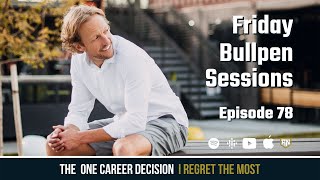
Andy Neary was cut from the Milwaukee Brewers in 2001 and quit baseball because he had a finance degree. His real regret wasn't stopping but the decade he spent feeling not good enough, comparing his metrics to others, and never celebrating wins. He learned to stop letting other people's judgments define him.
Chapters
Hey. Hey. It is Friday. It is time for Friday bullpen sessions. My name is Andy Neary. Each week I deconstruct my journey, my struggles through professional baseball to help unpack yours so you can live a life on purpose. Andy Neary. And this is episode 78. I'm excited. This week I'm going to get really vulnerable with you. I'm going to share a moment in my life that I regret. It's a decision I made.
That I had a much bigger and a much longer impact on my life than I think I realized. And it's going to be interesting. I want you to stick around and listen to this story. It involves my pro baseball career, but it's a story with a twist. You think I'm going to go one place with the regret, but it's not the regret I actually.
Hated the most. It's the decision I made mentally that had a much bigger impact on my life. And I wish I could do all over again. So let me take you back. Spring training, 2001, and I am playing with the Milwaukee brewers, and I'm down in Maryville, Arizona, where their spring training complex is. And one thing about spring training, to give you a little familiarity of what it's like, it is a rinse and repeat of the same monotonous thing day after day after day. Literally every day you get to the spring training complex before sun comes up and you sit down, the first thing you do is put everything in your locker. You go have breakfast, and you eat with the entire minor league camp. Rookie ball guys, single A, double A, triple A guys. Your locker could be next to somebody playing double A or triple A who's just one step away from making it all the way to the big league. So that's quite an experience in itself. A great way to learn from guys who have been where you are today. And then when you're done with breakfast, you come back, relax a little bit, put your uniform on, and then you head out for stretching and calisthenics. And, hey, then it's a long day of practicing. Seven, eight, nine hours, about two or three weeks in the spring training, you start playing some games in the afternoon, but, man, it's one day after another is the same thing. So if you don't enjoy that process, it is going to get to you quickly. Now, I admit I probably didn't enjoy that process as much as I could have when I got to pro baseball. I allowed myself to view playing the game of baseball more like a job than a hobby or a passion. Let's face it, it is a business at that point, but you still can give yourself that space to really enjoy the process, that every morning you get to get up and play baseball and get paid to do that. And I admit I probably didn't enjoy that process as much as I could have. And so that year.
I knew that if I stuck around spring training long enough, if I made it, if I didn't get cut, I had a chance to go break camp and spend the summer pitching for the Beloit Snappers in Single A. Beloit. The Bloit Snappers was a team, single A team in the Milwaukee brewers organization that was located in Beloit, Wisconsin. This is why this is a big deal. Beloit, Wisconsin is 50 miles from where I grew up. So I knew that if I spent the summer playing single A baseball, pitching for the Beloit Snappers, I would have friends, I would have family that could come watch every single game. I was excited. And so every day I got up, every day I worked on my mechanics. I didn't take anything for granted. Now, again, I may not have enjoyed the process as much as I could have, but I did not take anything for granted. And I remember heading into the last week of spring training and I felt good. I was days away from breaking camp, right? And I'll never forget this.
Late about second half of spring training. As I mentioned earlier, you spend your afternoons playing games. So sometimes teams will come to your spring training complex, or vice versa. You'll get on a bus and you'll travel to other spring training complexes to scrimmage other teams. Well, this particular day we were heading over to Scottsdale area to take on the Single A affiliate of the Oakland Athletics. And I remember it's a beautiful complex. It was up in the red rocks and I was pitching that day, and I actually had a really good outing. I think I went one inning, maybe two innings, didn't give up any runs, and I felt really good. Remember a week left from breaking camp and I felt strong about where I was headed, what summer was going to look like. I was excited. This was my chance to give back this gift that I had of playing baseball and give the gift to my family to be able to watch me play professional baseball on a consistent level consistently. I should say so. Got done with that outing. I still recall when I was done pitching those that inning or two, went over to the other practice field that was next to the field we were playing on. I ran my sprints. I did my cooldown workout with the trainer and hopped back on the bus to go back to our spring training facility to end the day. I felt good. In fact, I still remember sitting on that bus ride. I was sitting next to Billy hall. And if you are a Brewers fan, you, you surely remember Billy Hall. He actually spent few years playing in the Milwaukee with the Milwaukee brewers. Had some really good seasons with the brewers, played with the Mariners amongst some other teams. But I remember that, that bus ride home, I was sitting next to Billy hall, who at that time was playing double or triple A. We had a good conversation and we got back to the facility, went back to the hotel, did my daily routine of just hanging out at the hotel, trying to find a place to go eat, you know, all that good stuff. Well, the next morning, got up, it was like any other day, right? You hop on the bus before the sun comes up. It was about a 25 minute ride over to Maryvale. And when I got to the spring training facility that morning, something was different.
You see, when I walked into the locker room, sitting in my locker was, or hanging in my locker was a pink slip. And if anybody has watched the famous baseball movies, you know, Major League, Bull Durham, things like that, and we always talk about getting the pink slip, that's really what happens. And so I looked at my locker, there it was, the pink slip was hanging from my locker. And it's a really awkward moment. I know I've shared this part of the story with you before because everybody knows what's happened, right? Everybody knows you're getting cut, you're getting let go. And so people are just kind of tiptoeing around you. They don't want to offend you, they pat you on the back. You know, guys that I spent the previous summer playing with are coming up saying, man, you know, it's been a joy because everybody knows what's about to happen. You are on the chopping block. And so I grabbed my playbook from my locker and when you get to pink slip, what you got to do is you walk down the hall to the player director of player personnel, his office. And so took the walk of shame about 50ft down the hallway and with my playbook, I walked into the director of player personnel's office. I'm forgetting his name at the moment, sitting, you know, right, right there in front of his desk is a chair. And I sit down. Now here's what's interesting about walking into that office that morning. When you sit down and you're getting cut, not only are you talking to the director of player personnel, but to his left and to his right, sitting there are two minor league coaches. And I remember days after this meeting wondering why the hell they were there. And then it struck me that, oh, I forgot. I am sure there are guys that upon hearing they've been cut, absolutely flip out. So the coaches, one of which was my coach the previous year in Ogden.
Eddie Sedar, who is now the third base coach for the Milwaukee brewers, he was sitting to his left. So the meeting starts out, Eddie thanks me for my service and my time the previous year because I had helped them have some success in the playoffs, forgetting who the coach was on the right side. But in that moment, now I'm being told that I am getting cut. And what they do when they cut you is again, they thank you for your time, thank you for your service. And then the next thing is they pass over a list of independent teams. Now, these are not teams technically in professional baseball, these are independent teams. And there are independent leagues all over the country. And I was told that, hey, pick a team you want to go play for and we will make the call for you, we will give you a reference and you can go spend the next summer or two playing in the independent leagues. And who knows, another team might have interest, another major league team might have interest in you and sign a contract, sign you to a contract. And so in that moment, that was the first bad decision I made. And this is not what I regret, though. This is not the moment I regret in my life. The decision I made there that I probably would have done over was instead of taking them up on that offer, I said, guys, I appreciate it, I'm glad I got the chance to play professional baseball, but I already have my finance degree, I'm done with college, it's time to move on with the rest of my life. I mean, I was 22, 23 years old, and I look back and I, you know, should I, could I have taken a year or two to play some independent ball? Enjoyed the travel, enjoyed the fun, not have so many responsibilities at that young age? Absolutely. So if I can give any piece of advice out there right now, especially if you're a young athlete listening in, enjoy the moment, don't cut yourself off from that joy that sport has brought you. If you have a chance to continue playing in independent leagues or whatever other opportunities are out there, don't be so quick to end your career so abruptly like I did, because I said, no, thanks. I've got my finance degree. I. I'm ready to move on with the rest of my life now. This is how we get to this lesson I want to teach you with this episode today. As I said, that's not the decision I regretted. Would I have done it different? Yes. But here's what I did regret the most.
When I was told that I was no longer good enough to play a sport I've been playing since I was age 4.
That message.
Impacted my business career for well over 10 years. Why? Number one.
I struggled with not feeling like I was good enough. Somebody literally just fired me and told me I was no longer good enough to play for them. So mentally, that battle I had around self worth of am I good enough to do this definitely transitioned into my early business career when I was selling financial planning or selling insurance. Is that battle of am I good enough to win at this new game I'm playing in life.
Second regret I have around that is never being satisfied. Instead of looking back and saying, hey, you know.
What I accomplished as a 5 foot 9 pitcher, giving myself the chance to play professional baseball. Instead, I looked back and regretted and didn't enjoy. I looked at myself as a failure.
And again, it transitioned into my business career where I was never satisfied. It's something I still struggle with. Today is taking the time to pause, to reflect and to celebrate progress, to celebrate how far you have come.
And the third regret I have is this.
I know one of the biggest reasons I was let go back in 2001 was because of my stats or lack thereof. Whether it was my age, I was considered old for the level I was at in the minor leagues. My stats the previous year were good, but they weren't great. My stats on the mound in spring training were good, but they weren't great. And because I was not a high draft pick coming out of college, I had to be damn good to have a chance to stick around. And I wasn't. And I allowed that judgment of my abilities based on some stats, right? The fact I'm not being allowed to play in the brewers organization anymore because my stats weren't good enough. That lasted well into my business career. That constant allowing others to judge me, allowing myself to compare my stats to others. Now, we weren't talking earned run average, we weren't talking strikeouts, we weren't talking wins, but we were talking sales. We were talking pipeline opportunities. We were talking about the amount of money I was making and the amount of revenue I was bringing in. It's no different. It's just a different type of stat, that's all. And so really the message I wanted to share with you today is Looking back at that day, I was cut. Yeah. I mean, it stings when somebody tells you that you're no longer good enough to play something you've played your whole life. But it was the impact that that comment, that event had on my life that I did to myself. This is a mindset regret that I did myself for 10 plus years, long after my baseball career was over and I was on to business. That's what I regret the most.
I regret somebody telling me I'm no longer good enough. I regret letting that impact me. I regret not taking the moments to celebrate victories because I'm constantly striving for the next thing, the next goal, the next win, the next level of money. And I regret the fact that I allowed myself to be judged and I allowed myself to compare my results to everybody else. Because at the end of the day, the only person that impacted was me, my happiness and my success. So what I want to leave with you guys today is this. At some point, if you're a young athlete, at some point, your sport's going to be over. There are very few people in this world that get the chance to end their career playing the sport they love.
Someday your sport's going to be over and you're going to have to move on to chapter two. If you're a business executive.
Someday you're going to make a transition. You're not going to be doing what you used to do. You're going on to something else. Wherever you are in life, whether it's sports and business, the advice I want to give you is don't ever judge your own abilities. Know that you are good at what you do. You are not the result you create. Number two, be happy. Find something that fulfills you and then enjoy the process. Celebrate the victory. Celebrate the progress you're making. It's not about the money you're making. It's not about the result you're creating. It's about enjoying what the hell it is you're doing. And number three, don't let others judge you and don't let that impact you. And don't get caught up in comparison. Because at the end of the day, it held me back from business success for far too long. And I don't want it to hold you back. So I'll leave that with you today. When that transition comes in life, whatever that means to you, just know you're damn good at what you do. Enjoy the process to whatever your next chapter in life looks like. And most of all, don't compare, don't be impacted by other judgment. Just stay in your lane and you know that your success is coming right around the corner because you know what happens when clarity and confidence collide. Action happens. Go make it happen today.
Hey, thank you for taking the time to listen to this Friday Bullpen session. If you are enjoying these episodes, please do me a favor. Go over to Apple, subscribe, give it a five star rating, and if you know about anybody in your life, whether it's in your family, personal life, your friends, business colleagues that you think would find benefit in listening to these episodes as well, do me a favor. Please share the Bullpen sessions with them. I'd be extremely grateful if you did and again, go out and make it happen today. Thank you.
More from Andy




If you want producers to succeed faster, help them create a sales message that creates confidence.

Sales isn't a zero-sum game! You can have tough competition and still grab a beer after



Option 1: Meditation, a fast walk, a podcast, and protein. The ultimate morning routine!

How you do one thing is how you do everything. Ill elite producers fuel their body.


Stop living in the gray of maybe! Your job in sales is to get a clear yes or no