81. Johnny Elsasser: The Art of Masculinity
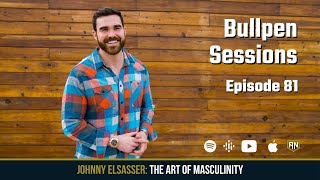
This is a transcript of Bullpen Sessions episode “81. Johnny Elsasser: The Art of Masculinity” (YouTube podcast interview, uploaded Dec 21, 2020). Andy Neary interviews Johnny Elsasser — a former U.S. Army Ranger (2nd Battalion, 75th Ranger Regiment) who completed four combat tours in Iraq and Afghanistan and later worked five years protecting the U.S. Ambassador in Baghdad. After returning home Johnny experienced depression, marital breakdown, and a loss of purpose; he rebuilt purpose through podcasting and coaching. Johnny now runs the Art of Masculinity (podcast and coaching) and runs immersive men’s events (Wildman Experience) that combine safe firearms/CBQ drills, helicopter and vehicle shooting drills, villa/ranch stays, curated meals, and facilitated group vulnerability work. He supports Ranger Road (veteran nonprofit). Key themes: presence/mindset, fundamentals/foundations, leadership-by-example, male mental health and identity, authenticity in modern masculinity, and practical steps for men to rediscover identity (trace conditioning → evaluate what serves you → distill 3–5 core traits).
Questions this video answers
December 21, 2020
2nd Battalion, 75th Ranger Regiment
Four combat tours in Iraq and Afghanistan
Worked ~five years protecting the U.S. Ambassador in Baghdad for a private company
Knoxville, Tennessee
Chapters
Foreign.
Hey.
Hey.
Welcome back to Bullpen Sessions. My name is Andy Neary. Each week I sit down with abundant thinkers who are kicking ass in life, and we deconstruct the formulas they have used to have success in business and in life, to help you unpack your life, your business, so you can do the same. So put a smile on, grab a pen and a paper, get ready to take a ton of notes, because you, my friend, are to go on a wild ride. Here we go. Hey. Hey. Welcome back to Bullpen Sessions. I am super excited this week to have Johnny L. Sasser join the podcast. Johnny is the founder of the Art of Masculinity, a coaching program designed to help men own their masculinity in a way that honors them and not what was created for them. I think this is such a very important topic today. Let's face it, we have a male mental health crisis in this country. A lot of men are being asked to put their emotions, their struggles, their mental battles in the back burner, and it's leading to this crisis. So I wanted to have Johnny on to talk about this. But Johnny's on because he also has an amazing story. Johnny has a storied military career. He served in the elite 2nd Battalion, 75th Ranger Regiment. He had four combat tours between Iraq and Afghanistan. If you're unfamiliar with the Rangers, the special ops, this is a group of badass dudes, and Johnny is one of them. He also spent time protecting the US Ambassador to Iraq in and out of Baghdad. So Johnny's military career is full of amazing stories, stories that will blow you away, stories that you never wanted to. You would never want to find yourself in. And he shares some of those with us in this episode. But it was when Johnny came back from his overseas duties to the US Full time where this journey begins. Because when he came back, he felt depressed, he felt alone, he felt empty, which ultimately led to a divorce, and he just felt a complete lack of fulfillment. But it was starting his podcast, the Art of Masculinity, where he started gaining back that momentum because it allowed him and so many other men listening in to shed that light of how alpha men struggle and let males everywhere know it's okay to bond, it's okay to grow together. And that's what I want him to talk about today. So if you have a male in your life you know is struggling or you are that male struggling with mental battles, with limiting beliefs, this episode is for you. So I'm excited to have Johnny now stick through to the end of the episode because he talks about one badass experience he has created for men around the world called the Wildman Experience. I am so excited to partake in this myself at some point here in the near future. So this is a great episode, full of stories, full of struggles, but most importantly, full of tidbits to help men everywhere overcome those limiting beliefs that we all battle today. All right, here we go.
Shift your mindset.
Johnny Elsasser. How are you doing today, man?
Doing well, brother. How are you? Long time no see.
Absolutely. Welcome to the podcast. Well, welcome to Bullpen sessions. So for those who don't know Johnny, he and his wife are on a RV tour right now. So where does the RV find you?
We're in Knoxville, Tennessee today. As of this podcast, it seems like.
That'S a hot, hot. What do I want to call it? Hobby. These this year is RV life.
Oh, man. RV life and the boat life. Apparently we've been talking to some friends and boats have been off the chain, like, in sales. So I think people not being able to travel and stuff, they're having to, you know, just really experience something around their home or your traveling becomes your wheels, right? Because there's no restrictions on the road. So, yeah, people have just been like, converting to and adapting to life is today, right now, anyways, with all these governors having restrictions and things like that on what you can do out in public, you know, so you make the most of it. And my wife and I hopped on. Hopped on the not a train, but train, for lack of a better term.
Right.
So we hopped on the RV train with a few of our mutual friends, and. And so we got a crew of us that are circling the United States like sharks in their RVs.
Well, you know, it's interesting, Amy. Amy and I were just talking about this last night that, you know, we're looking to. We might move, looking at a house, all this stuff, and the question becomes, do you want to spend a lot on the house or do you want to spend less on a house? But then give you the. Give yourself the chance to enjoy more experiences. Right? And it's like. But today, though, who. Who the hell knows how we're going to be and if we're going to be able to travel in the next however long. Right. Especially globally. Maybe you just spend a little more on getting an RV or a nicer house, because right now that is like the mothership for you. Because what else can we do?
Yeah.
Yeah.
Really? I mean, like, my wife and I love being outdoors, so the RV makes perfect sense. We have like a blow up paddle board in there. And you know, most these places, if you're close to the water, you can rent like kayaks and stuff. And we love hiking. So as long as we have availability to do those things, like we're, we're pretty set, man. Like, so we, we enjoy it.
So let's take a step back for a second because you have a pretty impressive story that I want to dive into for the audience that's listening and has no idea who the hell Johnny Alsacer is. Where were you born? Where are you from? What were you like as a kid?
So I was from. I'm from a place called Fresno, California. It's right in the middle of California. I was actually born in Orange county, was there till about two years old and then went up to Fresno. Most my mom's family went up to there.
And you know, as a kid, man, I was always, I was happy, but I was incredibly present. I remember a lot of times just, you know, it was a blessing and a curse, right. It was also what got me into the military was being incredibly present because I didn't have any forethought of what my future was going to look like. But on the same token, it allowed me to really enjoy most of the moments in my life for what they were and be really conscious about where I was. So as I was a kid, man, I always loved being outdoors. I loved playing. You know, my family called me Smiley because I just smiled all the time. And so like, you know, it was just. I just remember being a happy kid and I. And I loved every part of what I was kind of doing growing up.
So yeah, dude, you brought back a memory for me because when I was a pitcher in high school, my nickname, literally from the opposing teams was Smiley. Because when I would pitch, it was more of a show of my strain and effort, but it looked like I was smiling on the mound when I would throw the ball, people thought I was a cock for doing it. People thought I was arrogant, but I wasn't. It was just me, you know, smiling as I threw. But thank you. I too was had the nickname of Smiley as a kid. So you said something there that is really, really, really important is that you had a really good sense of being present.
Yeah.
And I think whether you're a kid today, an adult today, that's a struggle for so many because we're all also focused on, oh my Lord, what the fuck, what is the future going to look like? Right? Because it's so uncertain right now. The one thing we all have is the present moment. And before we get it, we go into the military background and your time spent there. What does presence mean to you today, man?
Honestly, I say it was a blessing in a curse growing up. But as I've gotten older, it's harder and harder to find ourselves in that present moment. And so I really, really love the fact that I'm able to kind of dial back and still remain present in my own mind. But I think a lot of people really struggle with that, with their daily life. So for me, I value it as this is. When you live in the past, you're living in death. And most people live in the past. Many, many men actually struggle with living in the glory years, right? And so they suck at being present, and then they suck at even looking forward. But living in the future creates your head up in the clouds because nothing that you're doing is at that moment is enjoyable. You're not enjoying the journey. You're just looking to where you want to be, and that becomes a struggle, too. And so what I love about being present is really like taking in and enjoying the day, enjoying whatever it is that you're. You're doing. And yeah, that's not always easy because sometimes things suck, right? But you're still six feet above the dirt. You know, you're still able to breathe and you're still able to change tomorrow when you live in that present moment. So you're not going to win every day, but if you can at least be present in it, you don't have any regret, regardless of whether it's bad or good. You don't have regret when you get older and be like, man, that blew by. I don't even remember that time. You're like, oh, no. I remember experiencing it for the good and the bad, but I still remember experiencing it. And to me, that's what's powerful with presence.
Such a valuable lesson because I think everybody needs to hear that right now. Take, especially today. Take. Take each day for what it is. Who gives a crap about tomorrow? Who. You know, who gives a crap what happened yesterday? Just be. I forget the name. I forget the tribe. But it's a South. I think it's a tribe in the Amazon that literally doesn't have a word for the past or the present or pastor. They just know the present. And I think that's so important today. So let's go back when you were in high school. Yeah, let's talk about the curse. That was your ability to be present. Oh, you made the decision to Join the military?
Yeah.
Probably made that decision at age 17, 18. What. What would you say led you to that conclusion? That it's, It's.
It's.
It's my purpose in my path to join the military.
There was no purpose and path. So I didn't grow up from a military family. I remember distinctly when I was a freshman in high school, I ran into a kid that was going into the military right after high school. And I remember looking at him being like, I would never do that. And so I remember that distinctly as a freshman, because then as a senior, I didn't. My family wasn't wealthy. I grew up in a very, you know, blue collar to low blue collar family. My dad was a mechanic. My mom was like an accountant assistant. Like, so neither of them graduated college. My mom always said we had to go to college. I didn't know anything about college. Like, nobody talked to me about it. I didn't pay attention to anybody talking about college that came through high school. I just loved hanging out with my friends and playing soccer. I was a big soccer player.
And stuff like that. Like, I just literally loved living life. And then I remember the end of high school, and I was like, all my friends were walking around with letters of acceptance from colleges, and they had all this stuff planned out. And I was like, oh, man, what am I doing after summer? I was like, ah, crap. So really, really kind of like a funny instance was just before, like, maybe the middle of the year, senior year. My good friend, who's still a good friend of mine to this day, one of my best friends, he came up and started talking about the military and not saying, go into the military. He's just like, have you heard of the. This. These special operation groups? And I was like, what the hell are those? And he's like, yeah, like Army Rangers, Navy seals, Special Forces. And he starts talking about. And I was like. So we looked into him, and I was like, oh, those Army Ranger guys look pretty cool. Literally, that was the conversation. Then at the end of high school, I'm like, I don't know what I'm doing. I don't know how to sign up for college. I don't know where to go get money from. I don't even know where I'm going to go. And I stumbled into some army recruiter's office. And it was literally just because I was present and I was not fearful of anything in the future, that I didn't really have anything holding me back either way. So I went in, talked to him. I was like, this sounds cool. Thought I could get Army Rangers in a contract. I went to the medical and processing station and. And after I took my test and passed everything, and I went to the medical and processing in San Jose. And you do all the medical stuff there. And then that's where you actually assign. Sign your official contract for the army or for the military, whatever group you're going with. And so I went and signed my contract. And the recruiter. I was 17. I didn't know anything. I literally had. My parents had to emancipate me to go to the Army. So I literally didn't know anything. And I'm like, hey, I want to get Army Rangers. And this recruiters, like, nah. And it was really hot in Iraq at the time, so they were. They were sending everybody to, like, Fallujah, and they wanted. They just wanted, like, bullet catchers in Fallujah and bodies to get blown up. And so, like, he was like, we're going to send you to the regular army, and then when you get there, you can go to Rangers. It'll be easy. And I was like, okay. I was like, not the case. But that's. I didn't. I never went to the regular Army. Fortunately, the way my story worked out is everything happened kind of for me. The universe conspired for me, and I ended up getting a drill sergeant who loved my passion and the fact that I was present and just hammering out my PT test. And I was a stud. I was running two miles in like 11 minutes and 30 seconds, and I was maxing out push ups and pull ups and everything else. He loved me, so he. He ended up basically bringing a contract down to me. He's. You know, we were leaving chow one day and he's like, ellis ass, come over here. And I was like, oh, shit, man, I'm in trouble. I don't know what I did. I thought I was gonna get my ass kicked. He's like, lss, what contract you want? You want Special Forces? You want Rangers? You wanna go be a sniper? What do you wanna do? And I was like, well, Drill Sergeant, I'd love to go Rangers. And he goes, all right, get your ass upstairs. So I go upstairs and, you know, next chow, and we finished chow and again. Al assassin, get over here. All right, what did I do today? Like, I don't know. And I didn't even remember we had had that conversation because I was just. We were getting our asses kicked the whole time. So then he holds it up and he goes, hey, sign this right now. And I go and sign it and next thing I know, out of basic training I go to airborne school and then I went to Ranger indoctrination man. And that's where it all started. But it was all about being present.
Well, I was going to say, I mean, and, and let's not forget you entered the military at a time of out of peace. There was a lot of shit going on over in the Middle east while you, while you were entering. And so you probably knew going in, depending on where you were, where you would end up, you would be deployed fairly quickly. And let's, let's not also forget you weren't messing around. Special Ops, I mean, if you don't mind taking a minute, Johnny, I think a lot of us out there, I'll call us normal citizens or average citizens in the U.S. we all know about the Navy SEALs, right? They get a lot of attention. Movies have been about them. Are you with what you're able to share? I mean, give us a little detailed definition of Special Ops. And how does it maybe compare to, you know, the Navy seals as everybody knows?
Well, yeah, there's just a misnomer out there that people think that like Navy Seals and Special Forces are like their, like they're. People don't even refer to them as Special Operations, they refer to them as Special Forces. But actually for a correction for everybody is that Special Operations is the umbrella. And you can look this up, I'm not like breaking any molds here. You can go look up socom, which is Special Operations Command. And basically there's an umbrella there and Rangers fall into that. So do Special Forces, so do Navy SEALs, you know, so do Marine Force Recon and then there's a few other groups, you know, I don't want to go through and name them all, but there's a few other groups that kind of get in there. And so we're all under this very small umbrella because we're the elite of each different branch. And basically we are a very, any one of those communities is incredibly small. And Rangers is actually one of the smallest. There's less Army Rangers than there are Navy seals. So we're a very, very small, tight knit unit. And basically everybody has their own job. And that's the whole point of Special Operations. They took the elite from those branches and made them this, you know, small unit. And each unit does a specialized job. And Army Rangers, you know, we were, we like to say that the tip of the spear because we were the door kickers, you know. And then Special Forces does a Whole different job. You know, they're. They're highly. They're good at other things than what we do.
Right.
But they're not as good at what we do as what we do. So everybody kind of is very specialized, which is really cool. And then we all kind of are able to join together and pull some stuff off that, you know, just regular units don't do, and regular units don't have the capabilities to do. So, yeah, there's. There's a lot in there. But, yeah, special operations, for everybody's correction, Special operations is the umbrella, not Special Forces. They are a group within Special Operations, just like Rangers, just like seals and a few. Quite a few other groups out there. So. Yeah, well.
And such an important lesson that you have to all work in sync as one big team for this, to. For us as a country to have success. Right. Whether it's the forces, whether it's the seals, I mean, each one of you has a specific role, right, for the greater good, to get to that successful result. So let's go back when you were, you know, obviously, it was your performance that allowed people to see, like, all right, this dude's ready for Special Forces. This dude's ready to be an Army Ranger, whatever it is. Sign here. Johnny, here's your contract.
Yeah.
When did it become real for you? Because this podcast, I like to talk a lot of things around mindset. Like, when did it become. Holy shit. Just months ago. I was this high school kid from California, and now here, it's like, okay, I'm about to. It's about to be game on here. When did that become real for you?
Oh, that's an amazing question. Because, like, thinking back to my mindset.
I think it finally became real to what I was doing in my first combat deployment, which is funny because it wasn't through the training.
It's really weird because you never think of yourself as elite when you're next to everybody else that's doing elite stuff. Stuff, right? So. And I know you've experienced this as well. You don't think yourself any special. And then you go talk to somebody else, and they're like, you did what? And you're like, what? There's nothing special about that. So I think for me, it became really real to what I was doing and my capabilities when we got overseas for my first deployment in 2005. And then the training, when I look back on it, it was just like, it was the key to it was being present, which I was very good at doing, and it was not thinking about Tomorrow, it was just one foot in front of the other. And, you know, I always told myself that pain can only last a while. It's not forever. And so whatever I was going through was just, hey, the pain's gonna stop at some point. Right? And so that was where I held onto. I didn't look forward to going to battalion. I was just like, every day was a new day, and I had to just take it for what it threw at me. And I didn't try to plan past that. And that was really where I excelled. But where it hit me to what I was doing was when I was in actually special operations and we were on our first deployment, and then I was like, oh, crap, we got to do this for real now.
Well, and there's. There's a very important lesson there, and I want your. I would love you. You to give some advice. So, to play at an elite level. Right, Right. Whether that's on the sports field or in. On the battlefield, you have to be present in the training. Now, what was very different for you is if you weren't present and you weren't working on the right things, it was a matter of life and death.
In the sports world, for example. Right. It's not a matter of life and death. But if you truly want to be play at an elite level, you have to be focused as much on the training, on the practice, on the grind of that as, oh, crap, it's game time. What advice would you give? Let's say somebody who's younger, whether they're an athlete or thinking about the military, and they are also looking at one of these elite positions. What advice would you give them today that maybe I don't know.
You didn't know at that age the importance of your. Your fundamentals. So I'm a huge proponent, and this is how I also coach men, and I do a lot of the things that I develop for my own. For my own brand. But it's all about the fundamentals and the foundation. If you are flawed in those, you are never like people think that you. And maybe you and I talked about this a little bit before, but people think you raised to the occasion. You do not rise to an occasion. That's. That's a. That's false. No elite person rises to an occasion. What happens is when you go down to your sympathetic nervous system and your consciousness kind of shuts off to make minute, you know, details and shifts to basically resorting back to your foundations, it's the level of your foundations which makes you elite. Everybody who's elite is has a such a high level of foundations and a high level of fundamentals that when they go back to just that sympathetic response, that instinctual response, they're so far above the normal person that they look elite. But it's not because they rose to the occasion. It's because their foundations were so high that they're above everyone else that's just basically playing for fun. And that's where the elite people are separate. And yes, once your foundations are that high, when the game isn't on the line, when the shit isn't hitting the fan, you're able to step up from those foundations and look even more incredible. But when everything goes to shit and all of a sudden you're looking at your third ex, Phil, because your first two got removed due to hostile environment, your sympathetic nervous system comes into play and you have to resort back to where you trained yourself. And that becomes all of the focus on the foundations and the fundamentals. And that's where I think people need to look when they want to picture themselves being elite in athletics or in the military.
I remember I actually, about a year or two ago, I saw a keynote speech from Matt. I think I'm gonna get his last name wrong. Eversby Eversman. He was one of the main men characters in Black Hawk Down. He was part of. And what struck me in his keynote talk was, you can practice, practice, practice. And I think this goes back to what you just said about what's the difference between the elite and everybody else. He said, everything works well until plan A goes to hell.
Yep.
And. And if you don't have the fundamentals of knowing what plan B, C and D are, shit can get really bad really quick. And so I love what you just said there. Perfect practice makes perfect performance. Again, whether it's in sports, business or in the battlefield of war. So I'm also a storyteller, Johnny, and I love stories. So if you're willing to share. Was there any, like, parts of training, like, for somebody who may not know what all goes on, especially performing or training to be in the forces, be an Army Ranger? Are there any stories you can remember in the training where you're just like, holy, like, it can't get worse than this?
Oh, man. I mean, I think I have probably a lot of those, but to kind of place that type of training with what we're talking about of, like, the high level of skills at a foundational level. We would train specifically before going overseas to be able to shoot in a room with our buddies in There. So we'd put targets, and your buddies would be pretty damn close to the targets. But there was a lot of training that led up to that. And you would be training all day and night because you had to do daytime and you had to do nighttime. So it wasn't just one. We had to train on both because we operated in both. So when you did this, though, when you were doing some of the other exercises, as soon as you did something that was, like, wrong, which. Especially training, you got to work out all the kinks. You did a lot. You got the crap kicked out of you for a long time, like, hours. And you're out there all day, all night, getting. And you'll have intermittent times of getting smoked, right? We call it getting smoked, which is just. They're basically making you do all kinds of crappy, like, workout stuff, basically to kick the crap out of you and go to muscle failure and just make you miserable, right? Beyond, like, what you think you can do. But all of that is to instill, like, a form of keeping your foundations high. So those days really sucked because they were incredibly painful because you always made mistakes, but they were incredibly cool because at the end of the day, you got to see your foundational skills at such a high level that you are shooting live rounds in a house with your buddy, like, a few feet away from a target. And so you're like, wow, this is. And you were so good at doing it. You're putting rounds really close next to each other within this target as well. They're not just flying everywhere. So that was, like the high level of training that was kind of mixed with crappiness, but then a solid foundation.
You know, it's, again, lessons everywhere here. It makes me think, of all people I heard this from, there's a Ryan Sirhant. He's part of the New York Million Dollar Listing show. He's somebody I follow. And I remember him sharing a video one day on his YouTube channel where he talked about, for him, you know, working out every morning, busting your ass in the morning is your way of saying, you know what? This is the hardest thing I'm gonna do today. And no matter what comes at me, the rest of the day, I've got it. Because I just literally did the hardest thing first thing in the day. And if you think about what you do, again, I go back to whether you're in the military, you're in business, in sports, whatever, putting that work in, making it extremely tough. I think about some of the greatest sports teams. Their practices were probably harder than the games.
Oh, yeah.
And it's because when it got to game day, it was second nature. And. And you just act. You just reacted. You didn't have to think anymore. And I. I can't. I have to believe it couldn't be more true to your point. Some of those practice days or training days you guys had were unbelievably hard. But when you found yourself in that house at night and your buddies were scattered around that house sitting next to targets, you didn't want to have to.
Think exactly, and you wanted to be able to react appropriately. And it goes back to your point. It goes back even to when I played soccer. We were. I was on a team. We were like the. We were the top team in California out of high school. And our practices were so hard that, like, we just enjoyed the game so much because the practices were miserable. But we were elite for that reason at that time. And it was the same thing. We enjoyed mission so much because we got to put everything, our tools into use because our training was much harder than what we were going to see out there in a lot of cases. And I mean, other than guys getting shot or something like that and the mission going completely to shit, but, you know, for the most part, we were on a lot of successful missions that it was more fun to be there than it was in the training for sure.
Well. And so, I mean, such an important lesson, if you're listening in right now, put the work in. If you're looking at people who are having more success for you than you in whatever endeavor you're in, it goes down to the work, the daily work that those people put in to make it look easy today. They weren't always that way, but it's. They put the work in to make themselves better every single day. The practice was harder than game day. So, Johnny, you had four tours in Iraq and Afghanistan. I believe you also protected the US Ambassador in Baghdad for a while. So not an easy task. And I won't make you go into a bunch of stories about your time in the military, but through all those deployments.
What lesson stands out the most for you?
Oh, man.
Or two? One or two. You don't have to pinpoint it down to one.
It's a. It's a great question and I love it. And there's so many that, that I did. But when I look at, like, my time in the military and then I did another five years functioning out of Baghdad for a private company protecting the US Ambassador, the biggest thing, in my opinion Is that if you're truly going to be.
If you're going to be a leader in any environment, you have to be willing to get back in the trenches with the people that you work with or that are looking up to you. I think a lot of times people in this life, regardless of whether you want to be, especially as men, we're inherently looked at as leaders. And if you're just sitting there directing people and just kind of being a piece of shit and not wanting to get back down in the trenches, and you just want to have some control and power, like, you really need to evaluate who you are as a person, because nobody respects that guy. And for women, too, you know, it's not just for men, but men are. Men, in a lot of ways, are looked at as leaders. And this is where a lot of men have this, you know, misalignment with who they are is because they don't know how to do that. But one of the biggest things I learned is that the good leaders are the ones that are willing to always get down in the trenches back with you, no matter how high they've climbed. And they're always willing to be honest with you, regardless of, you know, they're not trying to inflate your ego. So if they tell you did a good job, it landed with you. And if they told you that you did a bad job, it's because they were disappointed. They didn't beat you up, but they were disappointed. And that hurt worse than getting beat up. You know, when you respect somebody and you disappoint them, that hurts more. And so the biggest thing is just like, I love being a leader in my life, and I always want to show up for those people because not everybody can make those decisions. But if I'm not doing it the right way, then I'm not being true to being a good man in this world.
Well, and we're going to get there in a few minutes to what you're doing today, because I'm excited to talk about that topic because it's something that hits home for me. But here's another area. I want to go quickly with that because normally I like to bring on former pro athletes to the. To the show to talk about, you know, playing at an elite level.
Yeah.
And the struggles they went through, the transition. It's like in sports, Right. You can have the greatest sports career, but at the end of the day, you're probably retiring, still in your late 20s, early 30s, and you have a lot of life left.
Yeah.
And a lot of Athletes struggle so much to make that transition because sport, that sport was their life. Now you were in the military and that transition for so many veterans, from being in the thick of battle to, hey, I'm just back in living life as a US Citizen. Did you too have your own struggles with that?
Oh, absolutely. And, and I think that's probably. This is where, and I've had some conversations with some pro athletes as well. And this is where I think, like, you know, any elite level competitor.
Struggles with that transition because you lose a piece of your identity, if not all of it. You know, the professional baseball player, he's an MLB athlete, right? And he's like, wow, who am I now? Outside of being a professional baseball player for 10, 15 years, whatever, however long it is, it's the same thing in the military. You're operating at this elite level and your mindset is, I'm protecting our flag, I'm protecting my brothers to my left and right. There's a bigger purpose than my life. And when you leave that, you're like, wait, wait, where is my purpose now? Because I never put myself first. So there's a struggle to put ourselves first in life because the sacrifice at that point becomes more of a purpose that drives us to do really high level stuff. But when you lose that purpose in the transition.
That'S where you start to lose your identity. That's where you start to lose, like, who you are as a man. And my personal struggle came when I left, you know, doing protection, and I came back home and I was, at the time, I was engaged, and then I was married and it took about six months. I'll never forget, I was working behind a desk and I was like, wait, who am I? What am I even showing up for? What am I pressing these buttons for? There's nothing behind this. There's no bigger purpose for this. Like, so who am I showing up as today? And when you lose that, you lose your complete mindset. It's hard, man. It's hard to get it back because you wake up every day being like, what am I even showing up for? Right? So that, that becomes like a real big struggle on that transition. And that cost me a first marriage. That cost me, you know, I woke up. And I'll give your listeners a break here for a second. But I woke up and this was the biggest lesson for me is I woke up and I hated the guy I saw in the mirror. And that was my realization that I didn't know who that was anymore. And I didn't have a Purpose.
Yeah. I think that that comment couldn't have been more prevalent than it is today in 2020. If you're waking up right now, especially we're in the middle of the holiday seasons and you're wondering what the hell you're doing here or what the hell you're working for or waking up for every single day, that's the time to pause and figure it out. Immediately it gets too late. And so, again, I think that's. You probably can definitely attest to this, A struggle, I'm sure, for many veterans who are coming back from service. Like you said, they literally gave their lives up for the service of our country, for the service of their brothers. And now they come back and it's almost like. Maybe it's a horrible analogy, Johnny, but I remember the days when I was no longer a professional baseball player.
Yeah.
And there came a time no one gave a shit. I used to be a professional baseball player. And I think for veterans, they may go through that same thing. There comes a time where you're no longer getting the thank yous and the hugs because you're servicing. That's now in the past. And you're trying to figure out who it is, what am I doing here? And so let's fast forward now to what you're doing today, because I absolutely love what you're doing today with the Art of Masculinity. Number one, you have a top rated podcast, the Art of Masculinity. And if you're a man out there, do yourself a favor and start listening to this. Number one, he has absolute studs that he brings on to the episodes. And I can't. I've not been on yet. So, you know, I'm not even trying to put a shameless plug in there. But his episodes are unbelievable. It's all, it's. It's on the topic of what it means to be a man today. And I think that's such an important topic today, Johnny, because I feel like so many men in this society right now are kind of being told to put their emotions, their feelings on the back burner. What do you think about that?
Yeah. So. And I really appreciate the kind words, Andy. That was. That's awesome, man. Thank you so much. I love doing the podcast. I'm very passionate about helping guys. And I think here, here in today's society, guys are. They're actually being told to. It's weird because you get some aspect that guys are being told to embrace emotions, but they're not being told how. And they're not being told where these emotions can lead to or how to open up about them or to. And so we're all predisposed. This is where, you know, I talk to you about foundations. Well, this is. This was the start of my journey to help men, was to make sure I built a great foundation of knowledge on why we're programmed the way we are, especially here in Western culture. Right. And a lot of it is, you know, fundamentally we're predisposed to external influences from a young age to condition us at this level of who we are as men and how we're supposed to act and what is okay and what's not okay and all of these things. And I think you get people out there in mainstream media calling us toxic masculinity. If you're trying to be chivalrous or if you're trying to be a good person that looks after people, you're called toxic because you're not embracing feminism. Right. Which is a complete, you know, crock of shit, in my opinion. But what it is is that men nowadays are struggling because they're told the way that they were conditioned to be raised is wrong. And there's nobody that can say any of that is wrong. But what we can say is that society has evolved, and as men, we have to evolve as well, to embrace our own authenticity, regardless of what that means. And so men don't know how this goes back to the military and the transition from an elite athlete. You don't know where to be or who to be and how to be. Well, as men, we don't know where to be, who to be, or how to be. And so we're like, well, how do I embrace my own authenticity? I was told if I did that I'm not masculine. You know, maybe I like doing something that's. That's not overly masculine. Well, they're taught to shut that off. And so we're all taught to shut that off. And so guys are confused at what is appropriate to embrace and what's not. And that's where I think that misconnection, that misfiring of men today is because they're not sure what. What is okay anymore and what's not okay. And then they're like, ah, shit, I don't know. Let me just go back to what I used to be. And that's being deemed as toxic masculinity.
So, yeah, it's. You know, I think there's another great lesson there too. You talked about leadership by lead, by example, not by title. Yeah, I think that holds true for men today. I think there's still, you know, a lot of theories that we need to lead by title, we're a man, but no one's telling us how or the rules keep changing based on what mainstream media wants to tell you. Now, you and I met at a cool experience held by one of our mutual friends, Kyle Depes, and we had a fascinating conversation on one of the bus rides we had to an event we were going to. And I shared with you that, you know, I struggle from time to time with what it means, in my opinion, to man up, right, to be a man and how to step up for your significant other and things like that for many men out there, I think there's so many struggling with that right now. Johnny, what. What would be if somebody came to you today and said, johnny, I am right there. I'm in that moment where I don't know what I'm supposed to be doing as a man. What are 1, 2, 3 steps somebody can take out there to really start finding their masculinity again?
The first thing I tell them to do, and I think I even told you this, was to look back at who kind of conditioned you at a young age, right? And this is all founded in science, and. And it's basically from 0 to 7 or 8, which is kind of up for debate, but you're in this mode of absorption, and you're basically manufacturing your blueprint for masculinity at that point from either a mentor, from movies, from TV shows, from billboards, from data, from looking at what is a consensus of what guys are actually doing and saying, okay, if nine out of ten guys do this, that's masculine. You're deeming that masculine. So there's all these processes, and this is founded in sociology, and this is where men are programmed. And from zero to that eight years old, what happens is from zero to two, you're in delta, which is what with delta waves, your brain is in delta waves. This is what we sleep in, right? So this is where that age, you're just basically going with, like, instincts and mechanics. There's nothing else. But then from 2 to 8, you're in what's called theta. And this is why hypnosis works. When you're in theta waves, your brain is easy, easily manipulated and massageable. And it's basically at this point, I can program you. This is why hypnosis works for smokers, right? This is why hypnosis works for binge eaters and things like that. If you're allowing yourself to get in that fatal wave, you're able to be programmed. Well, we're in that. We're in that for six years. And so I say, okay, look at who influenced you. And it's not always your father. You know, my biggest influence was actually my uncle. And then it was movies. You know, we grew up watching Stallone and Arnold and Clint Eastwood and John Wayne and like, you know, the hero gets the girl, but the hero has to struggle. And then, you know, all these different things, right? And so we grew up watching that. Well, that conditioned us, but it's not realistic. So they call that, like a normative theory of what it is to be a man. And in that normative theory is that we've manufactured this normal masculine feature based in a manufactured movie or TV show. And then we took it in our psyche as that's what a man is. But it's never achievable. So we. You got to find out where you based it. And a lot. And I say this in okay, I know my uncle was a huge influence on the man that I have become. I know for a fact I loved watching those movies where the man was like this big, strong, buff dude, but then he'd struggle, and then he'd get the damsel in distress and all this. I loved watching those. I know that that's part of where I manufactured my masculinity from. So you have to look back and dive into it and take a second and write these down. Like, go and take about, like, 10, 15 minutes, write down where you built that from. That's my first step. Because then now the second part of that is you get to evaluate what's serving you and what you're not aligned with. And that's where a lot of this power comes into play. This power of, oh, I get to own me now, this authenticity. Start to evaluate those features that you derived from that. So you're going to build out the features, and then you're going to say, well, what's serving me? What doesn't really align with me? What's unachievable? What do I not even care to achieve? Because if you're holding yourself accountable to things, that's where that misalignment of who you are in today's society becomes. So then you take that, and then the last piece of that, that third tool for it is you basically write out, okay, what are the features from where I started to who I want to be? What are those features? And then compile that into a list. And I like to basically make this three to five main features, right? Main traits that, again, going back to what we said, when you're in your sympathetic nervous system and you're fighting with your wife or you're fighting with a friend, or you're struggling at the office, you need to have these down to three to five traits that your level of foundation when you're not thinking about anything else, you still show up as that guy every day because then you're authentic, Right. Then you're in alignment with who you are. Then you're not coming home regretting what you did that day. You're like, no, I owned the guy that I chose to be. I chose to be is the keyword. Not somebody. That somebody made me. You resonate with the guy you chose to be at every point in your life. And then you don't have that regret. And maybe you can do it better tomorrow, but you don't come home beating yourself up. And that's where the power and authenticity comes for men.
Johnny, I'm going to read, if you don't mind, the mission statement I pulled off your website.
Yeah.
Your mission is to help men find strength in developing masculinity, to be consistent with who they are and not what society expects them to be. This speaks to my heart. And what exactly what you just said speaks to my heart because in business today, for example, everybody has a personal brand. Far too many people today in society are trying to be a different brand based on their audience, whether it's a family member, a friend, a colleague, a prospect for business. What you just said couldn't have been more spot on. It just happens to be talking about men. Know your personal brand, show up every single day as that personal brand, own it, and have no regrets about it. It. Yeah, I love that. Okay, so Johnny just, like, lit you up on what it means to be a man. So, hey, hand raised here. I've struggled with this myself. Johnny, I want you to go into depth because we're talking about experiences too here. In storytelling, you have a pretty damn cool experience you create for men as well. You and I met on a men's experience called the Beyond Experience, but you have one called the Wildman Experience.
Yeah.
And this. This gives guys a chance to actually have a little taste of what it was like to be Johnny El Sasser, the Army Ranger. Right. If you don't mind, to take a couple minutes, I want you to talk about your Wildman experience, what you're doing with it, what's the purpose behind it? Because I think it's a really really cool endeavor more people need to hear about.
Oh, I appreciate that, brother. And I want to add one thing back to what you just said with the authenticity, but my wife posted this on Instagram yesterday, and it said, don't be afraid to be disliked. And I love it because I've never been afraid to be disliked, because I place value on people who bring their, you know, goodness in their heart and love and support, but can also stand in their own power. And that's who I value. And the people that dislike you and what your brand stands for, if you're authentic, they're not meant to be for you, man. They're not meant to be in your life. And then they get to struggle with their own insecurities, and they get to struggle with their own conversations, but you get to embrace who you are. So I love that you highlighted that. And I just wanted to throw that in there because my wife just posted that.
And I'll add, I always tell my clients, if somebody doesn't like the brand, they would have never done business with you anyways. And that's the same as they never would have been your friend anyways. They never would have supported you. Or that is if somebody doesn't like the brand you're being, but that is who you are. It wasn't meant to be. Let it go. They're not meant to be in your life. Move on. Go find people that are so. I love that you said that.
All right, I'll jump back to the Wild Man.
No, no, no. That was great. That was great. Let's dive. Let's dive into the Wild man experience, because I know I want to be a part of it in the future, and I just. It just sounds awesome. So if you wouldn't mind going to depth on what the heck this thing is.
Yeah, brother. It's an. It's an amazing event. I personally, I'm so passionate about it because I love where it came from. It came from a place of love and just enjoyment with who I used to be a part of my life that I really embraced. But essentially what I do is I curate this environment surrounded in this VIP kind of exposure where you're completely, fully taken care of. You're not thinking about anything. You're not pulling out your wallet. All I expect men to do is be present, right? There's nothing else, more than that. So I take guys on a VIP evening in this beautiful restaurant, the best restaurant in Corpus Christi. It's on the 20th floor of the hotel that we stay at, and it overlooks the water, it's got these huge vaulted ceilings and we sit down and we have a great dinner, get to know one another, but we have a great conversation. So I love to spark conversations where men get to open up and dive a little deeper than maybe what they do. Because in normal life, because we're giving them a safe environment. Guys who are willing to lower their walls and kind of open up and talk about things that are bothering them or talk about struggles in their life. So we have this great dinner where we get into some in depth conversations. Guys all get a chance to share and kind of open up and they get to see other men doing it, which is. It gives them the permission that it's okay, which I love. Like you see these guys open up and you're like, wow, man, that's really amazing. So we do that, we have this full VIP experience the first night and then the next day we go out to a ranch. And this ranch in Corpus Christi, outside of Corpus Christi, it's a 45 minute drive. We have cars, we take you guys out there and it's amazing, man. Every guy gets their own room. It's got like just its own bathroom, its own frickin everything set up. And we go out to the ranch to have fun. And what I mean by fun is we give you guys a taste of kind of just, you know, some gun familiarization. You don't have to have any experience. And actually I want to reiterate that it's not a shooting school by any means. I'm not teaching you the fundamentals and basics of being an expert marksman. Expert marksman. But we take you guys out there, teach you how to be safe with guns. And then we do some really fun things. We teach you guys how to do cqb, which is close quarter combat, what we used to do in an urban environment of shooting targets in a room. We teach you how to go in and clear a room. We have you guys shooting a lot of steel. We put you in some, some competitions where you're doing like what we used to call stress shooting, where you have multiple different targets and we'll make you set up and then shoot from one and then run to another target and then shoot from that one and then run to another area and shoot more target targets. So we get this competition going and then we actually have you guys, we teach you how to peel out of a vehicle and shoot from there, but then we put you in a moving vehicle and we have all kinds of steel targets laid out and you guys get to Shoot from a moving vehicle. And then you actually get to perform our peel out tactic. If you had you know, taking fire from like the side of your vehicle, if you had contact to the side of your vehicle, you guys peel out as a team and you guys do a shooting drill from the vehicle at the end of moving. So that's really fun. But then in the evening we also have it set up where we have an ex executive chef out there. He does all of the preparation for the meals so you guys don't have to worry about anything. He curates the meals like freshly, you know, killed food out there. And he just frickin makes like amazing stuff. But we also have another, you know, fun conversation. We have a fire, we're throwing hatchets, we have a hatchet throwing competition where you get, I won't tell you the gift for it, but the champions gift is pretty badass. So whoever gets that is really fun. We put you guys in brackets and it's a good time. We smoke cigars and just enjoy really good conversation again. And it's a fully stocked lodge, so anything you could want from snacks to obviously the dinners, prepped drinks, guys that don't drink, you don't have to. So it's fun. And then the next day we get up in the morning, we do some more fun shooting stuff out at the bays and then we put you guys in a helicopter and have you shooting out of a helicopter. And that's a lot of fun. It's a lot of experience that guys, number one, some guys haven't even been in a helicopter. But number two, to be in it and then be shooting from it is just an absolute blast. And it's just, it's such a cool experience for guys. We do that and then we have this amazing lunch, some more in depth conversation and then we actually take you guys back out and we do a distance competition where we had guys shooting from about I think our, our longest hit was 300 yards on this last one which is pretty far for, especially for guys who may or may not have ever shooting. Shooting. Shot a gun. So yeah, it's just a really, really fun time. And then we take you guys back to the hotel that evening. You get to relax after this huge sensory overload. You get to relax and enjoy another VIP dinner and cocktail hour at this hotel amazing bar and restaurant. And then throughout the whole time you're completely taken care of and you get a bunch of gifts throughout the whole thing, which I'm very proud of because we support veteran owned companies. So I Have a bunch of veteran owned companies that get involved and give these just actually badass gifts for everybody that attends. So it's an amazing time, man. And it allows guys to experience the stuff that I had fun with in special operations, but it also allows them to get their own self development going and it allows them to spark that conversation not only within themselves, but with men that they're going to bond with and then keep those friendships afterwards. They can maintain that communication and create just an environment for them to really allow themselves to open up with somebody else that's not afraid of talking about some of that vulnerability.
Well, and so, so many things came out of that, Johnny. I mean, it's community, it's leadership lessons, it's practice. Right. You're teaching them how to be perfect under the stressful moments.
Yeah.
And I think one of the most important lessons, and I think I learned this from our time together in North Carolina at the Beyond Experience. Before you can be your best for anybody else, you have to work on being your best for yourself. And that's not selfish, it's you have to work on you before anything else. And I think that this experience you have created for men to be able to do that, especially at a time like this, is so, so damn important. So if a guy just heard that and he is like, oh, hell yeah. How do they get in contact with you to learn more?
Well, you can either DM me on Instagram at Johnny lsasser or you can go over to my website and you can subscribe to my email list and you'll get notified when the next event is open and then it'll also notify you of, you know, what's coming up as far as, you know, if it's full and when the next one is available. Because we only take, I can only take 10 guys. It's a, it's a very tight knit group and that's by design. Number one, it's for guys to really enjoy and have a lot of time on the helicopters. But number two, it's to curate that tight environment to where growth actually takes place with the men that are involved. So we only have 10 guys who per event and so those slots get taken up pretty quickly and we just got to make sure that, you know, whoever it's first come, first serve. Right. So if you want to be involved, get, you know, send an email and get on the list, get on the wait list and then. Or shoot me a DM and get on the waitlist there. So. Yeah.
Awesome, awesome. Well, hey, man, we'll wrap it up here. I'm going to put all that in the show. Notes. I want to just quickly get your. A little background or take on something you support right now out, because I think it's. It's so, so important. You're a big supporter of Ranger Road.
Yeah, yeah.
If you wouldn't mind taking a minute or two, just quickly explaining what that is, why it exists, and how people can get involved if they want.
Yeah, no, I really, really appreciate you opening that door. And, you know, some of the guys in my platoon back from Ranger Bat have done some amazing things since they got out of the military, and one of them is a good buddy of mine, Mikhail Venikov, and he started Ranging Ranger Road, which is 100% nonprofit. Nobody's paid. That works for them. He's not even paid. And they basically have stood up these programs to help wounded vets and veterans in general around the nation to come to terms with transitioning out of the military, to give them community, safe environment. And then they have these really cool programs like scuba program, they have a racing program, they do a parachuting program, which is, you know, skydiving. And they just do all these amazing things to help guys that have really lost either physical parts of themselves, guys and gals, or just even mental parts of themselves. And so I'm really passionate about supporting them. We donate. They're one of the groups that we donate to through the Wildman Experience. The Wildman Experience is definitely an advocate for that and protecting, you know, against human trafficking. So we support a couple of those groups as well. And we always have a community donation piece as part of our where our profits go. So Ranger Road, if anybody wants to support them, you can either give time or you can give money, whatever. They appreciate both. So it's a great program and it's a great resource for any veterans that you have listening to your podcast.
That's awesome. And I know there's a link on your website that if somebody wanted to donate or learn more, they could go click on it. So, yep, that's awesome. So as we wrap up here, last, any. Any final words of wisdom, Johnny? You want to share with the audience that we haven't touched upon?
Not really. I just really want to reiterate the fact that, like, being an authentic man means being authentic to you, not to other people and owning who you show up as every day. Because there's nothing worse than feeling lost. There's nothing worse than hating the guy that you see in the mirror because other people expect you to Be something you're not. So I just really, really want men to embrace finding who that man is that they truly are, and start bringing him into the fold with their life and owning that guy.
Well, and I wouldn't be remiss if we didn't finish this by one me thanking you for your service. And if there's any, any others listening out there who are veterans, thank you for your time that you have put in to protect our country. And Johnny, this was a special episode for me because I think it's something that I've dealt with struggles in the past. You know, what does it mean to be a man? What does it be to man up and step up? And so I really appreciate your time. And again, if you're listening out there, especially if you're a male or you or you have a male who's a significant other, a son, a friend that you think should hear this episode today, this is a really important one. And if there's anything else you can do today, guys, you know what it is? It's from confidence and clarity, Clyde. Action happens. So go make it happen today. And Johnny, thank you one more time.
Thanks, brother. Awesome.
Hey, I just want to say thank you for taking the time to listen to this episode. If you're finding bullpen sessions to be valuable to your business and your life, do me a favor, please go to Apple, please subscribe, give it a five star rating. And if you have anybody else in your life, whether it's in your personal tribe or in your business that could also be impacted by listening to these episodes, do me a favor, share the bullpen sessions with them. I'd be happy, extremely grateful, and until next time, go out, make it happen today, put a smile on your face and have some fun.
You know, you're teaching them how to, how to. How to be perfect under the stressful moments.
Yeah.
And I think one of the most important lessons, and I think I learned this from our time together in North Carolina at the Beyond Experience. Before you can be your best for anybody else, you have to work on being your best for yourself. And that's not selfish. No, it's. You have to work on you before anything else. And I think that this experience you have created for men to be able to do that, especially in a at a time like this, is so, so damn important. So if a guy just heard that and he is like, oh, hell yeah. How do they get in contact with you to learn more?
Well, you can either DM me on Instagram at Johnny lsasser or you can go over to my website and you can subscribe to my email list and you'll get notified when the next event is open and then it'll also notify you of, you know, what's coming up as far as, you know, if it's full and when the next one is available. Because we only take, we. I can only take 10 guys. It's a, it's a very tight knit group and that's by design. Number one, it's for guys to really enjoy and have a lot of time on the helicopters. But number two, it's to curate that tight environment to where growth actually takes place with the men that are involved. So we only have 10 guys per event and so those slots get taken up pretty quickly and we just got to make sure that, you know, whoever it's first come, first serve. Right. So if you want to be involved, get, you know, send an email and get on the list, get on the wait list and then. Or shoot me a DM and get on the wait list there. So. Yeah.
Awesome, awesome. Well, hey, man, we'll wrap it up here. I'm gonna put all that in the show notes. I want to just quickly get your. A little background or take on something you support right now because I think it's, it's so, so important. You're a big supporter of Ranger Road.
Yeah, yeah.
If you wouldn't mind taking a minute or two, just quickly explaining what that is, why it exists and how people can get involved if they want.
Yeah, no, I really, really appreciate you opening that door. And you know, some of the guys in my platoon back from Ranger Bat have done some amazing things since they got out of the military. And one of them is a good buddy of mine, Mikhail Venikov, and he started Ranger Road, which is 100% nonprofit. Nobody's paid that works for them. He's not even paid. And they basically have stood up these programs to help wounded vets and veterans in general around the, around the nation to, you know, come to terms with transitioning out of the military, to give them community, safe environment. And then they have these really cool programs like scuba program, they have a racing program, they do a parachuting program, which is, you know, skydiving. And they just do all these amazing things to help guys that have really lost either physical parts of themselves guys and gals or just even mental parts of themselves. And so I'm really passionate about the supporting them. We donate. They're one of the groups that we donate to through the Wildman Experience. The Wildman experience is definitely an advocate for that and protecting, you know, against human trafficking. So we support a couple of those groups as well. And we always have a donation piece as part of our where our profits go. So Ranger Road, if anybody wants to support them, you can either give time or you can give money, whatever. They appreciate both. So it's a great program and it's a great resource for any veterans that you have listening to your podcast.
That's awesome, man. I know there's a link on your website that if somebody wanted to donate or learn more, they could go click on it. So, yep, that's awesome. So as we wrap up here, last, any. Any final words of wisdom, Johnny, you want to share with the audience that we haven't touched upon?
Not really. I just really want to reiterate the fact that, like, being an authentic man means being authentic to you, not to other people and owning who you show up as every day. Because there's nothing worse than feeling lost. There's nothing worse than hating the guy that you you see in the mirror because other people expect you to be something you're not. So I just really, really want men to embrace finding who that man is that they truly are. And.
More from Andy




If you want producers to succeed faster, help them create a sales message that creates confidence.

Sales isn't a zero-sum game! You can have tough competition and still grab a beer after



Option 1: Meditation, a fast walk, a podcast, and protein. The ultimate morning routine!

How you do one thing is how you do everything. Ill elite producers fuel their body.


Stop living in the gray of maybe! Your job in sales is to get a clear yes or no