85. Richmond Champion: Preparing For The Ride Of Your Life
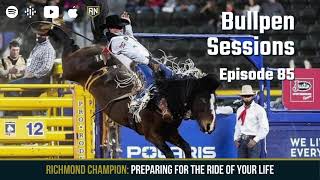
Richmond Champion, a world-ranked bareback rider, talks about his path from bulls to professional rodeo. He got his first horse July 3, 2010, and won his first $4,000 at 18. At the National Finals Rodeo, he explains how judges split 100 points between horse and rider, and why he brought 105 horses to compete.
Questions this video answers
July 3, 2010.
January 2011.
18.
About 105 horses.
Judges allot up to 50 points for the animal and 50 points for the rider (total 100).
Chapters
Foreign.
Hey. Hey. Welcome back to Bullpen Sessions. My name is Andy Neary. Each week I sit down with abundant thinkers who are kicking ass in life. And we deconstruct the formulas they have used to have success in business and in life, to help you unpack your life, your business, so you can do the same. So put a smile on, grab a pen and a paper, get ready to take a ton of notes, because you, my friend, are to go on a wild ride. Here we go. Hey. Hey. All right. Welcome back to Bullpen Sessions. This week, I get to sit down with Richmond champion. Richmond is a world ranked bareback rider. What? What is that? Well, you're about to learn. Bareback riding is a sport of riding the horse without a saddle. It's part of one of the sports, one of the skills in the a rodeo. And I couldn't be more elated to have Richmond on. In fact, I had his wife, Paige Lawrence, who was a figure skater for Canada in the 2014 Olympics, on about a month ago. This week, I get a chance to sit down with Richmond. He is one of the top ranked bareback riders in the world. In fact, while we were recording this episode, he was in the middle of participating in the National Finals Rodeo, which for those who aren't fans of the sport, thinking Super Bowl, World Series, NBA, finals of rodeo, all wrapped up in one event. So I wanted to have Richmond on for this reason. Many don't understand the sport of rodeo. I don't. And so we dive into, how the heck does a kid from Texas get into the sport of rodeo? Richmond started riding bulls at the age of 11. That's crazy. And then we talk about what it takes mentally and physically for athlete in rodeo to play, to ride to his or her peak performance. And again, we're catching Richmond right in the middle of the biggest event of the year. So couldn't have been a better time to have this conversation. And, you know, for those out there thinking, man, you have to be crazy to ride a bull, ride a horse. You're not totally wrong there. So we talk about what it takes mentally to wake up every day knowing you could draw that horse that everybody fears, just like Richmond did a few days ago in the National Finals Rodeo. So I am so excited to bring Richmond to you. As I've been sharing with you, I am pivoting the podcast. I'm bringing on athletes who are achieving at the highest level in their sport or who did achieve at the highest level of their sport, because we want to work on that mindset. We want to talk about that transition from sports to life, because at the end of the day, you know what happens when confidence and clarity collide? Action happens. So I'm excited. Sit down, listen to this episode, and heck, by the time Richmond and I are done talking, you're going to fall in love with the sport of rodeo. Here we go. Shift your mindset. All right, this one is going to be super exciting, guys. This week, I get to have, for the first time in Bullpen Session podcast history, a professional bareback rider on Richmond champion. Welcome to Bullpen Sessions, man.
Hey, thanks for having me.
No, this is. This is going to be one of, I think one of the more exciting interviews I've done, and it's going to be really, really good conversation. And like I told you offline, Richmond, this is. Very few times do I get to interview an athlete who is currently playing their sport, but not only currently playing their sport actually in the middle of a competition, because you're down in Texas right now at the National Finals Rodeo. So let's just start there. How's it going?
We're off to a good start. Today's the halfway mark, so round five of 10, and tonight's are what we call the TV pin. So it's the horses you dream about getting on. And so I'm really tickled and excited for tonight.
That's awesome. Well, before we go, because I want to come all the way back to that and just the whole mindset and philosophy behind what it is you do, and you and I talked offline that again, I'm a baseball guy, basketball guy, football guy, and I think most people understand if they're watching those sports on tv, like, what goes into the scoring and all that. I think there's a lot of people probably still go, okay, how do you score points in bareback riding or rodeo? And what does it all mean? So we'll get into that, but let's actually start, like, because you grew up in. I believe you grew up in Texas, right?
Yeah.
Where are you from?
Yes.
Yeah.
I'm from everywhere.
I was born in California, living in New Mexico, Alaska for six years. Texas, Arizona, Washington, back to Texas. I ended up graduating high school down in the Woodlands by Houston. And then I went to college in Stephenville, Texas, at Tarleton State on rodeo scholarship. And then me and my wife Paige decided we wanted to head north. So now we're living out of Montana.
That's awesome. And if anybody has listened to previous podcasts, I had Paige on about a month ago. Paige was a Olympic figure skater. For Canada. So two very. We'll call this a very athletically gifted household here. Now, here's my question, because I think if I have my notes correctly, you started riding bulls first when you were 12, 13 years old. Again, I'm just gonna ask the obvious question, man. Like most of my buddies and I, we picked up a baseball and a basketball at age 11. 12. What made you go, I want to go ride a bull.
I grew up playing baseball and lacrosse and all that, and I really shifted into horses and always had a love for. For riding. And.
The PBR professional bull riders was really heating up about the time I was, you know, 13, and I was like, man, I want to do that.
And I, I, yeah, I say I rode bulls for three years. I didn't ride very many of them. I got on a lot of them, but it was. It was a. It was a very unsuccessful venture for me. I'd say the only. The. The thing I'm most thankful for is it was when I shifted to riding bareback horses. I had a lot of, you know, there's a lot of crossover between the two. As far as you're getting on a scary animal, you're in a steel cage with them, you know, and you learn those things that, that. I didn't have to go through that. So I just really just went straight into learning how to ride buck and horses.
That's awesome. And so was there a point. Cause I believe you started riding horses at some point in high school, right?
Yes. 17.
17. Was there a point where you realized, like, hey, I'm actually pretty good at this? And, you know, again, little, Little do we know that certain colleges in certain parts of the country actually have teams, sports, you know, the rodeo as a. As a collegiate sport. At what point did you realize that you could ride at the next level?
I guess my. I started. I got my first horse.
July 3, 2010, and I was at my first professional rodeo in January of 11.
So. And I. It. I, you know, wasn't successful, but I just decided that's how I, you know, I, I didn't want to mess around with the. The amateur rodeo, and I wanted to, you know, find my way into it. And.
Now it's college rodeoing and professional roading, which we can do because we're paying entry fees at college rodeos and stuff, so it's not like normal college sports.
And. Yeah, just, you know, everybody pushed me, you know, was really supportive in the beginning, and I. It did come naturally to me, and I had great mentors right off the Bat. And they pushed me to, you know, just, I don't care if you fall off. I don't care if you get on the scariest, rankest horse in the world at your first pro rodeo. Just go and do it and you'll thank yourself later and definitely look back on that a lot.
So let me. I gotta ask this. Like, going back to when you first actually got on a bowl, you know, there's obviously the first time you actually get on the bowl in a competition, but if there is a kid out there listening, like, man, this is. This is what I want. Like, where do you get started? How do you start practicing to become a bull rider?
They've. They've come out with a lot of, like, training aids and stuff, but honestly, the best way to do is just to go get on them. And if you don't have somewhere to get on practice polls, because I.
That.
That is a thing. We have practice pins. You know, you just kind of got to know somebody around you. Or there's the rodeo school option. And that's. That's what I did when I started riding horses is I went to specific rodeo schools that, you know, the pro guys at the time would. Would put on because the guys that own the horses wanted to buck their younger ones. And they don't want us getting on them because, you know, they're not gonna get any confidence that way. And it's a good. It's a good crossover for the. When you're starting young to just get on young horses, because you're figuring it out together. And so there's a few of those around the country. That's what I would suggest is definitely to find a school and if you have a horse, ride it bareback, work on your balance and, you know, test your body.
And I'm gonna ask the ignorant question. Riding bareback means no saddle, right?
Correct. Yeah, no saddle.
So that's interesting. You brought up a really good point, because in your sport, as you're coming up the ranks, you're kind of growing with the horse. You said, you know, get on a younger horse. And that's where. What other sport out there, let's call it with the piece of equipment you use in your case happens to be an animal where you get the chance to grow up with that animal. That's actually pretty cool. That's pretty cool. So here you are at Tarleton State now, right? You're already riding pro. Was there a moment in event when you realized maybe it was just performance where you realized, like, I could make a living out of being a professional bareback rider.
Yeah, it's probably my.
Actually, right when I graduated high school, I went to a couple rodeos, and I won, like, $4,000. Never gonna see a broke day. Like, I was so pumped. And I think that first year, I went out with that $4,000, and I lost it all. And I came. Came home and I won, you know, won a little money there right when I got back home, and I was like, okay, not as easy as I thought it was gonna be. Yeah, I think my 2013.
I was, you know, I finally won a big, big tour rodeo. And that's when I was like, okay, if you can do. If you can do it here, you can do it anywhere. You just got to find a way to duplicate this. You know what I mean? What you're doing is working and had that confidence that came with that. And the next year.
I was having my best winner ever. And then they put on a rodeo at the cowboys stadium called the American, and winner wins a million bucks if you qualify. So I went through the qualifying deal and special, special day for me.
Yeah. And if anybody is googling Richmond, as we are speaking, you'll learn that you were the first, actually to win a million dollars at one event. Correct?
Yeah, that's absolutely.
You know what, man? To put this in a little perspective for you, you were how old when you won that first $4,000 check?
18.
18. Okay. So at one event, you walked away with $4,000. Right. You're like, man, holy crap, I can make money doing this. I spent an entire summer playing baseball in the minor leagues, ironically, up. Up near your neck of the wards of Stevensville. I was in helena. I made $900 a month.
To put that. I guess that answers the whole question of risk, reward, right? Baseball. Not as risky as getting on the back of the boards, but that's awesome, man. Yeah. Million dollars in one event is absolutely fascinating, you know, so here you are now. You've been in the sport for several, several years. And, I mean, I could sit here and listen all the accomplishments. I believe in 2017, you were second in the world in bareback riding, which is absolutely phenomenal. You know, was there any event to date for you besides the million dollars? I think that might be an obvious one. But was there any other event where that really stands out in your mind, Whether it's the venue, the location, just like, oh, man, if there's a place I want to ride, it's there.
Calgary Stampede, definitely. I like, obviously, the.
Like, the stage is amazing. The arena is incredible. But it's a, it's a similar feel to say, you know, the National Finals, you got it. If you win Calgary, you've been on at least six horses before you're crowned a champion. You know, there's no one hit wonder. The cream's got to rise to the top and you've got to like prove yourself. And it comes down to.
Finals where you get on in an eight man. So like the top eight guys ride off, then the top four come back and you get on another one like an hour later for all the marbles. And I don't know, I just love that format. I love the place. It's. Yeah. Pretty special.
So at a place like Calgary Stampede, how many riders actually start the event?
I want to say.
Maybe 24 or 30, something like that.
And then it pairs down.
Yep, it's an invite deal and you got it. You get on forehead and the top four guys out of that pool go on to that, that eight man round.
That's awesome. So for the again the ignorant folks on the interview like myself, who again feels I'm a sports fan, but the sport of rodeo is something I still am very infant at. We all know the super bowl is like the big game in the NFL, the World Series, the finals in the NBA, the Stanley cup in hockey. In rodeo. What is the super bowl, the World.
Series, the National Finals, what, what I'm.
At right now, where you're at right now. That's awesome. So we, we are doing this interview while Richmond champion is in the middle, Literally in the middle day five of 10 days of the National Championship, the Super bowl, the World Series all combined into one. You know, I have to share this Richmond. So Amy and I live in Fort Collins, Colorado and we moved out here six years ago and I think something cool that I read about you, we've we live 40 minutes from Cheyenne and I think people kind of feel like Frontier Days. Cheyenne's kind of legendary in its own right. It's. Is it still the world's largest rodeo? Outdoor rodeo?
Yeah, it's in the usa. I'm, I'm pretty certain it is.
It is. Okay. And so we've had a chance to go up and watch that a couple times. But you actually won Frontier days back in 2014.
Yeah, that's one of my favorite stops throughout the year. Kind of a, kind of a similar field to Calgary, honestly. Yeah. I.
Had had the momentum from the American in 14 and still like my goal shifted then. Like I didn't want to be a one hit Wonder I wanted to make the NFR now because I hadn't done that, and I didn't want to be that kid that had a lucky day in Arlington and didn't. Didn't, you know, seal the deal the rest of the season and showed up there and kind of came from the back of the pack. I think I come in seventh to the finals. And I had a horse named Dirty Jacket. He was incredible. I think he won bucking horse of the year that year, and it was 91 points to win Cheyenne. It was unreal. I got goosebumps just thinking about it.
Well, I get goosebumps thinking about it, too, because. Would you, by the way, would you have ridden there in 2017?
Yes.
So I get to say I watched you in the stands, and I at that point, obviously had no idea who you were. You know, for me, the experience. You and I were talking about this offline, too. First of all, Wyoming is kind of like in a land of its own, which is. There's. There's a beauty about that. And when we went up there, you know, at the beginning of every event, you and I talked about this. 4,000 people stood up, sang the national anthem with respect, and actually prayed for the riders. Where else in the country right now in 2020, do you find that happening? And you know, for you as a rider, when that. Because I'm assuming they're doing that at every major event. What is that feeling like when the national anthem is going off? The fans are praying for you? That's got to give you goosebumps.
Yeah, it's. It's awesome. I've actually always. I've talked to Paige about this, and I want to. I want to put on like a heart meter of if on any random day, if I hear the national anthem, if my heart starts speeding up because we're the first event, usually the anthem ends and we're going bareback riding. So I wonder if I have that trigger now because. Yeah, it's. You know, we. I think the general respect of rodeo fans and rodeo families is, you know.
Family first. You know, God is. Is everything. You know, everybody's. Everyone's has a really good relationship that way, whatever, you know, way they worship. And it's just a non. A judgment free zone.
There it is. I think that's. That's the key phrase, judgment free zone. And it's cool to see, man, I have to admit, like, over the last, what decade, maybe pbr, other. Other series have starting to get a lot of national attention on ESPN and things like that. So it's. It's really cool to see that. You know, let's. Let's do that. Let's get into the details. Some of the philosophy, some of the things, again, for the average sports fan out there is like, okay, I see a guy riding a horse, but what the heck is actually happening? First and foremost, when you are in the shoot, you know, you're. You're locked in with the horse, they haven't pulled the gate open yet. What's going through your head?
Little is possible, really.
I guess if you think about. If anybody that's played sports, like, you've had your best moment, you know, where you scored a goal or you hit a home run or whatever it is. If you go back and think about that moment, you weren't thinking about anything. You were just reacting. You know what I mean?
It.
It came naturally, and that's the subconscious taking over. So really, I'm. A lot of guys like to get wound up and amped up and, you know, get. Get mad in the bucket. Shoot. I just try to get myself to that special place that I. That I know I compete at my best. And it's not, you know, remove. Remove my brain from the situation.
You talking to the horse at all.
If they're nervous or wanting to, you know, bash me around. Yeah, we're having some words in there.
But you ever. I mean, I know there's probably like the, the. Like you said, there might be the times the horses are wound up a little and you're trying to calm them down, but are you ever having, you know. You know, it's you and that horse and against it, obviously, you're. You're kind of competing in the moment. But do you get. You ever find yourself having a conversation with the horse before you go out? Like, hey, man.
Yeah, like, when I'm saddling and, you know, I get there to go put my rigging on him and I'll pet him down and especially, like, a horse I had yesterday, I've been on her. Yesterday was my fifth time getting on her, and I love her. She's one of my favorites. And, you know, like, hey, girl, how you been? Like, you ready to do this? You know, I just. It's silly, but, yeah, I definitely do.
That's, you know, it makes. Here's what it reminds me of. Richmond. And this is again, the naive sports fan of. In Me. You know. You know this. The old famous Garth Brooks song, right. The Bull no Man could ride.
Yeah.
Which I believe was about. Was that about Lane Frost?
I believe so.
Yeah. Okay. And obviously the famous bull rider inspired by who was killed at Cheyenne Frontier Days. I believe.
When you find out you're drawing a certain horse, because that's the thing I think people don't understand. It's not like you're showing up with your horse that you get to ride every single event. No, no, no. You are you finding out what horse you're riding. And I think just at the national finals right now you pulled a horse by the name of Killer B, who you've ridden before but is known to be one of the harder horses in the circuit. Tougher horses to ride. When you realize that you've drawn that horse, what goes through your head?
I have a special, special relationship with that one. She is. So just a little background story or background for the way it works here is we, we bring 105 horses I think hand selected by the contestants. So we go on conference calls, decide what horses belong here and then we put them together so that in round one all the horses are very similar. And then in round two, same thing going down. So Killer B is what we call an eliminator. So she goes in our rank eliminator pin where everyone is supposed to have something scary and hard to ride. And she's, she's just terrifying.
She's, you know, she's a horse that takes, you know, you see him, see her buck off the guys, the four time world champs, the legends of the sport, she's got them down, you know, and it's just, just a whole different ballgame when you find out you have that one it. And it's all, I mean it. She's hard to ride physically but the mental game that comes with her is, and it may just be me, I like to think it's not. But she, yeah, this, that was a mental war because you find out the night before and then you got to figure out how you're going to get some sleep. Yeah, well, it makes for a long day.
It's interesting because you think it again other sports, baseball, basketball, football, stuff like that, you're going up against another human. Right. And you look at certain competitors with in awe. Like people who are just so good, so competitive, if you put them in a line with other athletes, you hit their face, you just stop. I gotta believe it's a little similar. Like when you, when you look at those horses and then you look at Killer B and you're like. Because you realize what, what she's done and, and what her capabilities are. So let's, let's go in the details.
You talked about in Cheyenne, you needed 91 points. And I think most people have no clue how a scoring system works in rodeo. In bareback riding, how does a rider earn points?
Okay, so.
All pages friends want to, they always try to judge my rides now that they're getting into rodeo and so, so I'll get a text from like tens across the board. I'm like, doesn't work that way.
But that's Paige's sport, guys.
Yeah, yeah. So the, we have usually two to four judges and they allot 50 points for the animal, 50 points for the ride. So you want that rank horse because that you're going to, you know, get a lot of points from that horse, but you also have to be able to ride that horse well and do your job. So the horse is judged on how high they kick, how much air they're getting. If they travel too far, if they're still doing their job and really bucking, that's fine. But if they're traveling far and they kind of get weak and kind of stop kicking or you know, aren't getting very high off the ground, that all comes into to, to account in that judge's mind.
Like there's horses that'll be right there and they, they won't leave a, they could buck in a six foot square because they're just so electric and right in front and that those are the ones you want. They're really fun to ride and obviously they, they give it a big flash factor that that's going to help you get more points for the animal but they also help you to spur.
Expose yourself. You know, it's really hard to expose yourself and basically everything's with your feet. You want, they want to see control in the upper body, control with your free arm. You know, they don't want you like whipping around and looking out of control. So you have to find control in a very uncontrollable situation. And then the spur, the spurring is everything. So if you're, you know, pitching them to your ears and you know there's the only thing touching that horse is a little bit of your butt in your hand, then you're doing it, you know what I mean? And yeah, I mean every guy has their own style. When you start, you emulate, want to emulate the best and you know, you take little things from everybody and it's really up to the judge that day. But you know, everyone's doing the same thing, just a different way. At this, at this point, you know, the 14 other guys in that locker room, they're studs. You know, they're. There's no question of if they're gonna make, you know, as good or better spur ride than I am any day. But it's. Yeah, it's. And it's a judge sport, so there's gonna be days where you make a great ride and they didn't like it, you know, and that's just part of it.
Well, and so I imagine the easier the horse, you may not be able to even earn 50 points from the horse side of that ride. Is that true?
Right. Yeah. So that's what I was saying. I was putting these horses.
More from Andy




If you want producers to succeed faster, help them create a sales message that creates confidence.

Sales isn't a zero-sum game! You can have tough competition and still grab a beer after



Option 1: Meditation, a fast walk, a podcast, and protein. The ultimate morning routine!

How you do one thing is how you do everything. Ill elite producers fuel their body.


Stop living in the gray of maybe! Your job in sales is to get a clear yes or no