91. Doug Bopst: From Felony To Fitness To Free
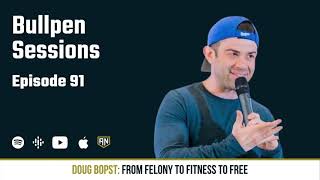
This YouTube Bullpen Sessions episode (host Andy Neary) interviews Doug Bopst about his transformation from drug addiction and felony conviction to a career in fitness, authorship, and podcasting. Doug describes childhood insecurity (parents divorced), escalating substance use (marijuana → cocaine → opioids), arrest on felony drug charges in 2008, and a five-year sentence/probation that led to a turning point in jail where a cellmate-mentor introduced fitness and accountability. After release he became a personal trainer (started Apr 2011), wrote From Felony to Fitness to Free and two follow-ups (Faith Family Fitness; The Heart of Recovery), hosts the Adversity Advantage podcast, and completed probation stipulations in Jan 2014 leading to the felony removal. The conversation emphasizes responsibility, stacking daily habits, momentum (positive and negative), and the power of mentorship and relationships.
Questions this video answers
2008
A five-year sentence (with conditions: probation, community service, fines, drug classes; modification possible if stipulations completed).
April 2011
January 2014
Baltimore, Maryland
Chapters
Foreign.
Hey. Hey. Welcome back to Bullpen Sessions. My name is Andy Neary. Each week I sit down with abundant thinkers who are kicking ass in life. And we deconstruct the formulas they have used to have success in business and in life, to help you unpack your life, your business, so you can do the same. So put a smile on, grab a pen and a paper, get ready to take a ton of notes, because you, my friend, are about to go on a wild ride.
Here we go.
Hey. Hey. Welcome back to the Bullpen Sessions podcast. My name is Andy Neary. I'm excited this week to have Doug Bopps join me. Doug and I are in a mastermind together, and I wanted to share a story with you because it's extremely powerful. Doug is the host of the Adversity Advantage podcast. He is the author of three books, from Felony to Fitness to Free Faith, Family Fitness, and the Heart of Recovery. Doug. Today, Doug is a fitness coach, a fitness trainer, a fitness mentor. But that wasn't always Doug's story. See, it wasn't but 12, 15 years ago. Doug was not a man, a beacon of health. He was anything but. Doug was using illegal drugs. Doug was selling and distributing illegal drugs. And in 2008, that landed his butt in jail. And it was in jail where his story really starts. You see, it was there, behind bars, he met his first mentor in his cellmate, of all people. So we talk about that, how this gentleman became his mentor. Both of them were behind bars for illegal acts, making a lot of bad decisions in life. We also talk about how the game of Scrabble and exercise allowed him to become a better version of himself while still in jail, which has driven him today to be on this mission he's on to help people overcome challenges, whether it's limiting beliefs, drug abuse, you name it, to live a life of health, whether it's both mental and physical. And I'm really, really excited to share this story with you. We also talk about how Doug has used his podcast to allow himself to make some amazing connections, not only to have amazing guests on his podcast, but how he has found himself on some of the biggest names in the industry, people like Tom Bilyeu, Dave Hollis, Rich Rolls. He was on Gary V's 1:37pm podcast sharing his story. Yes, his story is powerful, but his ability to connect, his ability to be persistent, creating those connections is equally amazing. And I'm excited to bring that with you. So just buckle up. This is gonna be a fun episode. Doug's story's he's going to make you realize we all have limiting beliefs. We have all made bad decisions, but it is never too late to overcome them. And it's never too late to make an amazing impact on this world. So buckle up, grab a note, grab a notebook, grab a pen, take a lot of notes. This one's going to be fun. Here we go. Let me bring you Doug Bost. Shift your mindset, all right? This is going to be one fun freaking episode. Doug Bobst, welcome to Bullpen Sessions. How are you, man?
Andy, it's great to chat with you on your show. I know we've connected before, and I'm looking forward to this conversation.
Yeah, you and I met each other in the Fast Foundations Mastermind, which we're both currently a part of. Yep. And so let's just go, right? Let's level set, man. For the people out there listening, going, okay, wait, wait. Doug Bobst, no clue who this man is. Tell us a little bit about your story. Where are you from? What was the early life of Doug Bobst like?
Man, you got like four months. No, I'm kidding. I don't know what you may have said in the intro or anything else, but I'll just say that, you know, today I host a podcast called the Adversity Advantage. I've written three books. I've been on all kinds of media to share my story. I'm also a personal trainer, which I've been for nearly a decade. But it wasn't long ago that I was using adversity to my complete disadvantage. I mean, as a matter of fact, it got me incarcerated. And being incarcerated is what actually ironically saved my life. I was incarcerated on felony drug charges back in 2008, and Fitness saved my life from the depths of this. Of addiction when I was in jail. So before, I kind of talk about how I went. Cause I'm sure many of you are imagining, how did this guy, hey, what did he do to get in jail be? How did he get from that moment to where he is today? Let me paint a little bit of a picture for you. So, born and raised in Baltimore, Maryland. Been here my whole life. And growing up, I had just so many different insecurities, trauma, different pain that I battled in some really unhealthy ways. And when I say insecurities and trauma and pain, like, what that looked like for me was my parents got divorced when I was five. Right. So it was a rough divorce. They hardly talked to each other, and we would bounce around from house to house like people do when they're going through.
A split home where parents are divorced. The problem was, I mean, it wasn't really a problem, but back then, you know, I'm 33 now, so it's been almost 30 years. I was the only kid whose parents weren't together out of my friend, my little friend circle when I was a kid. So I was always questioning what's wrong with me?
You know, what did I do wrong? Or why am I different? And that created a initial layer of insecurity. And then from there I was in school, and for some reason, I just wasn't gifted athletically. So I loved sports. Right. I know you're a former baseball player. I know your passion for baseball and I'm sure many other sports, I shared that same passion, except I was horrible at sports, uncoordinated, had no balance, couldn't run, couldn't jump, was weak. And so I was the guy who was always picked last for the sports teams.
Was the person who never made the cut and just was sucked at sports. So of course that creates even more insecurities inside of me. And I was also the kid. And I don't know if it was genetics or my environment where my metabolism just kind of was a lot slower than many kids. And I started to gain weight at a young age. So by the time I'm 10, 11, 12 years old, I'm getting a little pudgy. And I think it was also combination because I was trying to escape a little bit with the food I was eating. I was eating things like tons of pasta, Pop tarts, bacon, sausage, that sort of thing, which honestly wasn't like abnormal for a kid, I guess, at that moment. But for me, I was probably eating it in a little excess because of whatever stress I was managing at the time. And as I said, I was in school and I started getting bullied and picked on, and I was told that I looked like I had down syndrome. I had no luck with girls. I honestly never had a girlfriend in grade school, which is very embarrassing to admit. I mean, I'm pretty comfortable with who I am now. That doesn't bother me. But that's just to give you a degree of my level of self esteem and self confidence. And the first real moment, opportunity, I should say, I got to truly escape from my life was through pot. And when I was 14 years old, I was offered a hit off a marijuana pipe. And I felt this monkey come off my back when I first took that hit. Andy. And it wasn't that I enjoyed that hit of pot or that I loved the taste it Was how it made me feel. I was like, all my fears were gone. The fear of, will I ever get married? I will I ever be successful? What will my relationships look like? Will I make money? Will I have purpose? All that stuff was gone by the time I took that hit. I felt completely at peace with who I was. My pain was numb, and so I had to continue to chase that feeling because I was like, wow, this works. I've never felt comfortable with who I was. I've never been able to sit down and just not worry about my problems. I got to keep chasing this. So, as you can imagine, by the way, I also want to say I never thought that when I started smoking pot that I would end up in jail. Nobody does. Like, if anybody ever. If people thought and if there was a guaranteed said, hey, listen, if you take a hit off that pot pipe or whatever you're doing, you're guaranteed to go in jail. You know, in x amount of time, you're gonna die, it might change the context of the decisions you make. I know people are listening to this. Pot's legal in a lot of places. I get that. For me, pot wasn't the gateway drug. That was the issue. It was the gateway trauma. And the pain that I was numbing with the pot that was the bigger problem. So I started smoking it every day.
I start smoking weed every day, and then I start selling a little bit to support my habit, and that ends up getting in the way of my interpersonal relationships with my family. My mom and I get into some altercations. She ends up kicking me out of my 16th birthday. I go to live with my dad full time, 100% of the time, where they were splitting custody before. And I had a really bad relationship with my dad growing up as it was. So I felt a deep sense of rejection, neglect, what is wrong with me? Even though I made those choices. But in that moment, I was like, why is this happening to me? I was being the complete victim in my own circumstances again. It built more pain and trauma for me to manage. And they kind of did it, I think, thinking, oh, you know, he can find new friends that aren't using drugs, or maybe he'll get his act together. It just gave me more of a reason to now use drugs because now I had more stuff to deal with. Found new friends that were getting high.
Skated my way through high school, barely graduated, because all my friends and I did was ride around and get high. And shortly after I graduated high school, I began. There's a few things that Happened. Number one, I began selling pot now to make money. So now I'm 17, 18 years old, and I'm now picking up copious amounts of pot and selling it in quantities to make money. And so I'd be getting, like, a few pounds a week making some money. Problem was, all my profits were going up my nose because I now had developed a cocaine habit. I started snorting a little bit of coke. I felt this euphoric feeling of being able to be superior and being able to do things I never thought I could do and just being like the man and having that huge rush of dopamine that I never really had before that. I felt great, and I needed to keep chasing that great feeling. But what happened is I also struggled with a fair amount of anxiety and depression as a kid, and cocaine and anxiety go about as well together as somebody trying to lose weight and eating pizza every day. Just doesn't work, doesn't add up. So anxiety times 100, panic attacks. I'm just on edge all the time, and I'm selling drugs. So I have all this stuff going on. And plus, part of me in this moment, I'm like 18, 19 years old, is feeling defeated a little bit, because I did have aspirations as a kid. It wasn't like I just was like, you know what? I want to be a drug addict the rest of my life. No one thinks that. No one grows up saying, you know what? I want to be a drug addict the rest of my life. But what happens is life occurs based on our environment we grow up in. Maybe it's culturally. Maybe you make some dicey decisions along the way. Something happens to you, and the way you respond, of course, can lead you down that path of addiction if you're not careful, which is what happened to me. So I end up having all these panic attacks. And so instead of making a logical choice saying, okay, Doug, you're. You're starting a bunch of coke, you're selling drugs, you're hanging around this crowd. You're eating like shit. Let's maybe stop the drugs, change your friends, you know, maybe engage in some more healthy habits, you know, and turn your life around. I was like, nah, I want to keep going down this path. Let's just see where it goes. And at that, at this point, I've buried. I mean, I've lost. I lost a couple of my friends to, you know, drinking and driving, car accidents, overdose. I mean, I've buried. I mean, at this point, I think in my teens, I went to several funerals of people that I hung out with.
And I mean, as of today, it's been a lot more than that. And, you know, one minute, man. What really did me in and brought me to my knees was Oxycontin. And a friend of mine offered me a 5 milligram Percocet.
And I took it. And that same monkey that came off my back, that came off when I first started smoking weed. Because what happens is when you first started. When you first start smoking, you develop this thing called tolerance. So you need to smoke more to get that same feeling. So I had to keep chasing that numbing feeling to get that same, like, monkey to come off my back. I had to then smoke even more pot. And once I couldn't get high enough because I was smoking, like, a quarter ounce of pot a day. At one point, there was literally, I could not smoke anymore. It was almost like there wasn't enough time in the day.
I turned to that Percocet, and then the 5 milligrams turned into 10, turned into 20, turned into 40. And it got so bad that I was snorting 3, 400 milligrams a day just to support my own habit. Barely get out of bed. Was spending hundreds of dollars a day on my habit.
Half my left Doug, Therefore, right there. I have to imagine you're also almost forcing yourself to sell more.
Yes, it was. I had to play catch up all the time. I wasn't even making any money. I was. People were like, aren't you making money? And I'm like, no. I'm spending hundreds of dollars a day on drugs. How am I making any money? I'm eating out all the time. I'm going to strip clubs. I'm not there's anything wrong. People who do that, I'm not judging. Anybody does. But for me, I was spending money to get attention and validation in all the wrong places. And like I said, I was. Got to the point where I was snorting hundreds of milligrams a day. And my life in itself was spinning way out of control. Even my drug dealing got sloppy. I got burned. I got robbed. I was losing track of things. And one of the things I lost track of was a headlight in my car that I'd been meaning to get fixed for quite a while. All my friends and their parents were like, dude, you're driving around with a busted headlight. You better get that fixed. Like, you're. You're. Everybody knew me as the kid who was selling drugs. I was. And I'm not trying to brag. It's Just, like, people knew who I was, you know, because I had been doing it. I'd been in the game for quite a while. And they were like, you need to get your headlight fixed. You're gonna get arrested. And again, in that moment, like, when you're an addict and you're in that cycle of addiction, all you care about is, you know, how you're getting drugs, getting the drugs, selling drugs. It's drug, drug, drugs. And headlight didn't fit in the drug anywhere. And.
My biggest setback. Excuse me. Became my biggest blessing. And on cinco de Mayo 2008, I was riding around with a few of my friends to go make a drug deal. I had a half a pound of pot in my car, $2,000 in cash, and a cop was running radar because, duh, it's one of the biggest drinking holidays of the year.
Little did I know, right?
I was going to say when you said Cinco de Mayo, I'm like, yeah, this is not a good day to be doing this. Yeah.
So instead of, like, playing it cool.
And just driving by and hoping he would notice, I flashed my high beams at him, thinking that me flashing my high beams would have him look and see, like, oh, he's got his headlights on.
He's good.
But I gave him a reason to pull me over because his cops, like, why is this moron high beaming me? Right? Pulls me over.
Not to mention, high beaming is usually your signal to somebody else that there's a cop in the area. Yeah.
Oh, yeah. I honestly didn't even think about that. You said, you're right. You're absolutely right.
So, okay, now you're pulled over. Yeah, pulled over.
My eyes, people can imagine my heart at this point is in the pit of my stomach. I am incredibly scared for my life because I know what's about to happen. I knew it was about to unfold, and I feel like, subconsciously I want to get caught because my buddy in the back seat had an open container. They found that, and then he asked me to search the car, and I said yes. Searches the car, finds everything in the. I thought I was being very cool and hiding everything underneath the spare tire, my trunk, which is what most people do. I mean, I don't know, at least what we would do. He finds everything, goes in the glove box to get my.
Right.
Registration. There's like, a wad of cash in there and arrests me and puts me in the back of his car. And I remember just sitting there in handcuffs, man. And I don't know if Anybody here who's listening to this or maybe yourself, or maybe you have a loved one. I don't know. When you get to a point where you in a really bad spot in your life and you're kind of imagining all the. You're kind of seeing all these. Every poor choice you made kind of comes to a head and you're like, how did I get here?
How did.
How was I? This kid who was this super sweet kid, you know, as a young adult that had dreams, that was polite in many ways and loved sport. How did he get to. Now he's in the back of a cop car in handcuffs, and the only thing he wants right now is more drugs and a cigarette. How did that happen?
And it was a lot of poor decisions, man, that just never got addressed. I never. I think a lot of people, when they make those sore or bad decisions, if they can just stop, like 1, 2, 3 decisions in. Gotta go er a little bit and kind of just change directions and pivot, you can get out of it a lot easier than if you make a 50 of them. And then you're like trying to backtrack and you're like lost in the middle of nowhere without a map. And that's where I was. I had no map.
And I think it's important right there if I could stop. I mean, the lesson I want everybody to hear in that is, for you, it was not a week's worth of bad decisions. We're talking years worth of one bad decision after another. And it's so easy, especially since we're doing this interview in 2020, to blame your current circumstance on outside factors. So you could have sat there, literally, and people probably would have in the back of that cop car saying, stupid headlight. If I didn't have. Only it gotten that. No, no, no, no, no, no. It was choices, one of which not getting your headlight fixed. But it was a years and years worth of poor choices that led you to sitting in that back seat in that moment.
Yeah, it was. I mean, it was tough. Was a ton of bad decisions on my end. And.
It was just weird. You're sitting there and you're like, how did. How did I get here? Right? And I remember the next thing that happened was I got taken to jail, got booked, charged with the felony intended to distribute marijuana. Yes, it was a felony back then. And so it's just weird. It's. Honestly, it's funny telling the story now, but what's important for me to share in this whole thing is I always looked in And I always say this to anybody, anybody who's ever come to me, whether it's a parent, whether it's somebody who's doing drugs themselves, and they're. They're saying, oh, I'm just smoking weed or I'm doing. I'm like, why? Like, what's the point? Like, why are you doing it? How is it helping your life? And I want to say, if somebody's saying, yeah, I'm living an amazing life. I'm successful, I'm happy, my mental health's good, I have good relationships, I'm showing up to work, I have dreams, I'm driven, I'm fulfilled, and I'm smoking a little way to weed. Like, who am I? I'm not going to tell any. My job isn't to tell anybody what to or to not do. I'm just sharing my own experience.
Yep.
But what I do know is, is that if people start doing stuff like that for the wrong reasons, maybe they have that trauma like I had or pain, and they get the same feeling I did, which is a feeling of being able to escape and numb themselves out. You can set yourself up to go down a really dark path. You're not careful. A path that can lead to jail, death, you know, in and out of rehabilitation centers, broken relationships, and go on and on. So I get charged, and a few months later, I go to court. And again, you would think after I got charged and arrested and everything else, Doug might be like, you know.
I don't mean it's. I'm not trying to be important by talking to third person. I'm just saying, you know, just context, that my Doug back then would have been like, well, maybe it's time to maybe get your life together and stop doing drugs. But now, again, more pain. Now I'm facing drug charges. I'm facing potentially going to jail. I mean. I mean, it's. All these things are just adding up. And so I go to court. It was September of 08, and the judge sentenced me to five years.
Everything. First, he found me guilty of the felony, 10 to distribute marijuana, found me guilty of that, and then sentenced me to five years, everything but 90 days, five years probation, two hours community service, all kinds of fines, and drug classes. We said, doug, you're young. If you complete everything without messing up, because this felony conviction is going to haunt you the rest of your life. He's like, if you complete everything without messing up, no missed probation appointments, you do your time, you do your community service, you pay your dues, all that stuff. I'LL take the felony conviction off your record at the end of the five years of probation. And at that point, Andy, I'm 20 years old. I didn't think I was going to see my 25th birthday. Like I said, I've been to several funerals at this point. I was like, 2008. Isn't the world supposed to end in 2012? Remember that whole thing that was going on back then?
I was like, the Mayans, by the way, were eight years too early because it's happening in 2012.
Exactly. They missed the mark a little bit.
And so I just said, you know what? I took the deal, got out. Clearly. I kept getting high and then reported the jail a few weeks later, ironically, a week after my 21st birthday. And the last thing I did was snorted a few hundred milligrams of oxy. I was like, you know what? This is it. And.
I reported to jail. And I walked into those gates incredibly scared. I was crying. I was incredibly, obviously disappointed in myself. Tons of regret, shame, anger. And I was uncertain because, I mean, I had these stigmas. I was like, you know, what's gonna happen in jail? I mean, I don't want to get into the detailed thoughts, but you can know what I'm talking about. What's gonna happen to a guy like me who's unathletic, who wasn't a fighter, was scared what kind of things would happen? And I detox cold turkey in there. And for people who don't know what that feels like, it's like having the worst case of the flu for three weeks straight with the level of stuff I was doing. You're vomiting uncontrollably, Bowel movements all over the place. You. You're shaking. Sleepless nights, you feel like you're trying to crawl out of your own skin. Aches and pains because you're used to.
You know, with the numbing, all this pain and pretty much tranquilizing yourself with all these painkillers that you're not. Certain things that used to normally would hurt somebody or certain movements, like, hurt more now because you're so used to being sedated and tranquilized.
And then I, as I'm like getting through the detox, like, you know, you alluded to before we got into our conversation was my soon to be cellmate was sitting there at the Scrabble table playing Scrabble and playing board games was not really something I did. I played a little bit of chess when I was a kid, but I remember him looking at me and he took Some interest in me. He's like, you know, what are you doing here? And I remember sharing my story. And I was like, oh, you know, I'm in here for this, I'm here for that. And he just had me kind of sit down and I watched these guys play Scrabble. And I remember him looking at me and was like, you know, you're gonna work, you're gonna work out with me. You're gonna start working out with me. And I was like, dude, are you kidding me? There's no way. Because at the time, man, I could have been a model for Pillsbury. I was 50 pounds heavier than I am now. I was as unathletic as they come, as I've mentioned a few times. And I had no confidence in me. So me trying to work out and doing something such as doing a push up or running, when I knew I hadn't really done that before, my life in front of a bunch of grown men wasn't something I wanted.
Grown men in jail, yeah, it wasn't.
Something I really wanted to do. And then that night I just, I saw him work out for hours. Hours, man. Push ups, pull ups, running. Who is this guy? And so just like anything else, kind of, it's funny, kind of like any kind of coach, client, trainer, client. We started building some rapport in our cell, sharing more of my story, learning about his story. And what he really had me realize was I had been a victim most of my life, just with blaming people for my problems, blaming my addiction on my parents, divorce, blaming it on the girls that rejected me, blaming it on this, blaming it on that. And he looked at me and he said, there's plenty of people whose parents get divorced. There's plenty of people who experience abuse. There's plenty of people get picked on or don't get picked for teams, but they don't all end up in jail or addicted to drugs. You did. So that's your stuff. You have to own that. And I'm like, huh, he's right. And I remember him saying, like, if you're going to change, it's going to be up to you. No one's going to do it for you. If you want to change, it has to be you. And I felt empowered in that moment and decided to give exercise a try and got down. I was in the common area of a bunch of grown men, got down to a push up, sadly, couldn't do a pushup, not even from my knees. Could barely walk up and down the steps. And we set a goal to do 10 pushups and run a mile. By the time I left my sentence, and with his encouragement and training me in there every single day and holding me accountable, I was able to do it. I was able to run a mile, do a set of 10 pushups, and I felt this new sense of self esteem, confidence, dedication, commitment that I never had in my entire life.
At that time. Because. And it wasn't because of the push ups and the sit ups in itself was more about how they made me feel. I felt this, you know, this sense of accomplishment. I felt like I was taking care of myself for the first time. Setting and achieving goals. All these things we know today to be important was something that I learned when I was in jail.
Well, and who would have guessed that your first true mentor in life would have been the guy that you shared a prison cell with? Right. And I think it's important. One thing I want to add to your story here, because it's a word that popped into my head as you were telling it. Momentum. A lot of people think of momentum in a positive sense. Right. And that's true. But there can be such a thing as negative momentum.
Yeah.
When you apply one bad decision after another after another, that creates that flywheel of negative momentum. And when you tell. Told the story of how when you got to jail and you went cold turkey and it was like literally you were crawling out of your skin, it made. It brought a vision in my head of almost like those years, all those years of bad decisions were literally finding them their way out of your body.
Yeah.
And it's painful.
You know, you can stack days, man. And I love, I love the importance of stacking your days in a positive way and in a negative way like you alluded to. So let's just say for 20 minutes, 30 minutes, 40 minutes a day, whatever it is you're engaging in, things like doing drugs, alcohol, social media. I mean, I mean, with all this, it would take more than that. I'm just saying, just for a time, just this amount of time. Social media, you're playing the blame game. You're getting into arguments with people. You're spending, like, uncontrollable amounts of money. You do that for three, four weeks straight. Think about how much worse your life will be in three, four weeks. Three, four months. Where's your life gonna look like three, four years.
10 years worse by just making poor decisions for less than an hour a day.
Yep.
Right.
I think one of the best things that probably ever happened to you was hitting rock bottom.
Yeah. And I don't I don't wish that on anybody. I think there's people that are like, I wish I had your story. I'm like, do you. Like, do you really wish you had my story? Let me tell you what I had to do. And it wasn't easy, and I had.
Help along the way.
I had some great people come into my life. I had my, you know, I said my cellmate and other people. But it's hard, man. Like, do. And I think a lot of people don't make it out of rock bottom because they don't have. I don't want to say the courage, because I think everyone's courageous, but they don't have the patience to stand in the storm when it's raining. Everybody wants to put their umbrella up really quick and hide from the rain when it's pouring on you. But I think when you can just stand there in that storm and just believe that you're in there to get stronger, that you believe you're in there to get better and that you're. The rain's gonna stop at some point.
But is it gonna stop because you trusted it to stop, or is it gonna stop because you tried to force it to stop and you end up making a bad decision? Right.
Yeah.
And then. So you can also stack days in a positive way. If you were spending in. I mean, it's just safe. You know, you're spending an hour and a half, two hours a day, which isn't a lot. You know, you're exercising, you're listening to podcasts, you're.
You're meditating, you're talking to positive people, you're doing all these things, and over time, you'll stack your days. It's funny, I just had Robin Sharma on my podcast, interviewed him, and he talks a lot about this very things that he's been saying for years about the routine and how important having a routine in the morning can literally not only change your life, but completely transform it, because you stack these days, and it's just like you talk about, just like I talk about. It's the same kind of thing. How you spend your time adds up. And I think a lot of people, they let one bad day turn into 3, 4, 5, and they look back 3, 4, 5 months from now, they're like, what the hell happened? How did I get from here to there? And it's like, well, you couldn't manage that one day.
And so going back to. To finish up my jail story really quick, and then we can get more into the weeds of some Habits and that sort of thing that I've developed now is when I left. So when I went in, I went, I went in crying because I didn't want to go. When I left, I cried because I didn't want to leave. And I walked up to my cellmate and I just remember saying, hey man, like, how am I ever gonna repay you? Like, how can I. It's funny, I think of like that Lian rhymes like, how can I. How do I live without you?
Again, a very weird song when you're thinking about two cellmates talking. But okay. I mean, no, I didn't, I remember.
You know what I'm getting at. It wasn't like in a, in a, in a way where I was like, I'm gonna miss you cause we were dating. It was like more.
No, the words. We're talking about the words here.
Like, how can I live without you? Like, because I had just grown so attached to him in there.
Yep.
That.
But a lot of people say that, don't they, Doug? If they've been spent time in jail. There's also, there's also that fear of leaving.
Yeah. Because I didn't know how I was going to adjust.
When I left. Like, I didn't know how I was going to survive and adapt. And that was the thing I was worried about was how was I going to live without him? Like, because up until that point, my life was spiraling down.
Super fast in a bad way. And then I get to jail, he helps me along and then I'm like, alright. Like the only con, the only thing that's changed is having him in my life. So I need to keep him around.
And I just said, how am I ever gonna repay you? I definitely obviously got emotional. I cried because I felt like this unexpected angel came into my life and helped save it. And he said, just pay it forward and don't mess up. And he gave me a workout plan that I still have framed in my place. So I never forget where I came from, got out, was driven by not letting him down and just not wanting to go back to jail. That I stayed on a workout plan, lost £50 and then got to a place fitness wise where I wanted to help other people use fitness to change their lives. That's why I became a personal trainer, was to help pass the torch on, if you will, and use the same lessons I had learned about the power of fitness to help other people and was blessed to build a really successful personal training business. This is back in April of 2011 is when I started Training and time flew by, man. In January of 2014, I completed all the stipulations that the judge had given me. And I'd actually been featured in some media at the time, too, for my. I think my. My. My story had gotten out a little bit because I was very open about it, and the judge granted me the modification hearing. We went and he took the felony conviction off my record because I completed all the stipulations. I served the five years probation, did the jail time, did the community service, paid my fines, never missed a drug test, stayed clean off the drugs I was abusing. And I never really knew how much life could change in a matter of moments, man. And it did for me in that day. And I took it upon myself to know that I wasn't just here to be a trainer. I love training people. I love helping people, but I think the bigger reason is to share my story, to help other people kind of get through this block and help save people from addiction. And it inspired me to write my first book, From Felony to Fitness to Free. And then I was voted as a fitness hero by the Baltimore sun in 2015 and just have been on a tear since then. Really wrote two more books, Faith Family Fitness, the Heart of Recovery. Have been featured on Medialis, as the Today show, and Men's Health. I've been on Rich Roll's podcast, Impact Theory with Tom Bilyeu, and then I have my own podcast where I've interviewed some incredible people, too. And the last thing I'll say is I don't think any. A lot of this wouldn't have been done without a few things being tenacious, like just not giving up on myself and relationships. And I think those two. I mean, there's. Obviously, there's a. Plenty of other variables. Fitness, everything else. But, you know, a lot of the people I've met along the way have been through relationships and developing a better relationship with myself and being tenacious and not giving up. Like, I was able to speak to the Clemson football team with Dabo Sweeney last year and share my story to their team. And that was through a relationship. And it's like, relationships are everything.
Let's go there, because there's so many to. So many things to unpack from that.
Yeah.
Yeah.
And I got time.
This is why I love having you on. It's your power story because it's your story, but what you've done with it, that has allowed you to make some great connections with some great human beings. Yeah. And going back to your time in prison, what Would you say? I mean, the obvious is your mentor showed you what exercise meant and all that. Really? What were the lessons, the one or two lessons you took away from the mentorship, the time with him that you applied today?
There's a few, I think for one, it's just, you know, you gotta, you gotta be the hero of your own story. Like, no one's gonna change or do the work for you. You have to do it. Because for the longest time I was waiting for someone to come save me. And when you wait for someone to come save you, you get really lonely because no one's coming to save you. It's a hard truth, man.
And to know that if it was, if it was gonna be, it was literally gonna be on me to make those decisions to change my life. And if I got some help along the way, cool. But there's no guarantee that was going to come. So it was more so along the lines that I had to take responsibility for my choice of my actions. And he told me some hard things that I didn't like to hear. He called me, I mean, he was very honest with me about why I couldn't do a push ups because I was fat. Like, I was, that's a truth. But I hated hearing that word. There's a lot of people that I'm sure don't like that word. But for me, that fueled me, that drove me, because I was like, I never want to be called fat again, ever.
And I think you have to attach a deep, and I mean deep emotional why to whatever you're trying to do. And I learned that in jail before life attaches that why for you?
More from Andy




If you want producers to succeed faster, help them create a sales message that creates confidence.

Sales isn't a zero-sum game! You can have tough competition and still grab a beer after



Option 1: Meditation, a fast walk, a podcast, and protein. The ultimate morning routine!

How you do one thing is how you do everything. Ill elite producers fuel their body.


Stop living in the gray of maybe! Your job in sales is to get a clear yes or no