93. Mike O'Connor: Challenges, Successes, and Transitioning to the "Real World"
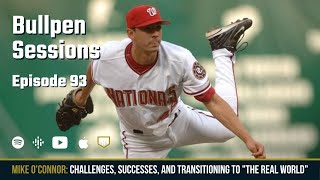
Former pitcher Mike O'Connor made his MLB debut in 2006 facing David Eckstein, won Minor League Pitcher of the Year in 2005, then endured elbow surgery and a facial fracture that derailed his career. He bounced through five organizations before transitioning to insurance, now advising pro athletes on life after baseball.
Questions this video answers
2002, drafted in the 7th round by the Montreal Expos (Washington Nationals organization).
April 27, 2006 (called up to pitch in St. Louis).
David Eckstein (lead-off hitter for the St. Louis Cardinals).
Named the Washington Nationals organization Minor League Pitcher of the Year (2005).
Elbow surgery after 2006 (missed most of 2007) and a facial fracture (orbital bone and nose) after being hit by a ball in 2008.
Chapters
Hey. Hey. Welcome back to Bullpen Sessions. I am excited this week to sit down with.
Mike o'. Connor. And I paused because I'm trying to figure out how I want to introduce this guy, because this one speaks to my heart. Not only is he a former major league baseball pitcher, he too is also in the insurance business. And so Mike spent the early half of his career in professional sports. Professional baseball, pitching for the Washington Nationals. Also spending time in the Mets, Royals, Padres, Twins and Yankees organization. But Mike had his call up. Mike had his chance to pitch at the major league level with the Washington Nationals. That call up came back in 2006, which we'll talk about. And I'm just excited to have Mike on because now he has transitioned into phase two of his career, which is in the insurance industry, just like me. So with that being said, I am going to bring Mike on. Mike, how you doing?
I'm doing well. Thanks for having me, Andy.
You bet, man. Welcome to Bullpen Sessions. So let's just. Let's level set. You know, you. Obviously, we're going to talk about your career with the Washington Nationals at the professional level. Go back to being a kid. I know you grew up. You were born in Dallas, right? Correct. But did grow, but also. But grew up in Baltimore.
Yeah, I grew up outside of Baltimore in Ellicott City and, you know, went to high school in Baltimore at Mount St. Joe.
Okay. Growing up, was baseball something you were always passionate about?
I think sports in general is something that I, you know, spent a lot of time with. I mean, growing up. Soccer, basketball, swimming, baseball. And then, you know, as I, As I got into high school, you know, kind of. Kind of happened that, you know, I realized basketball probably wasn't, you know, in my future. And really, you know, those were the two. Basketball and baseball were really the two sports that I love the most. And so really went all in on baseball in high school and wanted to play in college and ended up going to GW to play.
Okay, George, for those that don't know what GW is, we're talking George Washington, which is right. In D.C. correct.
Correct. Right near the White House.
Did you. You grew up an Orioles fan?
I did, yeah. Because, I mean, at the time, you know, the Orioles were the only team around here and, you know, grew up. They had some really good teams back then with, you know, Cal Ripken Jr. Robbie Olimar, Mike Muse, those guys. So he grew up a huge Oriole fan and. And still. Still follow them a little bit.
Who was your favorite player growing up? If you had to pick one.
You know, I was all, you know, pitching was really my thing in baseball. I mean, you know, growing up, I mean, and, and when we came from Texas, we still kind of followed the Rangers. You know, Nolan Ryan was with the Rangers. He was kind of the guy. Randy Johnson was probably right behind him. Big, big left handed pitcher. And then, you know, Mike Musina and Cal Ripken were kind of the two local guys that I really followed.
You know, I have to share this. This was an exciting moment for me when I was pitching at uwm. Actually. This will, this will be hit very close to home for you. My pitching coach was Todd Froorth, so. And you probably remember Frillworth, he was a reliever, middle reliever for the Baltimore Orioles, submarine pitcher. And this was still back when it was one of the last years. The brewers were in the American League and so they were playing the Orioles. The Orioles were in town and Messina actually came to our practice and worked with all the pitchers in the bullpen. That was one of my, it was a, it was a really fun experience to be able to work with him because he's just, his mind was magical.
Yeah, that's cool. Yeah, I definitely remember Todd Froorth. You know, he was, they would play the, what, Yellow Submarine or something when he came out. So definitely remember him well. So that's cool.
So let's talk about, you know, you go to Mount St. Joe's just outside of Baltimore. Was there a point, you know, when you were in high school where you remember that, okay, I have the ability to pitch at the next level. I have the ability to pitch in college?
Yeah, I mean, I think, you know, when I was, you know, 14, 15, I was, you know, doing really well pitching wise and you know, played with a really good team. We ended up winning the double ABC World Series when, when I was 14 and you know, played with some really good players.
Then dealt with some injuries during high school, just kind of, you know, shoulder, shoulder issues. And then my senior year, everything kind of came together and he was hoping to play Division 1. I was really focused on. That was my, my goal and you know, kind of held out till late and things were able to come together my senior year and that and that worked out for me. But yeah, I mean, I played with a lot of really good players and you know, kind of seeing where they, they were at. I mean, I graduated high school with Mark Teixeira who was a potential first round pick out of high school and you know, seeing where he was at and Some of the other guys, you know, just trying to keep up with, you know, the other other top players around me I think was something that was really, really helpful for me.
He ended up going to Georgia Tech, right? Correct.
Yeah, he ended up not signing out of high school and went to Georgia Tech for three years.
So you end up choosing George Washington, which is in the Atlantic 10.
Were they. Did you have any other offers coming out of high school?
Yeah, I mean, there's a couple other local schools who were interested. University of Maryland was pretty interested at that time. Their program was, you know, dealing with some, some issues here. They weren't the program they are now. And Towson and William and Mary was also like the other school that was interested. So that was kind of my, my top four. And there's some other schools in the area that I, you know, was interested in as well.
Well, here's what I love about, you know, you go to George Washington and correct me if I'm wrong, you know, Atlantic 10, I think basketball. Right. There's some schools in, in the Atlantic 10 that often are finding themselves ranked at the nat, you know, at the top 25. Was it. When it comes to baseball, was the Atlantic 10 more of a mid major conference like I pitched in the Horizon League with University of Wisconsin, Milwaukee.
Yeah, I would say, you know, there'd be a handful of guys drafted each year out of that conference from each team. I mean, at the time, Virginia Tech, when I first got there, Virginia Tech was still in the conference. University of Richmond, I mean, it has shift, obviously the conference has shifted like all of the conferences have the last few years. But I. Yeah, it's not a baseball powerhouse. I mean, a lot of the schools were in the northeast, so yeah, definitely more of a basketball first conference, for sure.
Quick piece of advice I want you to give because some of the listeners I think are younger athletes, which is great because this is. Guys like you and I can have a big impact on them. If there's a pitcher out there, a baseball player, doesn't matter what position I guess they are, and they're not getting the offers from the big time schools. What advice would you give them? Because I think you went to George Washington, didn't prevent you from getting drafted. You see so many guys going to smaller college programs. And what I love about baseball is that that doesn't mean anything when it comes to having that chance to play at the next level. What advice would you give a guy like that who may not be getting those D high D1 offers right now?
I Would just focus, you know, on finding somewhere that's a fit academically in a place where you can play. Right? I mean, you want, I mean, I think the thing, it really helped me going to George Washington. I was able to, you know, throw like 50 innings my freshman year, which, you know, was a decent amount. And I mean, I got my butt kicked a lot, but it ended up, you really paying dividends, you know, the second half of my college career, you know, those innings that I was able to get early on. And I think that, I think that was, was really important. And you know, the school offered what I wanted academically as well. So I think, you know, that that's, that's all always my advice. I mean, a lot of guys, you know, get caught up and go into the Power 5 type conference, you know, these big schools down in the south, you know, with the top notch facilities and all that. But at the end of the day, you want to find somewhere where you can get on that field and get a chance to compete.
I'm glad you said that because I do see that a lot where these kids go, want to go where the spotlight is and then they sit for three or four years versus having that if you had gone down a level or gone to a mid major versus high major, you would have had to chance to play, play more. And what. And in your story too, you can't slack off on the academic side. At George Washington, not too, not too much because you're not going to find yourself eligible on the sports field for sure. Okay, so at George Washington, Mike, was there a point where you now said, okay, I think there's actually an opportunity to get to the next level here. So not only have I succeeded at the Division 1 NCAA level, I think there's a chance that my next opportunity could come in the, at the professional level.
Yeah, I mean, I think my junior year started to have some really good success in college. I mean, my first two years didn't have a lot of success. So I mean, I was just trying to establish myself as a, as somebody who could pitch on our, on our pitching staff right at gw. And then, you know, my second, probably the summer that I went to Ohio was kind of where it was like, oh man, I could probably make something of this. You know, finally got bigger, stronger, started throwing harder instead of throwing in the mid-80s was, you know, high, high-80s, close to 90. And, and you know, I think that physical development was really, you know, the key for me in college.
Awesome. Was there anything you did, you know, for Some people, it's just a matter of growing into their body and. And the skills kind of develop along those lines. When you went and spent those summers playing in summer leagues in Ohio, was there anything you worked on specifically where you're like. It clicked, and that's what helped you.
Throw harder mechanics, Whatever it was.
I don't know if it was anything mechanical. I mean, there's some tweaks, you know, people help me with along the way, some small things that I think added up, but a lot of it was just getting, you know, bigger. Bigger and stronger and just, you know, making that part of my routine, you know, lifting and running and doing all this. All that stuff throughout the year that I think, you know, over. Over time, really, really allowed me to be successful. Successful.
So what you're telling me, Mike, is you have to put the work in off the field when no one's watching?
Definitely.
Most of us don't get by on natural talent alone, so I think it's so important. I think, yeah, you can't replace the amount of work that goes into just being successful on the mound for nine innings. It's. People. Don't. People see the. The on the field stuff. They. They don't see all the work that's going in off the field. So, sure, here you are. You get drafted, right? Seventh round by the Washington Nationals. Were they still the Expos at that time? Were they the National.
Yeah, I got drafted by the Montreal Expos. So whenever, you know, whenever I do baseball camps, you know, tell kids I got. They don't even know who that is, so it really ages me. So that's good.
But here's the cool thing. Do you still have some Expos gear?
Yeah, I have. I have a. You know, some jackets and bags and stuff up in my attic. So, yeah, I definitely have a couple things.
Those things are worth a lot now because the logo doesn't even exist anymore. Right.
What was life like? I think people, again, see the athletes at the major league level. If you were to give somebody in a minute or two a summary of what life is like at the minor leagues, what would you say?
I think it's. It's a grind, right? I mean, you know, and it's every day, you really have to love baseball to get through it. I mean, you know, starting off, you don't play at the best facilities. I know some of that's changed the last 20 years, but, you know, when I got drafted in 2002, I wouldn't have played for the Vermont Expos, and it was you know, we played at the Vermont University baseball field. I mean, they had a good fan base, but it was an older, Older, much older facility. And, you know, you travel. Travel around from city to city and play. Play a game every. Pretty much every night and just getting used to that, that lifestyle and what it takes to be able to prepare yourself to perform at that level.
A high school buddy of mine actually played in Vermont. Just a year or two ahead of you. He was. He was drafting the Expos organization. I remember seeing his pictures and stuff from Vermont. Okay, so you're in the minor leagues, you're traveling around. I think that's one thing people don't understand. Like you said, the grind that goes into this.
Did you have a rapid ascent to Double A and Triple A, or did you find that it was kind of just a matter of consistency and patience, that if you knew, if you just focused on what you needed to do every day, every inning, that the rest would take care of itself? Kind of describe your journey through minor leagues individually, specifically. You.
Yeah, I mean, I. I had a decent.
First short season and, you know, went to Savannah. They made. They wanted me to make some changes in how I pitched, and, you know, that kind of led to me losing my. My best pitch that I got drafted because of my curveball slider. So that kind of, you know, made things. Made things tough. And I know going into my. My fourth season in pro ball, it's kind of like I'm just going back to what works. I went home and just kind of went back to trying to. Trying to figure out what it. How I could get my. My curveball back, and, you know, went into spring training in 2000, 2005, you know, hoping just to make a team because, you know, had a pretty good, decent first half of the year in 2004, and then kind of struggled, kind of ran out of innings, and they kind of put me in a bad position, but, you know, they don't really care at the end of the year. They just look at your numbers and, you know, where things fall at the end of the year. But was fortunate. You know, the ex. The Nationals Expo system at that time was. Was really searching for prospects, so they, you know, they're able to hang with me a little while. They saw some. Some potential and then was. I was able to kind of figure out my. My curveball again in. In high A that I repeated in 2005, and, you know, ended up, you know, really getting myself on track the second half of two, 2005, and got, you know, Ended up winning the minor league pitcher of the year for the whole organization.
Oh wow.
After, after starting, after having a terrible start of the season, I mean a lot of it was just really, they really made me kind of re. I was throwing a lot of fastball change ups and then they wanted me to be a four pitch pitcher, start throwing more curveballs, start throwing a cutter slider. So, so really challenging, you know, what I was doing. And you know that I definitely took some growing pains, but that, that was really what put me on track to end up actually getting called up to the big leagues in 2006. So it was, you know, a really, you know, slow start to my pro career. And then things happened really quickly in 2006. I, I went from finishing the year in 2005 in high A to spring training. This the end of spring training, they told me I'm going to AAA in New Orleans. I didn't go to Double A. And then, you know, I went to New Orleans. They had some, a bunch of injuries on the major league pitching staff and you know, I was pitching well and was kind of on the radar with the season before in spring training. And you know, they called me up to pitch a game in late April against the Cardinals for, to make my debut.
Let's go there. So number one, I want to ask before we forget, were they the Savannah Bananas yet?
No, no, no. Sand Nats.
Okay. If anybody isn't has ever taken a look, I forget the guy who owns the Bananas now what he has done to the Savannah team from a marketing perspective is like nothing short of genius. But anyways, so. Okay, let's go to April 27, 2006. Right. What is that feeling like? Because we've all seen it in the movies when you get the call up. Do you remember where you were? What were you doing when they came to you and said, Mike, the Nationals need you. You're going to St. Louis?
We were, I was in New Orleans. You know, we had the next day off. I was, you know, in between starts and I think we're, I was going out to dinner and probably about to have a, a night of fun with some of the guys in AAA. And the pitching coach at the time was Steve McCatty. He pitched a long time for the Oakland days. And he called me and said, get out of there. You're, you're go, you're going up to the big leagues.
And, and make call your parents, call everybody. You know, it's like kind of a surreal moment. Yeah, we had, we had the day off the next day and, And I went to the field, got all my stuff, played catch with, I think one of the guys that worked in the front office, because I wanted to make sure I threw the day before I, Before I started and got. Got all my stuff and, and left the. I think left the next morning to go to. Or that. That afternoon to go to St. Louis. So pretty, Pretty surreal moment was your body.
I could imagine your body being numb and you just almost like you're floating on air.
Yeah, definitely, definitely very nervous. I mean, I, I don't know, you just. It's something you've worked towards forever and you're getting this chance to do it and. I don't know, just kind of a surreal moment, you know, you, I don't know, just walk in the hotel and met a couple of the guys. When I got there the next day, you know, walk into the manager's office and Frank Robinson, hall of Famer with the Orioles, and, you know, he's. I, I briefly met him in spring training before, but not never in this capacity where I even knew who I was and talked to him for a minute more, more listen to him. But, you know, having just that whole experience was surreal, for sure.
Tell for somebody who's never played minor league baseball, pro baseball, tell. Tell somebody. Tell them what that feeling is like. I think one thing was kind of weird. I remember I got promoted mid season, literally right after a game from Helena to Ogden, and it's like, here's your stuff. Get on a plane. You're going to Ogden. Your, Your host parents back in Helena are going to mail you your clothes. Like, I didn't even give a chance to say goodbye to my host family because we were on the road. And so often, like on both sides, when you get promoted or somebody gets cut and released, like, they're gone. What is that like never knowing when the call up or the demotion is going to come? Because it's like.
But I mean, I, you know, the second half of my career, I kind of bounced around as a, you know, a triple A player with a bunch of different organizations and, and then I still remember that, you know, the first spring training when, you know, you see all these guys cleaning out their lockers to get released and things like that. And it's just, it's just a really tough business. Right? I mean, there's so many people that want to do it and, you know, at the end of the day, the team has to make decisions with who they think are, are the players that can help them. And it's, it's really, really a, really a business at the end of the day.
So let's, let's talk about this. So you get called up. You, I assume you pitched right away. They probably called you up to pitch. Yeah. You remember who the first batter was for the Cardinals that you faced?
Yeah, so I faced. David Eckstein was the first batter. He was the lead off hitter for the Cardinals. His brother Rick was actually our hitting coach in AAA at the time, so. And he, he's one of the best guys in the world, so kind of. And then met David the next day walking into the stadium, talked to him for a few minutes, just couldn't, couldn't be a nicer guy, but walked him on four pitches to start off, start off the game there. So a little bit of nerves there, but you know, once I got it, once I got it out on the second hitter, I think the hitter swung it like a 20 pitch and popped up. You know, things kind of calmed down a little bit.
Yeah. And that's probably that moment you realized, okay, I belong, I'm here. It just got real.
Yeah. You can breathe a little bit, right. I mean, I think as a pitcher, you know, when you're starting a game, you just want to get that first strike, that first out.
Yeah.
And you can kind of. And things kind of, things kind of slow down from there, you know.
And if anybody has never heard of David Eckstein, that's all you talk about. A great story of somebody who's, who beat the odds. What was he, 5, 6, 5 7?
Yeah, he's not, he's not a big guy, doesn't run fast, not much of an arm. Played a shortstop in the big leagues.
Had one hell of a career.
Yeah, for sure.
So, okay, so you last a couple seasons here with the Nationals and then I know you spent time with the Padres, with the Mets, with the Yankees, with the Twins. Was there a point in your, like, was it. Do you remember that moment where you're like, okay, I don't know, this may be it. This may be the end of this professional, this chapter in professional baseball. Take us to that moment. What was, what were you going through mentally at that time?
Yeah, there's, there's a lot of those moments.
So, I mean, several years during my career, you know, things, I mean, injuries, different things happen, you know, Got to the big leagues in 2006, ended up having elbow surgery after the season, which ended up being more serious than they thought. Missed most of 2007, came back and pitched in Double A and just had nothing like no velocity, no off nothing, no breaking ball or anything, and, you know, was able to slowly get back in shape and by 2008, things kind of came back to normal. Had a really good year in 2008 and had a crazy injury in that season where I got hit in the face with a ball and broke my orbital bone and nose and. And that kind of really messed things up with. With the Nationals, where I probably would have got an opportunity to start some games. In 2009, I. I came back with the Nats and, you know, there was. They had really kind of changed that what they were. The GM changed and they brought in a lot of new people and things. Things really shifted. They were looking to, you know, really turn the franchise around, and obviously that's. That's worked out for them, but I was, you know, had had some injuries that year and I tried to pitch through them, and that was probably, you know, the worst decision my career. And it. It really made things tough. 2009, I played with a bunch of. A bunch of teams. I played Double A with the Nets aaa.
Got traded to the Padres, went over there. You know, things didn't. Things didn't work out over there. Went. Got released, played independent ball for about three or four weeks. Started to throw better while I was there, and then went to finish the season with the Royals in AAA and started off okay, and then had some really, really tough outings there to end the season. So that end of that year, I was like, man, is this it or what? And then ended up going to pitch down in. In Venezuela and kind of was able to, you know, just work on things and, and, you know, ended up getting released while I was there after six weeks and then just went home and just worked out and really just was like, all right, this is it, you know, and then got myself back in shape, was healthy, went to spring training with. Was fortunate. You know, somebody I knew, knew the, the assistant GM with the Mets and they were willing to bring me to spring training. There's some people I knew over there from the Nationals that were in the front office too, and, you know, they brought me in as, you know, somebody they could bring to spring training.
And was. Was healthy, pitched really well and, and made. Made the. Made the AAA team and, you know, was able to get myself back on the radar that year. Had a really strong year in 2010 and then got called up briefly with them in 2011 for about five weeks. So, yeah, definitely, you know, it's a, It's. It's a crate. You can really. You go from the, you know, the, the penthouse to the outhouse really quick, right?
And right back.
You can go, you can go right back too. Well, it's crazy.
And to your point, you have no control that, that orbitable and injury, like, who knows where you would have gone had you not had that injury, right? Like, there's so many things that are out of your control. Let's. I know, I know your time, you don't have a ton of time today, but let's end this, the episode with some value around that. You know, the thing about sports people don't realize is when that chapter's over, you're still in your 20s, maybe early 30s, like you have a lot of life left. What was that transition like for you to, let's call it the real world, you know, what was, what was, was that a tough transition or were you, were you able to make that pretty easily?
No, it was really tough. I mean, baseball had been a huge part of my life. I mean, that had been like all consuming for all 12 years that I played professionally. I mean, I thought things would be much easier to transition to the next thing.
And just, you know, have my degree in finance from GW and. But it was just really hard to figure out what that next thing was. All of a sudden I went from doing, you know, the one thing that I loved for a long time and, and you got to figure out that, that next thing and, you know, I had no idea what that was for about two years. So it was really, a really, really tough, tough time in my life. But I think, you know, that, you know, once I kind of, you know, decided that I really wanted to try something outside of baseball, that, you know, things started to become more clear to me what I wanted to do and kind of honed in on a few, few industries with the help of a career transition program with Major League Baseball. You know, they helped me kind of put together a framework for a plan that kind of got me on the right track. It was just, you know, definitely, definitely a tough thing to do though, to kind of reinvent yourself in your early 30s after you've had success in something and then really having to kind of start, start back over at the, at the bottom again.
Well, and here you are, you know, with a successful insurance career. I love the fact, you know, you're niching, you know, you're talking to, providing risk advising to form, you know, current and former pro athletes. I think this is such a cool opportunity. You know, is there anything Right now, when you're, when you're in the day to day battle of insurance and working with clients and advisor prospects, where you resort back to things you learned from baseball that you now put into play in the business world.
Yeah, I mean, I think, you know, I mean, being in sales, I mean, I think a lot of the things, you know, just having that ability to just keep getting up over and over again, I think is huge. Right. I mean, and, you know, having that team mentality where you're always trying to add value to your clients and prospects, I think is something that, you know, I think is important in the way that I try to, you know, differentiate myself in an industry where it's hard to do that.
But no, I mean, I think just the work ethic and dedication to something that I learned through baseball and sports is, you know, something that I always, always take with me anywhere I go. And you know, I think the insurance, you know, it's, it's not, you know, it's not playing baseball, but it's still the same, you know, in, in thing, you know, trying to, you know, trying to help your team win each day. Right? So I think, so I think a lot of that and being, being part of that, I think is, is. Has allowed me to kind of, you know, fill that competitive void that you have when you've played sports for a long time. And, and you know, I've enjoyed, you know, you know, the first couple years in this business were really tough. And you know, I'm going on year five here, so it's, you know, gotten better each year kind of learning, learning a new language almost. And you know, it's, it's been, it's been a, it's been a good career for me. And you know, something that, you know, I, I think a lot of athletes would do well in, well, and I.
Think a lot of athletes do well in sales because it's a game of consistency and putting in the work when no one's watching. And you know, your early years in the insurance were like going through the minor leagues, right? Like, here you are in year five and it's really starting to grow. But you got to spend the time on the grind and in the minors building that business. So I know you got a couple minutes left. Let's wrap up here. You ready for some quick pitch, some rapid fire? Okay, I'm going to ask you six questions. Just give me whatever pops off your head. This gives people a chance to know Mike a little more here before we wrap up. Number one, toughest Batter you ever faced.
Miguel Cabrera. Oh, that's a good one. Yes, he would be. I don't know what you can throw that guy that he might not hit out of the park.
Best road stadium in the majors you've ever pitched in or to pitch in.
I like Wrigley Stadium.
Any reason why?
Just the history.
Okay.
So I. I think that the older parks definitely, you know, thinking that, you know, Babe Ruth and all these guys played in the stadium. This is just crazy.
Okay. Awesome. Best minor league stadium you ever pitched in.
Or favorite crowd? Favorite fans from the minors.
I always liked Toledo.
Okay.
For AAA with the Tigers. Really cool downtown old stadium right in the middle. So awesome. I always like going there.
Awesome. True or false. You're a lefty. You're southpaw. Most lefties balk with their pickoff move.
False.
Oh, come on. All right, two more questions and I'll let you go. Best game manager you've ever pitched to? Catcher. Best catcher. Best game manager, pitch caller you've ever thrown to.
I pitched to some really good, good catchers during my career. Probably the one that every time I shook him off, I think I gave up a hit. With the Yankees, one of my last four. Francisco Cervelli.
Oh, nice. And he's. He just retired recently, didn't he?
He did. He did just retire. He's really, really smart guy. And, you know, the way he called a game, he kind of was one step ahead of you of the batters consistently.
That's why catchers make great managers. Last question. You got one pitch. Close the game out. What are you going with?
Not my fastball.
I like that. Well, Mike, last. Last piece of advice. If there's an athlete listening in, looking to transition into college ball or maybe their college careers coming over or their pro careers about to end, or a business executive whose transition is coming either to retirement, a new gig, whatever that might be. Any advice you'd give them.
Just real. I mean, as far as transition, I think everybody's got their own, you know.
Mindset and just try to figure out what. What you want to do next. And definitely a process. But I think, you know, taking the time to figure that out, I think can really make sure that you can.
Stay and stay in one place for a while instead of jumping around.
I like that because I know when I got released, I think I jumped too fast into the business world when I should have taken my time and maybe played some independent ball or enjoyed life a little bit at such a young age. So I appreciate that that means a lot to me. So, Mike, appreciate your time, and I know you're busy and you got to run, but I really appreciate this. I think a lot of young athletes, a lot of business professionals are going to take a lot from this because you're a journey man of consistency, patience, and you saw you've been to the top, and you're about to go to the top again in a different sector in the insurance industry. So thank you one more time. If somebody wanted to reach out to you, Mike, quickly, how can they get in touch with you?
LinkedIn's probably the easiest way. Mike O' Connor on LinkedIn or, you know, Facebook.
Awesome. And you'll see Mike's profile picture of an image of him with the Nationals on the mound. So, Mike, thank you guys listening in. I hope you took a lot of notes. Mike's got a great story, and as I always say, you know, what happens when clarity and confidence collide. Action happens. Go make it happen today.
Thanks, Andy.
Being part of that, I think is. Is. Is allowed me to kind of, you know, fill that competitive void that you have when you've played sports for a long time. And, and, you know, I've enjoyed, you know, the first couple years in this business were really tough. And it, you know, I'm going on year five here, so it's, you know, gotten better each year, kind of learning. Learning a new language almost. And, you know, it's. It's been. It's been a. It's been a good career for me. And, you know, something that, you know, I. I think a lot of athletes would do well in.
Well, and I think a lot of athletes do well in sales because it's a game of consistency and putting in the work when no one's watching. And, you know, your early years in the insurance were like going through the minor leagues, right? Like, here you are in year five, and it's really starting to grow, but it's. You got to spend the time on the grind and in the minors building that business. So I know you got a couple minutes left. Let's wrap up here. You ready for some quick pitch, some rapid fire? Okay, I'm going to ask you six questions. Just give me whatever pops off your head. This gives. This gives people a chance to know Mike a little more here before we wrap up. Number one, toughest batter you ever faced, Miguel Cabrera. Oh, that's a good one. Yes, he would be. I don't know what you can throw that guy that he might not hit out of the park.
Best road stadium in the Majors you've ever pitched in or to pitch in.
I like Wrigley Stadium.
Any reason why?
Just the history.
Okay.
So I think that the older parks definitely, you know, thinking that, you know, Babe Ruth and all these guys played in the stadium, it's just crazy. Okay.
Awesome. Best minor league stadium you ever pitched in.
Or favorite crowd? Favorite fans from the minors.
I always liked Toledo.
Okay.
For AAA with the Tigers. Really cool downtown old stadium right in the middle. So awesome. I always like going there.
Awesome. True or false? You're a lefty. You're southpaw. Most lefties balk with their pickoff move.
Balls. Oh, come on. All right, Two more questions and I'll let you go. Best game manager you've ever pitched to? Catcher. Best catcher. Best game manager, pitch caller you've ever thrown to.
I pitched to some really good, good catchers during my career. Probably the one that every time I shook him off, I think I gave up a hit. With the Yankees. One of my last. Francisco Cervelli.
Oh, nice. And he's. He just retired recently, didn't he?
He did. He did just retire. He's really, really smart guy. And, you know, the way he called a game, he. He kind of was one step ahead of you of the batters consistently.
That's why catchers make great managers. Last question. You got one pitch. Close the game out. What are you going with?
Not my fastball.
I like that. Well, Mike, last. Last piece of advice. If there's an athlete listening in, looking to transition into college ball or maybe their college career is coming over or their pro career is about to end, or a business executive whose transition is coming either to retirement, a new gig, whatever that might be. Any advice you'd give them.
Just. I mean, as far as transition, I think everybody's got their own, you know.
Mindset, and just try to figure out what. What you want to do next. And it's definitely a process, but I think, you know, taking the time to figure that out, I think can really make sure that you can.
Stay and stay in one place for a while instead of jumping around.
I like that because I know when I got released, I think I jump too fast into the business world when I should have taken my time and maybe played some independent ball or enjoyed life a little bit at such a young age. So I appreciate that. That means a lot to me. So, Mike, I appreciate your time, man. I know you're busy and you got to run, but I really appreciate this. I think a lot of young athletes, a lot of business professionals are going to take a lot from this because you're a journey man of, of consistency, patience. And you saw you've been to the top and you're about to go to the top again in a different, different sector of, in the insurance industry. So thank you one more time. If somebody wanted to reach out to you, Mike, quickly, how can they get in touch with you?
LinkedIn's probably the easiest way. Mike O' Connor on LinkedIn or.
More from Andy




If you want producers to succeed faster, help them create a sales message that creates confidence.

Sales isn't a zero-sum game! You can have tough competition and still grab a beer after



Option 1: Meditation, a fast walk, a podcast, and protein. The ultimate morning routine!

How you do one thing is how you do everything. Ill elite producers fuel their body.


Stop living in the gray of maybe! Your job in sales is to get a clear yes or no