99. Jeff Montgomery: About Anything Is Possible!
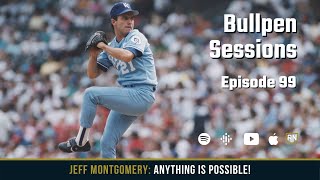
Interview (YouTube) with Jeff Montgomery and Andy Neary. Montgomery recounts growing up in Wellston, Ohio; college at Marshall; drafted by the Cincinnati Reds (called up 1987); traded to Kansas City in 1988 where he became a long‑time reliever/closer (1988–1999). He describes conversion from starter to reliever, physical and mental adjustments, routines (daily running, 15‑pitch mechanics warmup, pregame timing), pitch repertoire (four pitches, emphasis on mixing and low‑zone command), career highlights (approx. 304 saves, ~700 appearances, 3× All‑Star, Royals Hall of Fame, Fireman of the Year, single‑season high 45 saves mentioned), anecdotes (Bo Jackson highlights; waxing his car during games), and his broadcasting transition and approach (preparation, learning curve). Key advice: do one thing every day to improve; maximize strengths; work hard and stay consistent.
Chapters
And Juan. All right, Jeff Montgomery with the Kansas City Royals. How are you doing?
Well, Andy, I'm doing well considering the circumstances. But the fact that spring training is underway and baseball season is around the corner, I feel pretty refreshed, pretty excited and hopefully we're going to play 162 this year after abbreviated 2020. And the more more baseball we have, the closer we are to getting our lives back to normal. So I think it's all a good sign.
Absolutely. I couldn't agree more, Jeff. You know, quick backstory for everybody listening and I'm excited to have. Jeff, you're going to. If you don't know about Jeff Montgomery, if you're a baseball fan, you absolutely know about Jeff Montgomery. He pitched in the major leagues from what, Jeff, about 87 to 88 to 99.
87 with the Reds and 88 to 99 with the Royals. The last 12 seasons are in Kansas City and now I'm doing some television work in Kansas City. Have been, I think this my 13th season. So baseball has been part of my life and continues to be awesome.
And so I'm excited to have you because you are the story. You know, I had a colleague of yours on a couple of weeks ago, Joel Goldberg, and we were talking about your story a little bit on, on the broadcast about the undersized pitcher who overcame the odds. You was told, man, it's going to be tough for you to make it all the way you did. You ended up being the all time sage leader with the Kansas City Royals. So that's the story I want to talk about with you and just kind of your journey from, you know, Billings, Montana, as we talked about offline, to getting that break in the majors, that trade for Van Snyder that, that landed you in Kansas City and then the rest is history. At that point you became the all time saves leader with the Kansas City Royals. So Jeff, for the few people out there who are baseball fans that may not remember who Jeff Montgomery is, why don't you maybe just tell us where you grew up. That story about that Ohio kid that, that made big.
Yeah, it's kind of interesting. You know, when I was a kid, I loved sports, played baseball, football, basketball and you know, just kind of a year round, you know, seasonal sports guy and you know, baseball being a spring sport. I wanted to play college football or baseball. Baseball was tops on my list. Had a good football career in high school. But you know, being an undersized guy, a guy you know wasn't a Blazer, football wasn't really, you Know, the sport that was going to be most likely, you know, on my resume at some point. I grew up in a small town in Ohio and but fortunately I was able to hold on till the end of my senior season and end up getting a scholarship to Marshall University, which is in West Virginia, about 100 miles from the little town. I grew up in Ohio, but end up after my junior year, which was not a good season for me statistically. I ended up getting drafted by the Reds, a team that I grew up following. You know, being a kid who grew up during the Red Machine era, the Big Red Machine era, it was just a dream come true. And I honestly thought, you know, Cincinnati, 100 mile drive down the road from, from where I grew up in Wellston, Ohio, you know, it's gonna be a pretty quick trip. And I was excited about, you know, playing Riverfront Stadium someday. And gosh, little did I know, and I was very naive at the time that my hundred mile journey was gonna take me five years. But, you know, along the way I had some really good people in my corner. I probably go back to my rookie season in Billings. My manager was Mark Bombard. He was an undersized lefty and he was my manager and essentially converted me from a starting pitcher, which I'd been my entire life, to a relief pitcher. First day of our little minicamp in, I guess it was either June or July of 1983 there in Billings. And the one thing that I remember him talking to me about was, was the fact that, hey, you're going to have a lot of obstacle, obstacles to overcome because of your size. And I, you know, I threw 88 miles an hour, so I wasn't a Blazer. I wasn't a guy. I could, you know, throw that marshmallow through the stop sign. I was a guy that had to really, you know, work on tricking hitters and mixing my pitches up and so on and so forth. But he told me one thing that stood out to me and he said, you work hard every day to become a better baseball player. And I think you have the mindset, you know, to overcome those obstacles regardless of your, you know, 5 foot 10, 175 pound stature. You know, you have the ability to command a baseball, you have the ability to spin a baseball. Even though you can't overpower anyone, you, you have some ability on the mound with, you know, setting up your pitches. So, you know, playing at the rookie ball level and learning that, I, I really kind of took it to heart and I decided I'm going To do one thing every day for the rest of my baseball career to become a better player. So, you know the old saying, you know, the little things add up to big things, and that's really what I was able to do. And it may be, you know, doing some extra work in the weight room. It may be, you know, getting in that hallway at my house, in front of the mirror, working on my pickoff move. It may mean, you know, you're working on a better change up. I mean, just there's an array of things you can do to improve. I just started doing that on a daily basis and really became obsessed and focused on doing something every day to become better. And during that period of time, that five years it took me to make that trip from Wellston, Ohio, down the road to Riverfront Stadium in Cincinnati, it all became worthwhile once I put on that uniform for the first time. I walked up the tunnel from the clubhouse and walk on a Riverfront Stadium field, the field that I'd gone to dozens of times as a kid to watch the Reds play. Now I'm wearing a Reds uniform and playing for my favorite player of all time, Pete Rose, who was my first major league manager.
You know, there's so many things to unwrap from that, that story, that journey, Jeff. One that speaks right to my heart is, you know, I had the chance to play in the brewers organization. I grew up 30 miles outside of Milwaukee, so having that chance to go play for the team you grew up watching had to be just absolutely unreal for you. The question I want to know. And it was a struggle I had. So I was a starting pitcher my whole life, all the way through college. I get to the brewers organization, and I wasn't a high draft pick. And as you know, the high draft picks, usually other starters, I had to. I had to resort to middle relief. In your case, you went to relief to close rule. Where did. Where do you feel like your mindset had to shift a little bit to go from the guys starting the game, knowing you have maybe a longer Runway to the guy who comes in and has to get the job done right away?
Well, I think really kind of two things came into play there. One was a physical side of it as a starting pitcher. I remember, you know, in high school and college, I'd start a game and I don't know, you know, if they ever even had pitch counts, that they really live by too much back then. But, you know, I remember I pitched, you know, seven, eight, nine innings, whatever it would be. And then for A couple of days, it was hard for me to even play catch. I mean, my arm was tired and was sore and achy. You know, my elbow would, would be barking and I. That's why I was a little reluctant on accepting the offer, you know, to convert to a relief pitcher because I just didn't know how my arm would respond. But then, you know, from the physical aspect, it really responded well. In fact, I felt like I probably had a liver arm. I was able to, you know, maybe get a little more life on the baseball. So, you know, the physical aspect played favorably for me. From the mental side, I like going to the ballpark every day, putting on a uniform, knowing I have a chance to be in a baseball game. And in college, you know, it's a little different because you're playing, you know, sometimes three or four days a week. And it's not a grind like playing professionally, but playing professionally essentially seven days a week for a starting pitcher. If you don't have the, you know, the luxury of, you know, being at the country club on the four days you're not starting, you know, it's. To me, it would have been a real grind. I had, I did have the experience of being a starting pitcher for about a year in the minor leagues and it was so totally different for me as far as the preparation. You know, I'm looking at, you know, going out and throwing, you know, six, seven, eight innings as a starting pitcher and trying to find ways to get through that lineup more than one time. But as a relief pitcher, for me, especially as a late inning guy, you know, I'm focused on getting three outs or six outs, however many outs I have to get to get that last out. I always said, you know, as a closer, my job is to be a professional hand shaker. And what I want to do is I want to be shaking my teammates hands at the end of the game because that means that some, you know, some fashion, we were able to get that last out of the game and still have the lead on the scoreboard. And that's why I really enjoyed being that professional handshaker. Because most of the time, you know, it's something that gives you that thrill of throwing that last pitch of the game and getting that very last out of the game.
You know, you talked about not having that. You want to your starter those three or four days, you're not the guy on the mound, you can go to the country club, enjoy a little bit more when you're in the bullpen. You have to be ready every single Game. And, you know, if my research is correct, I think you ended your career at 700 games that you appeared in, which is, guys, if you're listening, in 700 games appeared in a major league careers. Absolutely insane. Insane.
Take us into the game for a second. So as a closer, you know, when you're out in the bullpen and you might even. Did you start the game in the dugout or were you the kind of guy that was always out in the bullpen? Once, Once the first inning?
No, I felt like I owed it to my teammates to be there for nine innings.
Okay.
I would, you know, I, my goal was to be out for the national anthem. I probably made it out for a national anthem and 99.9% time. There may have been a time or two that I couldn't. But I wanted to be there to see that starting pitcher leave the bullpen. I want, I wanted him to know that, hey, we got our eye on you tonight. We're here to back you if you need it. Go out and give us all you got for as long as you got. We got six or seven guys out here going to, you know, cover whatever you need for us to cover for you. But I always felt like it's important to be there for the first pitch of the game. I like that. And the one thing I learned after a while was it was important to not stay laser focused for nine innings. And if, you know you're going to be out there maybe in the seventh inning or the eighth inning or the ninth inning, whatever it is, it takes a little time to get yourself laser focused. But I felt like doing it for, you know, watching 250 pitches during the course of the game with that, you know, that adrenaline, it just didn't play out well for me. It kind of wears you out to me mentally. So I, I, you know, I'd be out as excited for the first pitch of the game and then I would kind of go into the, the mode where I'm almost like a fan. I'm watching. I might be learning some things. I might be talking, you know, to my, my bullpen coach or some of my other bullpen mates out there about, you know, how are we going to, you know, get this guy out tonight? He's been, he's been on fire hot. He, he owns most all of us. You know, how are we going to get this guy off? He comes up in a big situation at 8th inning. What are we going to do? How are we going to get this guy out? So, you know, you learn a Little bit by just talking and, you know, sharing experiences. But, I mean, I'll share a story with you. People find this kind of funny. I would always, you know, say the third, fourth and fifth inning of the game, I would try to relax as much as I could. And in Kaufman Stadium in Kansas City, right up from the bullpen, there's a tunnel that goes out to the parking lot. And a few of us would park our cars in that tunnel. And I remember one night, I'm out. I'm listening on the radio, and I'm out. I've taken my jersey off, got my T shirt on, and I'm actually waxing my car, okay? And our general manager, our general manager, whose name was Herc Robinson, he's on a golf cart coming down to visit with the groundskeeper, whose office is right there by our bullpen. And he stops and he says. He goes, monty, he goes, do you mind me asking what you're doing? I said, well, I'm waxing my car, Herc. He goes. He goes. In the game going on, I go, yeah, we're, you know, we're winning three to one. It's, you know, third inning, whatever. He goes. He goes, you do this very often? I go, not really. I said, just when my car needs to be waxed. And so he proceeds. He goes, okay. It seems like it works okay for you. I guess you'll be ready in the ninth inning if we need you. But, yeah, that was, you know, my way of just kind of getting away from the, you know, that laser focus of the game and kind of being a fan. I'm listening on the radio and cheering for my guys, and, you know, then, you know, once the game progresses and it gets in, like, in a sixth, seventh inning, you know, especially as a closer, you have a pretty good idea, you know, if it's a five to four game or six to three game, you know, in the seventh inning and you got the lead, there's a pretty good chance you're going to maybe see some action in that game. And that's when, mentally, I started to focus. That's when I could just tell my body started to change. You know, I started to get that little nervous energy, and the adrenaline started, you know, pouring out a little bit. And then by the time you get on the mountain and do your warmups, I mean, you're ready to go. You're. You're locked in, you know, who's going to be coming up in the next inning. And that's when, to me, I was able to really kind of harness all of that energy and then take it onto the mound.
I think that's so important you said what you said because especially I've never been a closer in my life. But if you were, if you are a closer and you try to stay focused all the way through, you could probably almost stress yourself out.
I think mentally you would wear yourself out.
Yeah, yeah. And so here's the question I have because I think there's people who listen would love to know this, but baseball players are superstitious.
Right.
We're creatures of habit. When would you so knowing Matt take take us through that game. Royals up three one, three two, seventh, eighth inning. You know, you're probably coming in. When would you really get locked in about starting a routine to get ready and then did you have a routine that you would go through to get yourself ready in the bullpen?
Yeah, I had a routine.
Actually.
It started in the afternoon. It started with, you know, some physical stuff. I was a big runner. I always felt like being a small guy, if I had strong legs, it could really be a huge advantage to me. So I would do a lot of legwork and a lot of abdominal work. It was back then, it was, you know, it was running distance and doing sit ups. I mean that was the way that we conditioned ourselves. We didn't use weights, we didn't do the typical stuff you see a lot of players and teams doing today. But you know, my, my routine started early in the day and people felt like I was superstitious because I had to run at 4:00'.
Clock.
But it really wasn't because of superstition. I just learned from, from experience how my body reacted and what kind of recovery time I needed. So if I'd run at 4 o' clock and if I'm not going to pitch till 9, 30 or 10, I had ample time to get myself physically ready to be 100% when I went to the game. So, you know, it started then, but as far as the game is concerned, you know, and my role changed over the years. It went from early on to where I might get the last out in the seventh inning and then pitch the eighth and ninth inning. So it was a very different role as far as being a closer during a lot of those years. It wasn't until probably the second half of my career until closers roles were really more refined to just being one inning. So you had to be a little more flexible. But just knowing that there's a chance you're going to, that phone's going to ring but you pretty much knew when the phone rang who it's going to be for. And I just felt like getting myself ready and doing some, you know, some warm up stuff before I even put a ball in my hand or put a glove on to get my body physically ready to start my routine. And it was a little different at home versus on the road. At home, we had a bullpen catcher who was there my entire time in Kansas City. His name is Bill Sobey, and he knew exactly my routine. And I've always felt like it's, you know, you want to keep things as simple as possible. I broke my mechanics down into three different elements. And I would get my arm loose, just do some rapid fire, getting a little blood flow in the arm, and then I would do five on one of my elements, five on the other, and five on the other side. I'd break it down. So it took me 15 pitches to work through all three elements of my delivery. And then it was just a matter of he would maybe set up some on the inside, some on the outside. And sometimes I'd ask one of the other batters or maybe the bullpen coach to stand in there in, you know, in the batter's box and kind of let me work a hitter. So when I went into a game, I was pretty much ready to go. I mean, I probably wouldn't have even needed the eight pitches you get to warm up to be ready to go. I, you know, other than just getting acclimated to the mound, I was ready to go. Once I hit that mound, you know, I'm going to.
I'm going to make you backtrack for a second, because back in. Was it 89? Is that when the trade occurred from the Royals to the Reds?
88. Yes.
You know, I want to ask you a question, because it reminds one thing that's unique about baseball and probably sports in general. I remember I got promoted when I was in Helena. I got promoted to Ogden. Ironically, the brewers had two teams in the same league that year. And I got promoted because the Ogden team was going to be making the playoffs and they needed some more relief help. But you don't get a chance to, like, say goodbye to people. It's like, hey, here's your bag. You're on a plane. We'll have your host family mail you everything. And you're. You're on to Ogden tomorrow. You guys got a game?
We're.
When that trade occurred. Now, for the baseball diehards out there, I want to. I want to tell you, I think this is one of the more lopsided trades nobody ever talked about. Jeff Montgomery gets traded to the Royals for Van Snyder. Jeff Montgomery goes on to be the all time saves leader for the Kansas City Royals. If my research is correct, van played in 19 games in the major leagues.
Yeah, that sounds right.
So the Royals got the better half of the deal. But what was that? What did that feel like in the moment? Because you're playing for your hometown team, Right. You grew up two hours outside of town.
Yeah.
What was it like when you got traded away?
Well, it's very interesting because, you know, having grown up, you know, a huge Reds fan and having spent my five professional seasons in a Reds uniform, you know, I was excited to be a Red, but honestly, the 87 season in which I was called up in late July and I, you know, I pitched a few months in Cincinnati, I did not perform anywhere close to the level that one would expect to perform at and still be considered on, you know, a good chance of making the team the following year. So I didn't, I didn't feel like I was going to make the team in, in 88 with the Reds. My bags were packed, ready to go to spring training camp. And it was just about maybe a week or two before spring training. Spring training opened up. I get a phone call from the Reds farm director. His name was Chief Bender. And Chief said, hey, I got some, you know, got some news for you. You were traded today to the Kansas City Royals. I was the happiest baseball player on earth because I think, hey, gosh, I'm going to a, you know, a team I'd never heard of, like Bud Black and Mark Ubiza and Charlie Lee Brandt and Steve Farr, all these guys who eventually became my teammates. I mean, I'd heard of Brett Saberhagen, I'd heard of Bo Jackson, I'd heard of, you know, George Brett and, you know, Dan Quesenberry. But I didn't know who a lot of these guys were. So I'm thinking, gosh, I got a good chance of making this ball club. So, you know, I got traded and I was very excited. I go to spring training a week or two later, and one of the first people that I met was our general manager at the time, John Scherholz and John Shirholz welcomed me to the Royal, said, happy to have you along. He said, hey, we'd look at your numbers in the Reds organization is both a reliever and a starter. We feel like you're more cut out to be a reliever. We're going to send you to Omaha to be our closer in Omaha. So my bubble was burst really, literally 20 minutes into my, you know, my first day in a Royals uniform because I thought I was going to make the club and the general manager tells me I'm going to Omaha already. But fortunately I had a really good spring training camp. I kind of made it tough on them to send me down. I went down for a short period and then I was called up late May, I believe it was, of 88. And I stuck in in Kansas City last year for the next 12 seasons.
So I got a question I want to ask you. It's off the subject of your career, but I asked Joel Goldberg in the interview we did about the one player he wishes he would have broadcast for that he didn't. And he said, hands down, Bo Jackson. He said, people still talk about Bo Jackson today. You got a chance to play with him. What was it like, I mean, to play with a guy that is that much of an athletic specimen?
Well, it was, it was just amazing the things he was able to do. And every night when he put on a uniform, there was a decent chance that he was going to be doing something that you've never seen a baseball player do before. It didn't happen every night. Now, Bo, he was actually becoming a really good player. He had enormous ceiling. He did some spectacular things in the early part of his career, but he was, he was, he was not a great outfielder at the time. I mean, he could throw a guy out from, you know, the warning track, but he could also misplay a ball, you know, a routine, you know, a routine single. He may play into a triple, you know, just because he would try to do things that he probably shouldn't try to do. But again, he was improving dramatically as a baseball player. And I could, I could fill this entire, you know, show with Bo Jackson stories. And one I'll share that I think is pretty cool is we were playing in Yankee Stadium against the Yankees and Deion Sanders was on the Yankees and Bo hit three home runs in this game. Bo hit three consecutive home runs in his three plate appearances. Deion Sanders comes up later in the game and Deion hits a little flare in the right center field. And Bo comes from center field and he dives like Superman to catch this baseball. And it just goes under his glove and the ball rolls to the warning track and Deon so fast. So he obviously scampers all the way inside the park. Home run. So, you know, two multi sport guys are making big headlines during the game, we end up winning a baseball game. So now Bo, as a result of that attempted catch, he separates his left shoulder. He goes on to save a list for six weeks. Now, six weeks later, he comes back. I remember it's a Sunday afternoon, we're playing a Seattle Mariners, and Randy Johnson's on the mound. And the first pitch that Bo Jackson saw after six weeks on the DL, he hit at 452ft for his fourth consecutive plate appearance with four home runs. And you know, to hit it hit a ball off Randy Johnson to start with is, is an accomplishment. To do it after six weeks on the DL, I mean, just uncanny abilities.
Yeah. I mean, if there's one guy you probably don't want to face after a six week layoff, it's Randy Johnson.
Exactly.
But I and you and thinking it's keeping it with the Mariners. I still remember that highlight of Harold Reynolds rounding third and Bo's picking the ball up at the warning track. And Reynolds think he's, he's got it easily.
Yeah.
Literally from the fly Bo Jackson throws. That throws him out from the warning track. Absolutely insane.
Yes.
So let's go back to your career because I think one thing that makes you unique too as a closer is, you know, you see the guys now who are closing, throwing 100 miles an hour, you know, and they're just coming with the gas. Maybe they've got a curveball once in a while, but they're coming, you know, Mariano Rivera, one pitch. You actually had like a four pitch repertoire as a closer, which is very unique. Why? What? How do you think, how you know where again, most people appear, view closers as that one go to pitch, one pitch guy that I'm going to come in, you know exactly what's coming. How do you think having that four pitch repertoire act really helped your relief career, your closing career?
I think the ability to throw all four of my pitches in any count, it was somewhat of an equalizer. I threw a lot of fastballs by guys that were, you know, 90 miles an hour, 88 to 90 miles an hour. I mean, I could throw a ball by a guy because he's got to protect against my slider. You know, it might be 3:1 and I know a guy sitting on fastball and I can throw my slider. It looks like a strike. You know, he swings, he pops it up, he grounds it out or he misses it. Now I'm three and two and he's thinking what's coming next? And you know, I could throw my fastball three Two, middle part of the plate. And because he's thinking breaking ball in the back of his mind, suddenly I can throw the ball by a guy or I can lock him up because he still feels like, hey, do a slider three one, he's going to throw a three two. And it just. That ability to throw all of my pitches in various counts and situations, that was my forte, essentially. Variety. Had to surprise him, trick him, whatever you want to say. But it was fun doing it. I mean, there were times I would, I would have, I would have a guy miss a pitch and I'd have to almost contain myself from laughing. I was so happy and so excited that it hurts. My 88 fastball I just threw by, you know, Jeffrey Leonard. Jeffrey Leonard or Chili Davis or, you know, some really good hitters at the time, but having them thinking about one pitch or the other, I always felt if I hadn't thinking about two different pitches, I've got a huge advantage.
And I think what you just said is important because in a, in an era today where it's all about gas, right? You see every, every relief pitcher that's coming in these days seems to be throwing 96 plus. You, you, you talked about a very overlooked part of, as a guy myself who threw maybe 90, when you have good off speed stuff, that 90 can quickly look like 95 or 96.
Oh, for sure. And you know, the other difference was, as you mentioned, you know, doing TV now. No, I know, you know, the scouting reports, I know the, all the metrics on almost every pitcher, you know, that we play against and players that are on our team. In Kansas City, it's rare to see a pitcher that does not throw north of 95 miles an hour. I mean, it's rare in today's game. Now in my era, I mean, there were like a handful of guys. I mean, there was obviously Nolan Ryan and Roger Clemens and Pedro Martinez and Randy Johnson and, you know, maybe a handful of other guys that threw 95 plus. But there were nowhere near the amount of players back then that throw as hard as players do today. So, you know, that, you know, if I, if I could, if I could find a way to get an extra mile or two with life, that was great, but I didn't feel like I needed it. One thing that I was, was taught really early in my career is actually my second season with Royals. 1989, I was in spring training camp and my catcher, a new catcher who was an old timer named Bob Boone, he had come over from the Angels to be on the Royals team. And he was catching me in spring training, right, right toward the end of camp. And.
I was going to pitch the seventh inning and maybe the eighth inning. I come in, I'm in a dugout. He said, what do you want to work on today? And, well, what do you think? And goes, well, here's the deal. He goes, your stuff's pretty good. Your command's pretty good. Neither one are great. He goes, but I think I can make them great for you. Like, okay, how are you going to do that? He goes, I'm going to set up right in the middle of the plate. He goes, I don't want you to worry about the inside corner, the outside corner. I want you to worry about the bottom corner of the strike zone. So in other words, the bottom of the, of the, of the zone. And he set up right down the middle. I end up going, 10 batters. I got nine batters out. I probably threw 30 to 35 pitches, and it was the easiest three outs. I. Easiest 10 outs, or, I'm sorry, nine outs that I ever got. And it just gave me that confidence now that, hey, I don't have to be perfect. A lot of guys pitch backwards. A lot of guys throw that really nasty pitch on the first, you know, pitch of the appearance, and now they're down one ball, no strikes, and they kind of pitch backwards. And I pitch backwards a lot where I would throw, you know, the really, you know, the get me over pitch early instead of late when I'm behind in the count. So just setting pitches up and understanding your stuff. And, and I think experience is so important. You learn that you don't have to be.
Laser sharp with regards to your command if you're down in the strike zone. And I just felt like that experience really went a long way in as far as longevity is concerned.
I remember a conversation. My head coach in college was Jerry Augustine, who spent a few years pitching at the mat major league level at the Milwaukee Brewers. And he used to tell us all the time when he was pitching and, you know, going up against the Yankees and teams like that, some of sometimes the best thing he could do is take his fastball and take about three or four miles off of it and just laser it on the lower, lower part of the, of the, of the strike zone and get guys to ground out, pop out, get ahead. He goes, it's not about hitting the corners all the time. Sometimes you just have to lay off, hit the bottom of the strike zone, and everything will take care of itself. That's.
That's Great advice.
Let me ask you this because you it's rare today too. You see closers who have long careers, right? Some guy may show up for a year, 40, 50 saves. The way they, I feel like the way they measure saves has changed a little bit to what counts as a save versus what may have counted 20, 25 years ago. But guys don't last very long. You're you defines a closer role by having a successful career as a closer role for 12, 13 plus years.
What do you think separates if you had to guess the guy, you know, somebody in your role, a Mariano Rivera. These guys who are career closers versus the closers we often see today that have an awesome one, two, maybe three year run and then all of a sudden you see them fade as quickly as they came about.
Well, I think it's the inability to throw secondary pitches more than anything. I think the guys that have the outstanding arms and they're, you know, they're everything's perfect. You know, during that year, that two when they're racking up 40 to saves and then they lose a little bit off their fastball and they don't have the ability to go to off pitches when they need to go to off pitches. I think that's probably why you see guys, you have those really big years and they fall off very dramatically and sometimes are never able to come back. And unless they make some adjustments, as far as, you know, they may have to add a split finger fastball, they may have to add a change up. If they have the ability to add, then I think they can find a way to be successful. But I think just regardless of the velocity, you lose a little bit. Obviously, you know, Father Time is undefeated. There's no one that's going to pitch until they're, you know, 70 years old. So every year in your career after you hit that peak, you're going to start to lose just a little bit. And as you start to lose a little bit, if you can't adjust and not just pitchers, but I think all players, you have to make the adjustments if you're going to be able to stay, you know, at that same level.
So if you had to, Jeff, wrap up your career in a statement or two, you know, again think about here you were in Ohio, 5, 11, 170 pounds, didn't throw 95 miles an hour. There's five, nine guys today that throw 98, 99.
And now we look at the back end whenever and when all was said and done, 304 saves, all time saves leader for the in Kansas City Royals history, in the Kansas City Royals hall of Fame three time all star Fireman of the year award. When you had his 45 saves like you had one phenomenal career, if you had to wrap it up in a statement or two, what would you say allowed you to have the career you had?
Hard work and consistency. I think a manager, what he wants from a player, he wants to know what he's going to get on a daily basis and then he wants to know what he's going to get on a seasonal basis. And I think what I was fortunate to be able to do was work really hard.
And be that consistent performer and you'll be the same guy. Whether I struck out the side last night or I gave up a walk off home run today when I went on the mound, that manager felt comfortable that I'm going to give him three outs and hopefully be shaking our teammates hands.
Yep, I like that. The full, full time hand shaker. I like that. So let's quickly parlay into your broadcasting career because now you're, you're part of Royals Live. You do the pre post game, pre in game, post game broadcasting for the Kansas City Royals. You know, how does, how is it watching a game now, broadcasting it versus they're standing on the mound in the ninth inning?
Well, it's totally different as far as the, you know.
The performance, let's call it live televisions. To me it's a lot more difficult than getting a big league hitter out. But just like like I mentioned with, you know, with, with playing experience becomes very important. I describe live television as like getting in a NASCAR and they give you the keys for the first time until you go on a track and drive 200 miles an hour and you're scared to death. I mean it's just coming at you so fast you don't know what's hitting you. And then you make it through, you know, you drive it around the track, you know, 20 laps and you turn off the car and you know what? I didn't crash. I'm still alive. And maybe I didn't hit the corners right, but I, I'm still alive. Then the next time you do it, you get a little better, the next time you do it a little. And then suddenly driving 200 miles an hour kind of feels normal. And that's the way broadcasting was for me. And I just felt like unfortunately I didn't get fired after my first few attempts at it because I felt like I was so terrible at doing it. But they stuck with me. They Allowed me to drive that car around the track a few more times and get more comfortable with 200 miles an hour. And I think now the biggest thing is, and some great advice I got early in my career was from our previous color analyst, who was an analyst when I was playing for the Royals, named Paul Split. Orff Split, told me that, you know, there are guys who do what you do. Former players, they just show up and they try to wing it. Said never fall into that category because it will show. So I felt like preparing and over preparing, to be honest, was the way that I was going to find it to be the best. And I still live by that today. When I go into a broadcast, I'm ready for that broadcast. It's just like when I went into a baseball game. I knew that I'd done everything mentally and physically prepare myself to be the best pitcher I could be. Same thing with broadcasting, I think. Same thing with so many different, you know, professions and areas in our life. You know, if you work hard and you're prepared, there'll be. There are gonna be times when it doesn't come off the way that you wanted it to. You're gonna make some mistakes, but at least you can look yourself in the mirror and tell yourself, hey, that was maybe not my best performance, but I'm going to be better tomorrow.
That's awesome. You know, And Joel Goldberg, that's one thing he said about you. He said that the best thing about Jeff and broadcasting alongside him is you take the same approach that you did when you were playing for the Royals as you do in the broadcast booth. It's showing up, being consistent every day.
Well, that's, to me, important. And I think if you find a way to put yourself in a position to do something you really, really enjoy doing, it makes it a lot easier to prepare for it. It makes it a lot easier to. To go in and do that. And I have to say this about Joel Goldberg. I mean, I couldn't ask for a better partner. Here's a guy that, you know, when you have your bad days, he picks you up, and, you know, he helps along the way. You know, as a. As a former athlete, there was no training. You know, it's like when I said, you put yourself in that NASCAR. You know, I'd never driven a NASCAR 200 miles an hour before. And the same thing when you go on live tv, I'd never done that. I didn't have any education or training in doing that. So just having somebody like Joel and I mentioned Paul split off along the way to help get you through those bumpy roads. You know, they were just very instrumental in the fact that I've been able to do this now for over a.
Dozen years and split offs, another split off is another great pitcher in Royal's history. And and so. Okay, one more question then we're going to go into a quick set of rapid fire, quick fire questions for you to wrap this thing up. So if somebody one do you think for the diehards listening and the die hard baseball fans are you, do you foresee that you're going to be able to do broadcast live in the booth at games this year unlike what we experienced in 2020?
I think it's going to be a lot like 2020. I think we'll be in the booth live for home games. I think we'll be in the booth doing it from video when the team's on the road. I think they're still going to be very protective of our players and just make sure there's no chance that anyone from the outside, regardless of, you know, their affiliation has any chance to, you know, kind of disrupt the season. But I think the deeper we get in the season a better chance that we may be getting closer to being back to normal where our broadcast crews may travel to the city where the team's doing the game.
Awesome. And my last question that I wanted to ask you was for that high school pitcher listening in or that college pitcher at a mid major program like a Marshall or UW Milwaukee who is 5 foot 10, 5 foot 11, doesn't throw 98 miles an hour and everybody is telling them that yeah, it's going to be very hard for you to make it to the next level. What advice would you give that kid right now?
I would say they are correct. It's going to be very, it's going to be more difficult than the guy that's six five and you know, has the bionic arm. But do one thing every day to become a better player and about anything is possible. Not saying everything's possible, but about anything that's feasible you can accomplish if you work hard at doing it. I think more importantly is knowing yourself. Find, finding ways to really maximize your strengths. So I think that's the advice I would give someone.
That's awesome. That's awesome. It's the same stuff I coach insurance advisors today and that's the same advice I give them. Know who you are, have self awareness and embrace that version of you and just step into it and give it everything you can every day. That's all you can ask for. So let's wrap up, Jeff. Five quick fire questions. The first answer that comes to your head is all I need to hear. But you might have some good ones right off the bat. So, toughest batter you ever faced?
Well, I'm gonna, I'm gonna give you two. Harold Baines is in the category of the toughest because I face him my entire career. The toughest in a short period for about five years was Don Mattingly.
Two left handed hitters with sweet swings. Yeah, those, those are tough guys to take out for sure.
Toughest crowd to close out a game in front of.
It was used to be called Jacobs Field in Cleveland. When they had those guys in the 90s, you know, the Tomes and the Alomars and you know, all the, all Albert Bells and Kenny Lofton's. All those guys that would, they, they had like 500 consecutive sellouts. That was the toughest place to get the last three outs of the game.
That's awesome. I could imagine that. And I think they even had the guys beating the drums and yeah, it was chaos. Okay, bottom of the ninth, two outs, full count, bases loaded. What pitch you going to?
What's the count?
Full count.
Slider.
Slider. Like it. Okay, that's confidence right there. I don't. Did you have entrance music when you were playing?
Yeah, it's kind of interesting. I love music and I loved Elton John and one of my favorite songs was Rocket Band. So they asked me, you know, my favorite song is Rocket Man. So they started playing Rocket Man. When I'm coming in games, my wife tells me, she goes, people are going to fall asleep. Listen to Rocket man when you come into a game. So I changed it to AC DC Thunderstruck.
Oh, yeah. It doesn't get better than that. Nice. I really like that one. All right, last question. Now let's flip it to your broadcasting career. What's your favorite stadium? Besides Kaufman, what is your favorite stadium to broadcast a game from today?
Probably Pittsburgh. The views from. They really kind of messed up the press box in Pittsburgh. They put the press box like on the very, very, very upper deck. I mean, this is high up. It's on top of the stadium, right? But you look out over the ball, over the ballpark, you have to see binoculars. You see the, you know, the numbers on the outfielders, but just the view and the vista from looking behind home plate out over the, you know, Allegheny river and, you know, the skyline in Pittsburgh. It's pretty cool.
That's it. I've never visited, but that's definitely on the bucket list because I've heard nothing but magical things about it, so. Well, Jeff, this was very, very appreciated. I'm so grateful you took the time to be here today. If you guys. Anybody listening in, I don't. Again, if you're a young athlete, you're. You're in business, whatever. Take this advice from Jeff. The reason I wanted to have Jeff on is he was an undersized pitcher, as was I. Everybody told him it would be very difficult for him to have massive success, but at the end of the day, he ended up a royal hall of Famer. All time sage leader, three time all star, on and on and on. And most, I think, Most impressive, Jeff, 700 appearances in major league games, which is absolutely insane. So, Jeff, one more time.
Thank you.
Andy. You're very welcome. Anytime I can be a part of your show.
Love to do it. Thank you and guys, for listening. And you know what happens when confidence and clarity collide. Massive action happens, so go make it happen today.
More from Andy




If you want producers to succeed faster, help them create a sales message that creates confidence.

Sales isn't a zero-sum game! You can have tough competition and still grab a beer after



Option 1: Meditation, a fast walk, a podcast, and protein. The ultimate morning routine!

How you do one thing is how you do everything. Ill elite producers fuel their body.


Stop living in the gray of maybe! Your job in sales is to get a clear yes or no