A Better Way For Brokers To Get Paid | With David & Alex Goldfarb
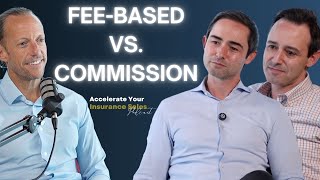
David and Alex Goldfarb moved their benefits brokerage from commission-based pay to fees to remove conflicts of interest. They explain why commissions push brokers toward expensive plans, how to educate employees across age groups, and what mid-year account management actually looks like.
Chapters
First meeting with a prospective client and I'm meeting with the cfo and I explained how brokers typically get paid. You might have to bleep this out. But he said something like that. Mother making $60,000 a year. I haven't seen him in 10 months. Where do I sign?
David, Alex Goldfarb. Welcome to show, guys.
Hello, Andy. Great to be here.
Yes, we're going to have this.
We're going to talk about life as the Benefit brothers. So you 2 both have DSG benefits group here in Dallas and we're going to talk about that for sure. But I definitely want to spend some time letting the audience get to know you for the folks that are tuning in. So, Alex, I'll start with you. Just introduce yourself, tell a little bit about your background. We're going to definitely talk about your background here in a few minutes.
Yeah, appreciate that.
Alex Goldfarb, quick introduction about me. I relatively new to the industry. I say that now, but it's actually now been six, seven years.
Seven year overnight success.
Exactly. Certainly not overnight, but I started in a completely unrelated industry in a design manufacturing company.
Working from the ground up, literally on the factory floor, sweeping floors, learning how to use a CNC machine, drill saws, picking up pallets, conveyor belts.
Worked in that industry, slowly worked my way up into a sales and a consultant position and ended up as a senior vice president of our sales and marketing division, in which I oversaw our sales design marketing efforts internationally.
That was going great. I had an early midlife Crisis and in 2019, David, older brother, he gave me a call we had been discussing, mentioned he was relaunching DSG as a 2.0 version, asked me, hey, would you like to help me kind of build this from the ground up? And I am an entrepreneur by heart. I mean, that's in my blood, it's in David's blood, it's in our father's blood. Going back generations and generations was in.
The design manufacturing as well, right?
Correct. Yeah. And he was. He started multiple businesses along with his father as well.
Wow.
So there was a tremendous appeal to doing so and knew I could add great value. So in 2019, I took the leap of faith and ventured into the employee benefits space. You know what I realized beyond just having a good time of building a business, employee benefits is extraordinarily important part of everybody's life. And I saw that firsthand. Working in a very blue collar manufacturing space, understanding with these specific members how important it was to have affordable health care and to understand that the understand the benefits that they had.
Yeah.
And I quickly realized, hey, this is a fantastic area for me to get involved. Understand it's an area where we can really improve, help people out, help organizations out.
Some guys for a midlife crisis, go out, buy a really expensive car. You join in the insurance industry.
I join the insurance. Correct. Yes.
Awesome. Well, David, how about yourself?
Let's see. I got into the space just as. I don't know if it's a fun fact or crazy fact. I got into this space on the September 11th.
Oh wow.
And I'm still in it. Right. Some people would say that's a sign.
He started when he was 15.
That's how I just turned 30 yesterday.
I've been in the space for quite some time. Obviously that dates me. I fell into the space. Never thought I would be in the insurance business and the insurance and employee benefits in particular. But.
Shortly after graduating.
Similar to Alex, I knew I wanted to do something business related really long term, didn't. I wanted to kind of create my own path. And so I was talking to a bunch of people in different types of businesses and I met somebody, somebody suggested I meet somebody. And he broadly explained this business and kind of my takeaway was.
You know, benefits in general, it's complicated. There's a lot of opportunity and kind of high level. It's problem solving. I mean there are problems. You are hired hopefully to solve these problems. And it's consultative in nature. Started, as Alex said, looking like I was probably 13.
And started working for somebody else. Did that for a couple of years. And in September 04, it's crazy to even say that started DSG Benefits Group with no.
Real business accounting, management, marketing background. Kind of learned it from the ground up. Major leap of faith. I will tell you what really prompted me to make that move and make that jump. Leap of faith was I got a phone call February of 2004 from the CFO of our largest client, my largest client. And he said, hey David, I've got some bad news to share with you. We are moving our business back to. And it was a large national brokerage consulting firm. But I want to let you know it has nothing to do with you. It has to do with the firm that you're with.
By the way, if you ever go off on your own or find yourself somewhere elsewhere, give me a call. So that was the decision. And a few months later, September, started the firm. And not going to bore you with the details, but kind of slowly built it up. Yeah, fast forward five or six years, no intention of selling, but that's what they always say. Ended up selling most of the assets of the business to, at the time, a regional player that didn't really have a presence in the southwest part of the country.
Well, and you sold it. I mean, how old were you? That's a young age.
Yeah, I sold it.
Were you even 30 yet?
Sold it.
2012. So, yeah, I was 34, I guess, right before. Yeah, our first child was born three weeks before first child was born and I have four now. And those first four years we had four kids.
So joined them kind of with a mission to kind of grow this part of the market. Southwest Texas. Fast forward a few more years. Things change, right? Culture changed.
Priorities of the organization changed. And there were just too many things that were not aligned with my personal values and who I am and kind of my personal value proposition that I bring to the table when I meet with employers. So I decided, you know what, I'm going to continue, go back to.
Creating my own destiny and relaunch dsg, more or less, but very differently, obviously now, based on a lot of experience and relaunched it with a lot of intention.
Going to do things very differently, going to be intentional on who we work with.
People that we have on staff, who we partner with, the type of advice that we provide, much more on the consultative than pure spreadsheets. And it's been a few years now and so far, so good.
Yeah, no, I, you know, it's interesting. You bring up, you. So you went out on your own in your mid, late 20s, 24.
Okay.
Yeah. I think, you know, looking back, I'd be curious to know, at age 24, I think you could almost argue it is a good time to go out on your own. For two reasons. There's probably a little naive ignorance, right. You don't know what you don't know. You're definitely probably more of a risk taker at that age.
Nothing, nothing to lose. Right.
But if you fail, you have a lot of time to recover. What advice? I want to get right into this. What advice would you give another advisor who might be listening, who's at that point, whether they're 25 or 35, ready to go, thinking about going out on their own? I was just having a conversation this morning with a client of mine about that. What advice would you give them? Any advice to be prepared for that?
Well, first of all, I'd say, listen, life is short, okay? So if you're going to do something, put some thought into it, but put a lot of thought and consideration in It. But go ahead and take that chance. What's the worst that can happen? What's the best that can happen? And obviously, I think the best that can happen is unlimited potential. And the worst that can happen is you fail and you recover and you try again. So ton of upside, unlimited upside and little downside. So, again, if things don't feel right, if your personal values feel like they're being forced to change because of other folks, take that leap of faith.
Yeah, I think for me, my moment, you know, it took me 41 years to go out on my own, and my. What I realized.
41, Andy. So you're 60. What, it took you 41 years?
Well, if I include my whole life. So I was 41 years old when I went out on my own. But I think what gave me a little comfort to the point you just made. Upside is unlimited potential. Right. Downside is what happens. I fail, somebody's going to hire me to sell health insurance. Right. I'm not going to be homeless under a bridge. Somebody's going to hire me to sell. I'll just go back selling health insurance like I was before. And I think that for a lot of people, that's comforting, and that would be the advice I'd give. If you went out on your own, it didn't work. Somebody's going to hire you to sell for them 100%. Every agency in this country is looking for producers.
And I think if you're about to take that step.
You know, you're probably pretty good at what you do already. So I. Yeah, definitely.
To your point, you're not going out on your own without having some modicum of success right now.
Correct.
I would agree.
Now you can kind of do things that are in alignment with kind of, you know, the way you want to run your business. So it just gives you freedom and, like you said, unlimited upside.
Alex, on your end, coming back from the, you know, being on the manufacturing side for a year, how many years were you in manufacturing?
17 years.
Oh, so, yeah, we're not quite some time.
What was your experience early on coming from? Because we have clients, too, that come from a completely different industry. What was your experience coming into a space like Benefits where you're still selling because you were selling in the manufacturing space, but now you're selling a completely different product.
Yeah, great question.
My initial impression was, you know, why does this have to be so complicated? Right. I mean, there were, you know, as David, he took me under his wing and he was explaining how the process worked. And I really, I Just dove right into it. Right. Trial by fire. And I soon realized after engaging in more and more of our client base and bringing in new clients, that this really does not have to be so complicated. There are so many things that I learned and I immersed myself in books, in tutorials, in webinars, going to seminars.
There was so much fear, so many scare tactics being used by, whether it be health insurance carriers or other advisors to push somebody in a certain decision versus this entire process can be simplified and you can achieve. Employers and members can receive the benefits that they need and in a relatively easy and inexpensive fashion. It just needs to be laid out and explained in such a way where they get it.
Yeah, you bring up a good point. You know, looking back, if some were to say, okay, what skill sets do you need to have success in the benefits industry? Sales help. Right. But I would tell people there's two things I think of. Psychology and math. Yes, you know, numbers, you'll do well. But if you can read people and you, or I should say psychology, math.
And communication, I was going to say, listen, you can.
If you can communicate what we do in a very simple way, you will do just fine. And I think that is a skill set a lot of advisors lack. They actually make it more confusing, you know.
And I would say one of the advantages that I, that I actually brought when I started going to meetings with our clients with David and I, you know, he's got decades of immersion in this.
I realized that on some of these meetings there was some bouts of confusion on the employer side because he was getting extraordinarily technical, whether it be in stop loss or different types of catastrophic coverage. And over a short period of time, I was able to, I was able to use my naivetiti to an advantage. Right. And just kind of dumb it down a little bit and take things on more of a macro perspective and state, you know, kind of here are the options and here is what you're looking at from an overall plan or a cost perspective.
Yeah, that's really, really good point. Before I bring it back to you, I want you to share a story. Alex. So we talked about sales. Number one, am I right in saying selling in the manufacturing industry was a lot of that based on price.
Or.
Was it just as much relationship driven as it is here in the.
I would say there is a good chunk on price, but there's also quite a bit of relationship invol. As well.
Okay. And you know, we agree that being good at selling in this industry takes little guts, right? You have to be a bold. Share the story you shared offline on some of the things you had to do in the Manufacture. Design. Manufacturing to win the business of prospective buyers.
Yeah. So early in my career, in order to get in front of people, I would. I had a client base literally all over the world.
East coast, we're in Dallas, East Coast, west coast, as far as the UAE and Asia. I would fly, let's say, to New York, and I would camp out in front of a prospect's office and if they're working in a large office building, catch them as they're coming out for lunch and run into them and explain, apologize for just intruding. I was in the neighborhood. Right.
Little did they know you just came. Exactly. Exactly.
For you to come out.
One of these while I'm here, want to see if. Can I grab 10 minutes and buy you a cup of coffee? And, you know, they genuinely appreciated that.
Especially New York attitude.
Exactly. They love the hustle and they love that you're actually trying to get their attention and being aggressive about it. So I found it.
Plane ticket, jump on a plane. Actually not have a. Have confidence they actually might be there.
Oh, I would have no meetings.
You're really going to hope they're going to be there that day, go there.
Plan a trip for two or three, three days. And I am just bumping into people.
Do you, I'm curious, do you take that same approach at all now with insurance, as far as, like, trying to get in front of a big group? Do you. Do you utilize similar tactics? That's impressive.
You know, I do. I use a little bit. And as I'm getting older, I use a little bit more. A little bit of a different tactic. I mean, I like. We've got tons of data. A lot of insurance professionals do. As far as how a plan's running, what plans a group might be offering can leverage some of that data and start an initial conversation that way.
So you have, like, some intel.
Some intel, right?
Yeah. Yeah. Wiser with age, right?
Exactly. Correct.
Smarter.
Not just exactly.
David, you talked about DSG 2.0. You're in a rare position where you again, grew an agency at a young age, sold it, now have a chance to reinvent and build 2.0. When you say the phrase 2.0, how would you say DSG is different today than it was when you initially started the 1.0 version?
Well, one word would be very, very different. Our approach. Listen, I don't want to go off on a tangent, but this is the reality we've Already discussed. This is a complex.
Industry. I think it's intentionally complex. There are perverse incentives all over the place. But.
Most employers.
Are not getting the right advice when it comes to benefits. So when I started 2.0 with that in mind and I had seen it firsthand and some of the reasons why I wanted to really kind of tackle and talk to these employers. When I say kind of certain employers, I've always said like our sweet spot is an employer from a size standpoint, maybe 50, 550, maybe to a couple thousand employees. I do genuinely believe these employers for the most part are not getting the right advice, guidance from their broker or consultant. And I think Alex and I, we talk about it. It comes down to like three reasons, more or less, time after time. One is.
They'Re getting cookie cutter advice. So they might bring a spreadsheet with Blue Cross, Blue Shield, Aetna, Cigna. These are the options.
Which one do you want to pick?
Yeah, easy button. So I say one of it's just like, I don't know, a combination of lack of knowledge or just laziness. They push the easy button. A lot of employers are getting bad advice because they're being sold or pushed products or services for the wrong reasons.
I think most people know today the way that most of the time brokers or consultants are paid is commission. We're doing more fee based work today.
But we're going to talk about fees for sure.
Time after time I see some of our competitors pushing carriers because they are literally getting paid two to three times as much versus another solution or carrier. And that's just we talk about like not aligning with values. That's we want to work and help the employer and do what's in their best interest, not just for hours. And we're not, not for profit. We need to make money, but we're not going to push products for those types of reasons. And I would just say the three. The third reason is this is all going back to 2.0 is we are willing to roll up our sleeves. I mean because this is not a. We don't look at these as short term engagements or one year deals. I mean this is a long term partnership. We want to fully understand each employer's unique objectives. Take the time because every employer is different and then.
Design a benefit program that aligns with those objectives. Manage the, implement, manage that plan. And create a plan that every year you don't have to change carriers really build, if possible, build a plan from the ground up. So think of a plan with A bunch of cogs and wheels. If a particular component of the plan is not working, take that one cog out, maybe it's pharmacy, put a new one in so you're not having to massively disrupt.
It's almost like you're helping them build their own version of 2.0. Like you did. Right?
That's.
Yeah, kind of.
Yeah.
And it's interesting. You talk about the whole compensation and I remember working in Colorado and I used to laugh at how you go to any agency website and what are you going to read? We put our clients first. And then you hear about the six figure bonus they got from Cigna and that's what drives their decision making. And it used to drive me nuts. Don't, don't tell me you're putting your clients first when the carrier bonus is what determines what product you're pushing. And I think there's still too much of that going on. And everybody wants to tout how they put their clients. But let's be honest, I'm watching your behavior and it's anything but putting your client first.
And also with a lot of the new laws that have been put in place over the past year or two, I mean, I don't want to use, you know, I was talking to somebody yesterday or the day before. I can't stand the word transparent or transparency.
It's thrown around too loosely in this industry.
That, and you know, that, you know, ERISA doesn't define what transparency is, but it does define what a fiduciary is and a fiduciary responsibility is. And, and you know, somebody that does what we do, I mean, they do have to outline how they're getting paid, including any contingent or override revenue. So it might be in fine print in the back, but I, you know, you got to look at that stuff.
Yeah, I agree. Alex, you talk about, you know, one thing that you two have to do because you guys are not a big firm by numbers of people. Communication. Let's talk about communication a little bit because I think that is something. You guys do a great job. One of the biggest issues we have is employees and employers just don't understand what the heck they're buying or what the heck they're using.
How can we improve communication in this industry? Because it is something. We have a lot of acronyms in this industry. We love to throw them out. We love to use words like transparency all the time. Nobody knows what the heck that means. How do we improve communication to employees? Because at the end of the day they're the end users.
Yeah. I think the first approach is you have to understand the client. Right. We are living in a world right now where you have three generations of people in a workforce. At least, at least, at least.
You have to understand your client, you have to understand the organization. If you have members that are all baby boomers, that are older, they might not be keen to, oh, here is this new app to download and here's everything that you need to know about your benefits plan on this app. That is a surefire way to confuse people more and not receive the engagement you want. So once you understand the type of members, the appropriate generations you have as a workforce, then you target specifically what's going to be most impactful. Whether that be old school print and mailing information, whether that be monthly lunch and learn at facilities or if it's a younger generation, talk about different technology platforms that might be more appropriate to help educate those members.
Alex, wouldn't you say, the world that we live in today, the reality is most companies have a multi generational workforce. So going back to that one size fits all will not work, will not be effective. Members, employees will not understand benefits. Because if you're a Gen Z employee.
Sending these big benefit guides, printed benefit guides, mailers, I mean, that's not the way to most effectively communicate, engage and educate.
Tldr. Give me the shortened version of this.
Right, yeah, yeah, exactly. So it's for those folks, it's bite sized messages. Yeah, simplified.
Well, and I think it's even the same case, you know, to your point, we still have baby boomers in the work. My mom's a substitute teacher still, she's a boomer all the way down to Gen Z. Right. The amount of loyalty baby boomers have for their doctor compared to Gen Z, crazy night and day. So if you're gonna bring in an option like direct primary care, you have to understand if you've got boomers in your workforce, they're not leaving their doctor, not gonna work.
Or like somebody's pushing an HMO versus a ppo. Well, and there's massive disruption. That's not. Even though you might be saving 10%, you're going to have disgruntled employees and possibly employees leaving the company.
Yes.
So it's, I mean, to answer your question, you know, how do we combat that? How do we solve that problem? It's taking the time to understand your client and not, you know, you make a sell, hey, great, they're a client of yours and you walk away. I'll see you in 10 months. When the renewal comes out.
Yeah, the knock on the door.
Exactly. Constantly, constantly. Be in touch with your clients. Understand how their organization is shifting, growing, depleting different generations and remain dynamic.
This episode is brought to you by True Captive Insurance. What if you could take full control of your healthcare strategy without the financial burdens of traditional insurance? At True Captive Insurance, they make that possible. As the only captive in the nation that puts up the majority of collateral on your behalf. They provide financial flexibility from day one, making them an advocating partner for their customer success. True Captives fully customizable plans and cost saving strategies ensure you never have to choose between affordability and quality care. It's time to break free from the limitations of conventional insurance. Take the next step today. Visit truecaptive.com and discover a smarter way to manage healthcare that is truecaptive.com how do you guys do that? Again? You're competing in a space where you're going up against a lot of bigger organizations. And we know what they're going to be touting, right? We have so many more people and resources than DSG does. How do you sell that though to a larger organization when they're looking at hiring a firm like yours and they, you're not begged by people. How do you combat that?
Yeah, I mean I, what I have personally found and as a kind of a newer producer, when I first started getting, when I was first getting started, I faced that challenge a lot. And what I found to be the most acceptable and the honest response was with a company like DSG or a smaller independent firm based on their core values and at, you know, dsg, we're huge on transparency.
I did it, but based on, based on having, you know, high integrity.
You want to do what's right and we are not going to push a product for financial gain. And that's. I found that a lot of the new, the first few new cases that I took on that were relatively bigger in size, I found what they were currently on was due to financial, financial gain. And it was just unbelievable. And as long as you can show that and communicate that to them.
Like.
Holy crap, I can't believe I've been doing this for so long. And you do enough of that. It does grow to referrals and recommendations.
What a great example. I can't remember. It was a case you guys ultimately, I think took over, what was it, 70, 80 lives and the advisor was making $100,000.
That's crazy. You know, there's so many examples of that. Right? And kind of going back to your question, Too. Like, you don't know what you don't know. So a lot of these relationships, you know, our goal is not to, like, create breakups, but it kind of is.
Let's be honest. We're trying business.
At the end of the day, we sit there. First of all, I mean, there's a reason why we were invited into that meeting.
Right.
And we do a lot of listening.
But kind of, once we kind of have an idea of what's going on.
We ask a few pointed questions. And then there are a lot of things that bring me joy in this space. But when the light bulb turns on and they're like, I can tell. Like, why have I never heard of this? Or, you know, it goes back to some of those. Those three reasons. Right. And I'm not going to necessarily say that in a meeting, but listening and just providing.
I mean, it's really. It's consulting and letting them know what's out there and letting them know there are different ways to skin the cat. I don't like that analogy. But there are different ways of doing things. We're different. The approaches that we might suggest are likely going to be different than what you've heard in the past. And if you're happy.
Running on that hamster wheel, we might not be the best fit.
Might not be the best fit.
Yeah.
And we're okay with that.
Yeah. I feel like we should be playing a game right now. Every time we say the word transparent.
I say it it again.
No, you don't. But I'm like, I feel like we just play a game. How many times we could use that word in this episode. To that point, though, with transparency.
You.
Talked about one of the things, you know. I agree with you. I think we have to empathize with the employers because they only know what they know. Right. And what they've been taught. And I think one of the big adjustments that have to be made is what expectations are you setting for your advisor? Because I remember hearing employers say, well, they returned my call. I mean, that's how low their expectation was. Right. But one of the things you guys preach heavily on expectations is how you get paid. We thought you said fees earlier. You know.
What led you to transition to that model? And how have your clients received that?
The simple answer is, when you explain the traditional way of getting paid.
It doesn't make sense. If an employer receives a 20% rate increase.
I mean, we certainly do not deserve a 20% increase in compensation. And there are ways to work with an insurance carrier, net of commission and come up with a fair compensation model where you just invoice the client. And now the premiums are net of commission. In fact, there's. If you look at premiums, if there's 5% commission built in, if you remove that 5%, the overall premiums actually go down by more. It's not just like it was $105, now it's $100. It's actually like 98, $99, because there's an expense built into adding that commission. So again, I'm not going to use that word, but that's going to be one of the very first things we talk about when we meet with a client. We don't want to beat around the bush. And I can't tell you how many times. I mean, I vividly remember.
One example. This is brand new. First meeting with a prospective client, and I'm meeting with the cfo and I explained how brokers typically get paid. And you might have to bleep this out, but he said something like, that motherfucker is making $60,000 a year. I haven't seen him in 10 months. Where do I sign? Like, they don't know what you don't know. He's like dream state. I haven't, I haven't seen him in 10 months. He's making $60,000. Like, where do I sign?
Well, think about that. If you ask that business owner, if you had an employee here making $60,000 a year, what would they be doing? Yeah.
What value?
They wouldn't be showing up twice a year.
Twice a year. And just putting together a spreadsheet and.
Saying, hey, yeah, the term I used to love to use. Because again, a lot of employers don't know what they don't know. Right. They're just used to. Well, our broker makes a commission and I would always ask them, so how would you feel if your accountant got paid by the irs?
Yep, exactly.
Would you trust them? No. And it's just. They don't know what they don't know. Now, did you have. I'm curious when, when you move to the model of fees. Because now employers are just used to not having to pay you because it's in. It's baked in the premium. Right. But now they're cutting you a check. Was that an adjustment for the cl.
Right, it is an adjustment and it's definitely. Listen, it's a change. Anytime there's a change, there's an adjustment. But if they fully understand the reason why and kind of the. What it does is leads to real I'm not going to use that word, but objectivity, you know, we can. I mean, we are objective. We're not getting paid to push products. I mean, they appreciate it.
Yeah.
And net. Net. It's going to be much more fair long term than. Than over the course of several years getting paid a commission.
I think it establishes trust. Right. So when you're giving advice to a client, and I love to lead off with this conversation, let me tell you how we get compensated. Do not want to be compensated by the insurance carrier here.
Sometimes you can't afford it.
Yeah, yeah, yeah, yeah. But it's important for us, for you to understand that the advice. Because we're giving you advice, the advice we are giving you is not by, Is not being driven by financial gain. Right. We will be making this fixed fee irregardless.
And this is what you're going to be getting in return. It's not just spreadsheeting, quoting. I mean, because anybody can do that really. You're not bringing anything of value to the table.
Well, and I think the value in that. I'm going to use the word again, do it being transparent where you're being honest with them by saying, listen, if you just want an advisor who provides quotes every renewal, stay with your broker. Anybody can do that. We're not a fit.
I think Chat GPT could probably do that now, correct?
Absolutely. It won't be long before AI will just create the quotes for you. But I, I feel like the more we're just upfront and honest with the prospect these days, the better it is. I have clients, I tell them, go in, tell them, odds are you're happy with your broker right now. Here's two things I know about you. You have a broker and I bet you're happy with them right now.
That alone will earn trust because you're just being honest.
Those are two safe assumptions for sure.
Yeah. What about, let's quickly talk and then I want to transition a little bit into the benefits being brothers. And what's that like? It's one thing to win a piece of business. When you're a smaller boutique consulting firm, it's a large piece of business. What's your thoughts, though? It's okay. That's great. But now your job's just starting, right? You want a nice 500,000 life group. And I think this is where a lot of smaller boutique firms fall apart. They said all the right things to win the business, but now the action's not backing up the words. How important is it for you guys now? That that account is one, they're now a client.
What do you have to do to make sure you're taking care of an account that size?
I'll answer this first and please add to whatever I say. I mean obviously you got to deliver, right? If you say you're going to do something, just like in anything else in life, you need to follow through and deliver. We talk a lot about data, we talk a lot about listening, about understanding each employer's unique objectives, also realizing that those objectives can change over time. So, so when we ask for the top three objectives and we know price is always a concern, we include that in all of our agenda meetings. So we know that we remain on track. Maybe the objective is to reduce our pharmacy expenses. So everything we're going to do is going to be aligned with objectives. And it's not. Every employer is different and all of our clients have their own unique objectives. But.
Understanding the employer what they want, gathering their feedback up front, gathering their feedback throughout the year, what's working, what's not working. And we also highly encourage employers to do some type of a survey that measures employees perception and satisfaction with the employee benefit program. Because if you've got 50, 100, 500 employees and you offer medical, dental, whatever it might be, employees might hate the dental plan. And maybe it's employer pay. Like if you're not asking simple, you could be ranking rating questions. I mean to truly provide a tailored benefit program that's in alignment with what the employer wants to achieve and their objectives, as well as understanding your multi generational workforce, what they want and kind of their levels of satisfaction, you've got to look at the macro and the micro. And then finally to answer your question, after a client renews, this is something we incorporated and I'm proud of, is we send out what's called, we call it a post renewal survey. And it's a standard survey. It's one page, there's five questions that are rated one through five. There's some open ended questions. But again, understanding what we need to do to provide the highest level of service to the employer is paramount to DSG 2.0.
I think that's one thing you guys do a really good job of is getting constant feedback from the client. I think a lot of agencies are too afraid to ask.
And if we're doing a bad job, you want to know, I mean, is there any area that we can approve one? Because we need to know.
Yeah. Any thoughts you want to add to that, Alex?
You know, I would say we always try to remain flexible and dynamic. You know, a big misconception is, oh, we just renewed. Everything needs to remain as is. No, I mean, we were looking at the data monthly. Right. We're constantly reviewing the data, capturing feedback from the employer if something needs to change. If you see some high cost medication come in that might be a specialty medication, no reason you can't put something in place right now, even though it's three months afterwards, to help combat that. So it's always remaining in contact, constantly reviewing the data and finding ways to improve.
It's not set it or forget it. Right.
One last thing to add to that is, you know, we're out there doing what we do, but we're also out there constantly looking for outside the box solutions. So another example would be like, hey, we just.
Formed a relationship with a large imaging provider that does MRI, CT scans.
CAT scans, those types of things. Let's go ahead and add this via direct contract to your workforce to reduce your imaging claims. Because these are kind of low hanging fruit things that can require very little modification but can be incorporated mid year to make a dent, make an impact.
Yeah, I think it's a good point. I think a lot of employers feel like once they make a decision, can't make another one until the next renewal. But there's so many things and solutions out there that can be implemented at any time. You've been in the business now, how long, Alex?
A little over six years.
Okay. What's it like to work with your brother?
You know, it's good.
Transparent.
You know, I think we both have both similar and different skill sets that complement each other well. To be more specific.
He'S a jerk. To be more specific.
Perhaps this is just from my manufacturing background. I look at things from a very structured, organized efficiency standpoint.
Right.
I mean, when I see him like doing things, I'm the visionary.
If you're talking about EOs, I'm the visionary.
Yeah, I would say visionary. And when I see David, you could have gone from step one to step five and we didn't need step two, three and four. There was no reason to do this. We can go right here to here finding inefficiencies. I think it's impactful. So I think we play off each other pretty well on that aspect. And then from a similarity standpoint, you know, the members that we have, the employees and the people that we work with at dsg, it's super important that they share the same core values as us. And a huge part of that is integrity. Right. In doing the right thing. We don't want people that work at DSG to have this simply be a paycheck that they receive. Right. If you want to work at dsg, you need to share the same core values that we have. Right.
Otherwise, you're not a fit.
You're not a fit. And we've created a really nice foundation with some amazing people that genuinely want to do the right thing for employers and their members.
Yeah. It's funny. Yesterday was age Amy, my fiance's last day as a dental hygienist because she's joining the business full time.
She goes by Nice.
By AJ in the business. But to that point. I laugh when you were talking about that because I'm. I'm the visionary. She's the details or the efficiency. And I like to say I live in the clouds. She lives in the checklist.
Right, exactly.
So you. But you have to have that. Right. If you were both visionaries, they're probably more here, you know, what advice, David, would you give? Because I. I coach several agencies. There's Father Son mix, there's Brother mom mix, or Son Mom Mix. And gosh, there is a lot of tension. And that tension, unfortunately, bleeds into personal life as well. How have you guys been able to make sure? Like, hey, even if there's a little tension in business, we can't let it bleed out into our personal lives.
Yeah, I'm not going to repeat that word, but that's part of it.
There's a T word. We'll just go clear.
Clear. No, but listen, before. I should say, maybe when we first started having this conversation of the possibility of working together, Alex and I both. I mean, obviously we love each other. And.
Many times when you have a family business, things don't work. And there are some terrible, sad stories that happen. So it's like being upfront and honest and getting ahead of problems and being open and honest is paramount and kind of just knowing we both have the same vision and. Yeah, we. We both complement each other. I have many weaknesses and a couple of strengths, and Alex has many strengths and a couple weaknesses, but they complement each other.
Yeah, we share the same objective. I mean, we all have the same. Yeah, we've got. We've got the same ultimate. And as long as you share that same vision, that same objective, we're all trying to get to the same place and do what we believe is the right thing and kind of where we want to go ten years from now. And I think that's a crucial part.
We both make mistakes, too. So it's like, again, be open and honest, get ahead of things, and just keep that dialogue open. Because if you don't.
It'S a snowball effect.
And you guys even have started to build a little brand with the Benefit Brothers, which is.
You've helped us with that. Now we gotta come up with a theme song.
I think your point, Alex, when you've said that we have very different skill sets, I think that's important because.
I think that's what makes a lot of this work, is I think when I watch family members engaged in the same business and struggle and just butt heads all the time, it's because they're exactly alike.
Now we're partners. I mean, that's it. And it's. Having the right people in the right seats is paramount. And I think.
What advice I'd love to hear from you guys as we start to wrap this up. What advice would you guys give? You know, what you've done a good job of, again, as a boutique. There's a lot of firms out there like you around the country who have that goal of wanting to go after bigger business.
And there's a couple fears that come up. I think. One, the fear of, well, if we start focusing here, our smaller clients who've been with us forever are going to get offended. They're not going to like that. But I also think there's a fear of going upstream because they haven't done it before. And there was probably a point, I'm guessing the 1.0 version of DSG, if I had to guess, probably had a lot of smaller businesses than 2.0 does. What perspective shift did you make to allow you to go upstream with more confidence?
I think it's going to be just.
Time after time having these meetings with kind of larger employers.
I see the same problems. I see the same thing. You don't know what you don't know. And I see the same solutions being provided. So that obviously helps from a confidence standpoint. Obviously, once you get a couple of wins, that helps as well.
But, yeah.
We have different service models, too. Kind of talking about offending kind of maybe our smaller clients. I mean, the smaller clients, they don't need the actuarial analysis or the predictive modeling that some of our larger ones do. And as long as they get kind of the service that we tell them, we're going to deliver on what we're going to be able to provide you. I think we've had, and our surveys.
Tell us that, too. I mean.
Following through is key. Go ahead, Alex.
Yeah, and I would say.
You'D be very surprised that even on these upstream clients, employers with 2,000, 3,000 lives, they have the exact same holes, the exact same problem.
I always said same problem with the lives.
I mean, you could see someone 3,000 lives. Tell me about, carry your history. What have you been doing? Oh, Blue Cross for how long? 5, 10 years. Have you changed plans? No, you know, the advice that we were given is just to kind of hit renew as is. Okay, well, you know, what else are you doing to help your members understand? Oh, you know, the carrier sends out notice. It's crazy. I mean, the same problems. I mean, you can't be intimidated that, hey, this larger 2000 life group with this national brokerage is getting this crazy service, it's not the case.
If I may just give a real life example, that occurred a month ago, real short, got an opportunity to meet with a very large employer, about 4,000 employees. I knew going in that there because their issue or their problem was pharmacy, which is not unique. To give you better perspective, once I got in front of them, they were telling me that their budget for pharmacy, before they renewed, they were budgeting for the next Plan year was 12 and a half million dollars for pharmacy. I met with them in February right after they renewed. Within about a month, they had to change that budget from 12 and a half to about $15 million. Three or four days before I met with him in February, that budget changed again to $17 million. So in three months that's a four or $5 million.
Again, much larger employer having the same experience that a lot of our smaller clients have. So it's out there.
Yeah, that was how I thought. I remember meeting with groups in Colorado. One particular met with a group with 900 lives fully insured. They were fully insured because their broker said, you shouldn't be self funded if you have less than a thousand employees.
I love that.
And it just blew me away. Like who gave them that?
And they both. But they believed in that, right? They believed in that. Their trusted advisor. Right.
And well, and, and if, if the HR team already had a little fear of it and the broker says, yeah, you shouldn't do it, what does it do?
That that job becomes so much more complicated.
But, but I agree. I always said, you know, the larger the group is, same problems, bigger budget, more zeros, that's it. And I think in some cases I, you know, working with large groups, you, you actually realize there's more efficiency, easier, they've got more, so they know exactly what they need.
To you to do.
They're going to take care of what they need to do. They're not relying on you for everything. It can be almost more hands off. Sometimes in those small groups I find.
You'Re not the de facto HR on the smaller groups. You're the HR group and you've got the business that are calling you on the larger groups. They've actually got dedicated HR teams, not a single person teams to help address those. So I completely agree. The larger the groups, it's more efficient.
Well, guys, I really enjoyed this conversation. Thank you for taking the time to do this. If somebody was listening and they're like, hey, I'd love to, you know, pick their brains, even though I hate that phrase, but I'd love to reach out to these guys. What's the easiest way to do it?
Call us. We're, I'm always, we're willing to help. So I don't care who it is.
We're willing to find David and Alex on LinkedIn.
LinkedIn is going to be the best articles. Yeah, check us out on LinkedIn. We, we post a lot of good content. Give us a call, shoot us a note. We're happy to help.
This is the benefit brothers.
Thank you.
Appreciate it.
Thanks, Andy.
That's all we got for this episode of the accelerate your insurance sales podcast. One of the most valuable things you can do to help us and other new potential listeners find our show is for you to rate the show and leave a review. So as a special bonus for you if you leave us a review, take a screenshot of your review and send it to me as a DM to my LinkedIn profile. I will send you a free copy of our LinkedIn Diamond Playbook, our proven four step strategy to grow your business on LinkedIn. So go right now, leave us a review, screenshot it and send me a DM on LinkedIn. Also, please share this podcast with anyone you think would enjoy it. That's it for now.
What have you been doing? Oh, Blue Cross, for how long? 5, 10 years? Have you changed plans? No, you know, the advice that we were given is just to kind of hit renew as is. Okay, well, you know, what else are you doing to help your members understand? Oh, you know, the carrier sends out notice. It's crazy. I mean, the same problems. I mean you can't be intimidated that, hey, this larger 2000 life group with this national brokerage is getting this crazy service. It's not the case.
Yes.
And if I may just give a real life example that occurred a month ago Real short. Got an opportunity to meet with a very large employer, about 4,000 employees. I knew going in that there because their issue or their problem was pharmacy, which is not unique. To give you better perspective, once I got in front of them, they were telling me that their budget for pharmacy before they renewed, they were budgeting for the next Plan year was 12 and a half million dollars for pharmacy. I met with them in February right after they renewed. Within about a month they had to change that budget from 12 and a half to about $15 million.
Three or.
Four days before I met with him. In February, that budget changed again to $17 million. So in three months that's a four or $5 million.
Again, much larger employer having the same experience that a lot of our smaller clients have. So it's out there.
Yeah, that was how I thought. I remember meeting with groups in Colorado. One particular met with a group with 900 lives and fully insured. They were fully insured because their broker said you shouldn't be self funded if you have less than a thousand employees.
I love that.
And it just blew me away. Like who gave them that?
And they both. But they believed in that, right?
They believed in that.
Their trusted advisor. Right.
And well, and, and if, if the HR team already had a little fear of it and the broker says, yeah, you shouldn't do it, what does it do?
That that job becomes so much more complicated.
But, but I agree. I always said, you know, the larger the group is, same problems, bigger budget, more zeros, that's it. And I think in some cases I, you know, working with large groups, you, you actually realize there's more efficiency, easier, they've got more. So they know exactly what they need.
To you to do.
They're going to take care of what they need to do. They're not relying on you for everything. It can be almost more hands off. Sometimes in those small groups I find.
You'Re not the de facto HR on the smaller groups, you're the HR group and you've got the business that are calling you on the larger groups. They've actually got dedicated HR teams, not a single person teams to help address those. So I completely agree. The larger the groups, it's more efficient.
Well, guys, I really enjoyed this conversation. Thank you for taking the time to do this. If somebody was listening and they're like, hey, I'd love to, you know, pick their brains, even though I hate that phrase, but I'd love to reach out to these guys. What's the easiest way to do it?
Call us. We're I'm always We're willing to help so I don't care who it is.
We're willing to find David and Alex on LinkedIn.
LinkedIn is going to be the best articles and content. Check us out on LinkedIn. We we post a lot of good content. Give us a call, shoot us a note. We're happy to help.
This is the benefit brothers.
Thank you.
Appreciate it.
Thanks Andy.
That's all we got for this episode of the Accelerate your insurance sales podcast. One of the most valuable things you can do to help us and other new potential listeners find our show is for you to rate the show and leave a review. So as a special bonus for you if you leave us a review, take a screenshot of your review and send it to me as a DM to my LinkedIn profile. I will send you a free copy of our LinkedIn Diamond Playbook, our proven four step strategy to grow your business on LinkedIn. So go right now, leave us a review, screenshot it and send me a DM on LinkedIn. Also, please share this podcast with anyone you think would enjoy it. That's it for now.
More from Andy




If you want producers to succeed faster, help them create a sales message that creates confidence.

Sales isn't a zero-sum game! You can have tough competition and still grab a beer after



Option 1: Meditation, a fast walk, a podcast, and protein. The ultimate morning routine!

How you do one thing is how you do everything. Ill elite producers fuel their body.


Stop living in the gray of maybe! Your job in sales is to get a clear yes or no